

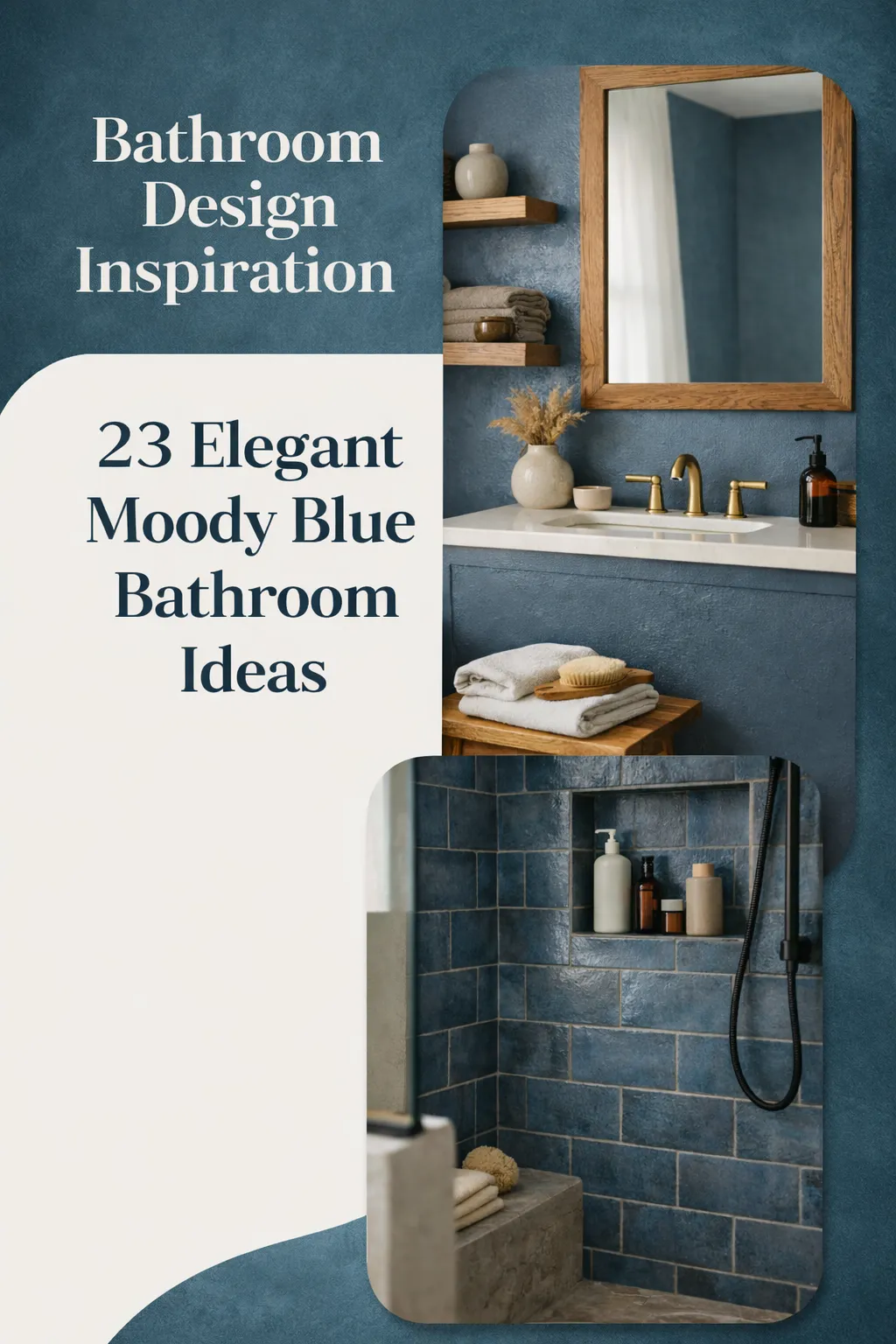
Moody blue bathrooms hit a sweet spot that a lot of color trends miss. They feel dramatic without being loud, calm without being boring, and polished without looking too staged. The key is using deep blue in a way that adds depth, warmth, and contrast rather than turning the room into a dark box.
In bathrooms, blue works especially well because it already feels tied to water, quiet, and rest. When you push that color deeper into navy, slate, stormy blue, or blue-gray, the room starts to feel more layered and grown-up. That said, not every moody blue bathroom should look the same. Some need warmth from wood and brass. Others need crisp contrast from white tile or stone. Small bathrooms often need a different balance than large primary baths.
This first half covers the foundation ideas that shape the overall look. The second half can build on these with more styling details, material pairings, and finishing moves.
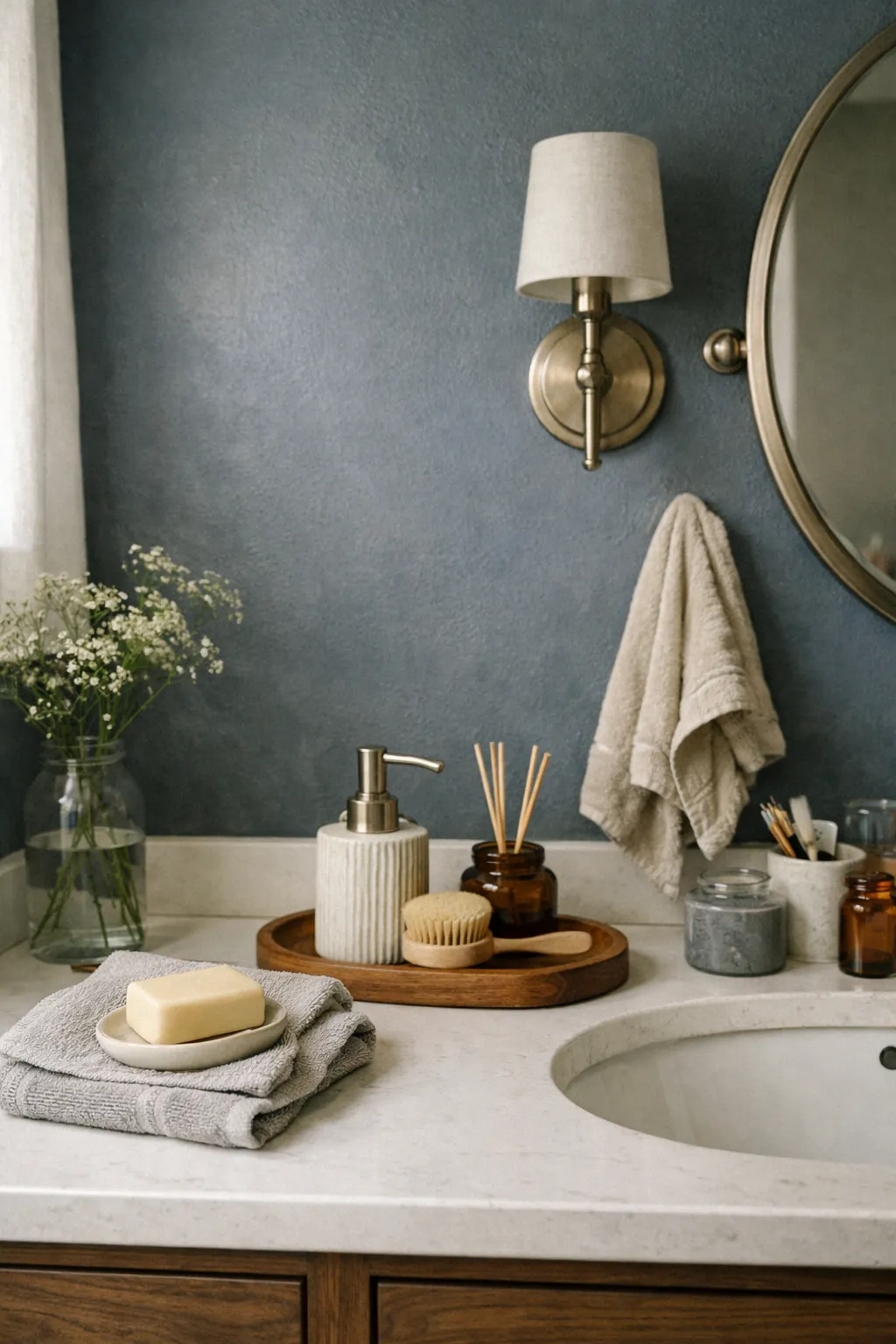
1. Paint the Walls a Deep Blue-Gray
A deep blue-gray is one of the easiest ways to create a moody bathroom that still feels livable. It gives you the richness of blue without the intensity of a bright navy. That matters in bathrooms where lighting can be uneven.
This works especially well if your bathroom already has:
- white trim
- a white sink or tub
- gray or marble flooring
- chrome, brass, or black hardware
Blue-gray also hides minor wall imperfections better than flatter pale tones. In real homes, that is not a small thing. A slightly dusty undertone keeps the room feeling soft instead of sharp.
For a small bathroom, stick with a satin or eggshell finish that reflects a little light without looking shiny. For a larger bathroom, a richer matte finish can look more custom and grounded.
2. Use Navy Vanity Cabinets as the Anchor
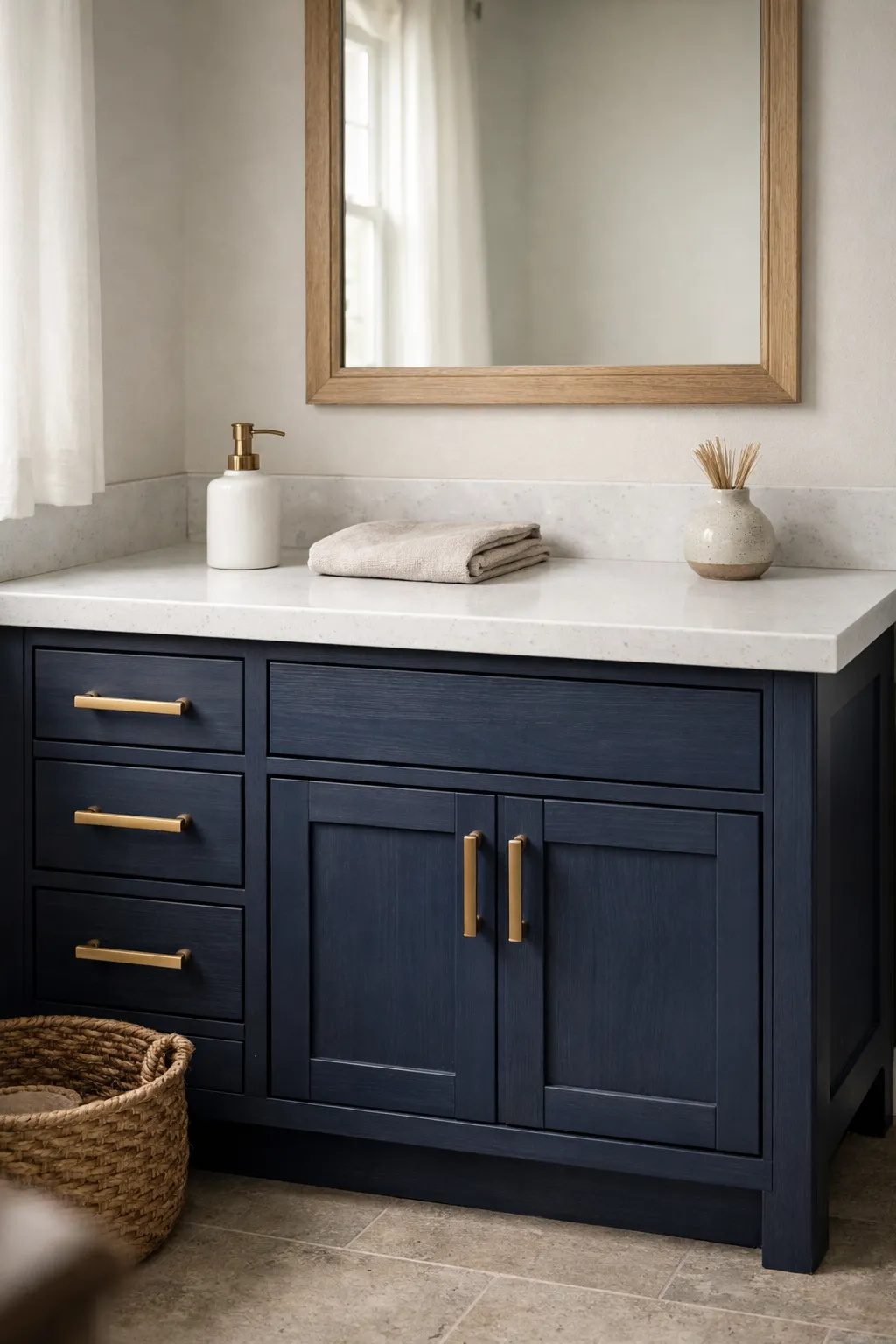
If painting the whole bathroom feels like too much, start with the vanity. A navy vanity gives you that moody blue look in a controlled way, and it instantly makes basic bathrooms look more expensive.
This is one of the smartest options for people who want color without committing to dark walls. A navy vanity pairs well with:
- white quartz countertops
- marble-look tops
- brass pulls
- aged bronze faucets
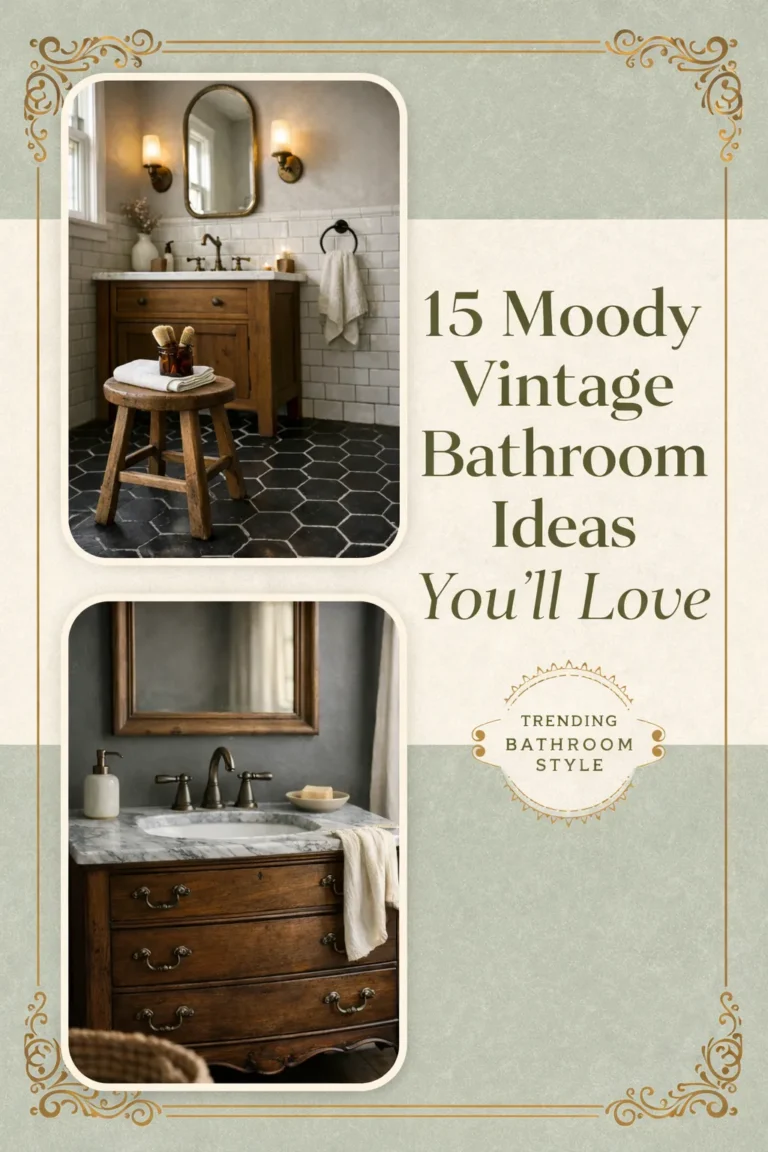
- warm wood framed mirrors
A good navy vanity creates weight in the lower half of the room, which helps the space feel balanced.
In family bathrooms, navy is practical too. It hides scuffs and water marks better than pale painted cabinetry.
3. Pair Moody Blue Walls With Crisp White Tile
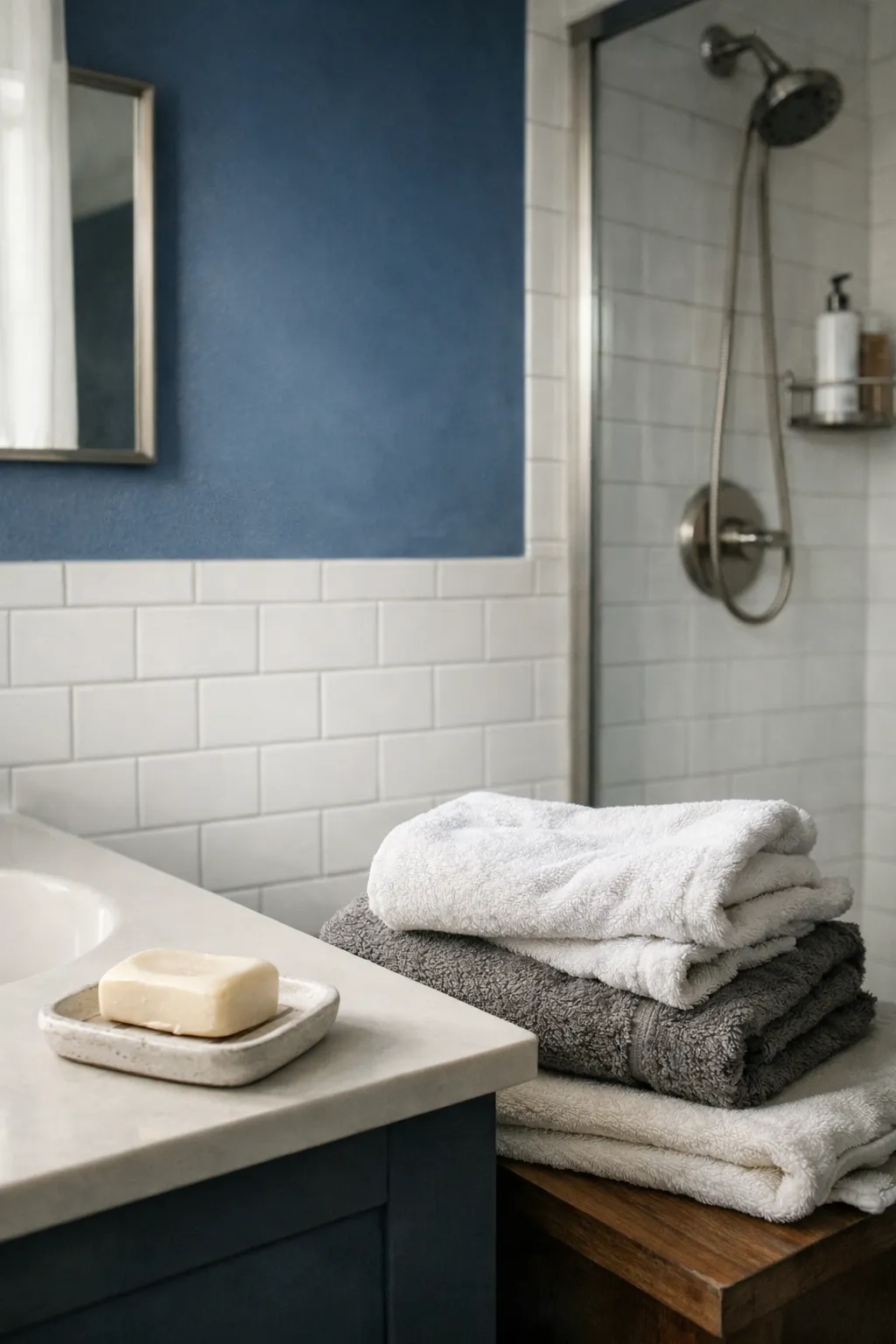
Dark blue walls can feel rich and cocooning, but they need something to push against. White tile is one of the cleanest ways to do that.
The contrast keeps the room from feeling muddy. It also helps architectural details stand out, especially around showers, wainscoting, or tub walls. You get the best result when the whites are clean but not icy. Soft white tends to feel more timeless than stark bright white.
Good pairings include:
- deep blue upper walls with white subway tile below
- navy walls with white zellige tile in the shower
- blue-gray paint with classic white penny tile floors
This mix works in both traditional and modern bathrooms because the contrast is simple and readable. It feels fresh, but not trendy in a way that will date fast.
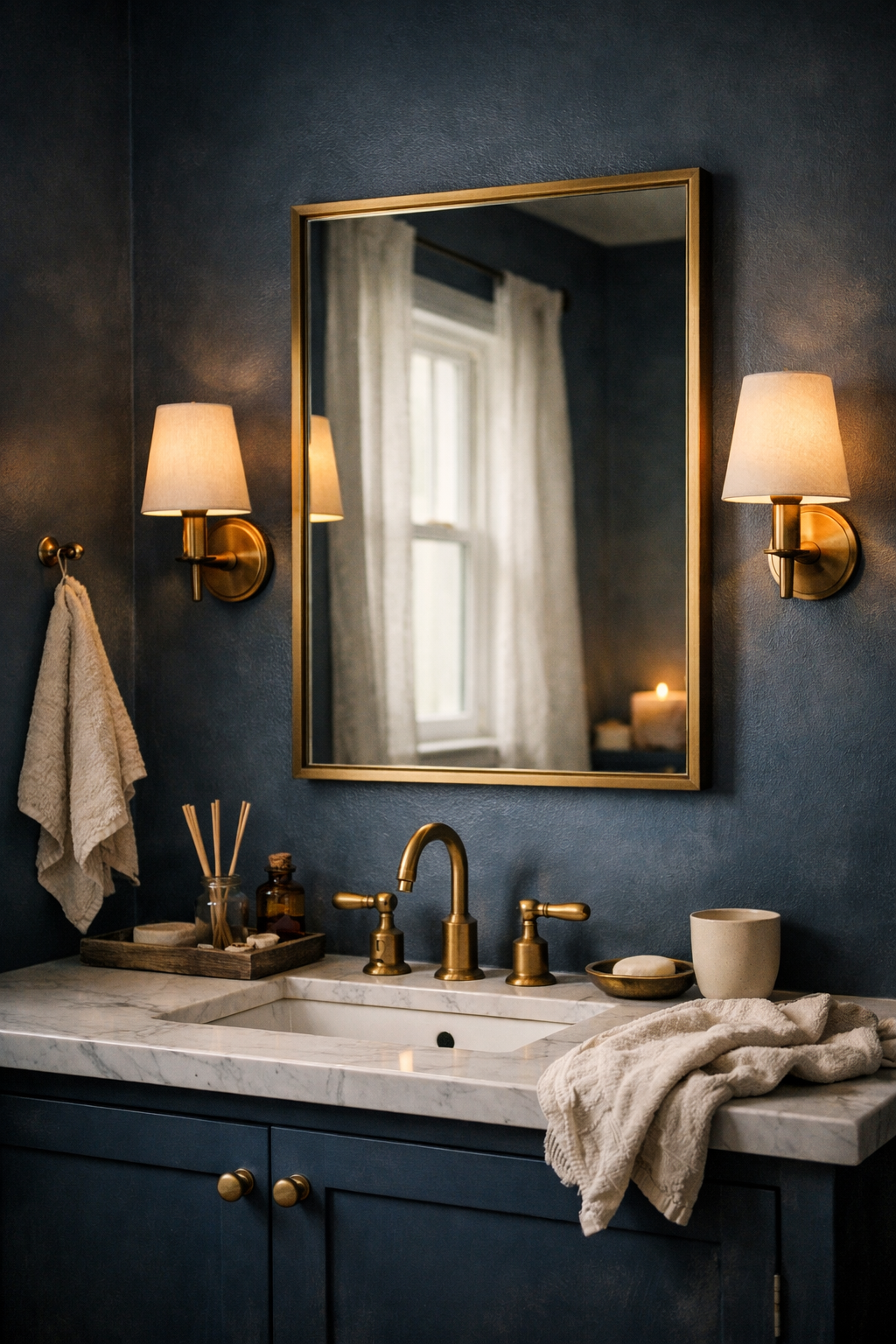
4. Bring in Brass for Warmth
Moody blue can turn cold fast if every finish in the room leans cool. Brass fixes that. It adds warmth, glow, and a little softness against dark blue tones.
This does not mean everything has to match perfectly. In fact, slightly lived-in brass or antique brass usually looks better than bright polished gold. It feels more grounded and less flashy.
Brass works especially well in:
- faucets
- vanity hardware
- sconces
- mirror frames
- towel hooks
If your bathroom gets limited natural light, brass helps bounce warmth back into the space. That makes a real difference in the morning, when a dark bathroom can otherwise feel flat.
5. Try Moody Blue Tile in the Shower
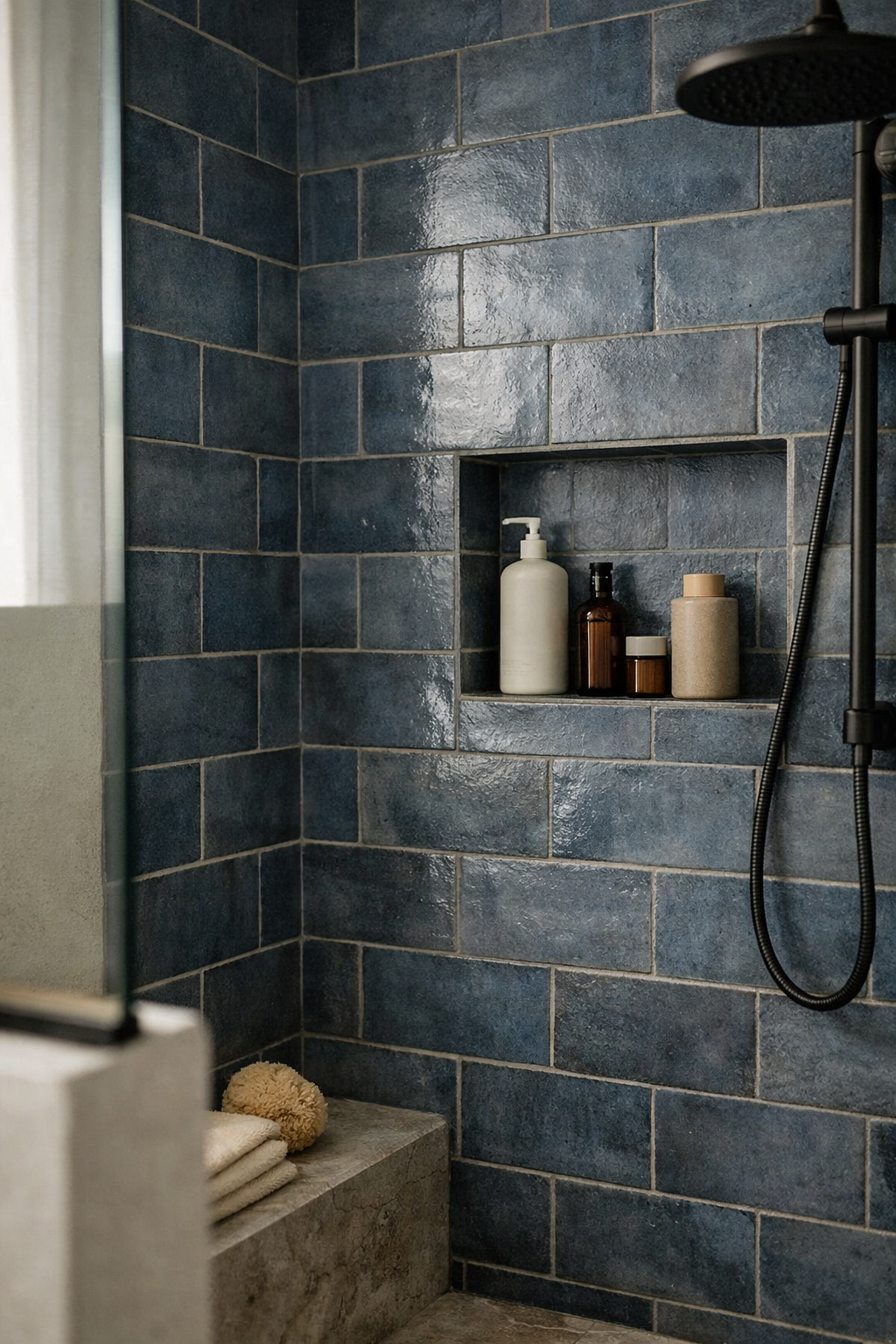
If you want the color to feel built in rather than painted on, use blue tile in the shower. This gives the room a more permanent and high-end look.
The best moody blue shower tiles usually have variation. Flat, one-note blue can look cheap. Slight tonal shifts make the surface feel deeper and more natural. Think:
- hand-glazed navy subway tile
- stormy blue square tile
- blue-green slate-look porcelain
- matte indigo stacked tile
Tile choice matters just as much as color. Glossy tile reflects more light and can help a small shower feel brighter. Matte tile feels quieter and more architectural.
In a bathroom with a white vanity or pale walls, a moody blue shower can become the focal point without overwhelming the whole space.
6. Add Wood Tones to Keep It Grounded
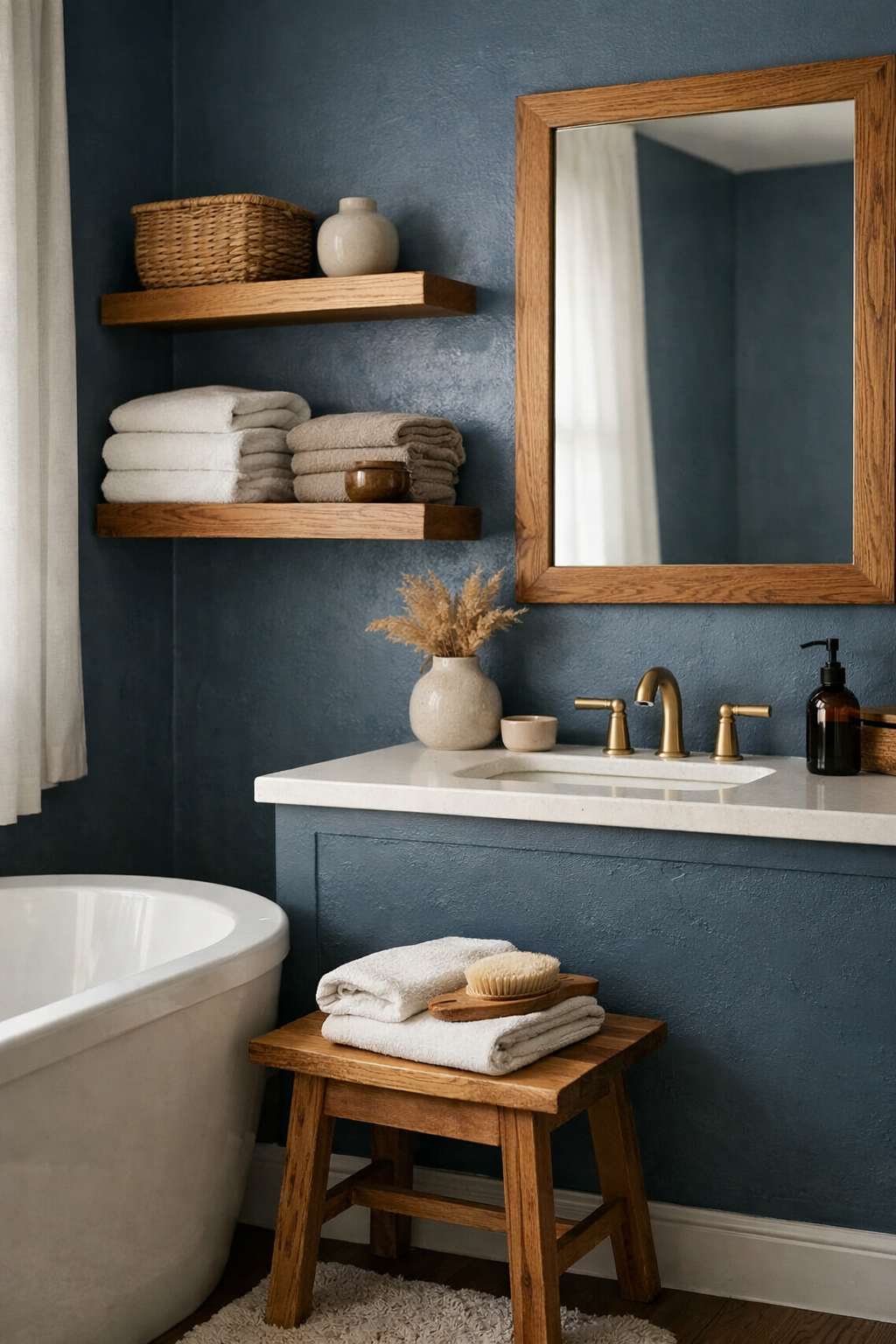
One of the biggest mistakes people make with moody bathrooms is forgetting warmth. If you combine deep blue with only white, gray, and black, the room can feel hard.
Wood adds the balance. Even a small amount can make the bathroom feel more relaxed and lived in. You do not need a full rustic look either. A few warm wood elements can be enough:
- oak floating shelves
- walnut vanity accents
- teak bath stool
- wood-framed mirror
- woven storage baskets
The point is not to make the bathroom earthy. The point is to keep the blue from becoming sterile. Real homes need that softness.
Medium and warm wood tones usually work better than very orange woods. Oak, walnut, and weathered wood finishes tend to complement moody blue without fighting it.
7. Go All In With Blue on Walls and Vanity
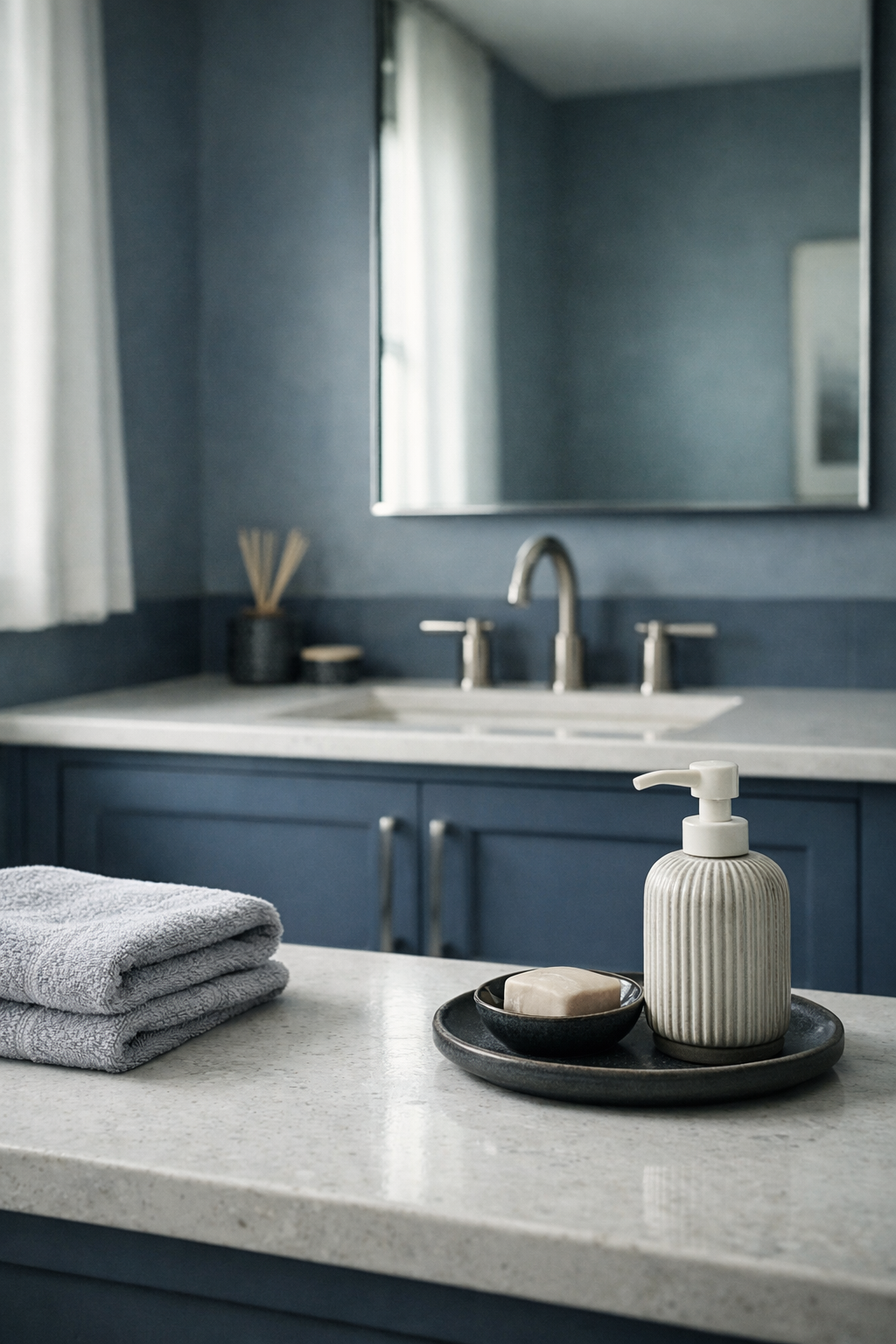
If you want a more immersive look, carry the moody blue across both the walls and the vanity. Done right, this creates a wrapped, cocoon-like effect that feels bold and polished.
The trick is variation. Do not make every surface the exact same flat tone with no texture. You need contrast through materials and finishes. For example:
- matte blue walls with a satin navy vanity
- blue-painted walls with marble counters
- deep blue cabinetry paired with lighter blue-gray tile
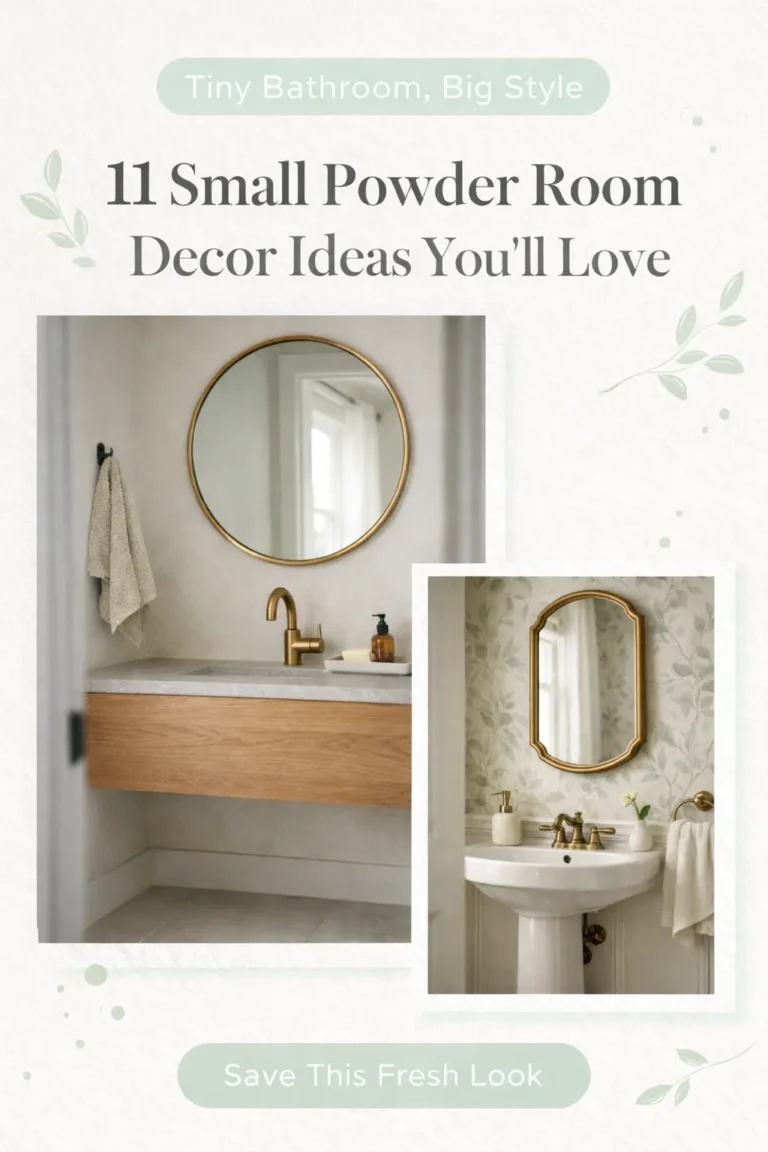
This layered monochrome approach works especially well in powder rooms. Smaller spaces can handle more drama because people spend less time in them. A powder room is a good place to take risks.
In a primary bathroom, keep the look from feeling too heavy by mixing in mirrors, stone, glass, and warm metals.
8. Use Black Accents for a Sharper Edge
If brass feels too warm for your style, black accents can give a moody blue bathroom a cleaner, more modern edge. The combination feels sleek and a bit architectural.
Black works best when it is used with intention. Too much can make the room feel harsh. A few strong accents are usually enough:
- black faucet
- black-framed mirror
- black sconces
- black shower frame
- black towel bars
This pairing looks best when the blue has some depth and gray in it. Very bright blue with black can feel too graphic. Deep navy, stormy blue, and slate tones hold up better.
A good rule is to soften the palette elsewhere with white tile, pale countertops, or natural materials. That keeps the room from tipping into a cold, over-styled look.
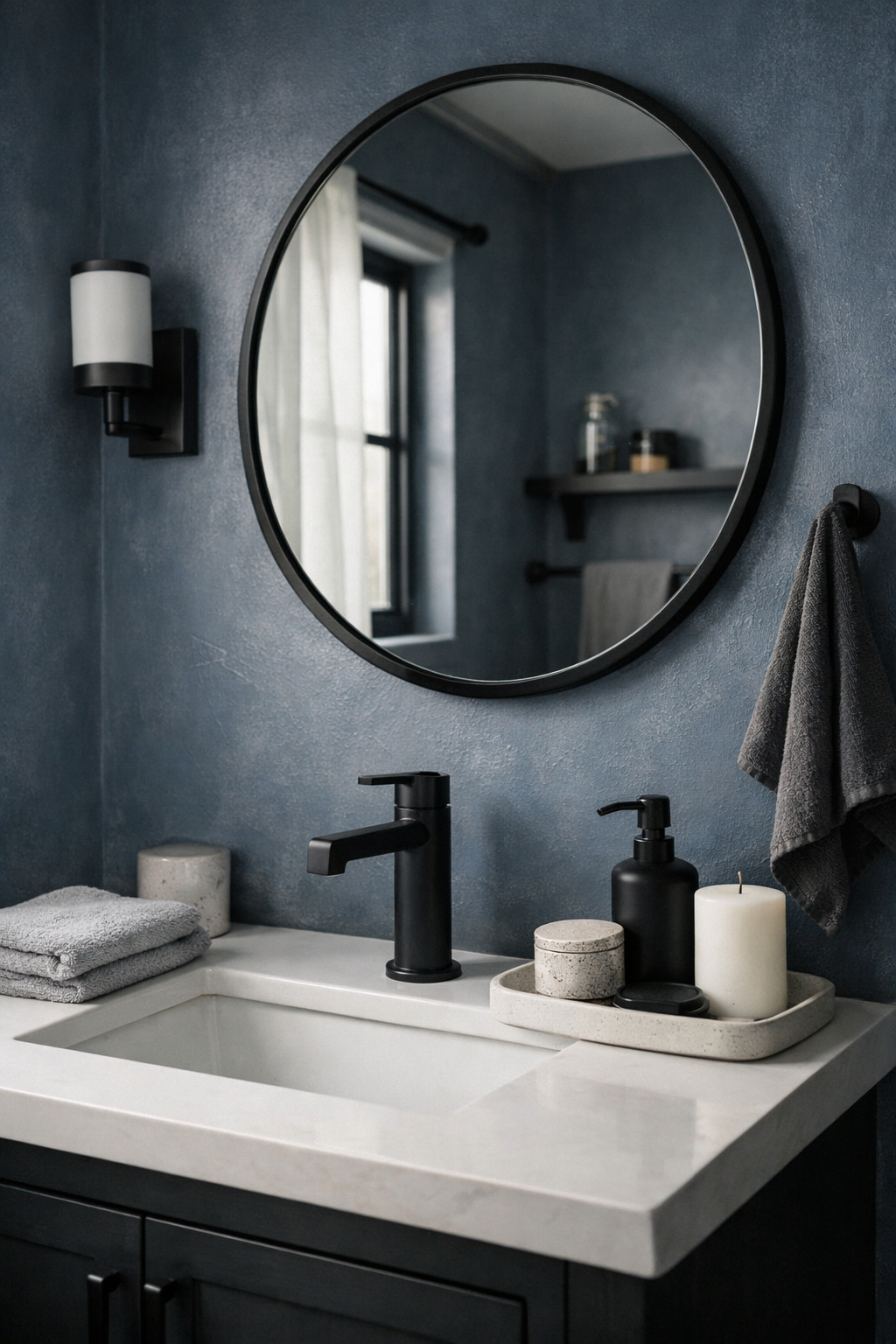
9. Choose a Statement Mirror That Breaks Up the Blue
In a moody blue bathroom, a mirror does more than reflect light. It also gives the eye a break from the darker surfaces. That makes it one of the most important styling pieces in the room.
A few strong options include:
- arched brass mirror for softness
- black round mirror for contrast
- wood-framed rectangular mirror for warmth
- vintage-style mirror for a layered look
The shape matters. If your bathroom has lots of straight tile lines, a curved mirror can make the room feel less rigid. If the room already has soft shapes, a simple rectangular mirror may keep it from feeling too decorative.
This is also where you can push personality a bit. Even in a practical bathroom, the mirror often sets the tone.
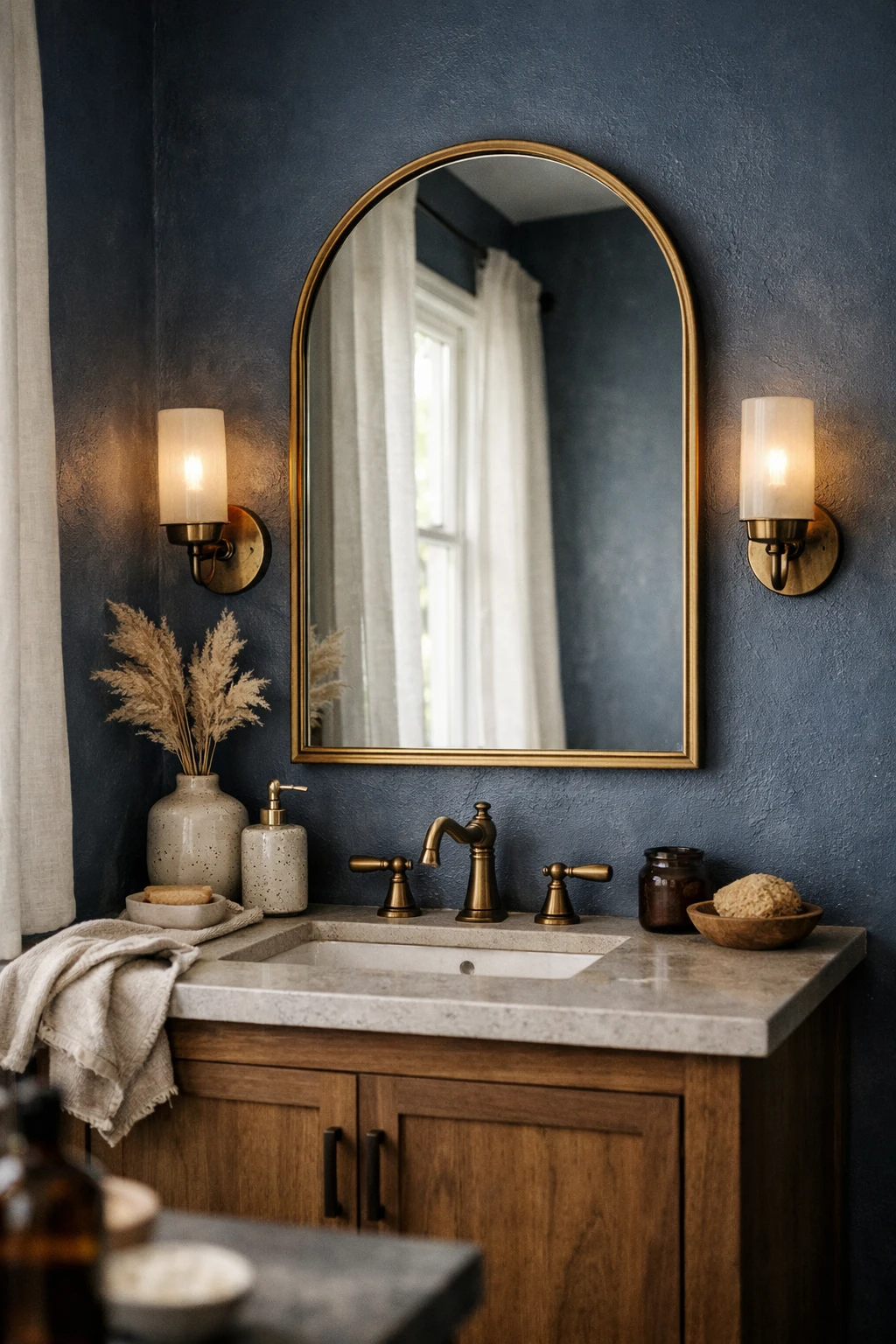
10. Layer Soft Lighting Instead of Relying on One Overhead Fixture
Lighting can make or break a moody blue bathroom. The color itself is not the problem. Bad lighting is. If the room only has one harsh ceiling light, deep blue will look dull and flat.
Layered lighting makes the color feel richer and more flattering. Aim for a mix of:
- overhead light for function
- sconces beside the mirror
- soft ambient light if the room is large enough
- warmer bulb temperatures that do not turn the room gray
Bathrooms need task lighting, but they also need mood. A pair of sconces at mirror height usually looks better than a single vanity bar stuck above the glass.
This is one of those details people skip and regret later. A well-lit moody bathroom feels intentional. A badly lit one just feels dark.
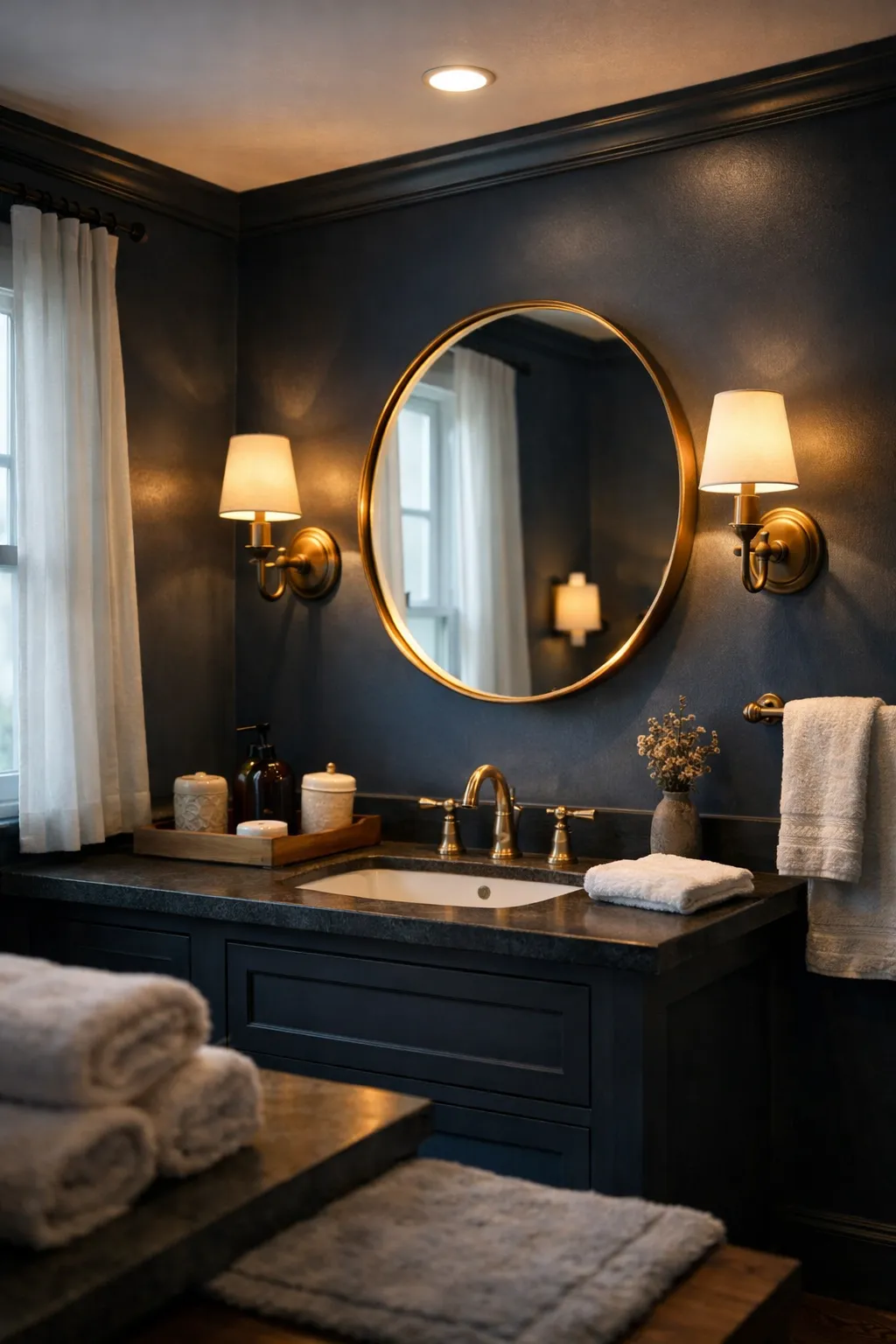
11. Use Marble or Stone to Add Movement
Deep blue looks best when it is paired with something that has natural variation. Marble and stone do that well. They add movement, softness, and a sense of depth that keeps the bathroom from feeling one-note.
Some of the best combinations include:
- navy vanity with white marble top
- moody blue walls with gray-veined marble tile
- deep blue shower tile with pale stone flooring
- slate blue cabinetry with quartz that mimics natural stone
This pairing works because stone breaks up solid blocks of color. It also makes the whole room feel more custom. Even if you are using a budget-friendly quartz surface, choosing one with a natural-looking pattern helps.
Plain, flat surfaces can make dark colors feel heavy. Pattern and veining lighten the visual weight without changing the palette.
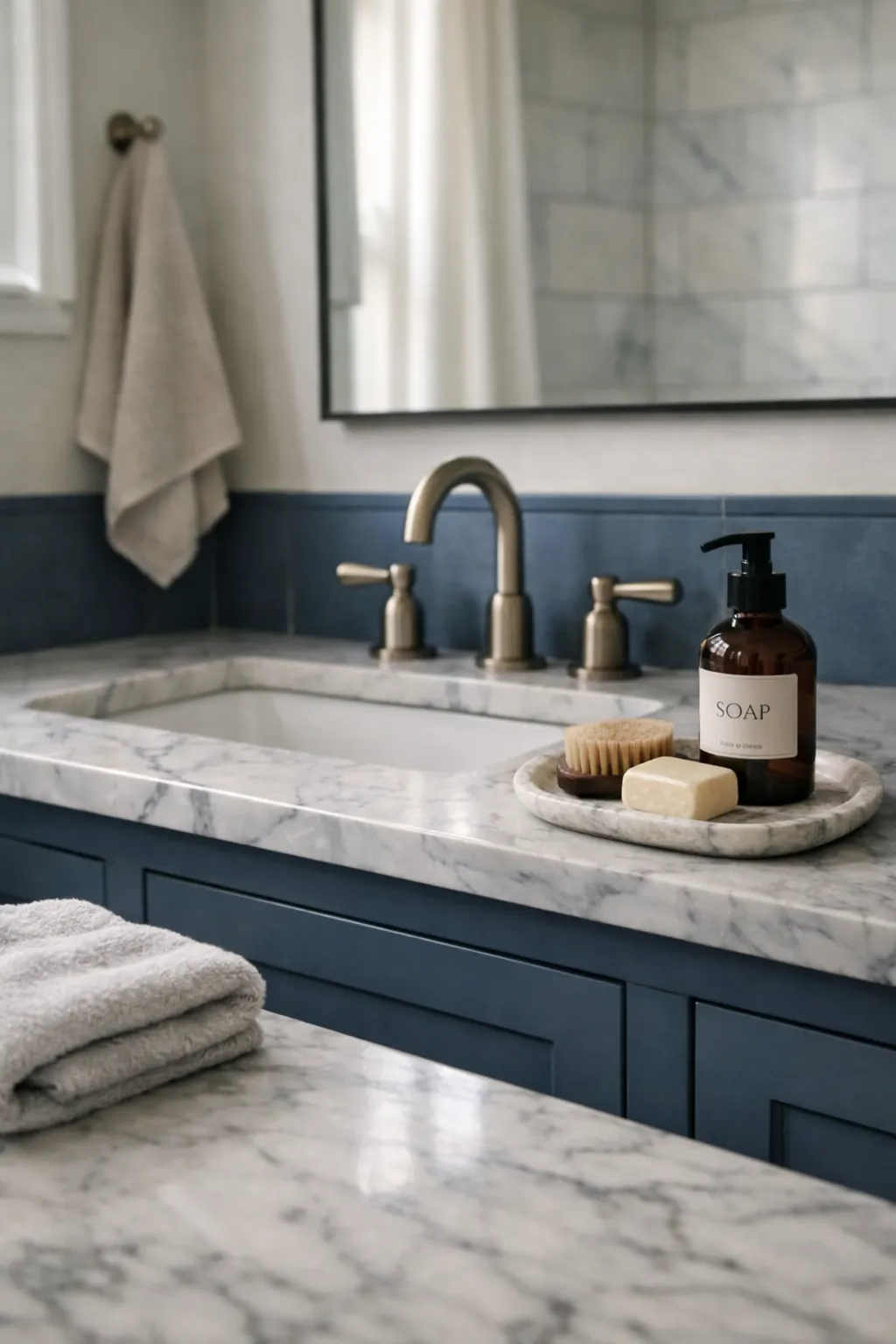
12. Make a Small Bathroom Feel Intentional, Not Cramped
A lot of people assume dark bathrooms only work in large homes. That is wrong. Moody blue can look amazing in a small bathroom if the room is designed with restraint.
What matters most is balance. In a compact bathroom, pick one or two strong blue features instead of forcing the color onto every surface. Good options include:
- blue walls with a white vanity
- navy vanity with pale walls
- moody blue wallpaper on one wall
- blue tile in the shower niche or backsplash
Here’s a simple comparison that helps:
| Bathroom Size | Best Moody Blue Approach | Why It Works |
|---|---|---|
| Small powder room | Go bold on walls | The compact space can handle drama |
| Small full bath | Use blue on vanity or one wall | Keeps the room from feeling closed in |
| Medium bathroom | Mix blue walls with white tile | Adds contrast and depth |
| Large primary bath | Layer blue across paint, tile, and cabinetry | Creates a rich, cohesive look |
Small spaces do not need less personality. They just need tighter editing.
This first half lays the foundation for a moody blue bathroom that feels elevated and usable, not forced. The strongest spaces balance dark color with texture, light, contrast, and warmth. In the second half, I’ll continue with the remaining ideas and push further into details that make the look feel finished rather than half-done.
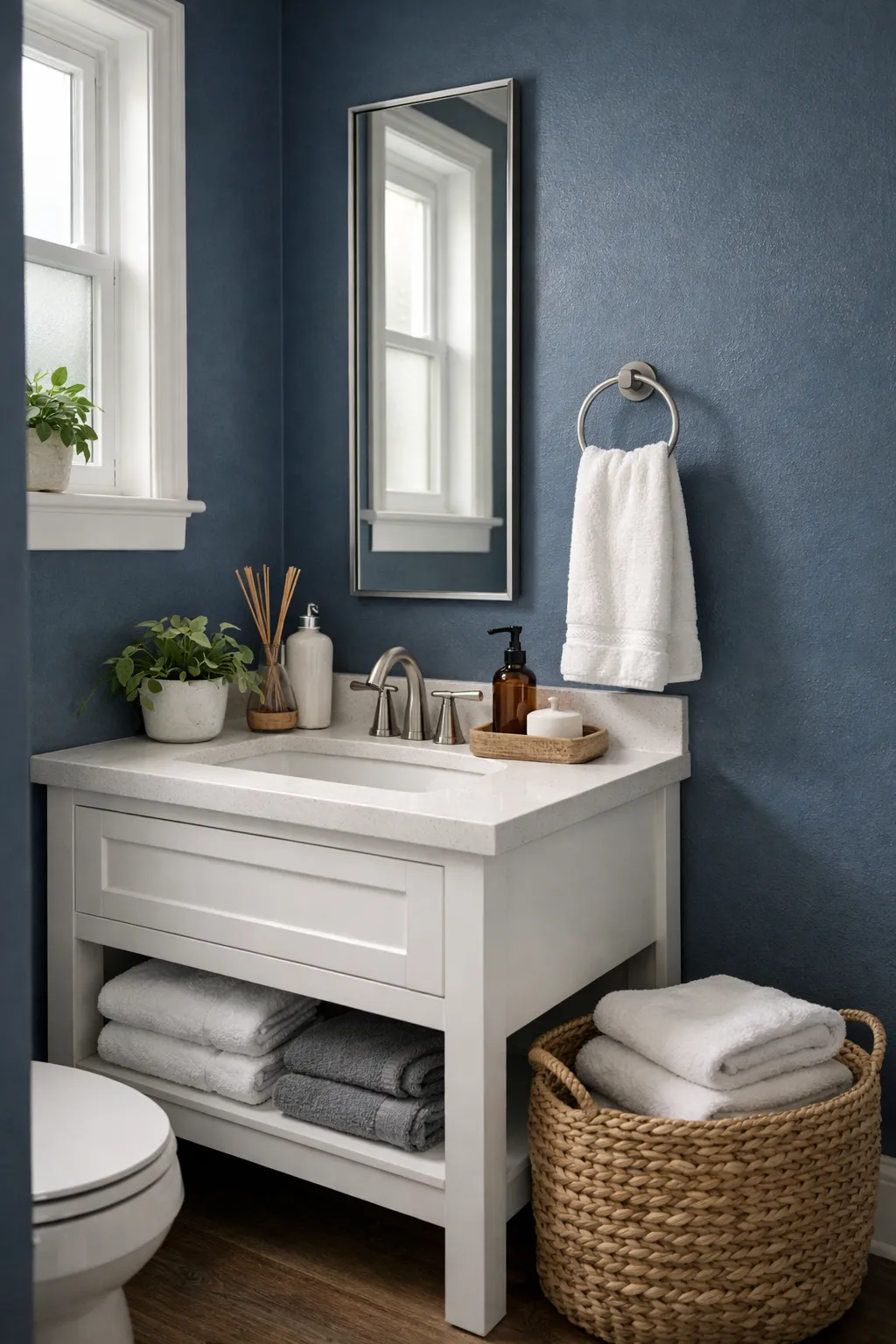
13. Add Blue Wallpaper for a Softer Layered Look
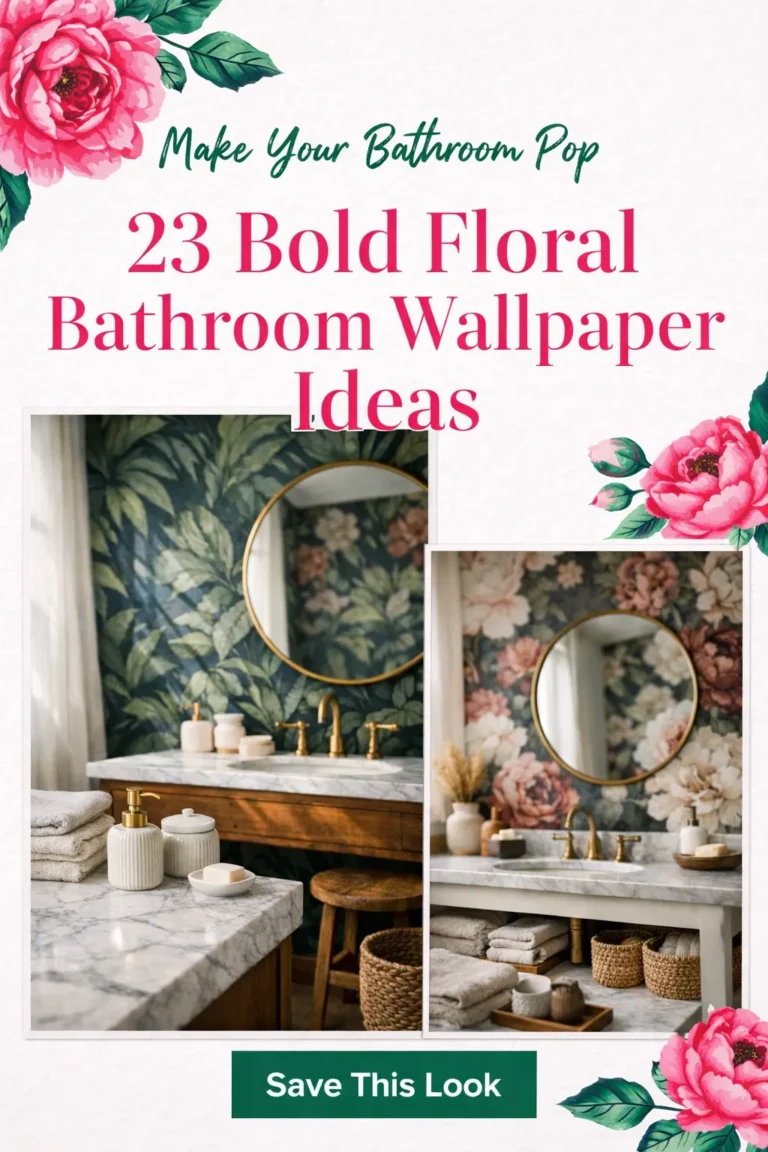
Paint is not the only way to get a moody blue bathroom. Wallpaper can bring in depth, pattern, and a more collected feel, especially if the room needs visual texture.
This works well in powder rooms and guest baths where you can take more risks. A blue wallpaper with subtle pattern can make a basic space feel more designed without requiring a full remodel. Look for prints that feel grounded rather than busy, like:
- small-scale botanicals
- block prints
- tone-on-tone geometric patterns
- faded traditional motifs
- textured grasscloth-inspired looks
The strongest moody blue wallpapers usually mix blue with softer neutrals, charcoal, cream, or muted taupe. That keeps the room from looking too theme-driven.
If the bathroom is small, use wallpaper where it will have impact without crowding the room. One accent wall can work, but in many powder rooms, wrapping all four walls actually looks better and more intentional.
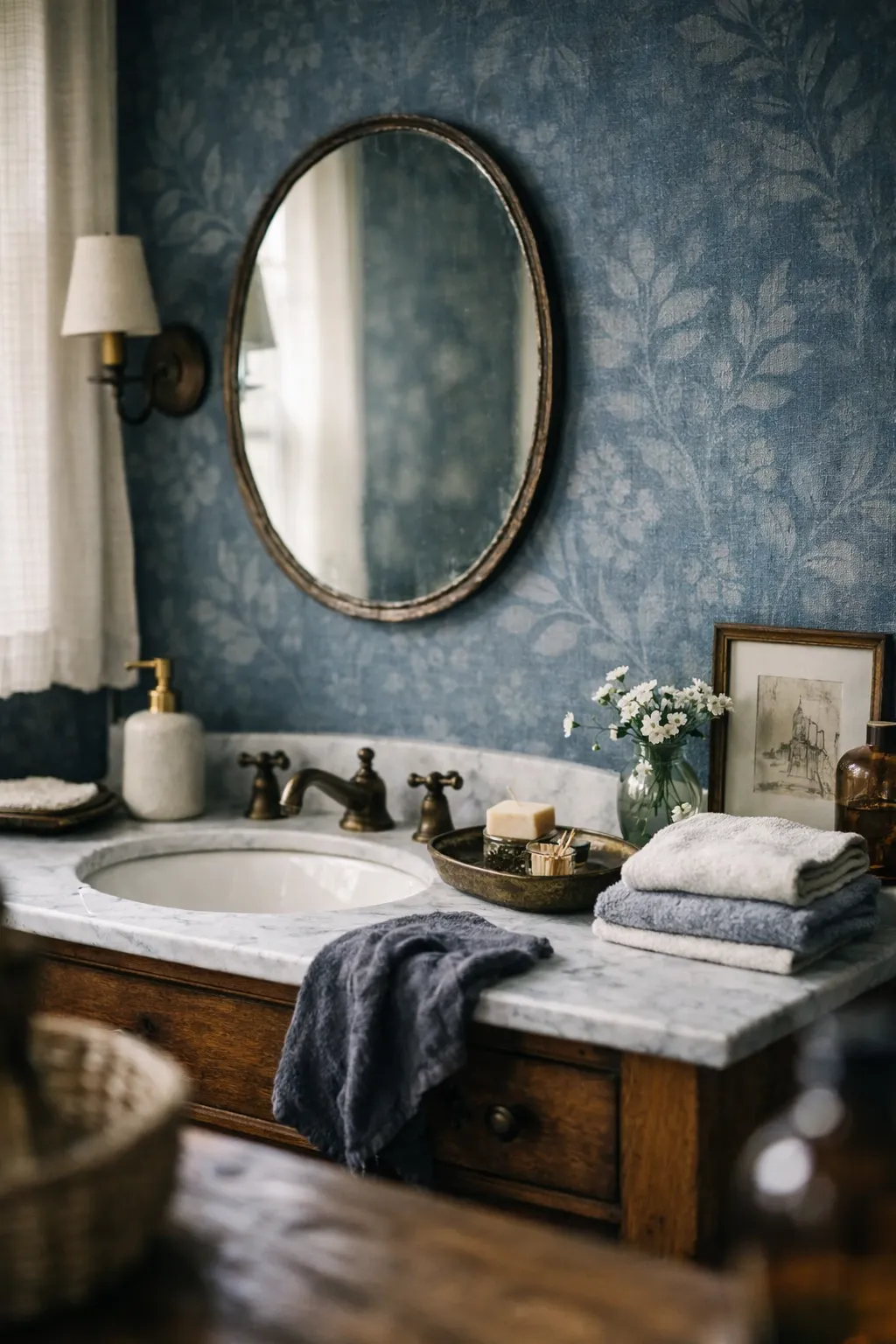
14. Choose Blue Tile With Texture, Not Just Color
A lot of bathrooms fail because the color choice is fine but the finish is dead. Textured tile solves that problem. It gives the light something to catch, which helps moody blue feel rich instead of flat.
Good examples include:
- handmade-look subway tile
- rippled ceramic tile
- matte tile with tonal variation
- vertical stacked tile with uneven glaze
- zellige-style tile with imperfect surfaces
These finishes look more natural because they are not too uniform. Bathrooms need that little bit of visual movement. Otherwise, the room can feel overly planned and cold.
Textured blue tile works especially well in showers, behind vanities, and on feature walls. In a bathroom with simple finishes elsewhere, this single move can do most of the design heavy lifting.
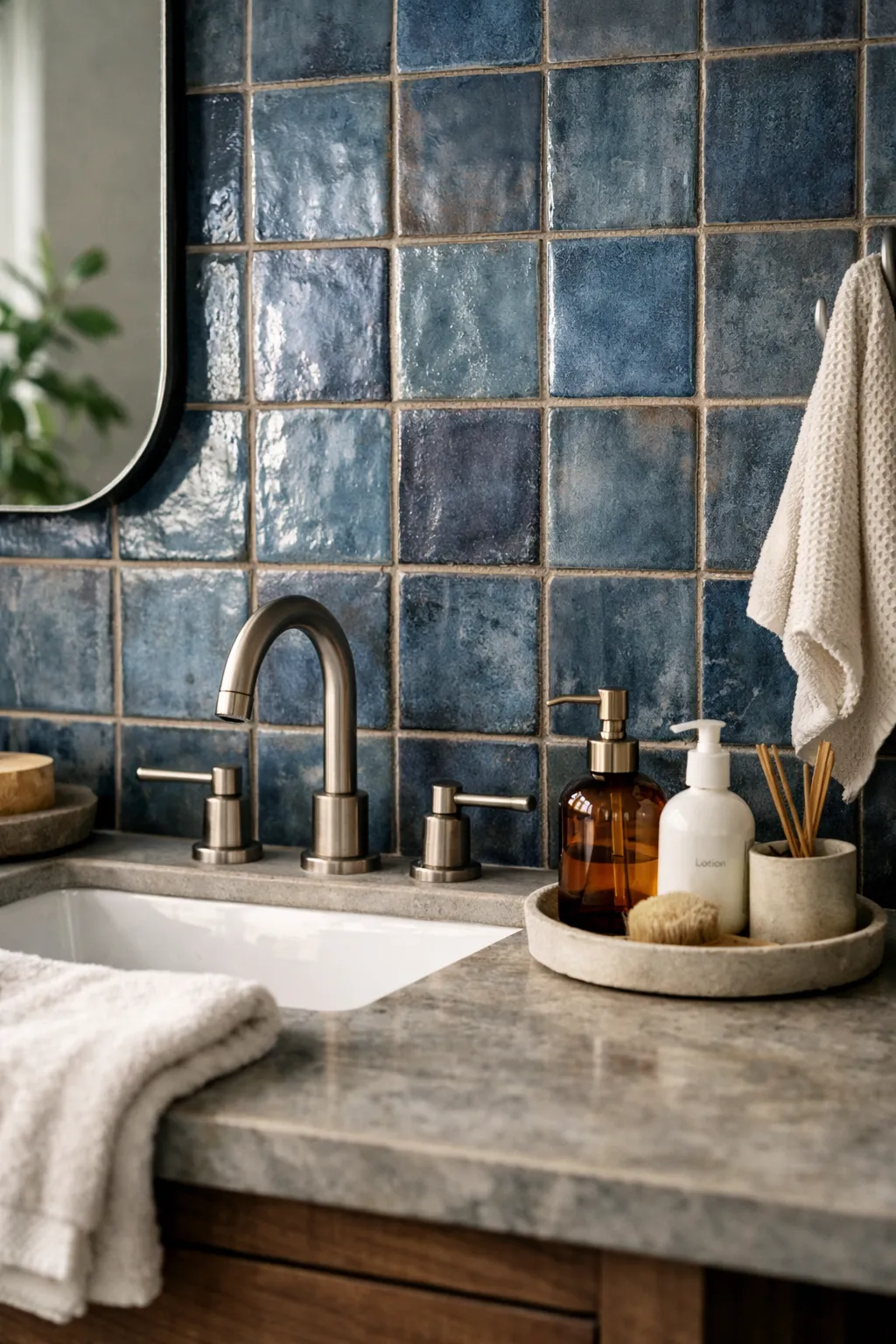
15. Keep the Ceiling Light to Avoid a Cave Effect
People chasing a moody look sometimes overdo it and forget that a bathroom still needs airiness. One of the easiest fixes is keeping the ceiling light, even if the walls are dark.
A pale ceiling gives the eye somewhere to rest. It also reflects light back into the room, which matters in bathrooms with little or no natural light. This balance works especially well when you have:
- navy or slate walls
- white or soft ivory ceiling
- white trim
- pale stone or tile flooring
It is a practical move, not just a style move. Dark ceilings in small bathrooms can look oppressive fast. In larger bathrooms, a darker ceiling can work, but only if the room has enough light and height to support it.
Most people trying this look at home should not darken every surface. That is where the design usually starts falling apart.
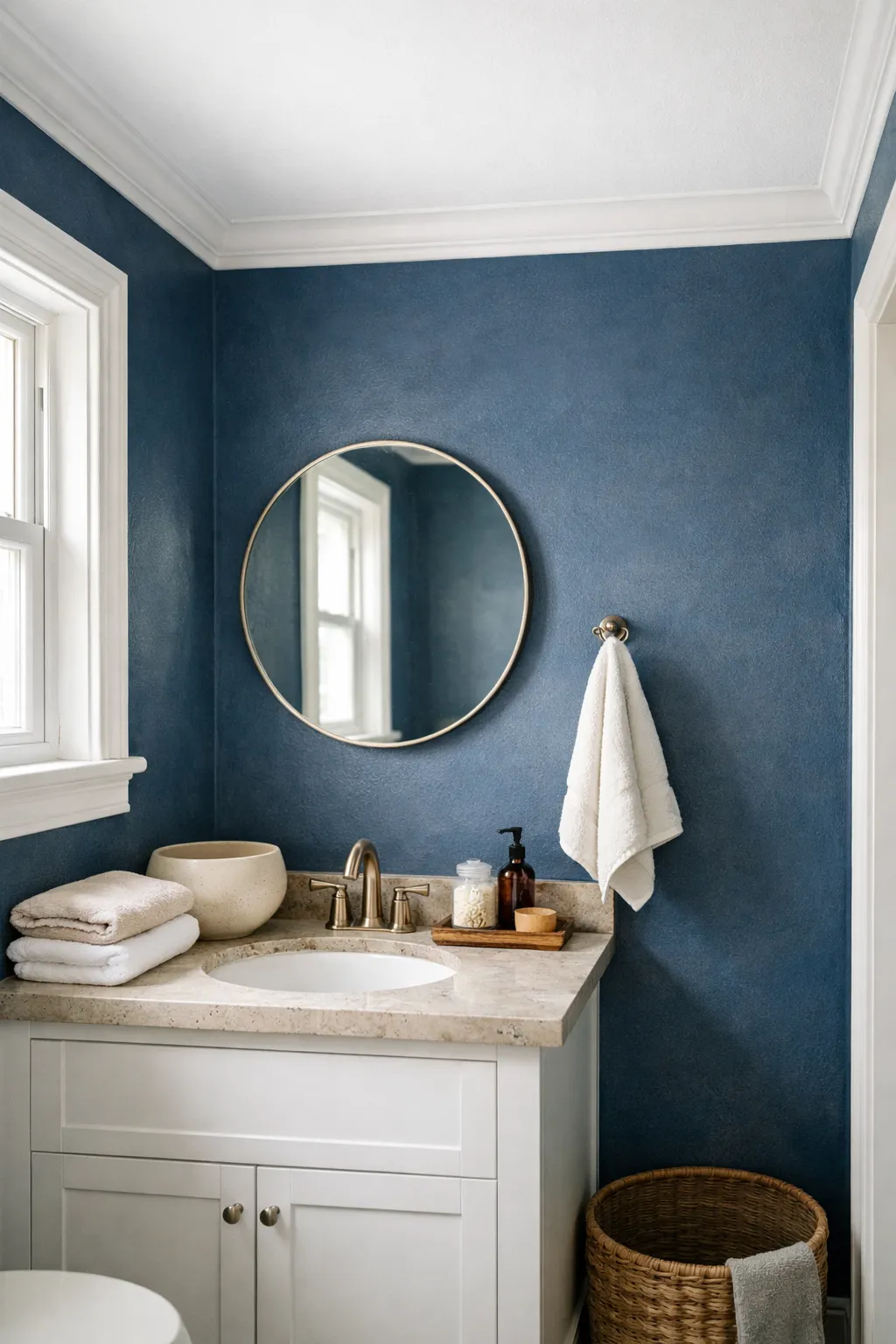
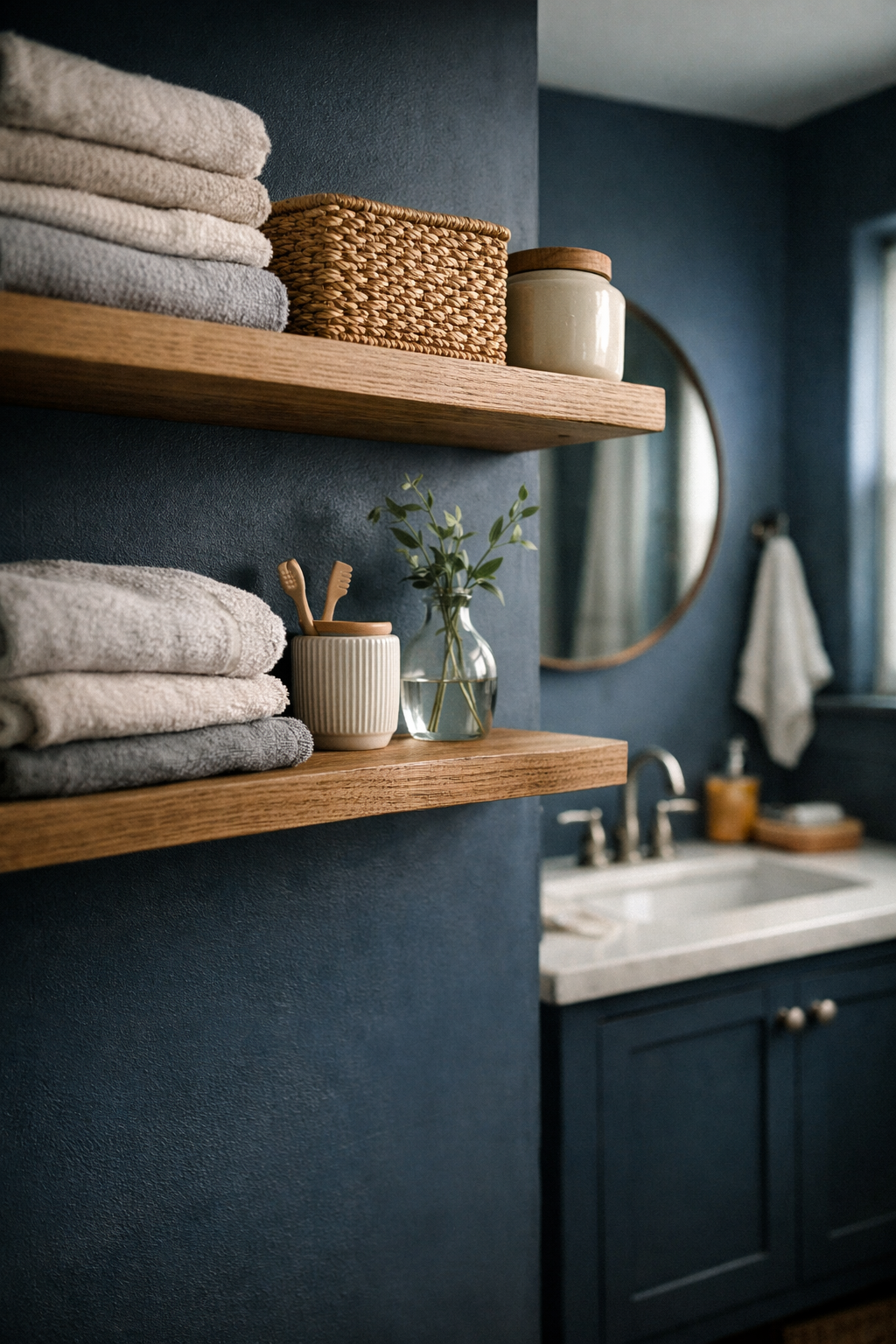
16. Style Open Shelves With Warm, Simple Decor
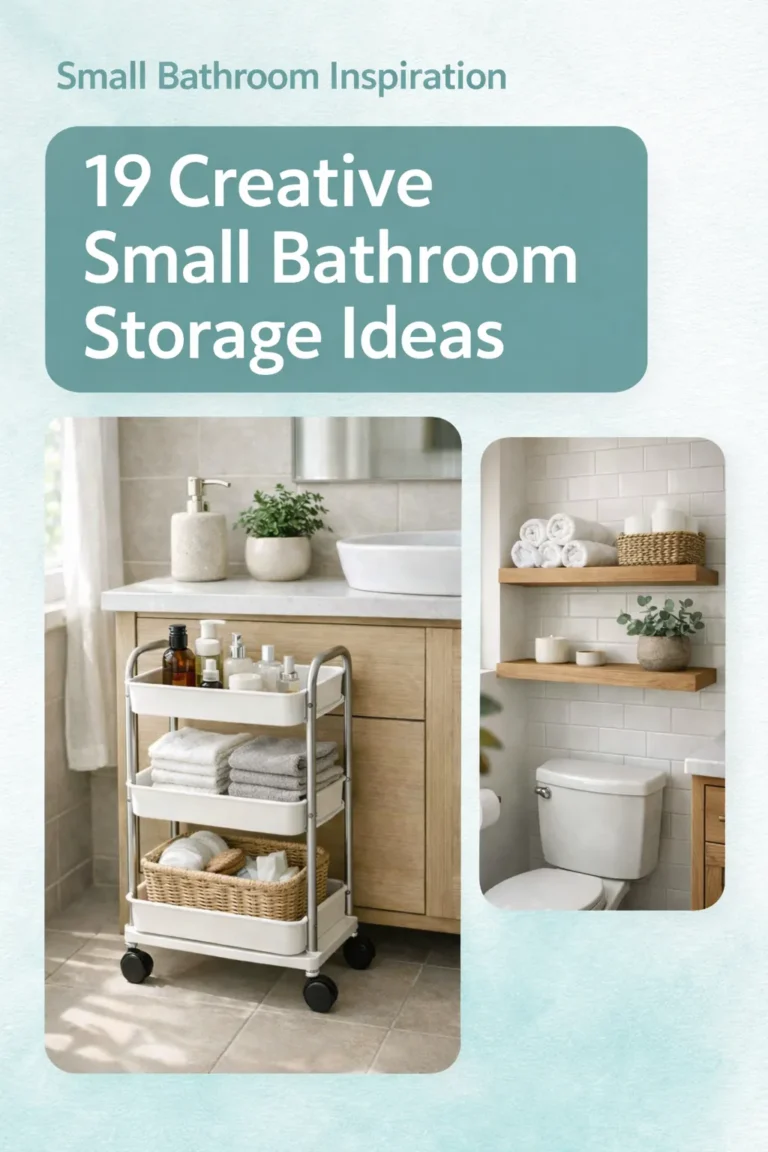
Open shelving can soften a moody blue bathroom when it is styled properly. It gives you a chance to add warmth, texture, and everyday function without cluttering the room.
The keyword there is properly. Most open bathroom shelves look messy because people treat them like storage overflow. Better styling is tighter and more selective. Think:
- folded white or oatmeal towels
- amber or clear soap bottles
- small ceramic containers
- a wood tray
- one plant or stem
- woven baskets for hidden storage
This kind of styling breaks up darker surfaces and keeps the room from feeling too dense. It also makes the space feel lived in, which matters if you want the bathroom to feel like a home instead of a showroom.
Use shelf materials that add contrast. Natural oak, walnut, or painted shelves in a lighter finish usually work better than adding more dark blue.
17. Mix Moody Blue With Crisp White Fixtures
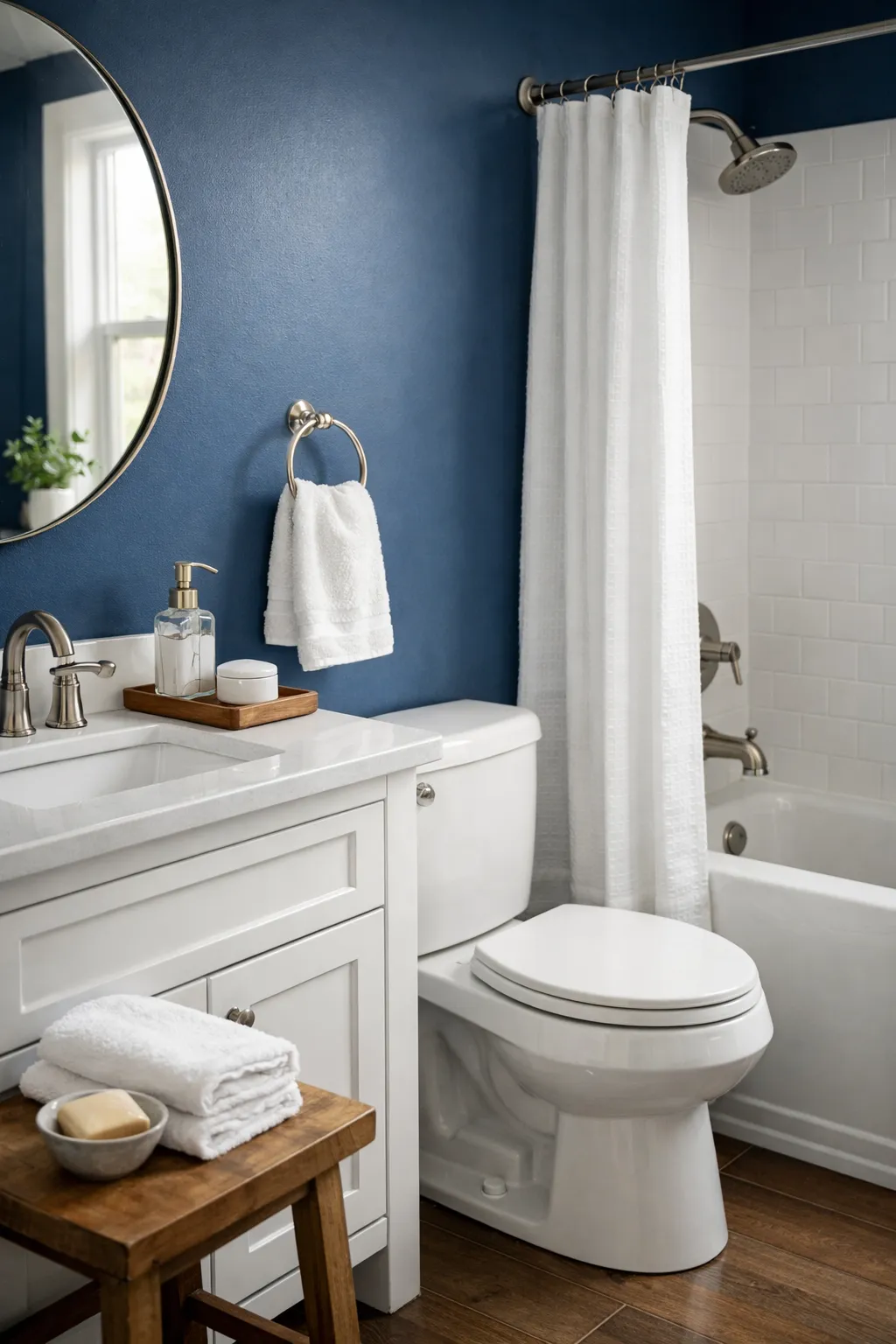
One reason moody blue bathrooms work so well is that most standard bathroom fixtures are already white. Sinks, toilets, tubs, and many shower bases naturally create contrast against darker colors.
Instead of fighting that, use it. Let the white fixtures sharpen the palette and keep the room feeling clean. This is one of the easiest ways to get a rich look without overspending on specialty materials.
A few combinations that work especially well are:
- deep blue walls with a white pedestal sink
- navy vanity with a white undermount sink
- blue tile walls with a freestanding white tub
- slate blue paint with classic white toilet and trim
18. Use Moody Blue in a Powder Room for Maximum Impact
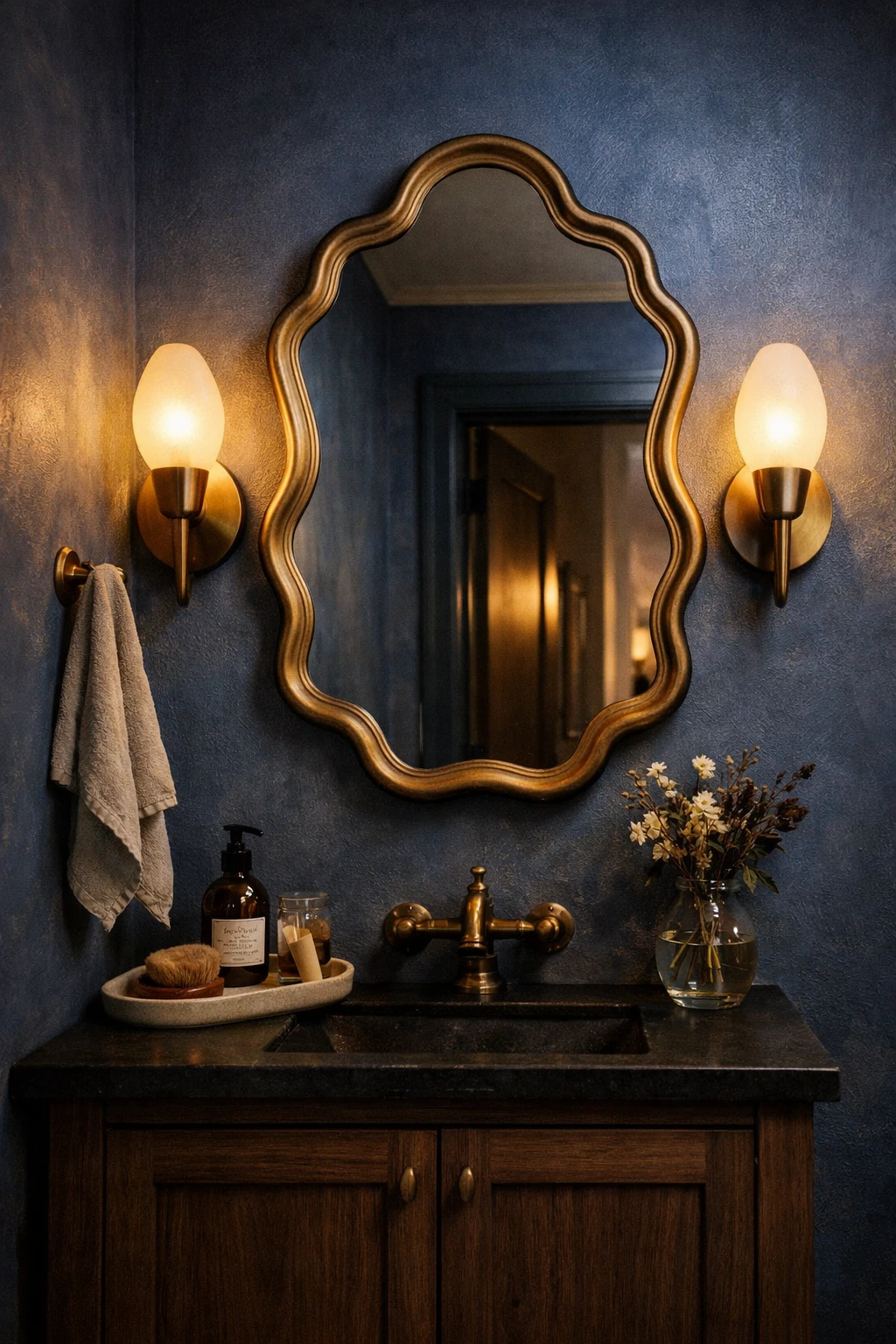
Powder rooms are where you can be a little less cautious. They are small, often window-limited, and used for short periods. That makes them ideal for a stronger moody blue look.
This is the place to try:
- darker walls
- bold wallpaper
- dramatic sconces
- vintage-style mirrors
- richer stone or tile accents
Because the room is compact, the design feels intentional faster. You do not need as many materials or as much square footage to make the space look finished. That is why powder rooms often give the biggest visual payoff for the lowest cost.
If someone wants a moody bathroom but is nervous about using dark color in a primary bath, the powder room is the obvious test case. It is lower risk and usually more rewarding.
19. Add Soft Textiles to Balance Hard Surfaces
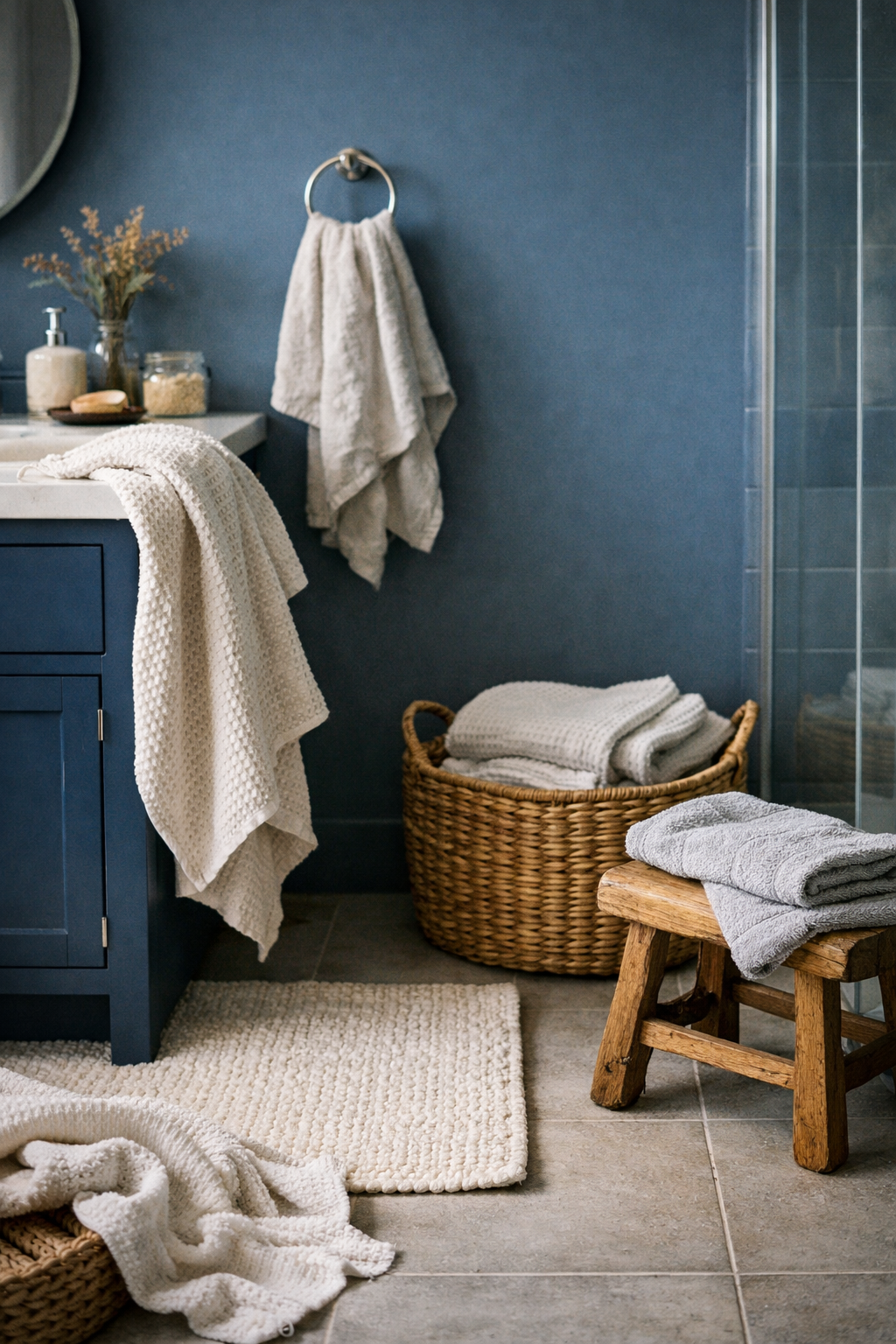
Bathrooms are full of hard finishes. Tile, stone, glass, porcelain, and metal can make even a beautiful room feel stiff if you do not balance them with softer materials.
That is where textiles come in. In a moody blue bathroom, soft layers help the color feel calm instead of severe. The best options are simple and tactile:
- waffle towels
- linen hand towels
- a cotton bath mat
- a subtle patterned shower curtain
- woven window treatments in larger bathrooms
Stick to colors that support the blue rather than compete with it. White, cream, taupe, gray, muted green, and sandy beige usually work well. You do not need bold accent colors here. You need relief and softness.
This is also one of the cheapest ways to improve the room. If the bathroom feels cold, the problem is often not the paint color. It is the lack of texture.
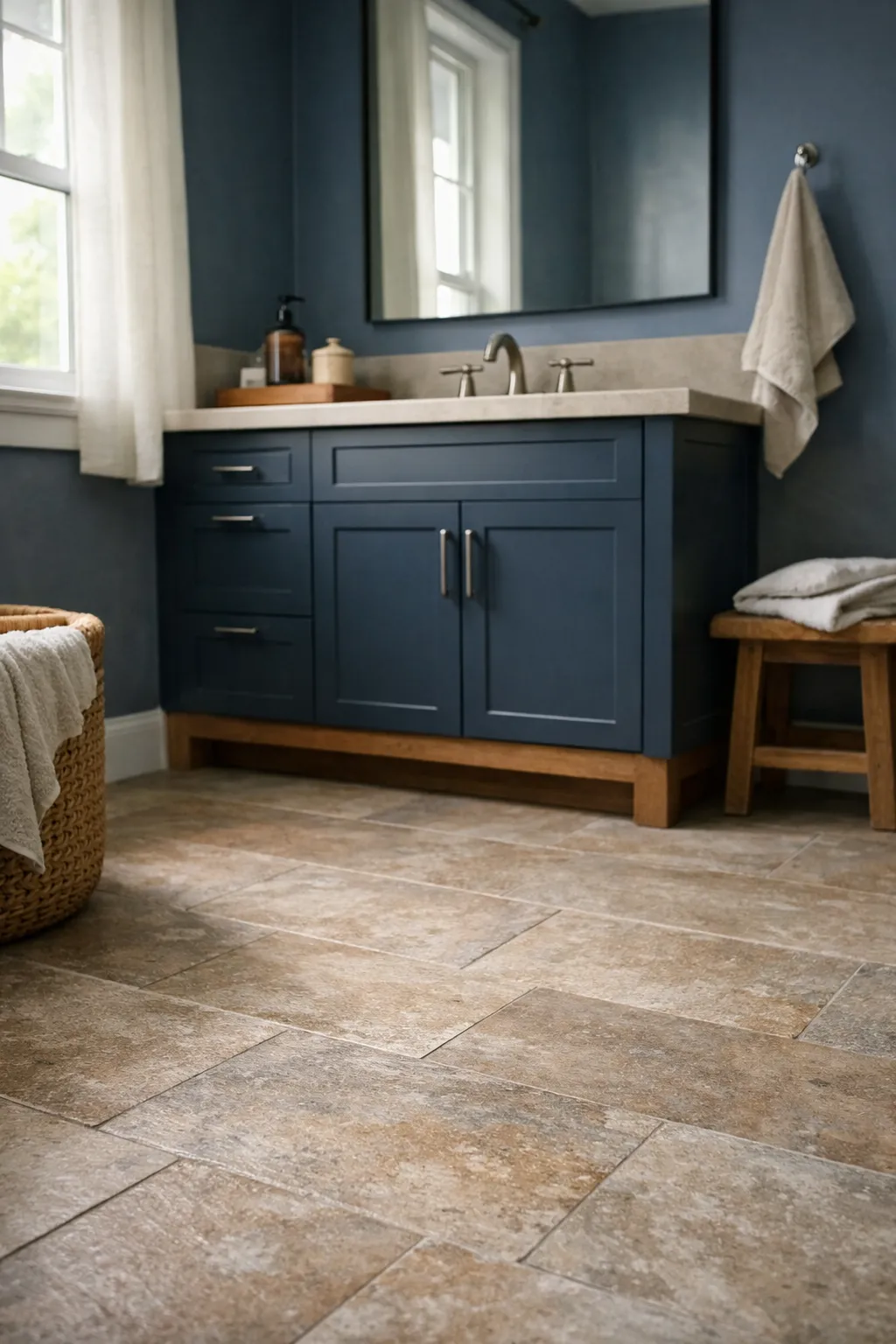
20. Pair Blue With Natural Stone or Earthy Tile Floors
Flooring has a huge effect on whether moody blue feels inviting or harsh. Cool gray floors with deep blue can work, but they can also push the room too far into a cold palette. Natural stone or earthy-look tile usually creates a better balance.
Strong options include:
- warm gray limestone-look tile
- soft taupe porcelain
- muted terracotta-toned accents in the right setting
- marble with warm veining
- textured stone mosaics
The goal is not to make the bathroom rustic. It is to stop the palette from becoming too icy. Blue needs something earthy near it if you want the room to feel settled and comfortable.
This matters even more in bathrooms with black fixtures or low natural light. The floor can quietly correct the whole mood of the space.
21. Use Art and Decor to Keep the Room Personal
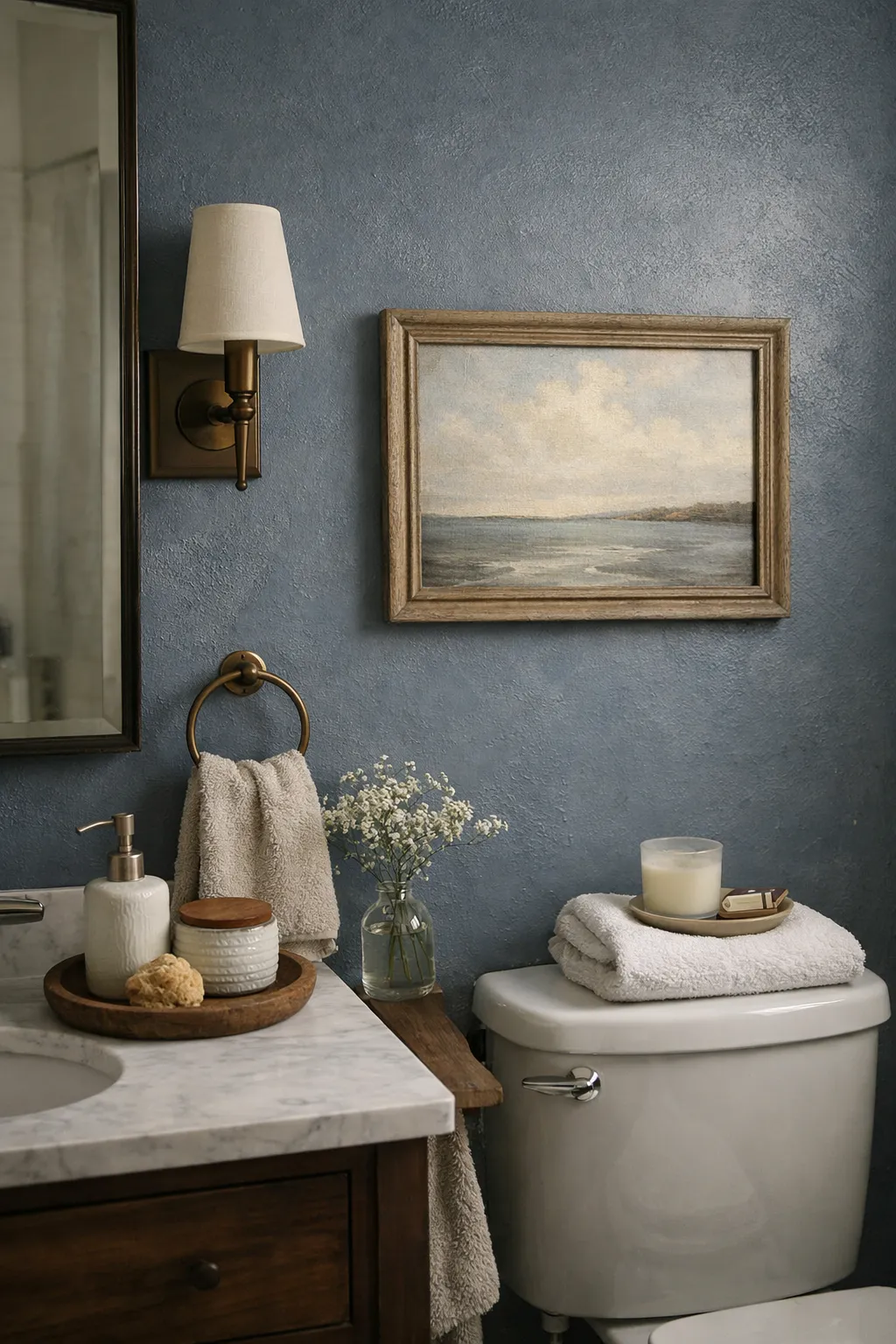
A lot of moody bathrooms look polished but forgettable because they stop at paint, tile, and hardware. That is not enough. The room still needs a little personality.
Art can help, especially if it softens the structure of the bathroom. Good choices include:
- abstract coastal-inspired prints
- vintage sketches
- framed landscapes in muted tones
- black-and-white photography
- simple line drawings
Decor should stay restrained, but not sterile. A ceramic vase, a small tray, a candle, or a stack of neatly folded towels can go a long way.
The point is not to clutter the room. It is to make it feel like someone actually lives there. Bathrooms that feel too staged tend to lose their charm fast.
22. Try Blue Wainscoting for a More Classic Look
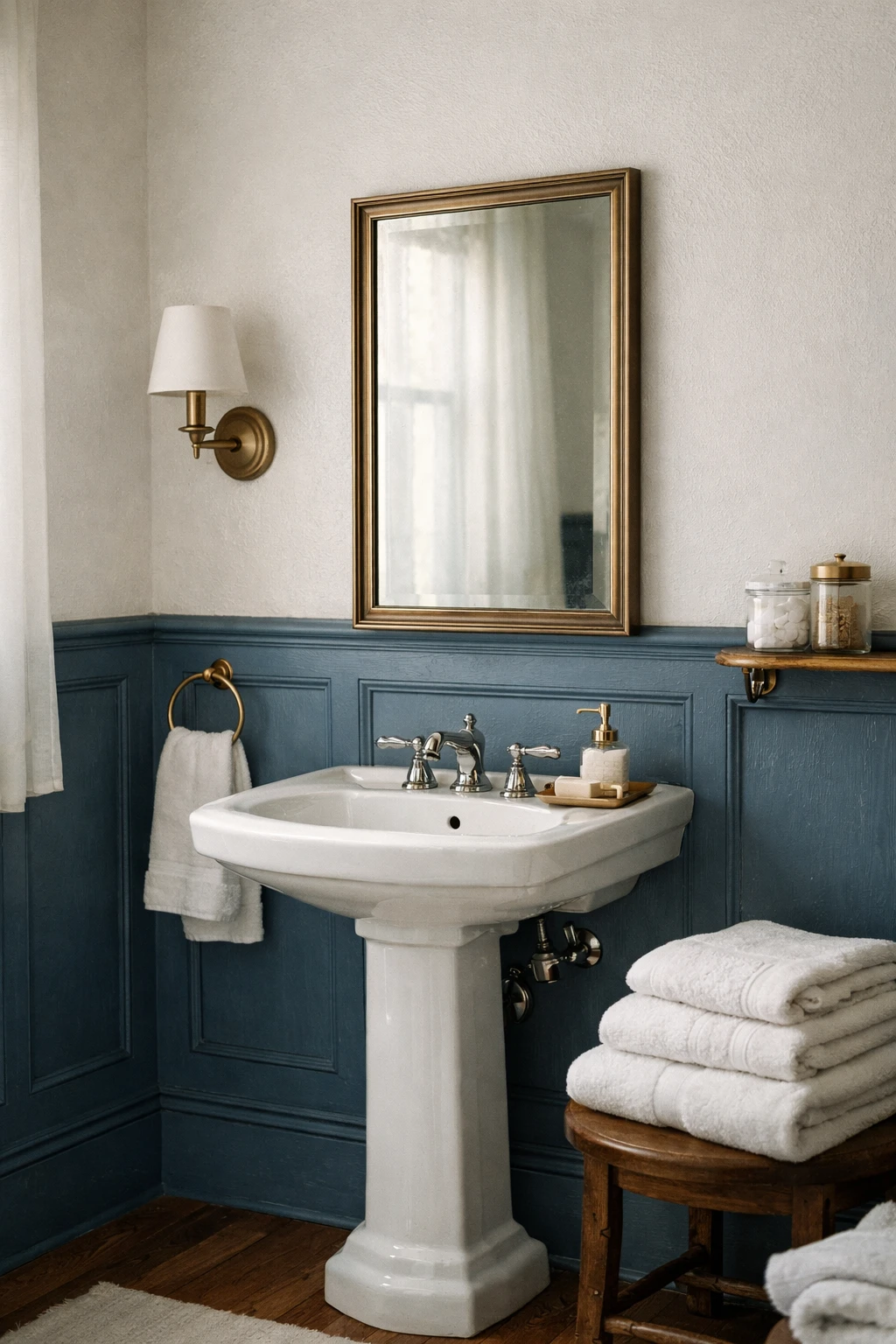
If you like moody color but want a bathroom that still feels traditional or timeless, blue wainscoting is a smart move. It gives the room structure and color without making the whole space dark.
This look works well with:
- white upper walls
- classic sconces
- pedestal sinks
- brass or polished nickel hardware
- framed mirrors
Blue wainscoting can be painted beadboard, panel molding, or board-and-batten, depending on the style of the home. It is especially effective in older homes where a full modern dark bathroom might feel disconnected from the architecture.
The benefit here is balance. You get depth in the lower half of the room while keeping the upper walls brighter and lighter. It feels tailored, not trendy.
23. Build the Whole Room Around Contrast and Restraint
The best moody blue bathrooms are not successful just because they use a pretty color. They work because the room is edited well. That means contrast, restraint, and material balance do more work than random decorating.
Here is what that usually looks like:
- one main blue tone, not five competing ones
- one or two metal finishes, not a mix of everything
- enough white or light contrast to keep the room clear
- natural texture to warm up the space
- lighting that flatters dark color
- decor that feels intentional, not crowded
This is the part people often miss. A moody blue bathroom is not about making everything darker. It is about making every choice more deliberate.
When the room is handled with restraint, deep blue feels elegant, calming, and timeless. When it is overloaded, it just looks heavy. That difference comes down to editing.
How to Make Moody Blue Bathrooms Work in Real Homes
A lot of inspiration photos look great because they are perfectly lit and barely used. Real homes are different. Bathrooms need to hold up to steam, water spots, clutter, and everyday routines.
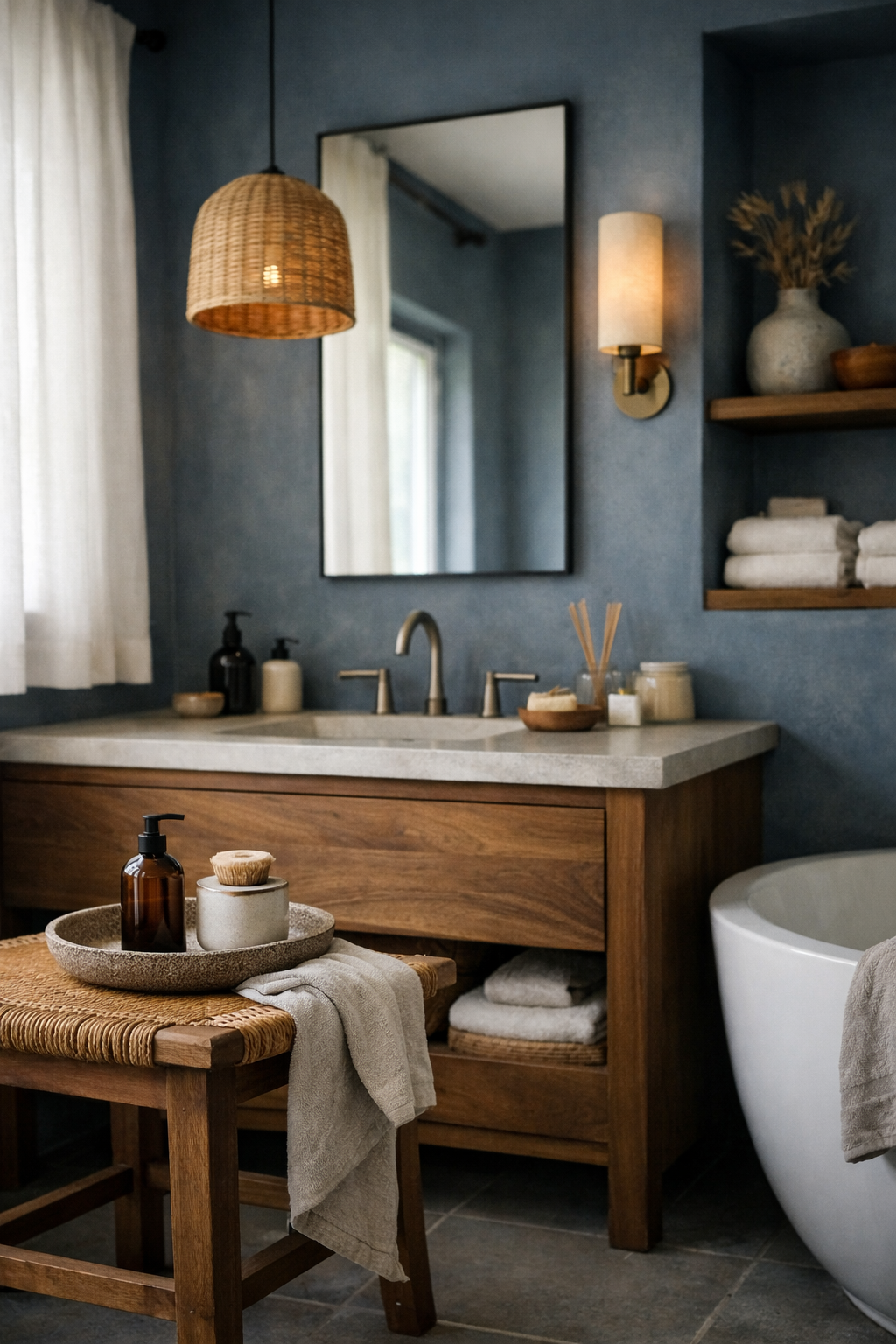
That is why the strongest moody blue bathrooms usually follow a few practical rules:
- choose finishes that are easy to wipe down
- use darker cabinetry where hands and splashes show up most
- bring in warmth through wood, textiles, and lighting
- avoid making every surface dark
- test paint colors in morning and evening light before committing
- use mirrors and tile to reflect light back into the room
The look should feel elevated, but it also has to function. A beautiful bathroom that feels gloomy at 7 AM is not a design win.
Common Mistakes to Avoid
Some moody blue bathrooms go wrong for predictable reasons. Most of them come down to poor balance.
Watch out for these problems:
- using a blue that is too bright instead of deep and muted
- pairing dark blue with too many cold finishes
- relying on one harsh overhead light
- forgetting texture
- adding too many small decorative items
- mixing too many shades of blue with no clear direction
- making a small bathroom dark on every surface
If the room feels off, the blue itself may not be the issue. Usually the problem is what is around it.
Final Thoughts
Moody blue bathrooms work because they combine calm and drama in the same space. They can feel classic, modern, cozy, sharp, or quietly luxurious depending on how you style them. The color does a lot, but it cannot carry the whole room alone. The supporting choices matter just as much.
The best version of this look comes from balance. Deep blue needs warmth, texture, light, and contrast. It needs materials that feel real and styling that does not try too hard. Get those pieces right, and even a basic bathroom can start to feel layered, elevated, and memorable.