

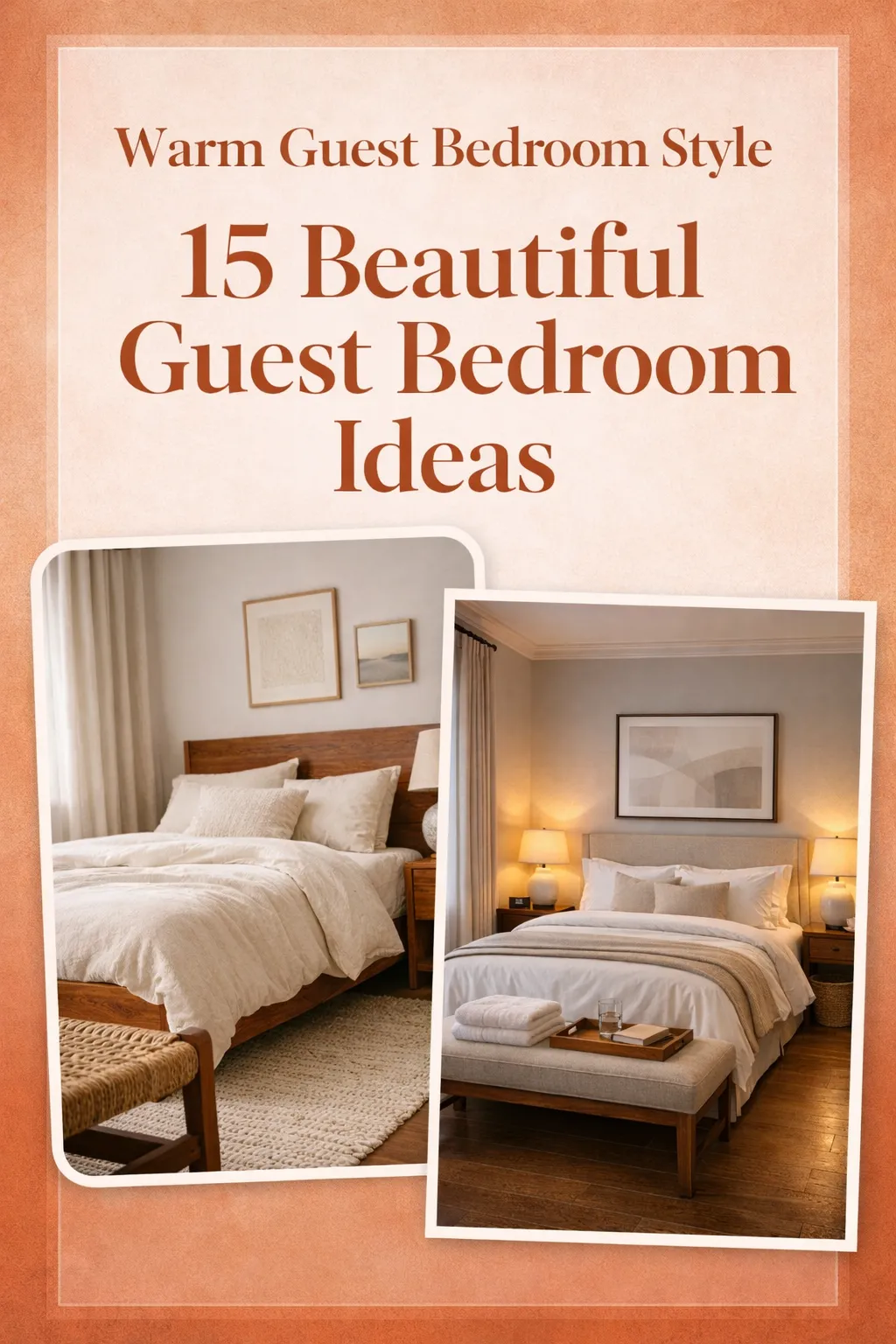
A well-designed guest bedroom does more than look pretty. It helps people feel comfortable, welcome, and at ease the moment they step inside. Whether you have a full guest suite or a small spare room, the right design choices can make the space feel warm, functional, and thoughtfully put together.
The best guest bedroom ideas balance style and comfort. Nice decor matters, but not more than good bedding, practical lighting, useful storage, and a layout that makes sense. Guests remember how a room feels. They notice whether there is a place to set their phone, whether the bed feels inviting, and whether the space gives them a little privacy and calm.
This article shares 15 guest bedroom ideas that can help you create a room that looks polished and works in real life. You’ll find practical decorating tips, smart layout advice, and simple styling ideas that make any guest room feel more welcoming, whether your style is modern, cozy, neutral, or classic.
1. Start With a Soft, Sleep-Friendly Color Palette
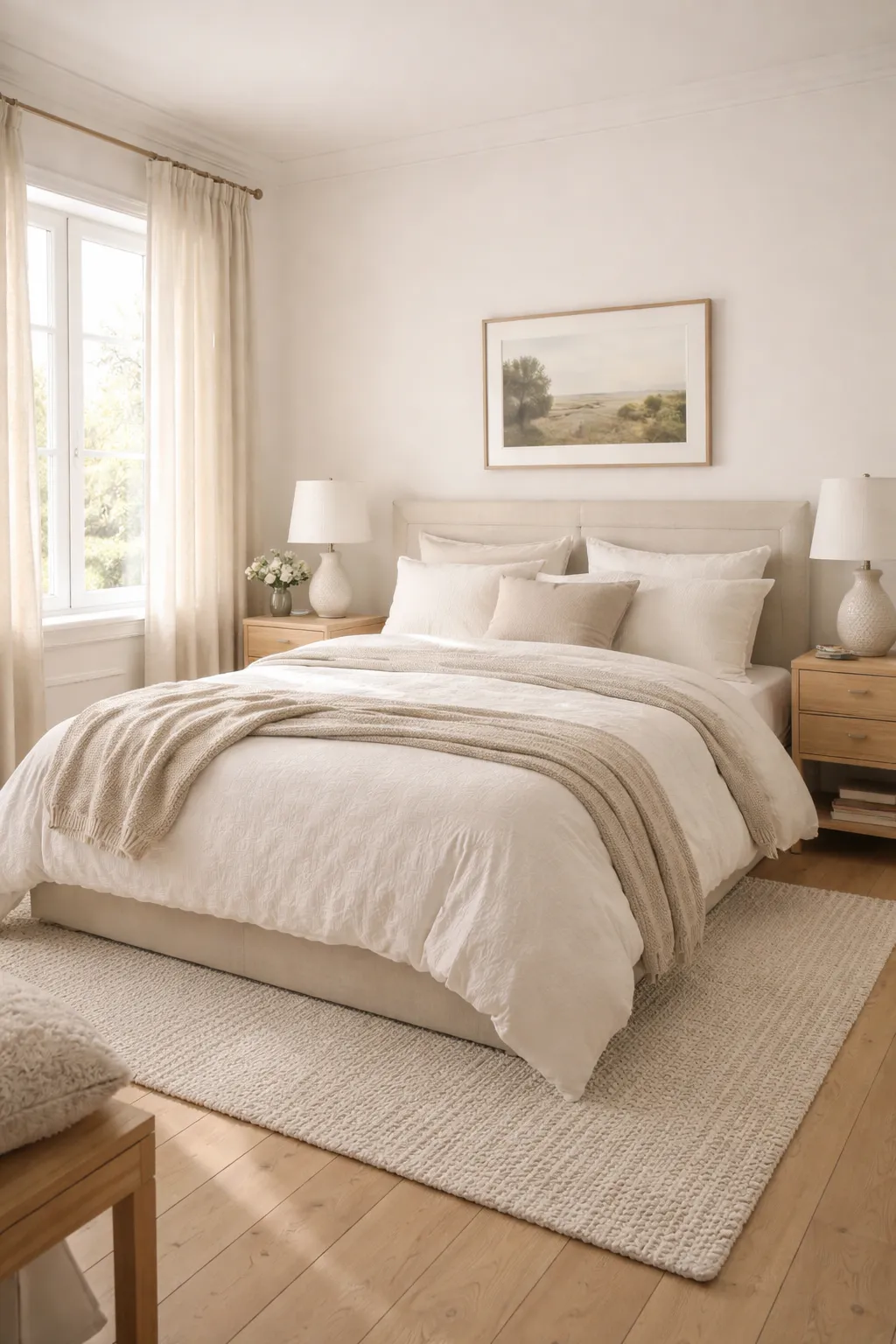
A guest bedroom should feel calm the second someone walks in. The fastest way to get there is with a soft color palette. Warm whites, light taupe, pale gray, muted sage, dusty blue, and sandy beige work well because they help the room feel restful without looking dull.
This matters more than people think. A guest room is not the place for loud accent walls, harsh contrast, or trendy colors that get old fast. Your guests are not there to admire your risk-taking. They are there to relax, unpack, and sleep.
A simple palette also makes the room easier to style. It lets bedding, curtains, rugs, and wall art work together without fighting for attention.
Good color directions for guest bedrooms include:
- Warm white and beige for a clean, airy feel
- Sage and ivory for a soft natural look
- Light gray and cream for a polished, modern room
- Dusty blue and oatmeal for a quiet coastal feel
If the room is small, lighter colors usually work better because they reflect light and make the space feel more open. In a larger room, you can bring in deeper tones through pillows, throws, or artwork without making the space feel heavy.
A realistic example is a small suburban guest room with soft greige walls, white bedding, oak nightstands, and one muted landscape print above the bed. It looks finished, but it still feels easy to sleep in. That balance matters.
2. Invest in Bedding That Feels Better Than It Looks
A guest bedroom can have beautiful furniture and still fail if the bed is uncomfortable. Bedding is one of the first things guests notice and one of the last things they remember. If the sheets feel rough or the pillows collapse, the room is not working.
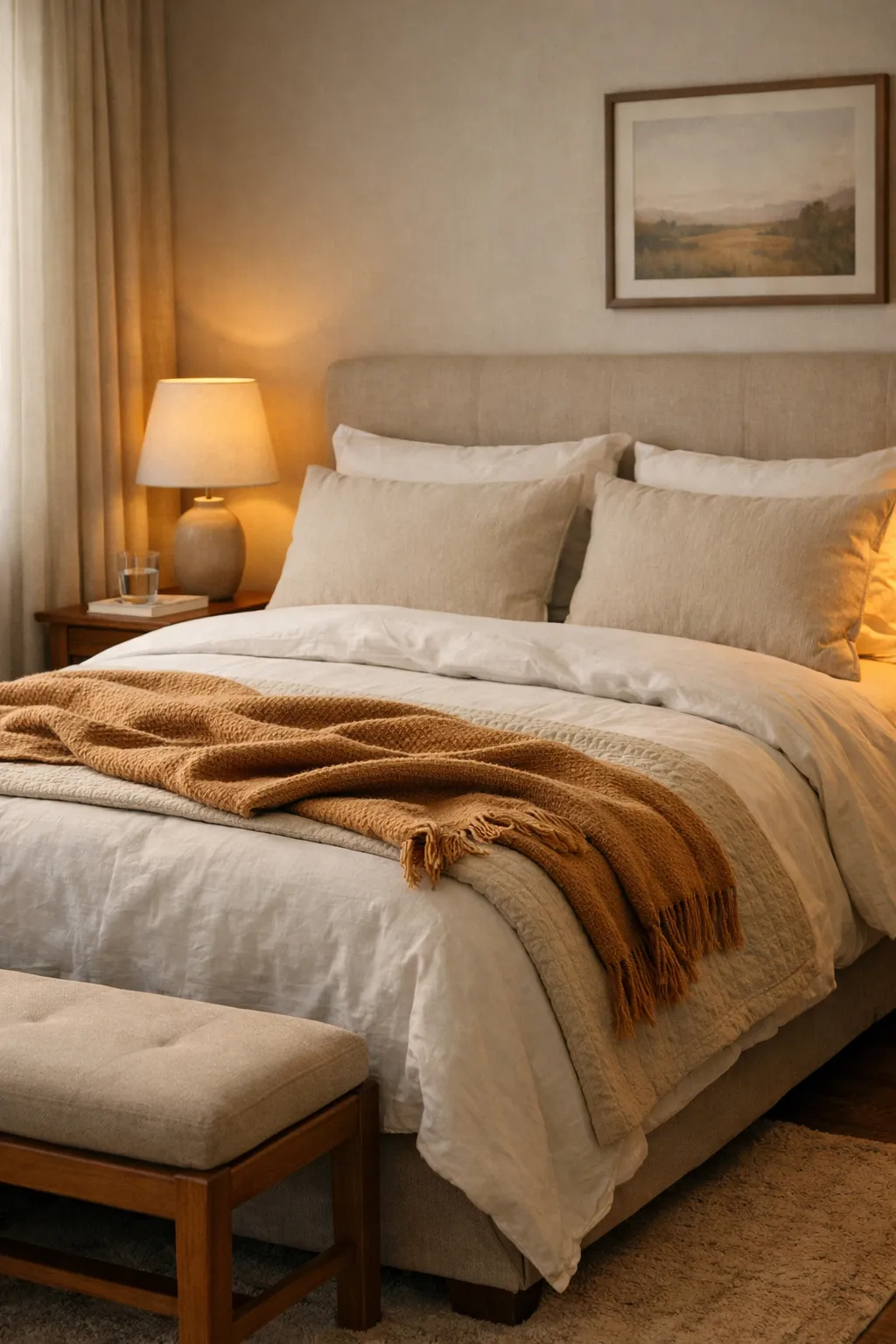
Start with breathable sheets in cotton, percale, or a quality cotton blend. Add a medium-weight quilt or duvet that works for most seasons. Then layer in an extra blanket so guests can adjust without having to ask.
The smartest setup usually includes:
- Two sleeping pillows per person
- One decorative accent pillow at most
- A blanket or throw at the foot of the bed
- A mattress protector
- Fresh, neutral sheets that feel crisp and clean
Do not overload the bed with decorative pillows. That looks nice in a catalog and becomes annoying in real life. A guest should not need to move eight pillows just to go to sleep.
This is also where a lot of people waste money. They buy fancy decor and ignore the basics. That is backward. Better sheets and decent pillows do more for the guest experience than trendy wall decor ever will.
If you want the room to feel polished, keep bedding in a cohesive color story. White, ivory, light gray, soft blue, and muted earth tones all photograph well and stay timeless. Then add texture through linen shams, a knit throw, or a quilted coverlet.
3. Add a Nightstand Setup That Covers the Basics
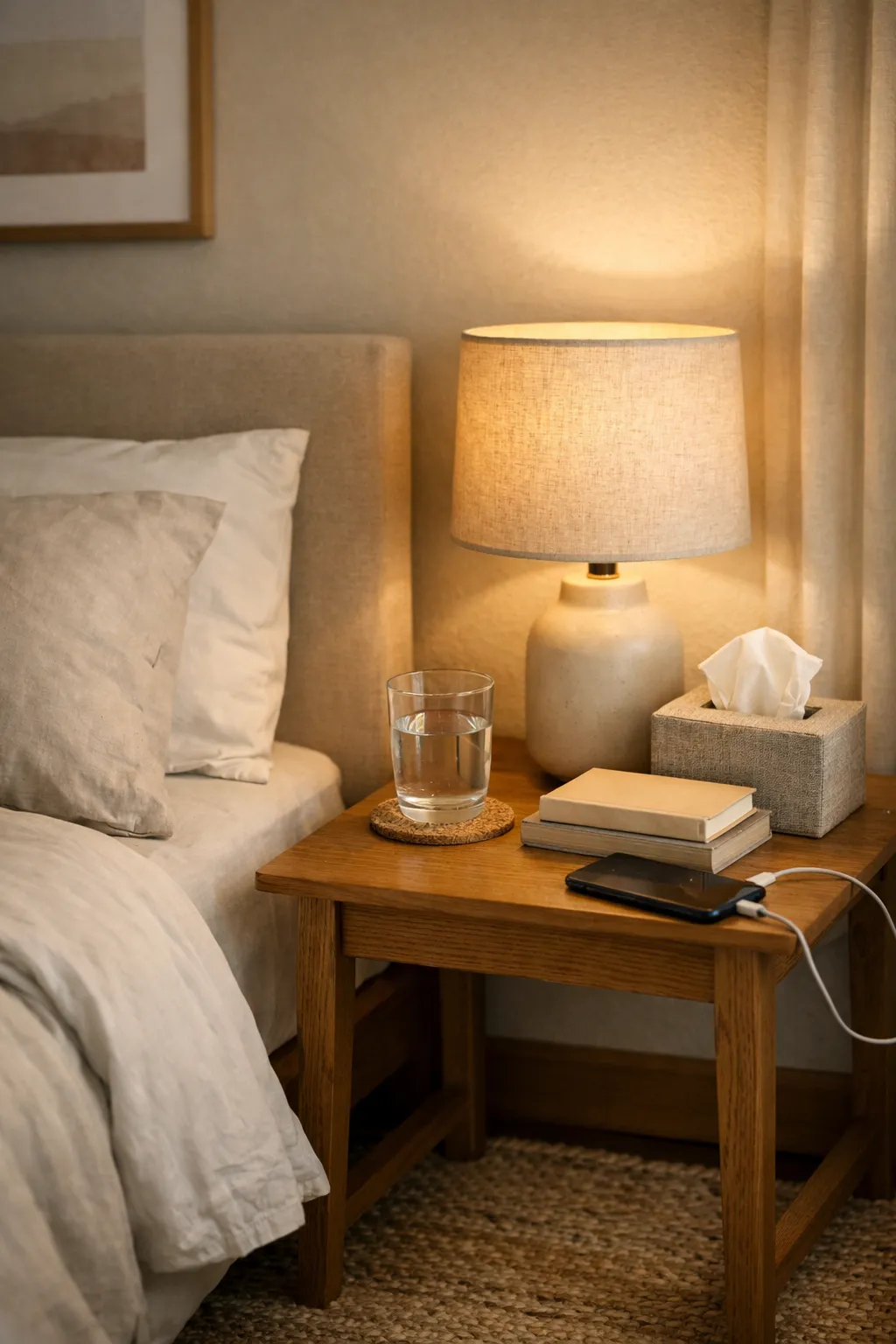
A guest bedroom should never leave people wondering where to put their phone, glasses, water, or book. A proper nightstand setup solves that fast.
Even in a small room, try to include at least one bedside surface. It does not need to be large or expensive. A compact table, floating shelf, or slim stool can do the job. What matters is function.
A useful nightstand setup often includes:
- A lamp with easy access
- Space for a phone and charger
- A coaster or small tray
- A box of tissues
- A small water carafe or glass
- A clock if the room feels too empty without one
This is one of those details guests may never mention, but they absolutely notice it. It signals that the room was prepared for a real person, not staged for a photo.
For couples or shared guest rooms, matching nightstands create visual balance. For smaller rooms, mismatched but similar-scale pieces often feel more natural and relaxed. There is no need to force symmetry if the layout does not support it.
A good guest room nightstand should also be easy to clean and not crowded with decor. One lamp, one practical item, one simple decorative object is enough. More than that starts looking like clutter.
4. Use Lighting That Feels Warm and Layered
Bad lighting ruins good decor. A guest bedroom with one harsh overhead bulb will feel cold no matter how nice the furniture is. Lighting should make the room feel soft, useful, and comfortable at different times of day.
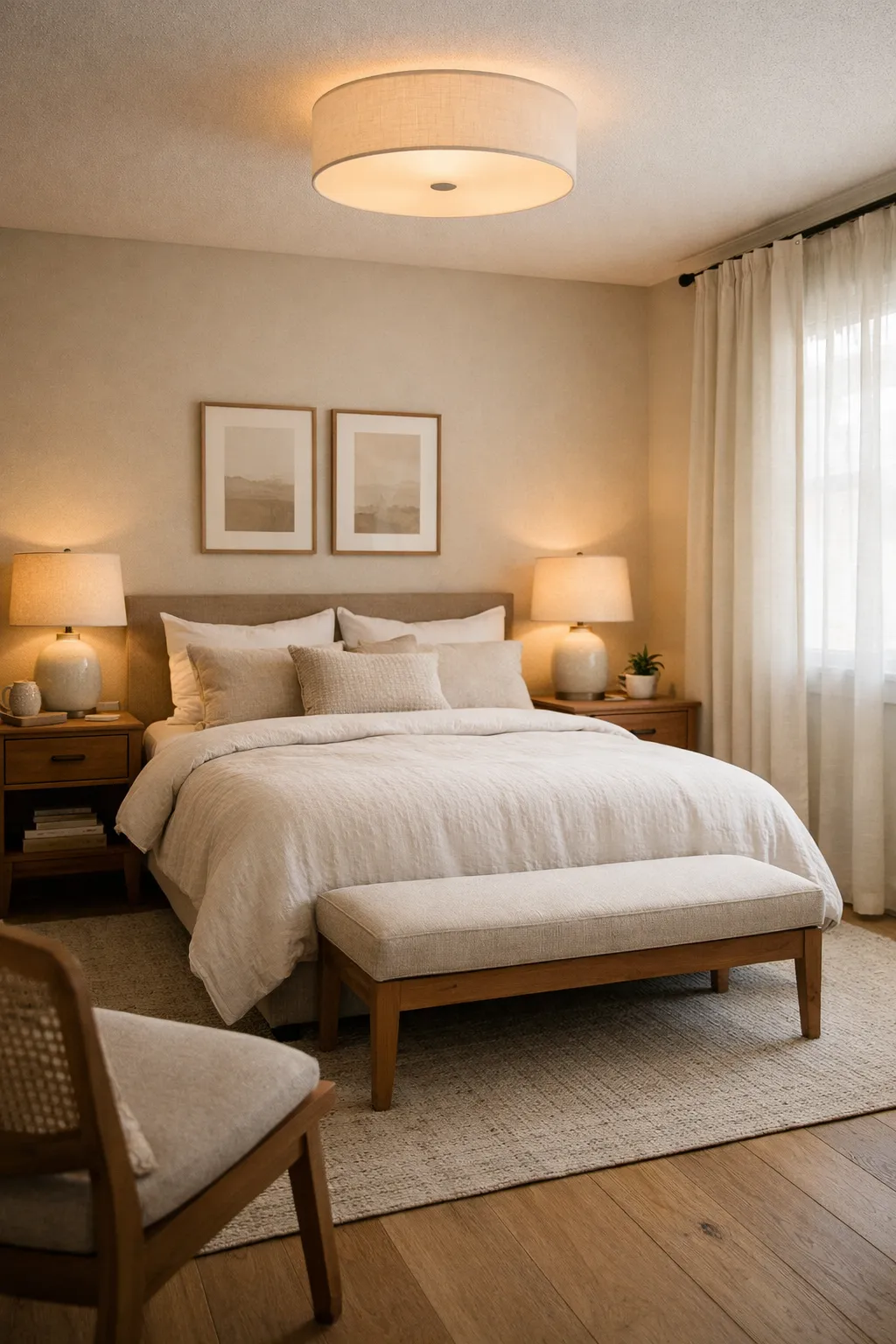
The best guest rooms use layered lighting. That means more than one source of light in the room instead of relying on a single ceiling fixture.
A practical lighting mix can include:
- An overhead light for general brightness
- Bedside lamps for reading
- A floor lamp in an empty corner
- Soft window treatments that filter daylight
Warm bulbs usually work best in guest bedrooms because they create a more restful mood. Bright white light can feel clinical, especially at night.
This is also where style and comfort meet. A ceramic lamp with a linen shade adds texture and softness while serving a real purpose. Wall sconces can save space in tight rooms. A floor lamp next to a chair turns an awkward corner into a reading spot.
Here is a simple comparison of common guest bedroom lighting options:
| Lighting Option | Best For | Strength | Watch Out For |
|---|---|---|---|
| Overhead fixture | Overall room light | Bright and practical | Can feel harsh alone |
| Bedside lamp | Reading and nighttime use | Warm and personal | Needs reachable placement |
| Wall sconce | Small rooms | Saves surface space | Harder to install |
| Floor lamp | Empty corners | Adds height and mood | Can feel bulky in tight layouts |
If you do one thing right here, make sure guests can turn on a soft light without crossing a dark room. That is basic comfort, not extra styling.
5. Make a Small Guest Bedroom Feel Bigger With Smart Layout Choices
A lot of guest rooms are not true guest suites. They are small spare bedrooms, home office combos, or converted box rooms. So the layout matters more than the furniture itself.
The first rule is simple: do not overfill the room. People keep trying to squeeze in a bed, dresser, bench, desk, accent chair, and storage tower, then wonder why the room feels cramped. The answer is obvious. There is too much stuff in it.
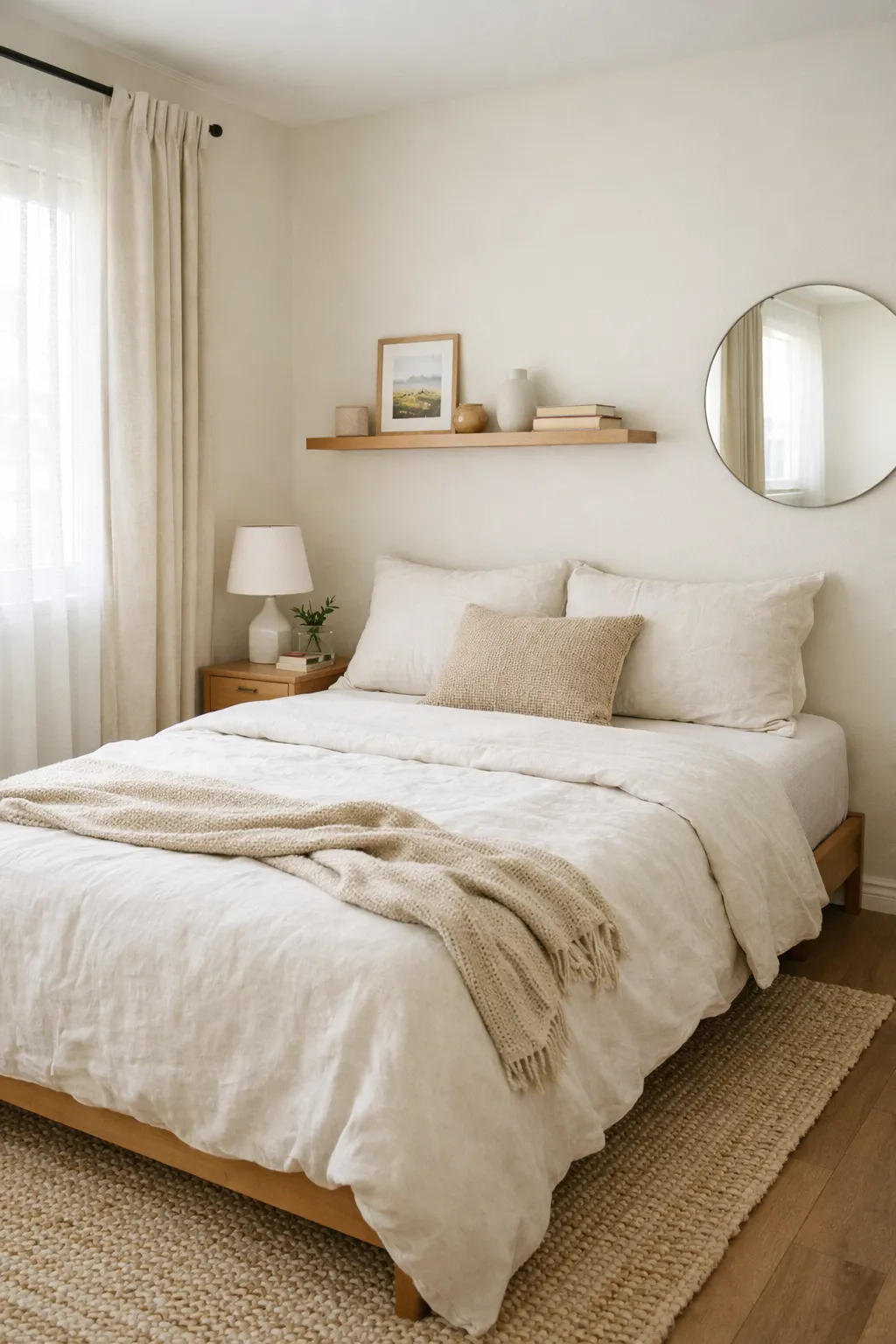
A smarter small-room layout focuses on:
- Clear walking space around the bed
- A bed size that fits the room
- One or two useful furniture pieces
- Vertical storage instead of bulky floor pieces
- Light-colored textiles and walls
In many small guest rooms, a queen bed is not the best choice. A full bed can make the room work better and still sleep guests comfortably. If the room needs flexibility, a daybed or trundle can be a stronger option.
Mirrors can help bounce light and create depth, but they are not magic. They support a good layout. They do not fix a bad one.
One solid setup for a small guest room is a full bed against the main wall, one narrow nightstand, floating shelves, light curtains, and a simple rug that extends beyond the bed frame. That gives the room shape without adding visual weight.
6. Include Storage So Guests Do Not Live Out of a Suitcase on the Floor
Nothing makes a guest room feel unfinished faster than giving people nowhere to put their things. Even short-stay guests want a place for clothes, a bag, and personal items.
You do not need a full custom closet system. You just need enough storage to make the room feel usable.
Helpful storage ideas include:
- A small dresser with empty drawers
- A luggage rack
- A bench at the foot of the bed
- Wall hooks for bags or jackets
- A few empty hangers in the closet
- A basket for extra blankets or towels
This is one of the easiest areas to get right, and a lot of people still ignore it. They style shelves with vases and stacked books but leave no place for a guest’s overnight bag. That is form over function, and it is bad design.
If the guest room doubles as storage for household overflow, be honest about it and edit hard. Guests should not feel like they are sleeping in your backup closet. Keep the room simple and leave visible space open. Empty space is useful space.
A good rule is that at least part of the dresser, closet, or hooks should be fully available when someone stays over. That makes the room feel intentional instead of temporary.
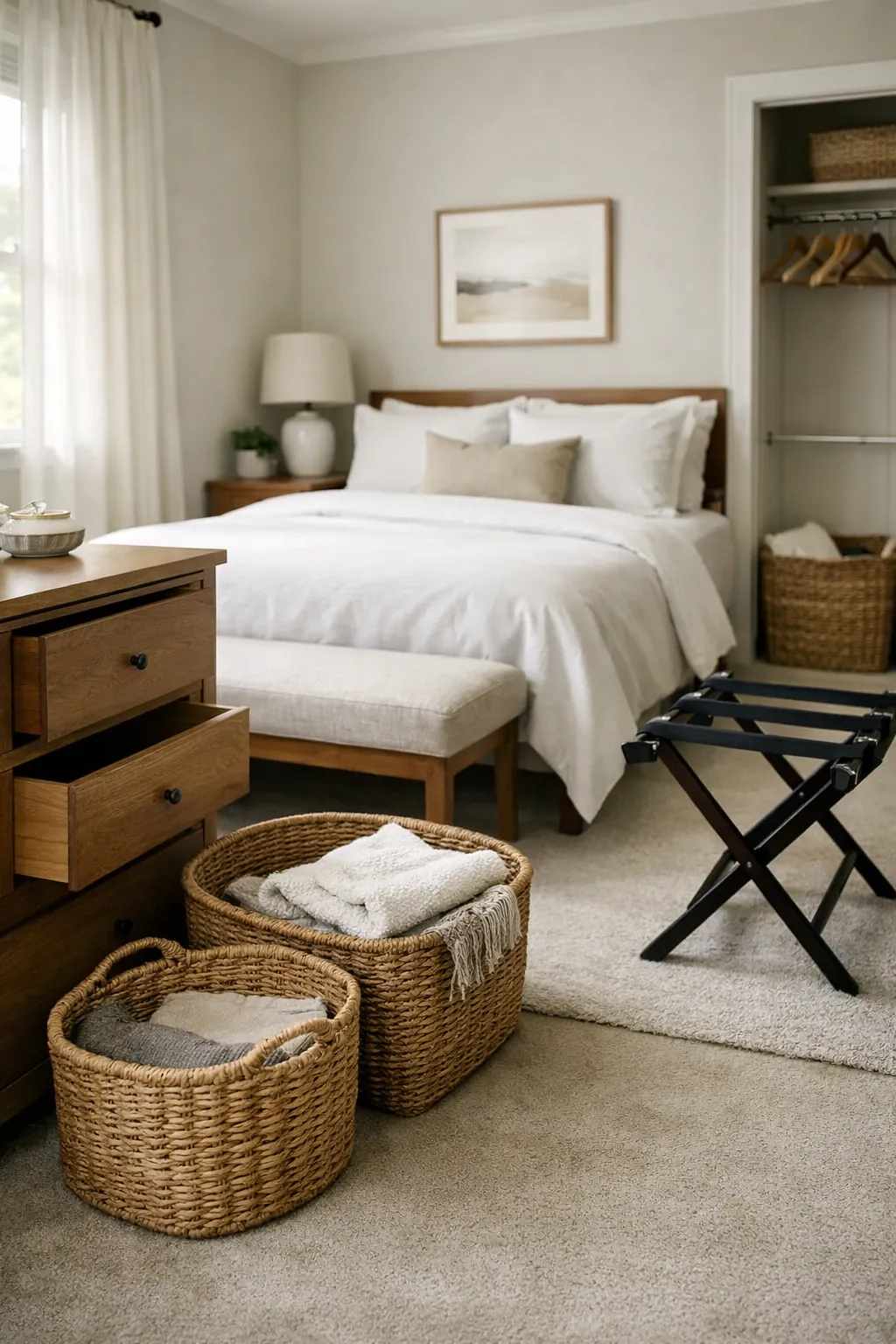
7. Create a Hotel-Inspired Feel With Small Practical Touches
A guest bedroom does not need to look like a luxury hotel, but it should borrow the parts hotels get right. The best ones make people feel comfortable without forcing them to ask for every little thing.
That is the goal here. Not fake luxury. Just thoughtful convenience.
A few hotel-inspired touches that work well are:
- Fresh folded towels in the room or nearby
- A phone charger or charging station
- A small tray for jewelry or keys
- A spare blanket
- A wastebasket
- A mirror with decent lighting
- A simple note with Wi-Fi details if needed
These details make guests feel less awkward. They reduce the tiny friction points that add up during a stay.
For example, a guest arriving late should not have to text you asking for the Wi-Fi password, search for an outlet behind furniture, or wonder where to place their bag. The room should answer basic needs on its own.
This is where guest room styling becomes real hospitality. Good decor is not just visual. It solves small problems before they happen.
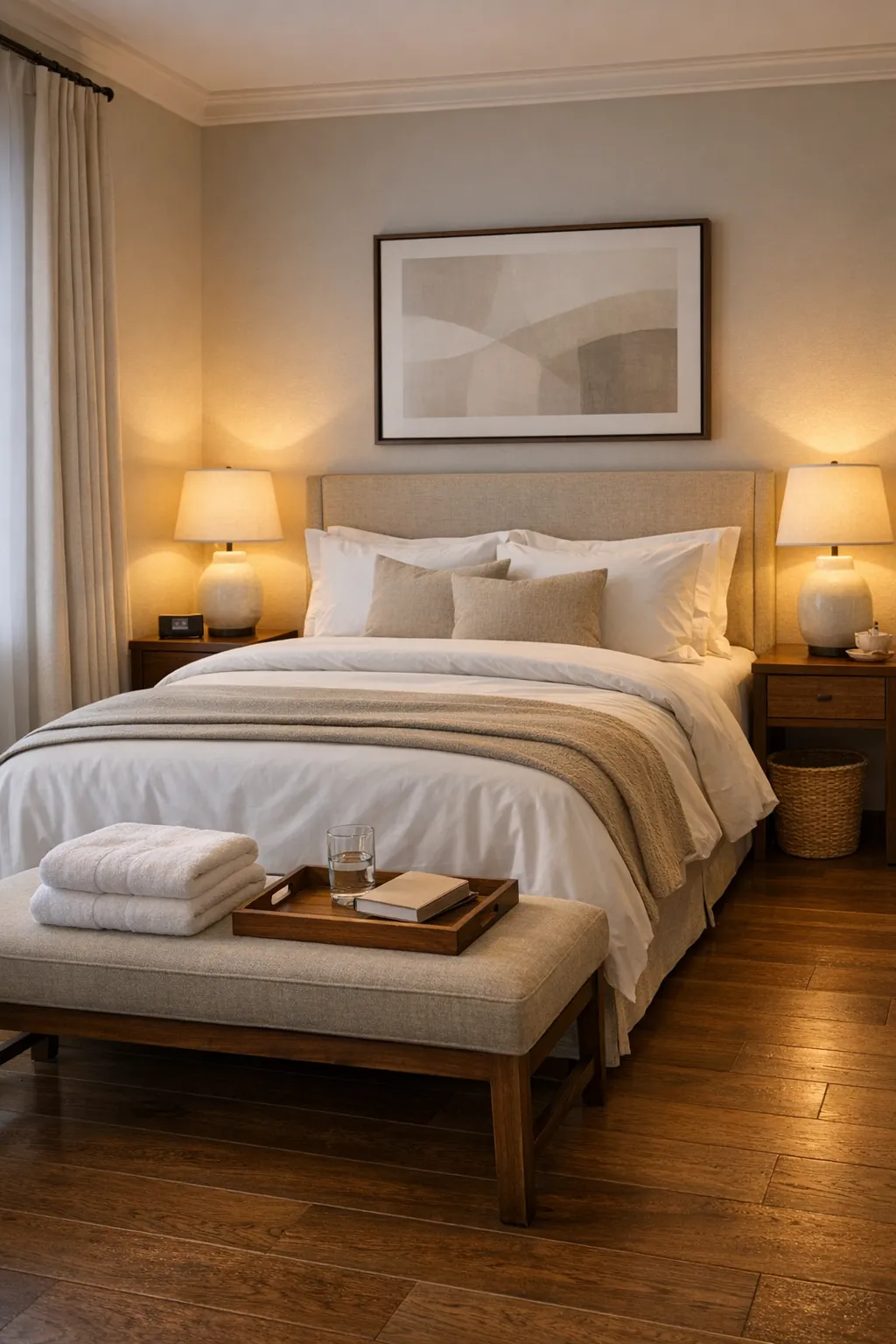
8. Use Texture to Make the Room Feel Warm, Not Flat
A guest bedroom with all smooth surfaces can feel cold even when the colors are right. Texture is what gives the room depth, softness, and that comfortable lived-in feeling people respond to on Pinterest and in real life.
Texture works best when it comes from materials, not clutter. Think linen curtains, woven baskets, a quilted coverlet, a low-pile rug, wood grain furniture, ceramic lamps, or a knit throw.
Some of the easiest ways to add texture are:
- Layer white or neutral bedding with different fabric finishes
- Add a woven or jute-style accent
- Use wood tones to warm up painted furniture
- Mix matte ceramics with soft textiles
- Include one rug with visible weave or pattern
This is also what helps a neutral guest bedroom feel finished. Without texture, neutral can turn bland fast. With texture, the same palette feels calm and rich.
A good real-life example is a guest room with ivory bedding, a walnut bed frame, linen drapes, a textured bench, and a soft patterned rug in faded taupe tones. Nothing is loud, but the room still feels layered and complete.
That is the difference between a room that looks plain and one that feels inviting.
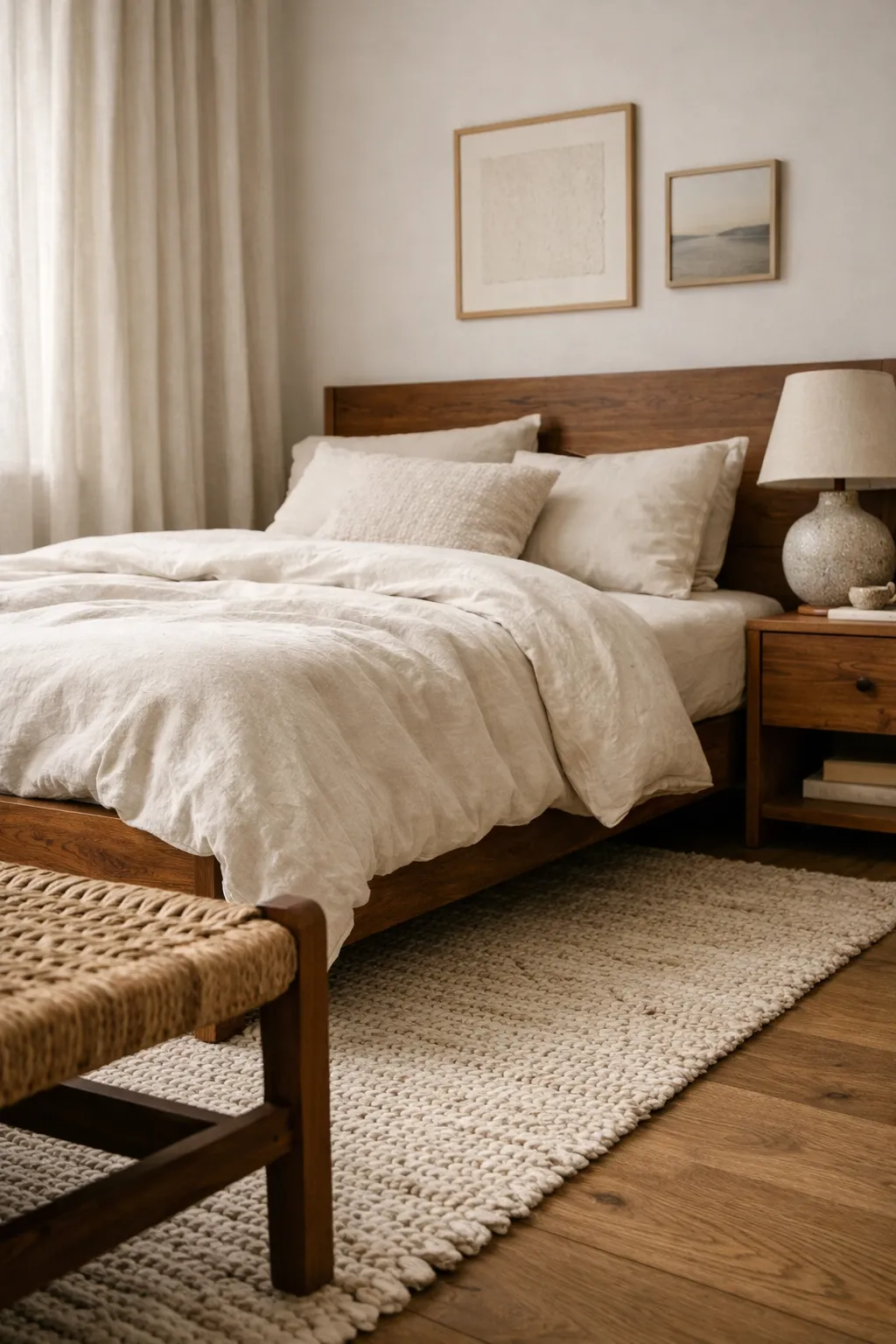
9. Add One Seating Spot if the Room Has Space
A chair in a guest bedroom is one of those things people skip because it feels optional. It is optional until someone needs a place to sit while putting on shoes, laying out clothes, or taking a quiet moment away from the rest of the house.
If the room has enough space, add one simple seating element. It could be:
- An upholstered accent chair
- A small wooden chair with a cushion
- A bench at the foot of the bed
- A slipcovered chair in a corner
- A compact chair with a side table
The key is proportion. Do not cram in a bulky armchair that makes the room harder to walk through. A smaller chair with clean lines usually works better in guest rooms.
This also gives the room more purpose. A bedroom with only a bed and blank walls can feel a little bare. A chair, even a simple one, helps the room feel complete and lived in.
A good setup is a chair near a window with a small table and lamp. That creates a quiet reading corner and gives the room a more thoughtful layout. In tighter spaces, a bench at the end of the bed can offer the same function without eating up as much floor space.
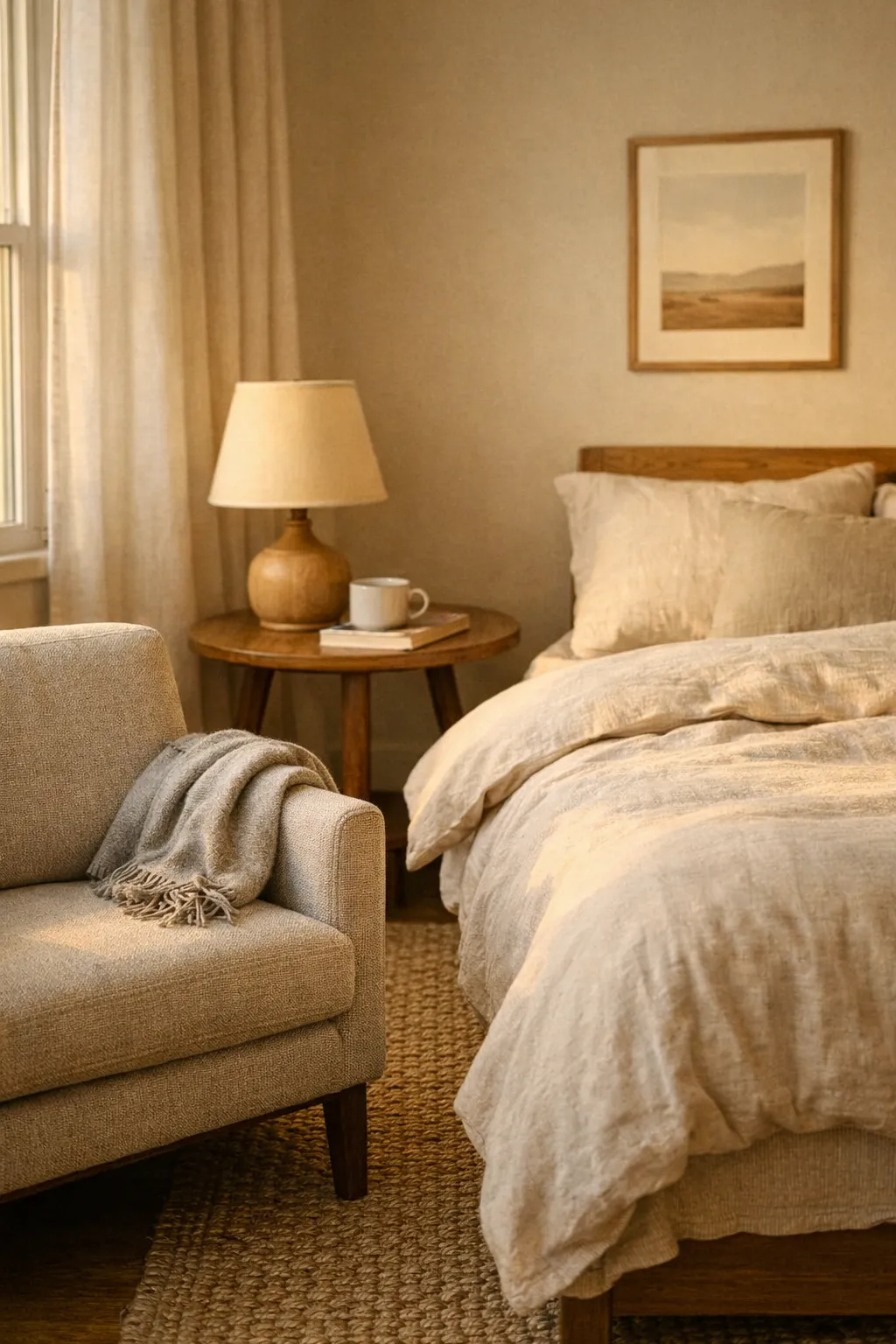
10. Keep Wall Decor Simple and Calm
A guest bedroom should not feel visually noisy. Wall decor can help the room feel finished, but too much of it makes the space distracting. A calm room usually works better than a room trying too hard to impress.
The best wall decor for guest bedrooms tends to be:
- Soft landscape art
- Abstract prints in muted colors
- Framed botanical sketches
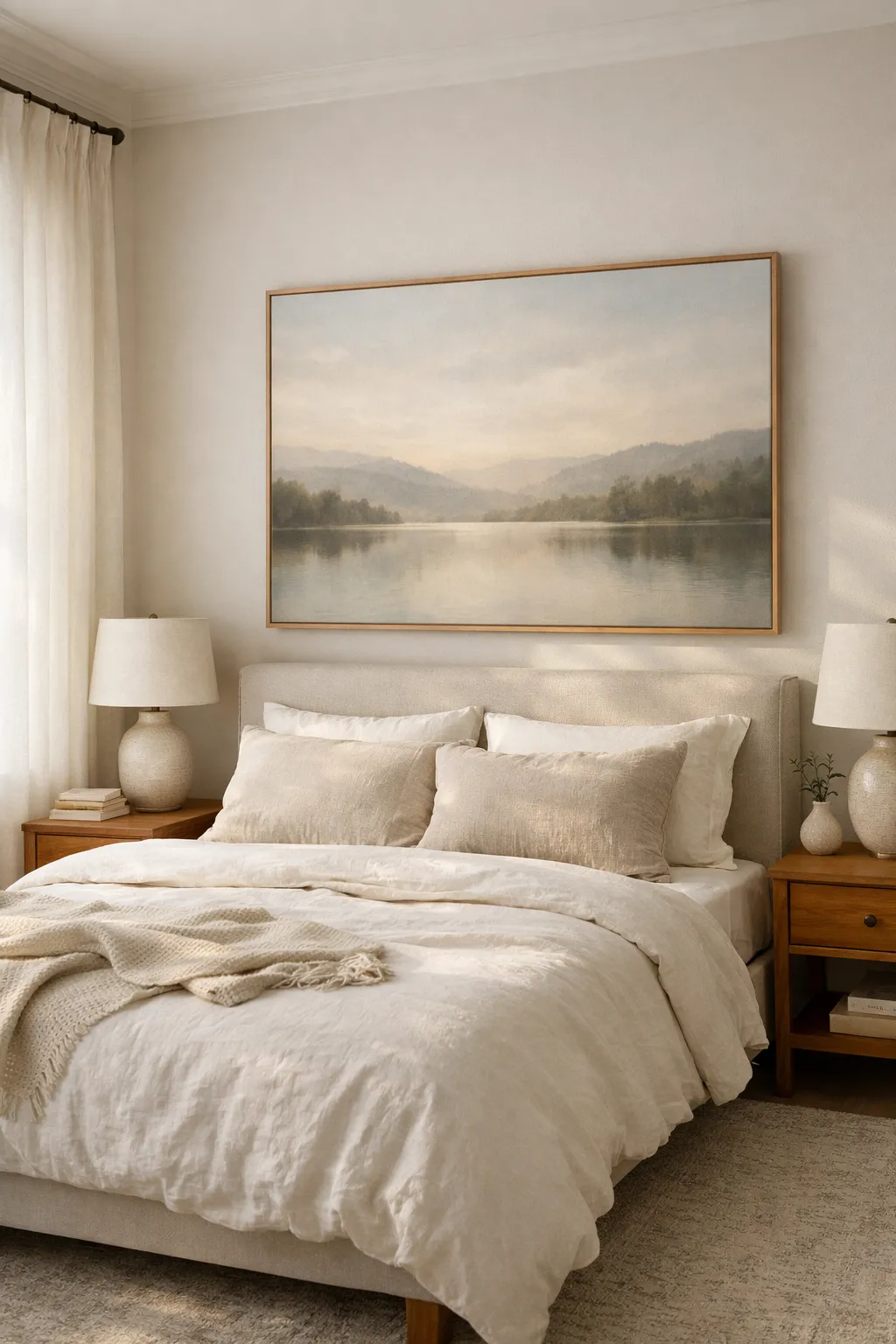
- One oversized piece above the bed
- A small set of coordinated prints
- A mirror that reflects light
This is not the place for personal family photo walls, loud typography signs, or trendy art that dominates the room. Guests should feel welcomed, not like they are sleeping inside someone else’s scrapbook.
One large piece of art above the bed often works better than several smaller pieces scattered around. It creates a focal point and helps the room feel more grounded. If the room already has strong furniture or patterned textiles, keep the wall art even quieter.
A simple rule: if the wall decor pulls more attention than the bed, it is probably too much.
11. Try a Multi-Use Setup That Still Feels Like a Real Bedroom
A lot of homes do not have a dedicated guest room. The space may also serve as a home office, craft room, or extra storage area. That is normal. The problem starts when the room clearly functions as something else first and only turns into a bedroom as an afterthought.
If a room needs to do two jobs, the guest experience still has to make sense. The bedroom side cannot feel accidental.
Some of the best multi-use guest room ideas include:
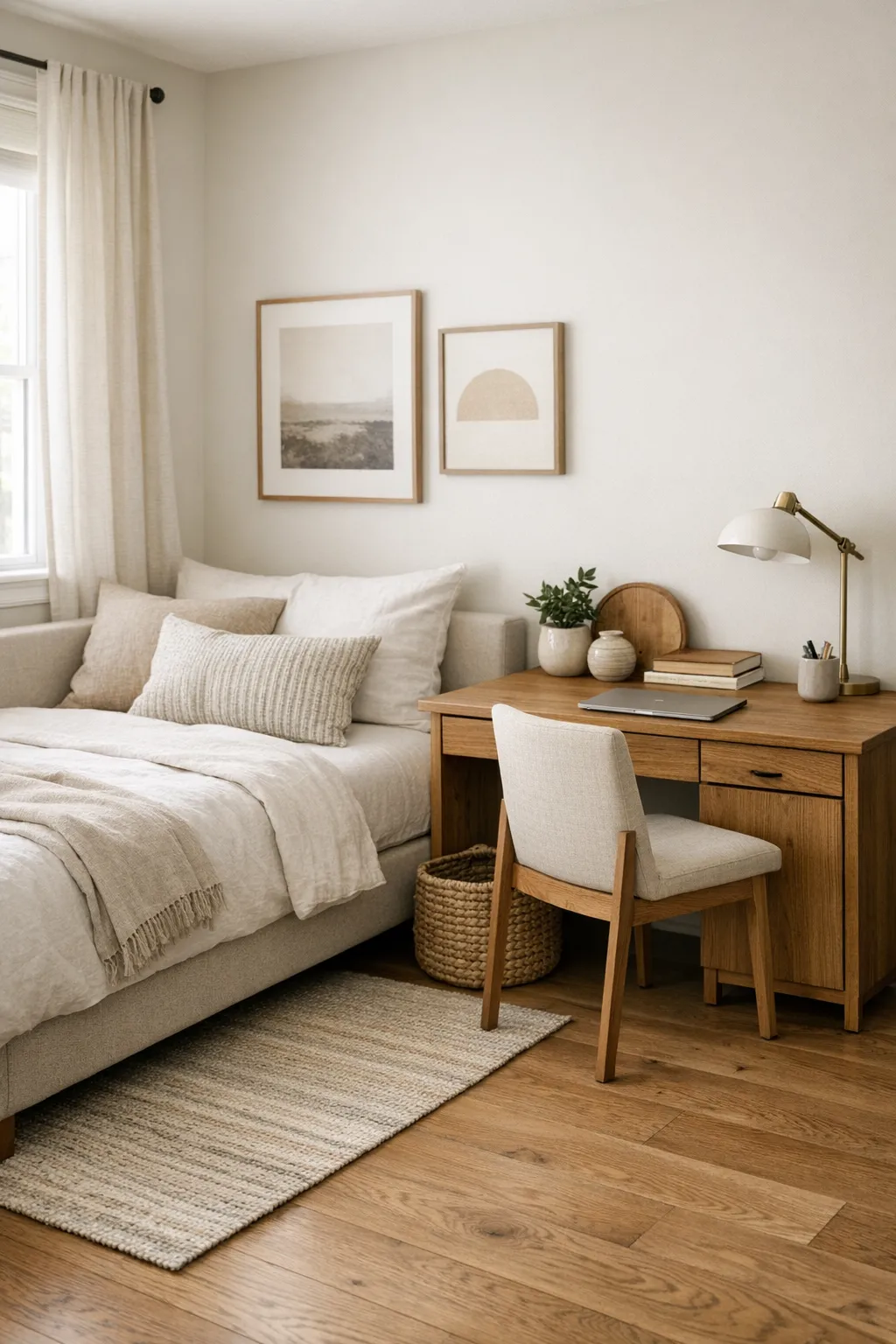
- A daybed with proper bedding in a home office
- A sleeper sofa in a den with nightstand-style side tables
- A Murphy bed with built-in storage
- A desk paired with closed cabinetry to hide work clutter
- A storage bench that doubles as seating
The trick is visual control. Office supplies, cords, paperwork, and random storage bins kill the restful mood fast. Guests do not want to sleep next to a printer and three years of tax folders.
If your guest room doubles as an office, keep the desk area edited and clean. Use closed storage, hide cables, and remove obvious work clutter before guests arrive. A small lamp, fresh bedding, and a cleared surface can shift the whole feel of the room.
People do not mind a room doing double duty. They mind when it feels unfinished.
12. Use Curtains and Rugs to Add Comfort Fast
Soft furnishings can completely change a guest bedroom. Curtains and rugs are two of the best tools for making the space feel warmer, quieter, and more polished without changing the whole room.
Curtains help with:
- Privacy
- Light control
- Softness around windows
- Better visual height when hung properly
Rugs help with:
- Warmth underfoot
- Sound absorption
- Anchoring the furniture
- Adding pattern or texture without much effort
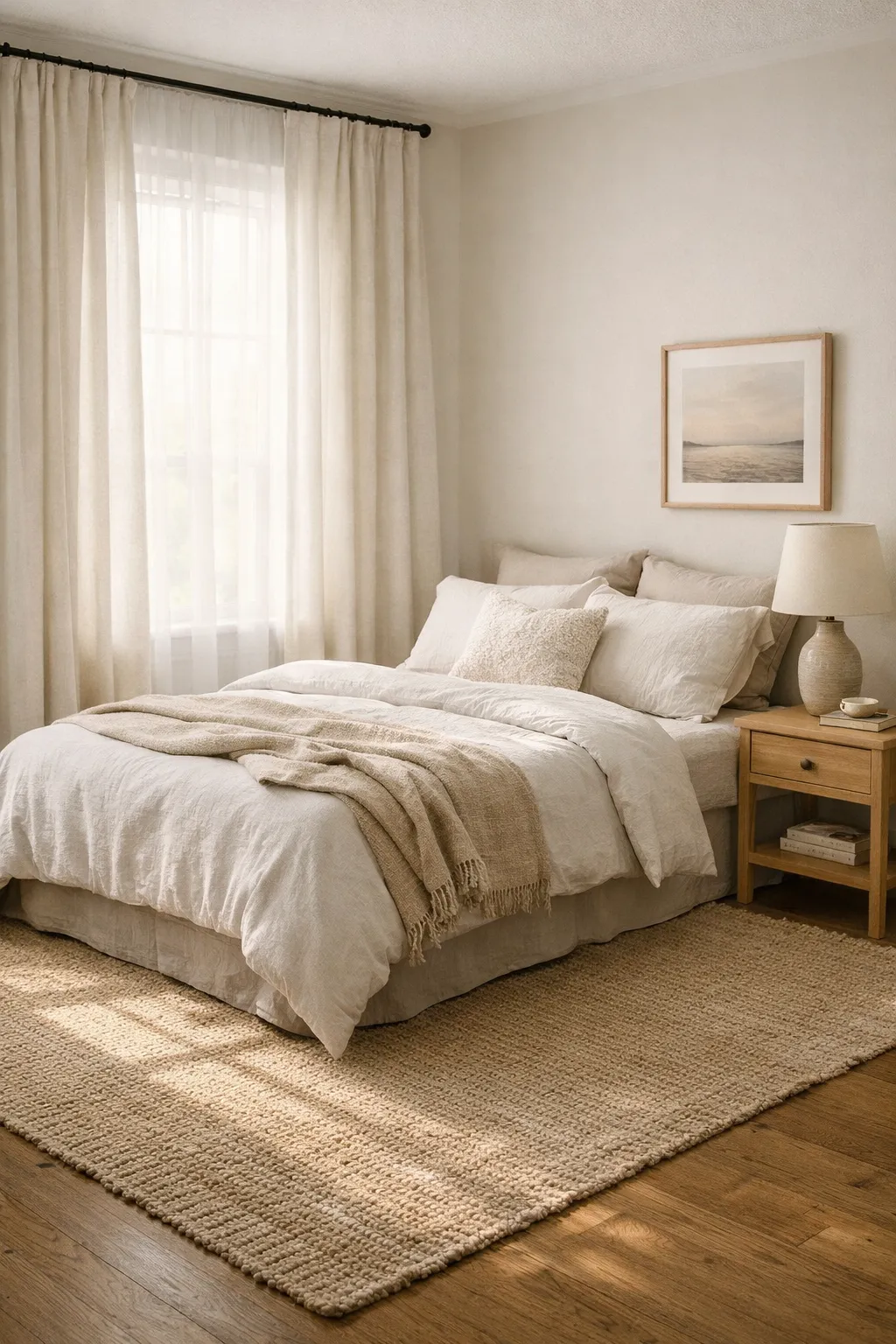
For a guest room, curtains should feel soft and functional. Light-filtering panels work well in many spaces, while blackout-lined curtains are great if the room gets strong morning sun. In most cases, hanging curtains higher and wider than the window frame helps the room feel taller and more finished.
A rug should be large enough to extend beyond the bed so the room does not feel chopped up. Tiny rugs usually look like an afterthought. A larger rug with subtle pattern or texture adds more value than several smaller pieces.
These are not flashy upgrades, but they make the room feel better in ways guests actually notice.
13. Add a Few Thoughtful Extras Guests Will Really Use
Some guest bedroom ideas look good online but do very little in real life. The strongest ones are often the least dramatic. Small practical extras can make the room feel much more welcoming.
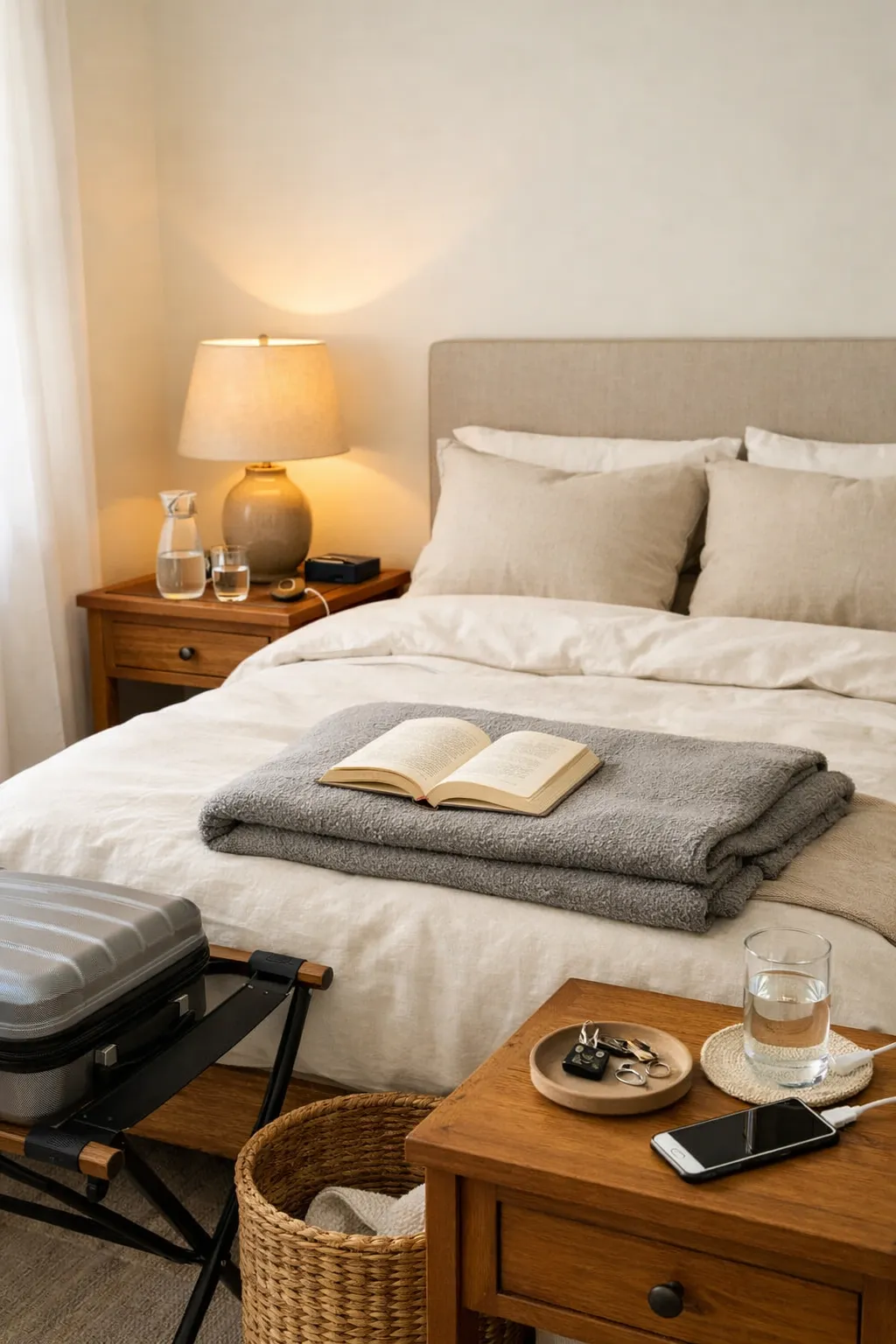
Useful additions include:
- A full-length mirror
- A spare phone charger
- A carafe or water glass
- A luggage rack
- A small basket with travel basics
- An extra pillow in the closet
- A fan if the room runs warm
- Easy access to a blanket
These things are not decorative filler. They solve normal guest needs.
A simple basket with hand cream, tissues, a spare toothbrush, and a sleep mask can be a nice touch for overnight visitors. It does not need to look fancy. It just needs to be useful.
This is also where common sense matters. Think about what people usually need when staying away from home for a night or two. Then set up the room so they do not have to ask for every item. That creates comfort without making a big show of it.
14. Work With Seasonal Layers Instead of Re-Decorating Constantly
A guest bedroom should stay useful all year. That does not mean it has to look the same in every season. The smartest approach is to keep the room neutral at its core, then shift the feel with small seasonal layers.
A solid year-round base might include:
- Neutral walls
- Timeless bedding
- Simple wood or painted furniture
- Soft curtains
- Basic layered lighting
Then you can update the room with:
- A warmer throw in fall and winter
- Lighter linen textures in spring and summer
- A subtle seasonal branch or greenery
- Pillow covers in a slightly richer or lighter tone
- Different bedside styling depending on the season
This works because it keeps the room flexible. You are not repainting or replacing furniture every few months. You are adjusting the mood in a simple way.
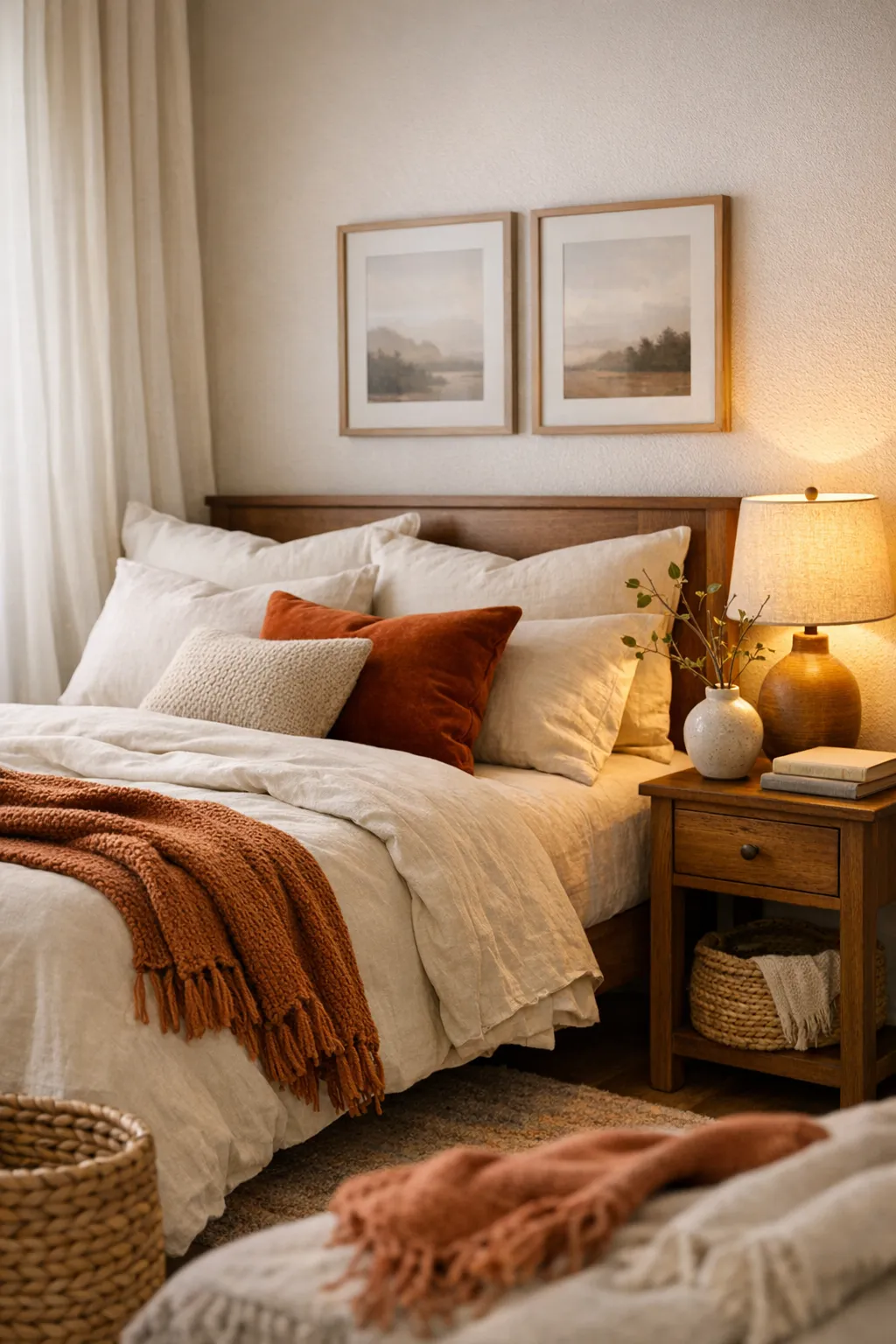
For example, a guest room with cream bedding and oak furniture can feel fresh in spring with a light sage throw and a ceramic vase of greenery. The same room can feel cozier in winter with a camel knit blanket and a warmer lamp glow. The structure stays the same. The mood shifts.
That is a much smarter approach than chasing every seasonal trend.
15. Focus on Comfort First and Styling Second
This is the idea that ties all the others together. A beautiful guest bedroom that is uncomfortable misses the point. The room should look good, yes, but comfort has to come first.
That means prioritizing:
- A supportive mattress
- Good pillows
- Useful lighting
- Privacy
- Storage
- Reasonable temperature control
- Enough walking space
- A clean and uncluttered setup
A lot of guest room mistakes happen because people decorate for appearance and ignore use. They buy trendy decor, overstyle the bed, crowd the surfaces, and leave out the basics. It looks fine in a quick photo and works badly for an actual guest.
The best guest bedrooms usually feel easy. Nothing is forced. Nothing is in the way. The room is soft, useful, clean, and thoughtfully arranged.
That is what people remember. Not whether the lamp base matched the picture frame. Not whether the bedding looked expensive. They remember whether they slept well and felt comfortable.
If you build the room around that standard, the styling choices become easier and better.
How to Choose the Right Guest Bedroom Style for Your Home
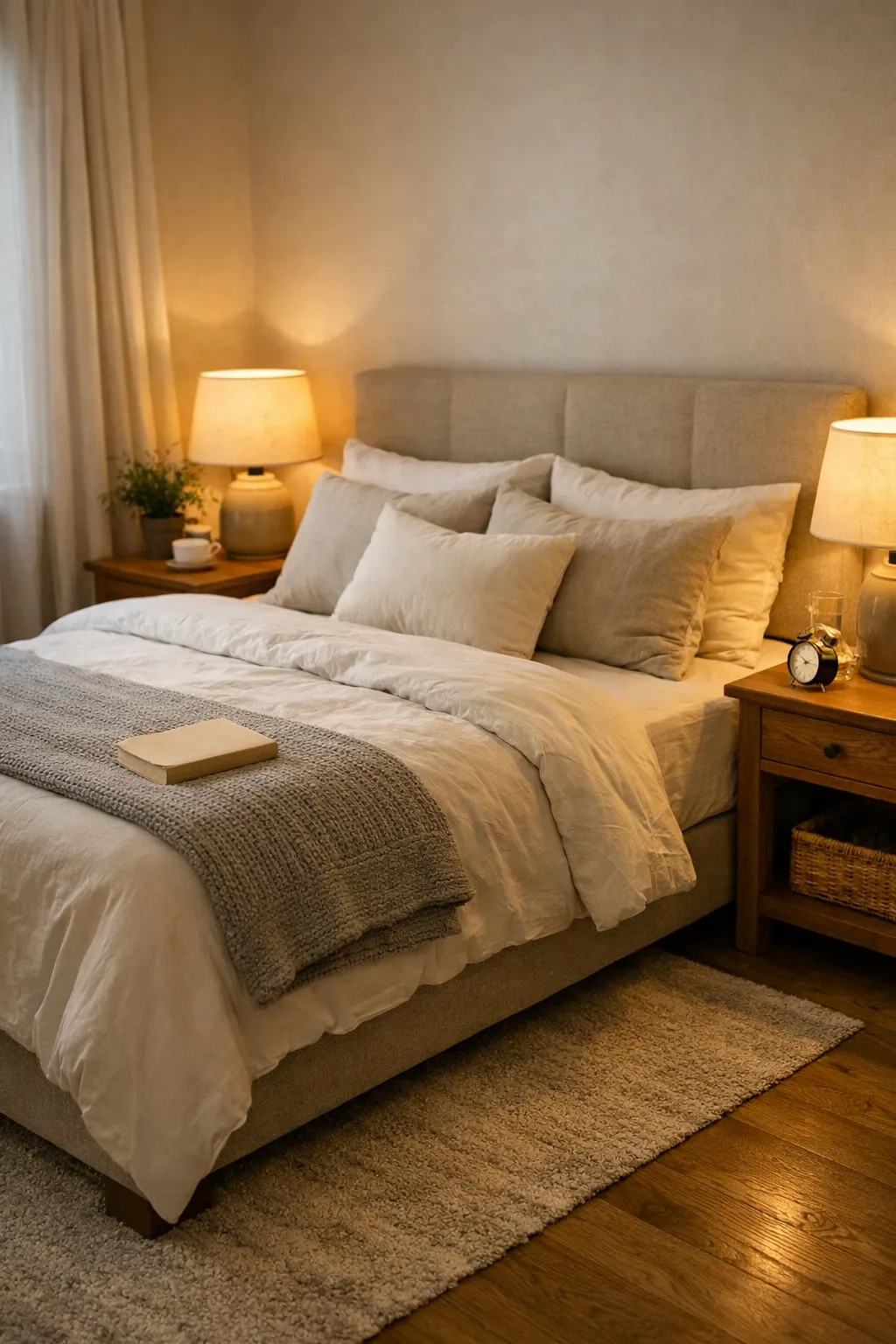
The best guest bedroom style is usually the one that fits the rest of your home instead of trying to become a separate theme room. If your house leans modern, keep the guest room simple and clean. If your home feels more traditional, use softer shapes and layered textiles. If your style is natural and relaxed, lean into warm woods, linen, and muted colors.
Here is a simple comparison to help narrow it down:
| Style | Best Features | Best For | Keep in Mind |
|---|---|---|---|
| Modern | Clean lines, minimal decor, simple palette | Smaller rooms, newer homes | Can feel cold without texture |
| Cozy Traditional | Layered bedding, warm woods, classic lamps | Family homes, timeless spaces | Avoid making it too heavy |
| Organic Neutral | Soft tones, natural textures, calm styling | Pinterest-friendly, evergreen look | Needs texture to avoid blandness |
| Coastal Soft | Light blues, sandy neutrals, airy layers | Bright rooms, relaxed homes | Keep it subtle, not theme-heavy |
In most homes, an organic neutral or soft modern guest bedroom is the safest choice because it feels current without being too specific. It also works well on Pinterest since it photographs cleanly and stays appealing over time.
Common Guest Bedroom Mistakes to Avoid
Some guest rooms fail for obvious reasons, and some fail in quieter ways. These are the mistakes that come up again and again:
- Choosing style over sleep comfort
- Using harsh overhead lighting only
- Leaving no space for luggage or clothes
- Overfilling a small room with furniture
- Using too many decorative pillows
- Hanging loud or overly personal wall decor
- Forgetting blackout options or privacy
- Treating the room like leftover storage space
Most of these problems are easy to fix. They just require more thought and less random shopping.
Final Thoughts
The best guest bedroom ideas are not about creating a perfect photo setup. They are about making a room feel restful, welcoming, and easy to use. That takes some styling, but it also takes judgment. Every piece should earn its place.
If you want the room to feel better fast, focus on the basics first. Improve the bedding. Edit the layout. Add better lighting. Clear space for storage. Then bring in texture, art, and a few thoughtful details that make the room feel warm and finished.
That is what turns a spare bedroom into a guest room people genuinely enjoy staying in.