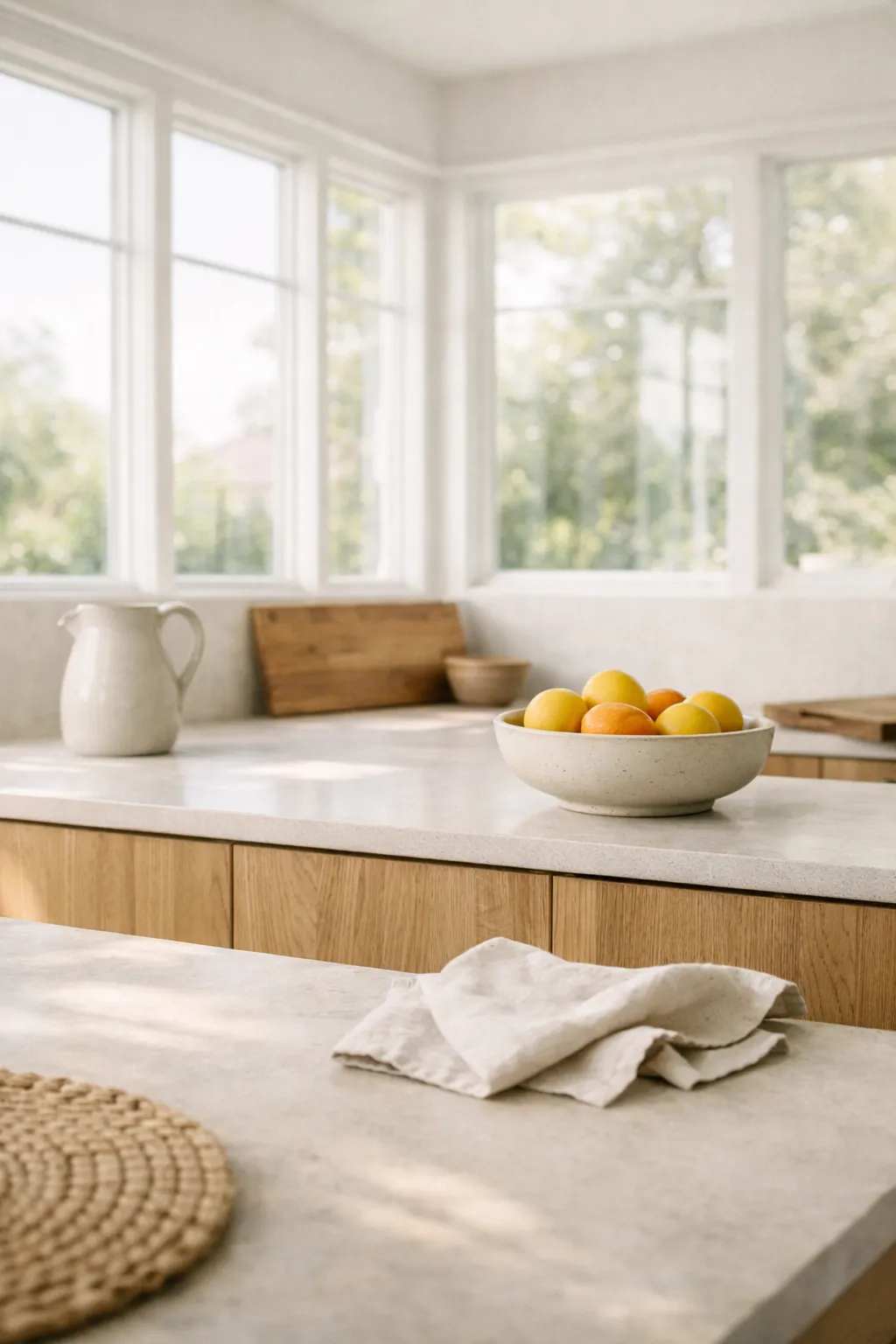


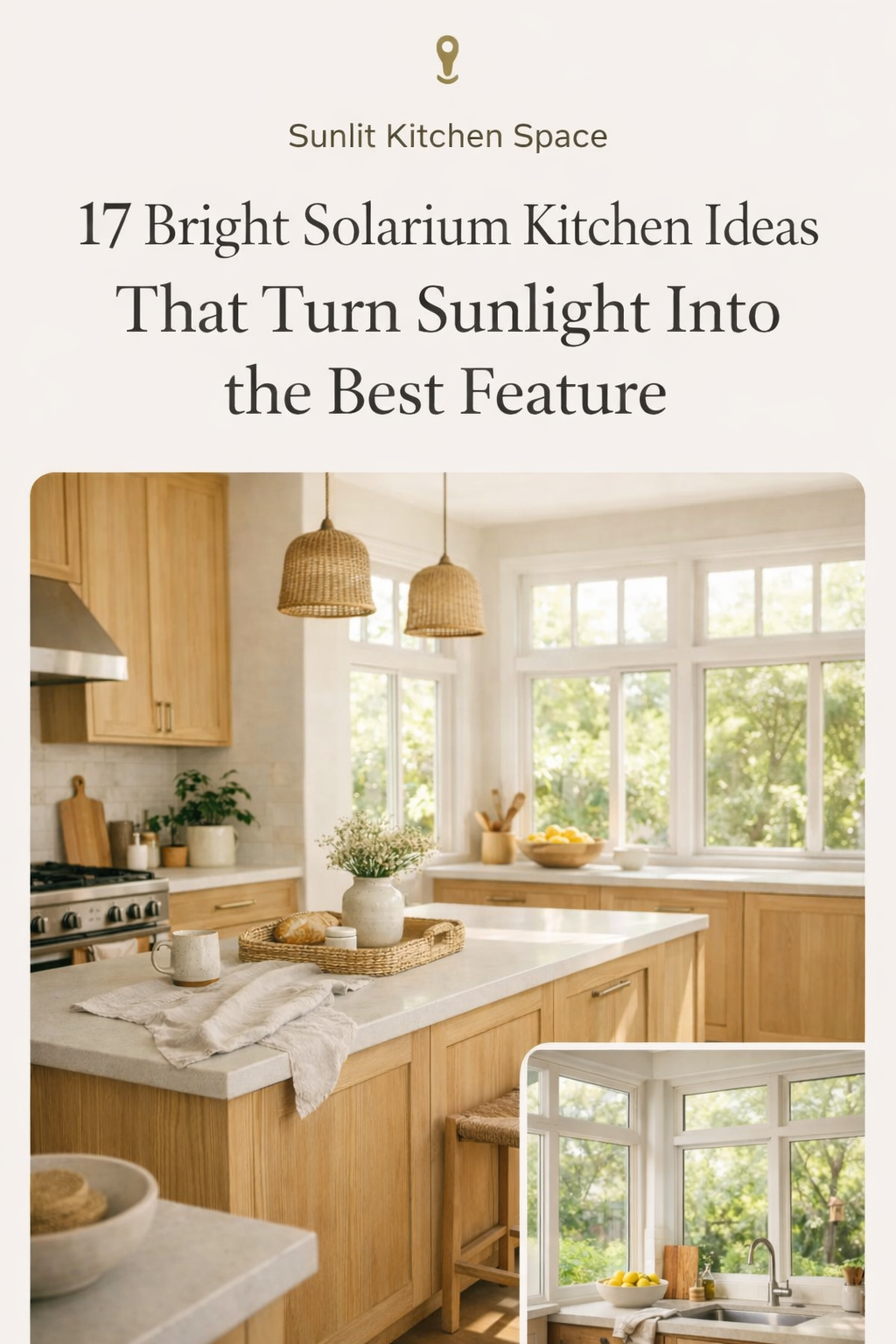
A solarium kitchen is not just a kitchen with extra windows. It is a space built around light. The whole mood changes when sunlight becomes part of the design instead of an afterthought.
That is what makes this style so appealing. A solarium kitchen feels open, fresh, and calm, but it can also be practical for real daily use. When it is done well, the room looks beautiful in the morning, works hard through lunch and dinner, and still feels inviting at the end of the day.
The challenge is balance. Too much glass can make a kitchen feel exposed or washed out. Too many hard finishes can make the room feel cold. The best solarium kitchens solve that by mixing natural light with warm materials, smart layouts, and details that soften the space.
The ideas below focus on that balance. They are meant for real homes, not just showrooms. Some lean modern, some feel a little more classic, and all of them help create a kitchen that feels brighter and more connected to the outdoors.
Here is a quick guide to what these first ideas do best.
| Design | Best For | Why It Works |
|---|---|---|
| 1. Wraparound windows | Homes with garden, patio, or yard views | Opens the kitchen visually and strengthens the indoor-outdoor connection |
| 2. White oak cabinetry | Bright kitchens that need warmth | Keeps the space light while adding natural texture and softness |
| 3. Soft sage or olive accents | Neutral kitchens that need gentle color | Adds depth and an organic feel without overpowering the sunlight |
| 4. Glass-lined breakfast nook | Families, casual dining, and daily routines | Turns a sunny corner into a functional and inviting gathering spot |
| 5. Open shelving | Kitchens where upper walls feel too heavy | Keeps the room airy and lets light move more freely |
| 6. Matte stone surfaces | Kitchens with strong natural daylight | Reduces glare and brings in calm texture |
| 7. Woven textures | Bright kitchens that feel too crisp or hard | Softens the space and adds a relaxed lived-in layer |
| 8. Skylights | Layouts with limited wall window space | Pulls daylight into the center of the kitchen |
| 9. Slim island | Smaller or open-concept solarium kitchens | Keeps traffic flow easy and avoids blocking light or views |
| 10. Warm white paint | Sun-filled kitchens that feel too stark | Softens brightness and creates a more welcoming backdrop |
| 11. Plant-friendly zone | Kitchens with strong natural light and shelf or sill space | Adds freshness and reinforces the connection to nature |
| 12. Brass or aged metal finishes | Kitchens that need warmth in the details | Gives hardware and fixtures a soft glow without looking harsh |
| 13. Framed outdoor view | Kitchens facing a garden, patio, or landscaped yard | Makes the outside scenery feel like part of the decor |
| 14. Soft Roman shades | Glass-heavy kitchens that need privacy | Adds privacy and light control without making the room feel heavy |
| 15. Mixed seating | Kitchens with islands and breakfast areas | Makes the space feel more personal, layered, and natural |
| 16. Stone or terracotta-style flooring | Very bright kitchens that need grounding | Anchors the room and balances all the glass and light |
| 17. Minimal styling | Solarium kitchens where the architecture is the main feature | Lets the sunlight, materials, and layout stay the focus |
1. Use wraparound windows to make the kitchen feel bigger
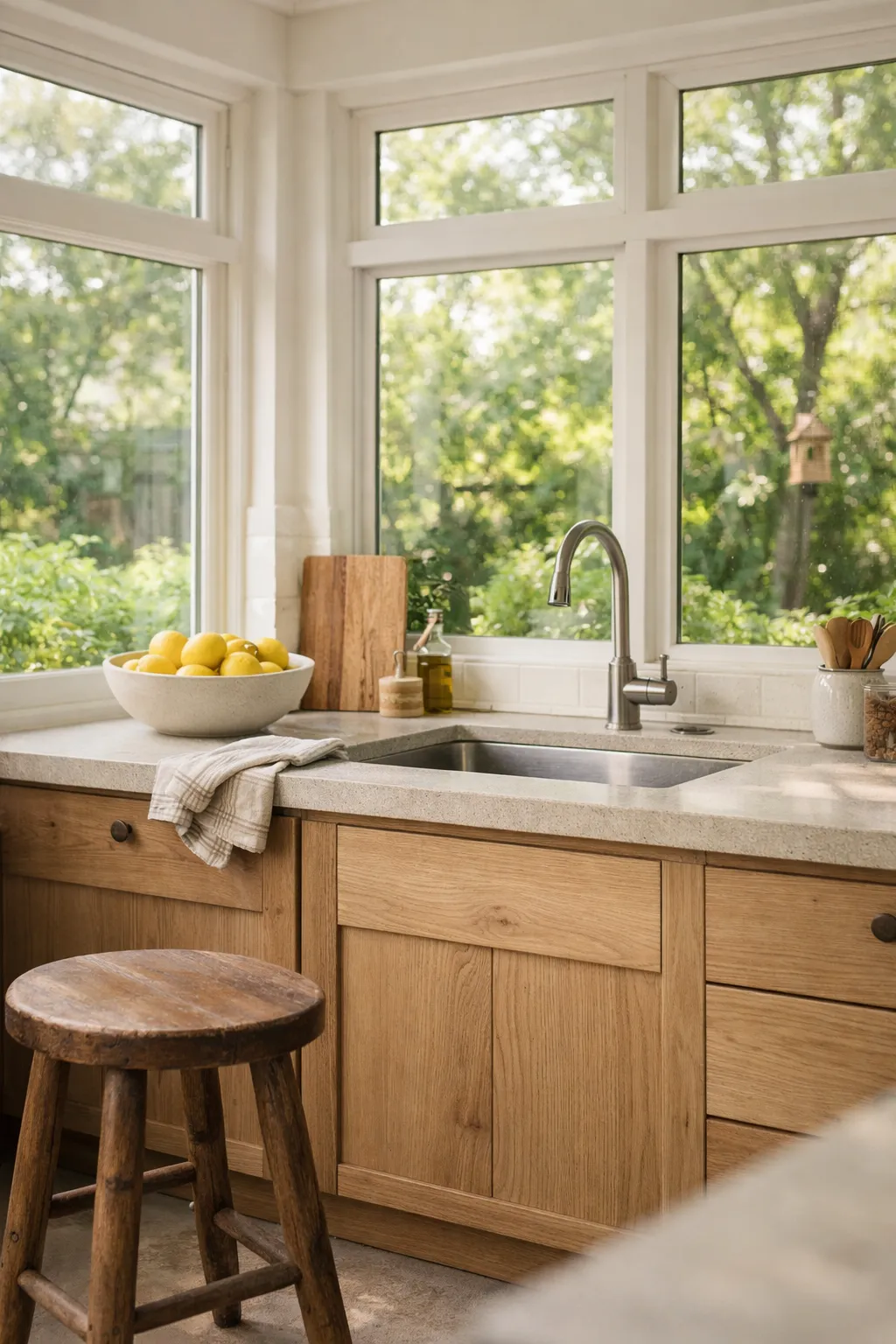
Nothing says solarium kitchen more clearly than wraparound windows. They change the room fast. Even an average-size kitchen starts to feel wider, calmer, and more expensive when light enters from more than one side.
This idea works best when the kitchen has something worth looking at, like a backyard, a patio, mature trees, or even a tidy side yard. The view does not need to be dramatic. It just needs to feel open enough to make the room breathe.
To make this layout work, keep tall cabinetry on one main wall and let the glass side stay as open as possible. A sink under the window is still one of the best choices because it gives a clear focal point and makes an everyday task feel less dull.
A smart layout might include:
- lower cabinets under the windows where possible
- a single run of tall pantry storage on the least sunny wall
- minimal upper cabinets near the glass
- slim window frames that do not break up the view
This is one of the easiest ways to get that sunroom-meets-kitchen look without filling the room with trendy details that age badly.
2. Choose white oak cabinets instead of stark white ones
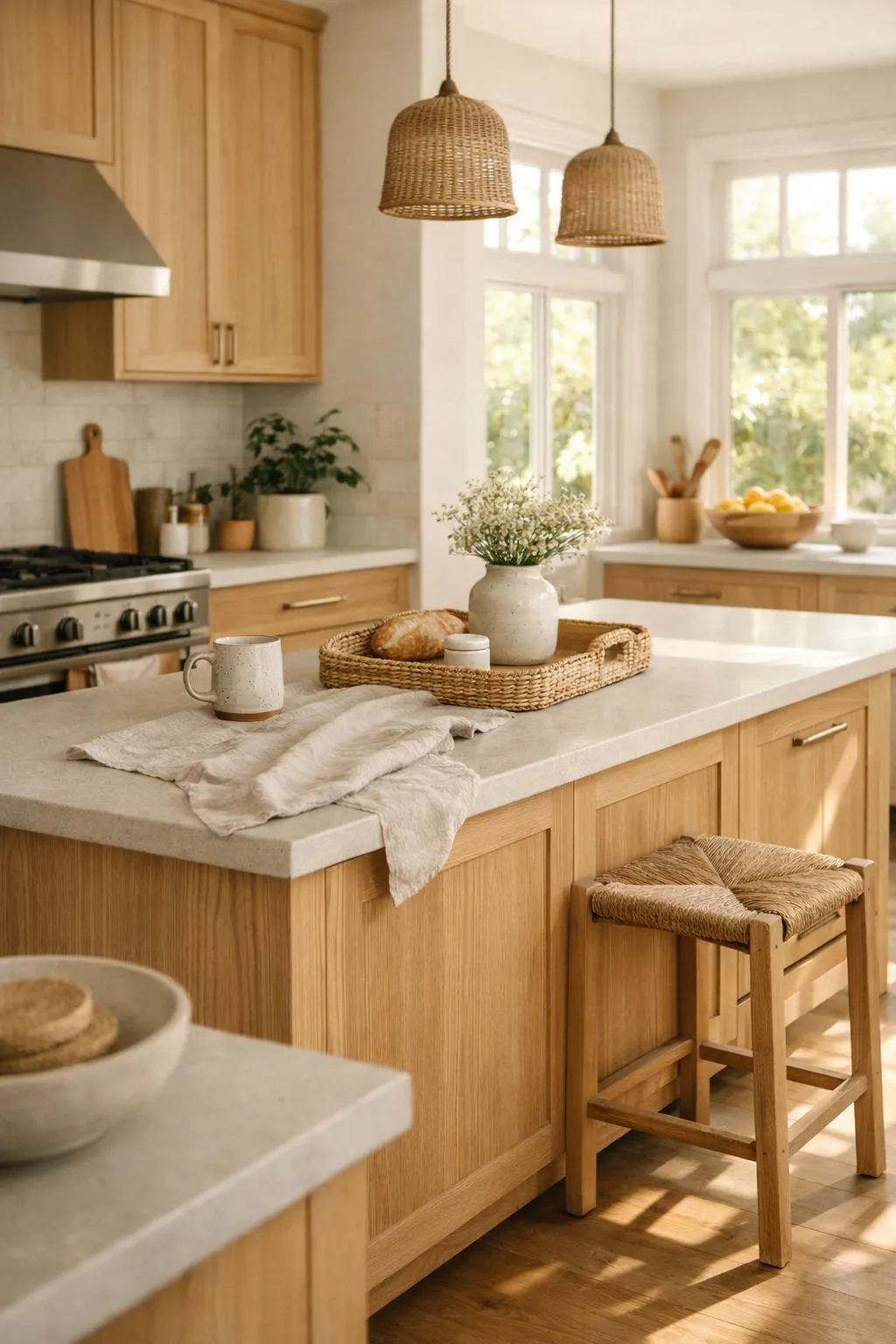
A lot of people assume a sunlit kitchen should be all white. That sounds good in theory, but in real life it often looks harsh by midday. Strong natural light can flatten bright white cabinets and make the room feel cold.
White oak gives you a better result. It still feels fresh and light, but it adds enough warmth to keep the kitchen grounded. That matters in solarium spaces where sunlight already brightens everything.
Flat-panel white oak cabinets work well in modern homes. A simple shaker profile works better if your house leans classic or transitional. Either way, the grain gives the room texture without making it look busy.
White oak also plays well with:
- creamy counters
- soft brass hardware
- warm white walls
- pale stone flooring
- woven stools or pendants
In a kitchen with lots of glass, wood keeps the room from feeling like a greenhouse or a showroom. It brings in just enough softness to make the space feel lived in.
3. Add soft sage or olive accents to cool down the light
Some sunlit kitchens need contrast, but not the kind that feels sharp. Black can work in small doses, but too much of it can chop up an airy room. A soft green tone often does a better job.
Sage, olive, dusty eucalyptus, and muted moss all work well in a solarium kitchen because they connect naturally with the outdoors. They also hold their shape in daylight. A color that looks pretty in a dim paint store can look strange in direct sun. Green usually stays calmer.
You do not need to paint the whole kitchen. A few touches can be enough:
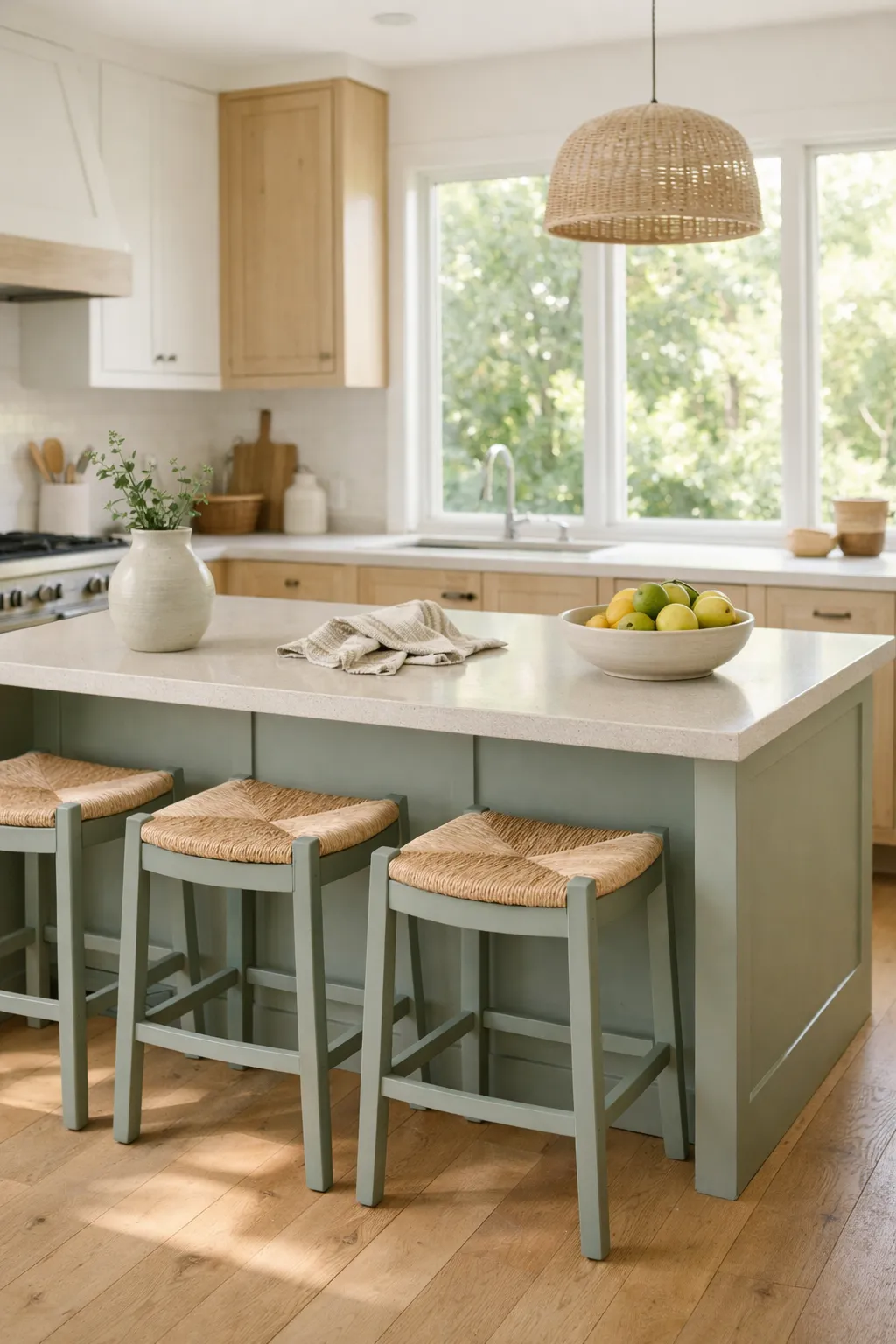
- a sage island
- olive counter stools
- green roman shades in a nearby breakfast corner
- pottery, planters, or art with muted green tones
This kind of color works best when the base palette stays simple. Think oak, off-white, stone, linen, and soft green instead of five competing shades all fighting for attention.
The result feels lighter than navy and warmer than gray. It also fits the solarium mood better because it picks up what is already happening outside the glass.
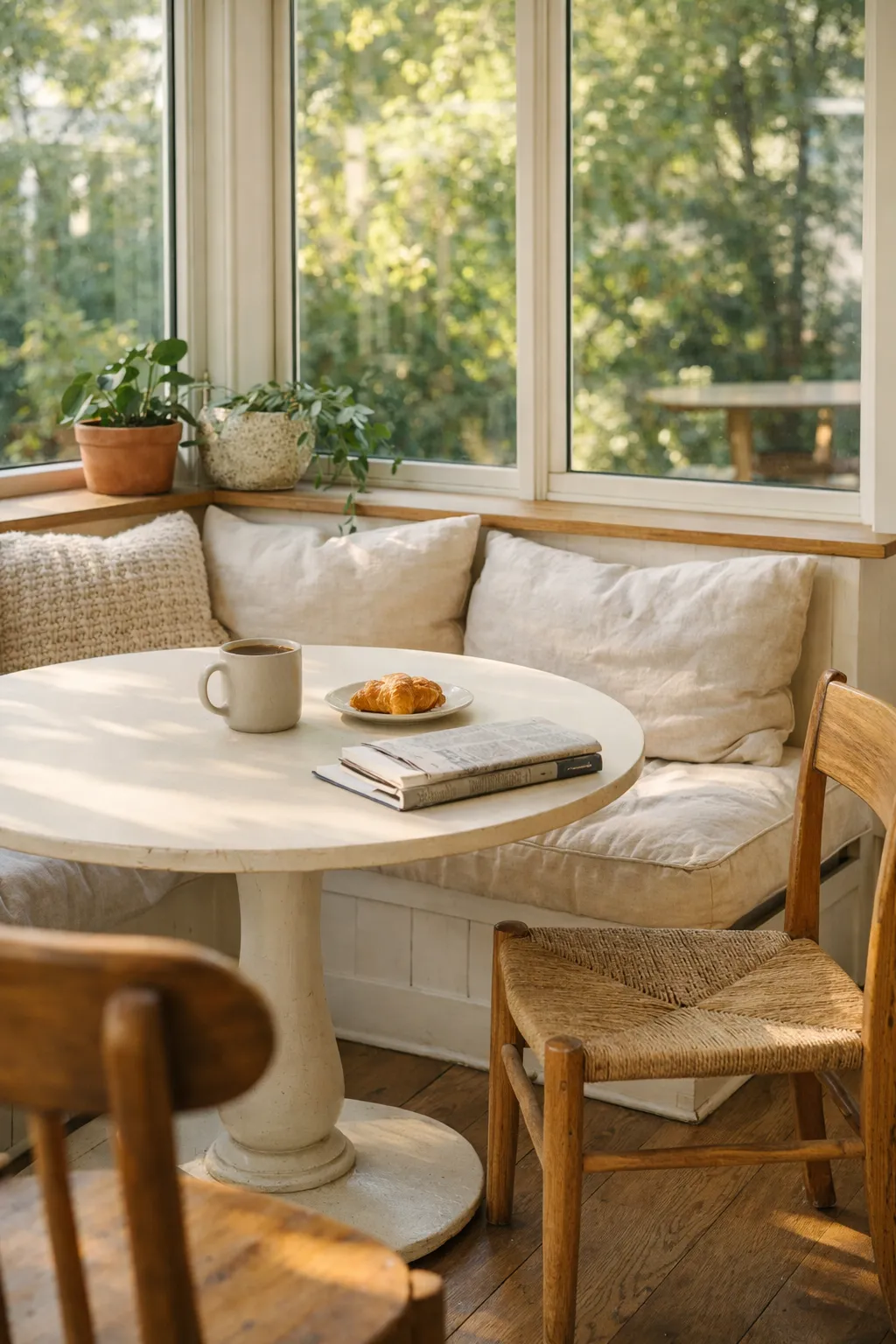
4. Build a glass-lined breakfast nook into one corner
A solarium kitchen should not waste its best light on empty floor space. One of the smartest ways to use that sunlight is to turn a corner into a breakfast nook.
This works especially well in L-shaped and U-shaped kitchens where one edge meets a bank of windows. A small built-in bench, a round pedestal table, and two light chairs can turn that area into the most used spot in the house.
It is not just about looks. It is functional. Kids can eat there before school. Someone can answer emails there while dinner cooks. Guests naturally drift there instead of crowding the main work zone.
To keep it feeling easy:
- choose wipeable seat cushions in linen-look fabric
- use a round table to soften all the straight kitchen lines
- keep the bench base simple, not bulky
- add one pillow or two, not six
A bright breakfast nook gives the kitchen a softer purpose. It stops the room from feeling like it is only there to work.
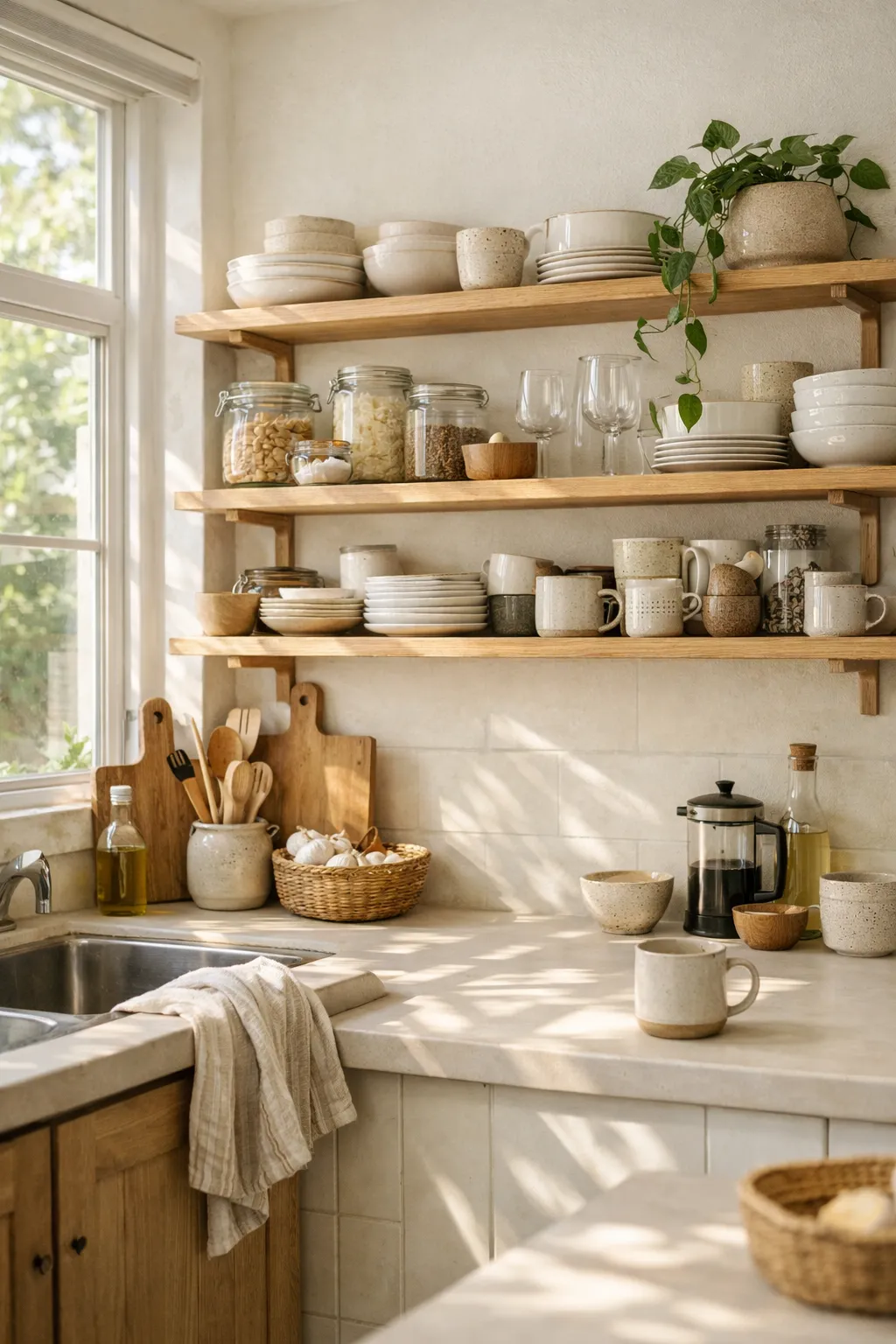
5. Replace heavy upper cabinets with open shelving where the light hits hardest
Upper cabinets are useful, but in a solarium kitchen they can block the very thing that makes the space special. If one wall gets strong natural light, open shelving can help that side feel less boxed in.
This does not mean removing all storage. That would be a mistake in a real kitchen. It means being selective. Use full cabinetry where you need hidden storage most and switch to open shelves only in the areas where the room benefits from visual breathing space.
Open shelving works best when you display things that are both useful and attractive:
- everyday dishes
- ceramic bowls
- glass jars
- wood cutting boards
- a small stack of cookbooks
The styling matters. If the shelves are packed tight, they lose the airy effect. If they are too empty, they look staged and awkward. Aim for practical but tidy.
This idea works especially well beside large windows because it lets the wall feel lighter while still giving you function.
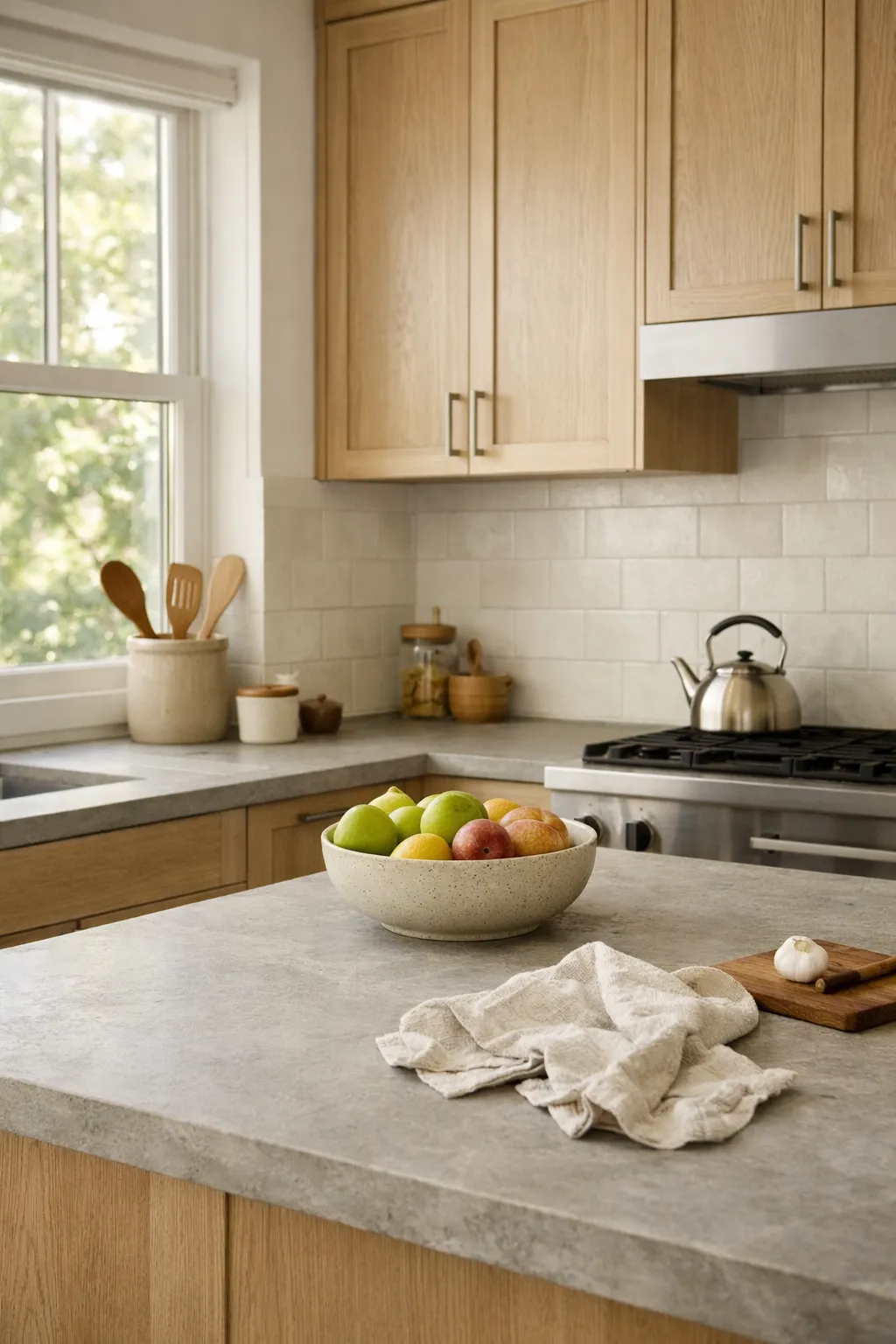
6. Choose matte stone surfaces that do not fight the sunlight
A shiny counter can look polished in a dark kitchen. In a solarium kitchen, it can turn into pure glare. That is why matte or honed finishes make more sense.
Honed marble, leathered quartzite, matte quartz, and soft-finish soapstone all handle bright light better than glossy surfaces. They absorb more, reflect less, and let the rest of the room feel calm.
This does not just affect counters. It matters for backsplash tile too. A super glossy tile may bounce light all over the room and make the kitchen feel harder than it should. In a sunlit space, texture often beats shine.
Good choices include:
- honed marble-look quartz
- handmade ceramic tile with a low-sheen finish
- tumbled limestone
- brushed or matte hardware
The goal is not to make the room dull. It is to stop every surface from competing with the windows. When the light is already strong, your materials do not need to perform like jewelry.
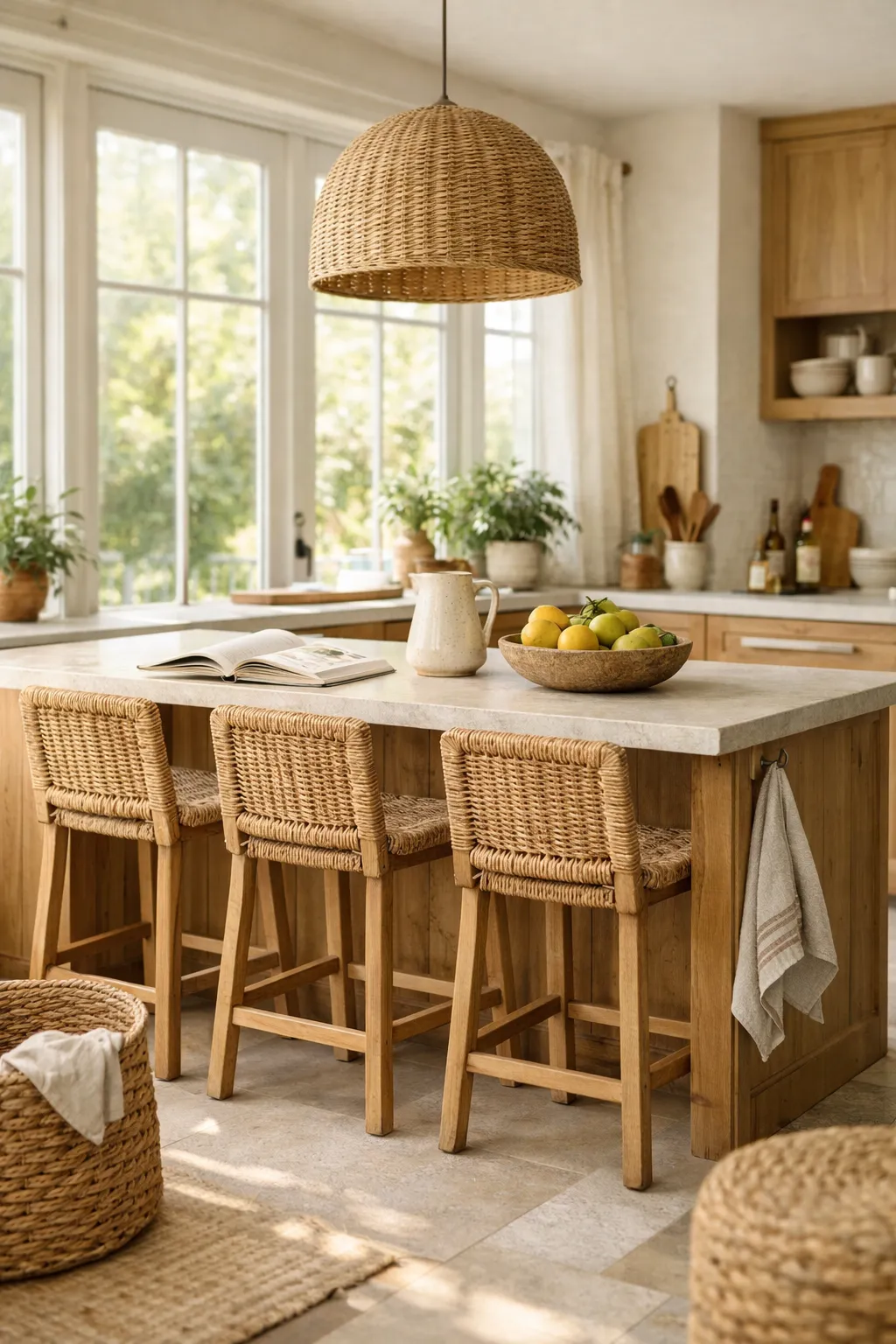
7. Bring in woven textures so the space feels relaxed
Natural light can make a kitchen look beautiful, but it can also expose every hard edge. If the room has too much stone, metal, and glass, it starts to feel a little stiff.
Woven textures help fix that. They add warmth without adding weight. A few small choices can make the room feel more human:
- wicker or rattan counter stools
- woven pendant shades
- cane-front pantry doors
- a jute runner near the sink
- baskets for produce or linens
These pieces work because they break up smooth surfaces. They also look better in daylight than many synthetic finishes, which can start to feel cheap when the sun hits them directly.
Use restraint here. One or two woven elements feel natural. Too many start to push the room into coastal-theme territory, which is not the same thing as a solarium kitchen.
The best version feels layered and easy, like the kitchen has evolved over time instead of being copied from one photo.
8. Add skylights when wall space is limited
Not every home can support huge glass walls. Sometimes the kitchen sits in the middle of the floor plan or shares walls with other rooms. That does not mean you have to give up on the solarium feel.
Skylights can bring sunlight into the center of the kitchen and make the whole space feel more open. They are especially helpful over islands, prep zones, or narrow galley layouts that need a visual lift.
The key is placement. One badly placed skylight can create heat and glare right where you do not want it. A better plan is to position skylights where they spread light more evenly across the room.
A few rules make them work better:
- choose models with built-in light control if the sun is intense
- place them where they brighten work areas, not just empty floor
- pair them with warm finishes so the room still feels balanced
- avoid overdoing it in already bright rooms
A skylight does not replace windows, but it can make a closed-in kitchen feel much closer to a true sunlit retreat.
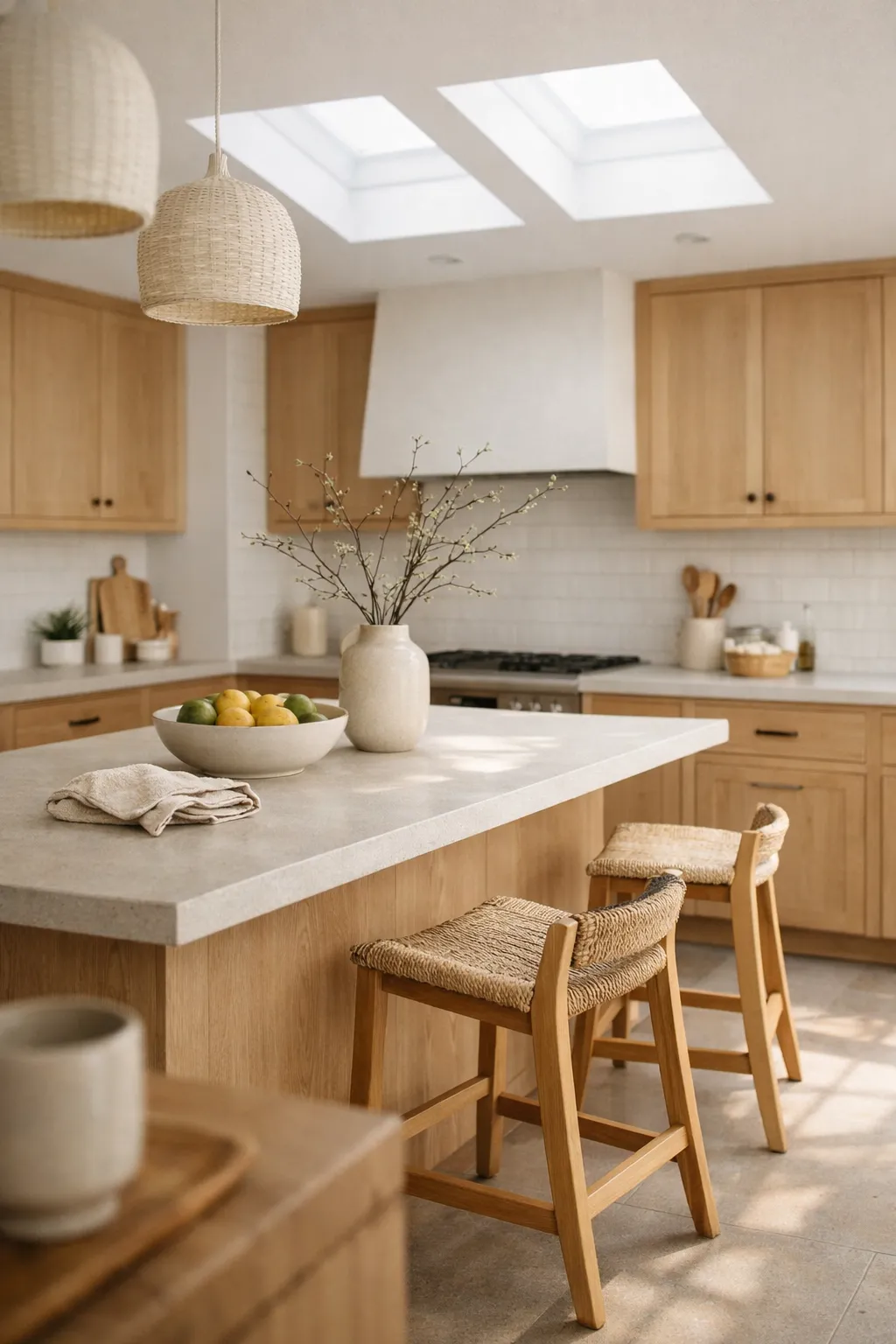
9. Use a slim island that keeps the room open
In a solarium kitchen, bulk is the enemy. A heavy island can block sightlines, interrupt the light, and make the room feel tighter than it should. A slimmer island usually works better.
This does not mean the island has to be tiny or useless. It means the proportions should fit the room. In a bright kitchen with lots of glass, a narrow island with clean legs or simple paneling often looks better than a thick, oversized block.
A slim island helps in a few ways:
- it keeps movement easy around the kitchen
- it lets light pass through the room more naturally
- it gives the space a lighter, less crowded feel
- it still provides prep space and casual seating
This is one place where restraint matters. Many homeowners try to force a large island into a kitchen because it feels expected. That is a mistake. In a solarium layout, openness usually matters more than squeezing in extra inches.
If the room already has a breakfast nook or dining area nearby, the island does not need to do everything. It just needs to support the way the kitchen works.
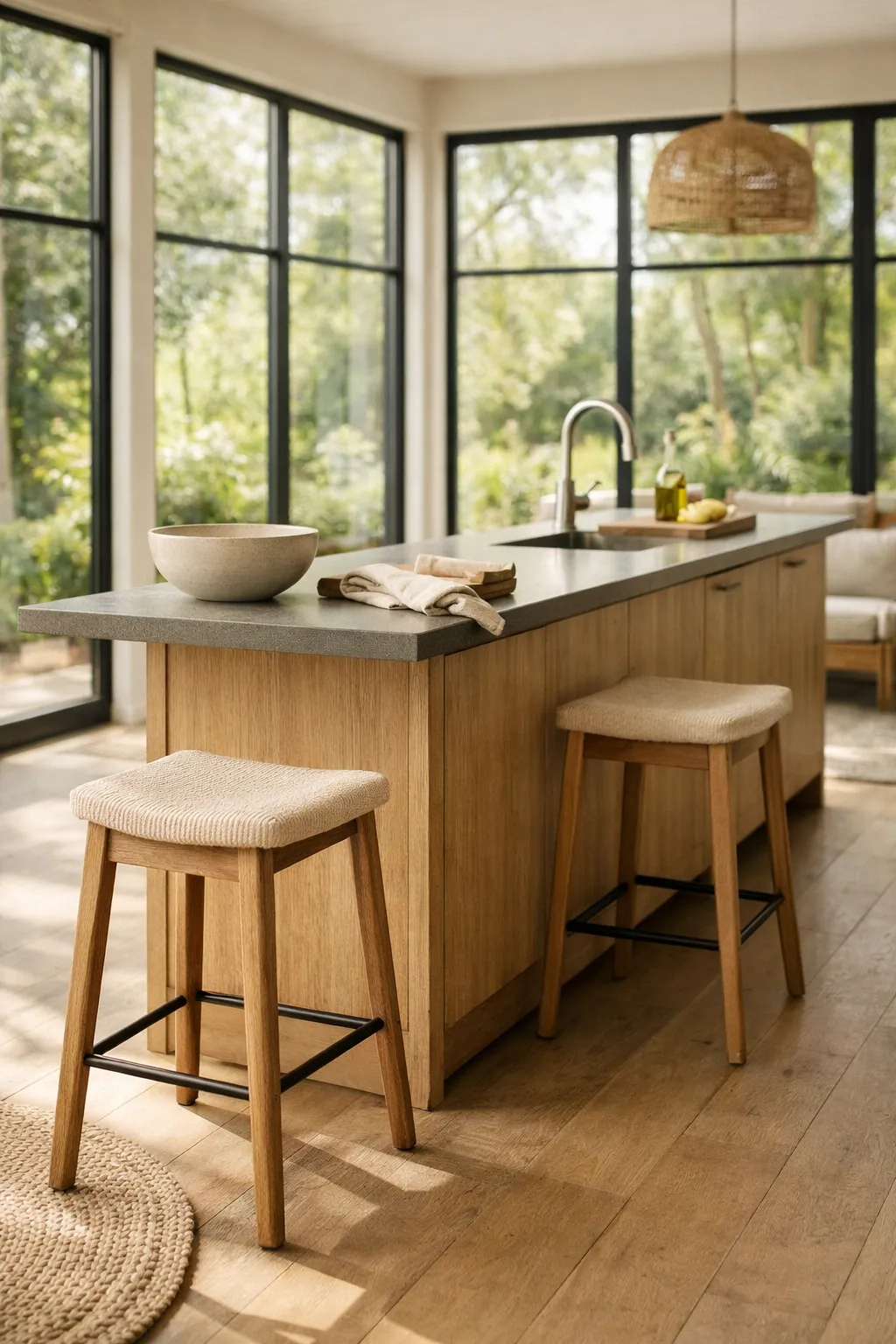
10. Layer soft white paint with warmer undertones
A bright kitchen still needs wall color, even if it looks subtle. Pure bright white is often too sharp in a sun-filled room. It can reflect too much light and flatten everything around it.
A soft white with warm undertones gives a better result. It keeps the kitchen fresh, but it also helps the room feel calm instead of glaring. This matters even more in spaces with lots of glass, because daylight changes all day. A paint color that looks fine at 9 a.m. may look harsh by noon.
Good choices usually lean:
- creamy white
- soft ivory
- warm greige-white
- pale linen white
These tones work well with white oak, stone counters, soft brass, and natural fabrics. They also make the light feel softer, which helps the entire room feel more welcoming.
If you have a nearby sunroom, breakfast area, or dining corner, using the same warm white across connected walls can help the whole space feel larger and more settled.
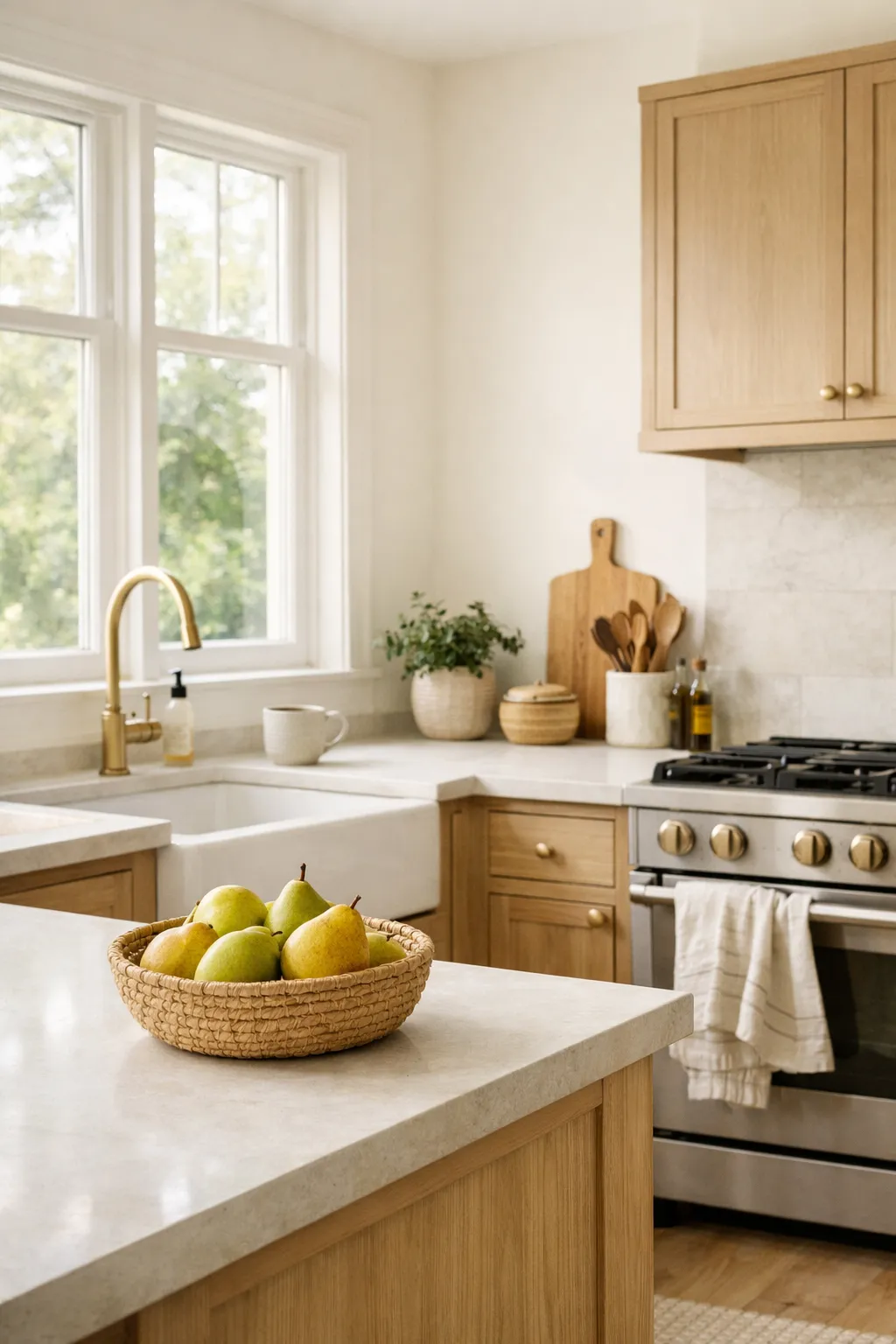
11. Create a plant-friendly zone without turning the kitchen into a jungle
A solarium kitchen naturally invites greenery, but a lot of people overdo it. A few healthy plants can make the room feel fresh and alive. Too many can make it look messy or themed.
The smart move is to create one controlled plant-friendly zone. That might be a windowsill with herbs, a corner shelf with a trailing plant, or a sunny ledge with two or three simple pots. The idea is to echo the outdoor connection without cluttering the kitchen.
The best plants for this look tend to be practical or sculptural:
- rosemary or basil in clay pots
- a pothos on an open shelf
- a small olive tree in a bright corner
- a snake plant near the breakfast nook
Choose containers that fit the room. Ceramic, stone, clay, and woven planters usually work better than glossy plastic ones.
Plants help soften glass, stone, and cabinetry. They also make the kitchen feel used and loved. Just do not let them take over the countertops where real kitchen work needs to happen.
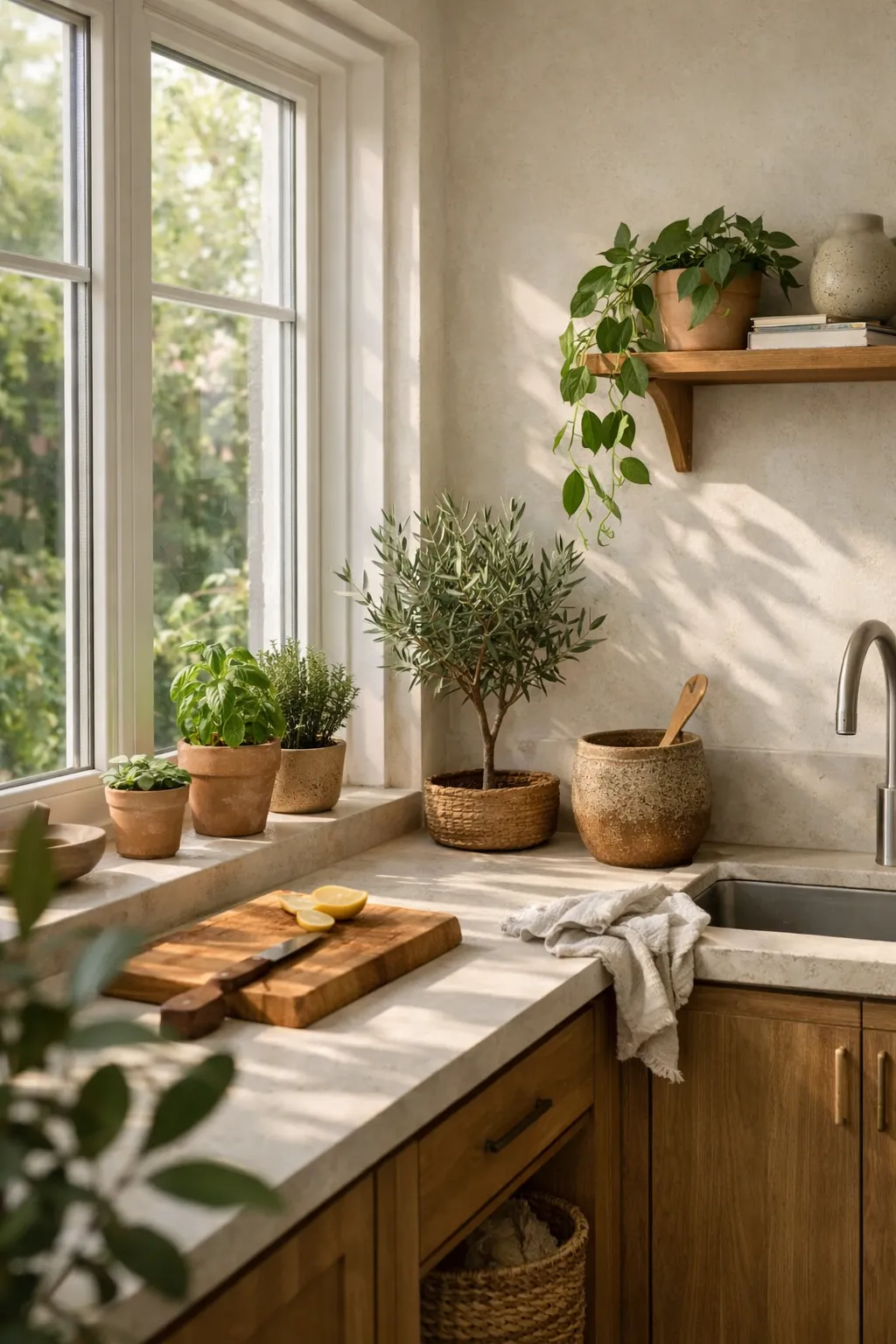
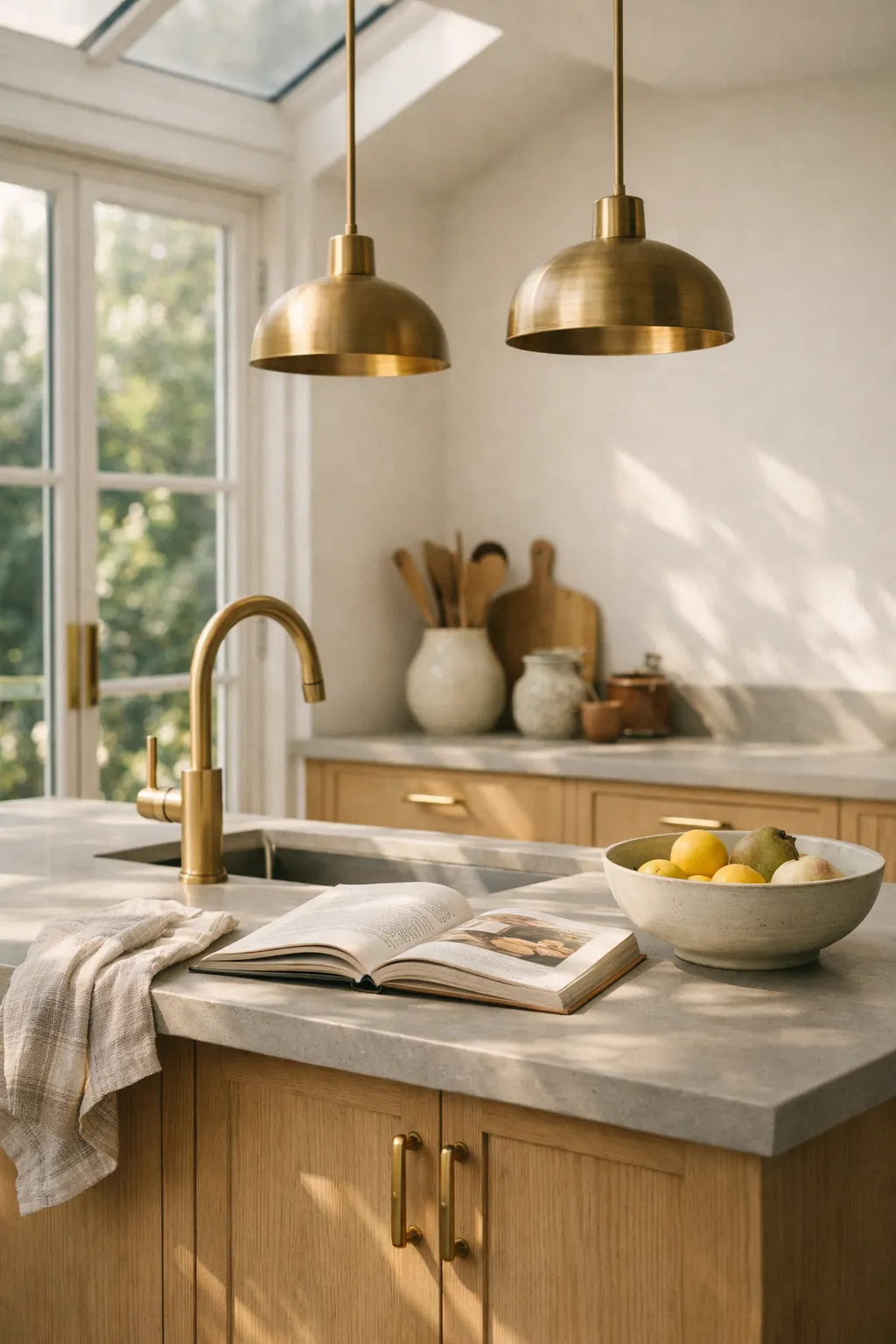
12. Mix brass or aged metal finishes for a warmer glow
A solarium kitchen gets plenty of brightness from the sun, so the metal finishes should support that light, not make it feel colder. Polished chrome can work, but it often looks a bit hard in these spaces. Warmer finishes tend to feel better.
Soft brass, aged brass, antique bronze, and lightly brushed nickel all add a more relaxed glow. They catch light without becoming flashy. That is a big difference.
These finishes work especially well on:
- cabinet hardware
- faucets
- light fixtures
- shelf brackets
- small furniture pulls on a built-in nook or pantry
You do not need to match every metal perfectly. In fact, a slight mix can make the room feel more natural. What matters is staying in the same general mood. Warm with warm. Soft with soft. Not polished chrome on one side and heavy black iron on the other for no reason.
In a sunlit kitchen, the right hardware becomes part of the atmosphere. It should feel quietly beautiful, not loud.
13. Frame the outdoor view like part of the decor
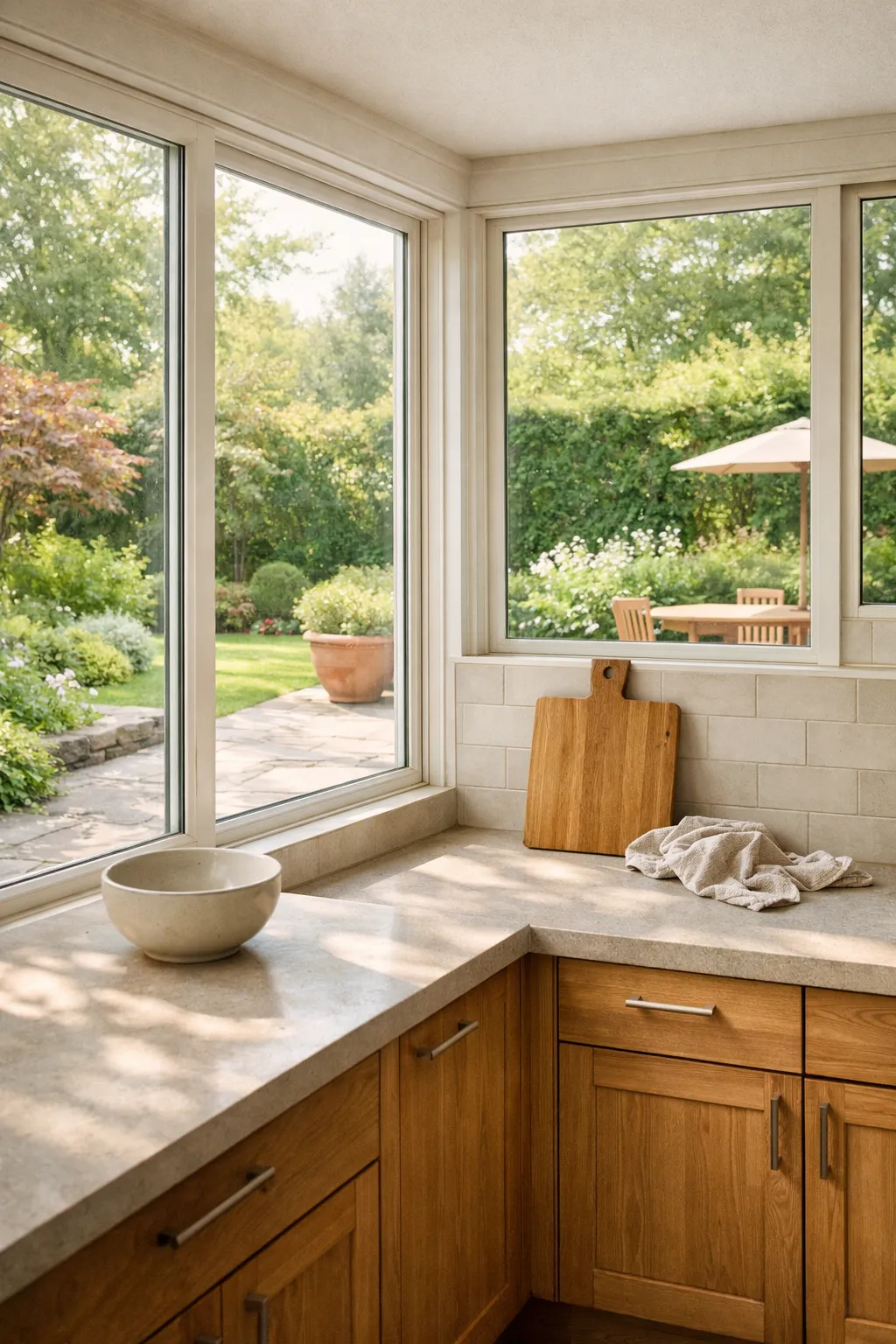
One of the biggest mistakes in a solarium kitchen is ignoring the view. If the windows face greenery, a patio, or even a neat fenced yard, that outdoor scene is already part of the room. Treat it that way.
This means the inside design should not compete with the outside. If the view is leafy and soft, choose materials and colors that complement it. If the backyard has stone or brick, echo a little of that texture indoors.
Simple ways to make the view feel intentional include:
- keeping window frames visually clean
- avoiding clutter on every sill
- using lower-profile decor near glass
- repeating natural tones from outside inside the kitchen
When the outside is pretty, the room feels larger because the eye keeps moving. When the outside is messy, no amount of good styling inside fully fixes it. So if needed, clean up what is visible from the windows. Even a few planters or trimmed shrubs can make a difference.
A solarium kitchen works best when indoors and outdoors feel like they are having the same conversation.
14. Add soft Roman shades for privacy without killing the light
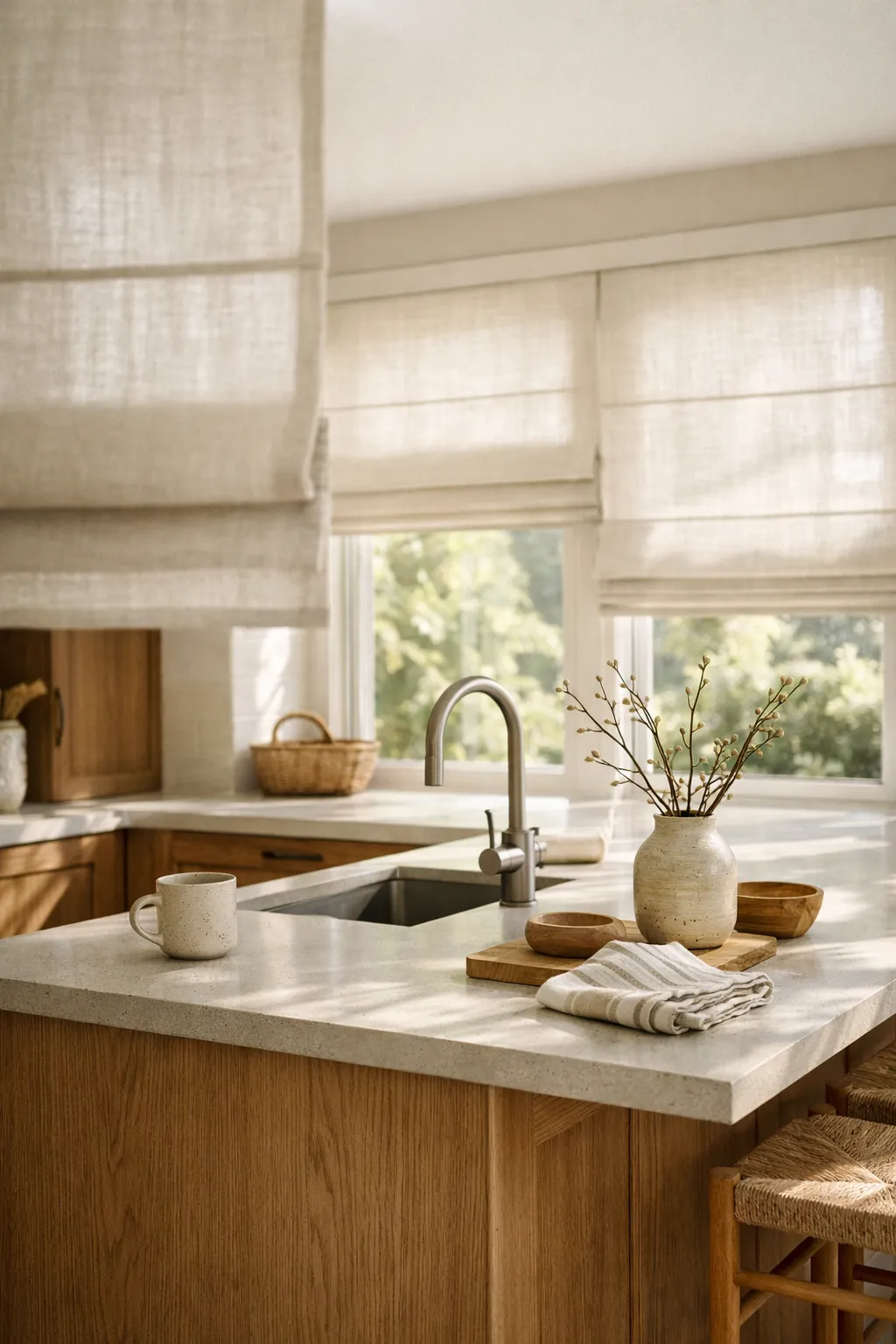
A kitchen with lots of glass can feel amazing during the day, but privacy becomes real fast once the sun goes down. That is why some kind of light window treatment often makes sense.
Heavy curtains usually feel wrong in a solarium kitchen. They block too much light and add more weight than the room needs. Soft Roman shades are a better fit because they look clean, give privacy when needed, and still keep the windows feeling special.
The best fabrics are usually:
- linen blends
- light-filtering cotton
- soft woven neutrals
- pale muted patterns with low contrast
Choose shades that disappear when raised and look tailored when lowered. Nothing too stiff. Nothing too fussy. The whole point is to preserve the airy mood.
This is also a good chance to bring in subtle texture or color. A warm flax tone, soft stripe, or muted green can help tie the room together without pulling attention away from the daylight.
15. Use mixed seating to make the kitchen feel more lived in
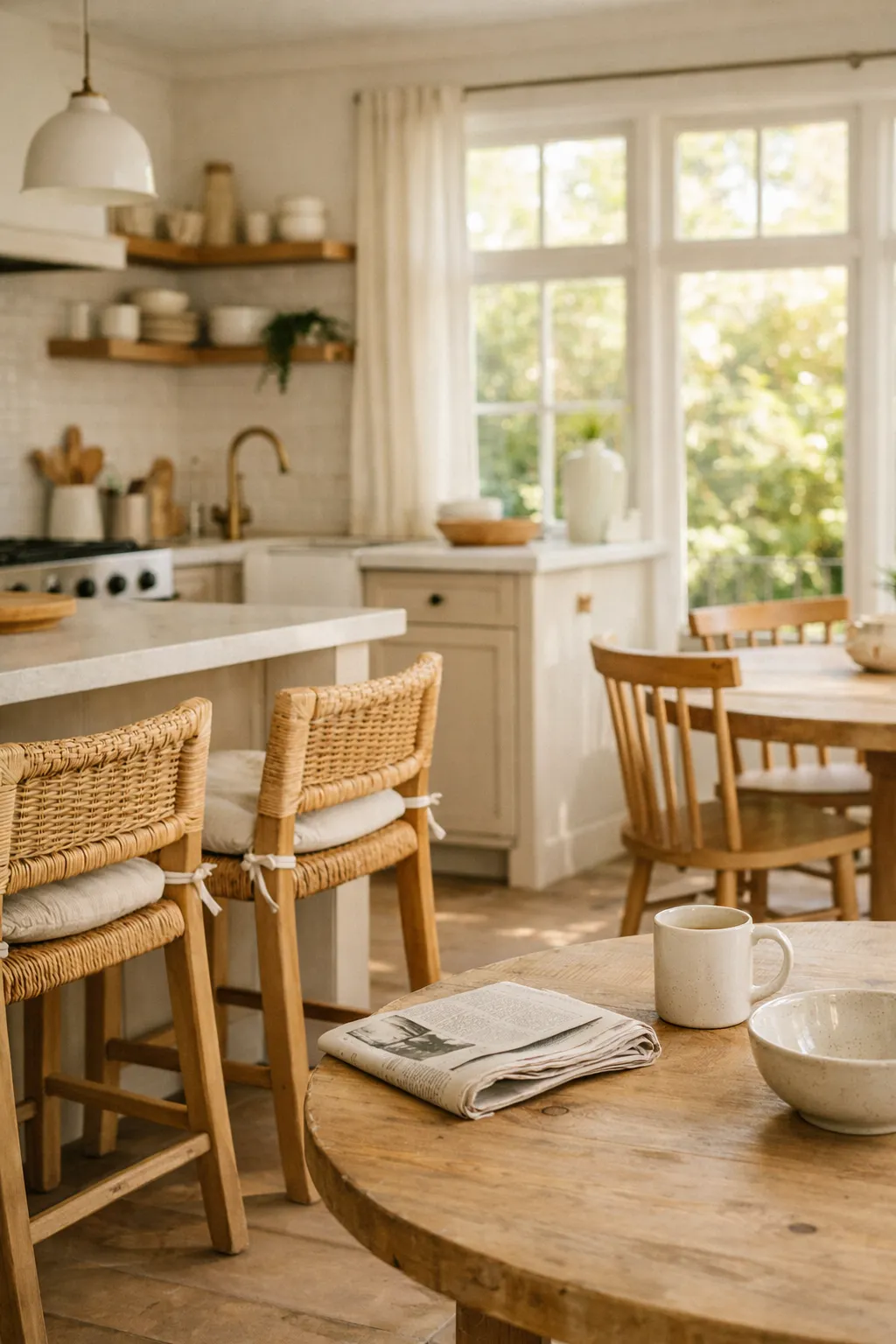
A solarium kitchen should feel easy, not overly matched. One simple way to get there is with mixed seating. That could mean woven stools at the island and wood chairs in the breakfast nook, or painted side chairs around a small dining table with a bench on one side.
Perfectly matching furniture can make a kitchen feel staged. Mixing materials gives it more personality and makes the space feel like it belongs to real people.
Good combinations include:
- oak stools with cane backs
- black spindle chairs with a natural wood table
- an upholstered bench with simple wood side chairs
- slim metal stools paired with a softer breakfast corner nearby
The trick is cohesion, not sameness. Keep the tones connected so the room still feels calm. Maybe the wood finishes are close in warmth, or the upholstery ties back to the wall color.
This approach works especially well in a bright room because daylight highlights the details. A little variation gives the eye more to enjoy without creating clutter.
16. Ground the room with stone or terracotta-style flooring
When a kitchen has a lot of glass and a lot of light, the floor matters more than people think. It can either anchor the room or make it feel like everything is floating.
Stone-look flooring, limestone tones, pale travertine, and terracotta-style tile all help ground a solarium kitchen. They add visual weight in a natural way and give the room a more settled feeling.
This works because warm, earthy floors balance the brightness above. They also hide day-to-day wear better than many cool-toned finishes. In a real kitchen, that matters.
Some strong options are:
- tumbled limestone-look tile
- matte porcelain in a pale stone finish
- warm terracotta-inspired tile in a softer shade
- natural oak flooring if the room needs less contrast
The goal is not rustic for the sake of rustic. It is balance. A solarium kitchen already has plenty of openness. The floor should make the room feel rooted.
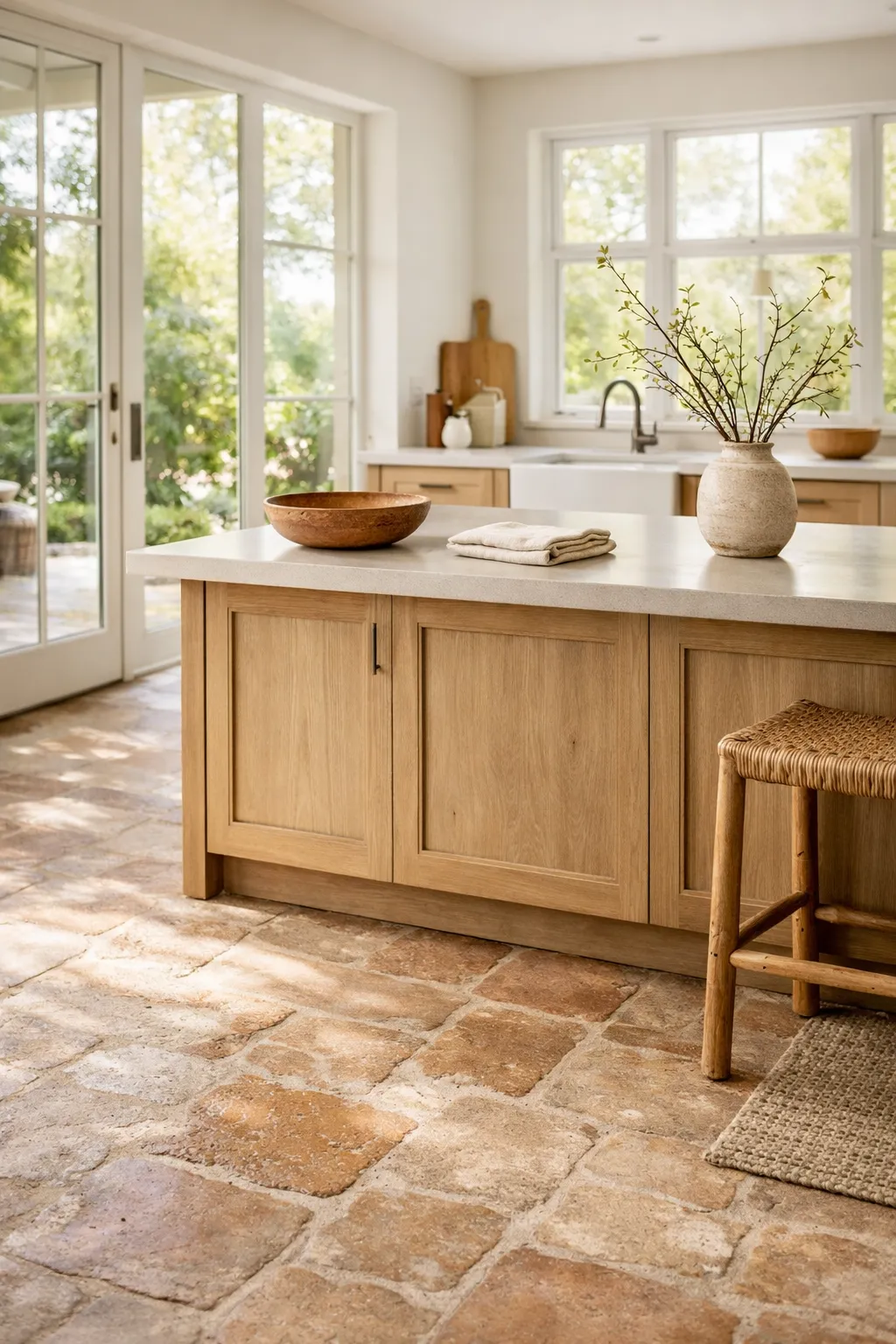
17. Keep the styling simple so the light stays the star
This last idea is the one people ignore, and it is often the most important. A solarium kitchen does not need constant decoration. The light is already doing a lot of the visual work. If you overload the room with decor, you kill the effect.
That means editing with more discipline than usual. Keep the counters mostly clear. Let a bowl of citrus, a ceramic pitcher, or a wooden board be enough. Do not cover every shelf, sill, and corner just because there is space.
A few strong styling choices go further:
- one large vase instead of five small objects
- one tray with daily essentials instead of random clutter
- one piece of art where the wall truly needs it
- one seasonal branch or arrangement instead of endless accessories
This does not make the room boring. It makes it believable. In a sunlit kitchen, every object gets more attention because the room is so visible. Less clutter means the materials, the view, and the daylight can do what they are supposed to do.
That is what gives a solarium kitchen its calm, effortless look. It feels bright, open, and collected without trying too hard.
A solarium kitchen works best when every choice respects the light. Warm woods, soft finishes, airy layouts, and restrained styling all matter more here than in a darker room. The point is not just to create a bright kitchen. The point is to create a space where sunlight actually improves how the room looks and feels.
If you get that balance right, the kitchen stops feeling like just a work zone. It becomes a place people want to spend time in, which is exactly why this style keeps lasting.