

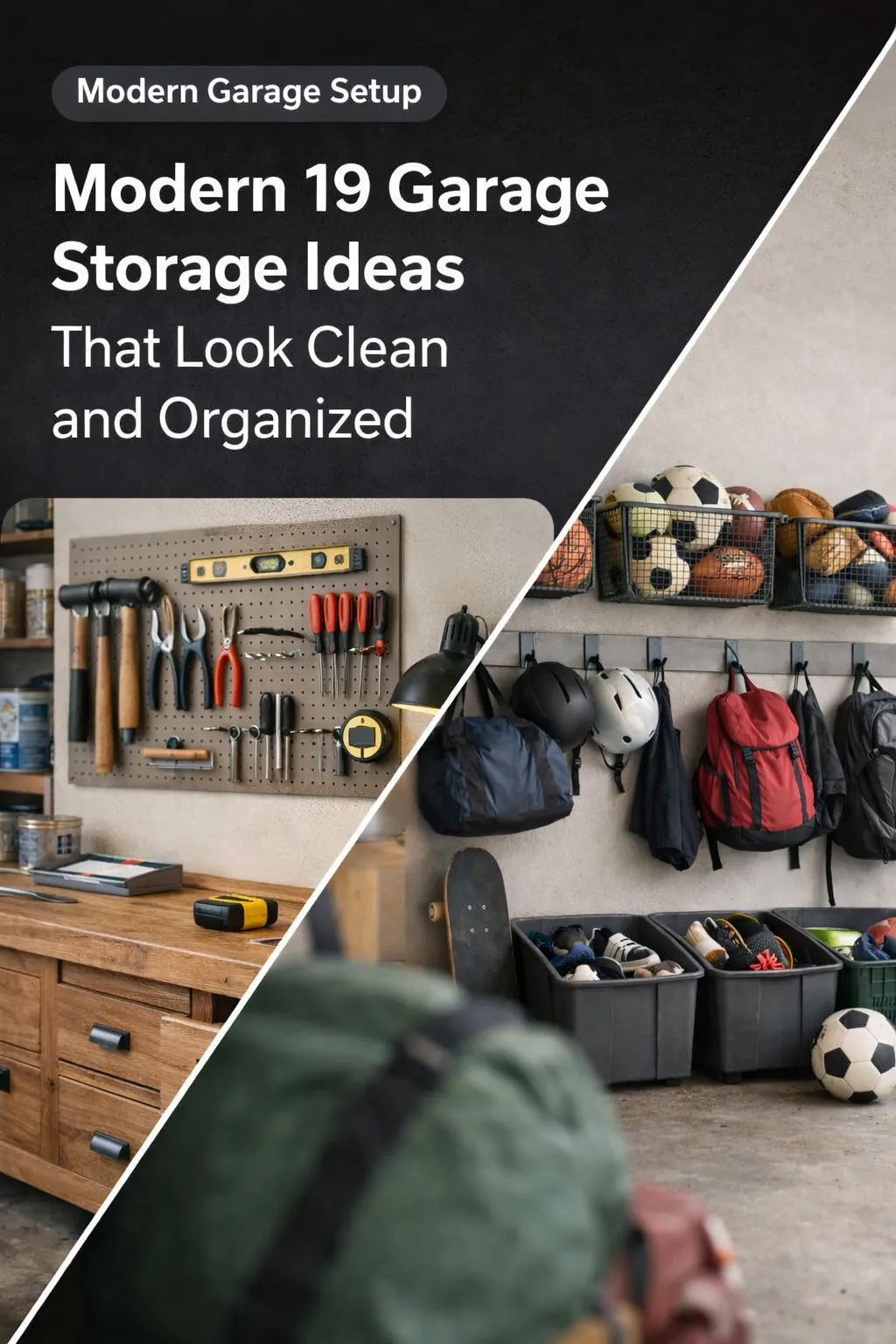
A garage can become a dumping ground fast. One week it holds your tools and holiday bins. A month later it turns into a tight maze of bikes, paint cans, sports gear, and things you forgot you owned.
The fix is not just buying more bins. Good garage storage starts with a smarter layout. When every item has a clear home, the garage feels bigger, works harder, and stays easier to maintain.
The ideas below focus on real homes, real clutter, and real daily use. Some are simple weekend upgrades. Others create a cleaner built-in look. Mix a few together, and even a crowded garage can start to feel calm and usable again.
Quick Look at the Best Garage Storage Options
| Storage Idea | Best For | Budget Level | Biggest Benefit |
|---|---|---|---|
| Floor-to-ceiling shelves | Bins, bulk supplies, seasonal items | $$ | Uses vertical space well |
| Pegboards | Hand tools, small gear | $ | Keeps grab-and-go items visible |
| Wall track systems | Mixed gear, flexible storage | $$ | Easy to adjust over time |
| Overhead racks | Holiday decor, long-term storage | $$ | Frees up floor space |
| Cabinets | Paint, chemicals, clutter control | $$$ | Creates a clean look |
| Ceiling bike hooks | Bikes in tight garages | $ | Clears awkward floor clutter |
| Rolling carts | Projects and supplies in motion | $ | Easy to move where needed |
Why Garage Storage Works Better When You Zone It First
Before you install anything, divide the garage into zones. That step saves money and stops random storage from taking over the room.
A practical setup usually looks like this:
- Daily-use zone near the garage door for shoes, bags, and quick-grab gear
- Tool zone near a workbench
- Seasonal storage zone higher up or farther back
- Yard and garden zone close to the side door or lawn equipment
- Sports zone with hooks, bins, or open cubbies
When you group like items together, you stop wasting time hunting for things. You also see how much storage you really need.
1. Install Floor-to-Ceiling Shelving
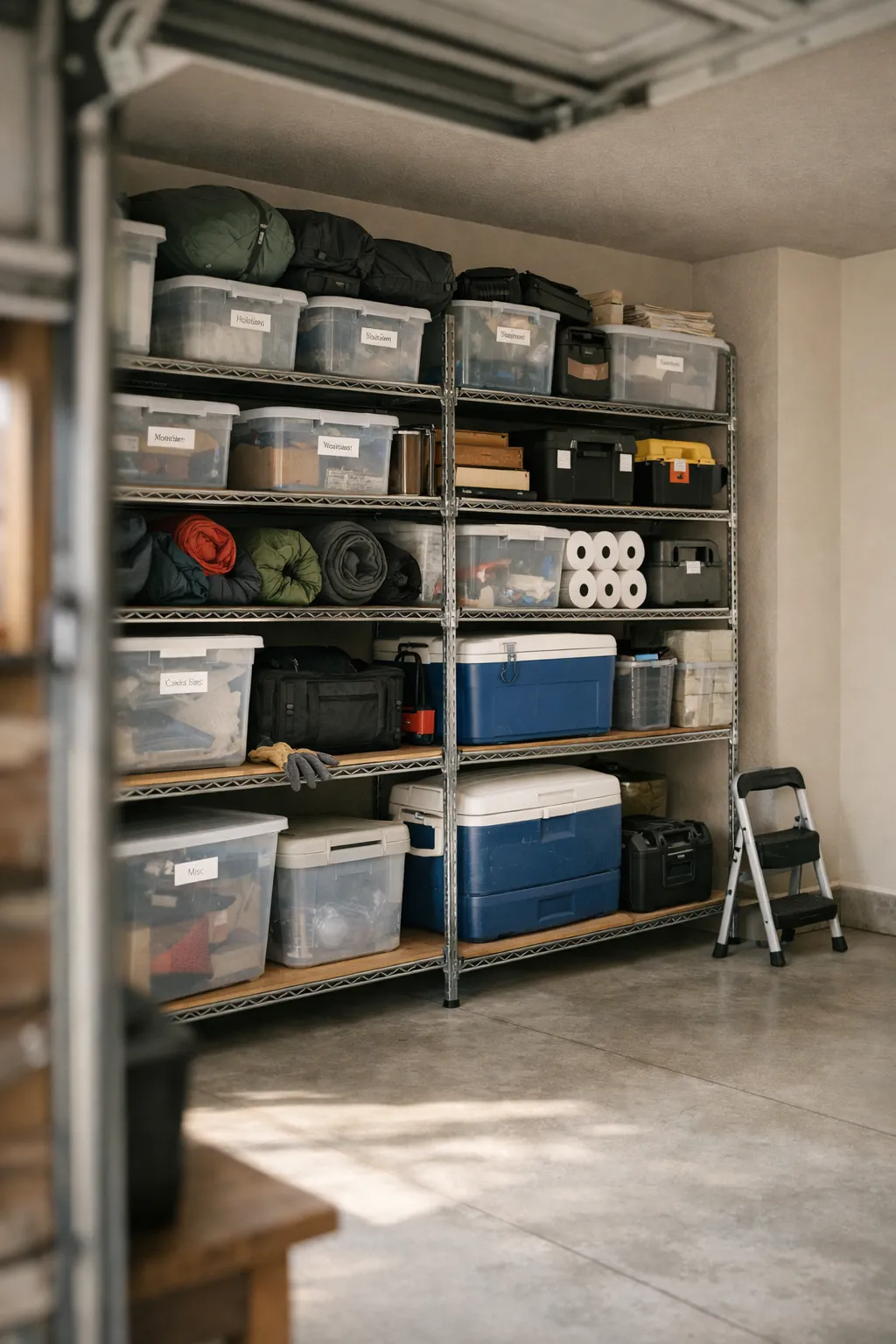
Tall shelving is one of the easiest ways to add serious storage without shrinking your walkway. It works well for plastic bins, paper towels, cleaning products, coolers, and backup household supplies.
Choose sturdy shelves that can handle weight. Lower shelves should hold the items you use most. Save the top shelves for holiday decor, keepsakes, or other things you only pull down a few times a year.
If your garage gets dusty, use matching lidded bins so the whole wall looks cleaner and less chaotic.
2. Use Clear Labeled Bins for Seasonal Items
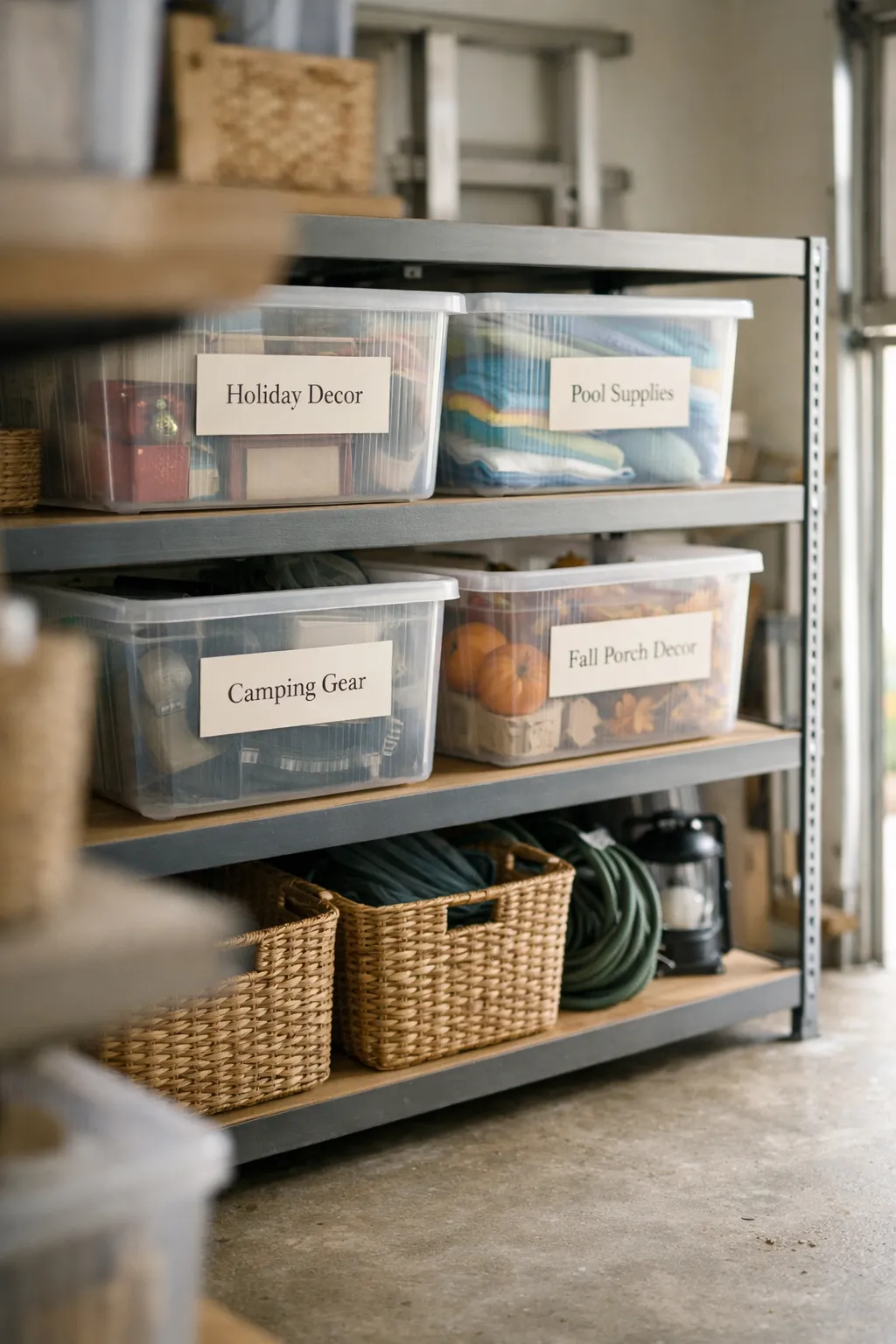
Garage clutter gets worse when seasonal things live in random boxes. Clear bins fix that fast because you can see what is inside without opening each one.
Use labels that make sense at a glance, such as:
- Fall porch decor
- Christmas lights
- Pool supplies
- Camping gear
- Car wash products
Keep the labels big and simple. A clean row of clear bins on shelves looks better than mixed cardboard boxes, and it makes change-of-season swaps much easier.
3. Add a Pegboard Above the Work Area
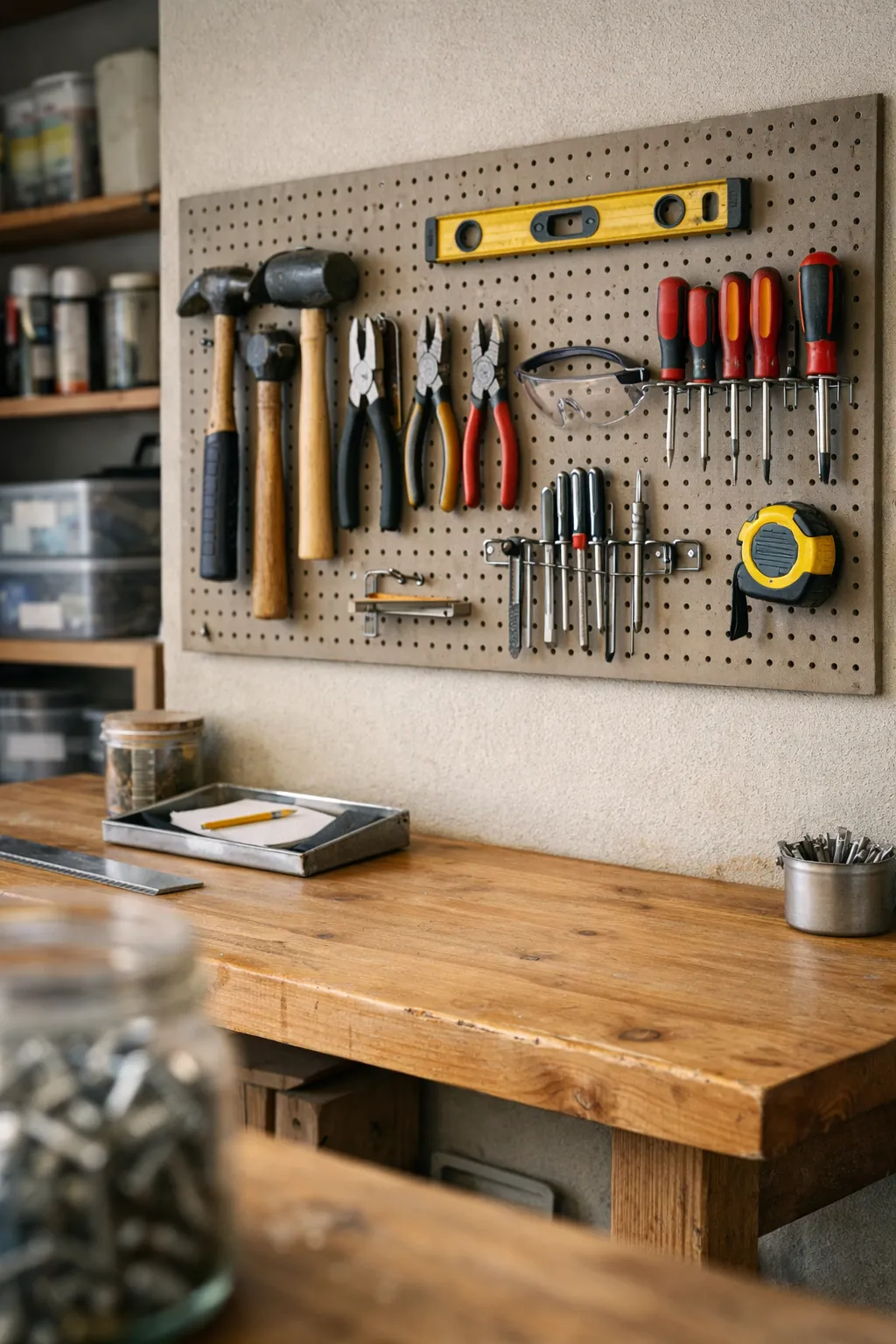
A pegboard gives small tools a visible home. Hammers, screwdrivers, pliers, tape measures, and safety glasses all stay off the bench and easy to grab.
This works best above a workbench or along a side wall near your project zone. The big advantage is speed. You can see right away if something is missing, and you do not have to dig through drawers.
Use a basic layout at first. Leave some open space so the pegboard can grow with your needs.
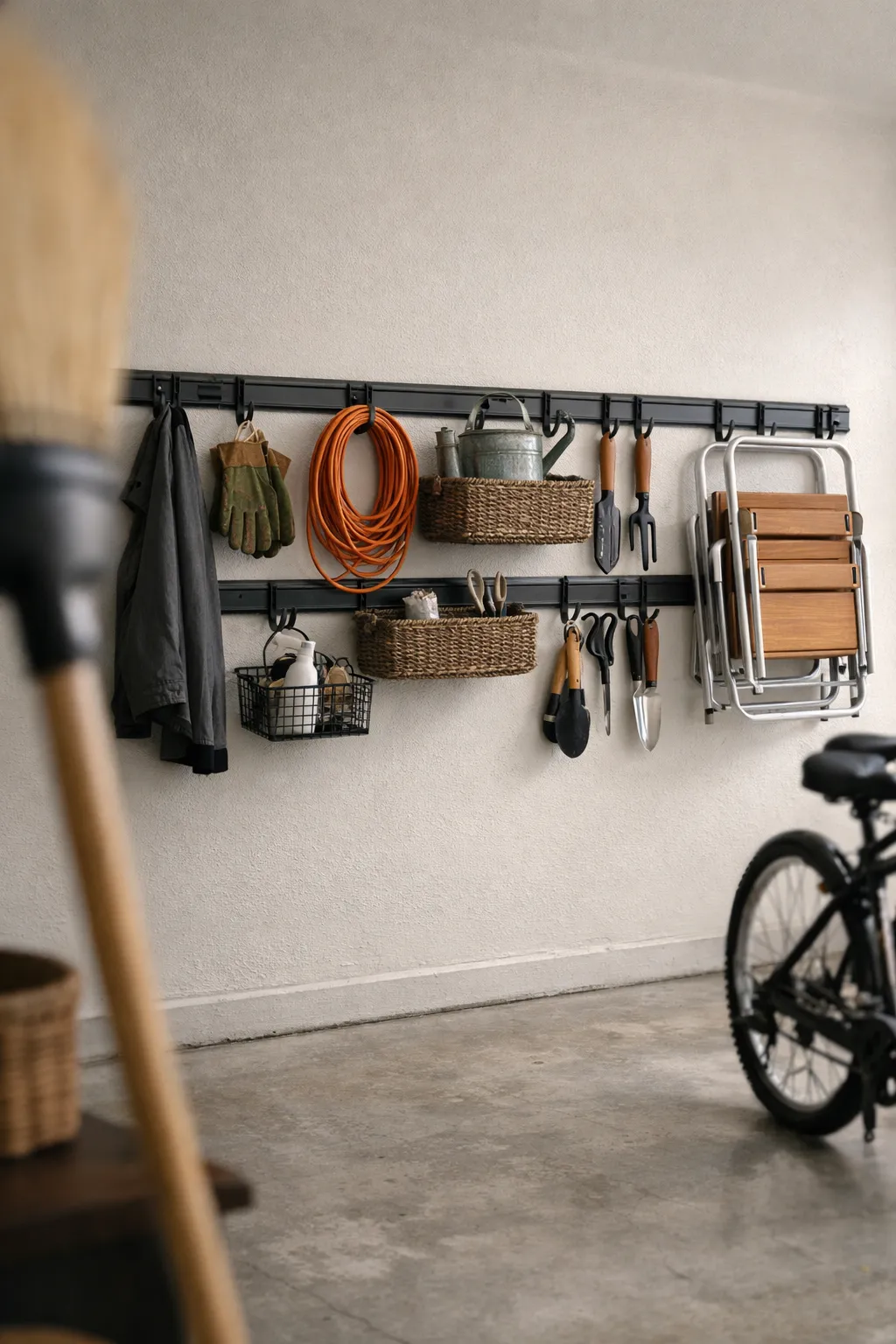
4. Hang a Wall-Mounted Track System
Track systems are great when your storage needs change often. They can hold hooks, baskets, small shelves, and tool holders all on one rail.
That makes them useful for families with a mix of sports gear, extension cords, folding chairs, and lawn tools. As life changes, you can move the pieces around without tearing everything out.
This is a smart option if you want something more polished than random hooks but less bulky than full cabinets.
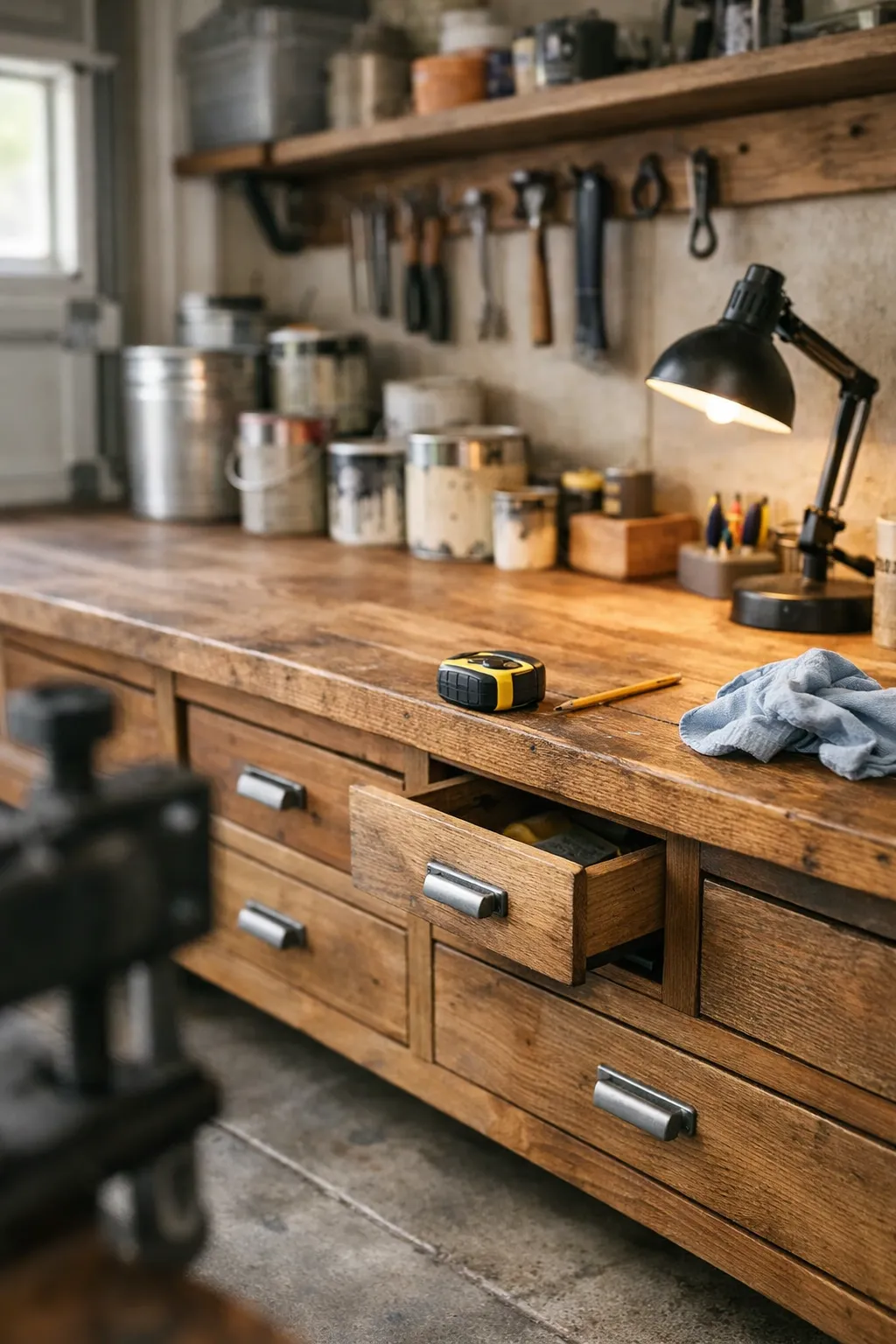
5. Build Around a Simple Workbench
A workbench becomes more useful when it includes storage under and around it. Add drawers, open shelves, or rolling tool chests below. Then use wall storage above for the tools you reach for most.
Even a basic bench can become a strong storage anchor. In many garages, this area ends up handling repairs, crafts, paint touch-ups, and quick assembly jobs. That means it should stay clear enough to work on, not just collect clutter.
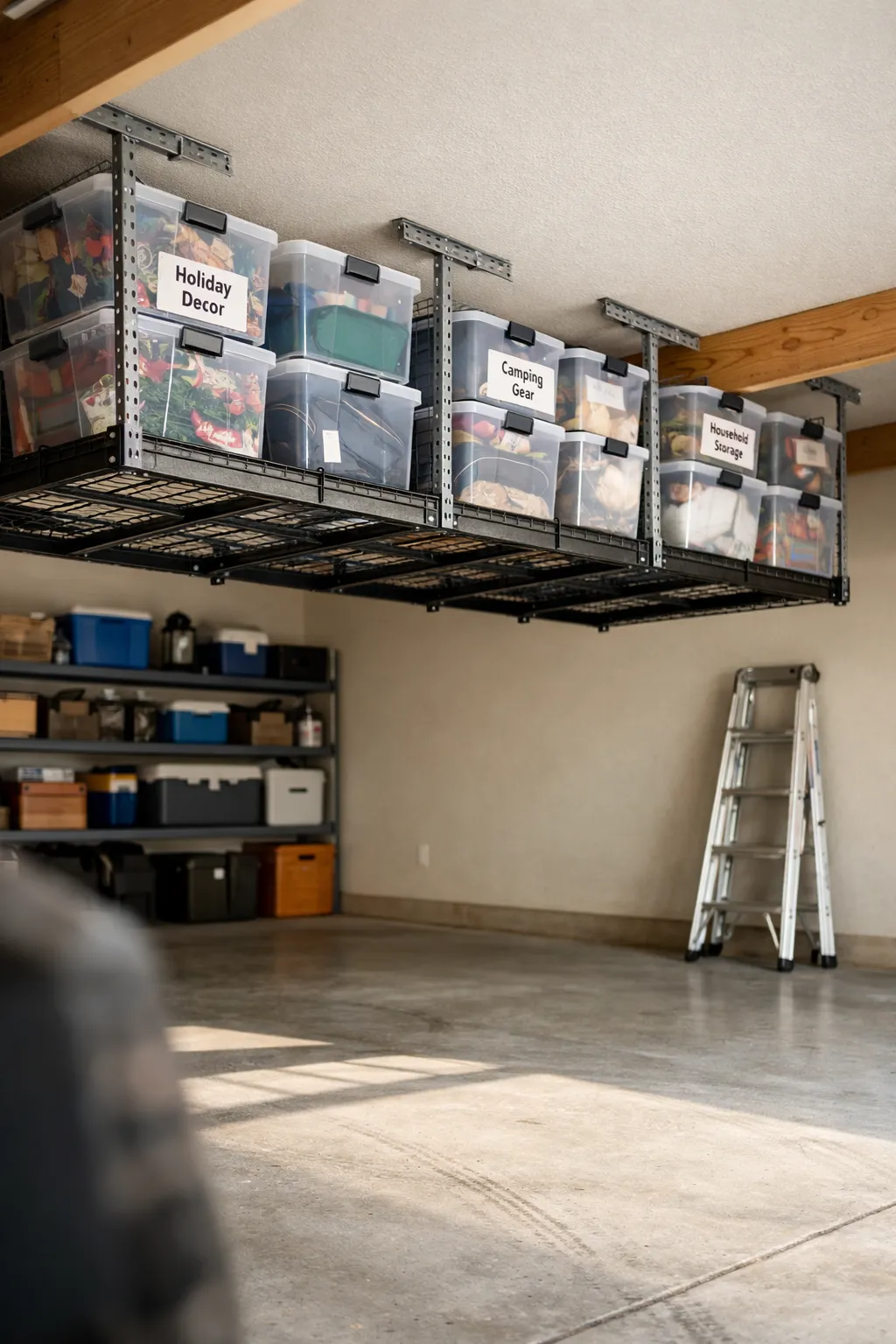
6. Make Use of Overhead Ceiling Racks
Ceiling racks are perfect for long-term storage. They help you move bulky bins off the floor and out of the way.
Use them for:
- Holiday decorations
- Archived paperwork in sealed bins
- Extra household supplies
- Camping gear you only use a few times a year
Do not store anything too heavy unless the rack is rated for it and installed properly. Keep often-used items lower and easier to reach.
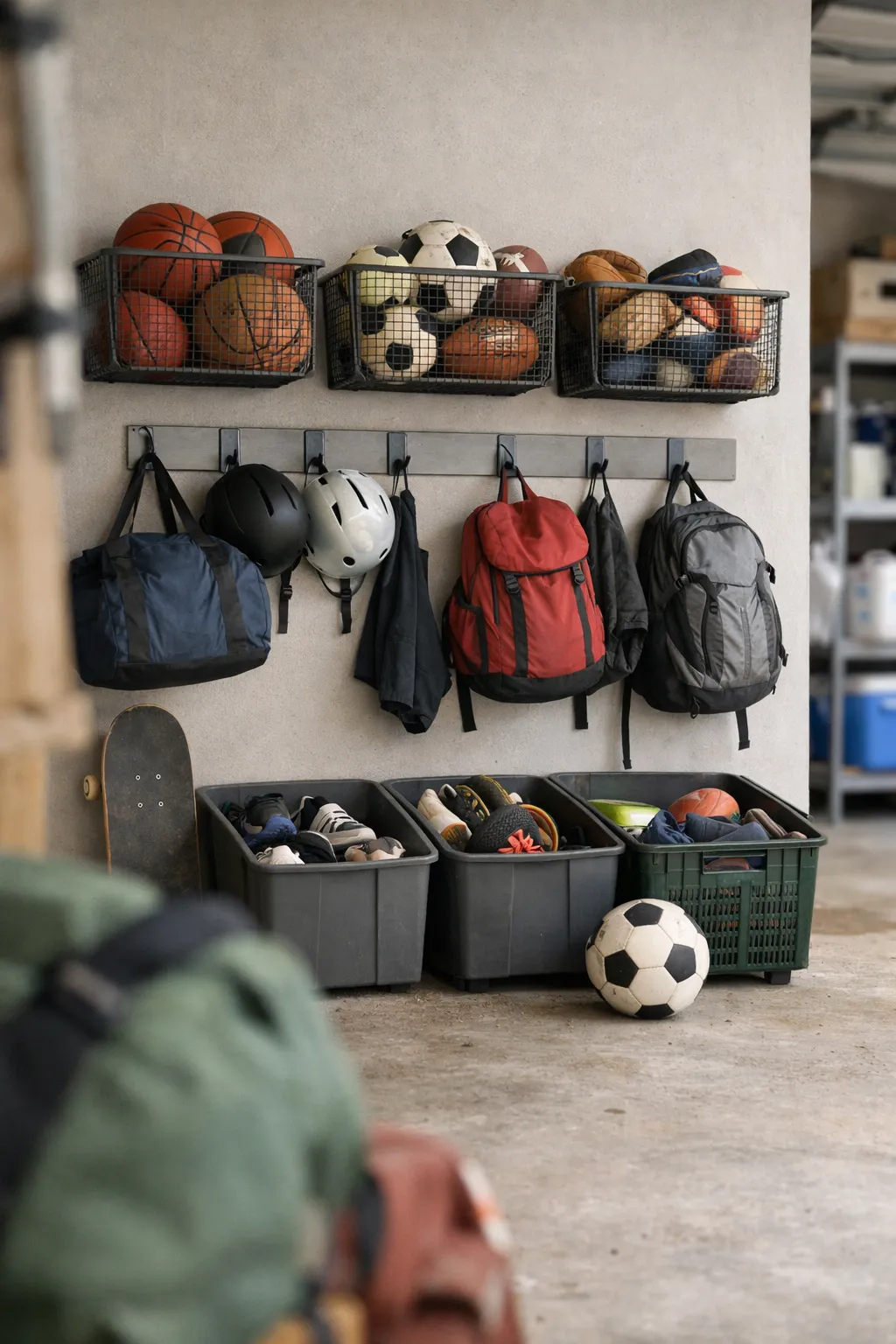
7. Create a Dedicated Sports Gear Wall
Sports equipment spreads fast. Balls roll everywhere, helmets pile up, and bags end up on the floor.
A single sports wall solves that mess. Combine hooks, baskets, cubbies, and a low bin for loose gear. Kids can usually put items away more easily when each type of gear has a visible spot.
This setup works well near the garage entrance if the garage doubles as a family drop zone.
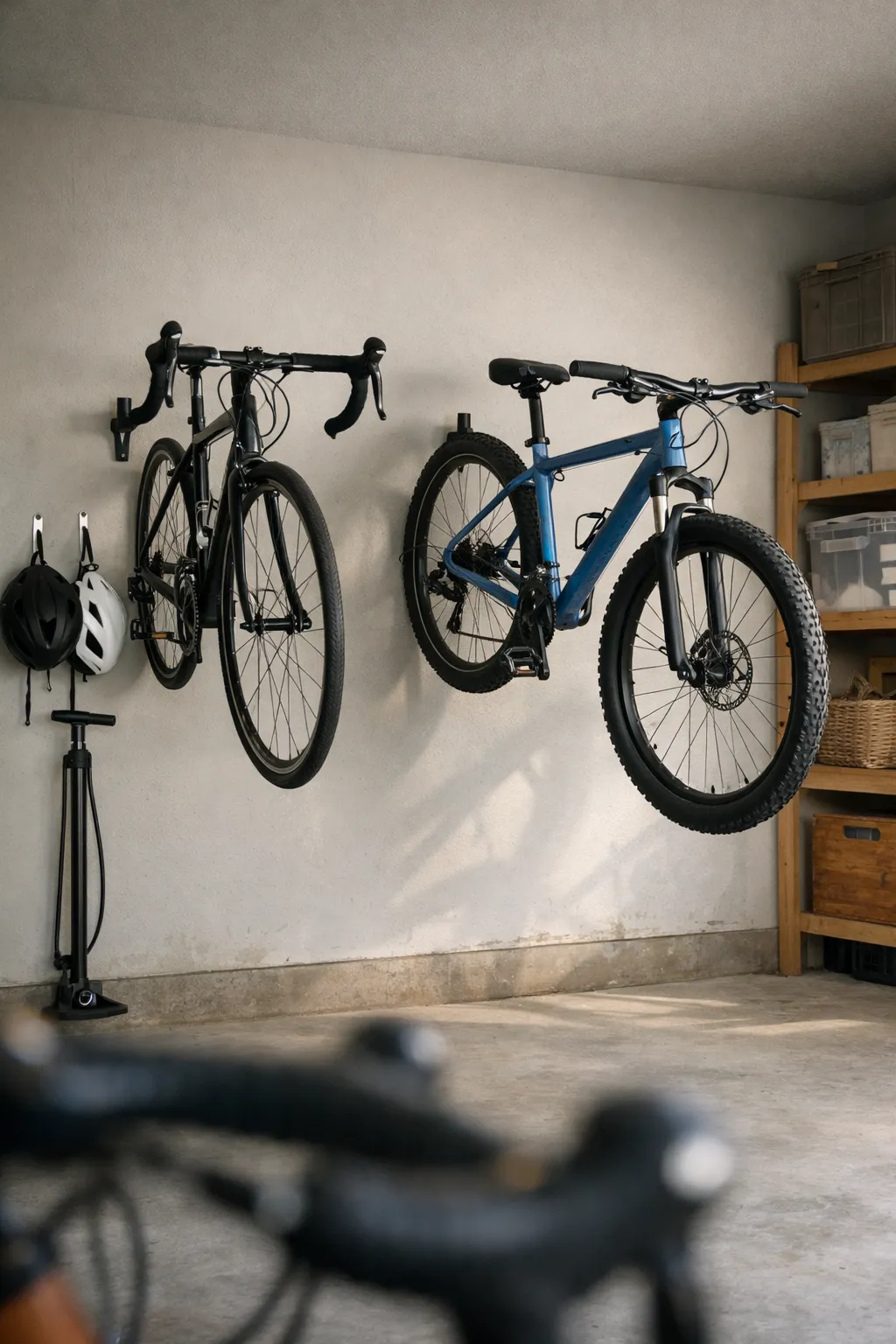
8. Hang Bikes Instead of Parking Them
Bikes eat up a surprising amount of floor space. Hanging them on wall hooks or ceiling mounts opens that area right away.
Vertical bike hooks work well in narrow garages. Horizontal wall mounts can look cleaner if you have enough side wall space. The best option depends on your ceiling height, bike count, and how often you ride.
If the bikes get used every day, make sure the storage method feels easy enough that people will actually use it.
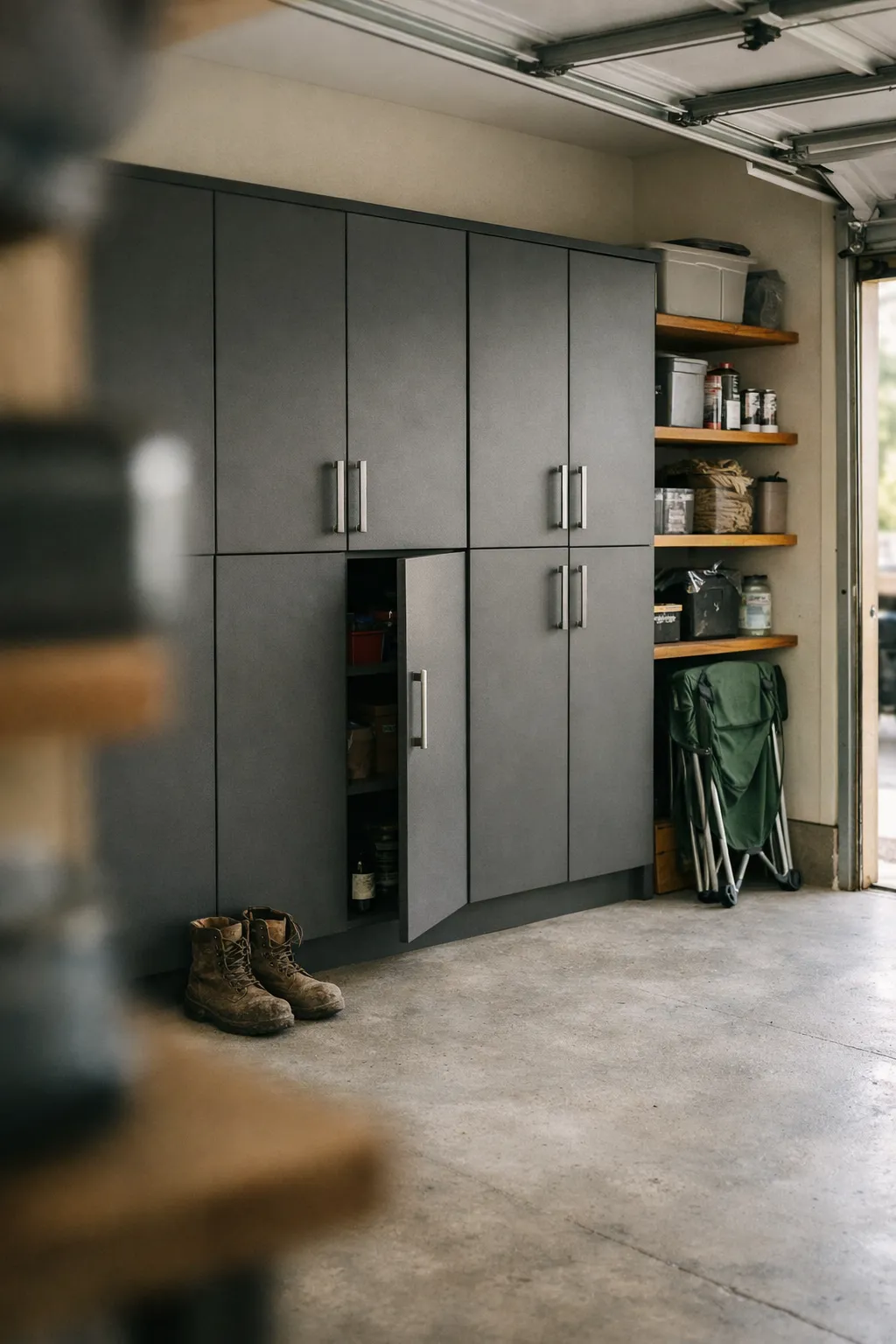
9. Use Tall Cabinets for Visual Calm
Open shelving is practical, but it can still look busy. Cabinets hide the visual mess and make the garage feel more finished.
This is useful for:
- Paint cans
- Car care supplies
- Power tools
- Fertilizer and chemicals
- Random household overflow
Locking cabinets also add safety if you store products that should stay away from kids or pets. Choose simple finishes in black, gray, or white for a clean look.
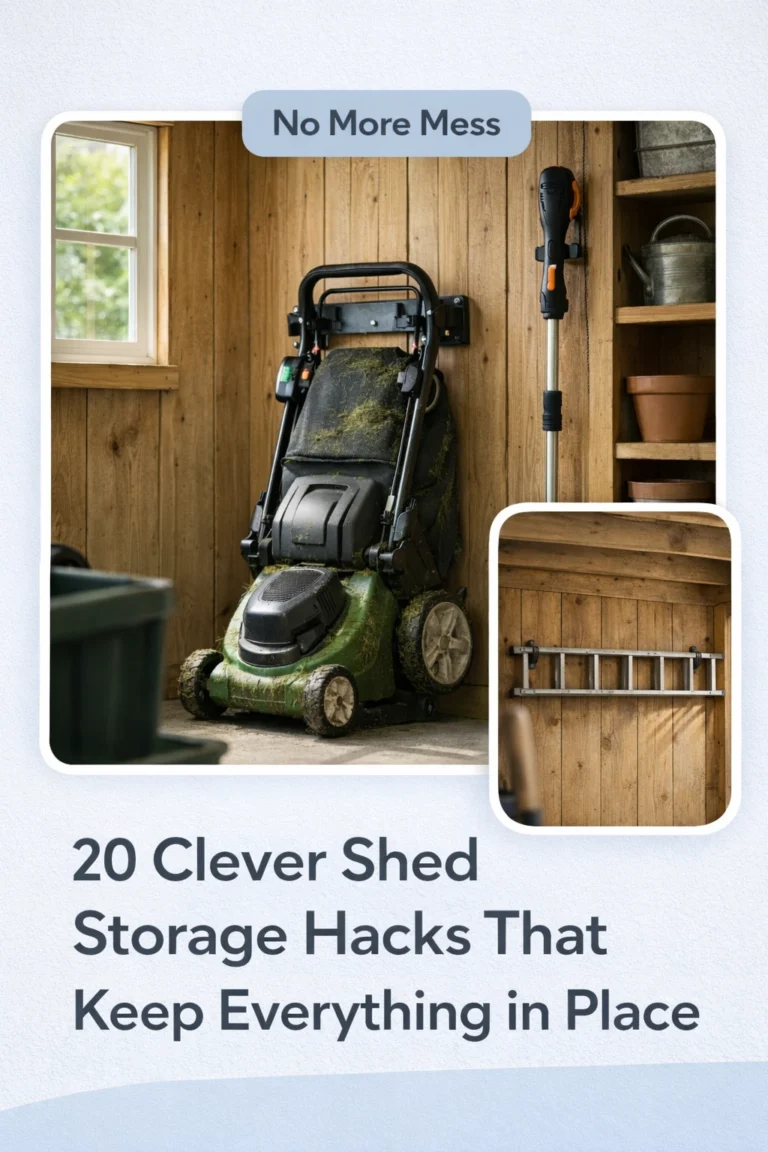
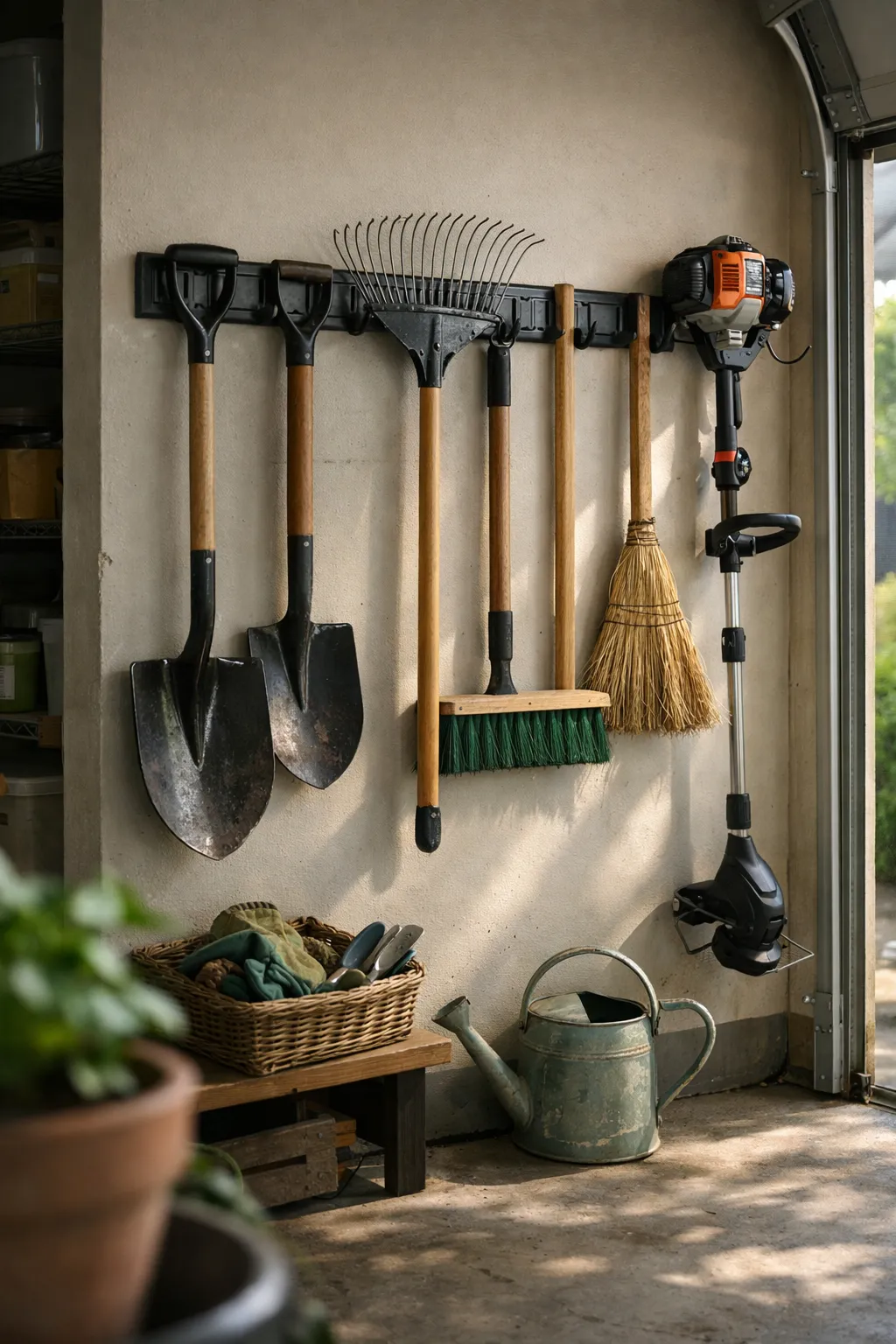
10. Add Hooks for Lawn and Garden Tools
Rakes, shovels, brooms, and trimmers should never lean in a corner if you can help it. They fall over, tangle together, and damage the wall.
A row of strong hooks turns an awkward pile into an organized tool zone. Group tools by use, and place the most-used ones at arm height. Keep a small bin or shelf nearby for gloves, seed packets, and hand tools.
This setup works best near the garage door that leads to the yard.
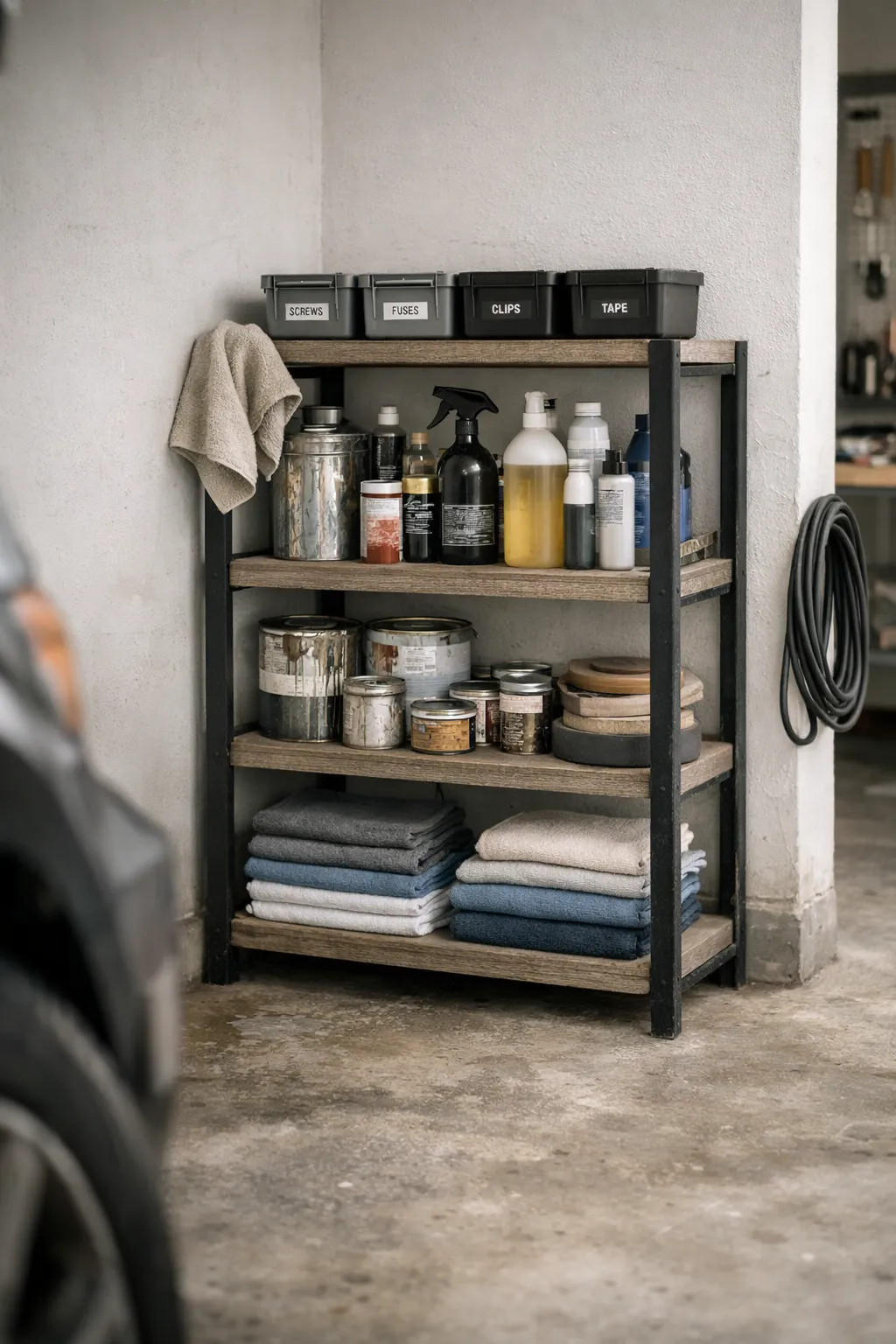
11. Turn One Corner Into a Compact Storage Station
Garage corners often go wasted because standard shelves do not fit well there. A corner shelf unit or angled wall storage can turn dead space into useful space.
This is a good place for smaller bins, car cleaning products, or backup paint supplies. If your garage is tight, every corner matters. Even one cleaned-up corner can make the whole room feel more intentional.
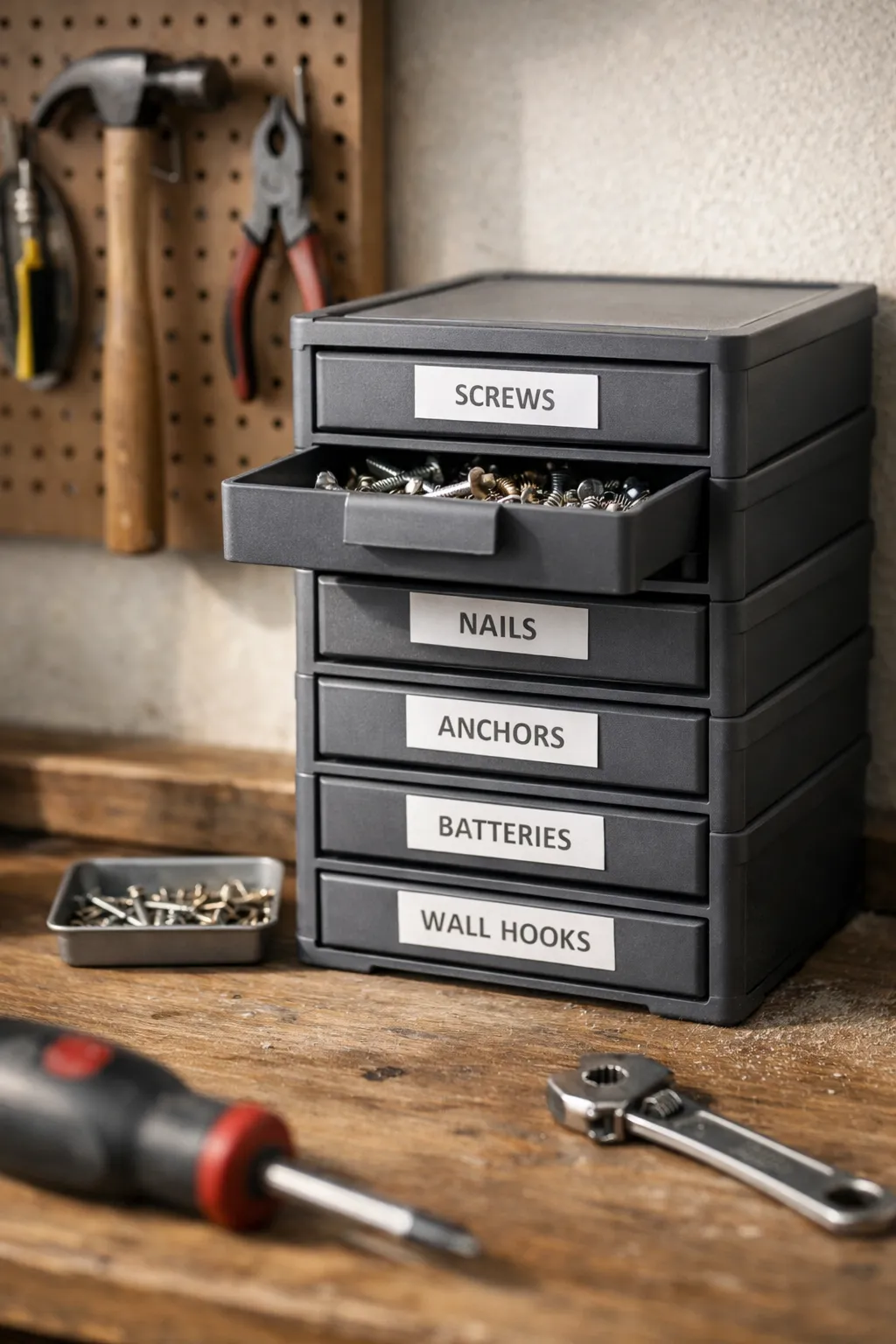
12. Use Stackable Drawer Units for Small Parts
Small parts are where organization falls apart. Screws, nails, zip ties, batteries, picture hangers, and random hardware all get mixed together.
Stackable drawer units help because they break those little items into categories. Put them near your tool area, and label each drawer clearly. This beats a junk drawer every time.
Go small and specific with labels. “Fasteners” is too broad. “Wood screws,” “anchors,” and “cord clips” are much easier to use.
13. Add Open Cubbies for Grab-and-Go Items
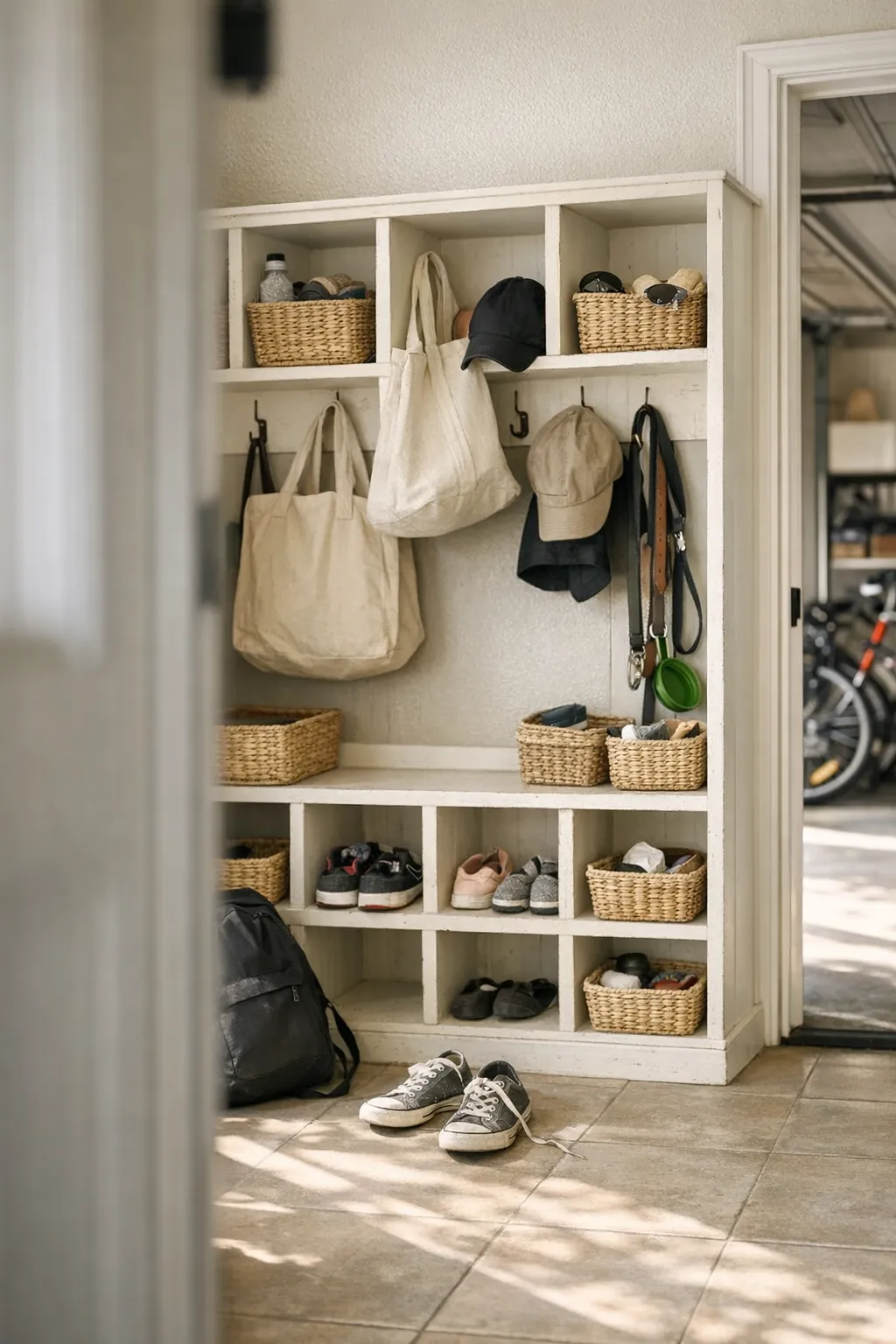
Open cubbies are useful for the things you reach for all the time. Think reusable bags, dog-walking gear, sunscreen, ball caps, work gloves, and extra water bottles.
They work especially well in garages that connect to the house. In that setup, the garage often acts like a mudroom. Cubbies keep the daily mess contained without making the space feel heavy.
Pair them with baskets if you want the look to stay tidy.
14. Use a Rolling Cart for Active Projects
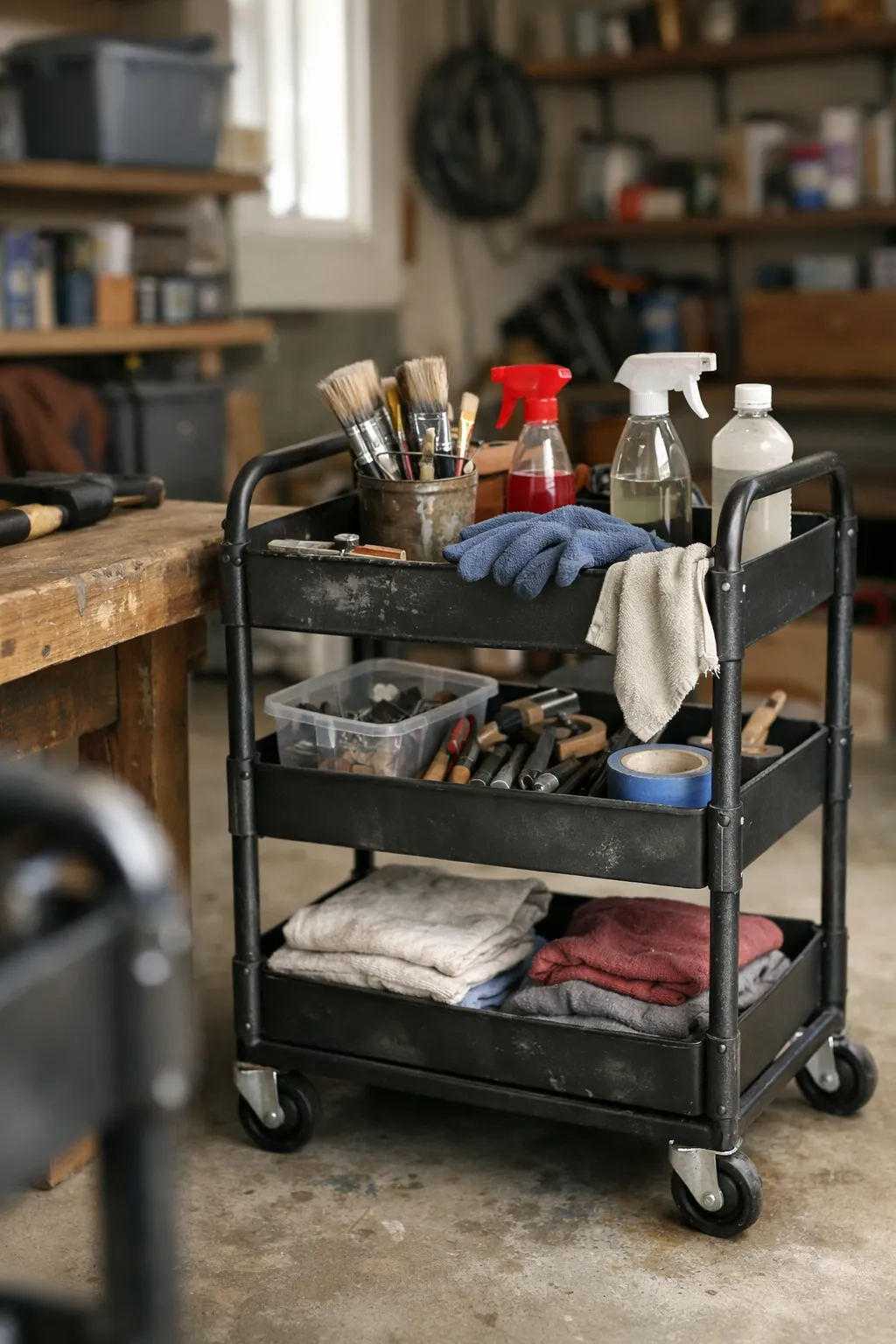
A rolling cart helps when you do hands-on work in different parts of the garage. It can hold paint supplies, car wash products, gardening tools, or home repair basics.
The big win is mobility. You bring the tools to the job instead of carrying items back and forth. When you finish, the cart parks in one spot.
This works well in smaller garages because it gives you flexible storage without a permanent footprint.
15. Install Slatwall Panels for a Cleaner Look
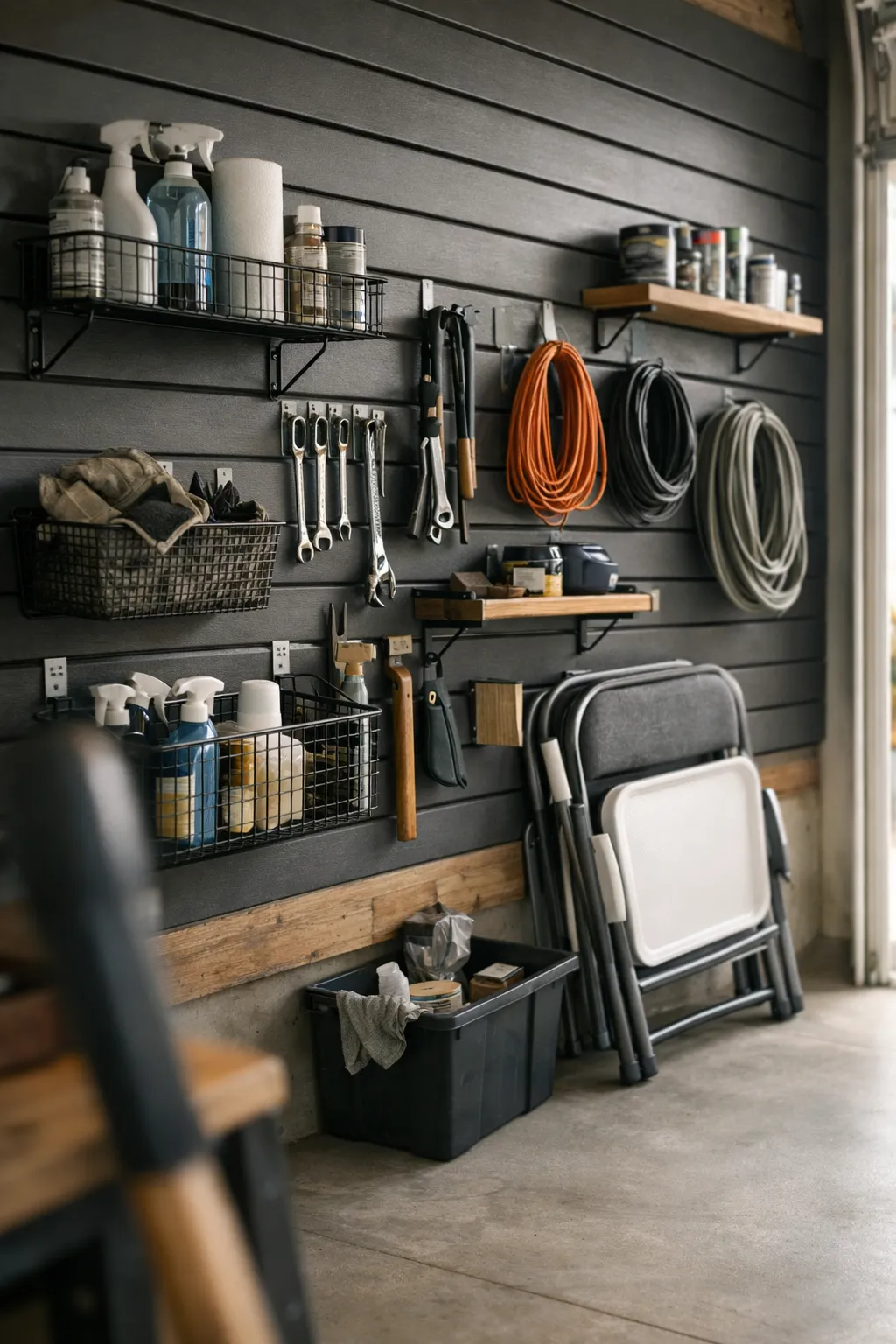
Slatwall panels offer the same flexible feel as a track system but with a smoother, more finished appearance. Hooks, baskets, and shelves can all attach to the panel, and the whole wall looks neat even when it holds a lot.
This option is popular in garages that need both function and style. If you want a Pinterest-friendly look that still handles real-life clutter, slatwall is hard to beat.
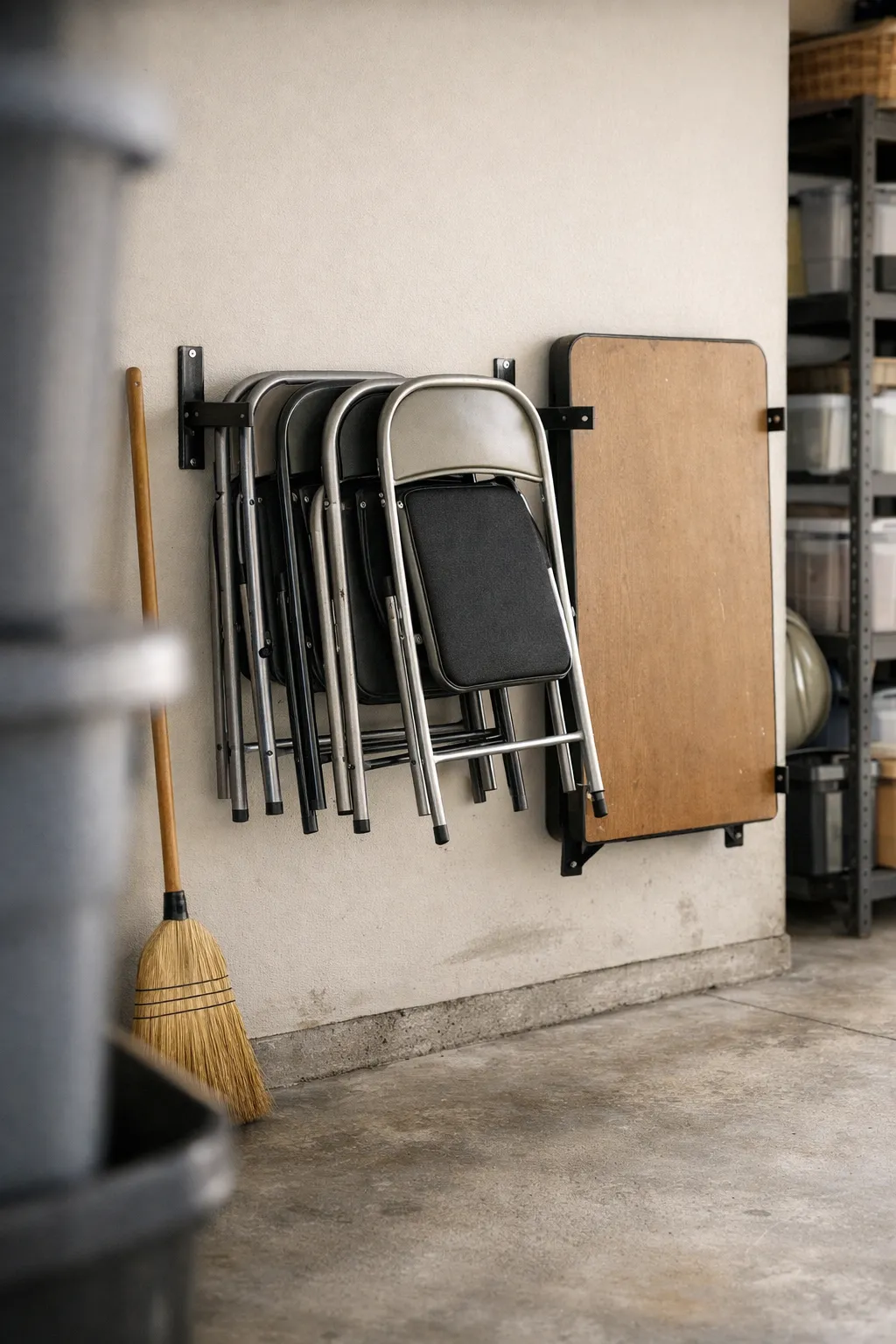
16. Store Folding Chairs and Tables Upright
Folding chairs and tables often get shoved behind bins and forgotten. Give them a vertical storage spot against a wall or inside a narrow zone beside cabinets.
This keeps them out of the traffic path and makes them easier to grab before parties, school events, or family gatherings. Simple wall brackets are often enough.
It is a small change, but it clears a surprising amount of awkward floor clutter.
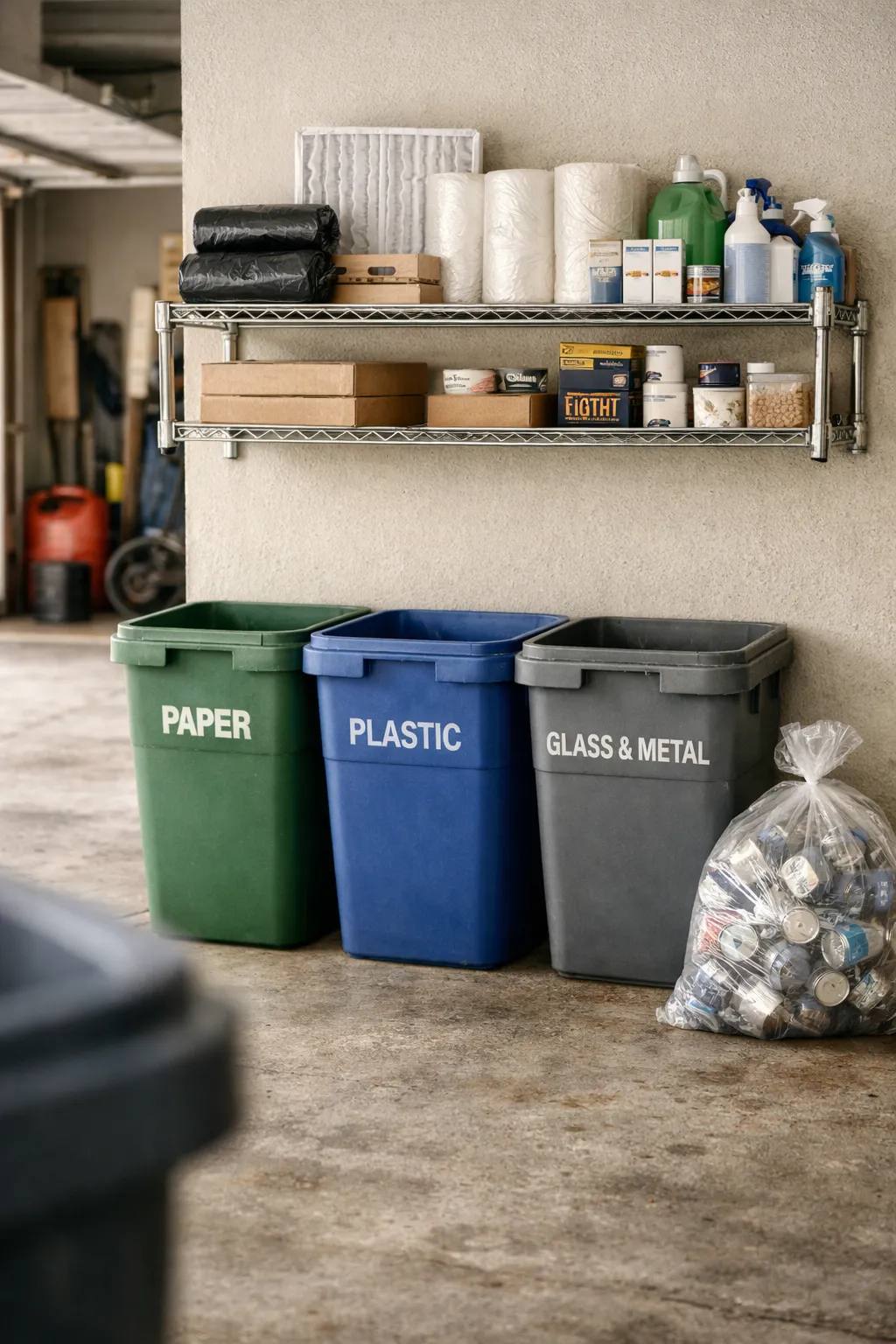
17. Create a Recycle and Utility Zone
A garage can become more efficient when you stop scattering household utility items across different corners. Group your recycling bins, trash bags, light bulbs, extra filters, and cleaning refills in one area.
That turns the garage into a more useful support space for the home. Use shelves above the bins so the floor stays open and the whole zone feels organized.
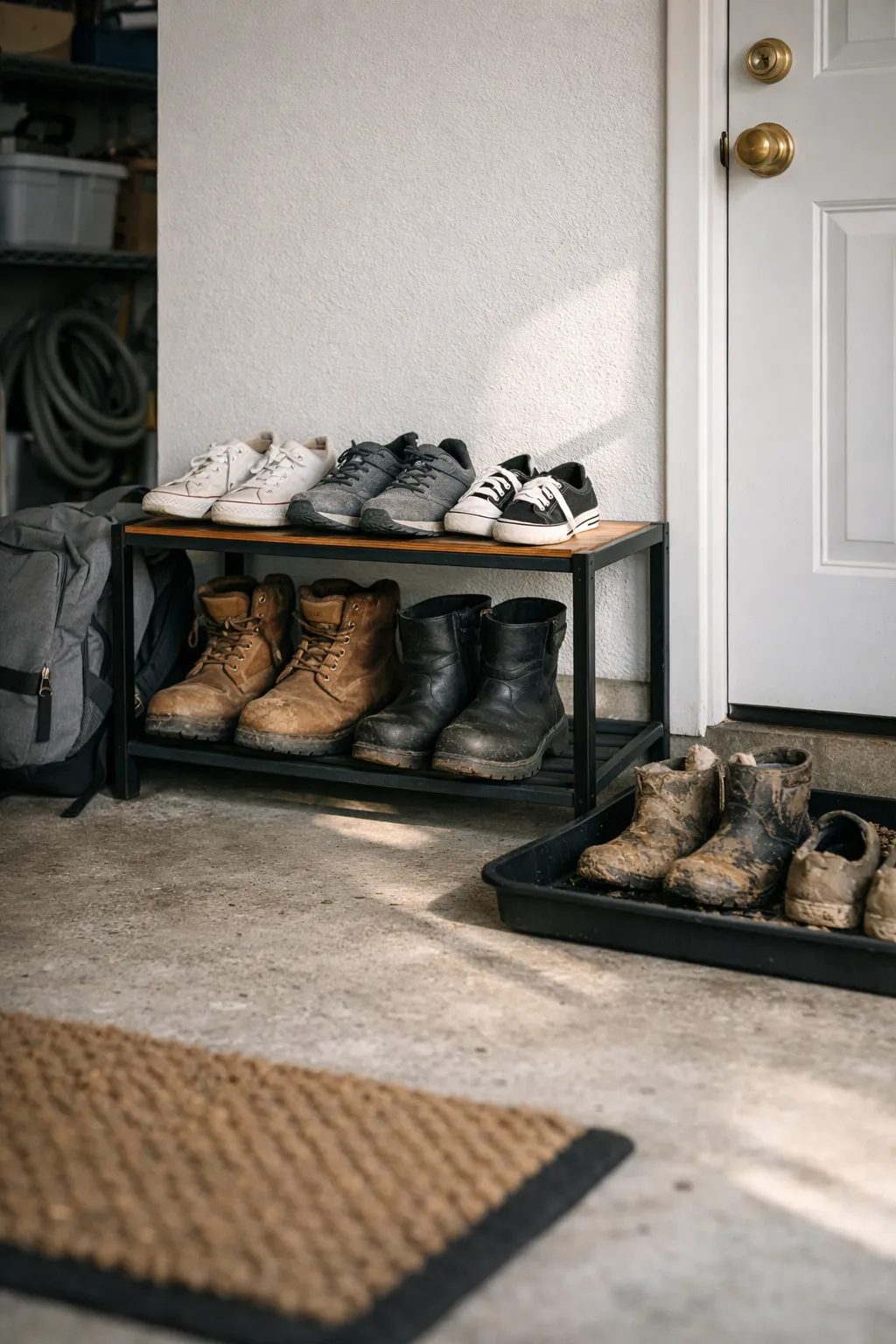
18. Use Shoe and Boot Storage Near the Entry
If your family comes through the garage every day, shoes can create instant mess. A low rack or simple tray near the entry keeps dirt, grass, and mud from spreading.
This is one of those storage ideas that helps the house as much as the garage. In homes with kids, it also gives backpacks and sports shoes a landing spot before they disappear into the car or kitchen.
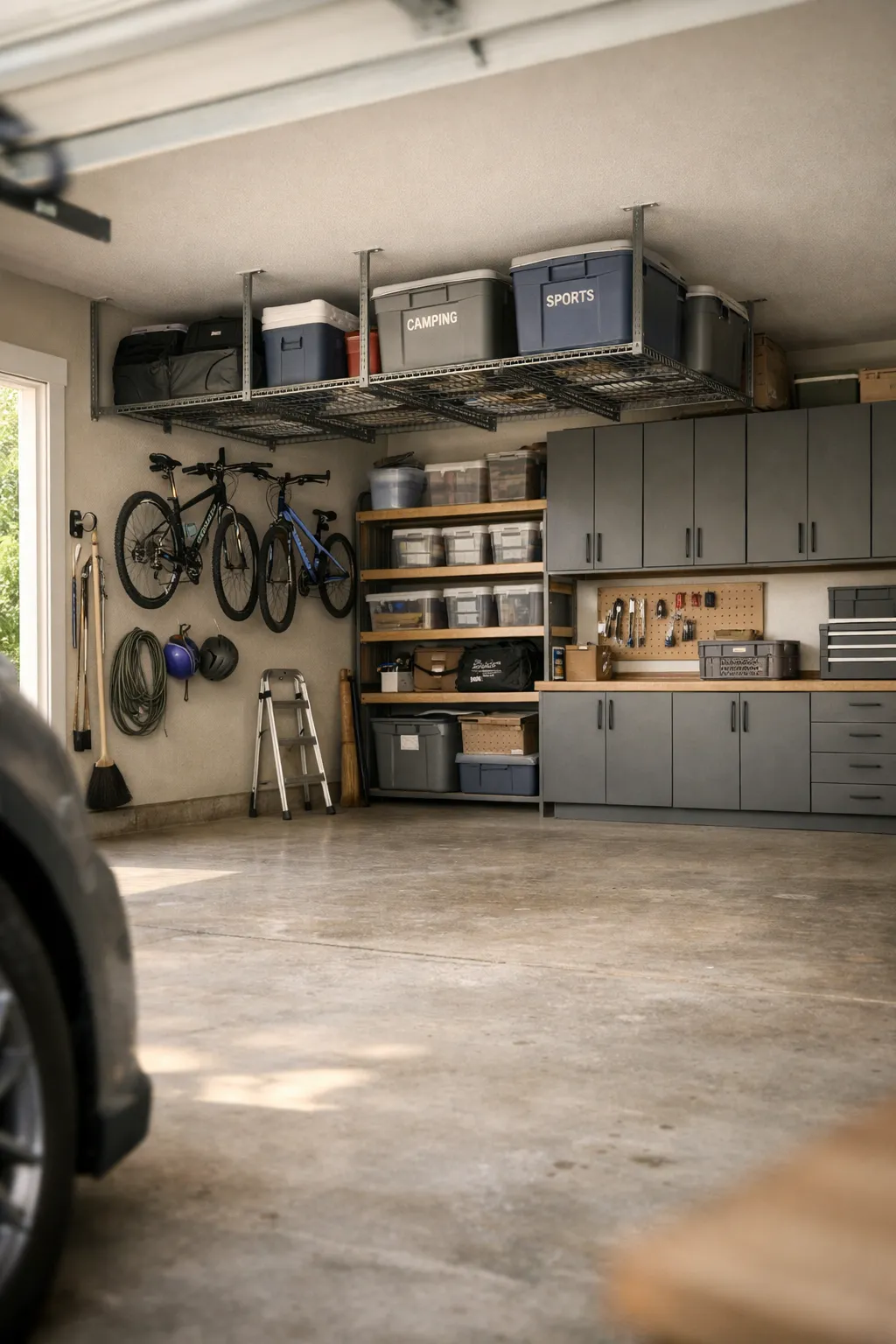
19. Leave Open Floor Space on Purpose
This is the idea people skip most often. Not every inch of the garage should be filled.
Open floor space matters because it makes the room easier to clean, safer to walk through, and more useful for parking, hobbies, and home projects. Cramming storage into every wall can backfire if it leaves no room to move.
A well-organized garage does not just store more. It feels lighter and works better day to day.
Smart Tips That Make Any Garage Easier to Maintain
Keep daily-use items between waist and shoulder height
That is the most comfortable reach zone. Save higher and lower spots for things you use less often.
Store heavy items low
Large toolboxes, bulk drinks, or bags of soil belong on lower shelves for safety.
Use matching containers when possible
The garage looks more organized when the bins share a similar shape and color. It also makes stacking easier.
Edit what you store every season
If you have not used it in years, ask whether it needs garage space at all. Good storage is not just about adding systems. It is about cutting the clutter that no longer earns its spot.
Common Garage Storage Mistakes to Avoid
Buying storage before sorting
This wastes money. First group your items, then choose the storage that fits what you actually have.
Blocking access to important items
Keep ladders, emergency supplies, and car tools easy to reach.
Ignoring wall height
Many garages have more vertical potential than people think. Empty wall space is often the biggest missed opportunity.
Mixing every category together
When sports gear sits next to paint cans and holiday lights, the garage starts to feel messy even if it is technically stored.
Final Thoughts
The best garage storage ideas do not all come from one system. Most garages work better when you combine a few smart layers: shelves for bins, hooks for long tools, wall storage for grab-and-go gear, and overhead space for things you use less often.
Start with the clutter that frustrates you most. Fix that zone first. Once the garage becomes easier to use, the rest usually follows.