


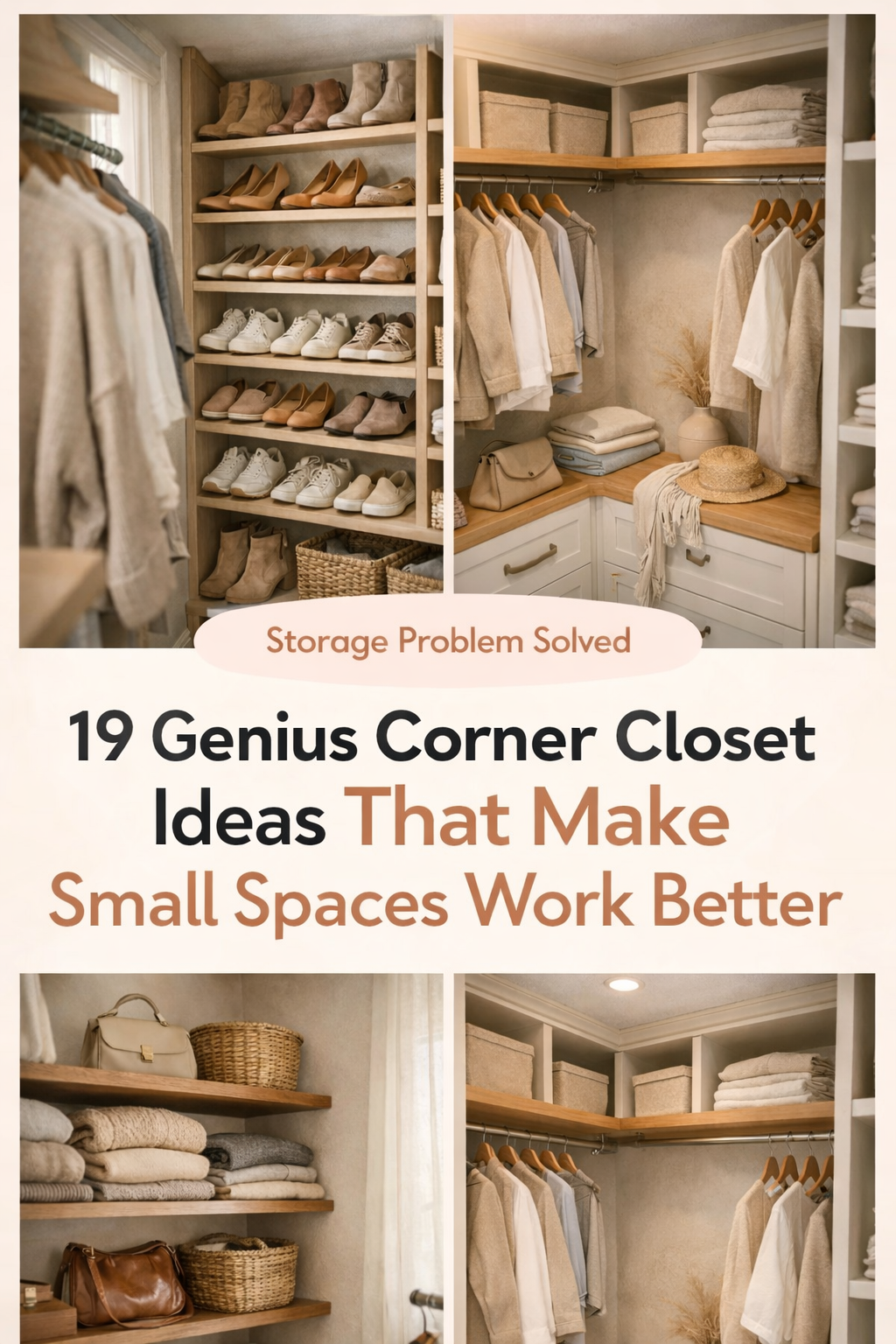
A small walk-in corner closet can either become a smart storage zone or a daily frustration. Most people waste space in corners because the layout feels awkward. The result is predictable: crowded rods, dead space, messy shelves, and a closet that feels smaller than it actually is.
That is a design problem, not a space problem.
A corner walk-in closet has more potential than people think. The trick is to use the corner as a working part of the layout instead of treating it like leftover space. Good closet design is about flow, visibility, and access. If you cannot see your clothes, shoes, and accessories clearly, the closet will always feel chaotic no matter how pretty it looks.
These small walk-in corner closet ideas are built around practical storage, clean styling, and realistic home use. Some lean custom. Some can be done with modular systems. All of them are meant to help a small closet work harder while still looking calm, and bright.
1. L-Shaped Corner Closet Layout
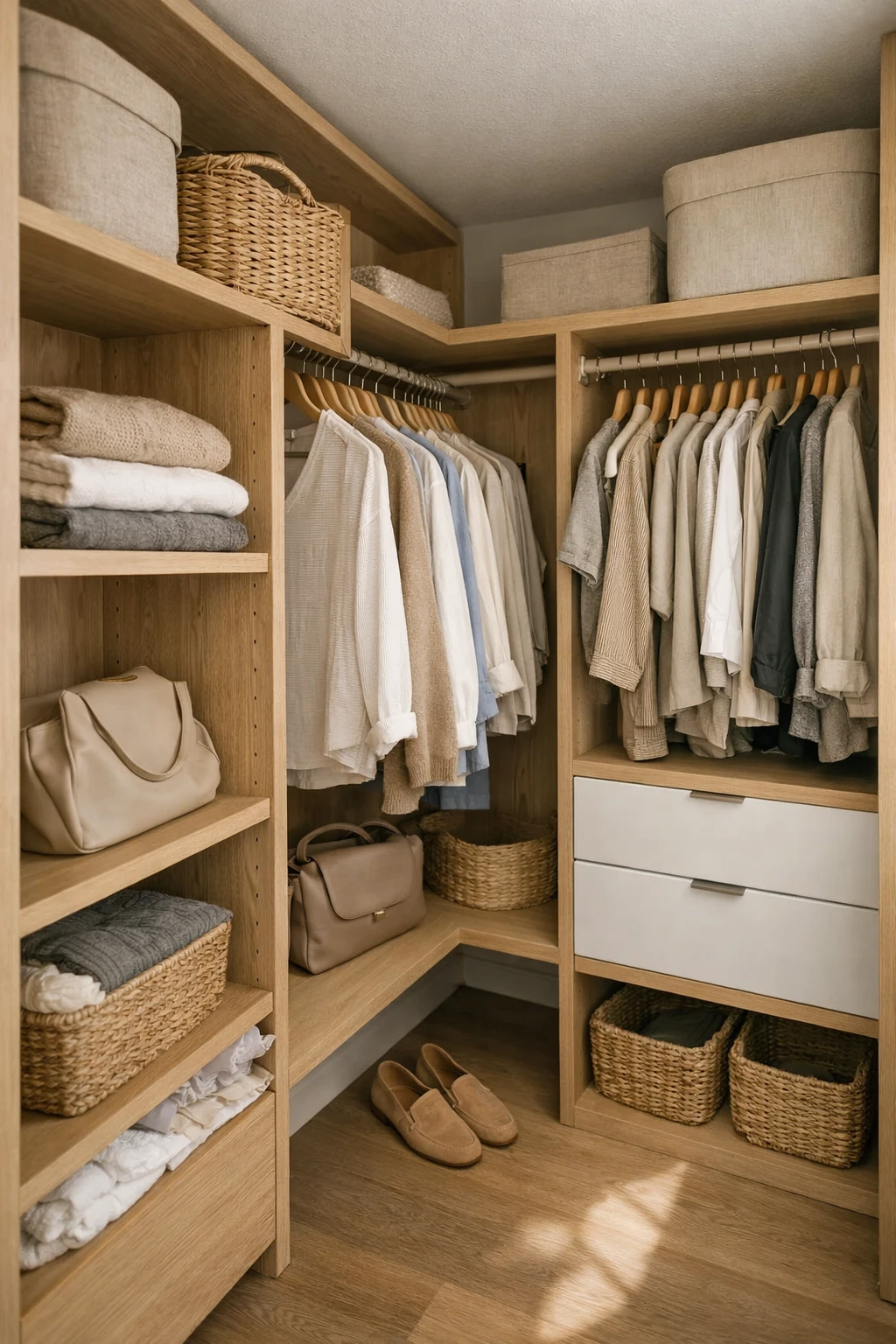
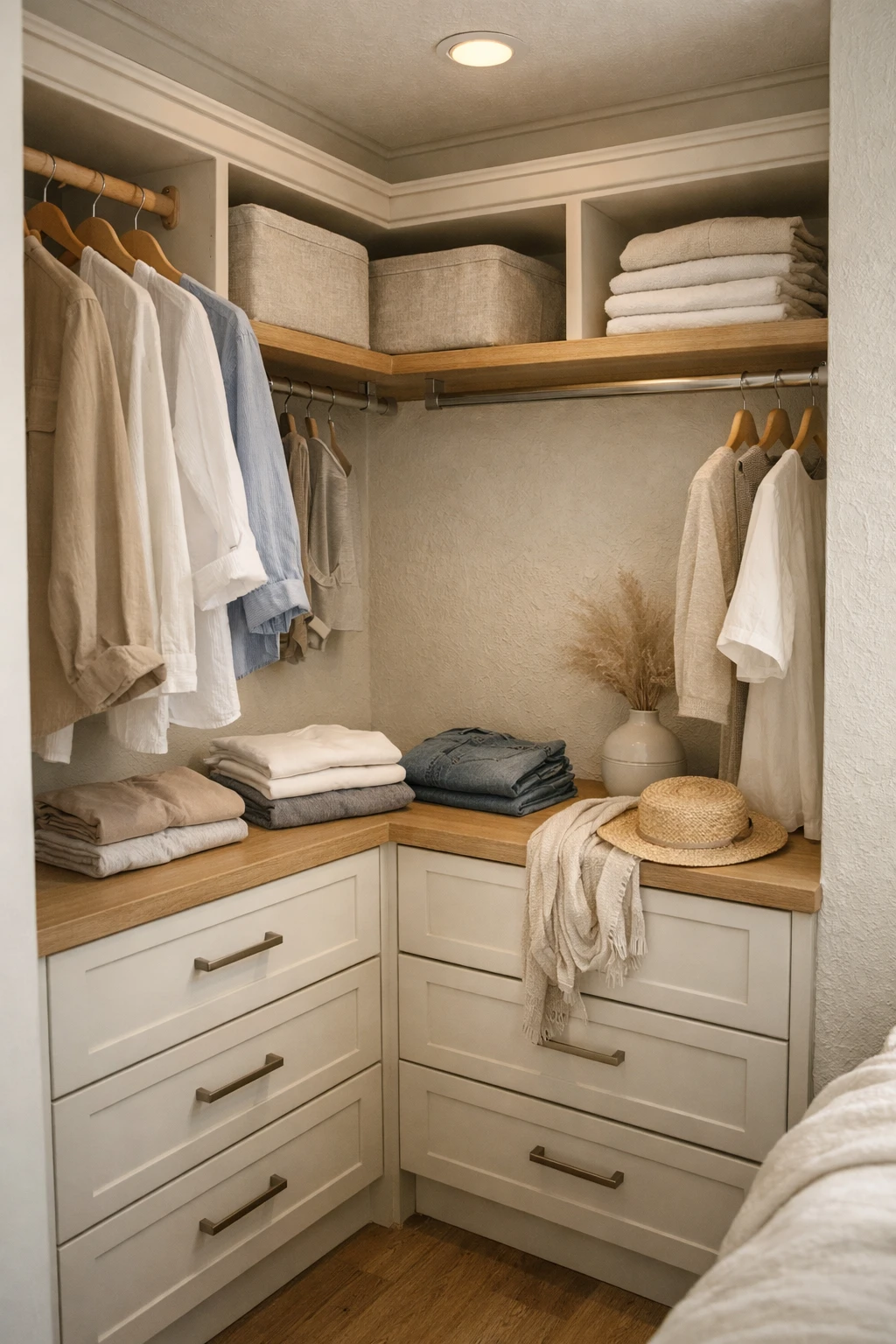
An L-shaped layout is the most obvious solution, but it is also one of the best. It uses two connected walls and turns the corner into active storage space. Instead of forcing one straight run of shelving into a cramped room, this layout wraps the storage around the corner and keeps the center open.
This works well for small walk-ins because it creates a natural flow. One side can be used for hanging clothes, while the second side can hold shelves, drawers, or shoe storage.
This idea is especially effective for:
- small primary bedroom closets
- corner closets in apartments
- narrow walk-ins with one usable corner
Keep finishes light to make the space feel larger. White shelving, pale oak, or warm neutral tones will reflect more light and reduce the boxed-in feeling.
2. Double Hanging Rod Corner System
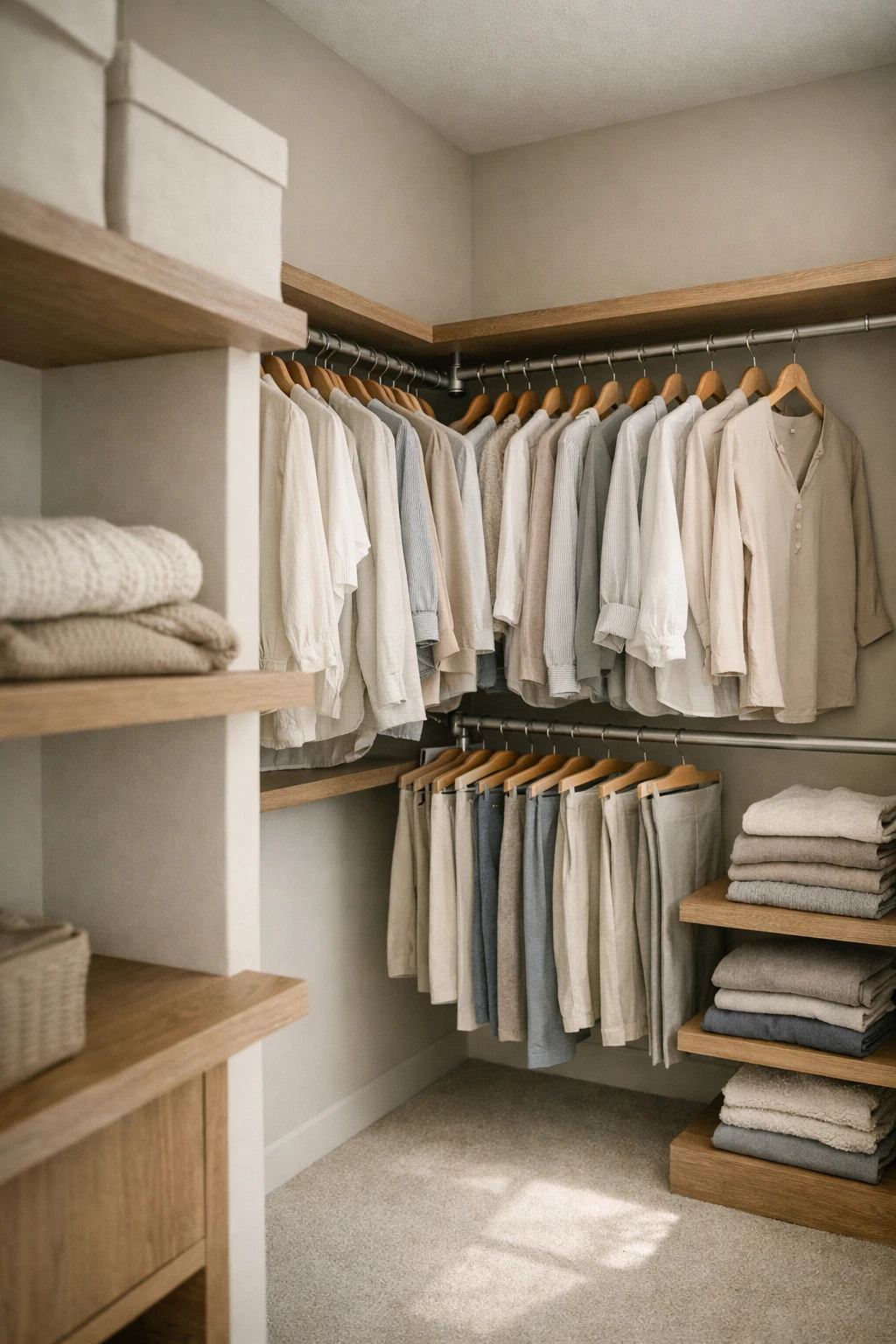
If your closet is short on width, stop wasting vertical space. A double hanging rod system can nearly double your hanging capacity. This is one of the most efficient ideas for small closets because it lets you store shirts, blouses, pants, and skirts without expanding the footprint.
Place the upper rod for tops and jackets. Use the lower rod for shorter pieces. This works best on one wall of the corner closet, while the other wall can be dedicated to drawers or shelves.
The main advantage is function. The main risk is overcrowding. If every inch is packed tightly, the closet will feel cheap and stressful. Leave a little breathing room between sections so the closet still looks intentional.
3. Floating Corner Shelves for Bags and Folded Items
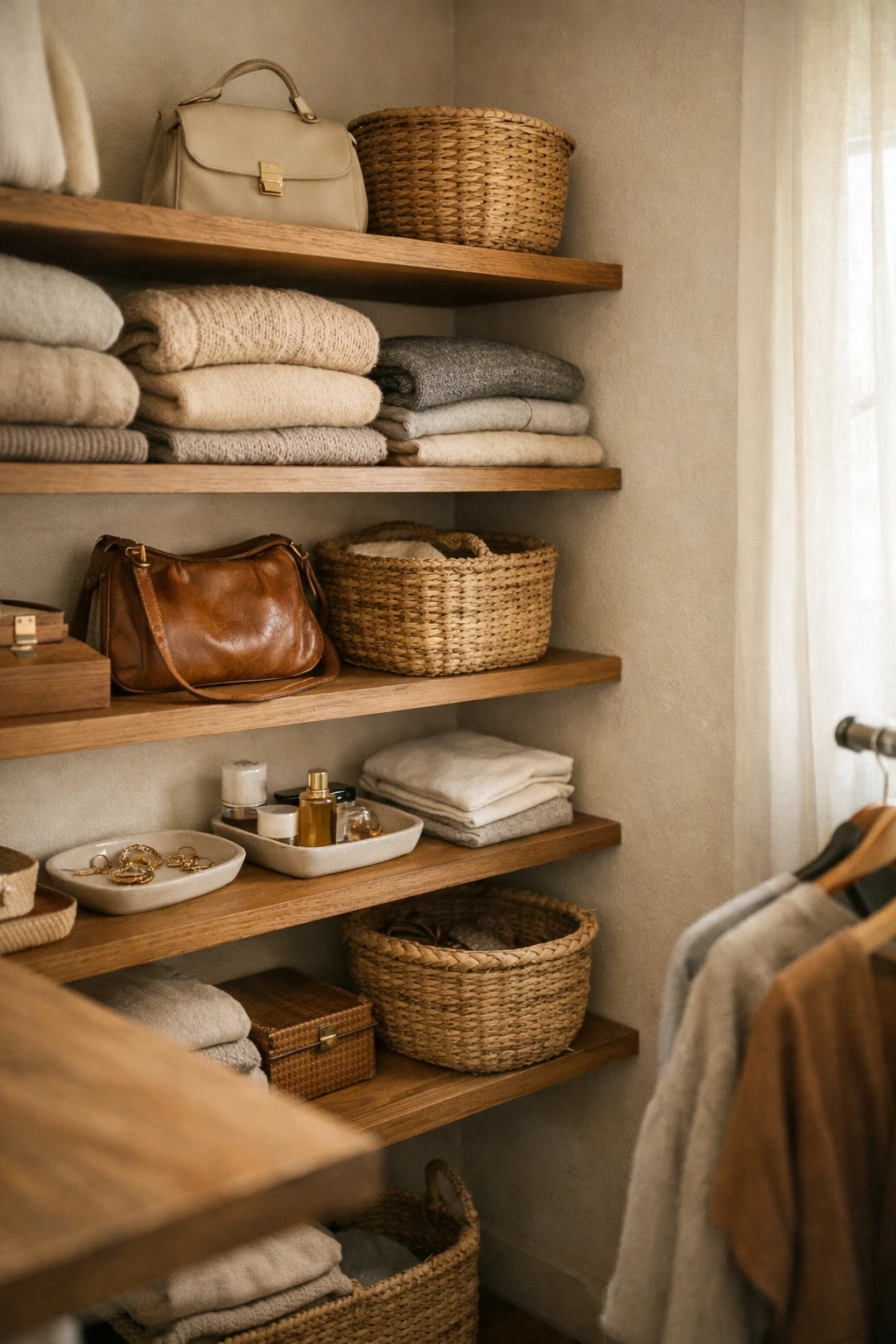
Floating shelves are a cleaner option than bulky closed cabinets. They make a small closet feel lighter because they do not visually block the walls. In a corner walk-in closet, floating shelves are useful for storing handbags, folded denim, knitwear, or decorative storage baskets.
This setup works best when the shelf spacing is consistent. Random shelf heights usually make a small closet look messy. Consistent spacing creates rhythm and gives the room a more custom feel.
A good approach is:
- top shelves for less-used items
- middle shelves for bags and folded clothes
- lower shelves for grab-and-go storage bins
Add texture with woven baskets, linen boxes, or ceramic trays for jewelry and small accessories.
4. Built-In Corner Drawers
Open storage is not enough for most people. You need some hidden storage or the whole closet ends up looking cluttered. Built-in drawers solve that problem fast. They are perfect for socks, undergarments, workout clothes, sleepwear, and small accessories.
In a small corner closet, a drawer unit can be placed under hanging rods or in the inner corner with shelves above it. That creates a layered storage system that looks polished and works hard.
Drawers are also useful because they reduce visual noise. That matters in a small space. When everything is exposed, the closet can feel chaotic even when it is technically organized.
Choose simple hardware and clean drawer fronts. Flat-panel drawers usually look more modern and less heavy in compact spaces.
5. Open Shoe Wall Along One Side
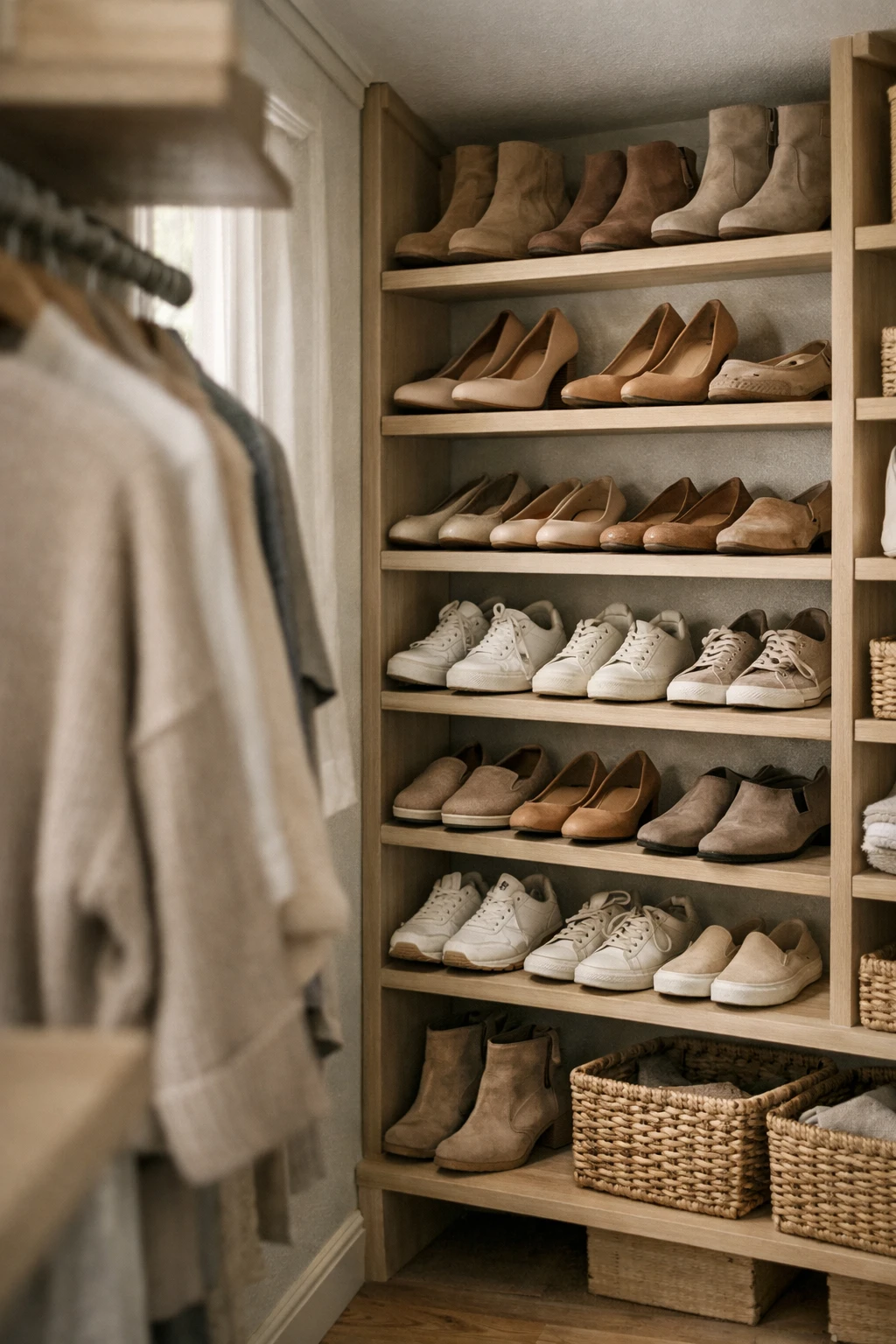
Shoes are usually the first thing that wrecks a small closet. They end up on the floor, under clothes, or stacked in mismatched boxes. A dedicated open shoe wall fixes that problem.
Use one side of the closet for narrow shelves designed around shoe height. This instantly improves visibility and keeps pairs together. If the closet is especially tight, shallow shelving works better than deep units.
This idea works well for:
- heels and sandals
- sneakers
- ankle boots
- seasonal shoe rotation
Do not cram too many shoes onto each shelf. That makes the closet look overfilled. A little negative space makes the whole setup look more intentional and upscale.
6. Corner Bench with Storage Below
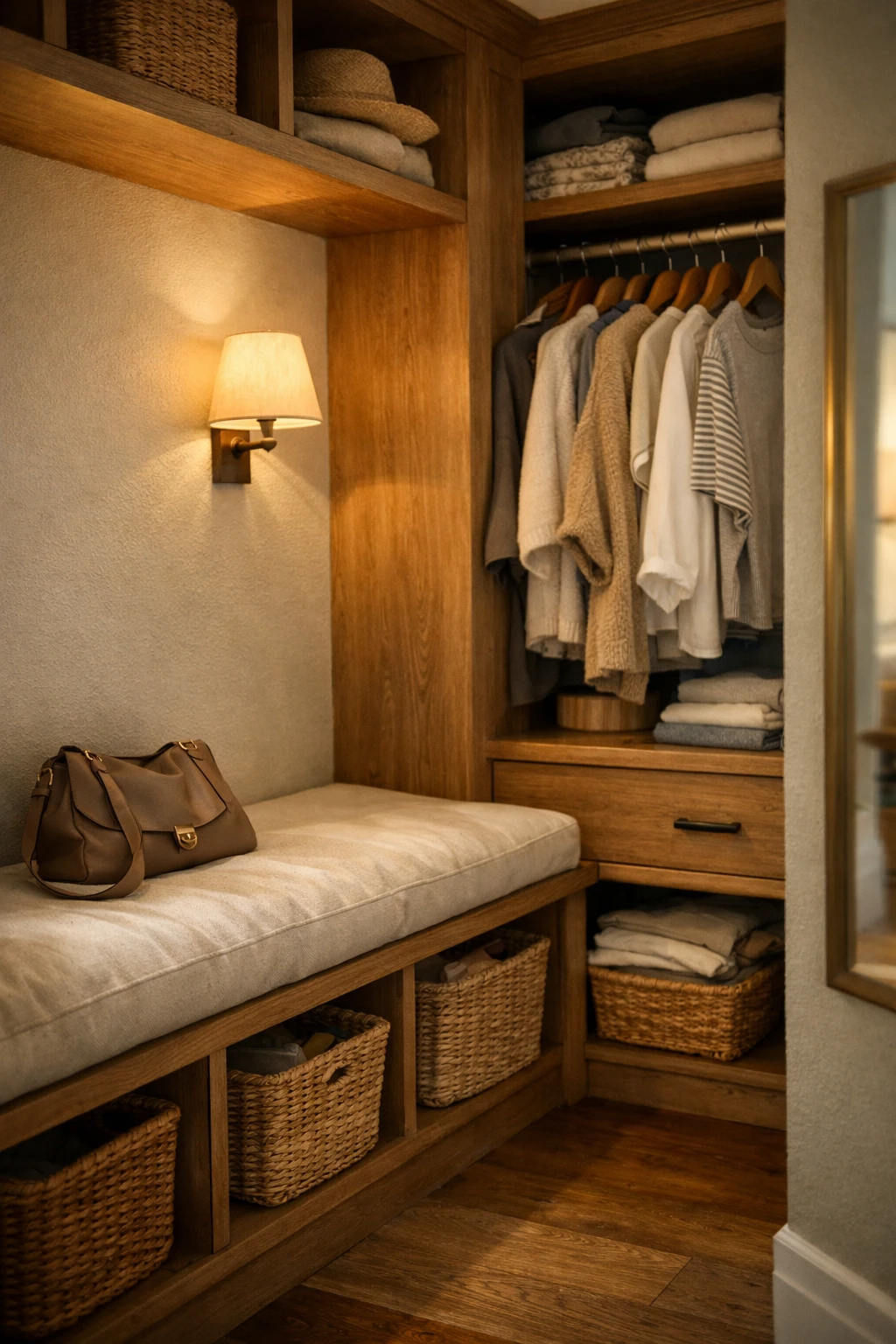
If the closet has enough depth, a small bench can make it feel far more finished. A bench gives you a place to sit while putting on shoes, setting down bags, or sorting outfits. It also adds the feeling of a dressing space rather than a utility closet.
The bench becomes even more useful when it includes storage underneath. You can use baskets, drawers, or cubbies below for shoes, scarves, or off-season pieces.
This idea works best in:
- square walk-in closets
- bedroom corner dressing closets
- small but not ultra-narrow layouts
A bench with an upholstered seat softens the hard edges of shelving and cabinetry. Stick with neutral fabric tones so the closet still feels calm and cohesive.
7. Full-Length Mirror to Open Up the Space
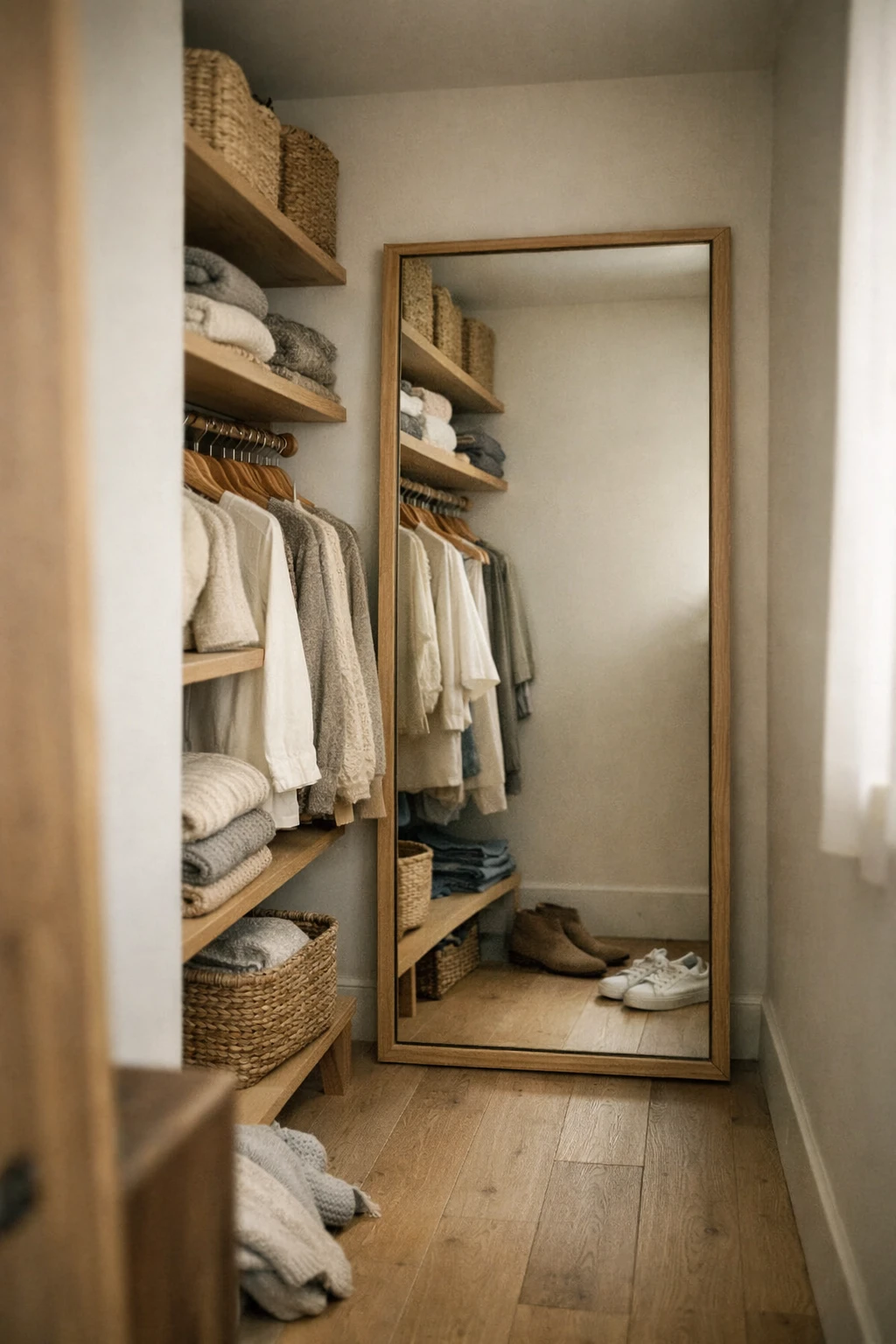
This is not optional if the closet is tiny. A full-length mirror makes the space feel bigger, brighter, and more usable. It reflects light and gives the eye more depth, which is critical in a narrow walk-in corner closet.
Place the mirror on the back wall, on the side wall, or even mounted to a closet door depending on the layout. If the closet has little natural light, the mirror becomes even more important because it bounces artificial light around the room.
A thin frame in black, brass, or natural wood usually works best. Heavy ornate frames can overpower a small closet and make it feel crowded.
This is a simple upgrade, but it has a big visual payoff.
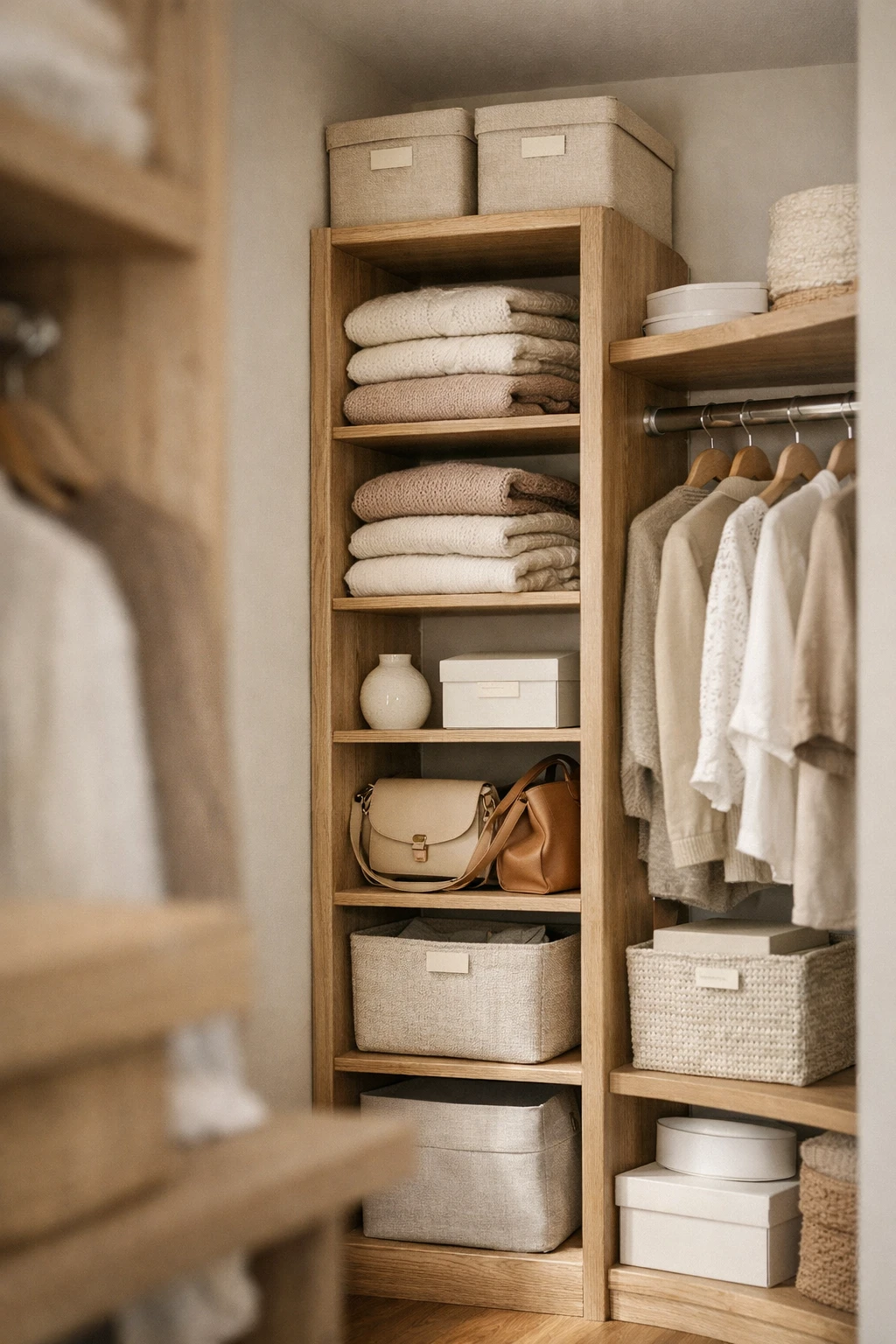
8. Vertical Shelf Tower in the Corner
A vertical shelf tower is one of the smartest ways to use an awkward inner corner. Instead of leaving that area dead, build upward. A tall shelf tower can hold folded sweaters, bags, labeled bins, or accessories while using very little floor space.
This is especially effective for people who do not need every inch for hanging clothes. It also works well as a visual anchor between two runs of rods or shelves.
Use the lower shelves for daily items and the highest shelves for seasonal storage. That sounds obvious, but people often do the opposite and then wonder why their closet is annoying to use.
If you want the closet to feel custom, align the shelf tower finish with the rest of the closet system.
9. Soft Layered Lighting for a Boutique Feel
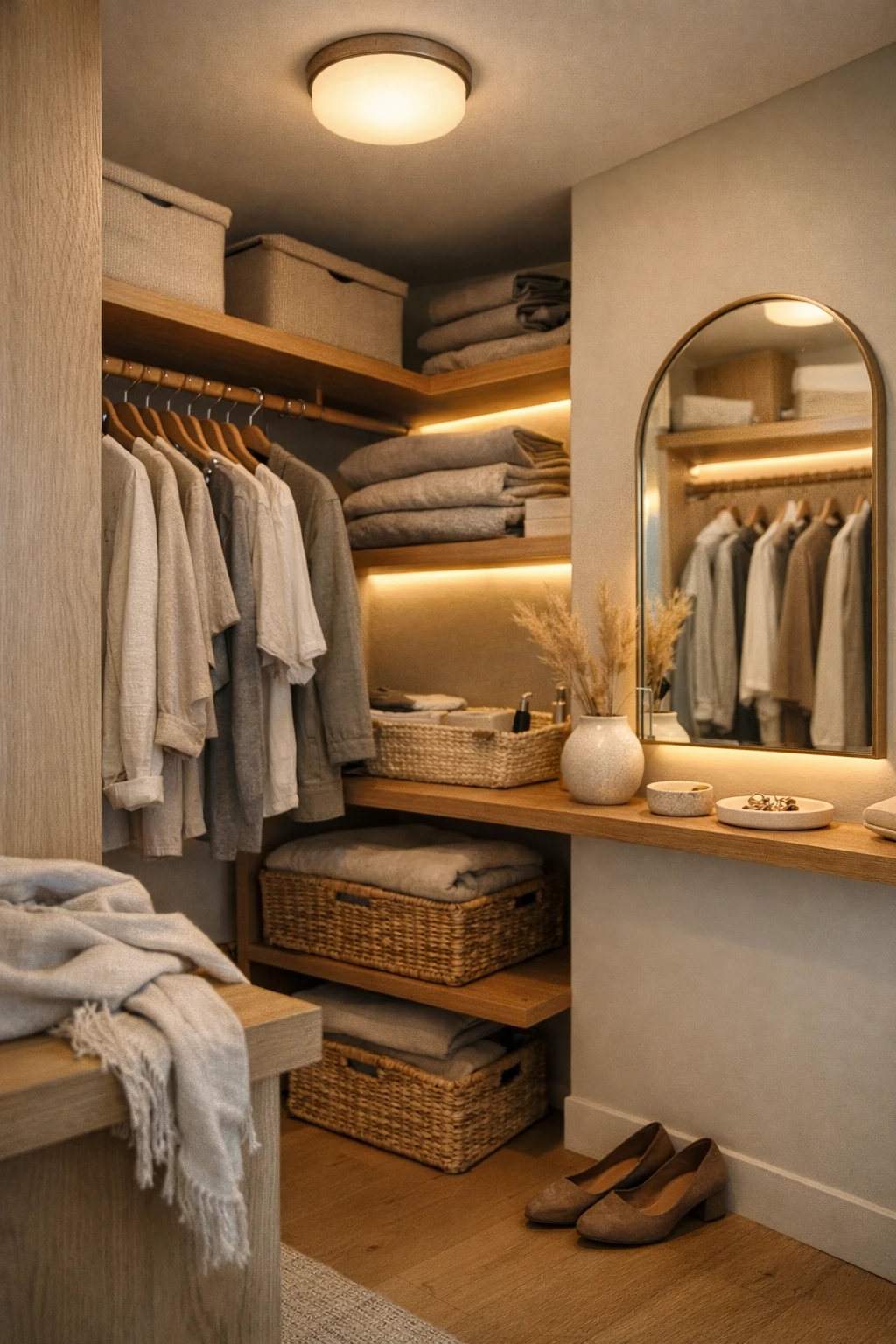
Bad lighting ruins closet design. It makes colors look wrong, hides clutter, and turns a small walk-in into a dark box. Good layered lighting does the opposite. It makes the closet feel intentional, warm, and easier to use.
A strong setup usually includes:
- ceiling light for overall brightness
- LED strip lighting under shelves
- accent lighting near mirrors or display shelves
In a small corner closet, soft layered lighting is better than one harsh overhead fixture. Harsh light exaggerates shadows and makes the room feel clinical. Warm or neutral lighting feels more flattering and more residential.
This is one of the fastest ways to make a basic closet look expensive without changing the layout.
10. Glass-Front Upper Cabinets for a Lighter Look
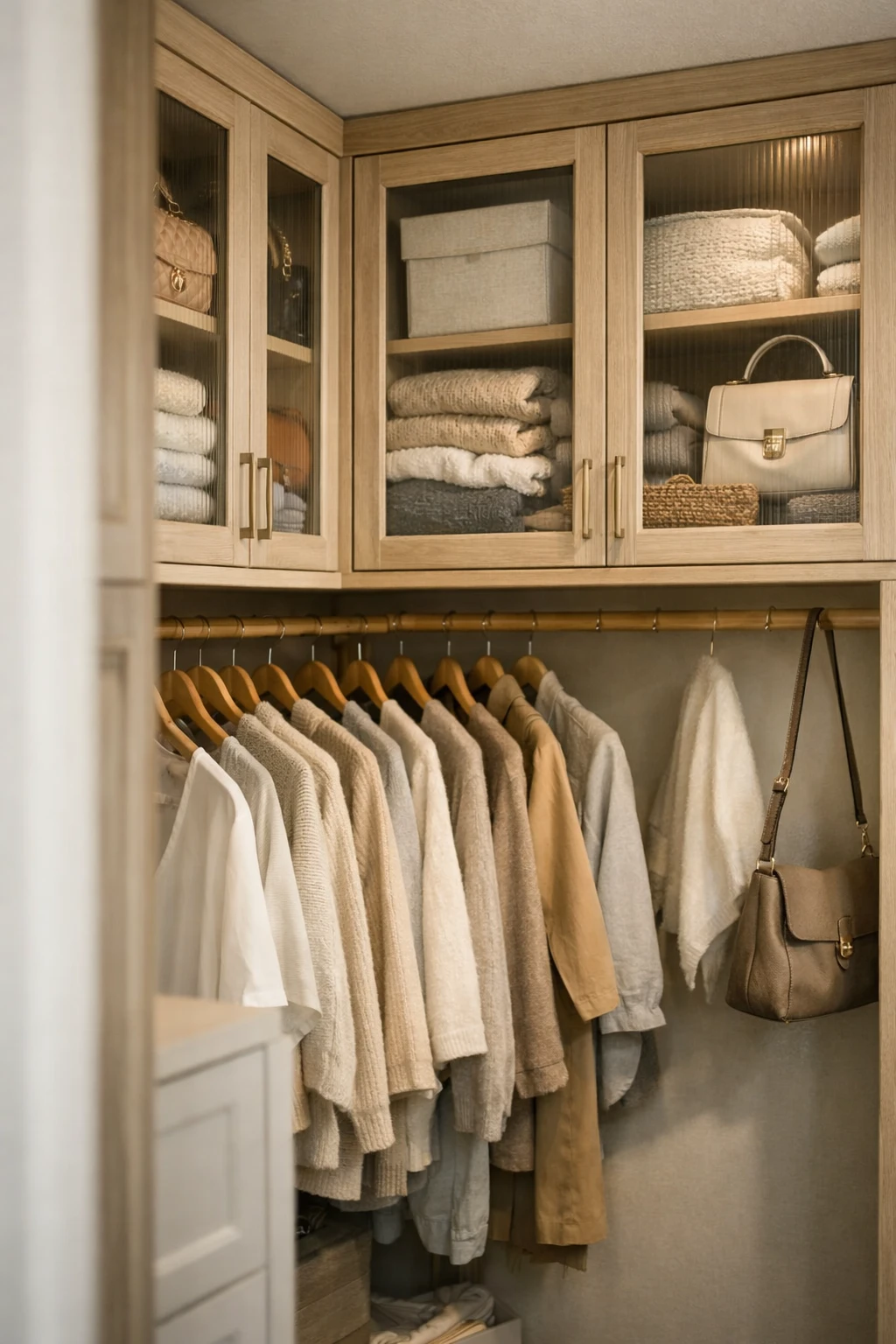
Upper cabinets add storage, but solid doors can make a small closet feel boxed in. Glass-front upper cabinets solve that problem by keeping the look lighter while still hiding clutter better than open shelving.
This idea works especially well for:
- handbags
- neatly folded knits
- special occasion items
- storage boxes in matching tones
The glass breaks up the heaviness of built-ins and adds a subtle polished feel. Clear glass works best if you are disciplined about keeping things tidy. Ribbed or frosted glass is better if you want a softer, less exposed look.
This idea looks strongest in neutral or warm minimalist closets where the goal is to feel airy, not overloaded.
11. Corner Hanging Rod with Curved Layout
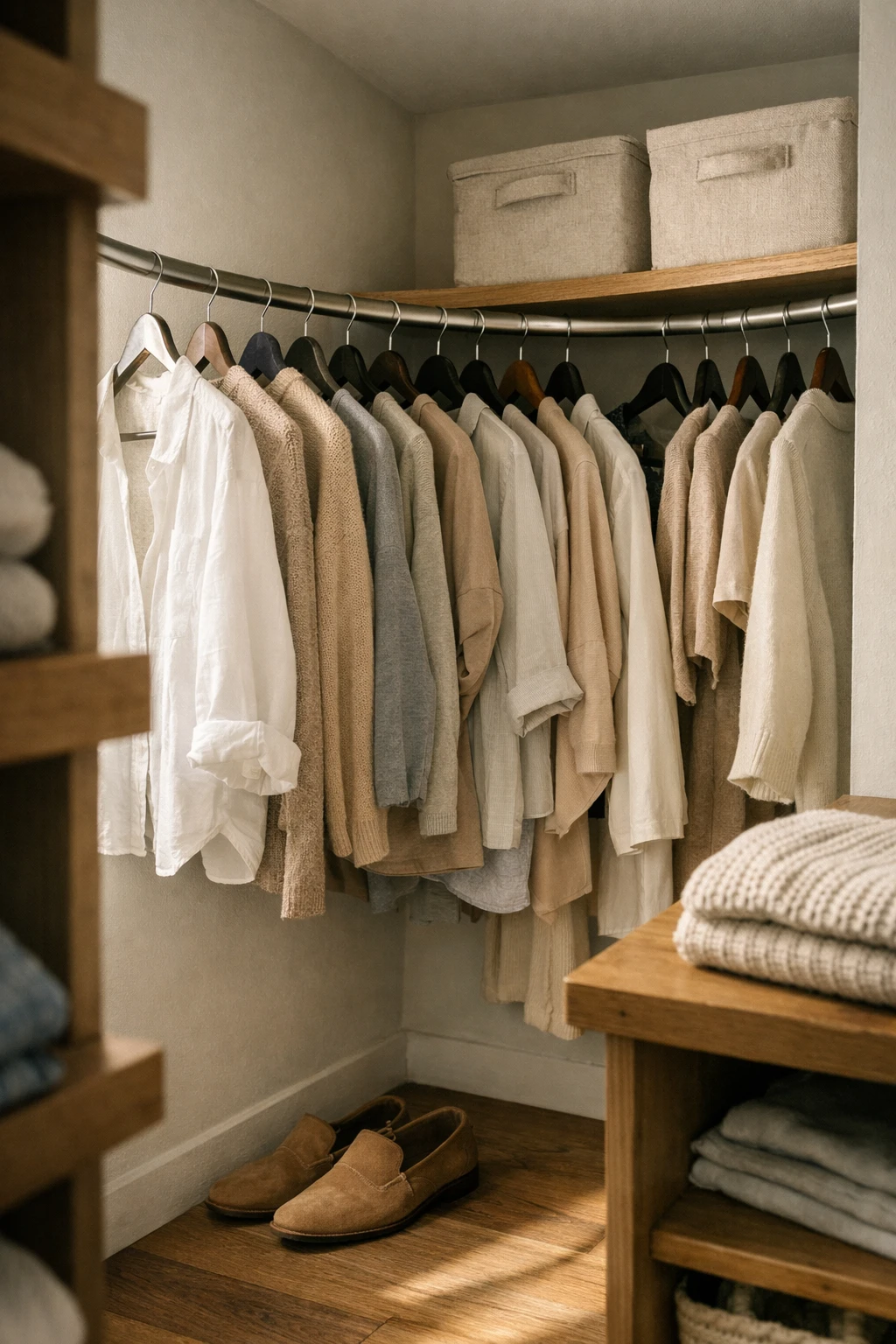
A curved corner rod is one of the smartest solutions for tight walk-in closets. Instead of stopping the rod before the corner, a curved metal rod connects both walls smoothly. This allows clothing to continue around the corner without awkward gaps.
This design works especially well for closets that need more hanging space but cannot add additional walls or shelving.
Benefits of a curved rod layout include:
• continuous hanging space
• smoother clothing movement along the rod
• better use of awkward corner angles
Choose a sturdy rod with a brushed metal finish so it stays durable over time. Slim velvet hangers will also keep the closet visually tidy.
This approach keeps the corner active while maintaining easy access to every garment.
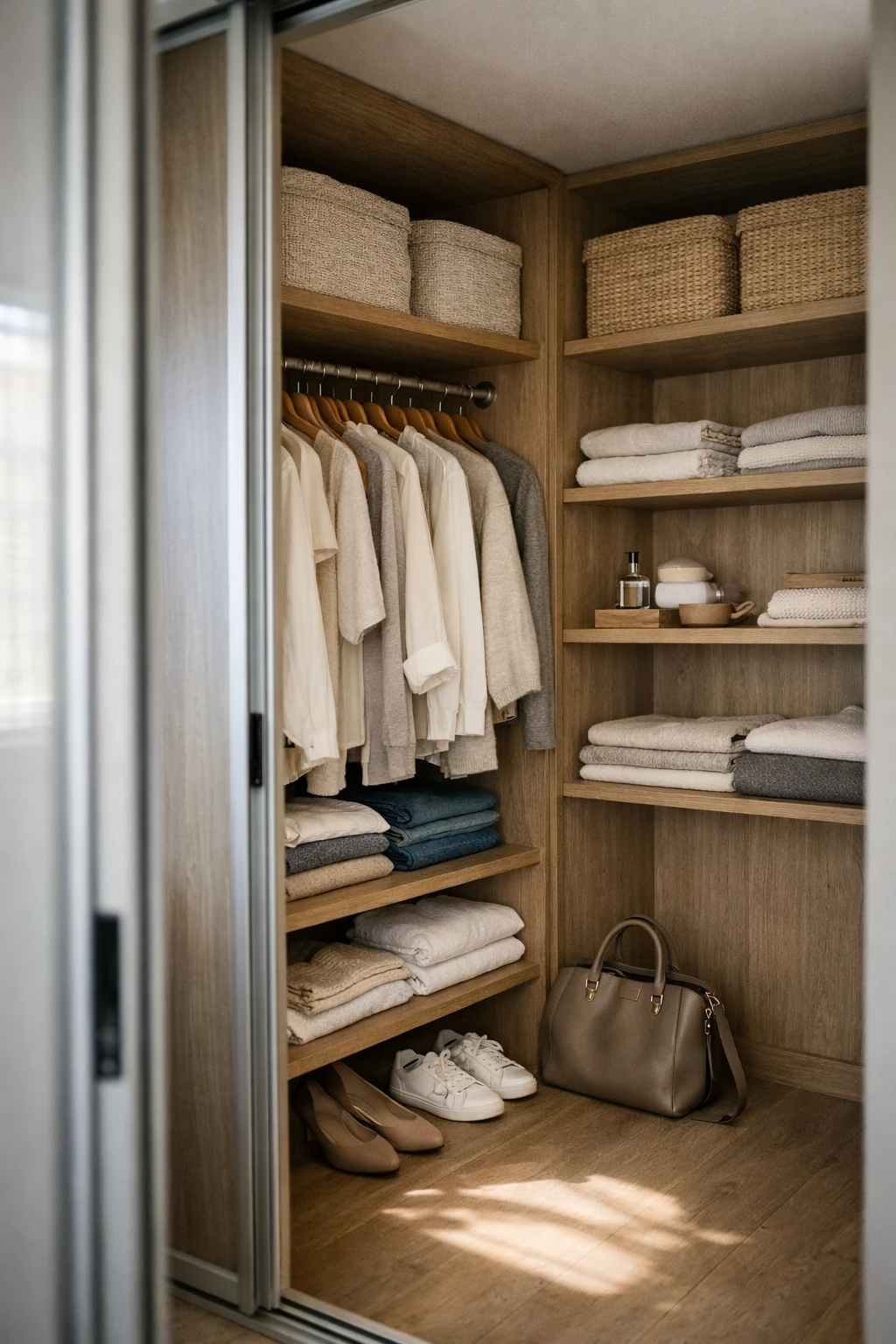
12. Corner Closet with Sliding Doors
Some walk-in corner closets feel cramped simply because of the door style. Traditional swing doors require clearance space, which often blocks part of the closet interior.
Sliding doors solve that problem.
They allow the closet to remain accessible without interfering with shelving or drawers. Sliding doors also create a cleaner visual line across the room.
Popular styles include:
• frosted glass panels
• minimalist wood frames
• mirrored sliding doors
Mirrored panels are particularly useful because they reflect light and visually enlarge the room.
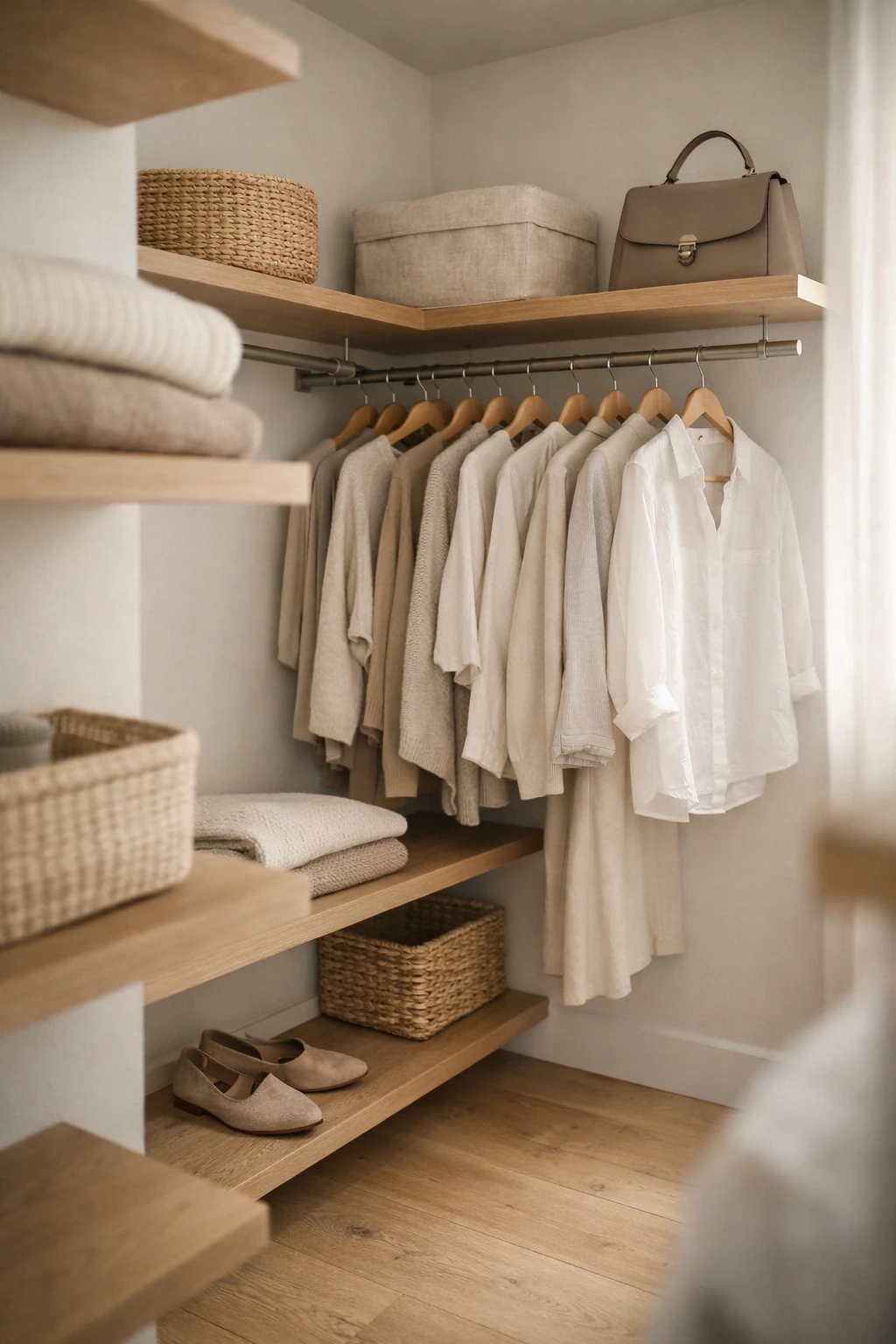
13. Minimalist Closet System with Open Rails
Minimalist closet systems focus on simplicity and accessibility. Instead of heavy cabinets, they use open rails, slim shelves, and light metal supports.
This style works well in small corner closets because it reduces visual weight.
Clothes remain visible, and the space feels less boxed in.
A minimalist setup usually includes:
• one or two open hanging rails
• narrow floating shelves
• a small drawer module
Stick to a limited color palette like white, beige, or soft oak to maintain a calm aesthetic.
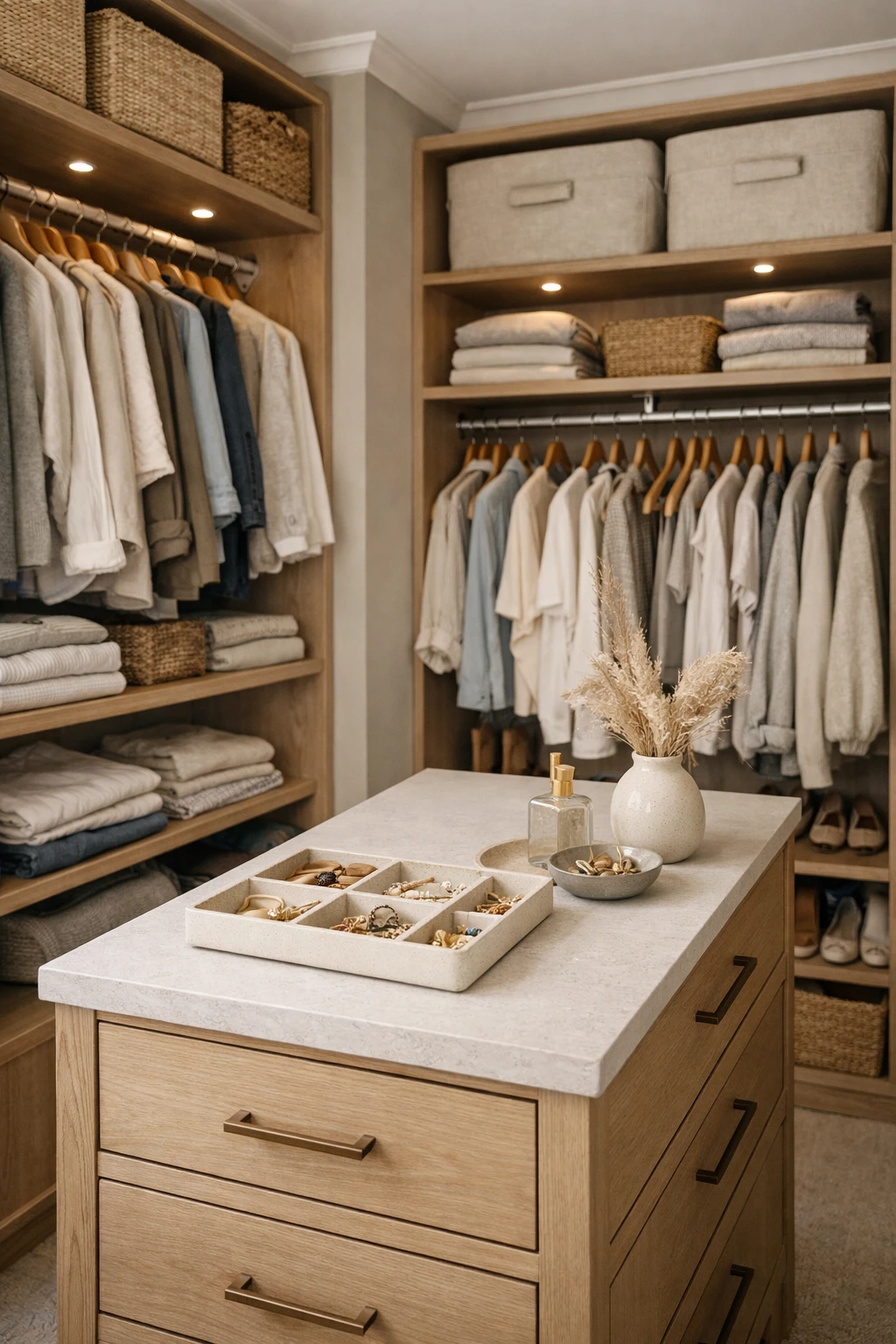
14. Corner Closet with Island Drawer
If the walk-in closet has slightly more space, a narrow island drawer can elevate the design significantly.
The island acts as a central storage piece while still allowing movement around it. It can store accessories, watches, belts, or folded items.
Top surfaces are perfect for styling trays, jewelry boxes, or small decorative accents.
However, this idea only works if the closet walkway remains comfortable. A cramped island defeats the purpose.
For smaller walk-ins, choose a narrow island no wider than 16–20 inches.
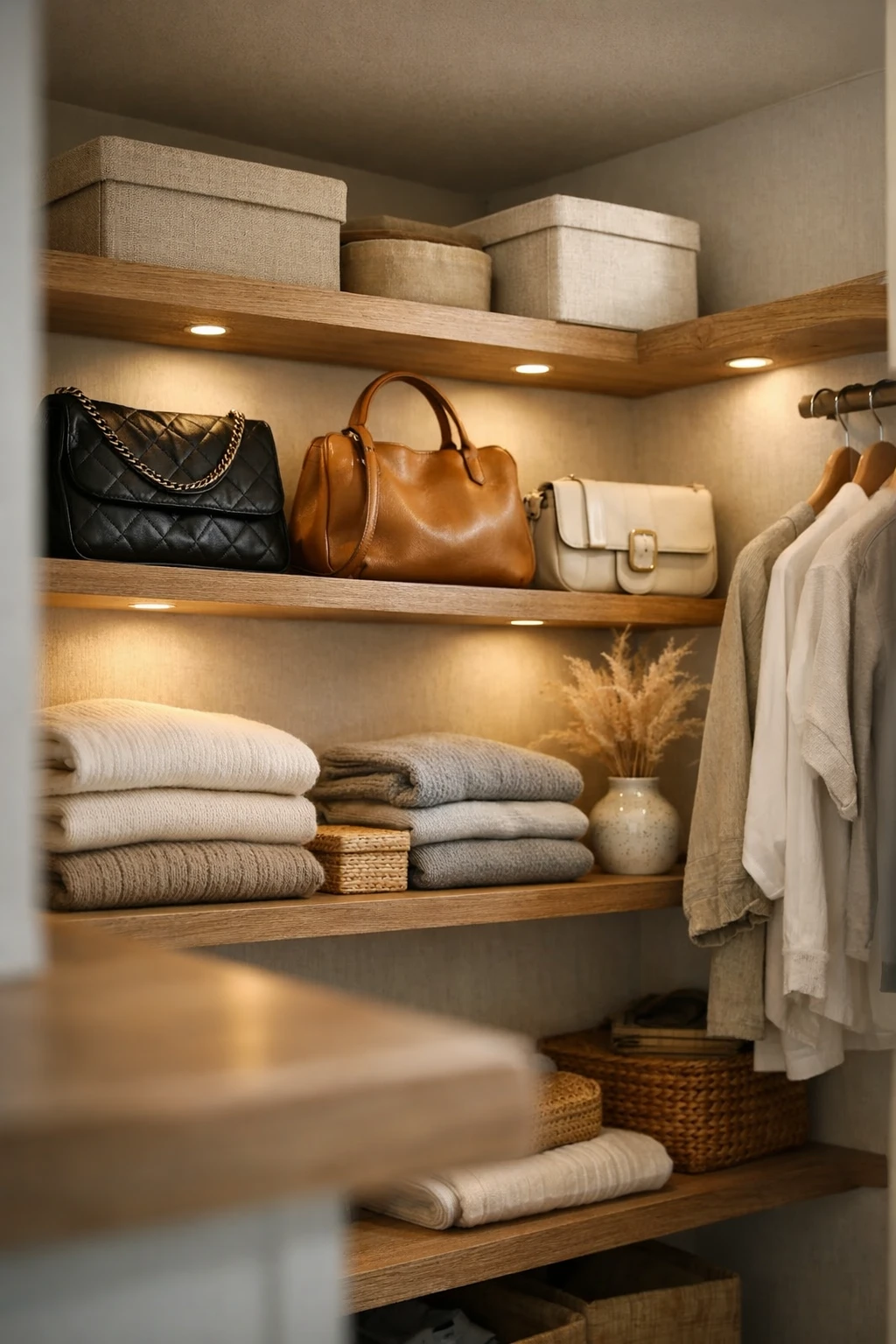
15. Closet Corner Display Shelves
Display shelves can turn a small closet into a boutique-style dressing area. Instead of hiding everything behind doors, select a few shelves to showcase handbags, shoes, or favorite accessories.
This works best when the display area stays curated.
Avoid overloading the shelves. A few well-spaced pieces create a more refined look.
Lighting also enhances display shelving. Small LED strip lights or subtle spotlights can highlight items without overpowering the room.
The result is a closet that feels stylish rather than purely functional.
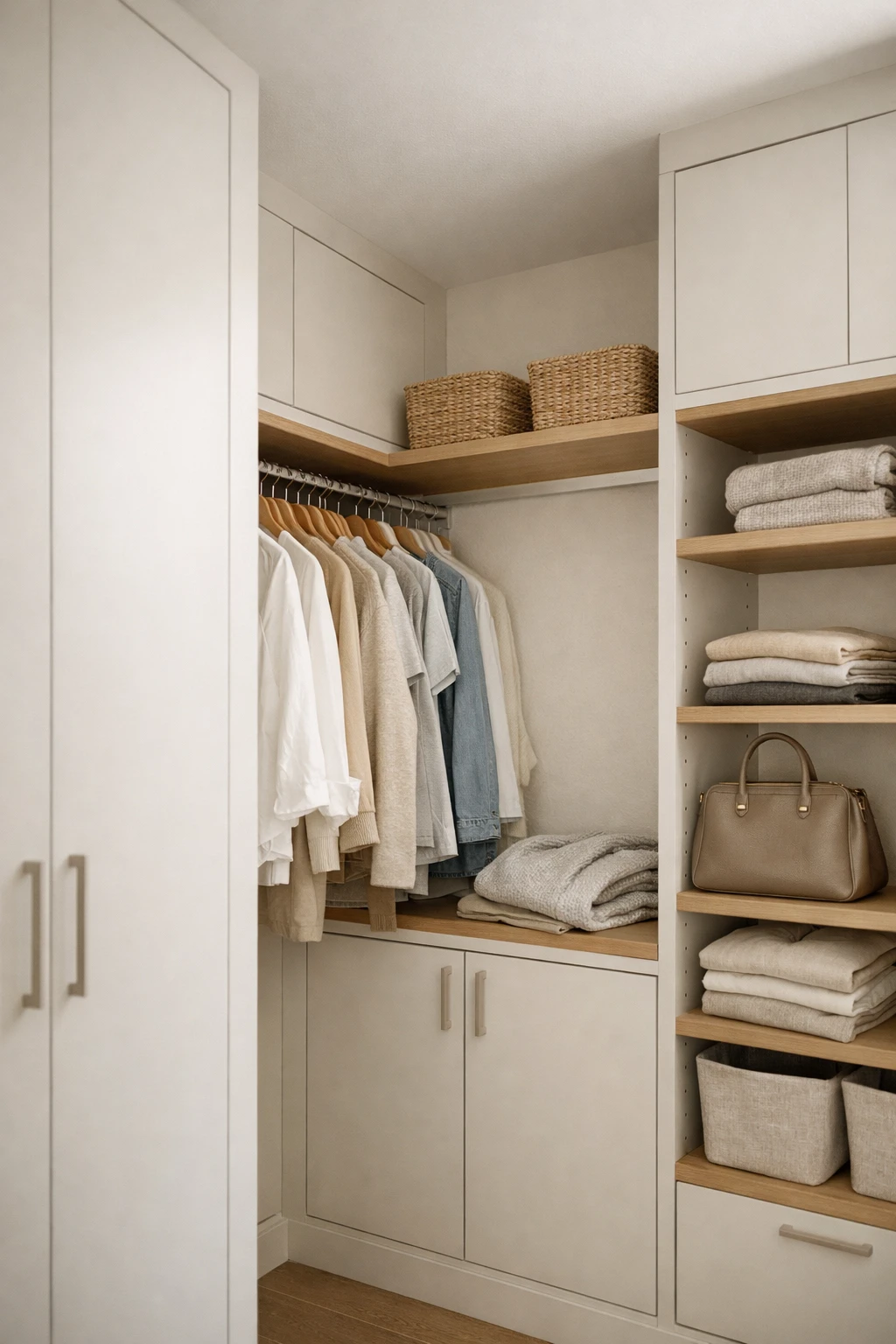
16. Built-In Corner Wardrobe Cabinets
Some homeowners prefer closed storage to maintain a clean appearance. Built-in wardrobe cabinets provide that benefit.
These cabinets can hide seasonal clothing, bulkier items, or less frequently used pieces.
Flat-panel doors keep the closet visually calm. Soft neutral paint colors also help cabinets blend with surrounding walls.
Consider combining cabinets with open shelving or hanging rods so the closet maintains a balanced design.
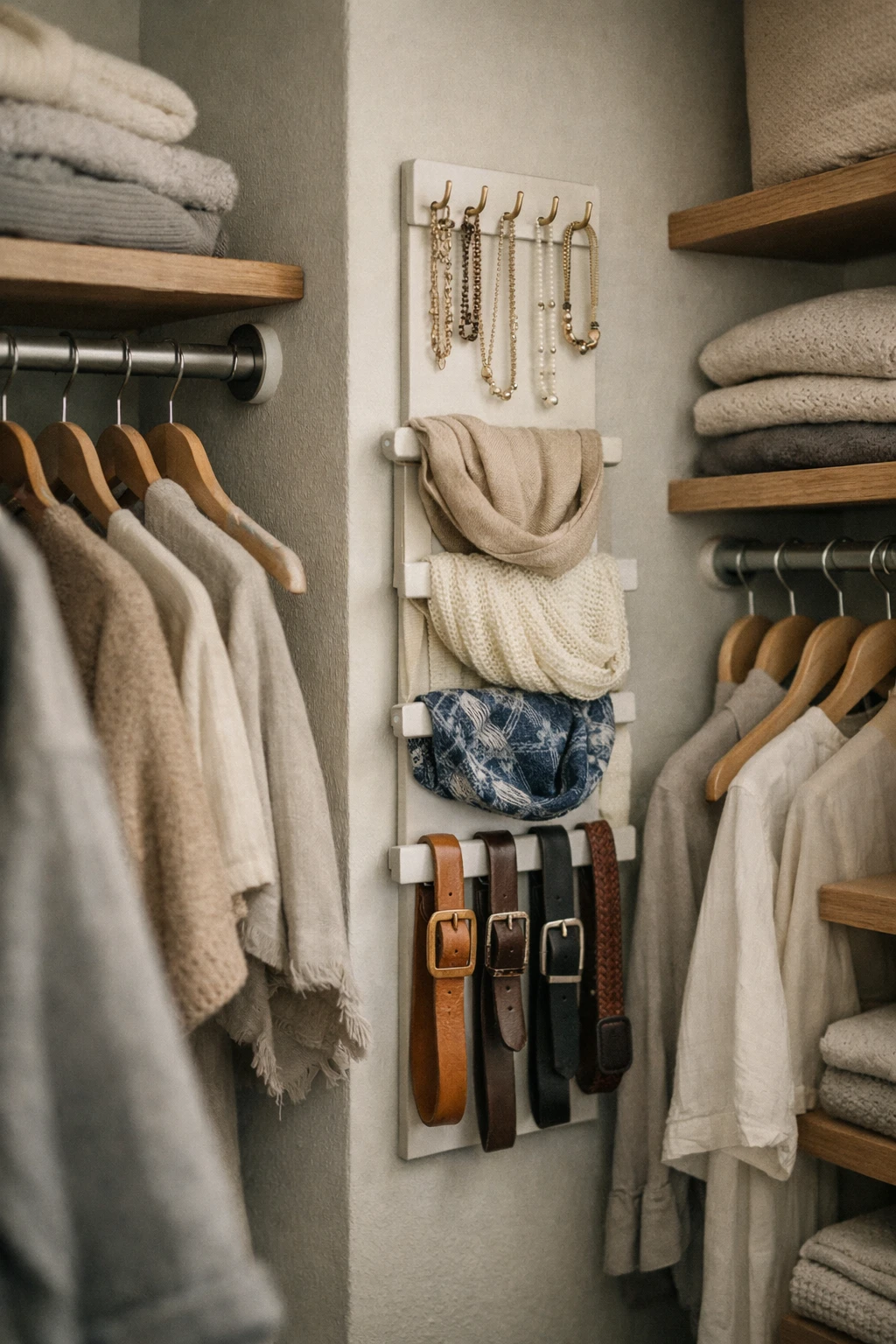
17. Vertical Accessory Organizer
Accessories often become cluttered in small closets. A vertical organizer solves that problem by giving each item a dedicated spot.
This can include:
• belt hooks
• scarf racks
• jewelry panels
• tie organizers
Mount the organizer along a narrow wall or inside a cabinet door.
Keeping accessories vertical improves visibility and prevents tangled storage.
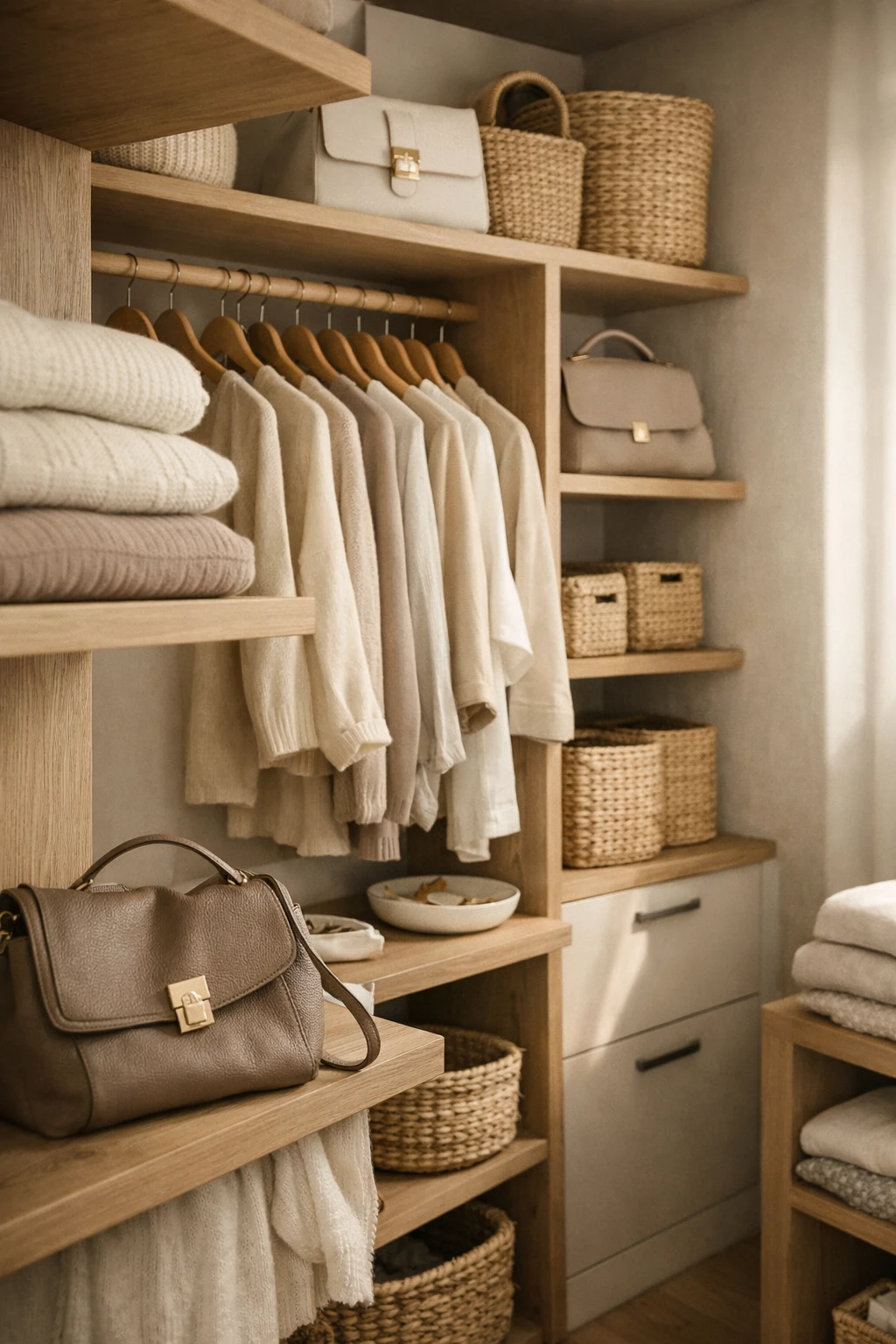
18. Neutral Boutique Style Closet
A neutral color palette can transform a small corner closet into a boutique-inspired dressing space.
Soft tones like warm white, beige, pale oak, and light taupe make the room feel larger and calmer.
Textures play an important role here. Mixing materials such as linen baskets, wooden shelves, and ceramic trays adds visual interest without overwhelming the space.
Boutique-style closets focus on presentation as much as storage.
Clothing spacing, coordinated hangers, and tidy shelves make the closet feel curated.
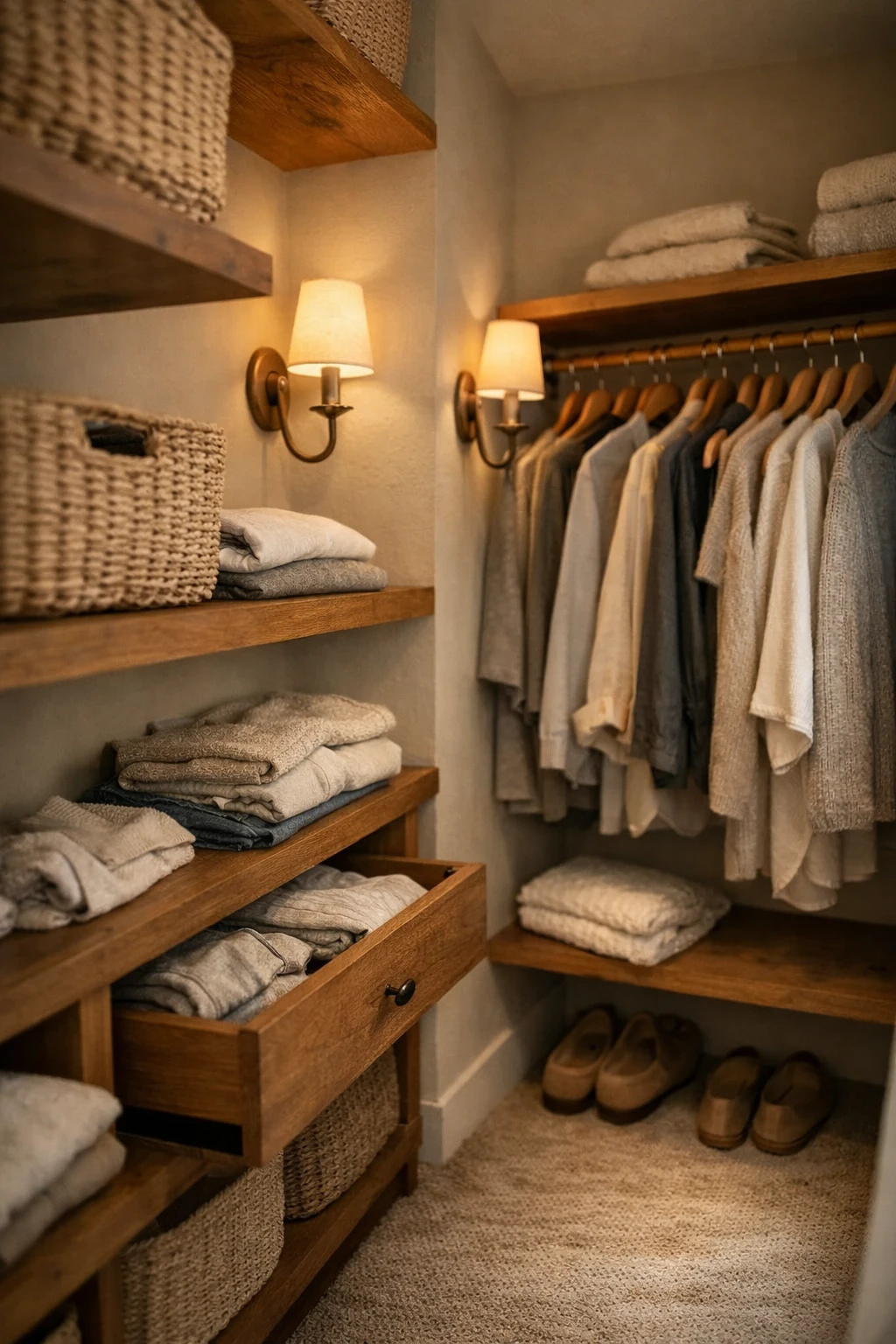
19. Soft Corner Lighting with Wall Sconces
Lighting often receives little attention in closet design, yet it can dramatically change how the space feels.
Wall sconces installed in corners provide gentle ambient lighting that spreads evenly across the closet.
This creates a warmer, more welcoming environment compared to harsh overhead fixtures.
Soft lighting also makes it easier to see colors accurately while choosing outfits.
Warm neutral bulbs tend to feel the most flattering in closet spaces.
Conclusion
A small walk-in corner closet does not need to feel cramped or chaotic. With the right layout and storage strategy, even the smallest corner can become a highly functional dressing space.
The most successful designs focus on three things: smart storage, visual balance, and good lighting. When shelving, rods, and drawers are arranged intentionally, the closet becomes easier to use every day.
Using vertical storage, curated displays, and layered lighting can dramatically improve both function and appearance. Even simple adjustments like floating shelves, mirrors, or better shoe storage can transform the space.
Instead of fighting the corner layout, these ideas work with it. The result is a closet that feels organized, calm, and thoughtfully designed.
A well-planned corner closet does more than store clothing. It becomes a small personal space that supports daily routines while maintaining a clean and inviting look.
Comparison Table: Best Small Walk-In Corner Closet Ideas for Function
| Idea | Best For | Main Benefit | Watch Out For |
|---|---|---|---|
| 1. L-Shaped Layout | Most small corner closets | Uses two walls efficiently | Can feel crowded if oversized units are used |
| 2. Double Hanging Rods | High clothing volume | Doubles hanging storage | Not ideal for long garments |
| 3. Floating Shelves | Bags and folded clothes | Keeps the space visually light | Can look messy if overstuffed |
| 4. Built-In Drawers | Hidden storage | Reduces clutter fast | Needs careful sizing |
| 5. Open Shoe Wall | Shoe organization | Easy visibility and access | Can look busy without spacing |
| 6. Corner Bench | Dressing comfort | Adds function and style | Needs enough floor depth |
| 7. Full-Length Mirror | Small dark closets | Makes space feel larger | Poor placement can reflect clutter |
| 8. Vertical Shelf Tower | Corner storage | Uses height well | Can feel bulky if too deep |
| 9. Layered Lighting | Any small closet | Improves look and function | Cheap lighting can feel harsh |
| 10. Glass-Front Cabinets | Stylish storage | Keeps upper storage lighter | Requires neat arrangement |