


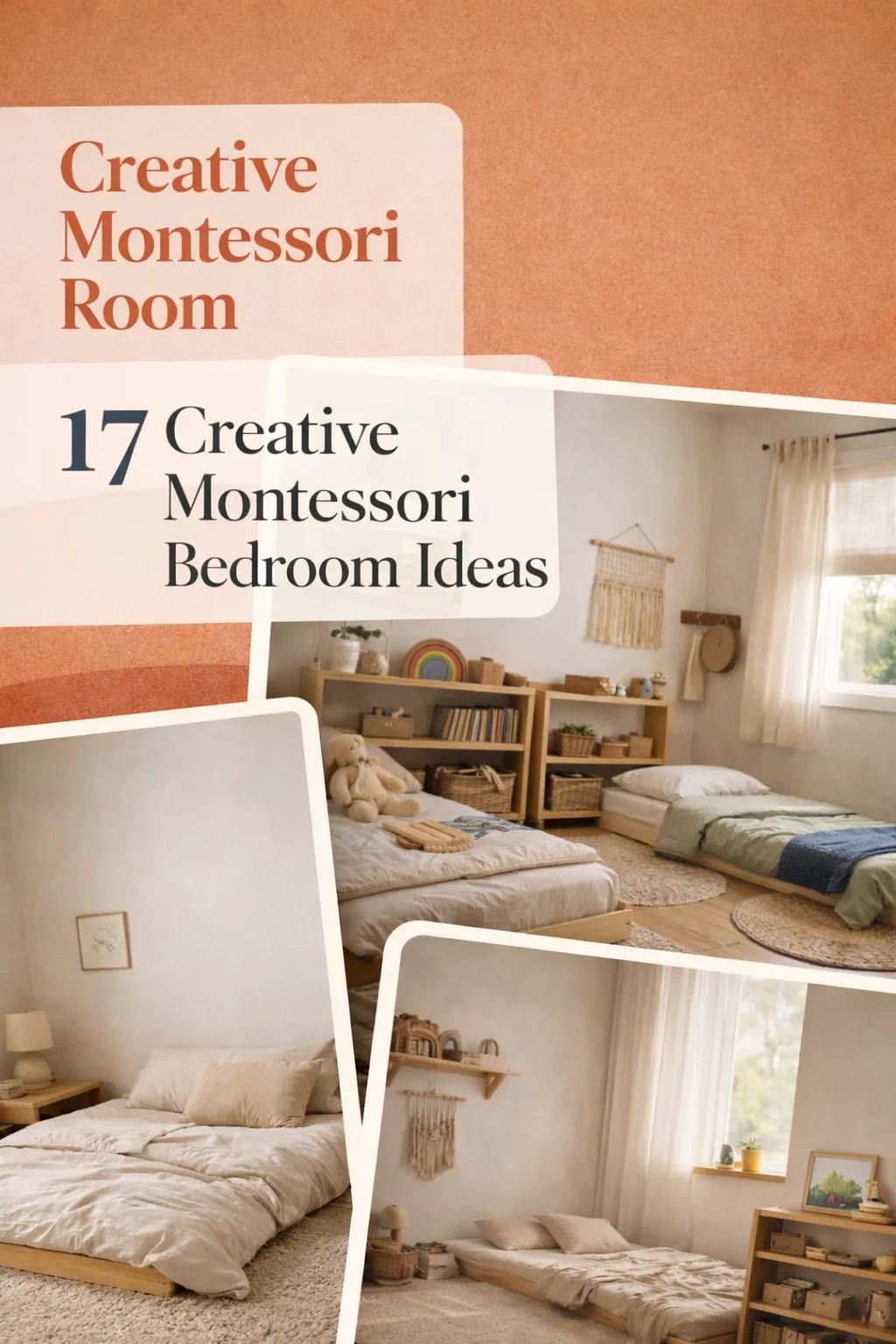
A Montessori bedroom should do more than look cute in photos. It should help a child move freely, make simple choices, and feel comfortable in their own space. That is the real point. The decor matters, but function comes first.
A well-planned Montessori bedroom gives children age-appropriate freedom. It also makes daily life easier for parents. When the bed is easy to access, books are within reach, and clothes are stored at child height, kids can start doing more on their own. That builds confidence in a very natural way.
The good news is that a Montessori bedroom does not need to be expensive or overly styled. It does not need to be all beige either. The best rooms feel warm, simple, organized, and lived in. They support sleep, play, reading, and getting dressed without too much visual noise.
These Montessori bedroom ideas are designed for real homes, real budgets, and real families. Some are ideal for small rooms. Some work well in shared spaces. All of them can help you create a child-centered room that still feels polished and Pinterest-worthy.
Why Montessori Bedrooms Work So Well
Montessori bedrooms are built around independence. Instead of asking an adult to hand them a toy, pick out a book, or lift them into bed, children can do more for themselves. That does not mean the room has to look bare. It means the layout is intentional.
A strong Montessori bedroom often includes:
- A low bed or floor bed
- Open, reachable storage
- A calm color palette
- Simple decor
- Clearly defined zones for sleep, reading, and play
- Safe furniture and uncluttered pathways
The goal is not perfection. The goal is a room that makes sense to a child.
Quick Comparison Table for a Montessori Bedroom Setup
| Feature | Traditional Kid Bedroom | Montessori Bedroom |
|---|---|---|
| Bed height | Often adult-height toddler or twin bed | Low bed or floor bed for easy access |
| Toy storage | Large bins or packed shelves | Limited, visible, easy-to-reach items |
| Book display | Books stacked on high shelves | Front-facing low shelves |
| Clothing access | Controlled by adults | Child-height drawers, hooks, or rods |
| Room layout | Decor-first | Function-first with calm styling |
| Independence level | Lower | Higher |
1. Use a Floor Bed for Easy Independence
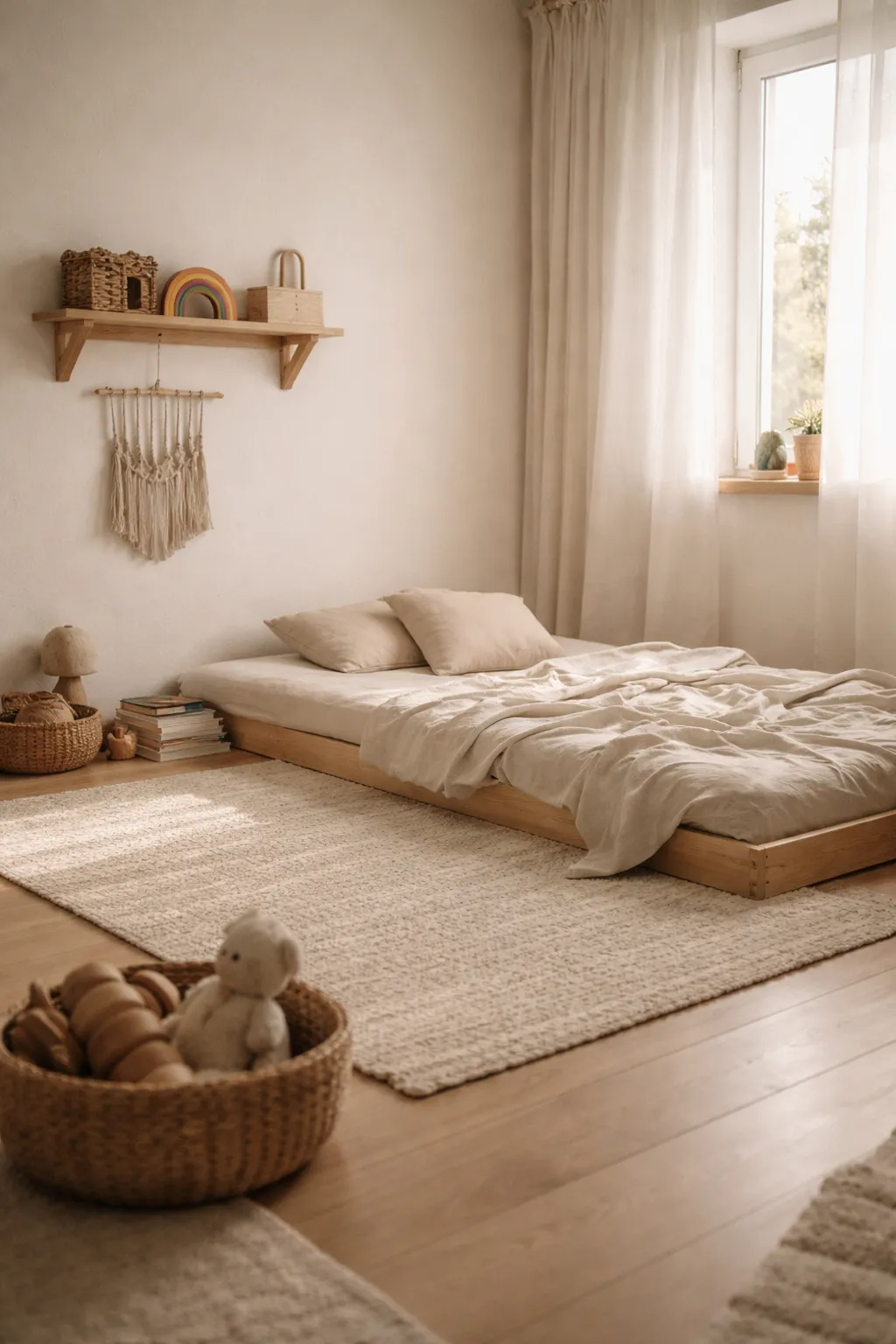
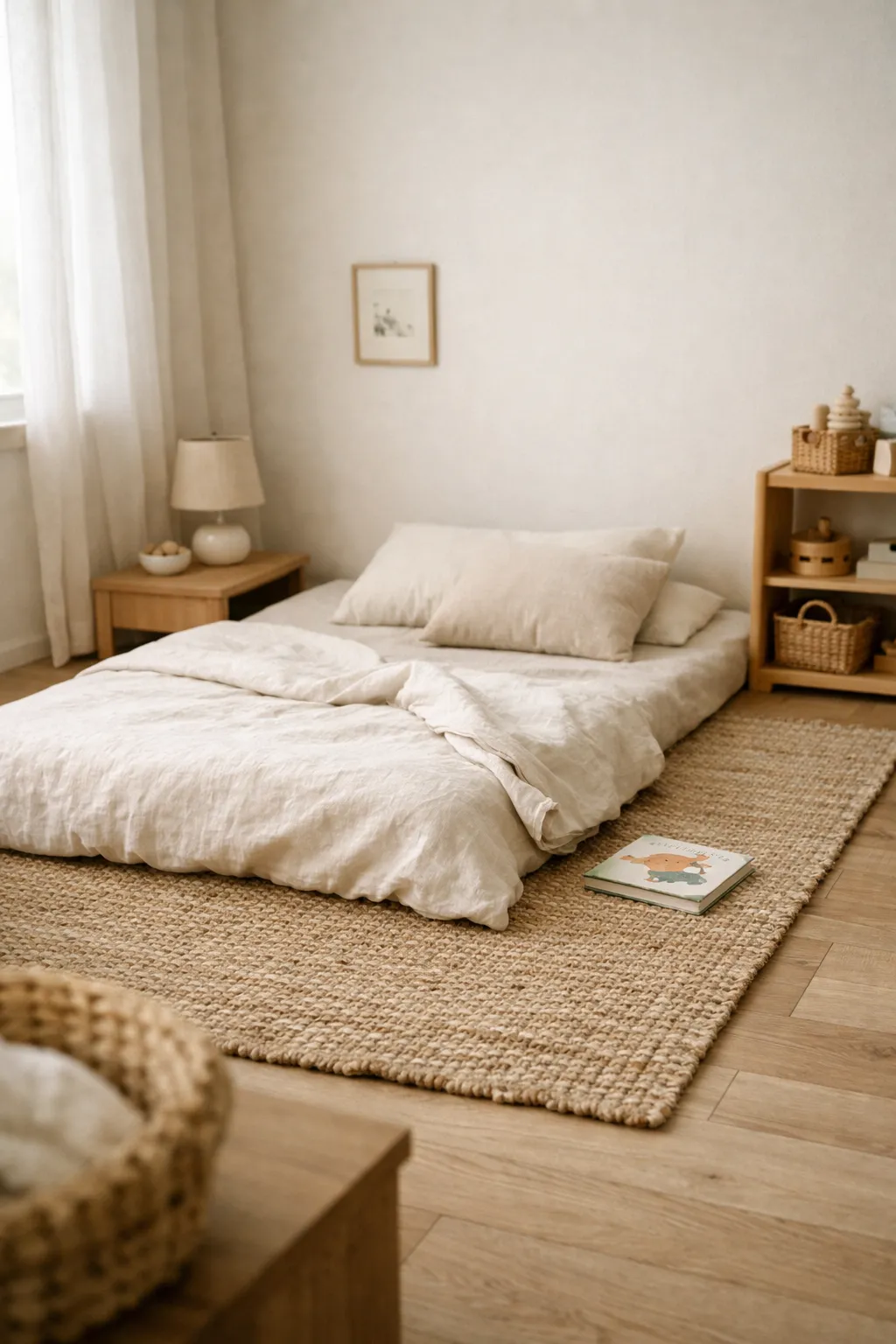
A floor bed is one of the most recognized Montessori bedroom features, and for good reason. It allows a child to get in and out of bed without help. That supports freedom of movement and can make bedtime feel less restrictive.
A floor bed does not have to be fancy. A simple mattress on a low frame or directly on a clean, ventilated base can work well. Keep the area around the bed open and uncluttered so the room feels safe and easy to move through.
For styling, soft bedding in cotton or linen gives the room a calm, grounded look. Neutral shades work well, but dusty blue, muted green, warm clay, or soft blush can also fit beautifully.
2. Keep the Room Layout Open and Uncrowded
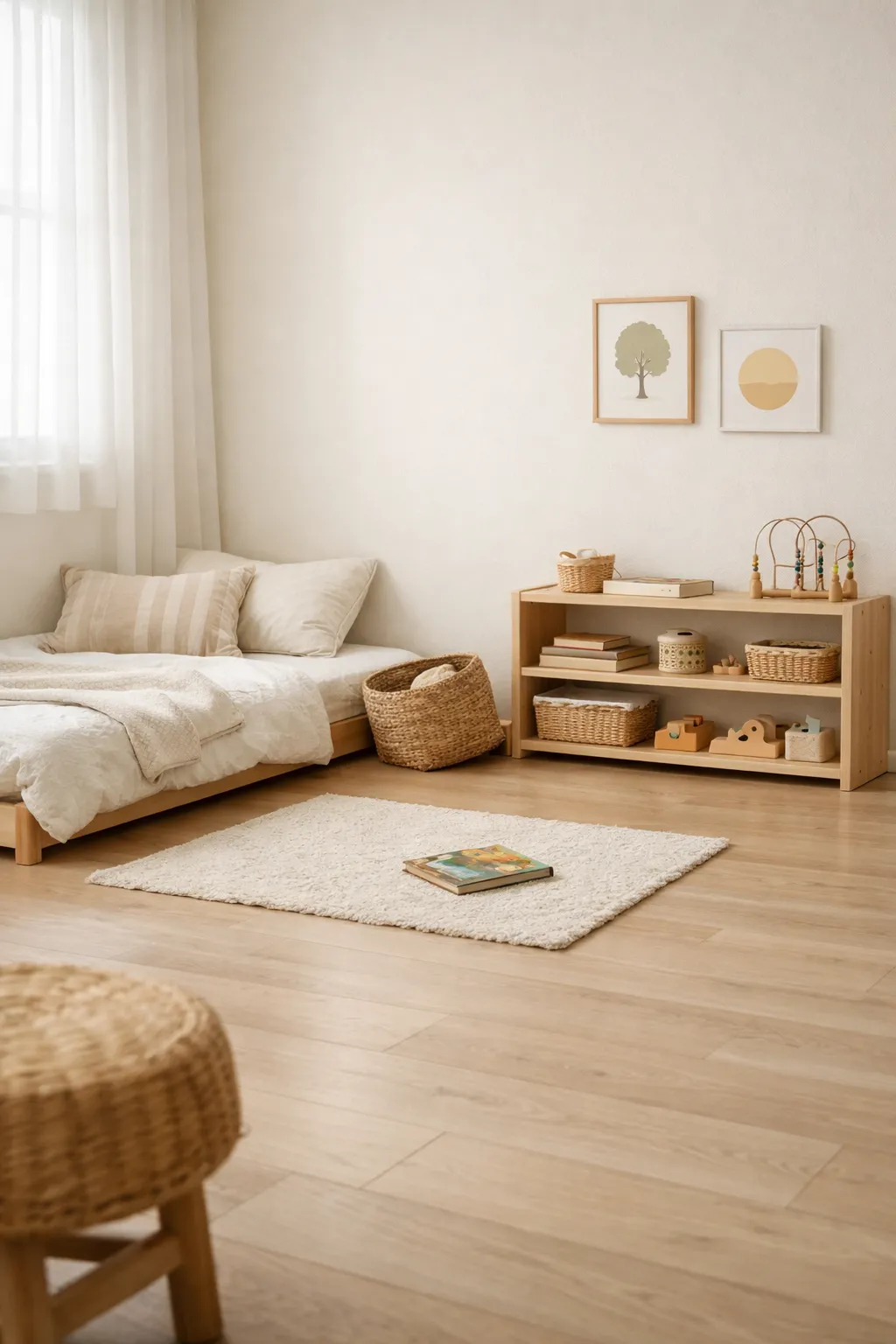
A Montessori bedroom should not feel jammed with furniture. Children need space to move, explore, and play. An open layout also helps the room feel calmer.
Instead of filling every wall, leave some breathing room. Choose fewer pieces that serve a clear purpose. A bed, a low shelf, a small rug, and a child-height book display may be enough for many rooms.
This is where many parents overdo it. They add extra seating, oversized storage, too many baskets, and too much wall decor. The result looks busy and works poorly. A cleaner layout usually feels better and functions better.
3. Add a Low Bookshelf With Front-Facing Books
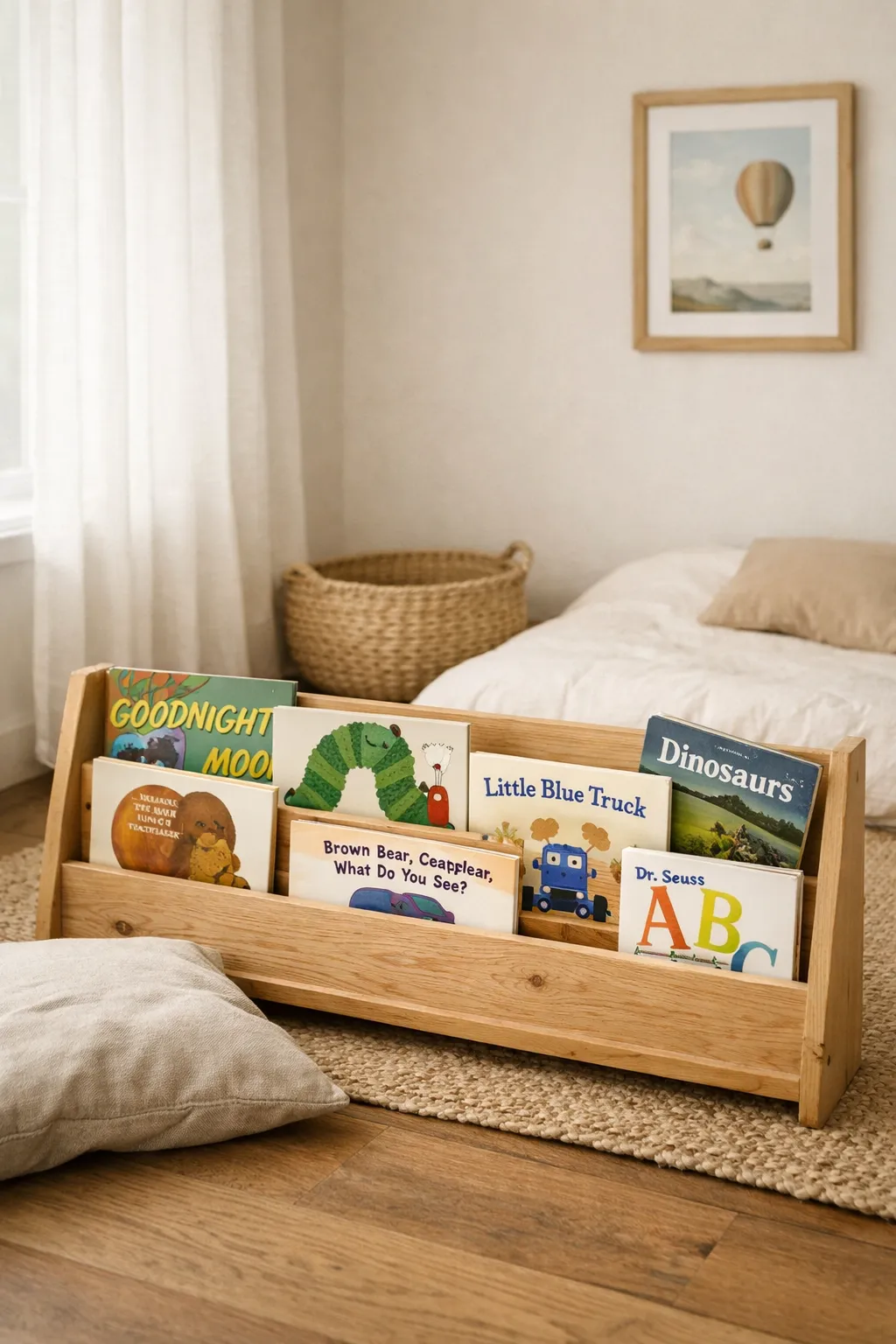
Children are more likely to choose books when they can actually see the covers. A front-facing bookshelf is much more inviting than a tall shelf packed with spines.
Place a low book display near the bed or reading corner. Rotate titles every week or two instead of leaving every book out at once. That keeps the shelf fresh without creating clutter.
This idea also adds strong visual appeal to the room. Colorful covers can act like decor, especially in a space with otherwise simple styling.
What to place on the shelf
- 5 to 10 books at a time
- A small basket for library books
- One framed print or family photo nearby
4. Create a Simple Reading Nook
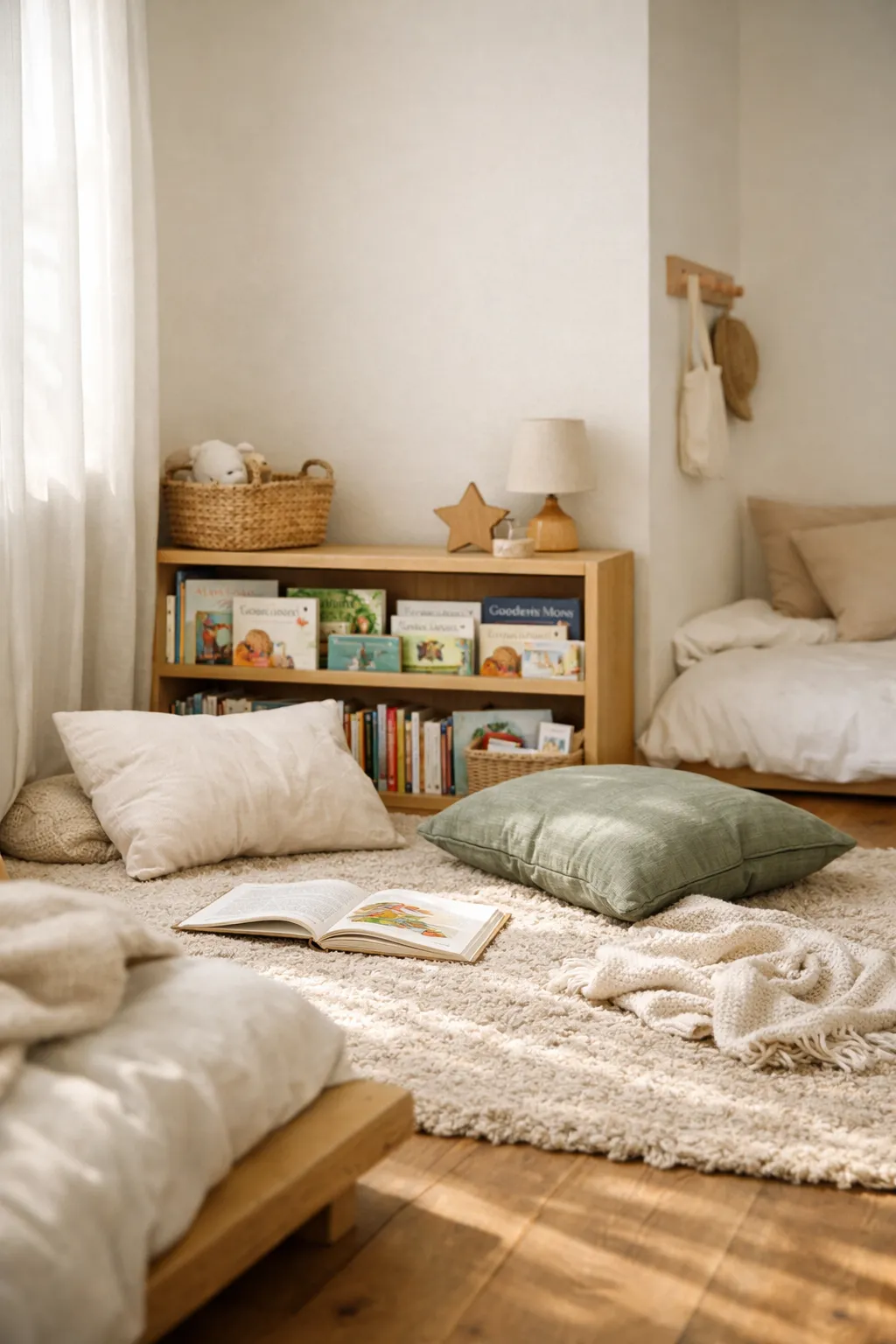
A Montessori reading nook does not need a canopy, custom bench, or expensive wallpaper. It just needs to feel inviting. A soft rug, a floor cushion, a low shelf, and gentle lighting can do the job.
Place the reading nook in a quiet corner away from toy storage if possible. This helps separate rest and focus from active play. If the room is small, the nook can be next to the bed with just a pillow and a wall-mounted book ledge.
For decor, think soft textures and comfort over too many accessories. One or two cushions are enough. More than that starts turning into clutter.
5. Use Child-Height Clothing Storage
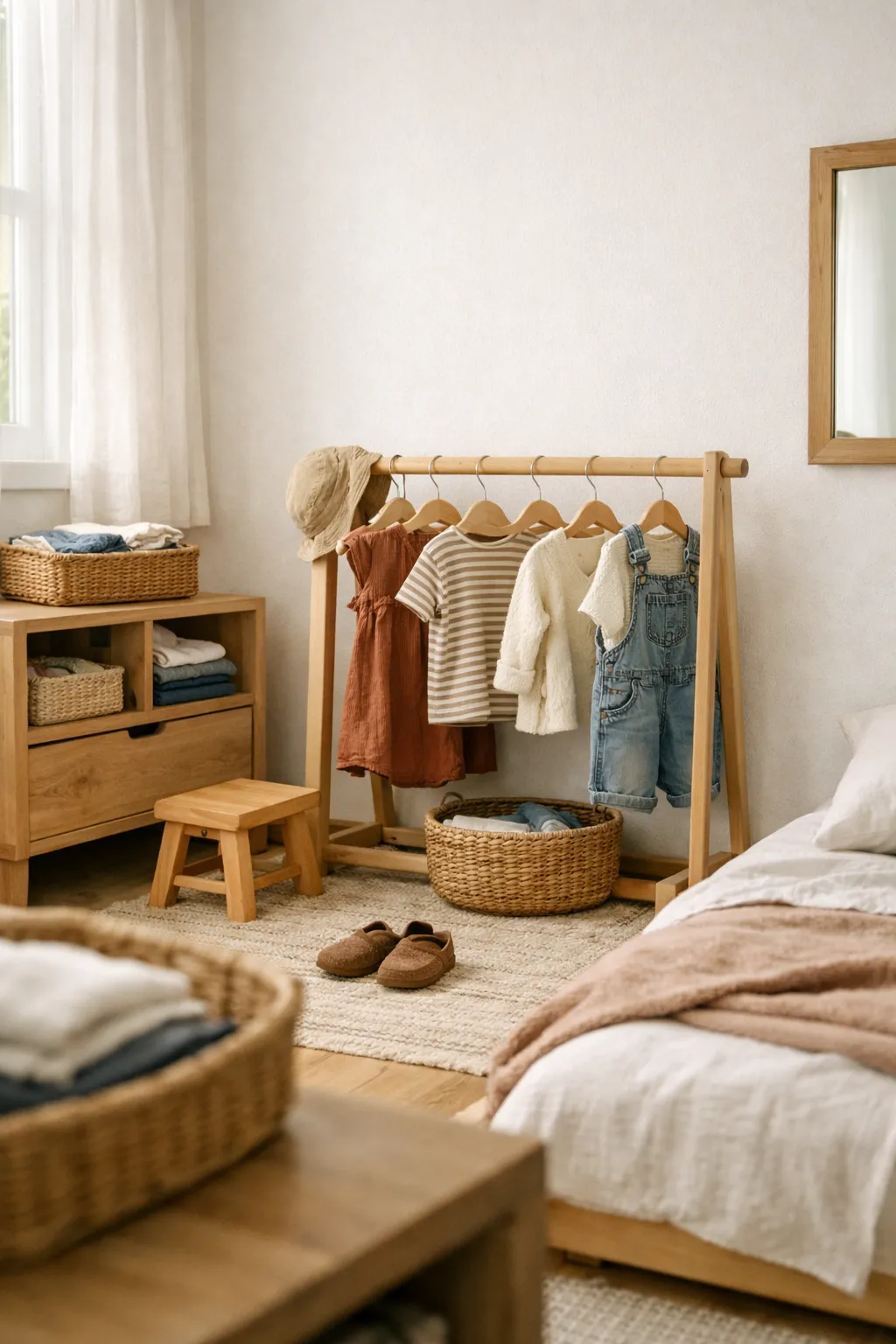
A Montessori bedroom should help a child participate in getting dressed. That is hard to do when every item is stored in a tall dresser or a packed closet controlled by adults.
Try a low dresser, open cubbies, or a small clothing rack with a few weather-appropriate options. You do not need to give access to the entire wardrobe. A limited set of choices works better.
This setup teaches independence while keeping the room tidy. It also helps mornings move faster because the child can take part in the routine instead of waiting passively.
6. Add Low Hooks for Daily Essentials
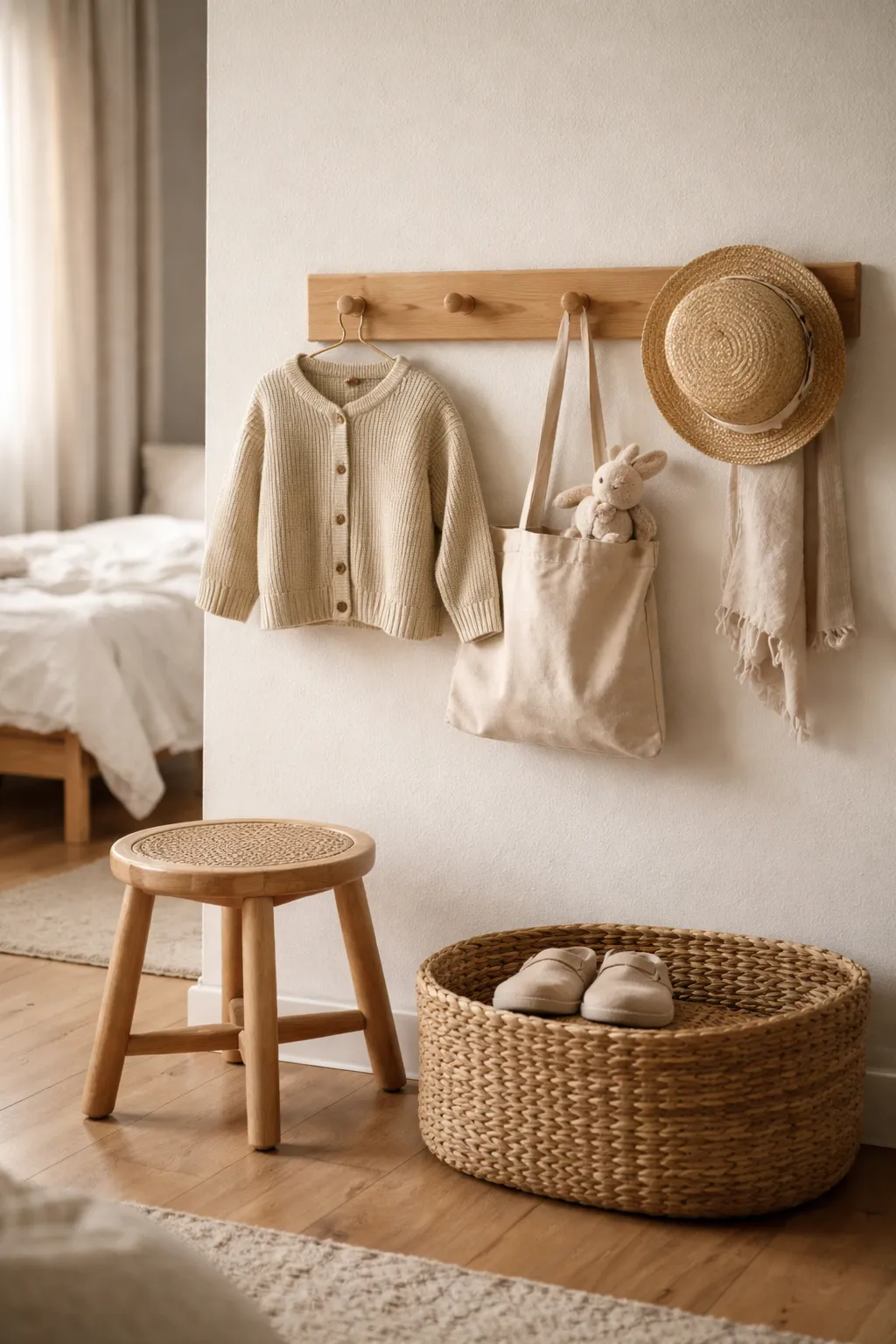
Wall hooks at child height are one of the easiest Montessori upgrades, and they cost very little. They help children hang up sweaters, bags, or tomorrow’s outfit without asking for help.
Use wood hooks or simple metal hooks that match the room style. Place them near the door or dressing area. You can also hang a small basket below for socks, slippers, or hats.
This small detail makes the room feel more functional right away. It also reduces the usual mess of clothes landing on the floor.
7. Choose Open Toy Shelving Instead of Deep Bins
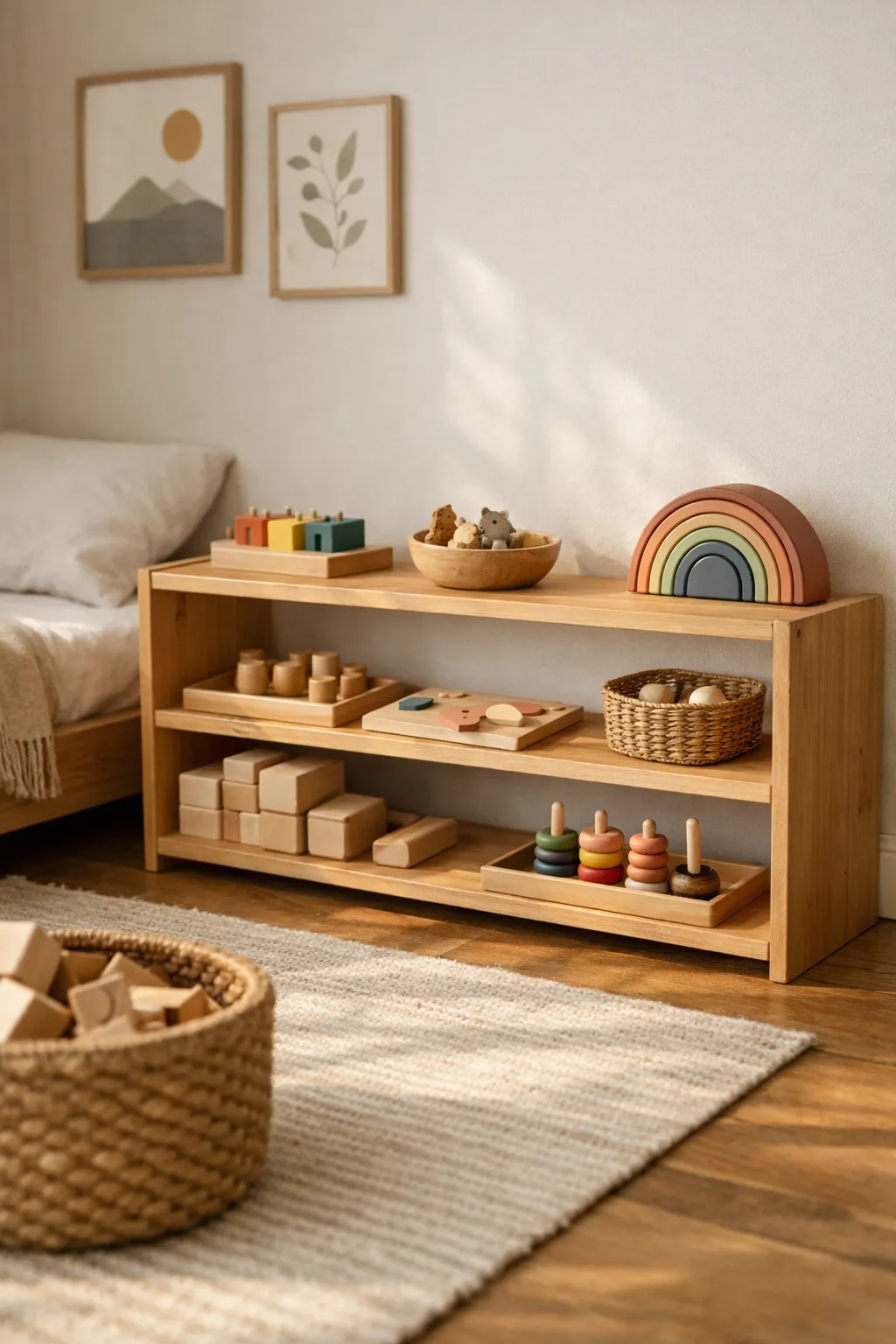
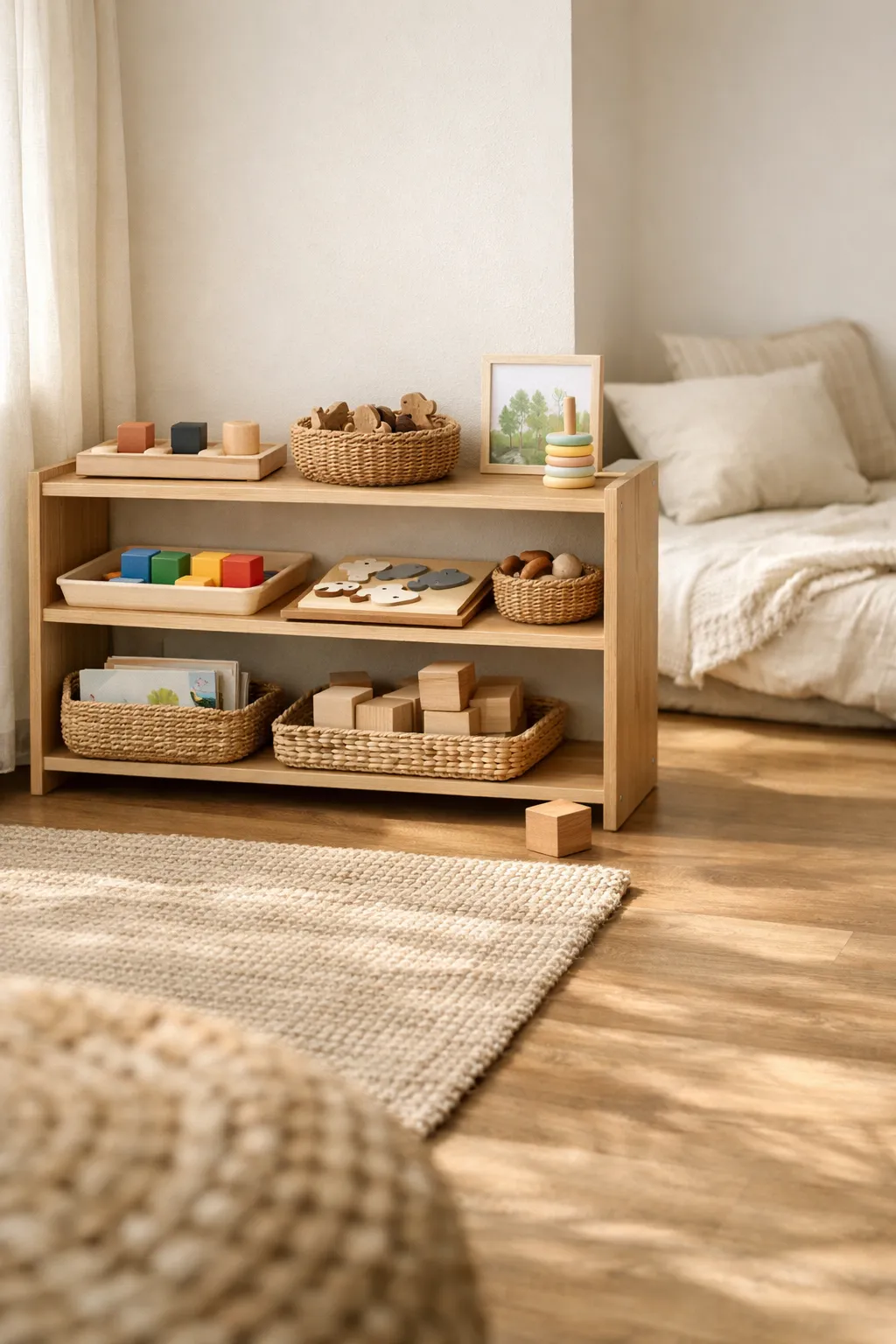
Deep toy bins often create hidden chaos. Everything gets dumped together, and kids either ignore it or empty it all at once. Open shelving works better because children can see what is available and return items more easily.
Use a low shelf with a few trays or baskets. Limit the number of toys on display. Less is usually better. A crowded shelf does not encourage focus. It encourages dumping.
This style also looks cleaner. Wooden toys, puzzles, blocks, and small baskets can give the room a warm, styled look without losing function.
A good toy shelf setup often includes
- 6 to 8 activity choices
- One item per tray
- Space between objects
- Rotated materials instead of everything at once
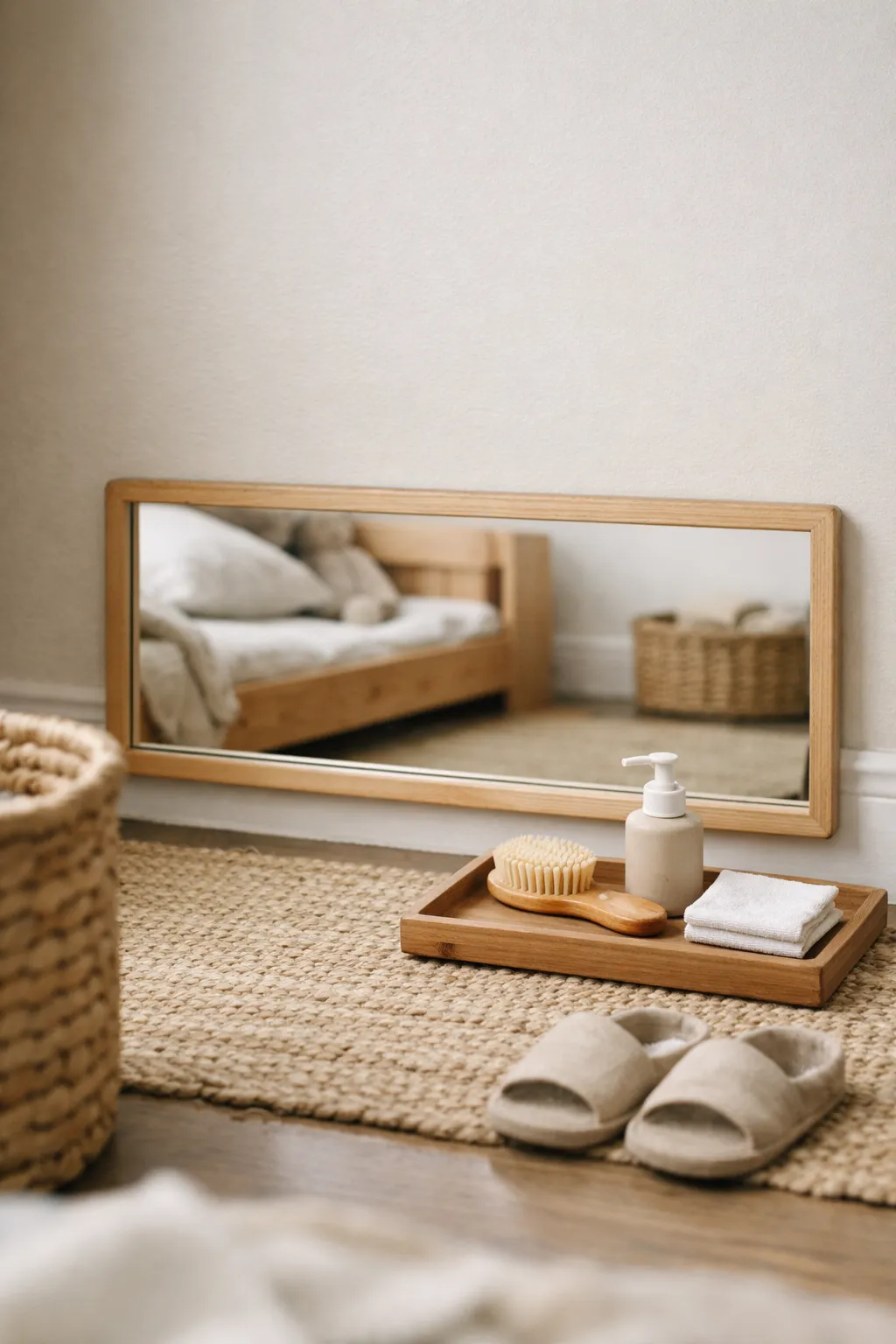
8. Add a Child-Safe Mirror Near the Dressing Area
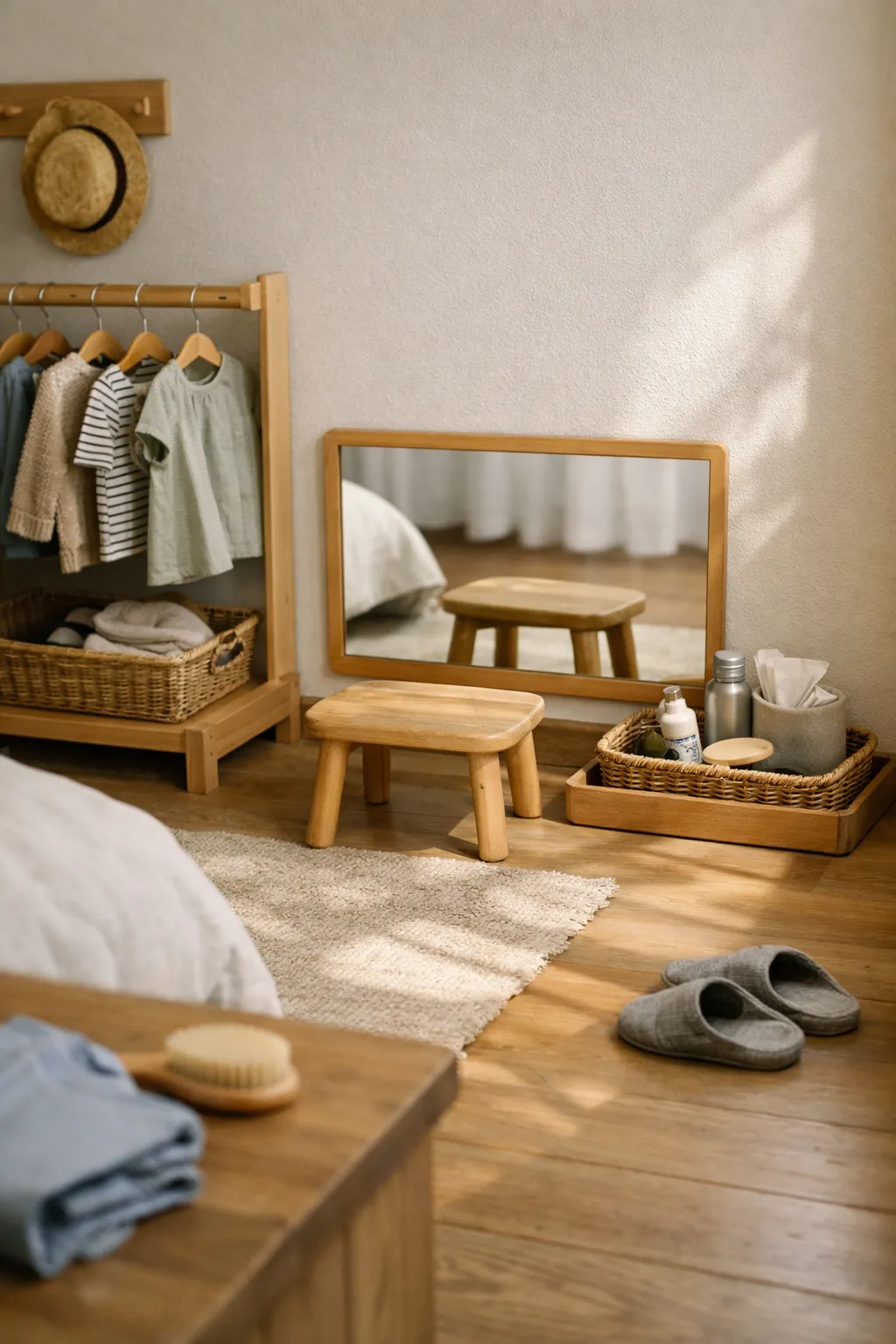
A low mirror is a classic Montessori element because it helps children become more aware of themselves and their movements. In a bedroom, it works especially well near the dressing area.
Use a secure acrylic or child-safe mirror and mount it low enough for the child to use comfortably. A small stool, brush basket, or simple tray nearby can support self-care routines.
From a decor perspective, a mirror also helps reflect light and makes a smaller room feel more open. It is practical and visually useful, which is the sweet spot in good design.
9. Stick to a Calm Color Palette
Montessori bedrooms do not need to be plain, but they should feel restful. Loud, high-contrast colors on every surface can make the room feel overstimulating.
A calm palette often works best with:
- Warm whites
- Soft taupe
- Sage green
- Dusty blue
- Muted terracotta
- Light wood tones
You can still bring in playful touches through art, books, or textiles. The key is balance. If the walls, rug, bedding, storage, and decor are all fighting for attention, the room stops feeling peaceful.
10. Use Natural Materials for Warmth and Texture
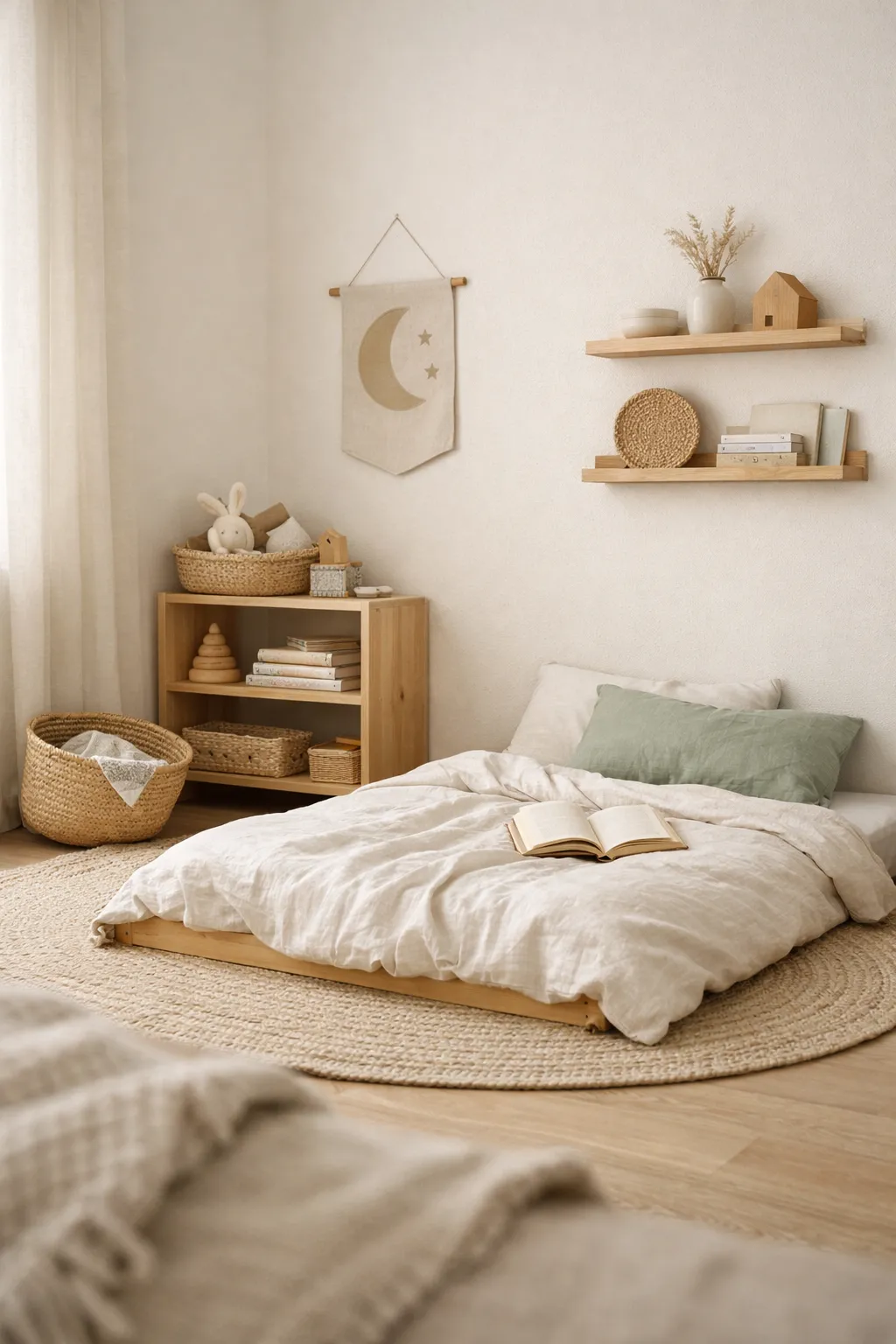
Montessori spaces often feel more grounded when they include natural materials. Wood, cotton, linen, wicker, wool, and ceramic all add texture without making the room feel loud.
This does not mean you need to replace everything. Even a few swaps can help. A wooden shelf instead of plastic storage, a woven basket instead of a bright bin, or linen curtains instead of synthetic blackout panels can shift the feel of the room.
Natural textures also photograph well, which matters if you want the room to have that polished Pinterest look without seeming staged.
11. Keep Wall Decor Low, Simple, and Meaningful
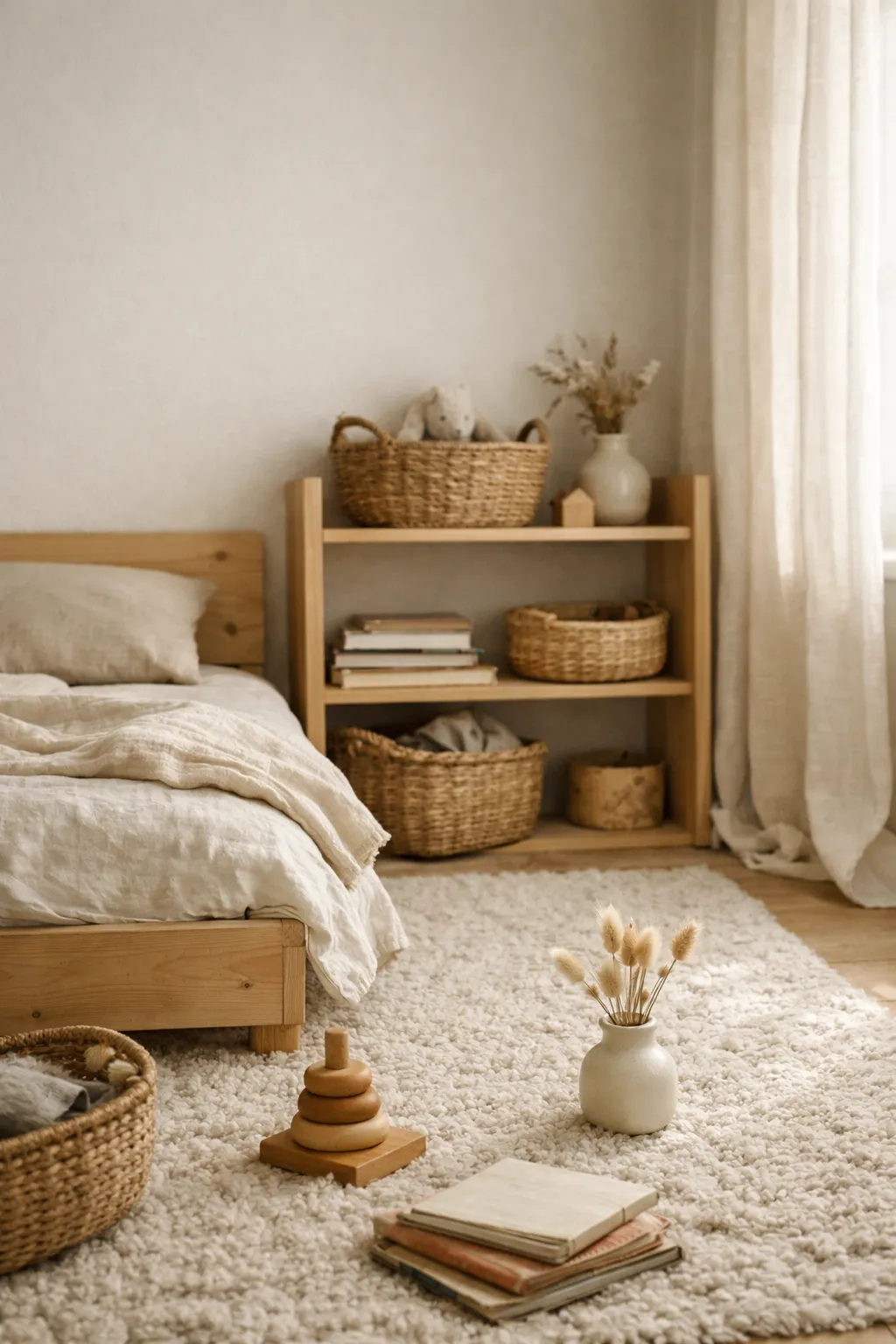
Many kids’ rooms are overloaded with wall art, decals, garlands, and signs. It is too much. In a Montessori bedroom, wall decor should feel intentional, not crowded.
Hang art lower so the child can actually enjoy it. Choose a few pieces rather than covering every empty spot. Botanical prints, animals, simple landscapes, or family photos can all work well.
Avoid filling the room with word signs and trendy clutter. Most of that is for adults, not children. If the room is meant to support a child’s experience, the decor should reflect that.
12. Define a Quiet Sleep Zone
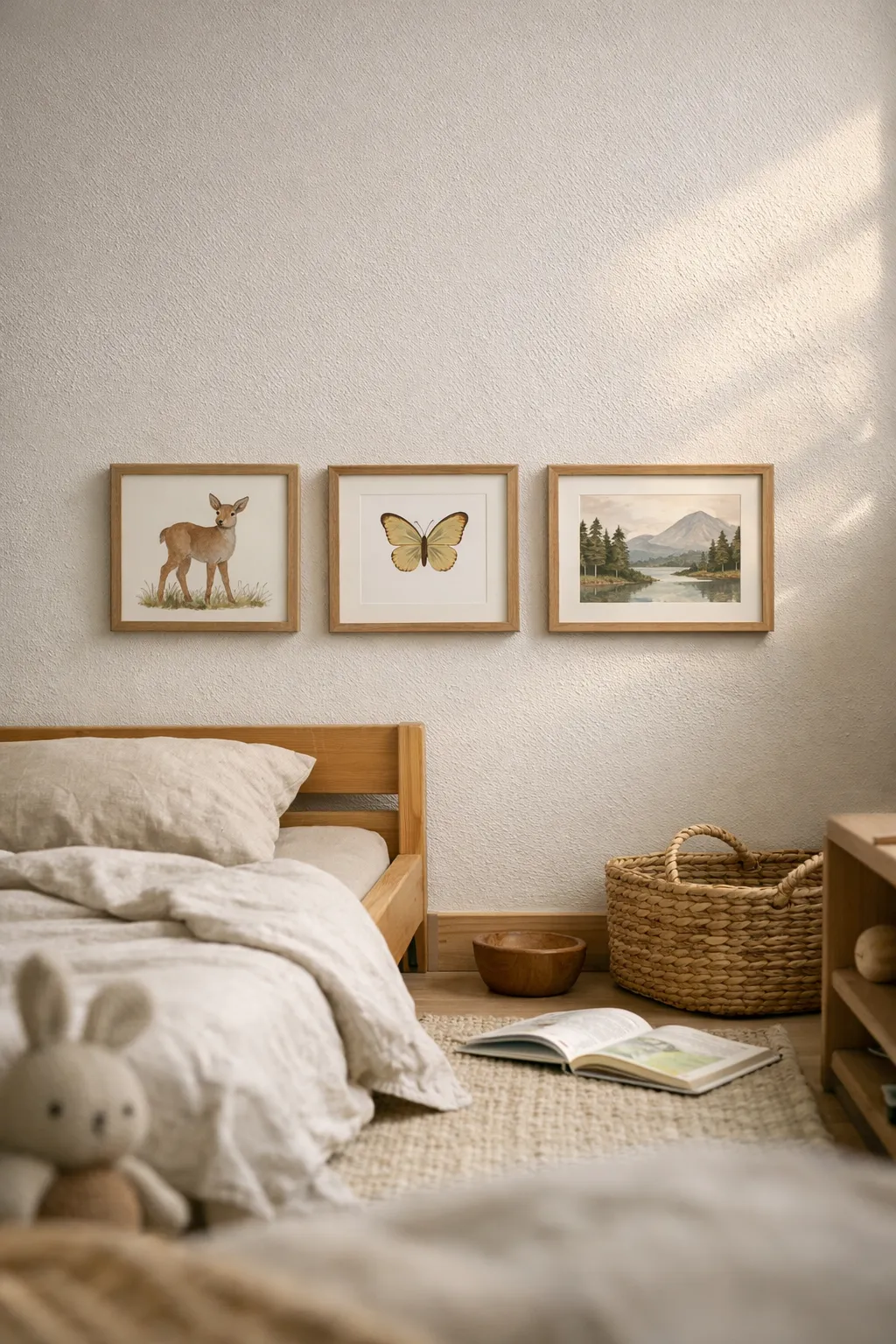
The sleep area should feel separate from active storage and play, even in a small room. This helps create a stronger bedtime rhythm and gives the room more structure.
You can define a sleep zone with a rug, soft wall color, a small bedside shelf, or gentle lighting. Keep this area visually calm. Avoid placing loud toys or busy open storage right beside the bed.
A small bedroom can still handle this idea. Even moving the toy shelf to the opposite wall can make a real difference.
13. Add Soft, Layered Lighting
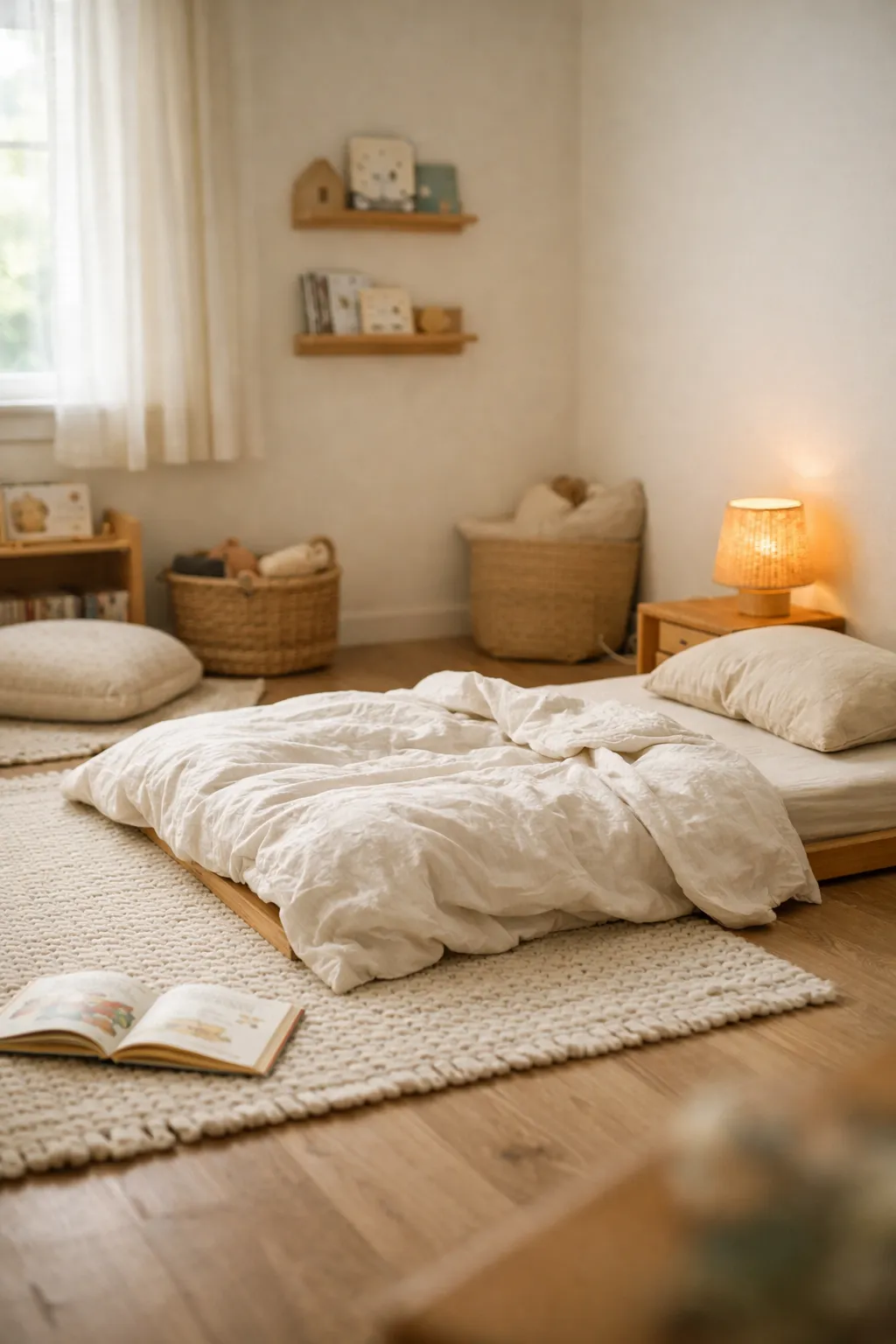
Lighting changes how a bedroom feels. Overhead ceiling lights alone can make the room feel flat or harsh. A Montessori bedroom benefits from softer layers of light.
Use warm bedside lighting, a small lamp on a low shelf, or a wall sconce placed thoughtfully out of reach if needed. During the day, natural light should do as much work as possible.
Good lighting helps in practical ways too. It can make reading corners more inviting and bedtime routines calmer. The room should feel gentle at night, not bright and busy.
14. Make Space for Independent Morning Routines
A strong Montessori bedroom supports more than sleep. It can also help with simple morning habits. Think about what your child needs to do after waking up and before leaving the room.
That could include:
- Choosing clothes
- Brushing hair
- Looking in the mirror
- Putting pajamas away
- Picking a book or quiet activity
A small tray with a hairbrush, tissues, or a soft cloth can support these routines. The point is not to create a tiny adult station. The point is to make ordinary tasks easier for the child to join.
15. Try Toy Rotation to Reduce Clutter
You do not need every toy out every day. In fact, that usually makes the room worse. Too many options can lead to scattered attention and more mess.
Toy rotation is simple. Store some items out of sight and keep a smaller set on the shelf. Swap them every week or two based on interest and season. This makes the room feel fresh without buying more stuff.
Parents often resist this because it sounds like extra work. It is not. What is extra work is constantly cleaning a room overloaded with items the child is not even using well.
16. Adapt the Room for Small Spaces or Shared Bedrooms
Not every family has a large nursery or dedicated toddler room. That is fine. Montessori ideas can work in small bedrooms and shared rooms if you focus on the basics.
In a small room, prioritize:
- A low bed
- One low shelf
- A compact reading area
- Limited clothing access
- Clear walking space
In a shared room, define each child’s area with rugs, shelf placement, or wall art rather than bulky furniture. Keep storage separate and easy to understand. The room does not need to look symmetrical. It needs to work.
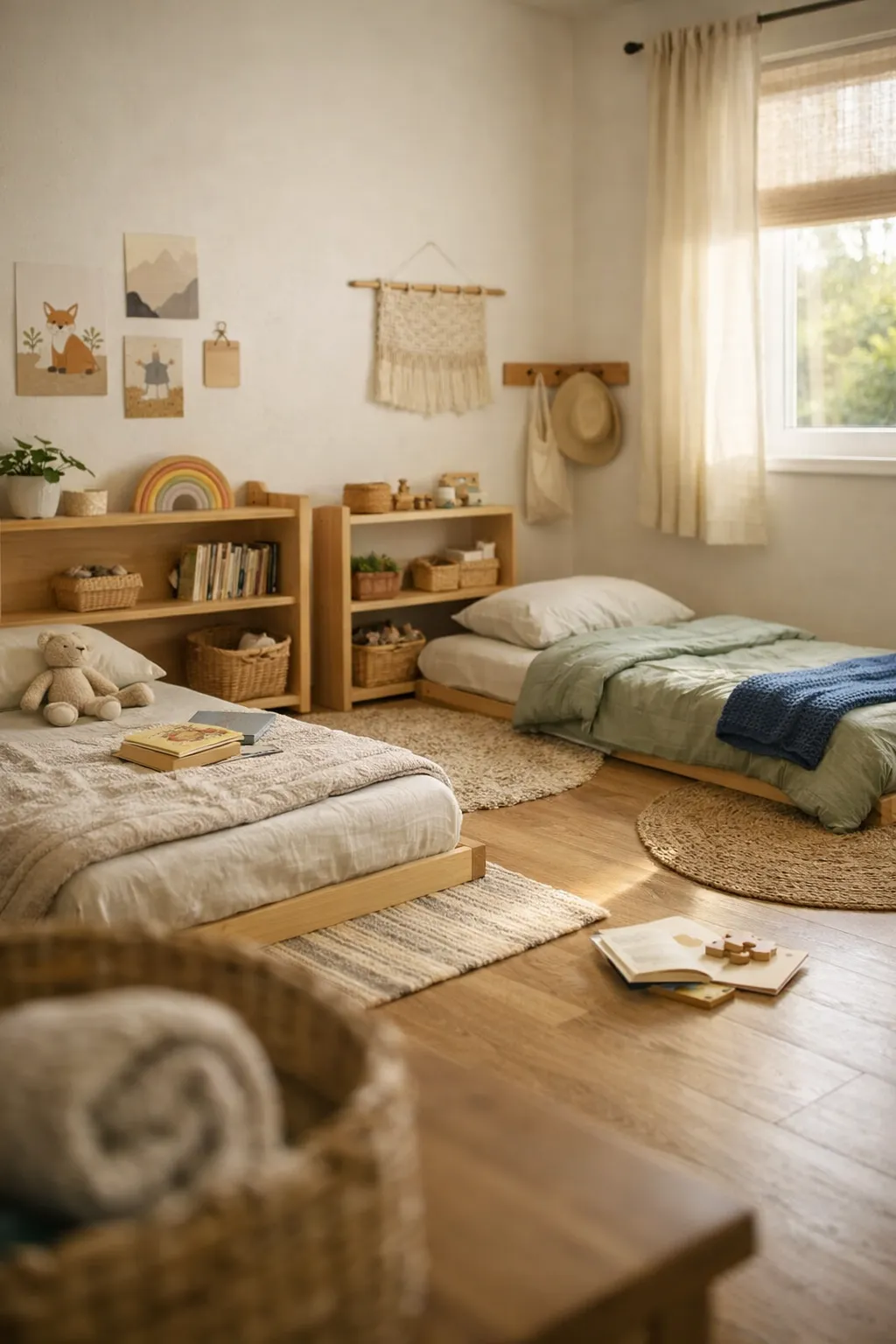
Shared room tip
If one child is older, do not force identical setups. Their needs are different. Design around actual use, not matching aesthetics.
17. Let the Room Evolve With the Child
One mistake parents make is trying to create a perfect Montessori room all at once and then freezing it in place. That is not realistic. Children grow fast, and the room should change with them.
A baby’s floor bed setup will not be the same as a preschooler’s room. Book choices change. Clothing storage changes. Activity shelves change. The best Montessori bedrooms are flexible enough to adapt.
Start with the basics and adjust as you go. If something is not being used, change it. If a setup looks beautiful but causes frustration, fix it. A room that works is always better than a room that only photographs well.
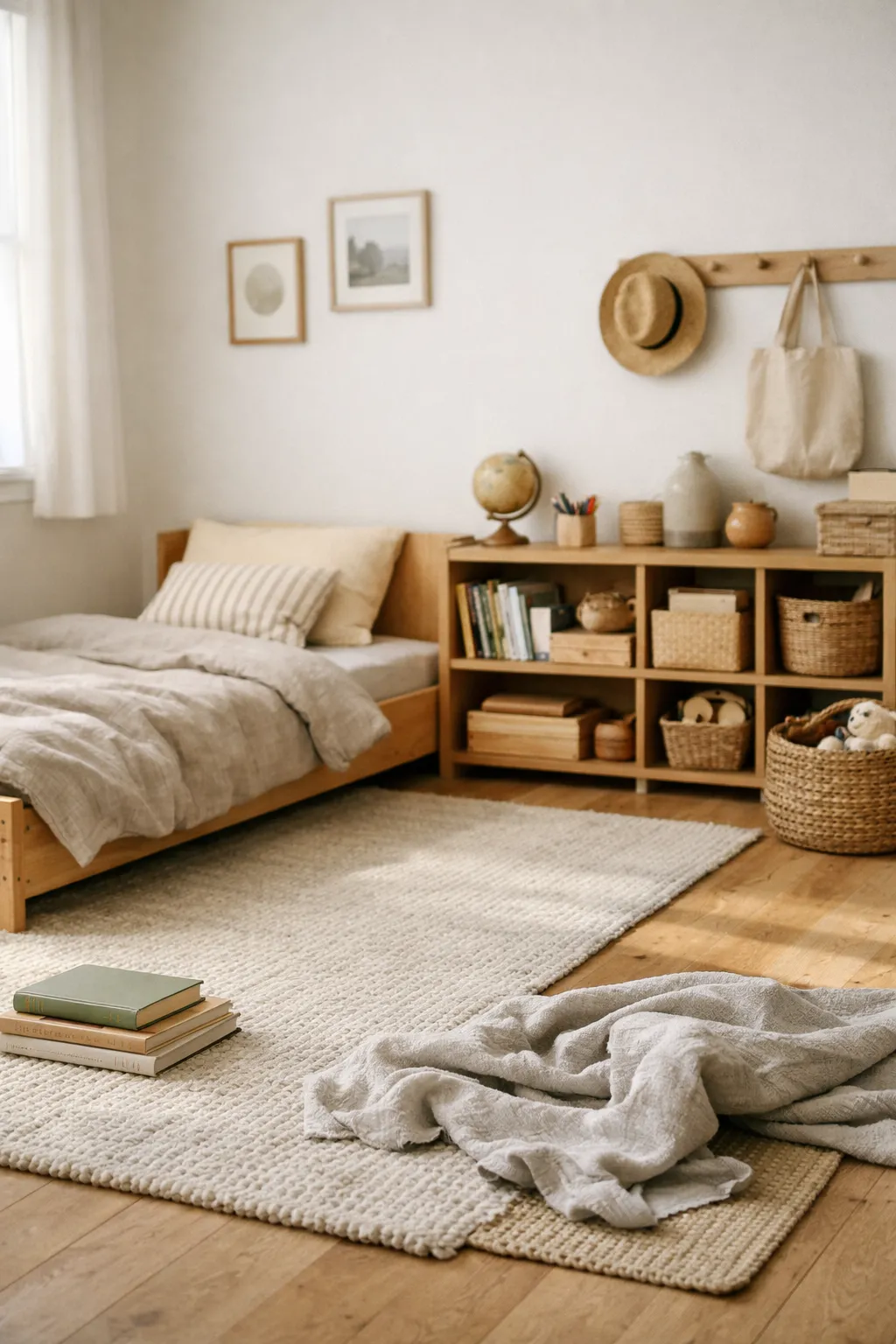
Common Mistakes to Avoid
A Montessori bedroom can look simple, but getting it right takes restraint. These are the mistakes that throw the whole thing off:
- Too much furniture
- Too many toys on display
- Storage that is technically low but still hard to use
- Decor chosen for trends instead of function
- Overly beige styling with no warmth or personality
- Expecting the child to use the room independently without being shown how
A child-centered room still needs adult guidance at first. Independence is built, not magically switched on.
Final Thoughts
The best Montessori bedroom ideas are not about copying a perfect look from the internet. They are about creating a room that respects the child, supports everyday routines, and feels calm enough to live in.
If you focus on accessibility, simplicity, warmth, and order, the room will already be moving in the right direction. Start with one or two changes if needed. A floor bed, a low bookshelf, or better toy storage can make a bigger impact than a full makeover done badly.
A Montessori bedroom should feel peaceful, useful, and real. That is what makes it beautiful.