



A moody black bedroom can feel rich, calm, and stylish when it is done with control. It can also look flat, gloomy, or cheap when people treat black like a shortcut instead of a full design choice. Dark decor only works when the room has enough contrast, texture, warmth, and shape to support it.
That is the real difference between a bedroom that looks dramatic in a good way and one that feels like a bad paint decision.
If you want a black bedroom that feels cozy instead of lifeless, focus on the full picture. Wall color matters, but so do bedding, lighting, furniture finish, hardware, curtains, and the way materials play against each other. The strongest dark bedrooms feel layered. They do not rely on one black surface repeating over and over with no relief.
These ideas will help you build a black bedroom that feels elevated, usable, and visually strong in a real home.
1. Use a Soft Black Paint Instead of a Sharp Jet Black
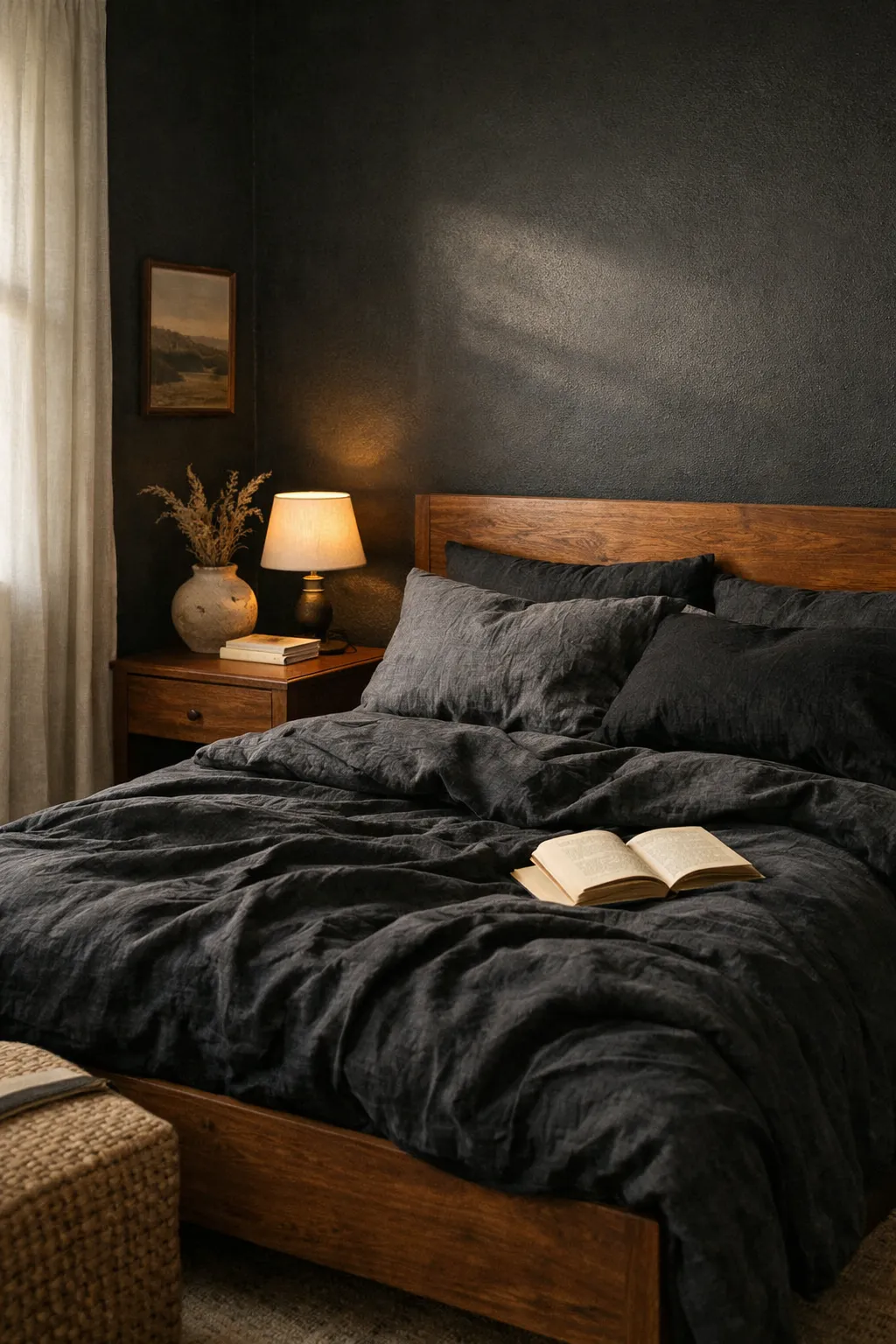
The first mistake people make is choosing a black that is too harsh. A sharp, cold black can make a bedroom feel stiff and severe. A softer black with charcoal, brown, or smoky undertones usually works better because it feels deeper and easier on the eye.
Bedrooms need calm. A softer black creates that calm better than a hard, high-contrast black that pulls too much attention. In most homes, matte or low-sheen finishes also look better than shiny finishes because they give the wall a velvety look.
This works especially well if your room gets:
- low natural light
- warm afternoon light
- a lot of beige, wood, or cream accents
A soft black wall does not scream for attention. It creates a backdrop that lets the rest of the room feel richer.
2. Layer Black Bedding With Different Textures
A black bedroom gets boring fast when every surface looks the same. If the bedding, headboard, rug, curtains, and walls all read as one flat block, the room loses depth.
The fix is texture.
Use linen sheets, a quilted coverlet, velvet pillows, knit throws, or a washed cotton duvet in slightly different dark shades. Black bedding looks best when it has visible texture and a little tonal variation. That keeps the bed from looking like a single dark shape in the middle of the room.
A good layered bed might include:
- black or charcoal linen sheets
- a deep gray or washed black duvet
- one textured throw blanket
- two or three accent pillows in velvet, boucle, or woven cotton
This makes the room feel styled, not heavy.

3. Add Warm Wood to Keep the Room From Feeling Cold
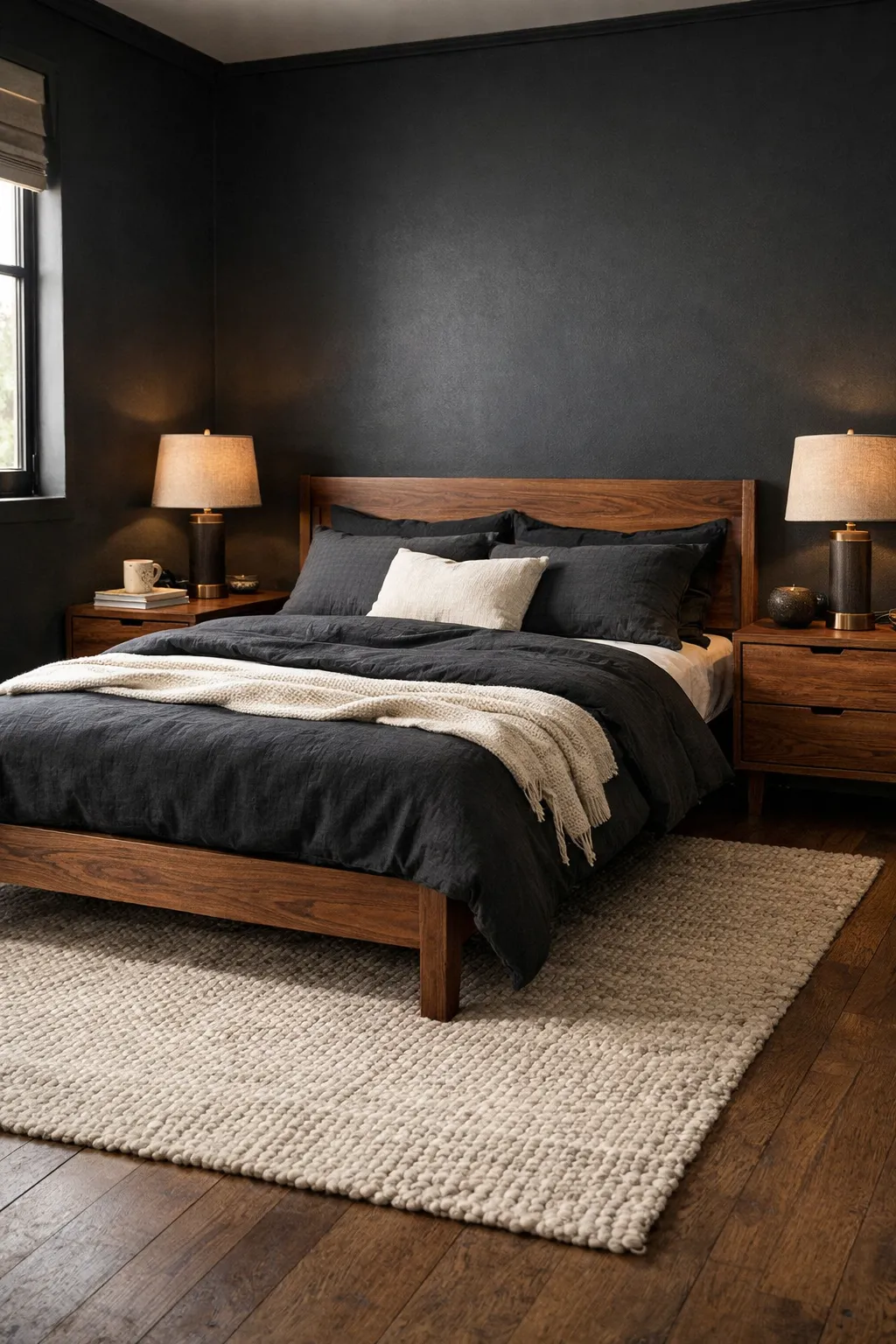
Black needs something natural next to it. One of the easiest ways to make dark decor feel more welcoming is to bring in warm wood.
Walnut, oak, chestnut, and medium brown wood tones break up the darkness and make the room feel lived in. That warmth matters because black on black on black can start to feel sterile if nothing softens it.
Wood works well in:
- bed frames
- nightstands
- dressers
- picture frames
- benches
- ceiling beams
Even one or two wood pieces can make a huge difference. A black wall behind a walnut bed looks grounded and expensive. A black wall behind a glossy black bed can look too hard.
4. Let the Lighting Do Half the Work
A moody bedroom without good lighting is not moody. It is just dim.
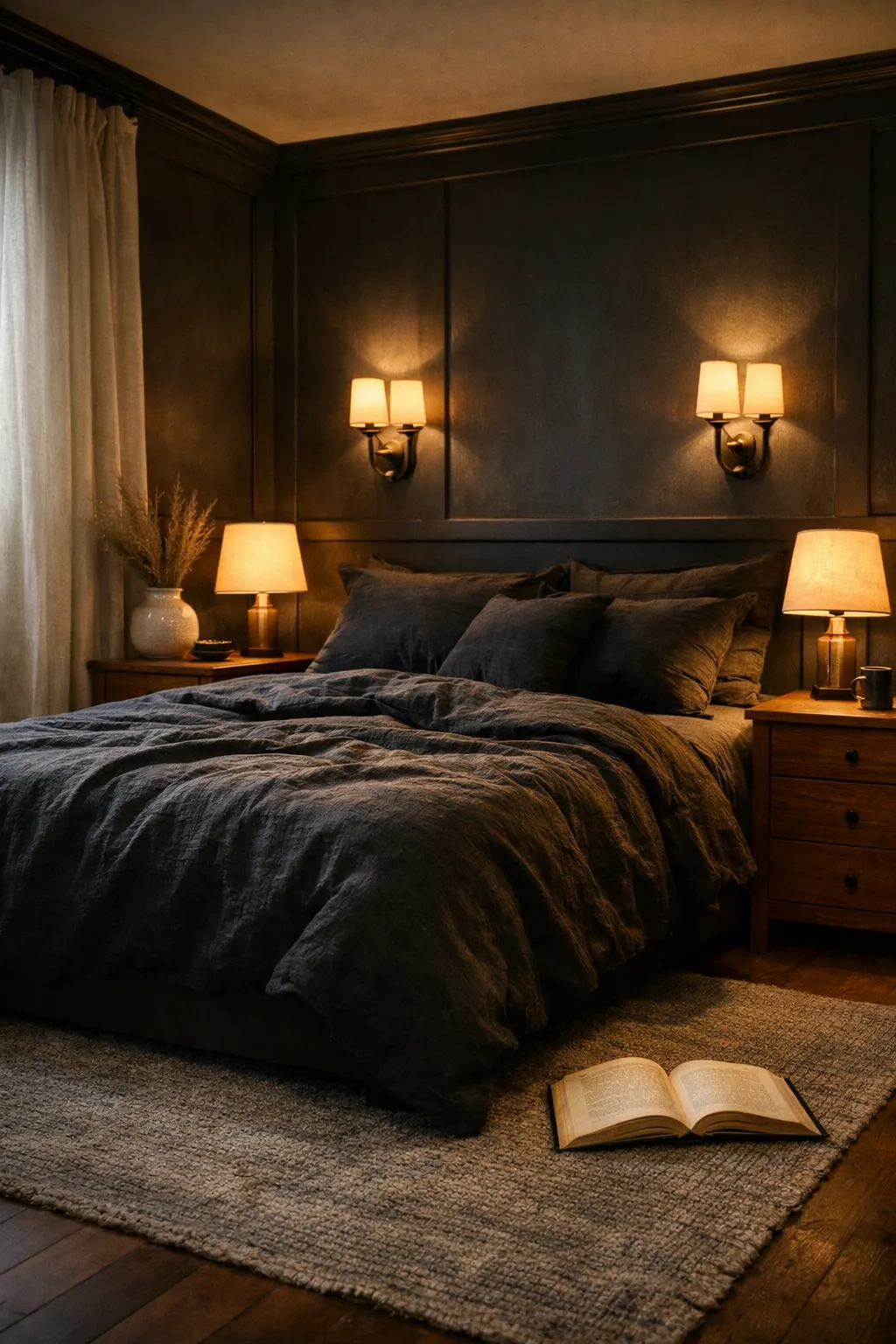
Lighting is one of the biggest reasons some dark bedrooms feel cozy while others feel depressing. The best setups use layered light instead of one bright overhead fixture. You want a mix of light sources that create glow at different levels.
A strong dark bedroom often includes:
- bedside lamps for warmth
- sconces for soft side lighting
- a ceiling fixture with gentle diffusion
- accent lighting on a dresser or shelf
Warm bulbs usually look better than cool white bulbs in black bedrooms. Cool light can make dark paint feel flat and cold. Warm light pulls out texture and helps the room feel relaxed at night.
5. Try Black Paneling for More Depth
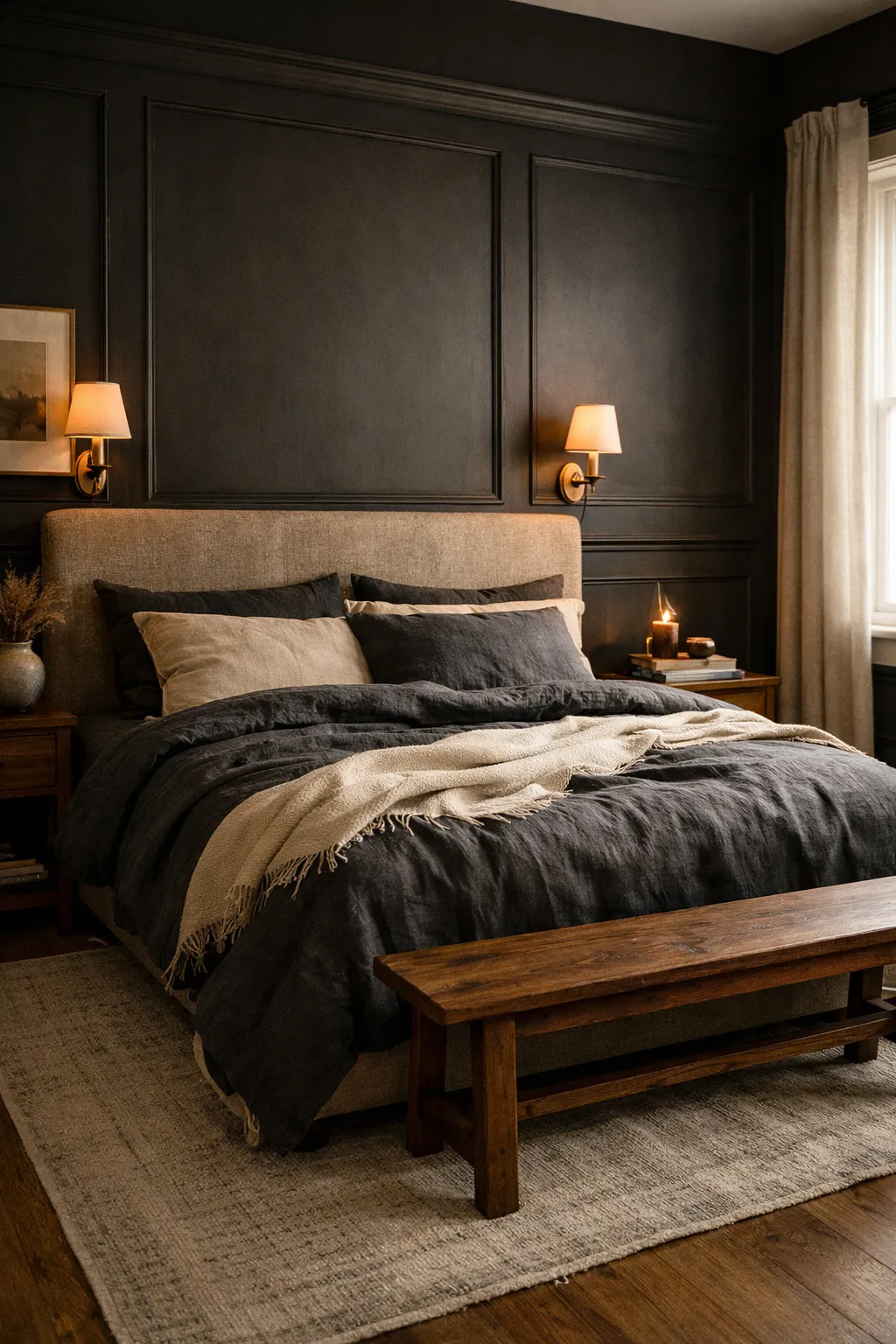
Plain painted walls can work, but black paneling often looks more finished. It adds shape and shadow, which helps the room feel layered without adding clutter.
Board and batten, picture frame molding, beadboard, or full wall paneling all work well in dark bedrooms. The reason is simple: when black is applied to a wall with detail, light catches the surface in a more interesting way.
That means the wall looks deeper and more custom even when the color is dark.
Black paneling is especially good if you want:
- a more classic moody look
- a bedroom that feels upscale
- depth without a lot of wall art
This is one of the smartest ways to make dark decor feel intentional instead of rushed.
6. Pair Black With Cream for a Softer Contrast
A lot of people think white is the only contrast color for black. That is not true. Cream usually works better in bedrooms because it softens the space without killing the mood.
Bright white can look too crisp against black walls, especially if you want the room to feel cozy. Cream, oatmeal, ivory, and warm off-white tones create contrast in a gentler way.
Use cream in:
- bedding
- curtains
- rugs
- lampshades
- upholstered benches
- art mats
This kind of contrast gives the eye a place to rest. It keeps the room balanced and stops the dark palette from feeling too aggressive.
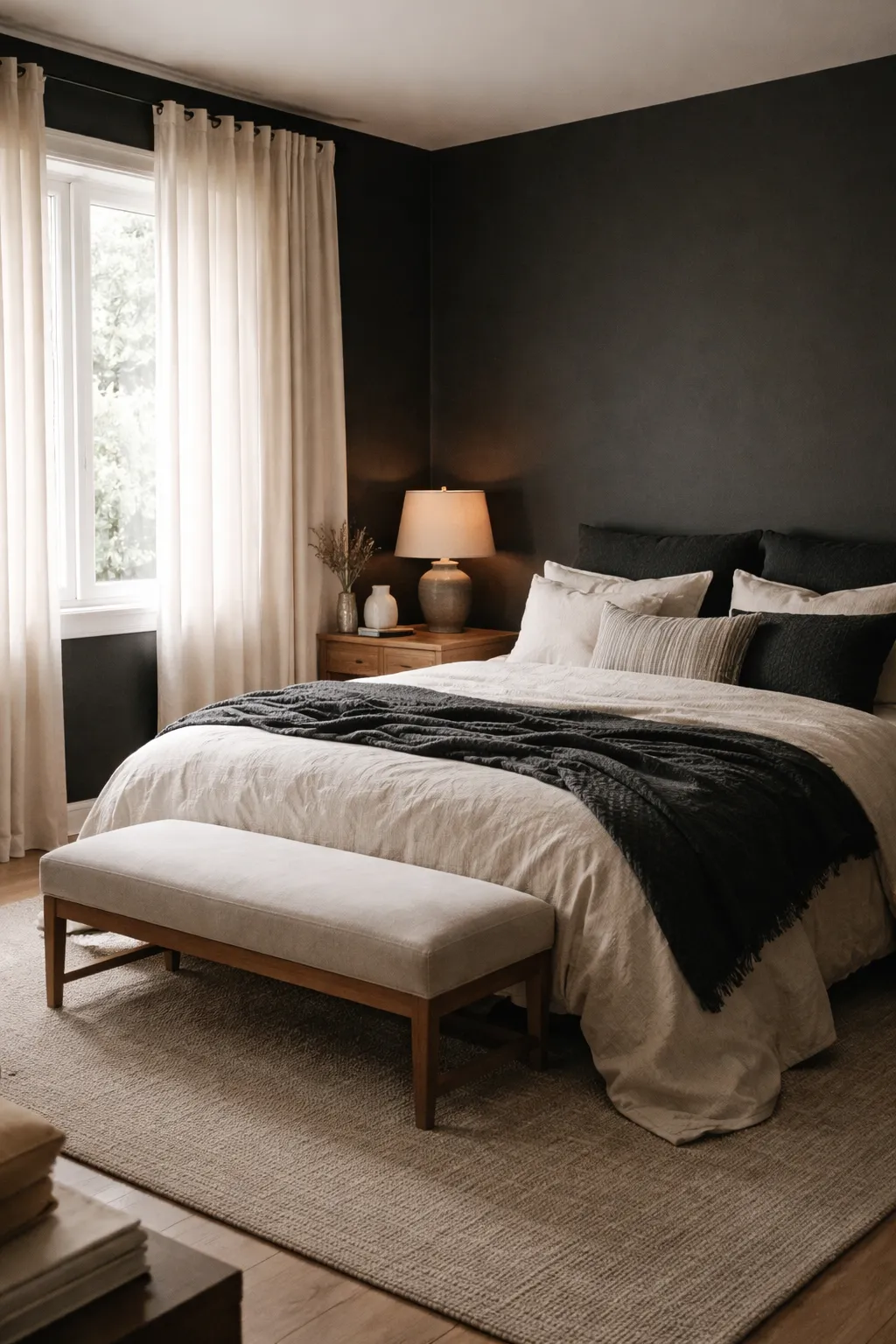
7. Choose One Statement Black Wall if the Room Is Small
Not every bedroom needs four black walls. In a small room, one black accent wall can give you the same moody look without making the space feel boxed in.
The best wall for this is usually the one behind the bed. It anchors the room and makes the headboard area feel more dramatic. Then you can leave the other walls in a softer neutral like warm white, taupe, mushroom, or pale gray.
This works well for:
- apartments
- guest rooms
- narrow bedrooms
- rooms with low ceilings
People often force full dark paint into a room that cannot support it. That is a mistake. A single black wall can be the smarter move because it adds mood without shrinking the space too much.
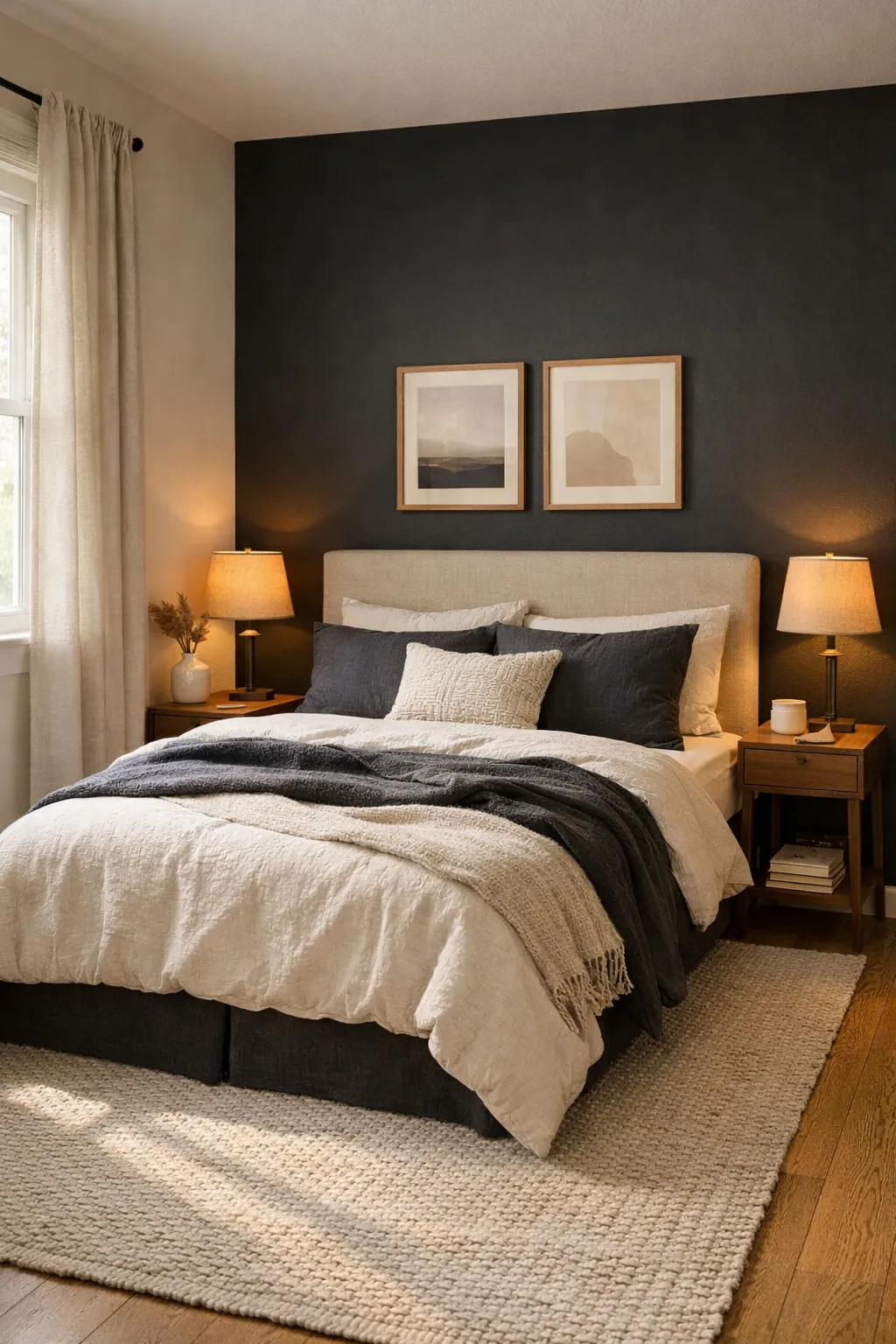
8. Bring in Brass or Aged Gold for Warmth
Black and brass is a strong combination because the metal adds warmth, reflection, and a little elegance. It stops dark decor from feeling too flat.
The key is restraint. You do not need shiny gold everywhere. A few aged brass or brushed gold details are enough.
Try it in:
- sconces
- lamp bases
- drawer pulls
- mirror frames
- curtain rods
Brass works because it catches light in a soft way. That matters in a dark room where every reflective surface helps create movement. Black and brass can lean modern, vintage, glam, or classic depending on the shapes you choose.
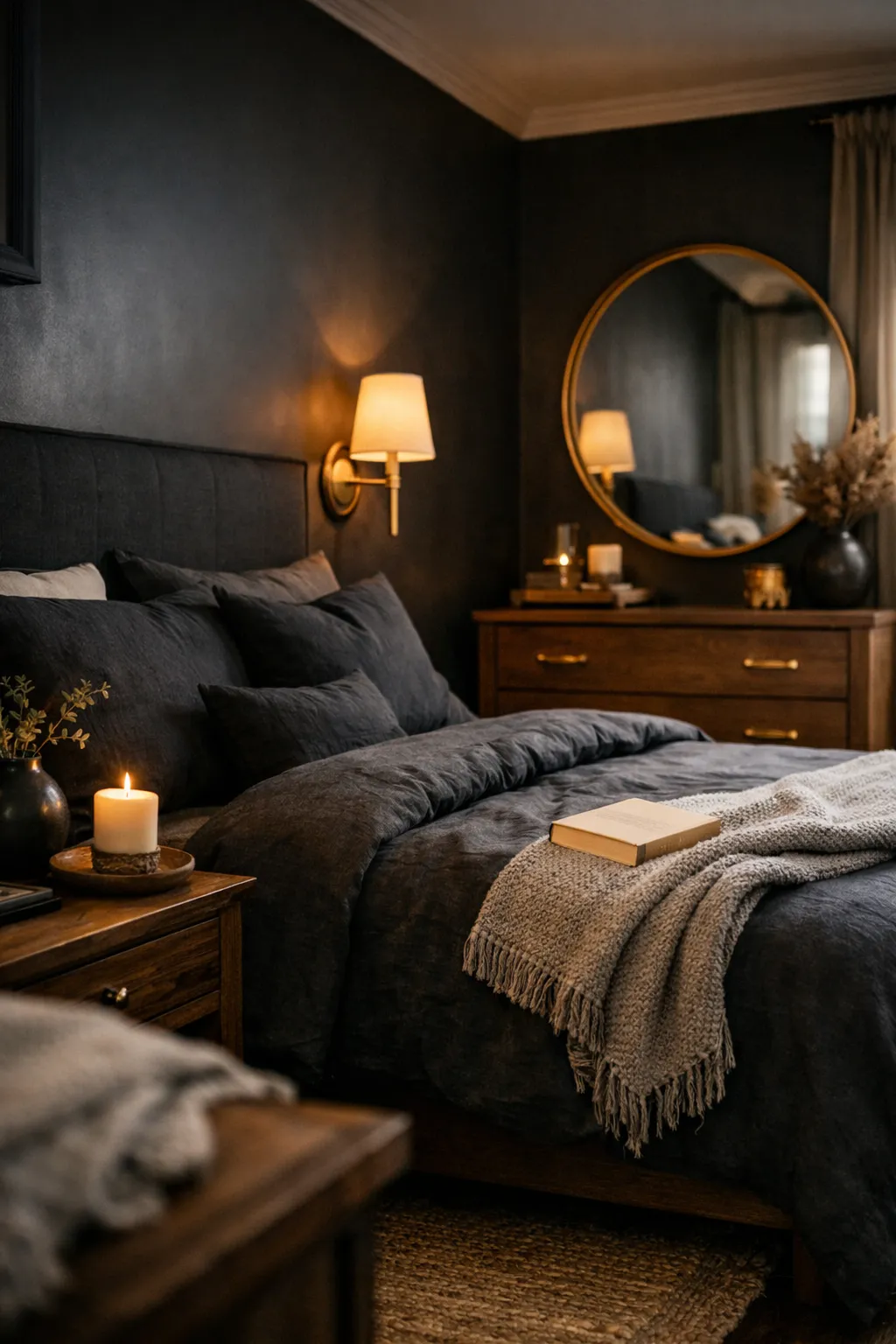
9. Use Floor-Length Curtains to Make the Space Feel Richer
Short curtains kill the mood fast. In a black bedroom, floor-length curtains make the room feel taller, softer, and more finished.
Choose fabrics with some weight, like linen blends, cotton, velvet, or brushed materials. You want the curtains to add softness, not look stiff. Black curtains can work, but deep taupe, charcoal, olive, or warm gray can also look great depending on the room.
Curtains help in two ways. They soften hard lines and they absorb some light, which adds to the cocoon effect. They also make the room feel more private, which fits the dark bedroom mood.
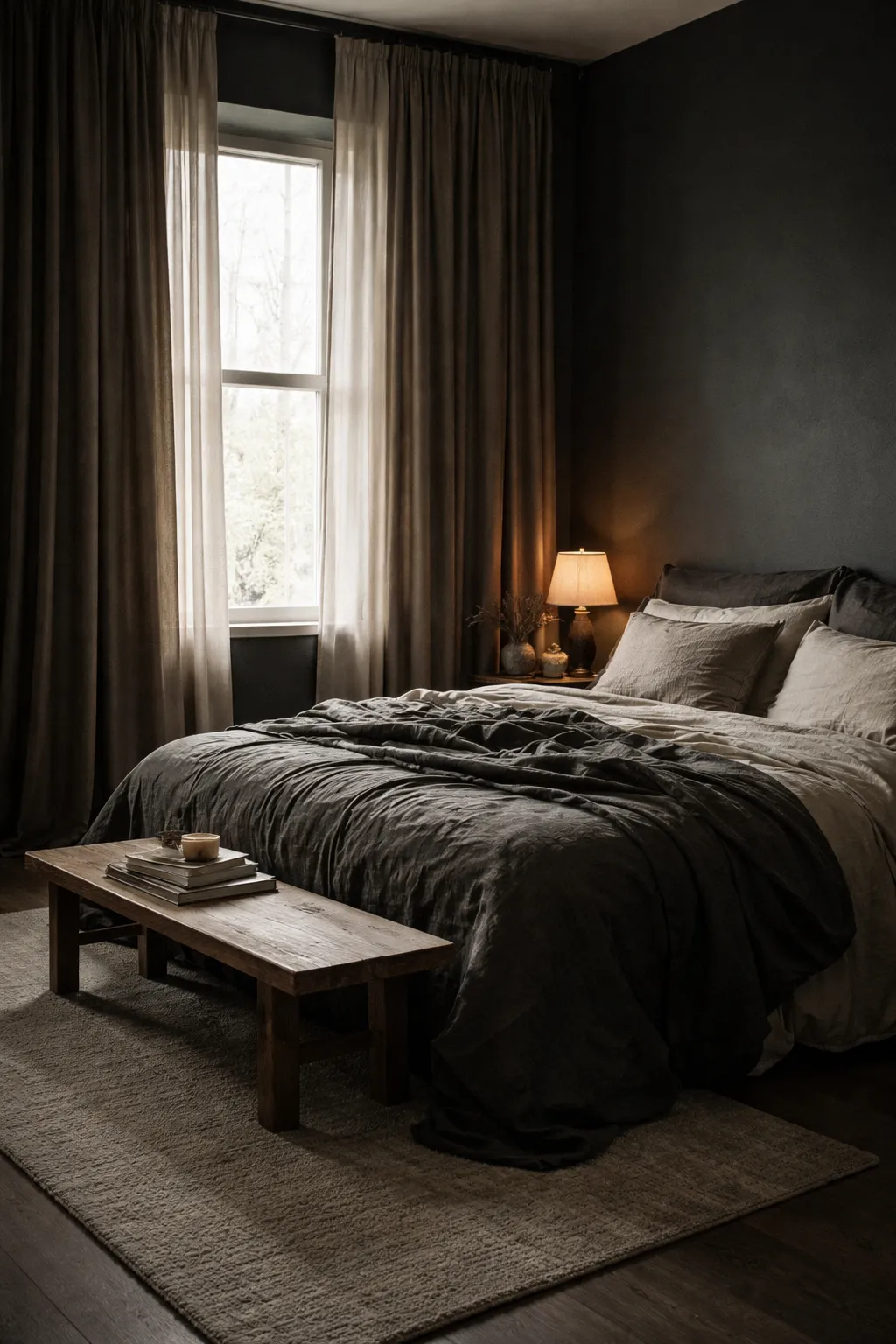
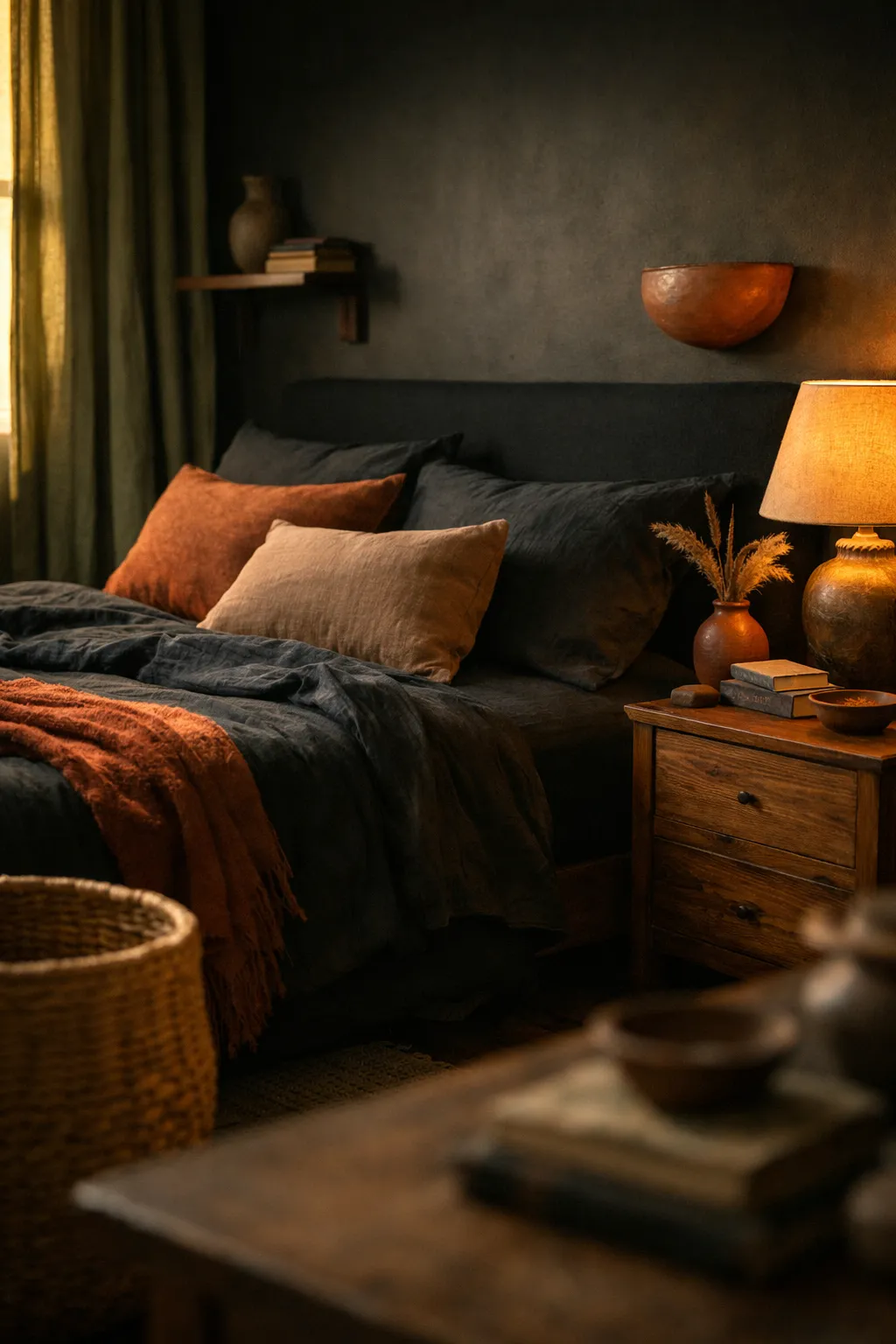
10. Mix Black With Deep Earth Tones
Black does not always need to be paired with neutrals only. Deep earth tones can make a dark bedroom feel warmer and more personal.
Colors that work well include:
- olive green
- rust
- clay
- tobacco brown
- deep taupe
- muted terracotta
These tones stop the room from feeling one-note. They also keep it from looking too trendy in a bad way. A black bedroom with rust pillows or olive curtains feels more grounded than a black bedroom with random bright color pops.
This kind of palette works very well in homes that already use natural woods, woven textures, and older furniture pieces.
11. Choose Furniture With Shape, Not Bulk
Dark decor can make bulky furniture feel even heavier. That is why shape matters. A black bedroom usually looks better when the furniture has some visual relief, like curved edges, slim legs, open bases, or simple silhouettes.
Heavy dark furniture with no spacing under it can make the room feel crowded. A lower-profile bed, a dresser with cleaner lines, or nightstands with some leg height will help the room breathe.
Here is a simple comparison:
| Element | Better Choice for a Moody Black Bedroom | Riskier Choice |
|---|---|---|
| Bed frame | Upholstered, wood, or simple black frame | Oversized bulky frame in flat black |
| Nightstands | Slim profile with texture or warm finish | Boxy black cubes with no contrast |
| Dresser | Clean lines, wood grain, or subtle hardware | Massive dark dresser with no visual break |
| Lighting | Layered lamps and sconces | One cold overhead light |
| Textiles | Mixed textures in dark tones | All smooth black surfaces |
This is where many rooms fail. The paint is fine, but the furniture makes everything feel dense and airless.
12. Use a Large Rug to Soften Dark Floors and Walls
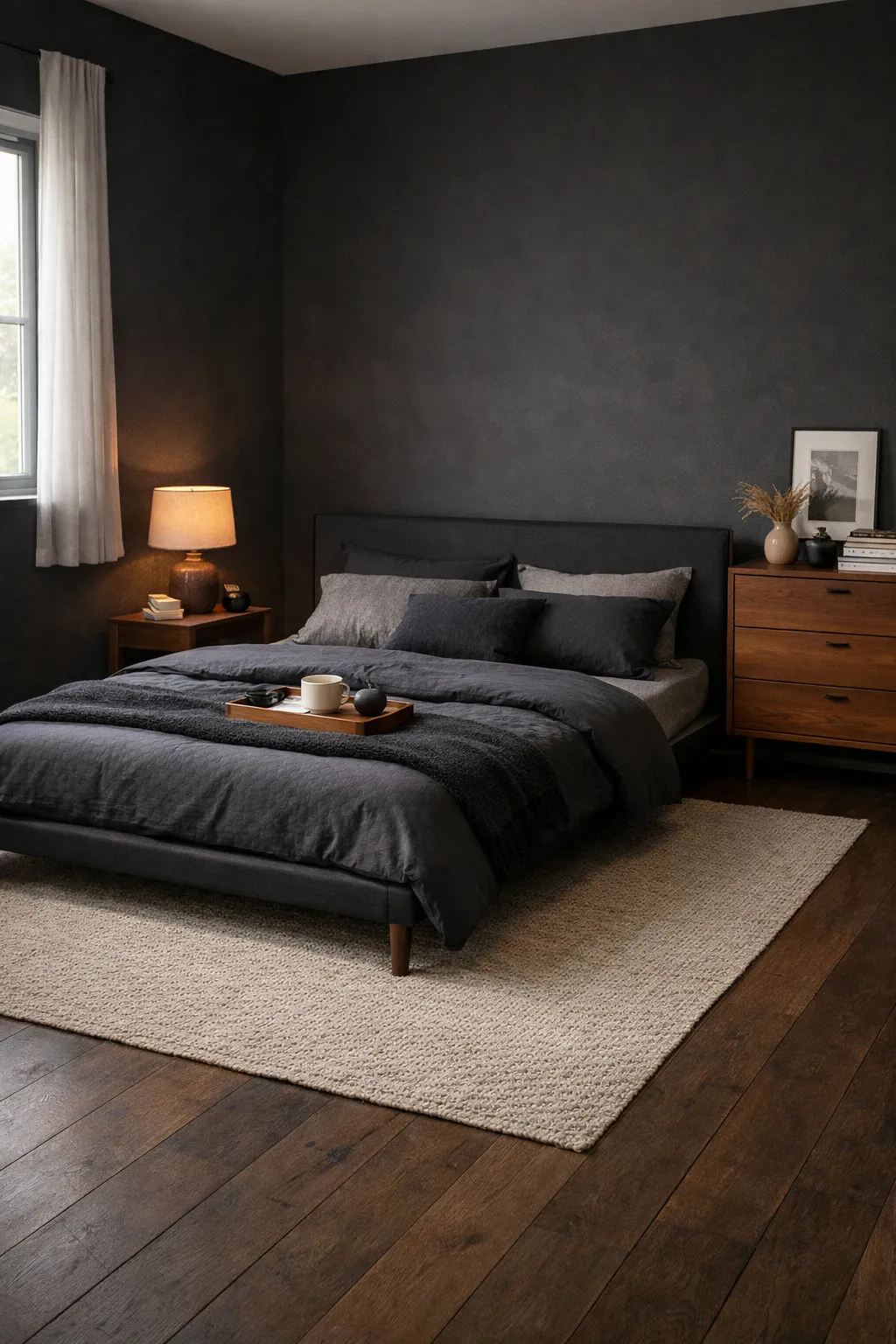
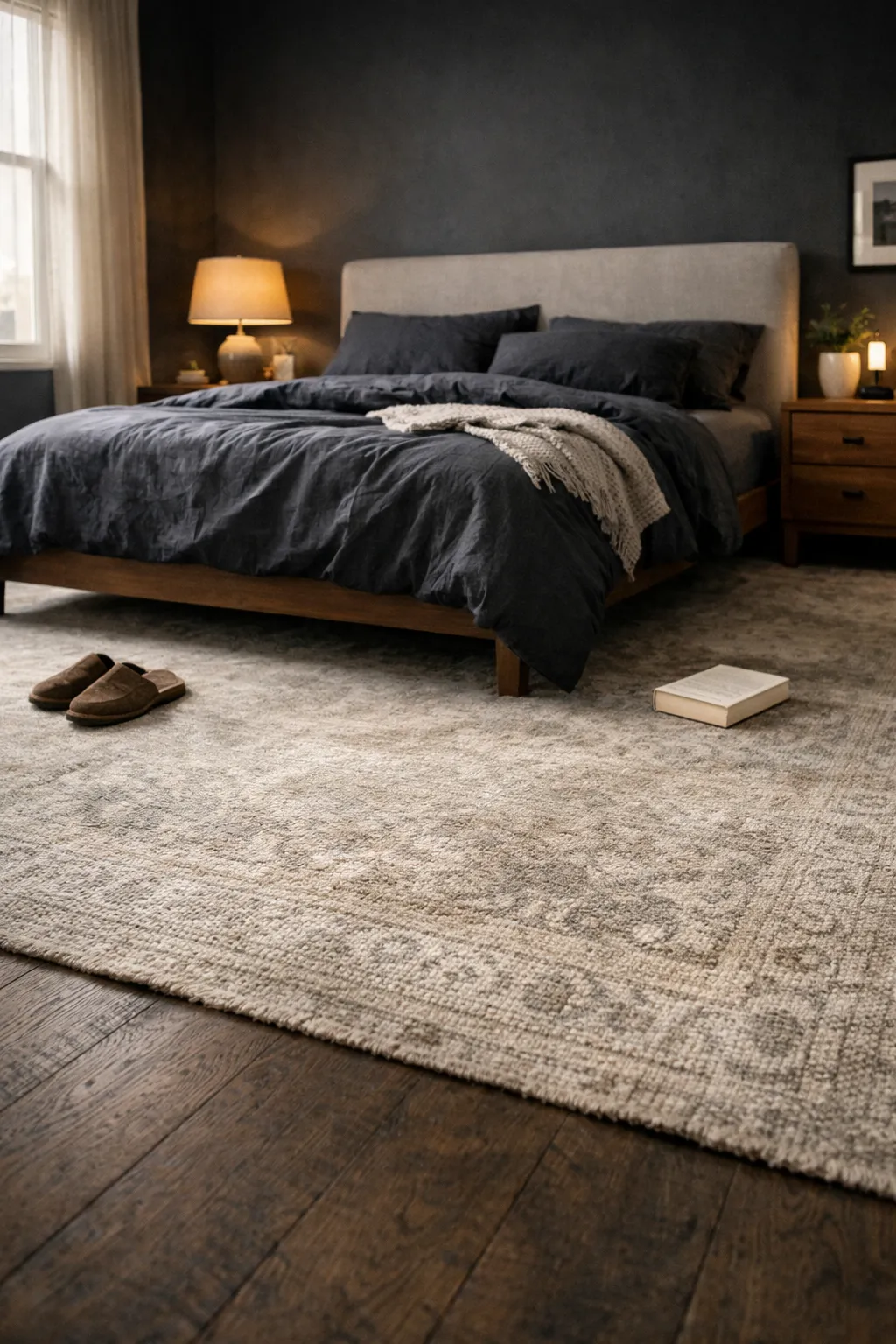
A rug is not optional in most black bedrooms. It helps break up the dark palette and adds softness underfoot, which matters in a room meant for rest.
If you already have dark flooring, a rug becomes even more important. Without it, the room can feel too hard and visually bottom-heavy. A large rug in cream, taupe, muted pattern, or faded charcoal can lighten the center of the room while keeping the moody look intact.
The rug should usually extend beyond the bed enough to be visible on both sides and at the foot. Tiny rugs make the room look unfinished.
A worn vintage-style rug can be especially effective because it adds:
- pattern
- color variation
- age
- softness
That keeps the room from feeling too polished or too flat.
13. Add Black-on-Black Details the Smart Way
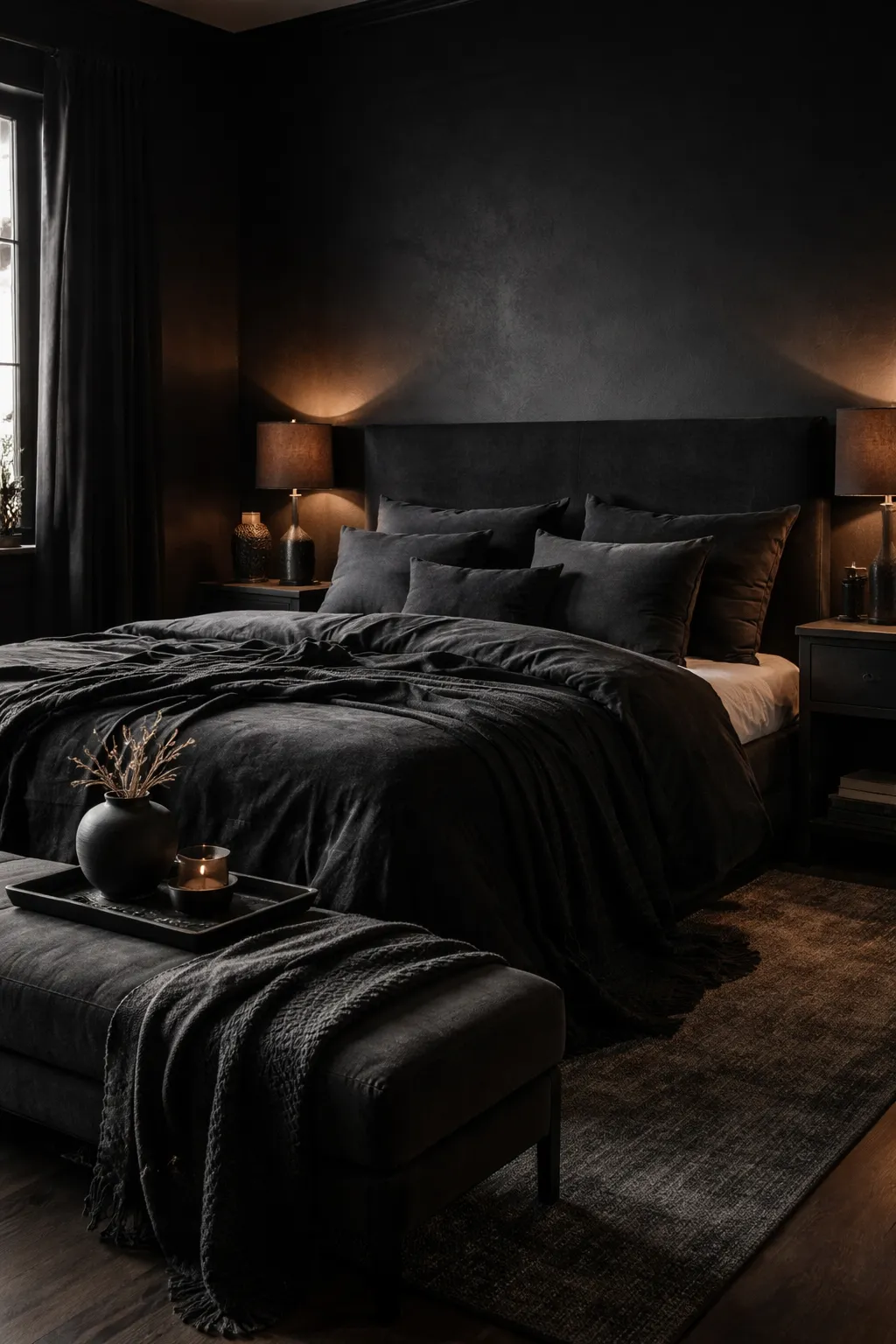
Black-on-black can look beautiful when there is enough material contrast. It fails when everything blends into one dull mass.
For example, a black wall behind a black headboard can still work if:
- the wall is matte
- the headboard is velvet, leather, or boucle
- the bedding has visible folds and texture
- the lighting creates soft shadow
The lesson is simple. Same color is fine. Same finish everywhere is not. Contrast in a moody bedroom does not always have to come from color. It can come from texture, sheen, shape, and light.
That is what gives the room dimension.
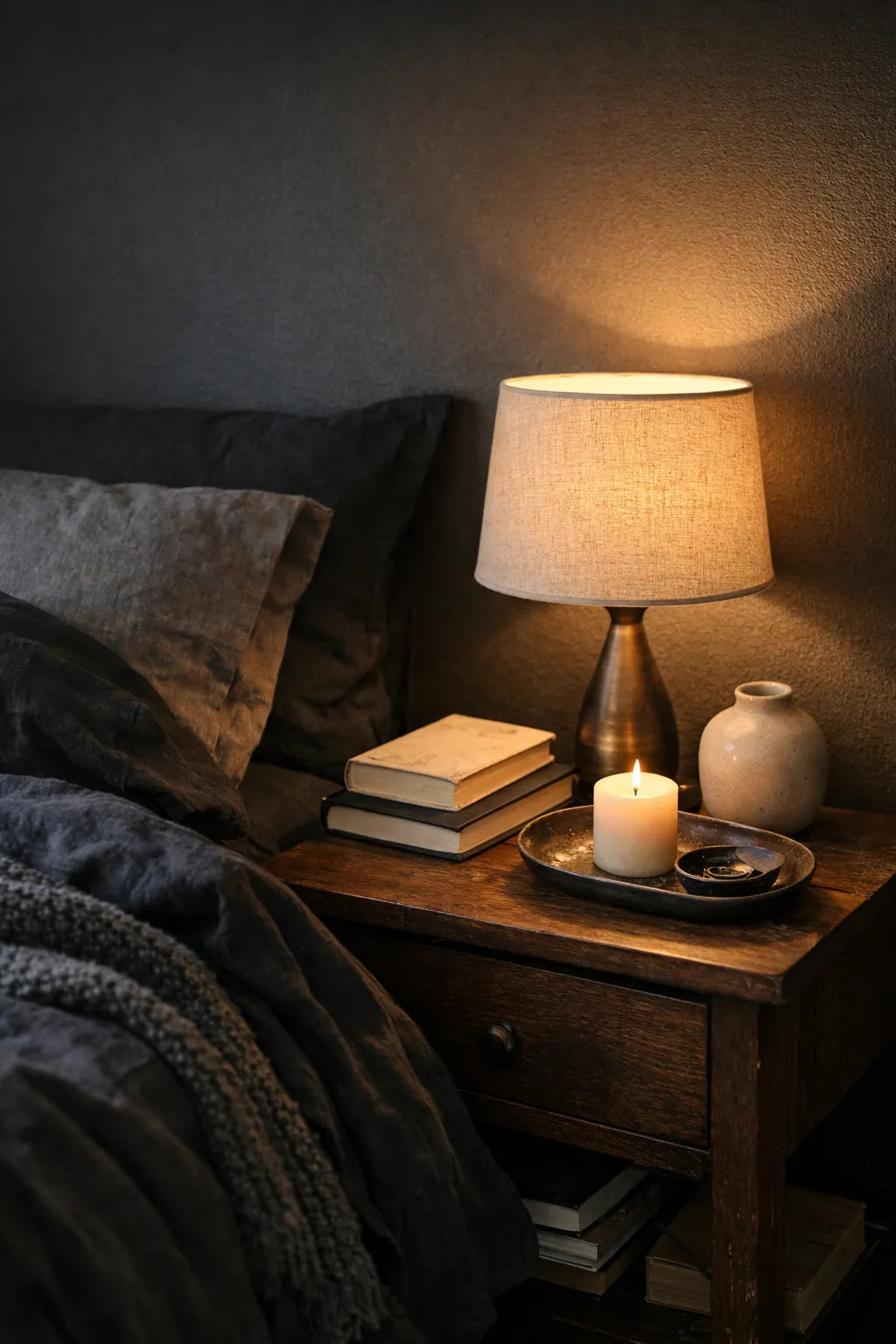
14. Style the Nightstands Like a Real Bedroom, Not a Showroom
A moody bedroom should feel personal. If every surface is too staged, the room starts to feel fake. Nightstands are a good place to add that lived-in balance.
Keep them simple, but real.
A good nightstand setup might include:
- a lamp
- one book
- a small dish or tray
- a ceramic vase
- a candle
- a framed photo or small art piece
You do not need to crowd the surface. You just need enough to make it feel used by an actual person. In dark rooms, these little details also help break up solid blocks of black furniture.
15. Use Moody Art With Space Around It
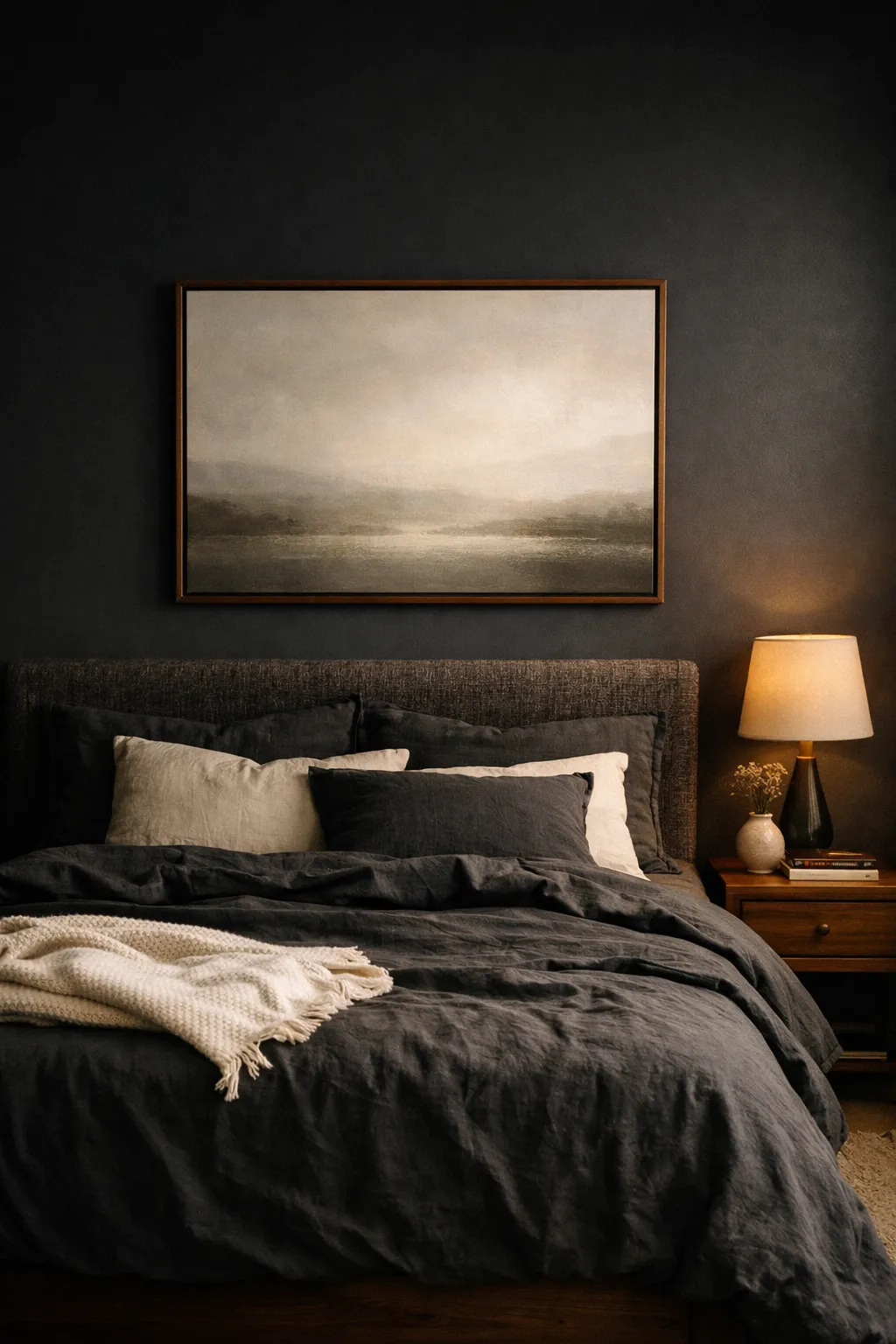
Wall art can make a black bedroom feel more layered, but it should not look random. Dark bedrooms do well with art that feels quiet, textural, and intentional.
Think:
- black-and-white photography
- abstract neutral artwork
- vintage sketches
- moody landscape prints
- earthy toned canvases
The frame matters too. Black, walnut, aged brass, or soft oak frames all work depending on the look. What does not work is hanging too many small pieces with no visual breathing room.
Dark rooms need editing. One larger piece over the bed or dresser often works better than a cluttered gallery wall.
16. Bring in Soft Upholstery to Balance the Darkness
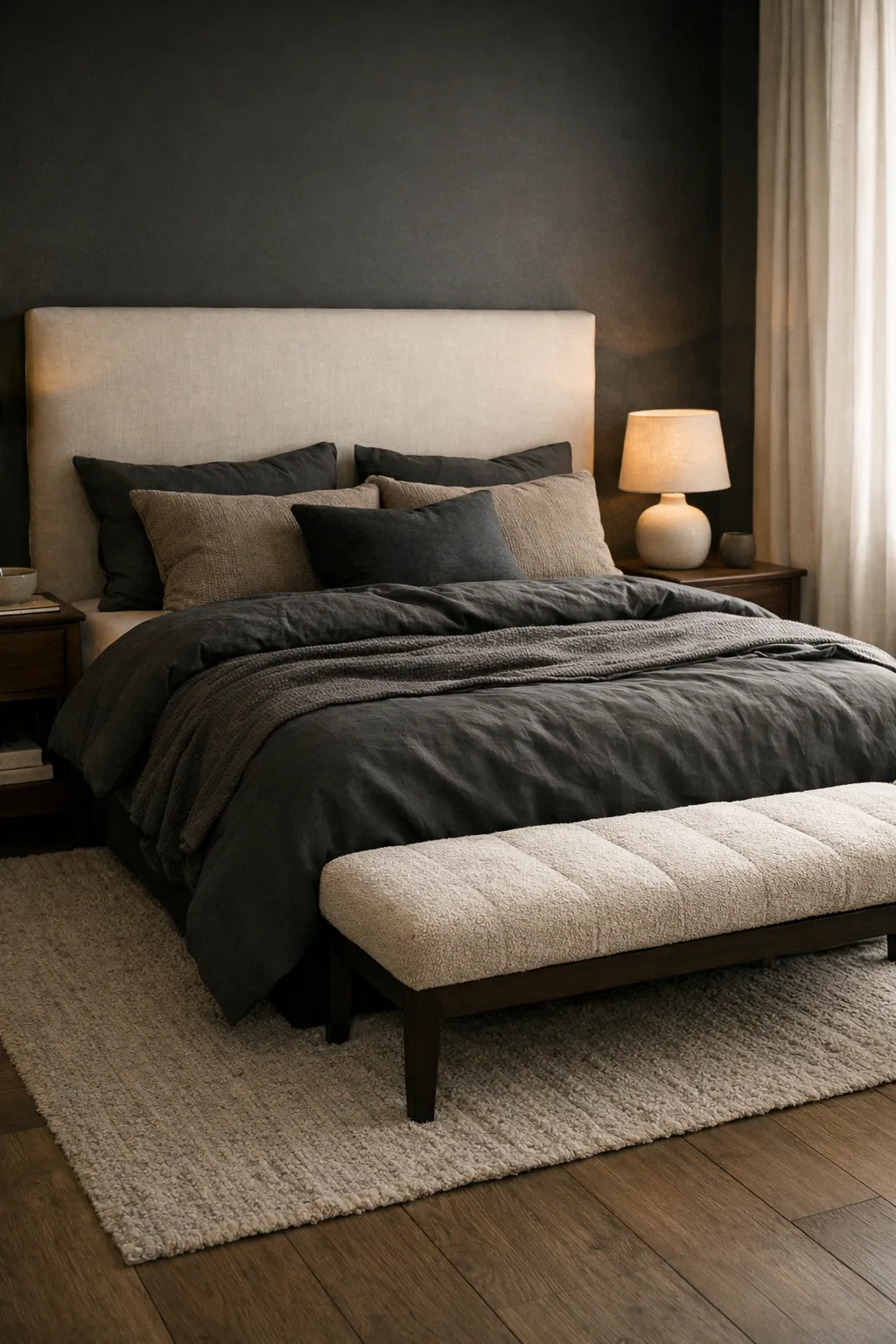
A black bedroom needs softness somewhere. Upholstered pieces help because they break up hard surfaces and absorb light in a warmer way.
This could be:
- an upholstered headboard
- a bench at the foot of the bed
- an accent chair in the corner
- padded dining-style stools used as bedside seating
Fabric choices matter. Linen, boucle, velvet, and brushed cotton all add comfort and depth. In a dark room, these materials make the space feel more inviting. Without softness, black decor can lean too sharp and rigid.
A cream or taupe upholstered headboard against a black wall is one of the easiest ways to make the room feel calm and balanced.
17. Let the Ceiling Join the Mood if the Room Can Handle It
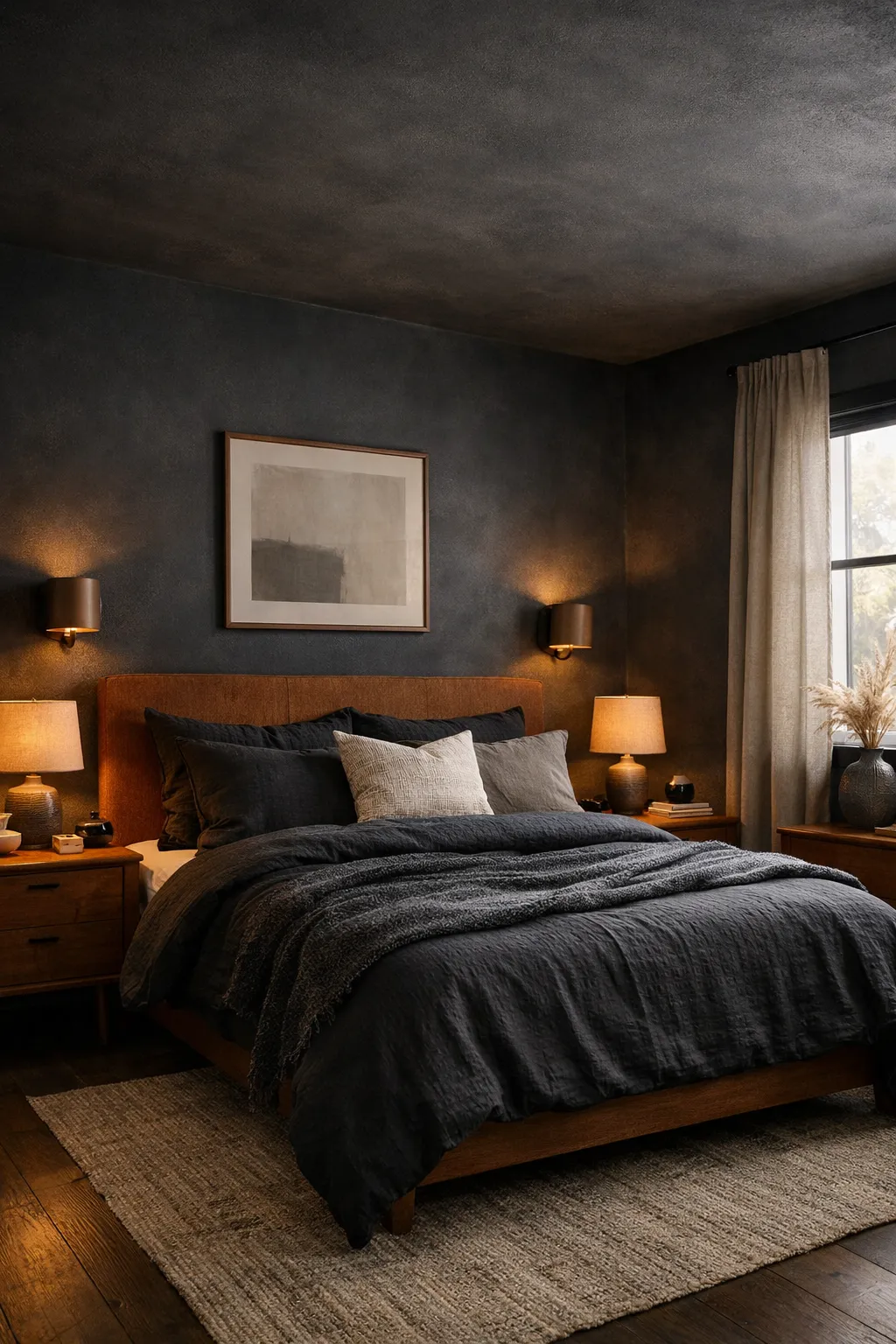
Most people ignore the ceiling. In a moody bedroom, that is wasted potential. Painting the ceiling black or a deep charcoal can make the room feel more immersive, especially in larger rooms or rooms with higher ceilings.
This works best when:
- the room has decent natural light
- the walls already have some contrast from textiles or wood
- the furniture is not too bulky
- the lighting is layered well
In smaller rooms, a dark ceiling can still work, but only if the rest of the room is controlled. If the space is already tight and underlit, this can push it too far. Be honest about the room before copying a dramatic look you saw online.
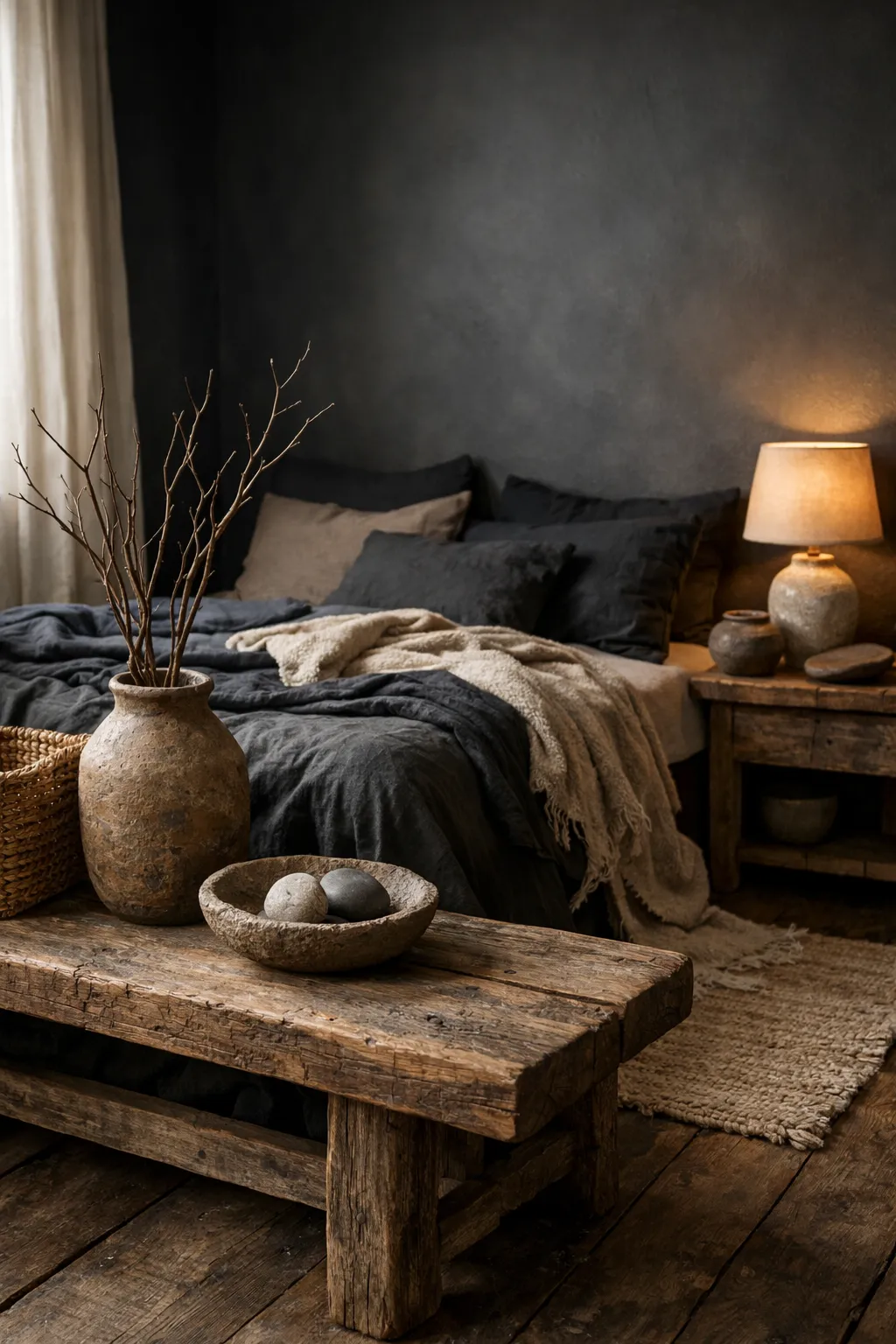
18. Add One Organic Element to Keep the Room Alive
Dark bedrooms need at least one organic element that feels fresh and imperfect. This helps the room avoid feeling too manufactured.
That could be:
- a branch in a ceramic vase
- an olive tree
- dried stems
- woven baskets
- a reclaimed wood bench
- stone or clay decor pieces
These details matter because black can feel rigid if everything is too polished. Organic shapes and natural materials loosen the room up. They bring in life without ruining the moody feel.
Even a simple ceramic vase with uneven texture can do more for the room than another generic black accessory.
19. Build the Room Around Mood, Not Trend
The best black bedrooms do not chase a trend label. They are built around a feeling. Maybe you want the room to feel calm, romantic, dramatic, masculine, minimal, or slightly vintage. That feeling should shape every choice.
If you only copy pieces from pictures without understanding the mood behind them, the result usually looks forced.
Ask better questions:
- Do I want this room to feel warm or cool?
- Do I want high contrast or a softer layered look?
- Do I want the space to feel clean and modern or rich and collected?
- Do I sleep better in darker, quieter surroundings?
When you answer those honestly, the room gets better fast. Black is not the whole design. It is just the base note.
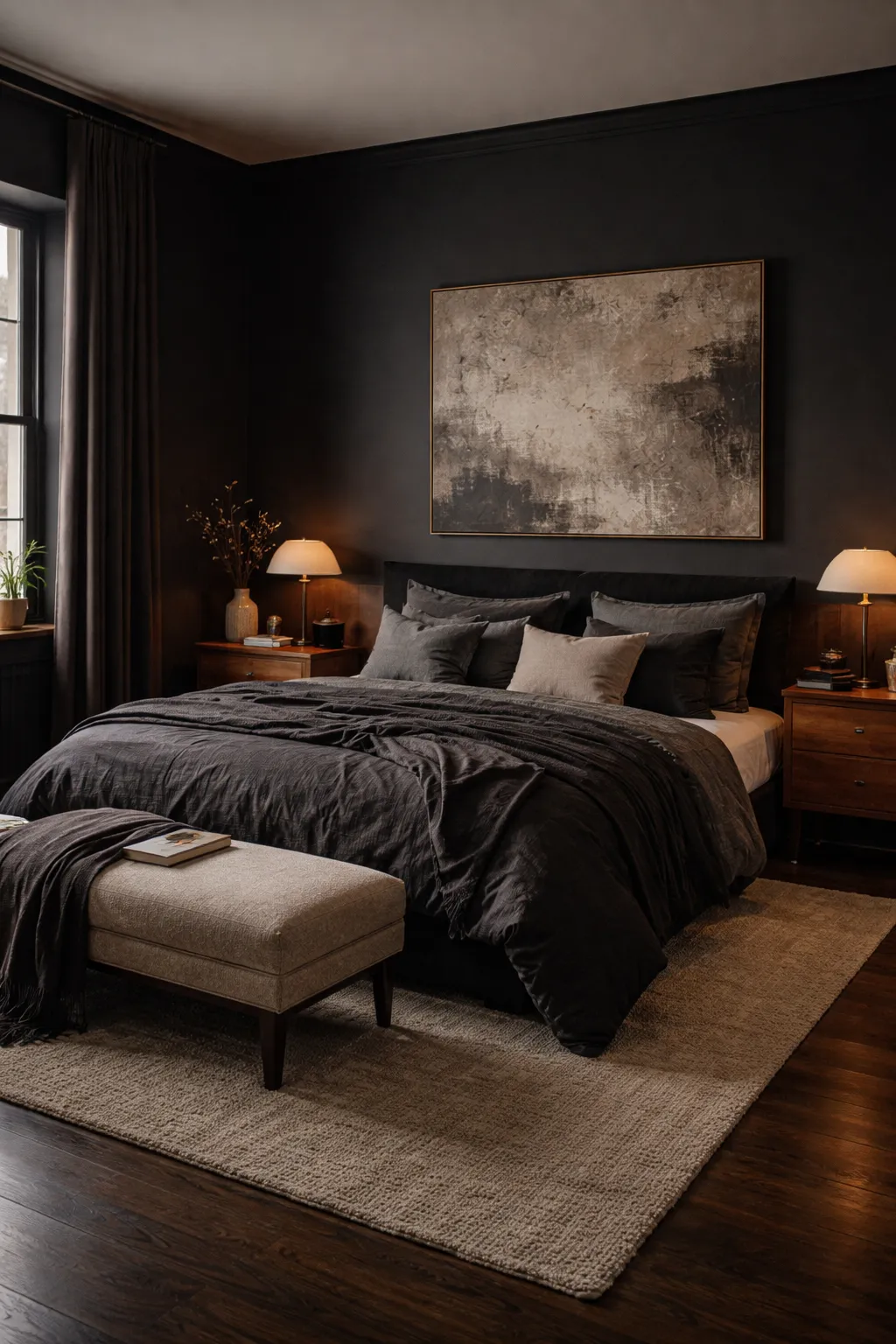
How to Make a Moody Black Bedroom Work in Real Life
A dark bedroom has to function well, not just look good in one photo. That means thinking past paint and focusing on how the room feels day to day.
Keep these practical rules in mind:
- use warm lighting instead of cold bulbs
- bring in texture through bedding, rugs, and upholstery
- break up black with wood, cream, or earth tones
- avoid bulky furniture when the room is small
- leave some visual breathing room
- choose decor that feels personal, not overly staged
A strong black bedroom should feel restful at night, comfortable in the morning, and visually calm all the time. If it feels tense, too dark, or overly styled, something is off.
Common Mistakes That Ruin Dark Decor
A lot of black bedroom ideas fail for predictable reasons. The problem usually is not the color itself. It is poor balance.
Here are the biggest mistakes:
- using one overhead light only
- choosing black paint with the wrong undertone
- buying all-black furniture with no texture change
- skipping soft materials
- using tiny rugs
- adding bright white everywhere instead of warmer contrast
- forcing full black walls into a room that needs only one accent wall
- decorating every surface until the room feels cramped
Black needs editing. It also needs warmth. Ignore that, and the room turns flat fast.
Final Thoughts
A moody black bedroom can be one of the most beautiful rooms in a home when it is handled with some discipline. It should feel layered, restful, and a little dramatic without turning oppressive. The best rooms use black as a backdrop for texture, shape, warmth, and contrast.
That is the real formula.
Do not think of dark decor as just a paint choice. Think of it as mood-building. When the lighting is warm, the materials are varied, and the styling has restraint, a black bedroom feels less like a trend and more like a space you actually want to live in.