


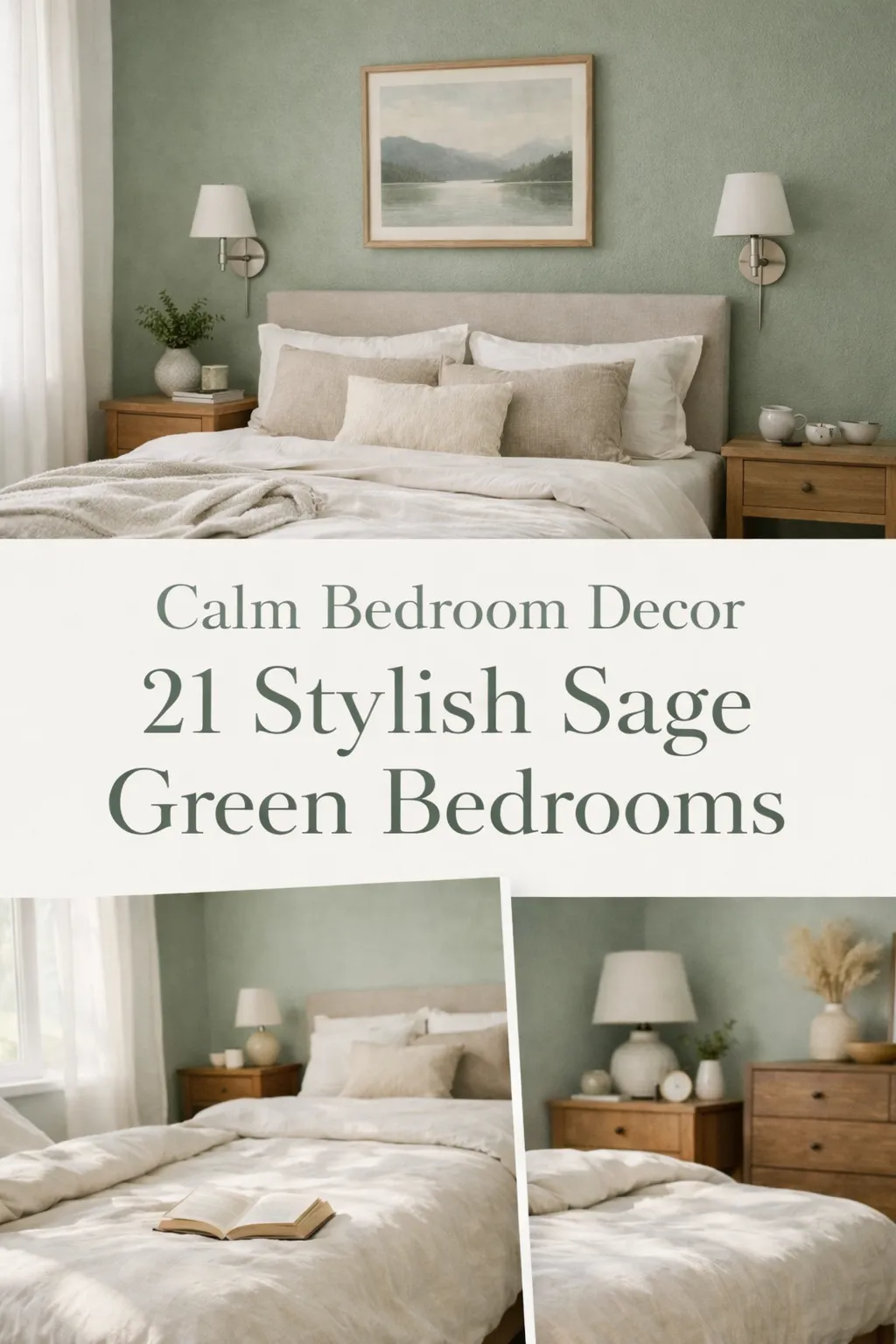
Sage green is one of those bedroom colors that keeps working year after year because it does something a lot of trendy shades fail to do. It feels calm without being cold, fresh without being loud, and stylish without looking forced. In a bedroom, that matters. This is not a room you pass through for five minutes. It is where you start and end the day, so the color has to feel easy to live with.
That is why sage green works so well. It has enough softness to act almost like a neutral, but it still adds personality. It can lean cozy, airy, modern, classic, earthy, or slightly romantic depending on what you pair it with. White makes it cleaner. Beige warms it up. Wood gives it depth. Brass makes it feel polished. Black accents sharpen it.
The ideas below are not filler. Each one gives you a different way to use sage green in a bedroom that feels real, practical, and actually worth trying.
1. Use Soft Sage Green on All Four Walls
If you want sage green to shape the entire mood of the room, wall color is the strongest place to start. Painting all four walls in a soft sage tone creates a quiet backdrop that feels settled and restful. It brings more depth than plain white, but it does not overwhelm the room the way darker greens can.
This works especially well in bedrooms with decent natural light. During the day, the color looks fresh and muted. In the evening, it feels warmer and more cocooning, especially with lamps and layered bedding.
To keep the space balanced, pair sage walls with materials that feel natural and unfussy. Good choices include:
- warm white bedding
- beige or oatmeal curtains
- light or medium wood furniture
- woven baskets
- ceramic lamps
- linen or cotton textures
The mistake people make here is adding too many extra colors. Once the walls are green, the room usually looks better when the rest of the palette stays simple.
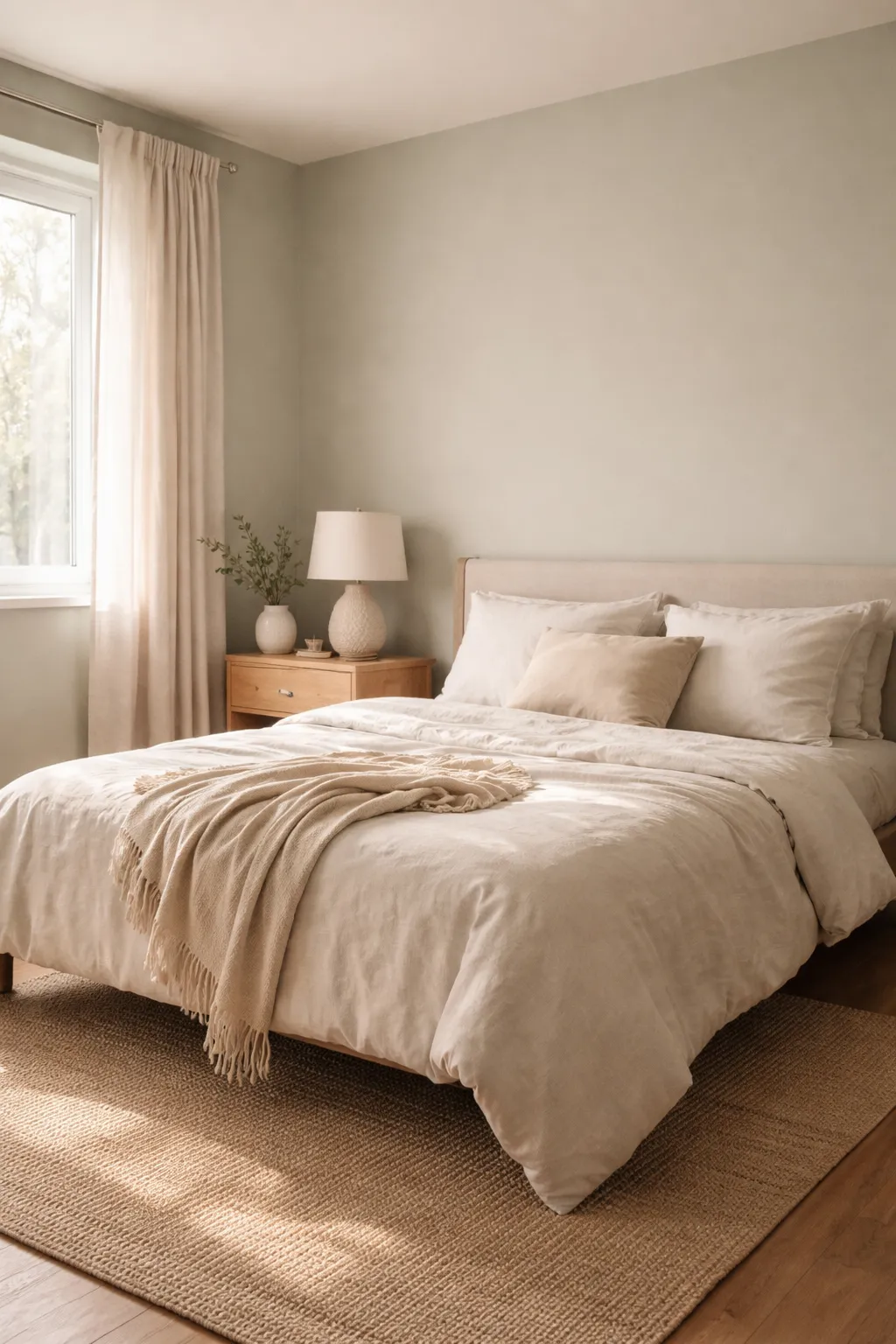
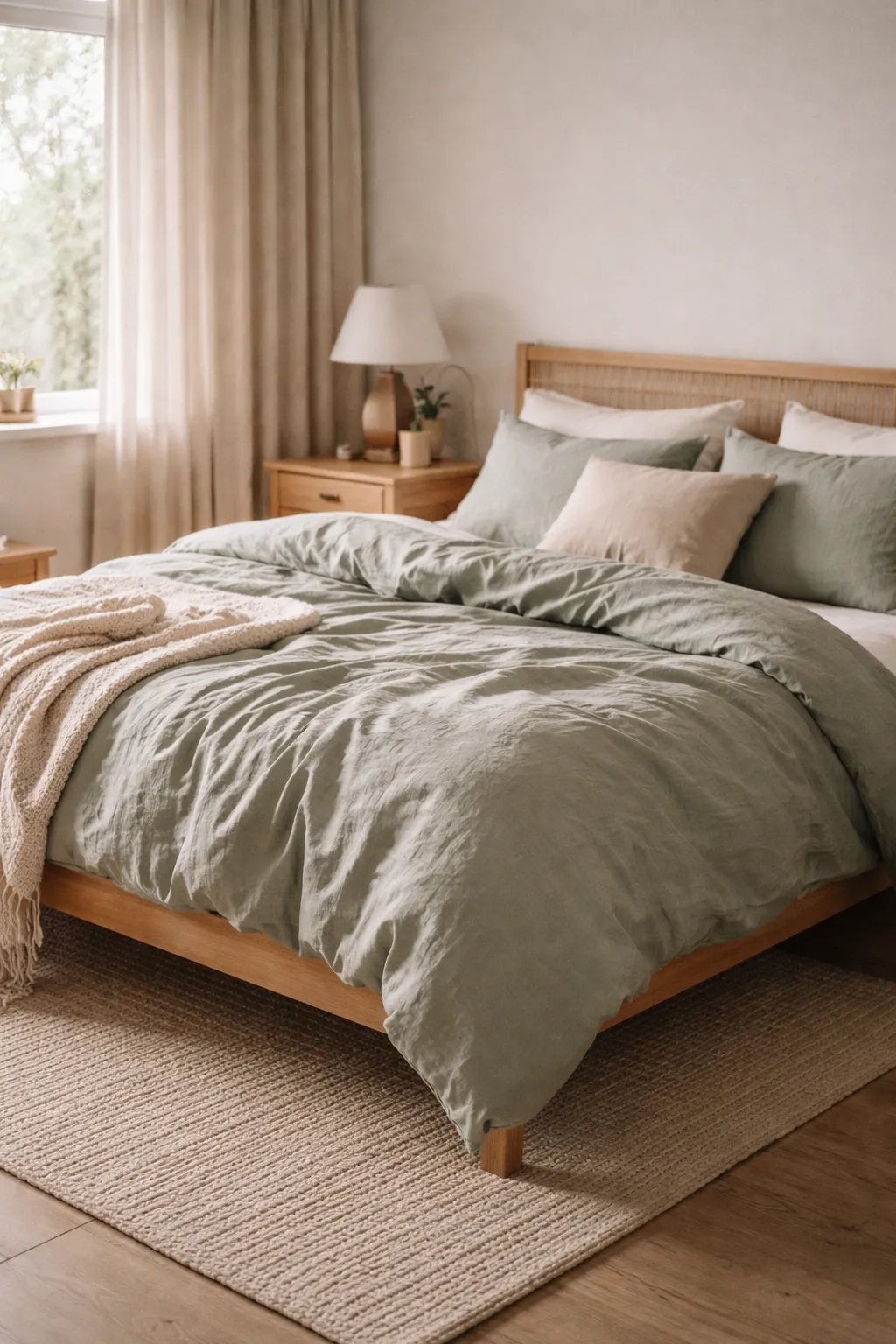
2. Build the Room Around Sage Green Bedding
Not everyone wants to paint, and honestly, they do not have to. Bedding can do a lot of the heavy lifting. A sage green duvet, quilt, or comforter instantly tells the eye what the room is about. It can become the focal point without any major renovation.
This is one of the easiest sage green bedroom ideas for renters, small apartments, or anyone testing the color before making a bigger commitment. It also makes seasonal updates simpler.
The strongest version of this look comes from layering instead of buying one flat matching set. For example, you might use:
- white sheets
- a sage green duvet
- cream pillow covers
- one knit throw in beige or taupe
- a lumbar pillow with subtle texture
That combination feels softer and more expensive than a bed covered in one exact shade of green from top to bottom.
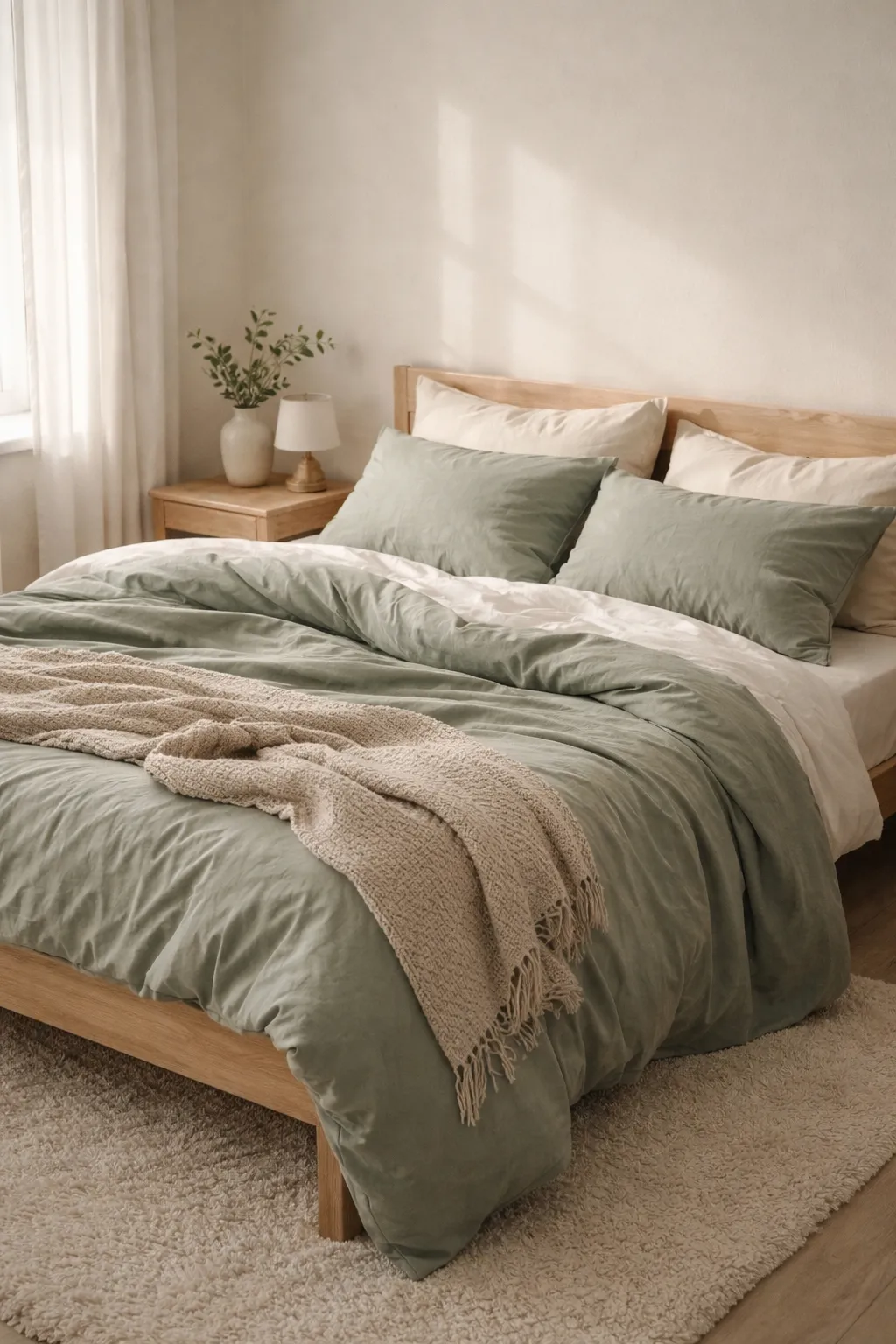
3. Pair Sage Green With Warm Wood Furniture
Sage green and warm wood are one of the safest combinations in bedroom decor because they fix each other’s weaknesses. Sage can sometimes feel too washed out on its own. Warm wood adds depth and grounding. Wood furniture can sometimes look heavy. Sage makes it feel lighter and calmer.
This is a strong choice for people who already own oak, walnut, mango wood, or vintage wood bedroom pieces and do not want to replace everything. Instead of fighting those tones, work with them.
This pairing looks especially good with:
- oak bed frames
- walnut nightstands
- cane-front dressers
- wooden benches at the foot of the bed
- framed art with natural wood finishes
If you want the room to feel more current, keep the wood tones in the same family. Too many different wood finishes in one small bedroom can make the space look messy fast.
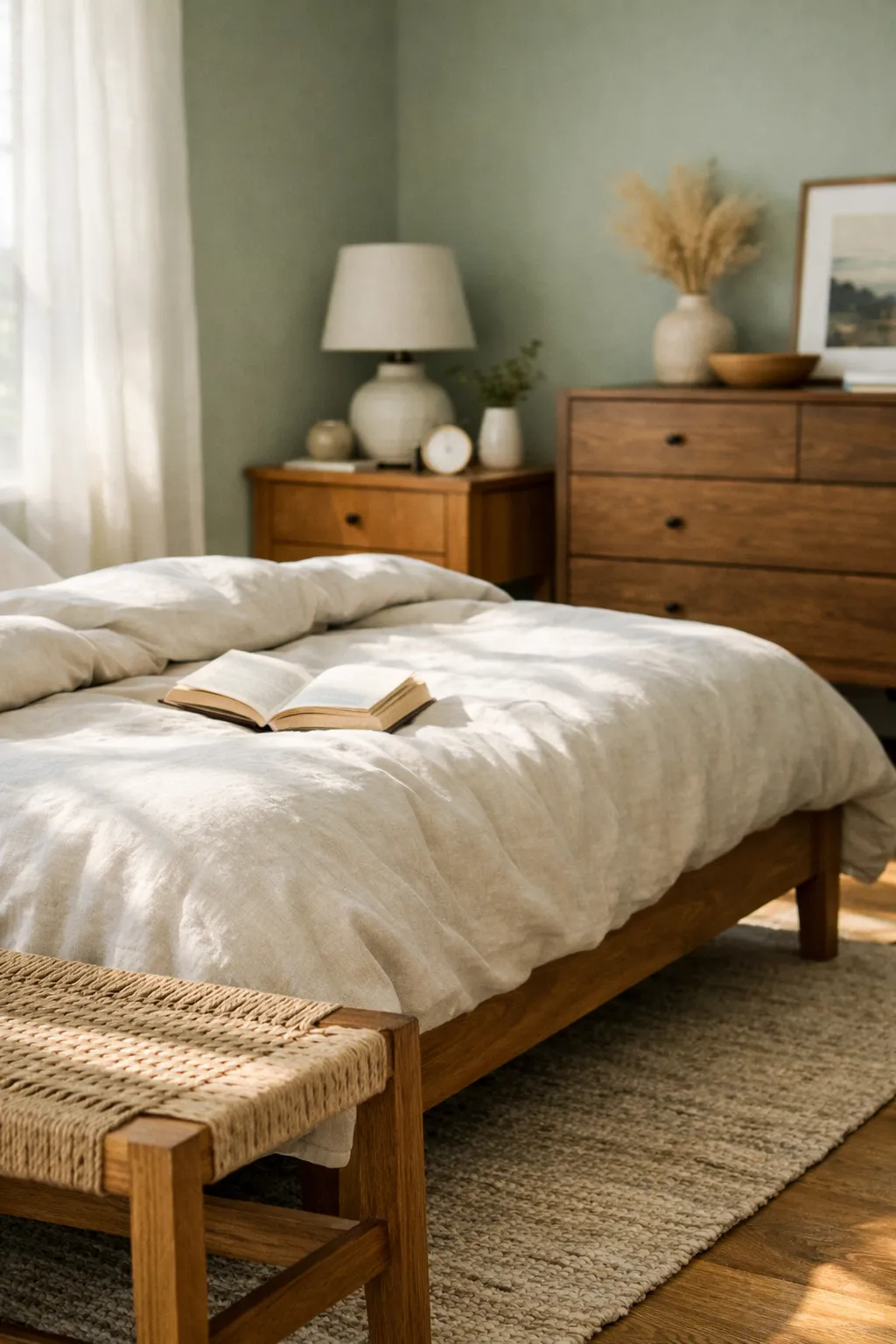
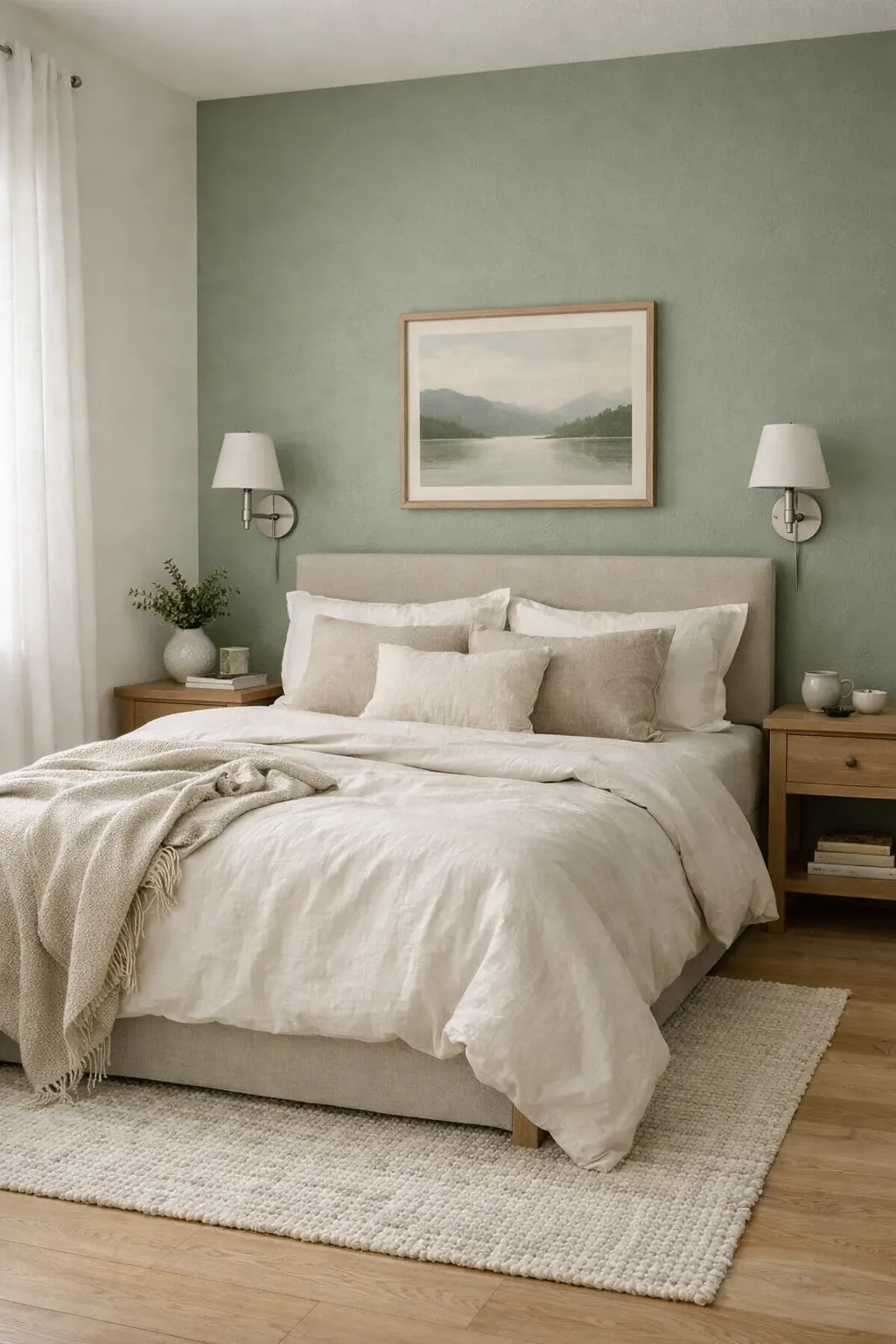
4. Try a Sage Green Accent Wall Behind the Bed
An accent wall is a practical move when you want color but do not want to commit to painting the whole room. The wall behind the bed is usually the best location because it naturally anchors the room and draws attention to the main focal point.
A sage green accent wall can make a plain bed look more styled even if the rest of the room is very simple. This is useful in bedrooms that feel flat or unfinished.
You can keep the other walls white, soft cream, or very pale greige. That contrast helps the green stand out while keeping the room open.
This idea works well with:
- upholstered headboards
- floating nightstands
- matching sconces
- simple black-and-white art
- layered neutral bedding
If the room is already small or dark, go for a lighter sage instead of a muddy or gray-heavy one. Too much dullness on one wall can drag the whole room down.
5. Mix Sage Green With White and Cream for an Airy Look
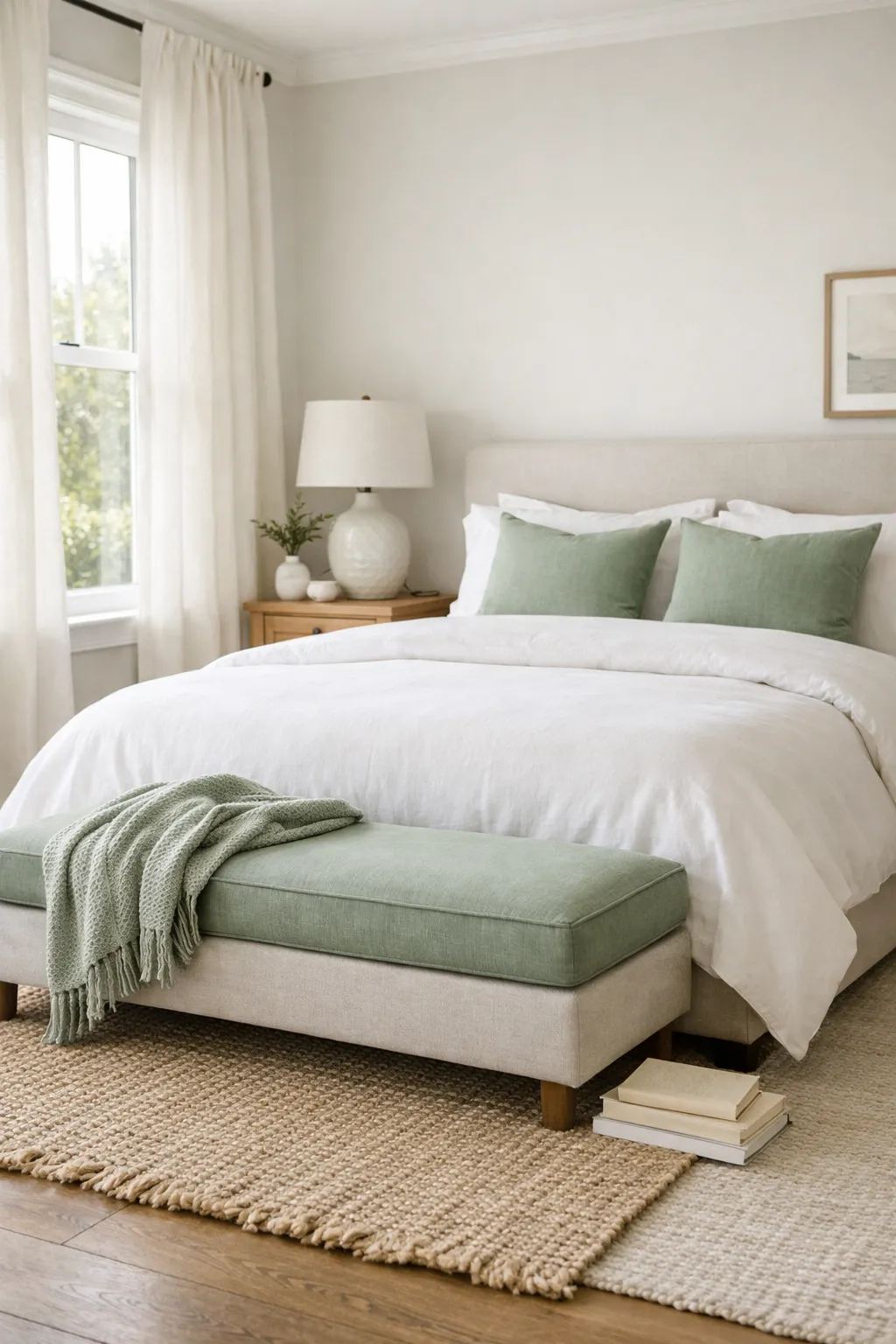
Some people like sage green but still want the room to feel bright, clean, and open. That is where white and cream come in. This mix keeps the bedroom soft and fresh without turning it into a sterile all-white box.
The trick is to let sage green act as the gentle color note while white and cream do the work of reflecting light and keeping the room lifted. This is a great approach for smaller bedrooms, guest rooms, and rooms with minimal furniture.
You might use sage green in:
- throw pillows
- a quilt
- curtains
- one painted furniture piece
- wall art
- a bench cushion
Then let white and cream dominate the larger areas such as bedding, walls, rugs, or lampshades.
6. Add Brass or Gold Accents for a Softer Luxe Feel
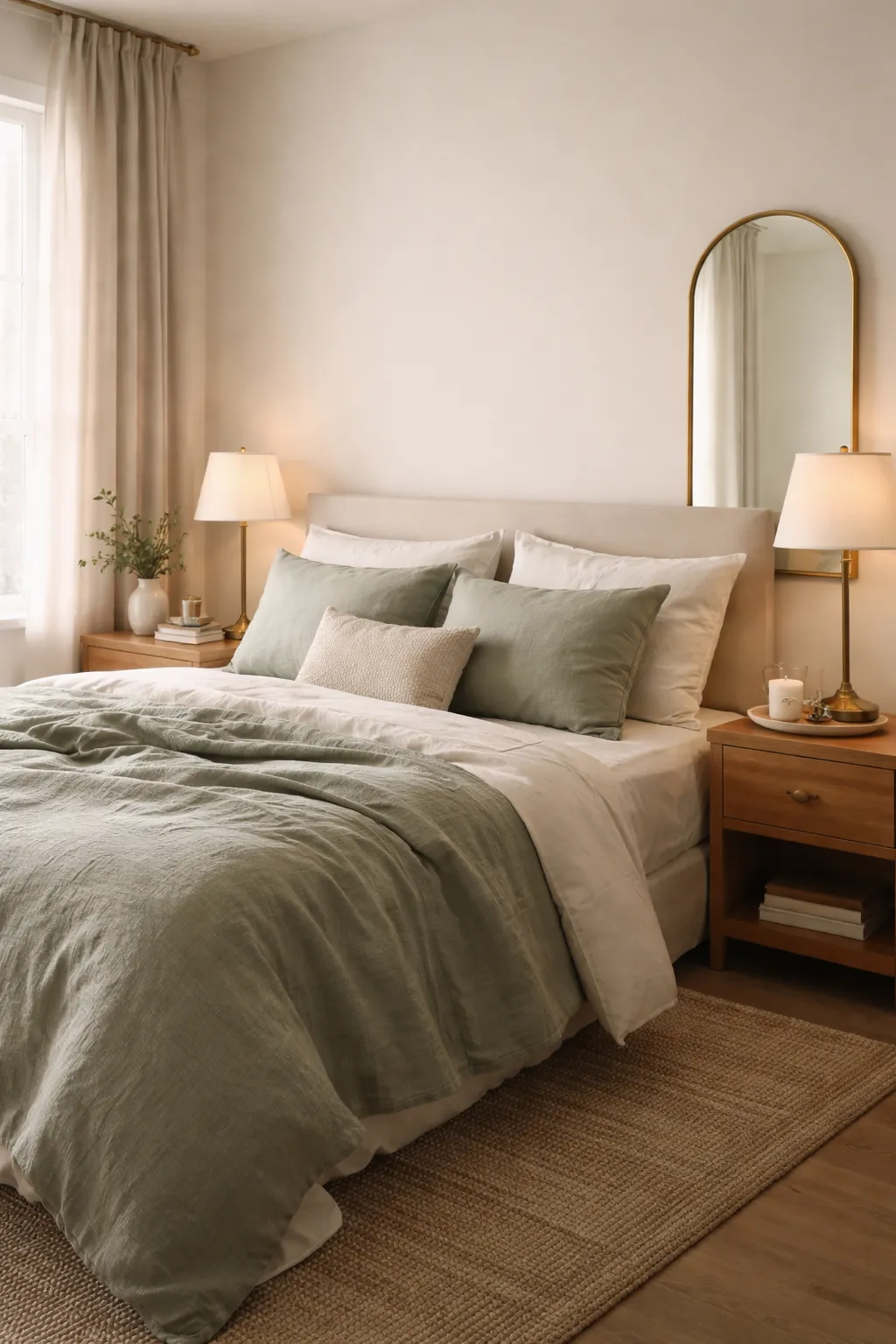
Sage green can go casual, but it can also look polished when paired with the right metal finishes. Brass and warm gold accents bring in a little shine without making the room feel flashy. The result is a bedroom that feels more considered and pulled together.
This pairing works because brass adds warmth. Chrome can make sage feel colder. Matte black can make it sharper. Brass keeps the room softer.
Good places to add brass include:
- bedside lamps
- drawer pulls
- mirror frames
- wall sconces
- curtain rods
- small decorative trays
You do not need a lot of it. A few warm metallic accents are enough. Overdoing shiny finishes is one of the fastest ways to make a peaceful bedroom feel overstyled.
7. Use Sage Green Curtains to Soften the Room
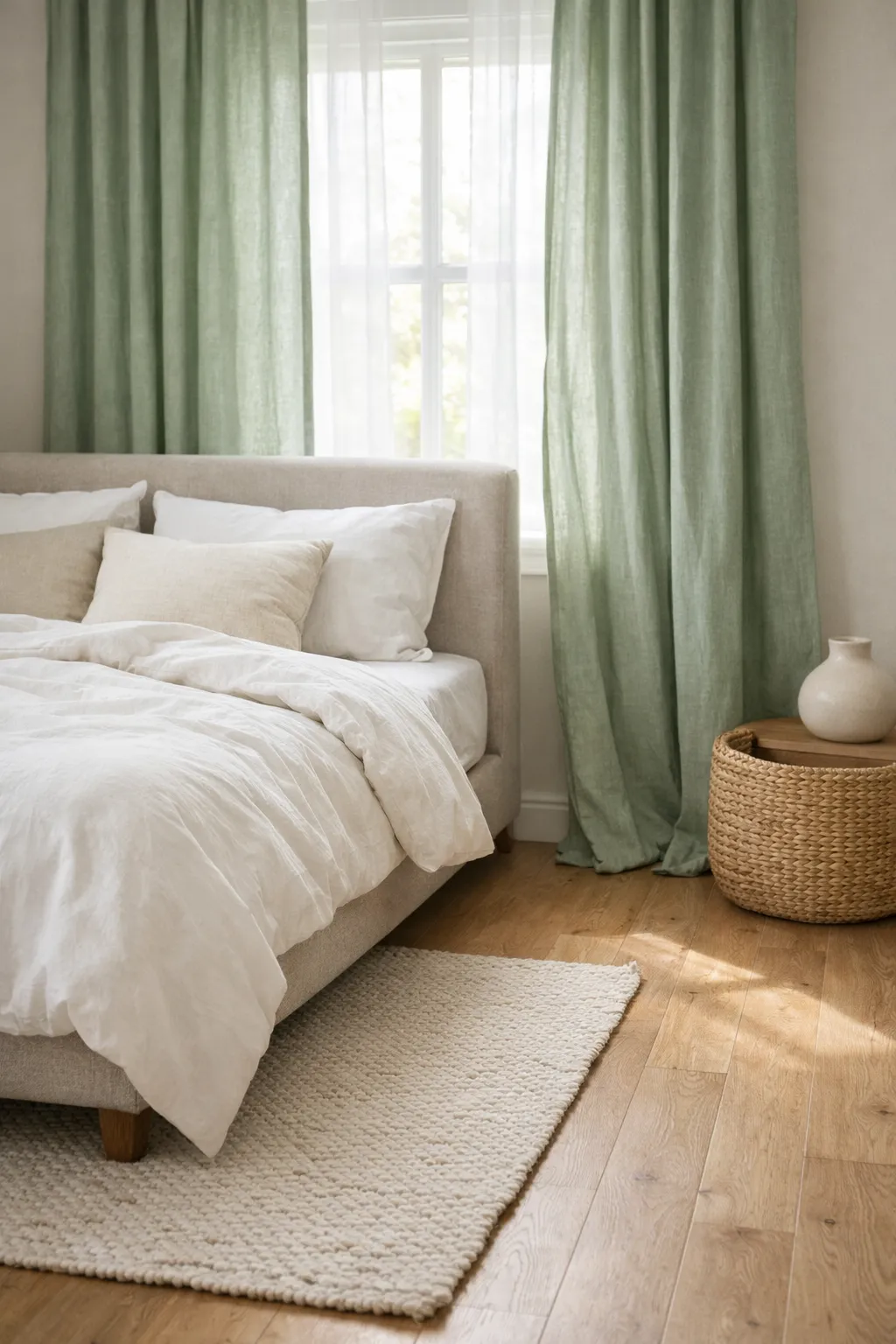
Curtains are often ignored, which is stupid because they take up a lot of visual space. If you want to introduce sage green without changing walls or bedding, curtains are one of the smartest places to do it.
Sage green curtains can soften bright windows, frame the bed area, and make the room feel more layered. They also help bring color higher into the room, which creates better visual balance.
For the best look, choose fabrics with a relaxed texture. Linen, cotton-linen blends, or lightly woven panels tend to look better than overly shiny or stiff fabric.
This idea works especially well when the room already has:
- neutral walls
- white bedding
- light wood furniture
- simple black or brass lighting
- woven rugs or baskets
If privacy matters, use lined curtains. If softness matters more, go with airy panels and let the texture do the work.
8. Bring in Sage Green Through Upholstered Furniture
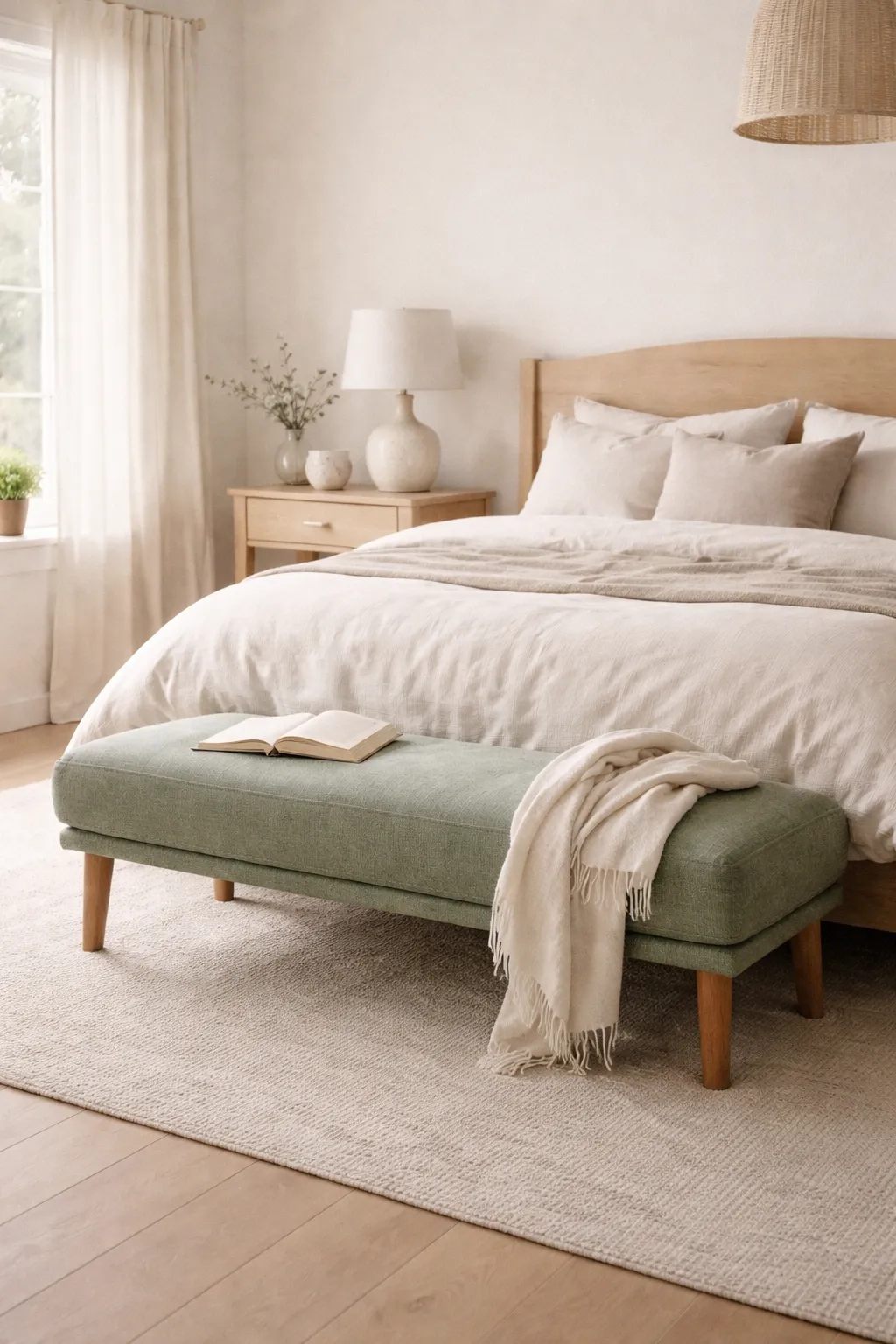
Not every room needs green walls or green bedding. Sometimes one upholstered piece is enough. A sage green bench, accent chair, ottoman, or even a fabric headboard can add color in a way that feels more tailored.
This is a strong option for bedrooms that already have a neutral foundation but need one element with personality. Upholstered furniture also helps the room feel warmer because fabric adds softness that painted surfaces do not.
Pieces that work well in sage green include:
- channel-tufted headboards
- velvet benches
- reading chairs
- storage ottomans
- small vanity stools
If you go this route, make sure the shade of green connects to something else in the room. That could be a throw pillow, artwork, or a plant. Otherwise it can look random instead of intentional.
9. Combine Sage Green and Beige for a Warm, Easy Palette
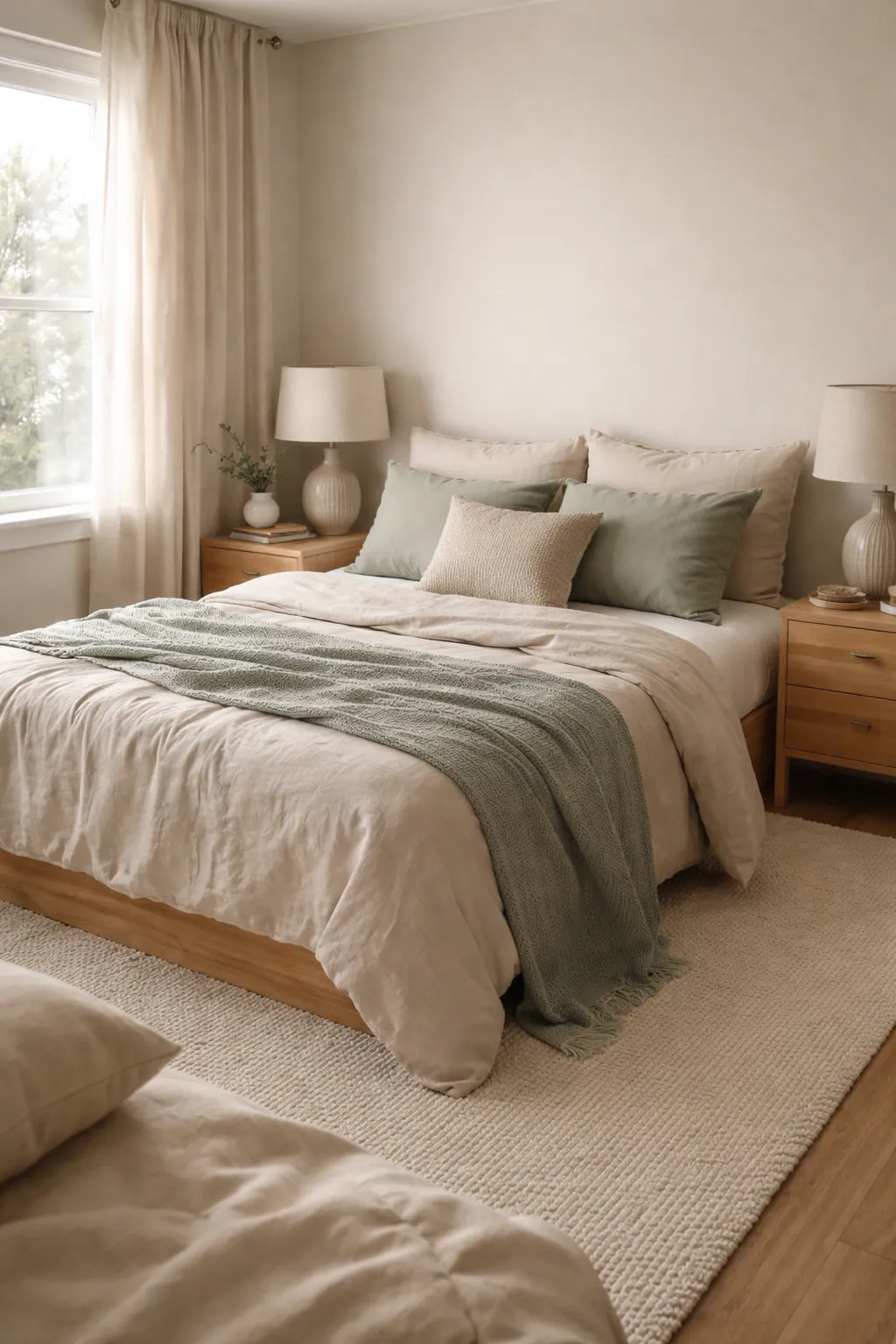
Sage green and beige are one of the most livable bedroom combinations because they create warmth without heaviness. Beige takes the edge off cooler green undertones and helps the room feel relaxed instead of sharp.
This palette is a good fit for people who want color but still want the bedroom to feel neutral overall. It works in almost every style, including modern organic, soft farmhouse, coastal-inspired, and classic casual rooms.
Here is a simple comparison of how sage green behaves with common bedroom neutrals:
| Pairing | Overall Feel | Best For |
|---|---|---|
| Sage green + white | Crisp and airy | Small bedrooms, minimal spaces |
| Sage green + cream | Soft and cozy | Relaxed bedrooms, guest rooms |
| Sage green + beige | Warm and grounded | Everyday lived-in spaces |
| Sage green + gray | Cool and muted | Modern rooms with sharper lines |
If your bedroom gets cold light, beige usually works better than gray. That is not decoration theory nonsense. It is practical. Cool light plus cool neutrals can make a bedroom feel lifeless.
10. Style a Small Bedroom With Light Sage Tones
A lot of people assume color makes a small bedroom feel smaller. Sometimes it does. Sometimes it does not. The real issue is not color alone. It is depth, contrast, and how heavy the room feels overall.
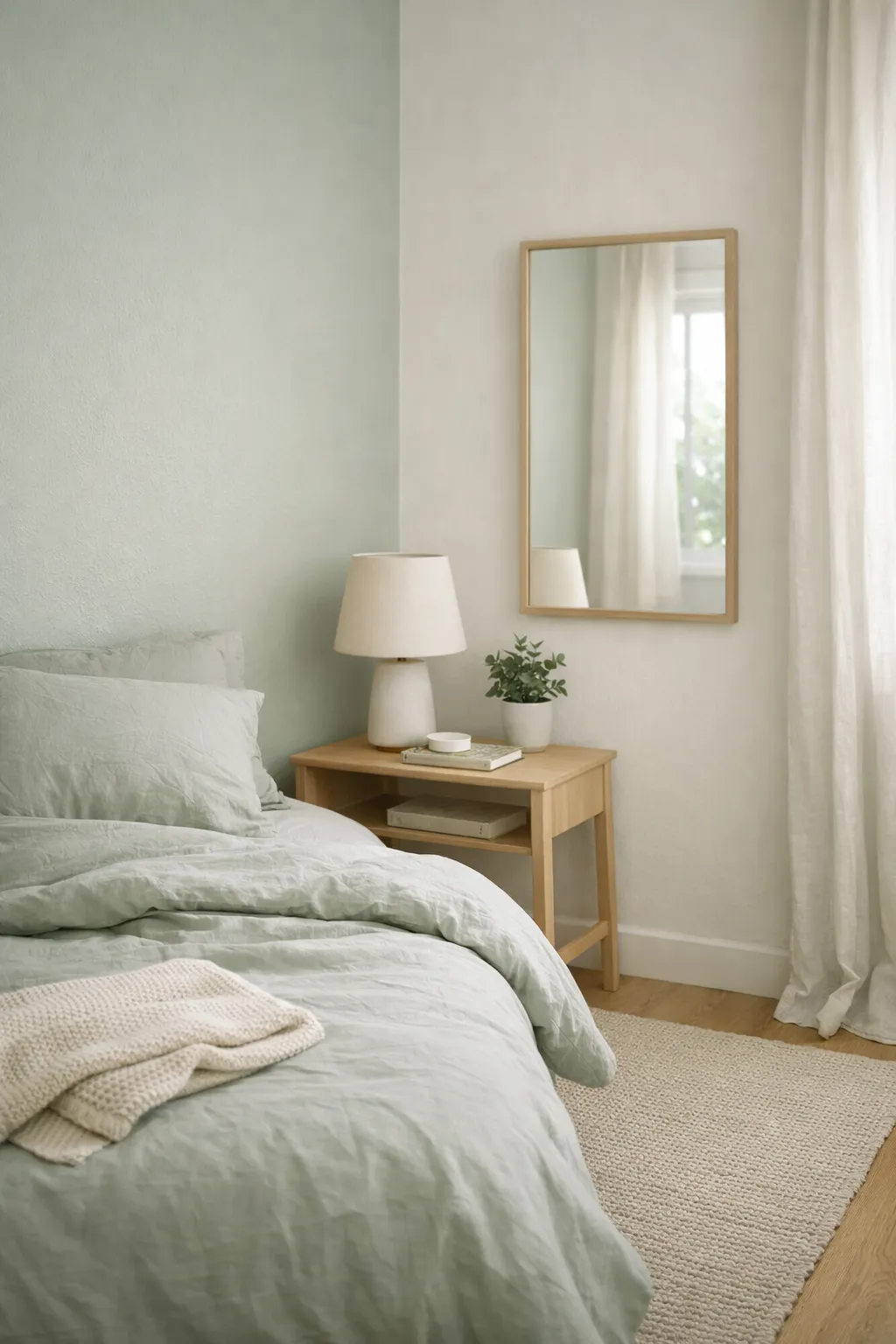
In a small bedroom, light sage green can work beautifully when the rest of the room stays visually clean. A pale sage wall, quilt, or curtain can add softness and personality without cluttering the space.
To make it work, focus on a few simple rules:
- choose lighter sage instead of darker muddy tones
- keep large furniture simple in shape
- use mirrors to bounce light
- avoid bulky dark furniture
- stick to two or three main colors
- use vertical curtains to make the room feel taller
This kind of bedroom often looks best when styling stays restrained. Too many decorative objects can make a soft green room feel crowded fast.
11. Create Contrast With Black Accents
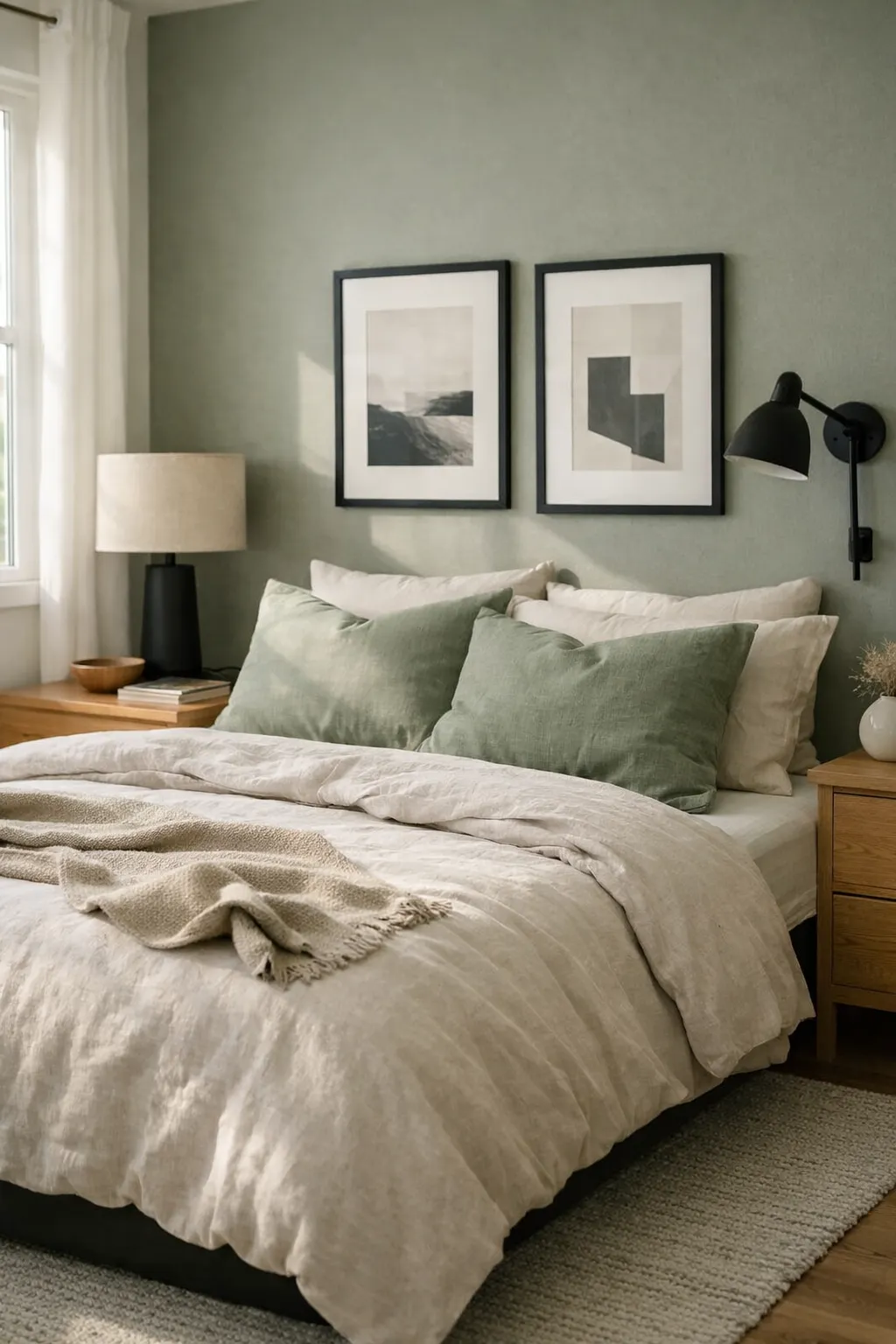
Sage green has a naturally soft personality, so one way to keep it from feeling too sweet or washed out is by adding black accents. Black creates structure. It sharpens edges. It gives the room enough contrast to feel finished.
This is one of the best ways to make sage green feel more modern. A room with sage walls, white bedding, wood furniture, and a few black accents often looks cleaner and more current than the same room without contrast.
Try black in small, controlled ways such as:
- metal bed frames
- picture frames
- sconces
- drawer hardware
- curtain rods
- lamp bases
The key is restraint. Too much black can overpower the softness that makes sage green appealing in the first place. You want definition, not a fight between two strong finishes.
12. Add Sage Green Through a Statement Headboard
A headboard is one of the best places to use sage green when you want the bed to feel more styled without filling the whole room with color. Since the bed is already the main focus, a sage green headboard makes sense visually. It gives the room shape and color in one move.
This works especially well in bedrooms with plain white walls or simple neutral bedding. The headboard becomes the feature, so the rest of the room can stay calm.
A few headboard styles that work well in sage green are:
- upholstered rectangular headboards
- softly curved silhouettes
- channel-tufted panels
- linen-wrapped frames
- velvet styles for a richer look
If you want the room to feel relaxed instead of formal, skip anything too ornate. Sage green already has a quiet personality. Clean lines usually suit it better than fussy details.
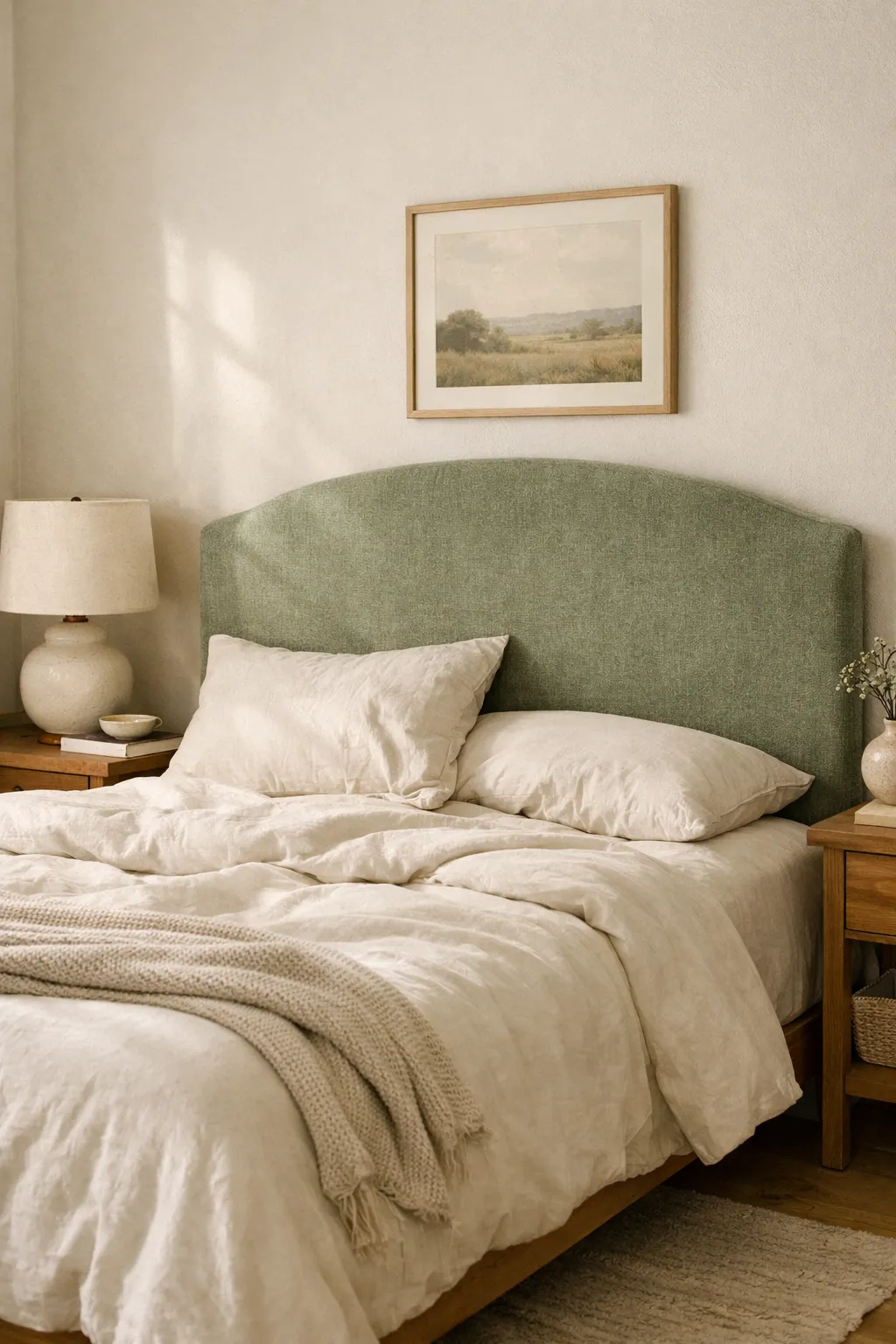
13. Use Sage Green and Linen for a Relaxed Look
If you want a bedroom that feels soft, breathable, and easy to live in, sage green and linen are a strong match. Linen has natural texture and slight wrinkling, which keeps the room from looking stiff or overdone. Sage green adds enough color to keep all that softness from turning bland.
This pairing is a good fit for people who like casual bedrooms that still feel intentional. It works well in homes with organic modern, coastal, rustic, or lightly boho influences.
Try using linen in:
- duvet covers
- pillow shams
- curtains
- bed skirts
- throw blankets
The best version of this look usually includes a few imperfect details. A casually draped throw, slightly relaxed curtain folds, or textured pillow layering can make the room feel more real. Bedrooms should not look staged to death. That usually kills the comfort.
14. Bring in Botanical Decor Without Making It Cliche
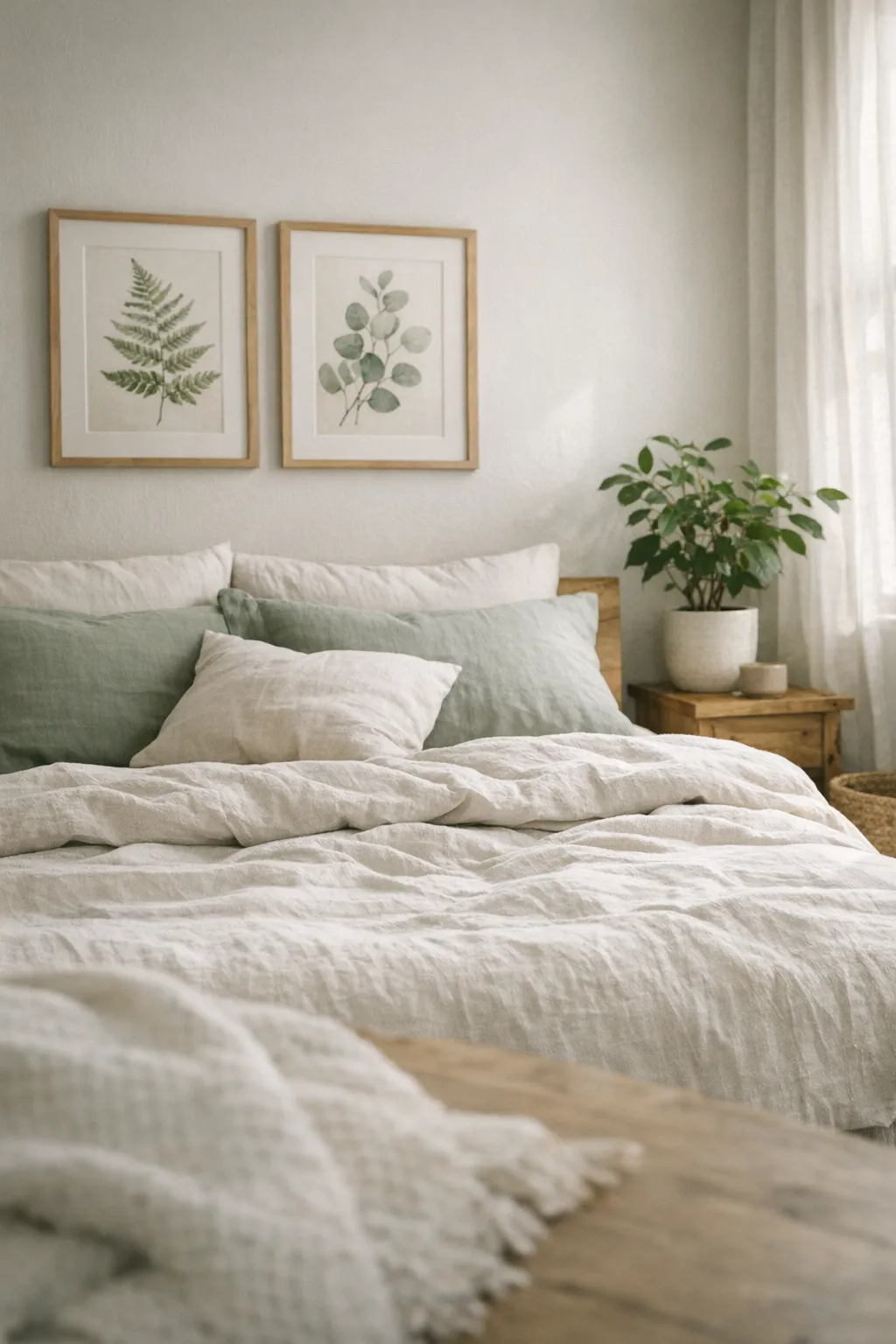
Sage green naturally connects to outdoor tones, so botanical decor can work well in this kind of bedroom. The problem is that people often overdo it and end up with a room that looks themed instead of designed.
A better approach is to use botanical touches in a limited, thoughtful way. One or two framed prints, a small plant, or bedding with a subtle leaf pattern is enough. The goal is to support the color story, not turn the room into a fake greenhouse.
Good botanical accents include:
- simple framed leaf sketches
- olive branch stems in ceramic vases
- one potted plant near a window
- bedding with a quiet organic pattern
- natural woven textures that echo outdoor materials
If the walls, bedding, and decor all scream green at once, the room loses depth. Sage green works better when something neutral keeps it grounded.
15. Try a Darker Sage for a Moodier Bedroom
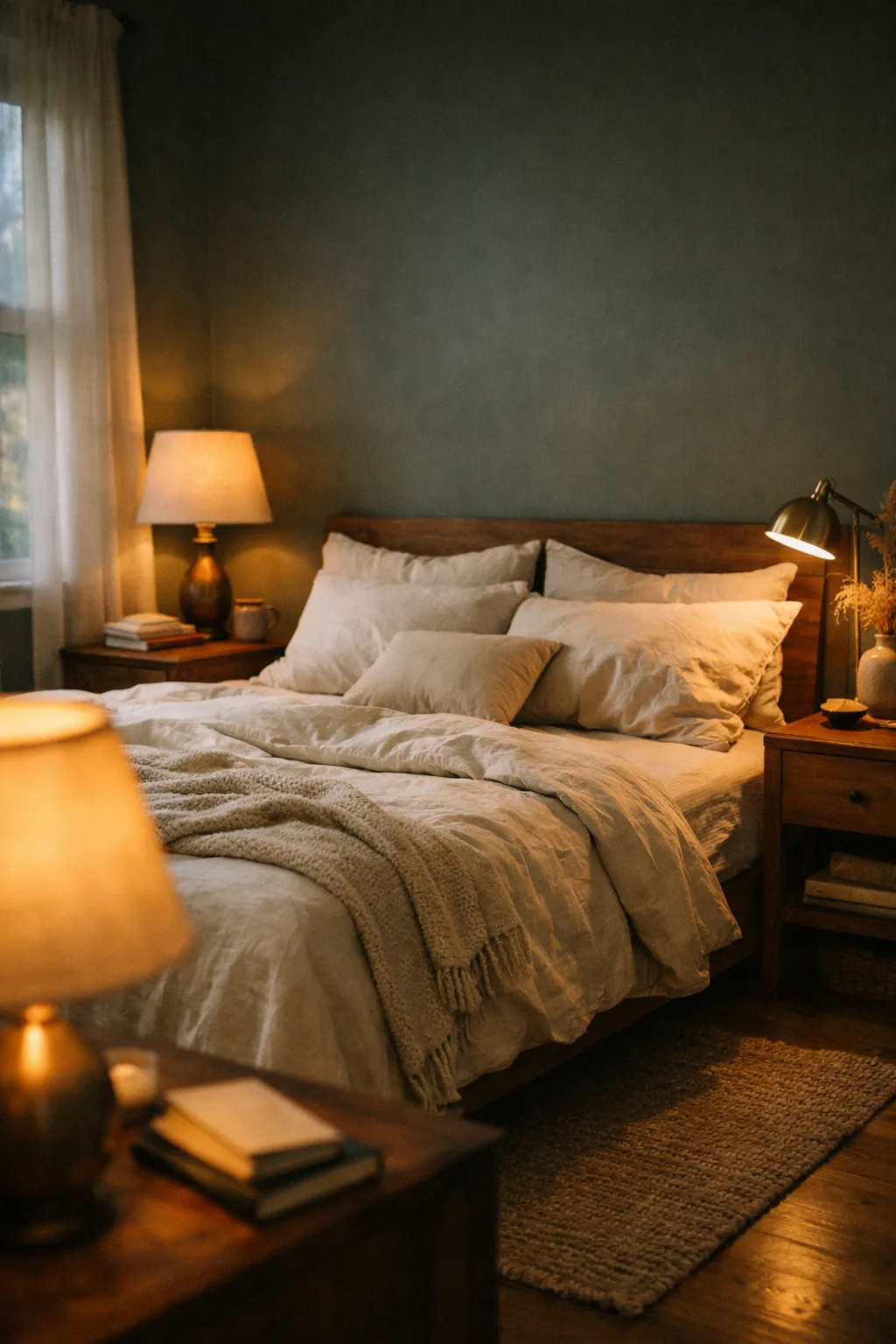
Not every sage green bedroom has to feel bright and airy. A darker sage or deeper muted green can create a more intimate, grounded bedroom, especially if you like rooms that feel cocooning at night.
This approach works best in larger bedrooms or rooms with enough light to handle a deeper tone. It can also work in smaller bedrooms if you want a cozy feel and are willing to lean into the mood instead of fighting it.
To keep a darker sage room from feeling flat, add contrast through:
- warm white bedding
- cream curtains
- walnut or oak wood
- antique brass details
- layered lighting from lamps and sconces
This kind of room can look expensive very quickly if the materials are right. Cheap glossy finishes ruin it. Matte paint, textured fabric, and warm wood make a huge difference.
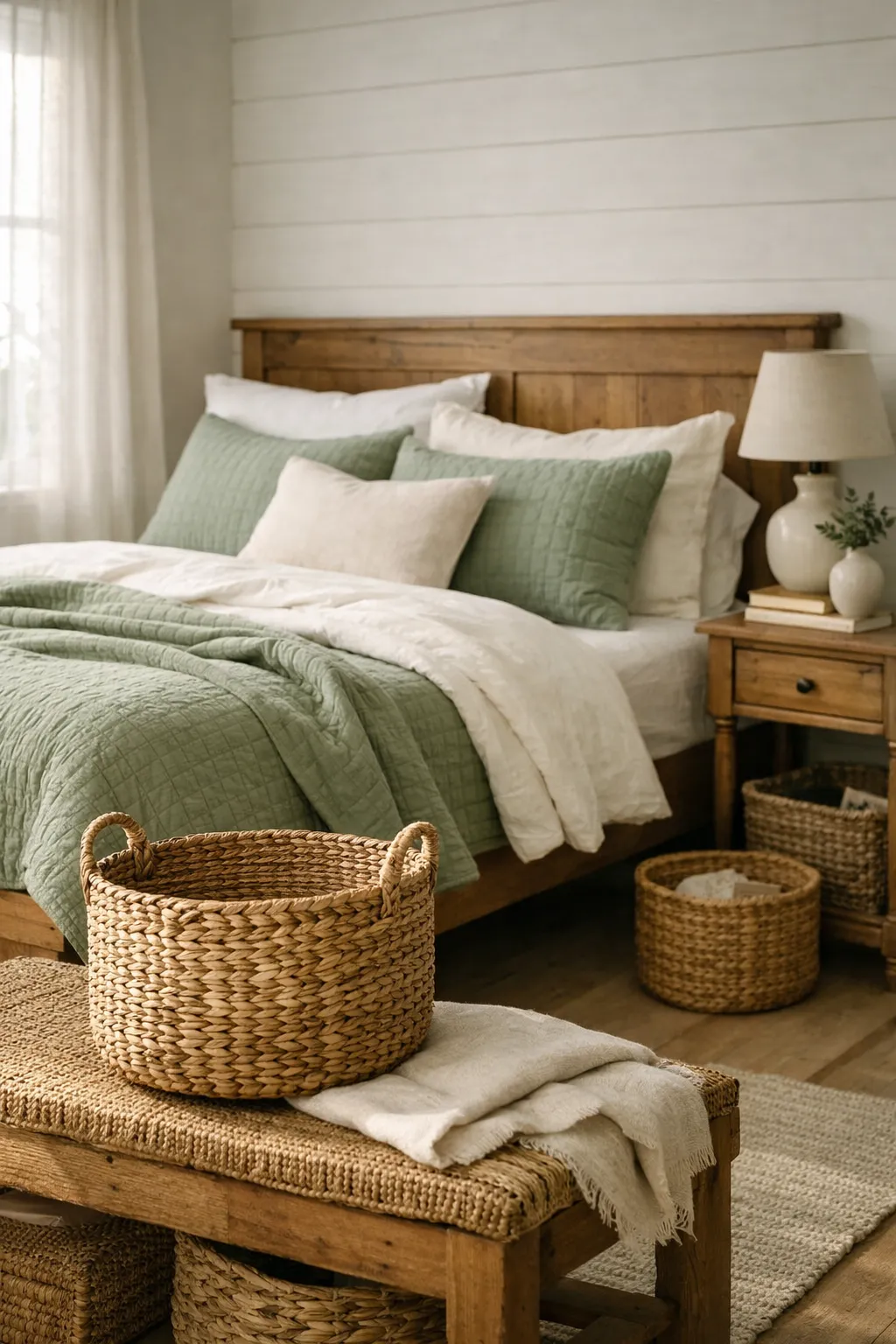
16. Use Sage Green in a Farmhouse Bedroom the Right Way
Sage green fits farmhouse bedrooms easily, but this style goes bad fast when it leans too fake or overly themed. If every piece looks distressed, every sign has words on it, and every surface has decorative filler, the room starts looking tired.
A better farmhouse bedroom uses sage green in a cleaner way. Think painted shiplap on one wall, a sage quilt, vintage-inspired lamps, and wood furniture with simple lines. Add softness through textiles instead of loading the room with signs and props.
This style works best with:
- white or cream bedding
- black or aged brass hardware
- warm wood nightstands
- subtle plaid or stripe patterns
- woven storage baskets
- one or two vintage-style accents
Farmhouse works when it feels calm and practical. Once it starts trying too hard to look rustic, it usually falls apart.
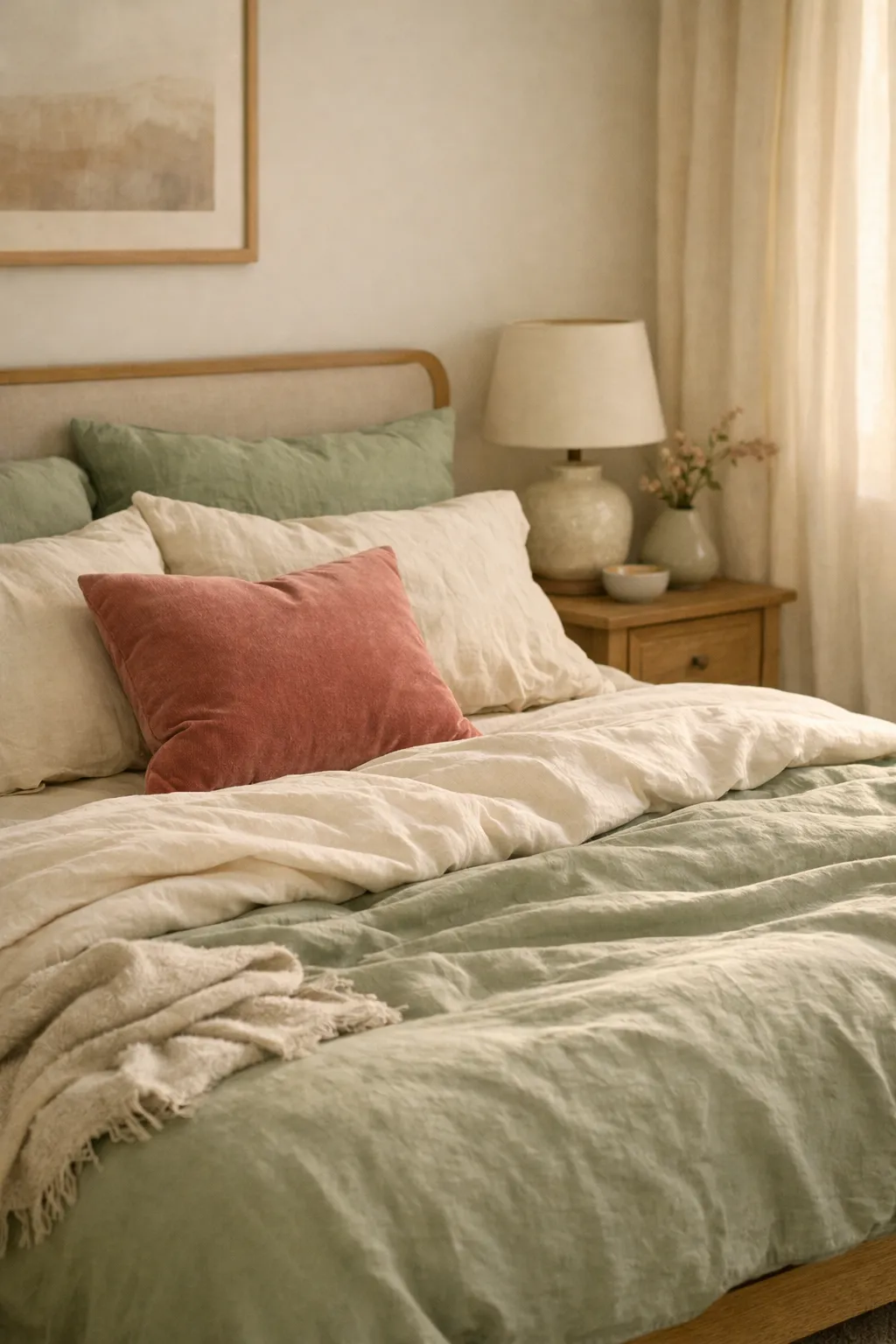
17. Pair Sage Green With Soft Pink for a Gentle Contrast
This pairing can look beautiful when done with restraint. Soft pink adds warmth and softness to sage green, which makes the bedroom feel a little more inviting and less strictly earthy. The problem is that this combination can turn childish if the tones are too sugary.
The better version uses dusty pink, blush beige, or muted rose instead of bright pink. Those tones sit more naturally beside sage green and create a softer contrast.
You do not need much pink here. It works best in small doses such as:
- one throw pillow
- artwork
- a blanket folded at the foot of the bed
- a ceramic vase
- a patterned lumbar pillow
The room should still read as sage green first. Pink is the support color, not the lead.
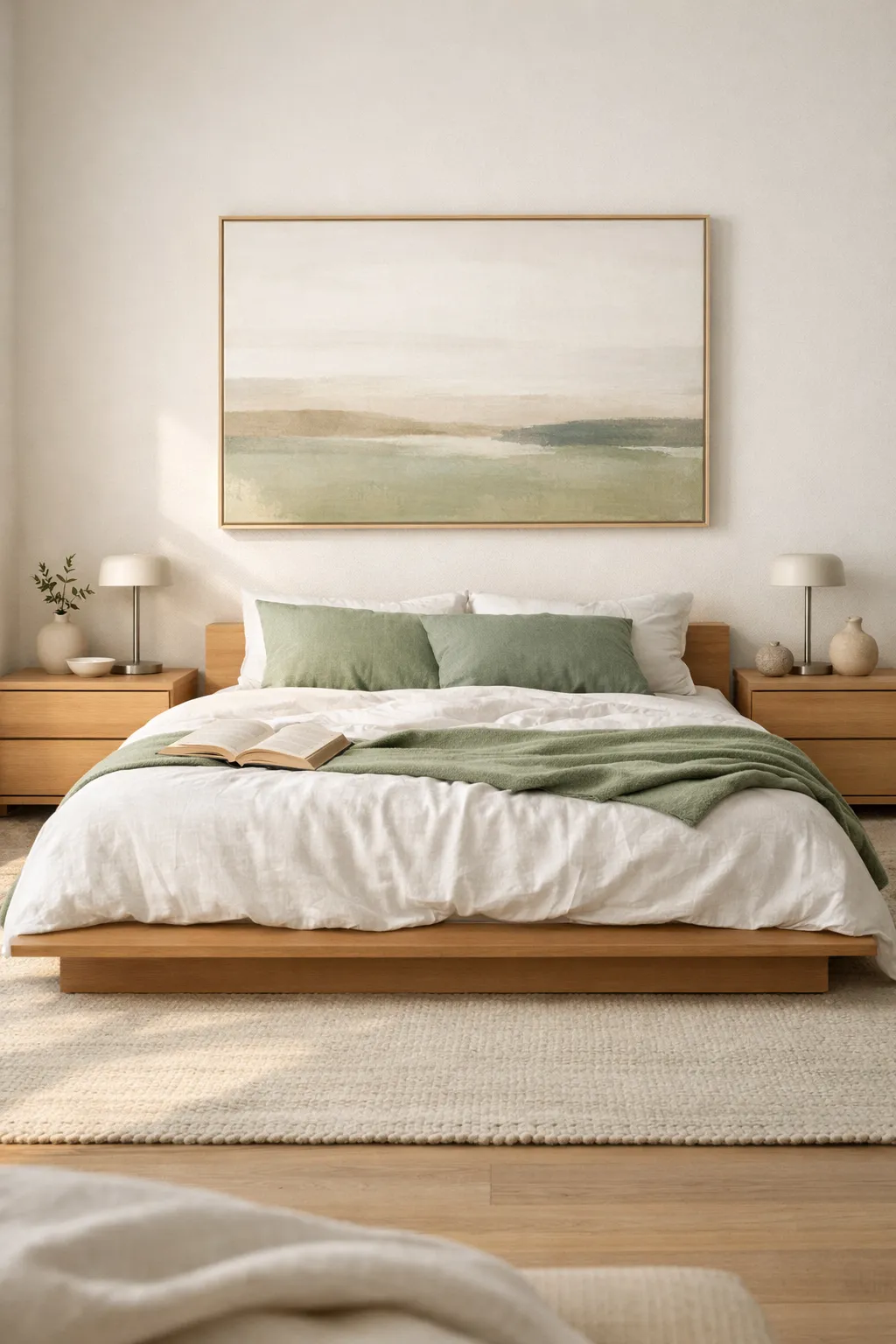
18. Keep It Modern With Clean Shapes and Minimal Decor
Sage green is often used in cozy or rustic bedrooms, but it also works very well in modern spaces. The difference is in the shapes, finishes, and editing. A modern sage green bedroom should feel clear, not crowded.
Use the color in a controlled way, then keep the furniture lines clean. A platform bed, simple nightstands, understated lamps, and minimal wall art usually work better than decorative extras.
A modern sage green bedroom often includes:
- flat-front furniture
- simple white or cream bedding
- black metal or matte brass accents
- one large piece of art instead of many small pieces
- low visual clutter
- smooth, quiet color transitions
This style depends on discipline. If you keep adding accessories because the room feels empty, you usually ruin the modern look.
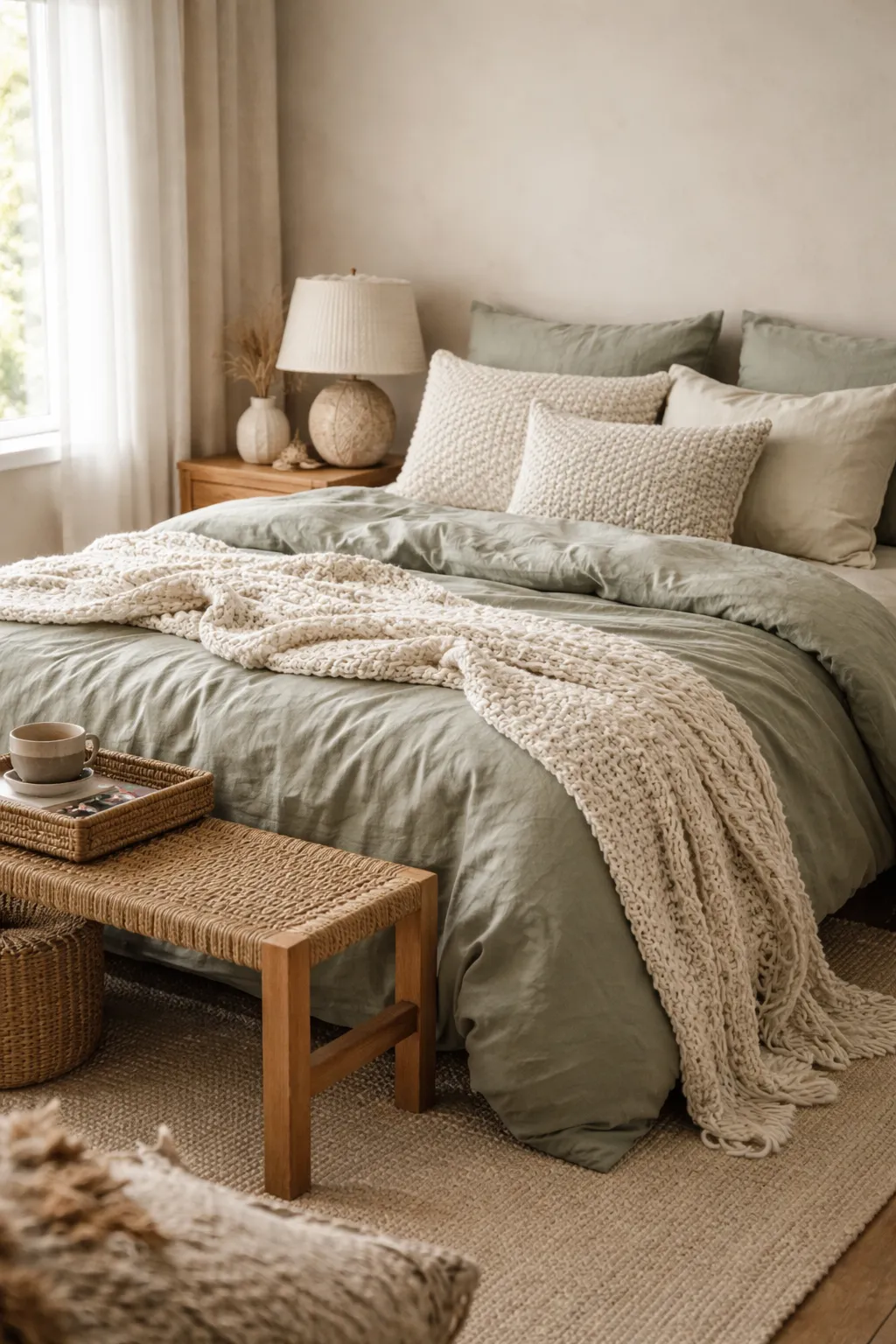
19. Add Texture With Rugs, Throws, and Woven Pieces
Color alone is not enough. A sage green bedroom will fall flat if everything is smooth, plain, or too similar in finish. Texture is what makes the space feel layered and comfortable.
That does not mean stuffing the room with random decor. It means choosing materials that create variation in a subtle way. This is especially important in neutral-heavy bedrooms where sage green is the main color.
Useful textures include:
- chunky knit throws
- linen bedding
- woven baskets
- ribbed ceramic lamps
- jute or wool rugs
- cane or rattan details
- nubby accent pillows
The best rooms usually mix smooth and rough surfaces. A sleek painted wall looks better next to crinkled linen. A clean bed frame looks better with a textured throw. Contrast in material is what keeps soft colors interesting.
20. Use Sage Green in a Guest Bedroom for Universal Appeal
Guest bedrooms need to feel welcoming to a lot of different people, which is why extreme color choices often backfire. Sage green is a smart middle ground. It feels more personal than beige alone, but it is still gentle enough for most guests.
This is one reason sage green performs so well in spare rooms. It creates a calm backdrop without making the space feel too trendy or too specific to one person.
A guest bedroom with sage green often works best when it includes:
- simple layered bedding
- neutral lampshades
- soft curtains
- one bench or chair
- easy bedside storage
- a few practical touches like hooks or a tray
The room should feel restful first and decorative second. A guest room that looks good but functions badly is not actually well designed.
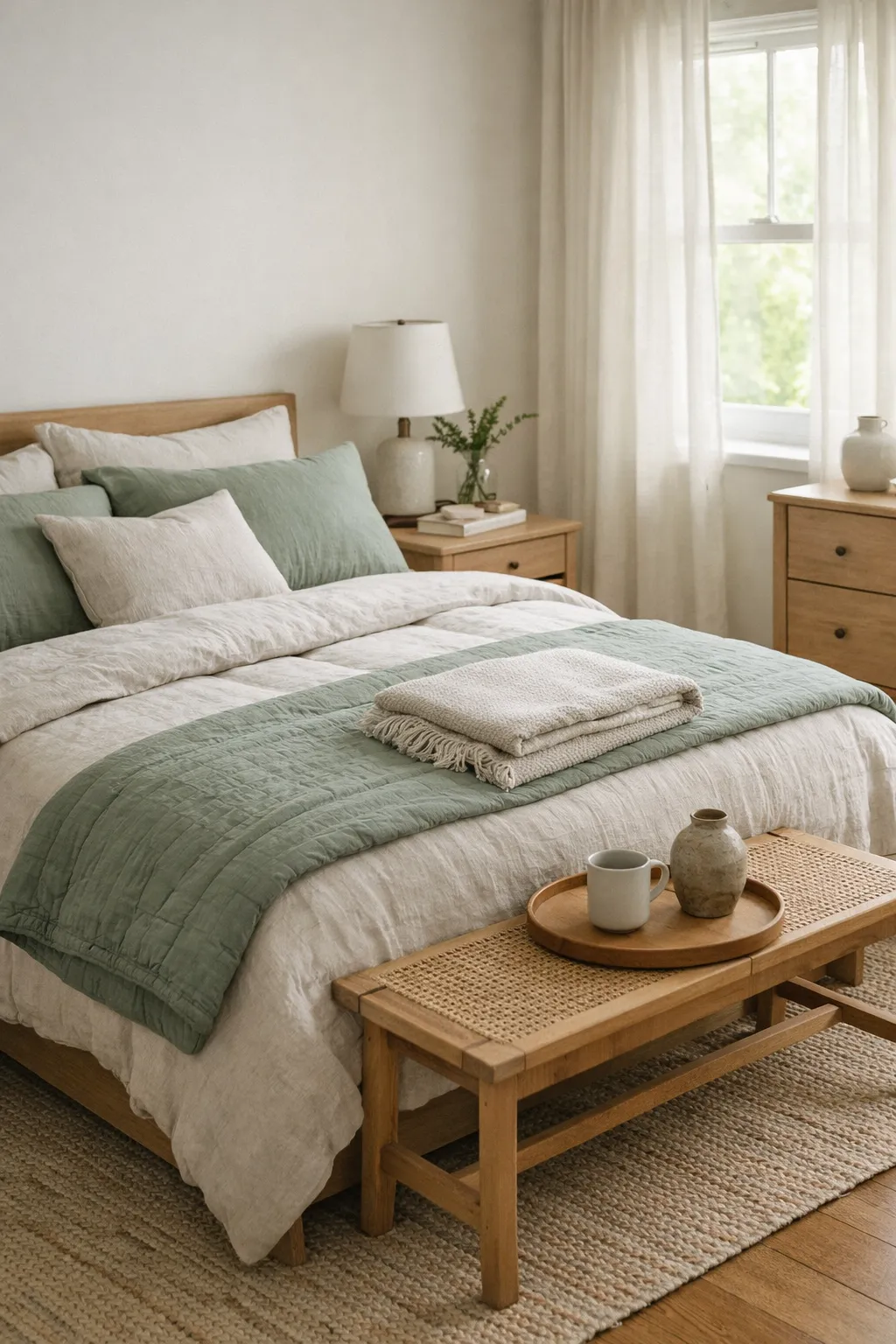
21. Pull the Whole Room Together With Repeating Green Touches
One of the easiest mistakes in bedroom decorating is using a color once and expecting it to carry the room. A single sage pillow or one painted wall is not always enough. The room feels more complete when the green appears in a few different places, even if each use is subtle.
This does not mean matching everything. That usually looks forced. It means repeating sage green with variation so the room feels connected.
You might repeat it through:
- bedding
- curtains
- art
- a small bench or chair
- ceramic decor
- one painted furniture piece
- a patterned pillow with green mixed in
The goal is rhythm, not sameness. When the eye sees the color appear naturally around the room, the whole space feels more intentional.
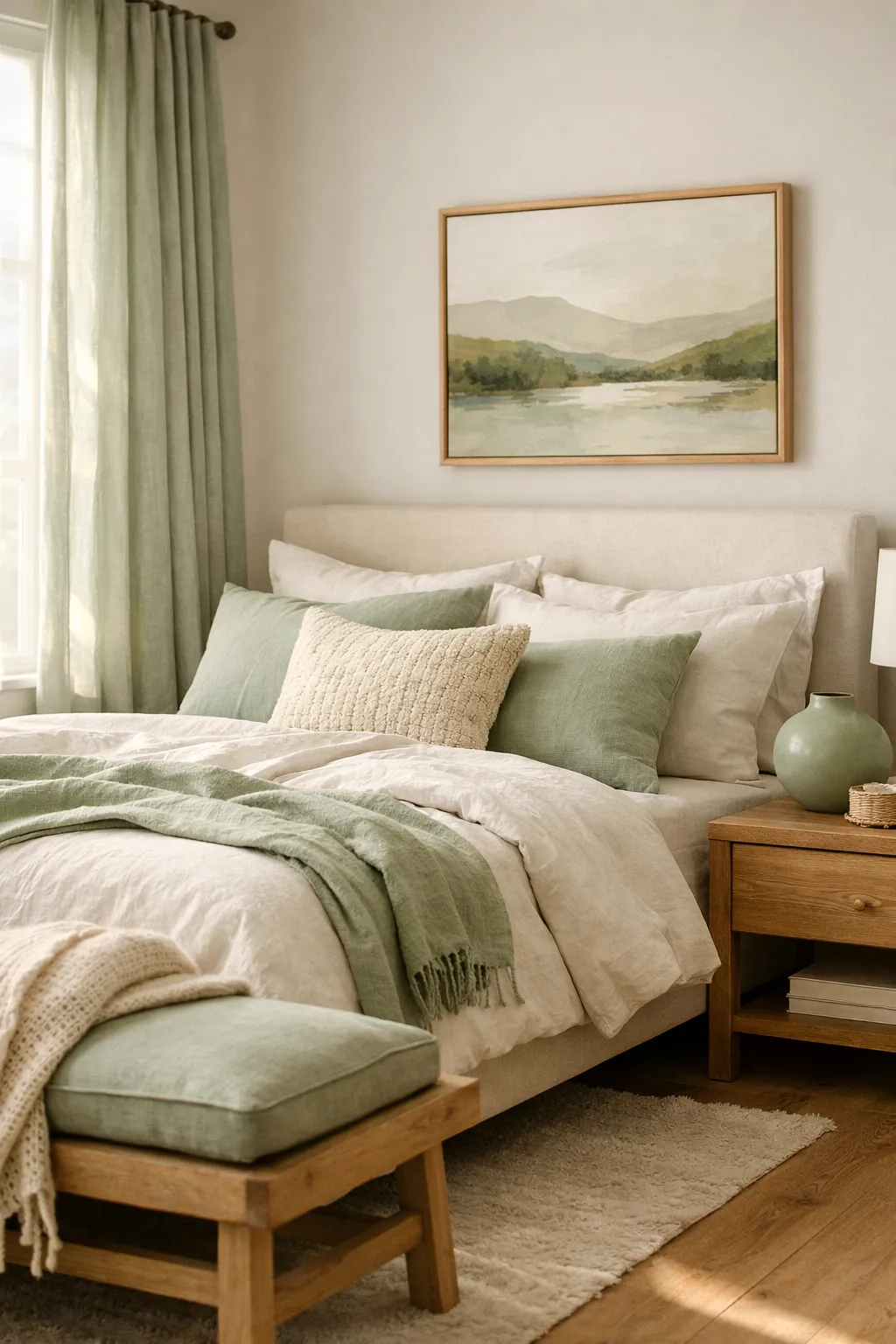
How to Choose the Right Sage Green for Your Bedroom
Not all sage greens are equal, and this is where people mess up. Some shades lean gray. Some look warmer and earthier. Some go flat in low light. Some read almost pastel in bright rooms.
Before choosing paint, bedding, or furniture, pay attention to these things:
Room lighting
North-facing rooms often pull colors cooler, so a gray-heavy sage can look dull. South-facing rooms usually handle softer greens more easily.
Existing furniture
If your furniture is warm-toned wood, choose a sage that feels slightly warm or muted. If your room has black or cooler finishes, a cleaner sage may work better.
How much color you want
If you want a quiet room, use sage as an accent. If you want the room to feel fully wrapped in color, use it on walls and repeat it in textiles.
Finish and texture
Paint, velvet, linen, and cotton all show sage green differently. The exact same color can feel richer, softer, or flatter depending on material.
Common Mistakes to Avoid in a Sage Green Bedroom
A lot of sage green bedrooms fail for predictable reasons. The color is not the problem. The choices around it are.
Watch out for these mistakes:
- choosing a muddy sage with no life in it
- pairing it with too many cold grays
- using green everywhere with no contrast
- ignoring texture
- mixing too many decor styles at once
- adding trendy pieces that do not suit the room
- forgetting to test paint in real light
The most successful sage green bedrooms feel balanced. They have softness, but they also have structure. They use color, but they still leave room for the eye to rest.
Final Thoughts
Sage green keeps showing up in bedrooms because it solves a real problem. Most people want a bedroom that feels calm, comfortable, and current, but they do not want it to feel cold or boring. Sage green sits right in that sweet spot.
It can cover the walls, soften the bed, warm up a guest room, sharpen a modern layout, or bring life to neutral furniture. It works with wood, white, beige, brass, black, linen, and natural textures because it has just enough color to stand out without taking over.
The best sage green bedroom ideas are not about copying one exact look. They are about understanding how the color behaves and using it in a way that fits your room. Get the tone right, repeat it with intention, and balance it with texture and contrast. That is what makes the space feel finished.