

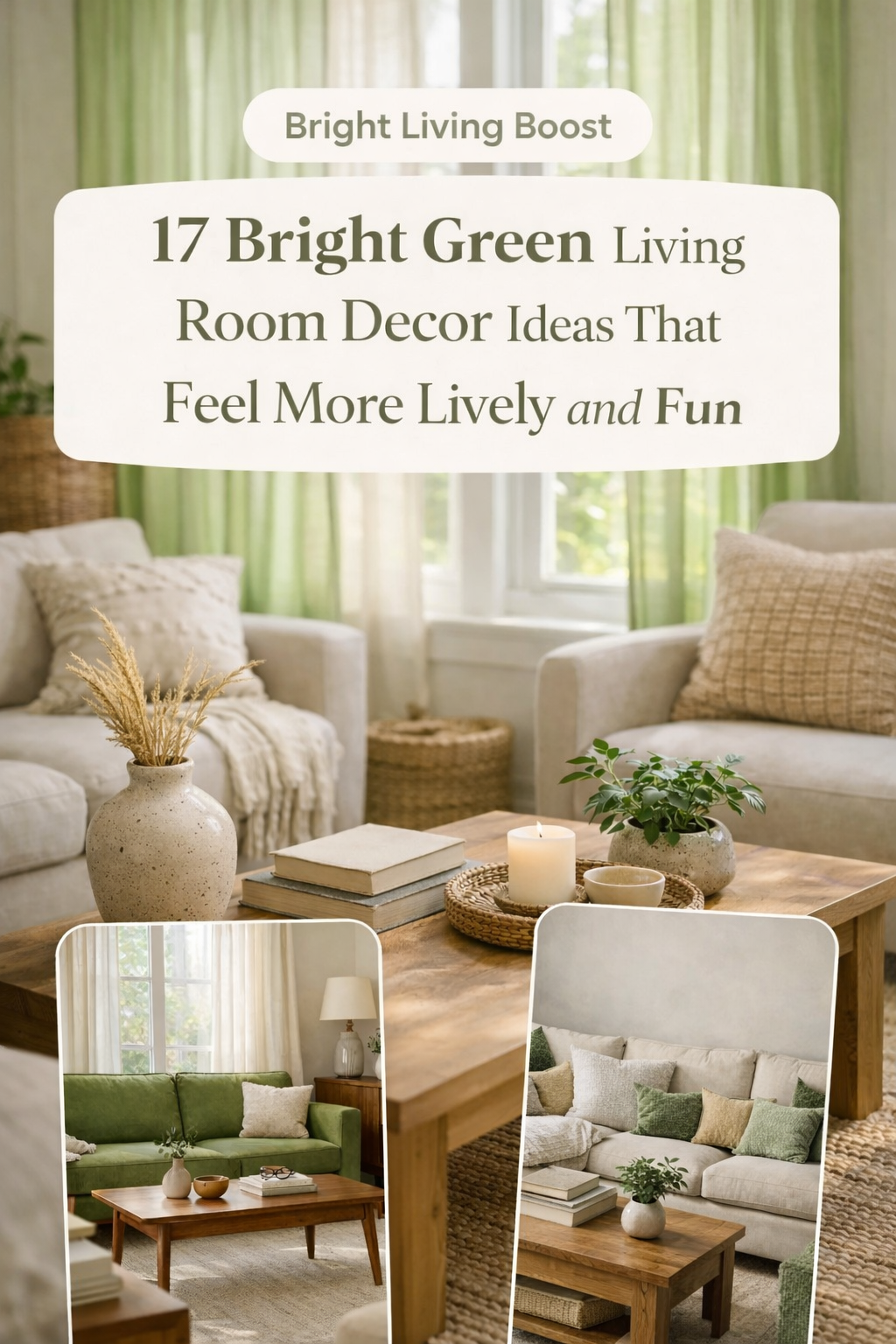
Green has quietly become one of the most loved colors in modern interior design. It brings the calm feeling of nature indoors while still offering depth and character to a living room. From soft sage walls to dramatic emerald furniture, green can shape the entire atmosphere of a space.
Many homeowners across the United States are shifting toward nature-inspired interiors. Warm woods, neutral fabrics, woven textures, and indoor plants are becoming common design choices. Green fits naturally into this trend because it pairs beautifully with these materials.
Another reason green works so well in living rooms is its flexibility. Lighter greens feel fresh and airy, darker greens create drama and depth, and muted tones blend seamlessly with organic modern interiors.
The ideas below explore practical ways to incorporate green into your living room while maintaining a balanced and timeless design.
Design 1: Sage Green Walls for a Calm Living Room
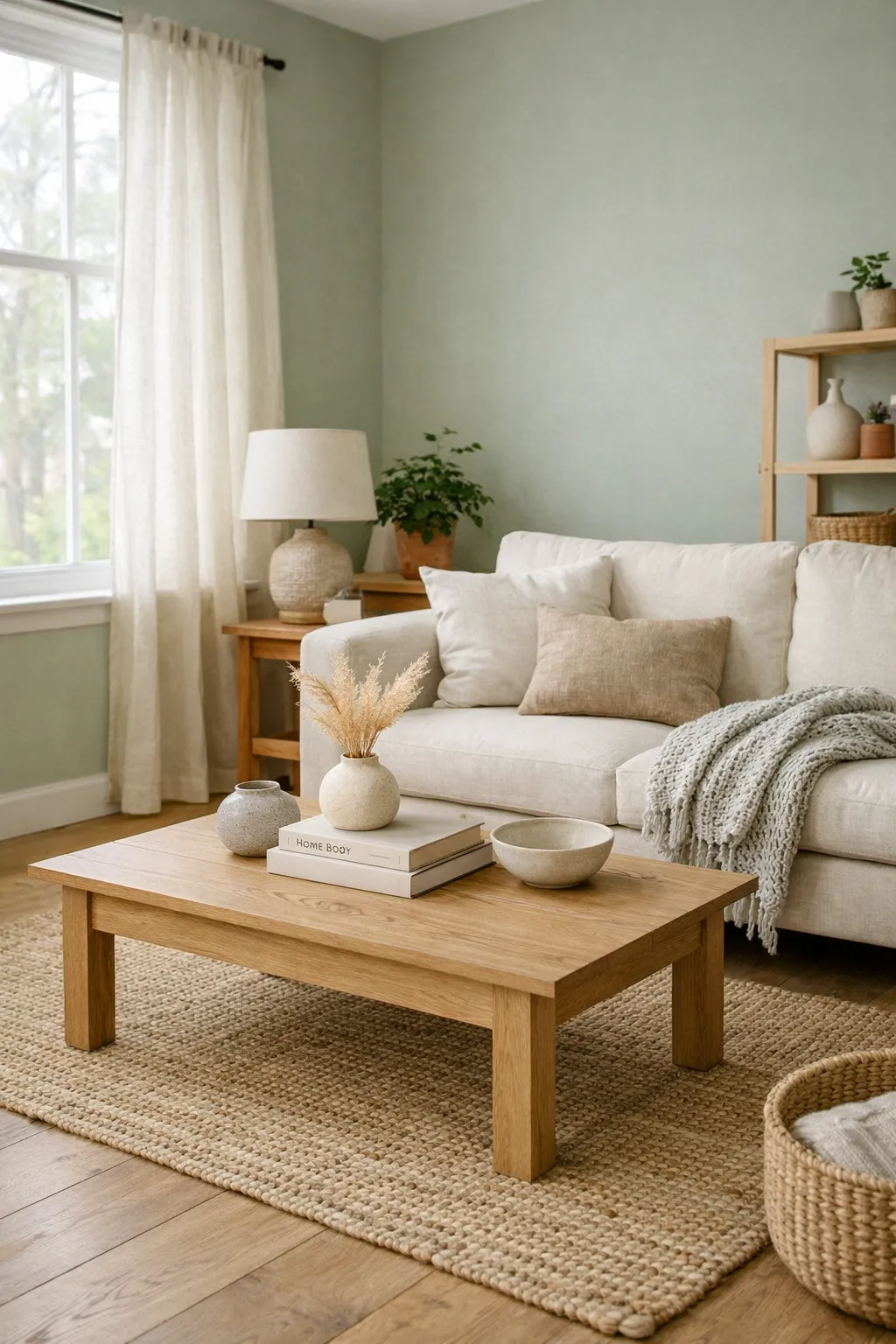
Sage green walls create a soft and peaceful atmosphere. This muted shade reflects natural light in a gentle way, making it ideal for living rooms where people gather to relax.
Pair sage green walls with warm neutral furniture such as cream sofas or beige armchairs. These tones keep the room feeling bright while allowing the wall color to add character.
Natural textures help complete the look. A jute rug, linen curtains, and wooden coffee table bring warmth without overwhelming the color palette.
This approach works especially well in smaller living rooms because the soft tone keeps the space feeling open and airy.
Design 2: Emerald Green Velvet Sofa Statement
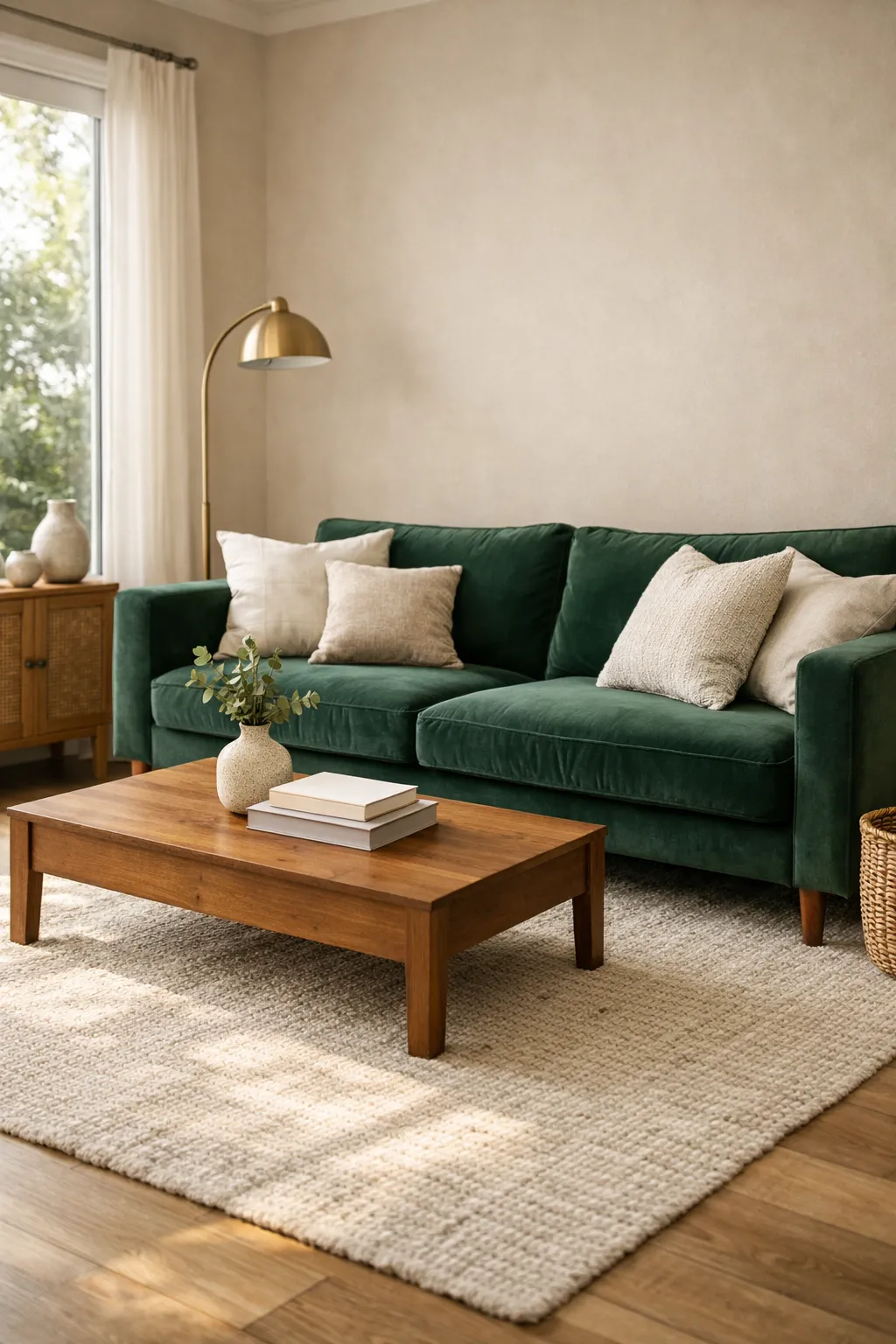
An emerald green velvet sofa instantly becomes the centerpiece of a living room. The rich color adds depth while the velvet fabric introduces softness and visual interest.
To balance the bold sofa, keep the rest of the room relatively neutral. Light walls, warm wood furniture, and soft beige rugs help highlight the sofa without making the room feel heavy.
Metal accents also complement emerald beautifully. Brass lamps, gold frames, or small decorative trays can add a touch of elegance.
This design approach works well in modern apartments and transitional homes where one striking furniture piece defines the space.
Design 3: Forest Green Accent Wall
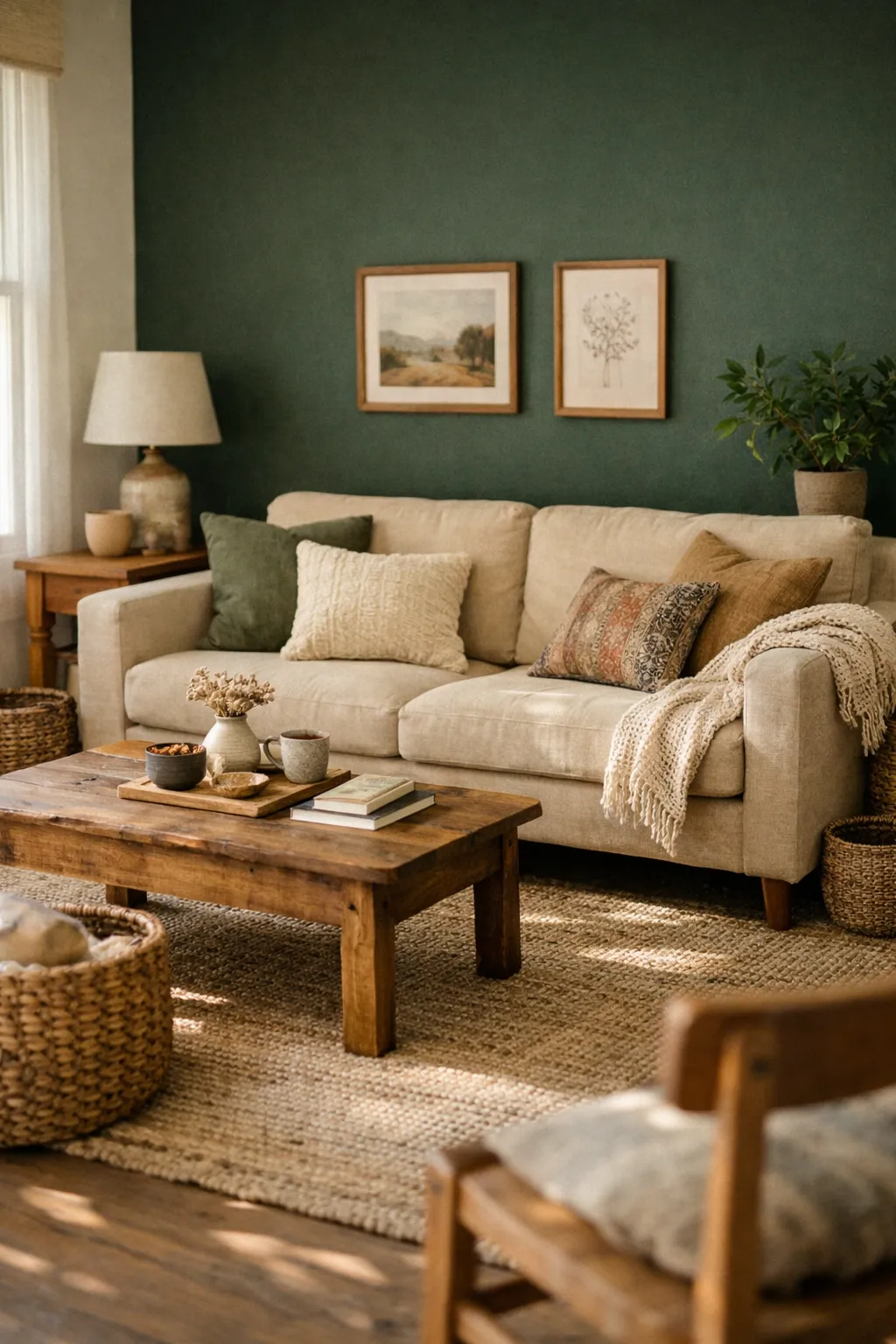
A forest green accent wall adds depth and drama without overpowering the entire room. This darker shade creates contrast and helps anchor furniture visually.
Many homeowners choose to place the accent wall behind the sofa or entertainment unit. This naturally draws the eye to the main seating area.
To balance the darker color, introduce lighter elements such as:
• cream sofas
• natural oak coffee tables
• neutral woven rugs
• soft linen curtains
These lighter pieces prevent the room from feeling too dark while maintaining a sophisticated look.
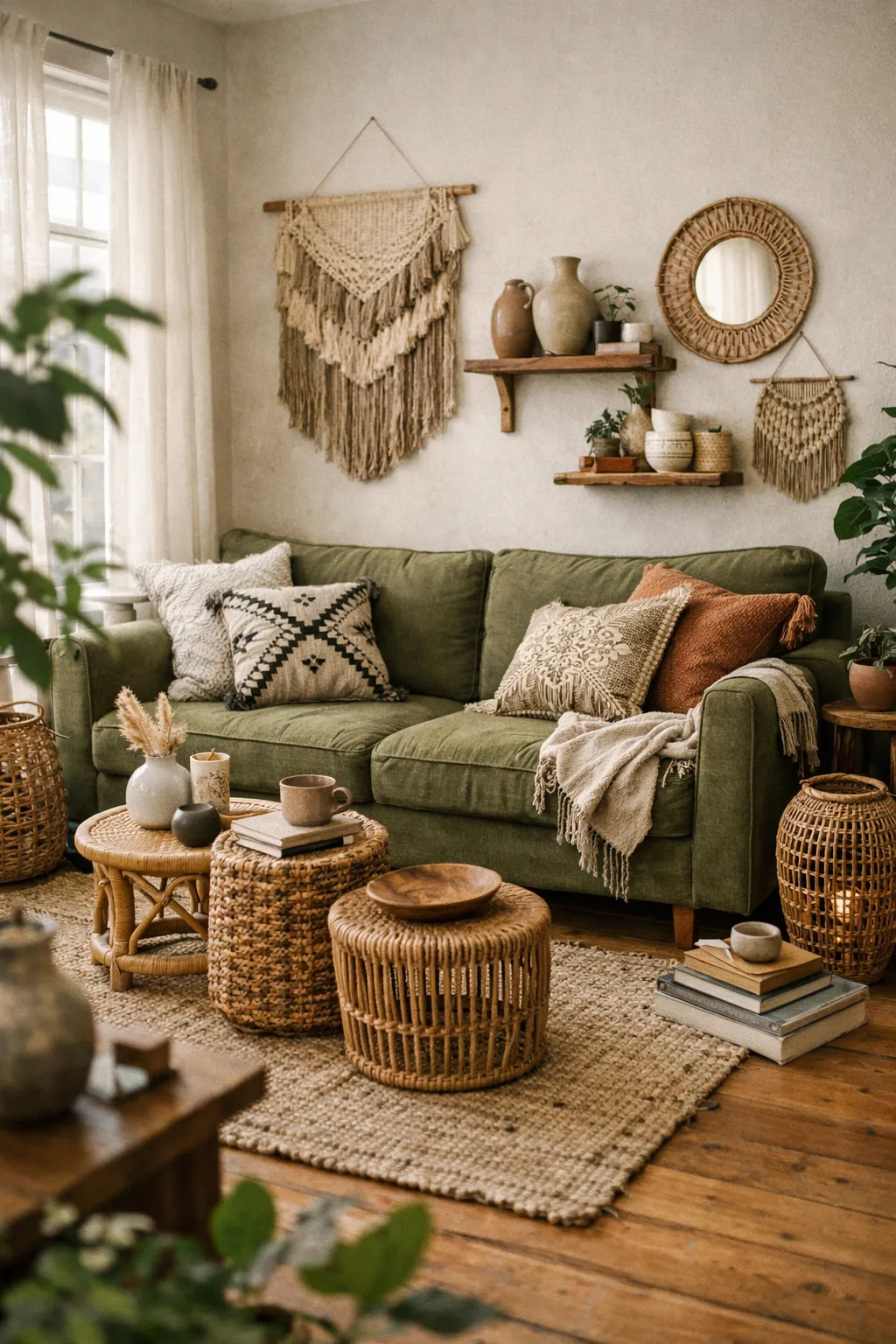
Design 4: Olive Green Boho Living Room
Olive green works beautifully in bohemian-style living rooms. The earthy tone pairs naturally with layered textures and handcrafted decor.
A typical olive green boho living room might include:
• olive green seating
• woven wall hangings
• patterned throw pillows
• wooden stools or side tables
• plenty of indoor plants
The goal is to create a relaxed and collected space where textures play a major role in the overall design.
Design 5: Green and Neutral Organic Modern Living Room
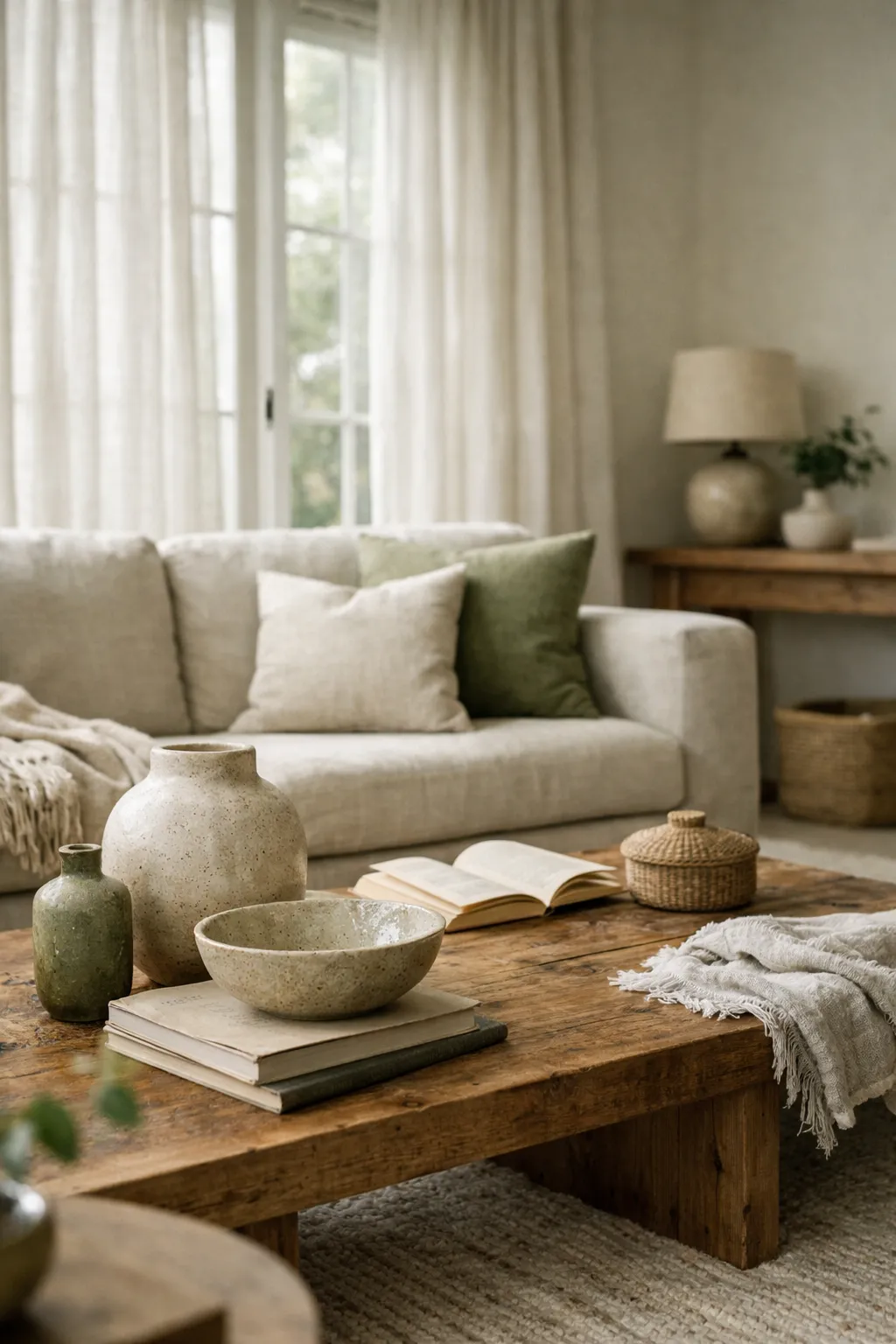
Organic modern interiors focus on natural materials and calming palettes. Muted green tones fit perfectly within this style.
Instead of bright colors, choose shades like eucalyptus or moss green. These blend seamlessly with beige sofas, warm wood tables, and ceramic decor.
An organic modern green living room often features:
• neutral furniture with green accent pillows
• wood coffee tables with visible grain
• linen curtains
• textured rugs
The result is a clean and minimal living room that still feels warm and welcoming.
Design 6: Layered Green Textiles
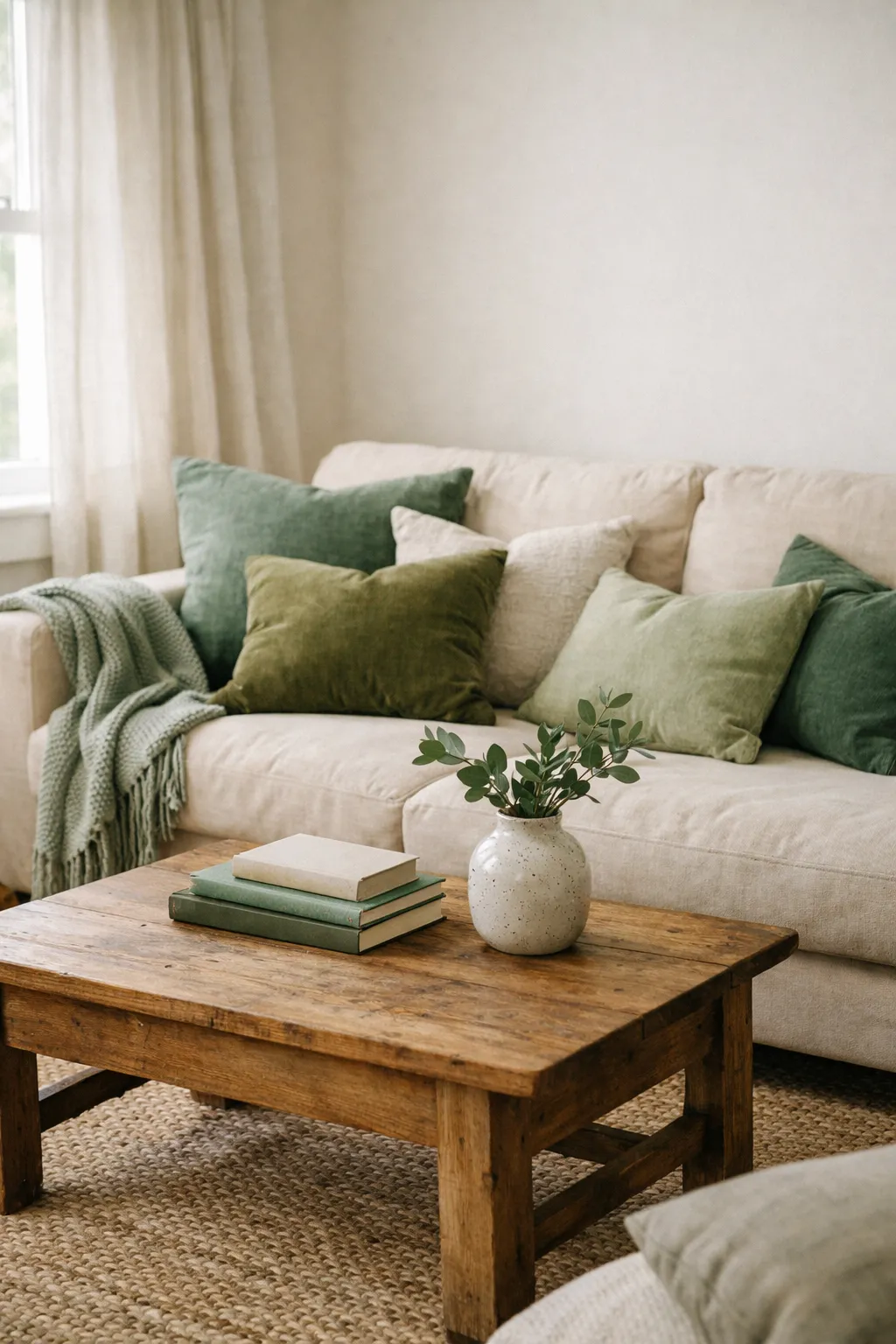
Not everyone wants to repaint walls or buy new furniture. Layering green textiles is a simple way to introduce color gradually.
Start with neutral furniture and add green through:
• throw pillows
• knit blankets
• patterned rugs
• fabric ottomans
Mix different shades of green to create depth while keeping the base of the room neutral.
This approach works well for renters or anyone looking for a low-commitment decorating update.
Design 7: Botanical Living Room with Plants
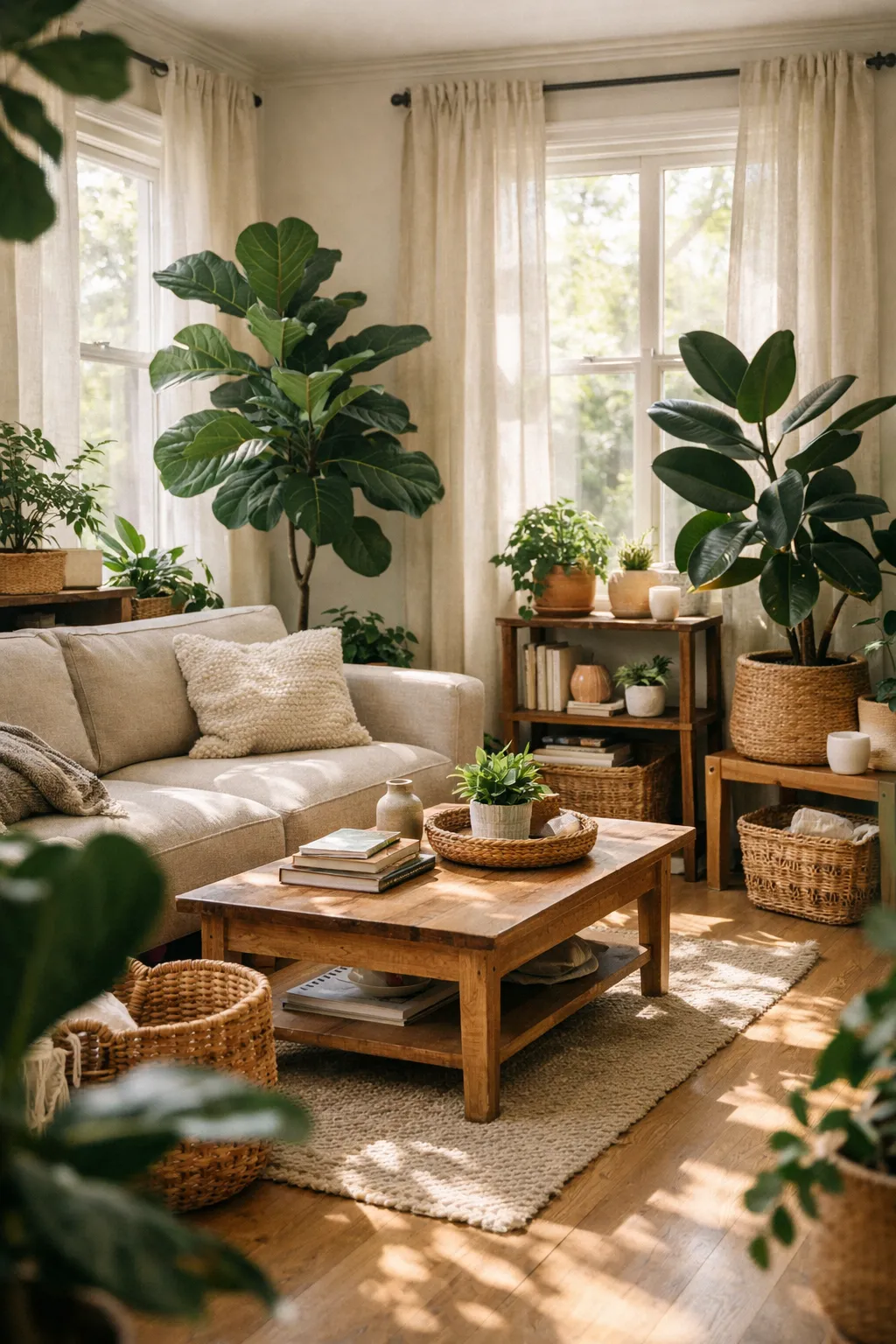
Nothing complements green decor better than real plants. A botanical-inspired living room uses greenery as both decoration and atmosphere.
Large plants like fiddle leaf figs or rubber trees can fill empty corners, while smaller plants can sit on shelves and coffee tables.
Pair plants with natural materials such as wood, linen, and woven baskets to create a cohesive nature-inspired environment.
Natural light is essential for this design because it highlights the plants and keeps the room feeling lively.
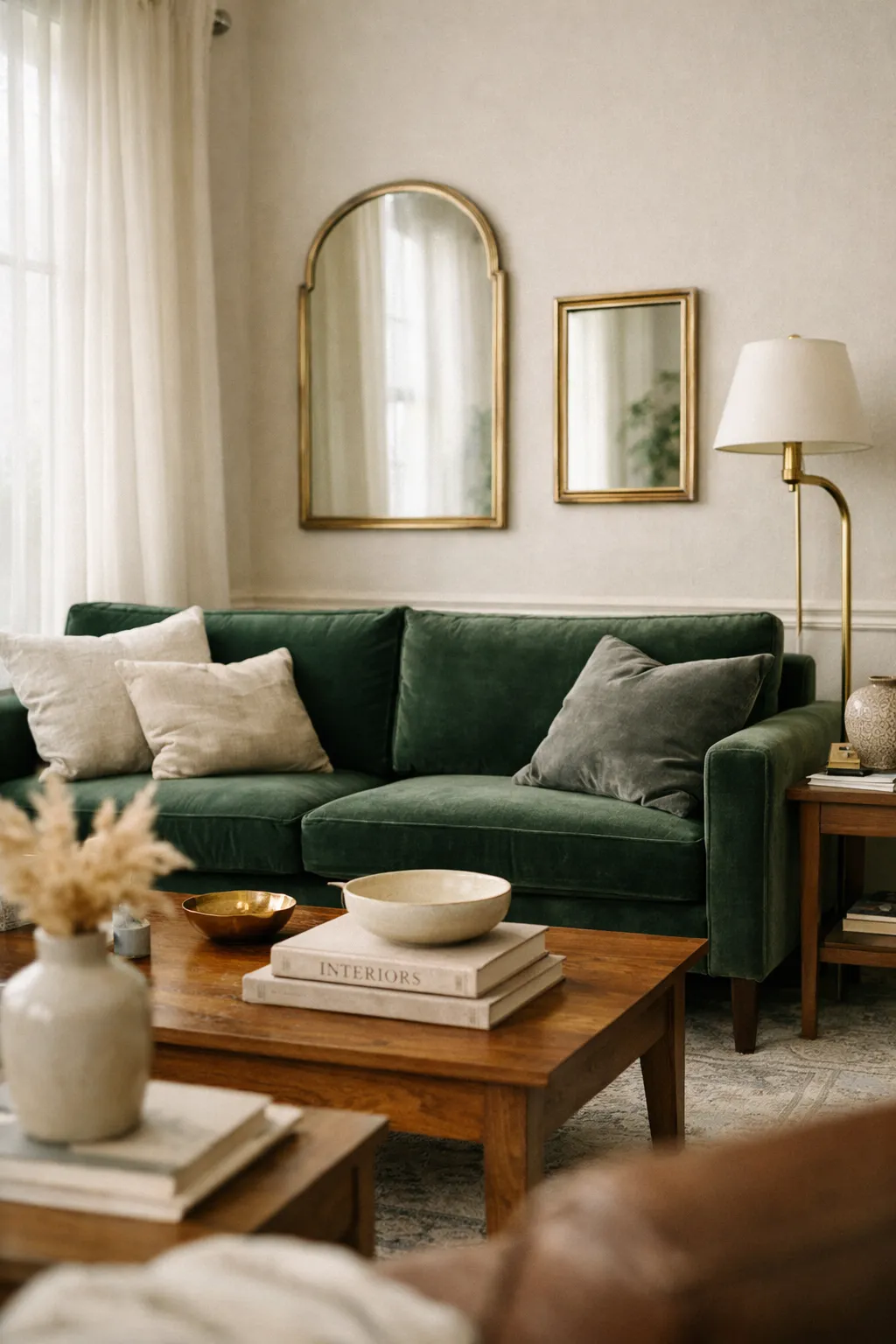
Design 8: Green and Brass Elegant Living Room
Green and brass create a timeless combination that feels elegant and sophisticated.
Deep green furniture or walls pair beautifully with brass lighting fixtures, mirror frames, and decorative trays.
To keep the look balanced, add soft neutral fabrics like cream sofas or beige curtains. This prevents the metallic accents from feeling overwhelming.
This style works well in formal living rooms where a slightly polished look is desired.
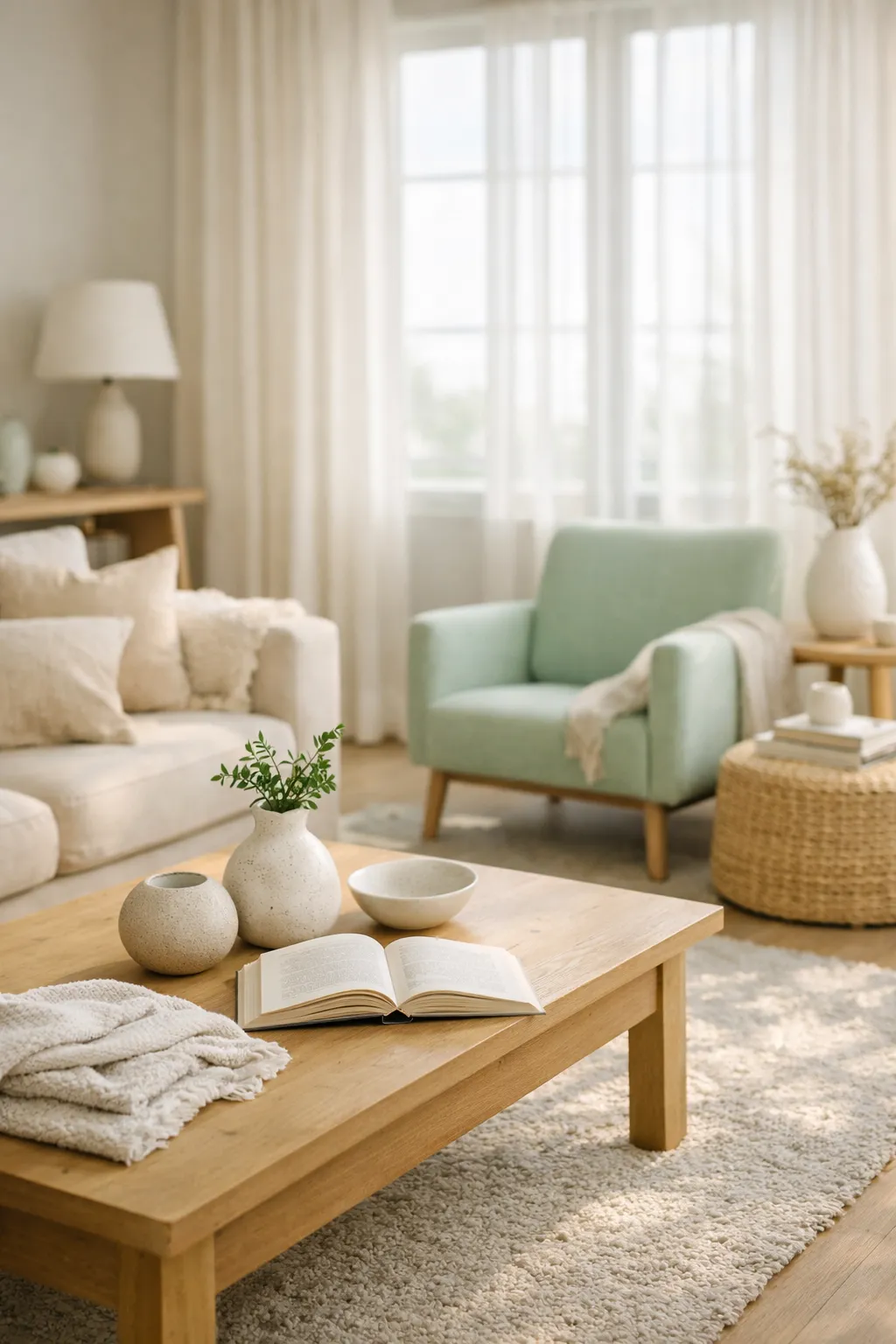
Design 9: Soft Mint Green for a Light Living Room
Mint green offers a lighter and fresher alternative to darker greens. It works particularly well in living rooms that aim for a bright, airy atmosphere.
Combine mint green accents with white or light beige furniture to keep the palette soft and clean.
Light woods, simple ceramics, and woven textures help maintain a relaxed and natural look.
Mint green works especially well in coastal-inspired or Scandinavian-style interiors.
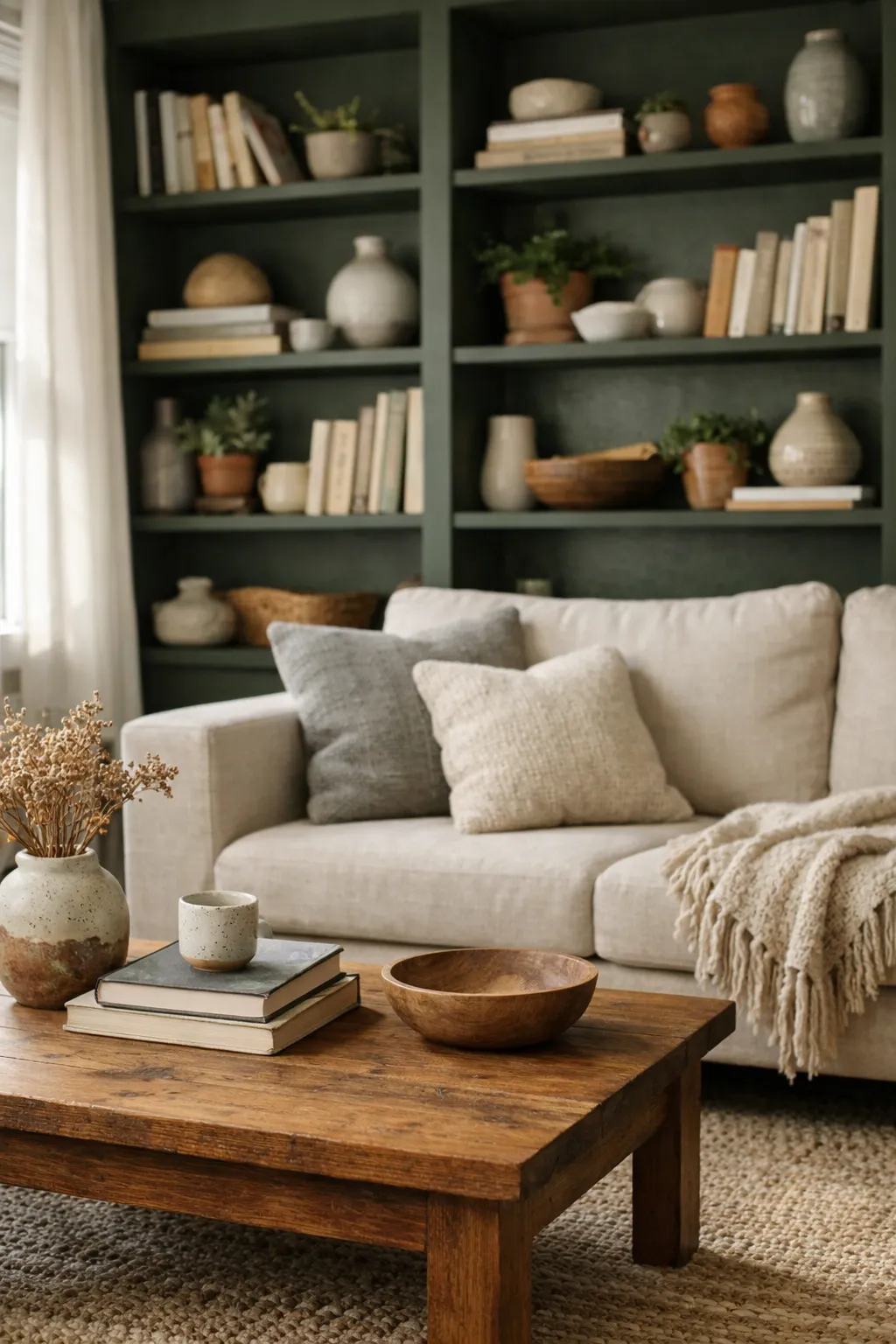
Design 10: Dark Green Built-In Shelving
Built-in shelving painted in a deep green shade can instantly add character to a living room. Instead of painting the entire room, using green on shelves creates a focused design feature while keeping the rest of the space neutral.
Forest or hunter green works particularly well for built-ins because the darker color highlights books, ceramics, and decorative objects placed on the shelves. The contrast helps every item stand out more clearly.
Pair dark green shelving with warm wood furniture and soft neutral seating. This balance prevents the room from feeling heavy while still allowing the green to create depth.
Soft lighting from table lamps or wall sconces can also highlight the shelving in the evening, giving the room a cozy layered glow.
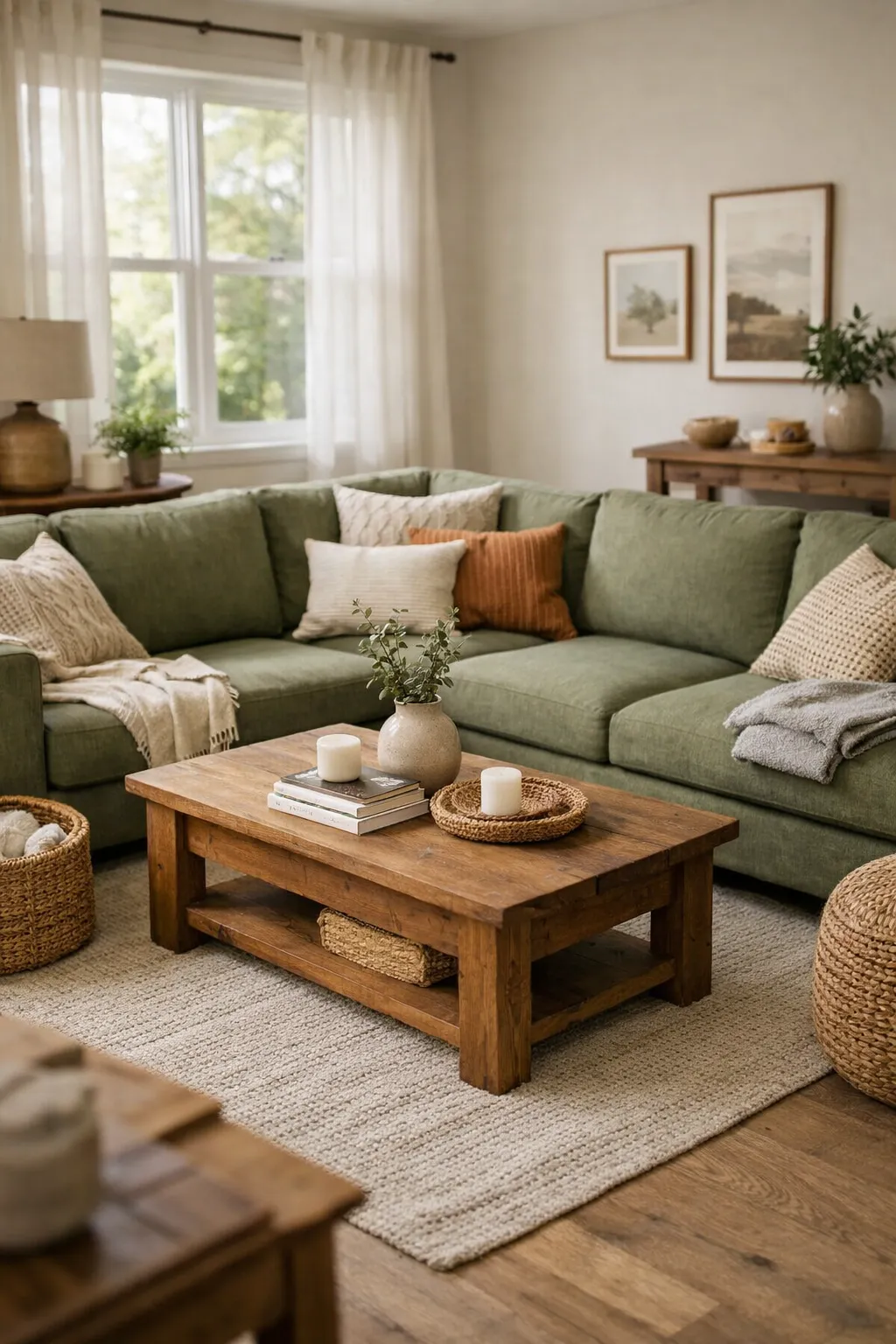
Design 11: Green Sectional for a Cozy Family Room
A green sectional sofa is a practical choice for larger living rooms or family spaces. The color adds personality while the sectional layout provides plenty of seating.
Choose a fabric that feels comfortable and durable such as performance fabric or soft chenille. Shades like olive or moss green tend to work well because they hide everyday wear while still looking stylish.
Balance the sectional with neutral elements such as a beige area rug, wooden coffee table, and soft textured pillows.
Layering different pillow textures like linen, cotton, and woven fabrics can help break up the large sofa visually.
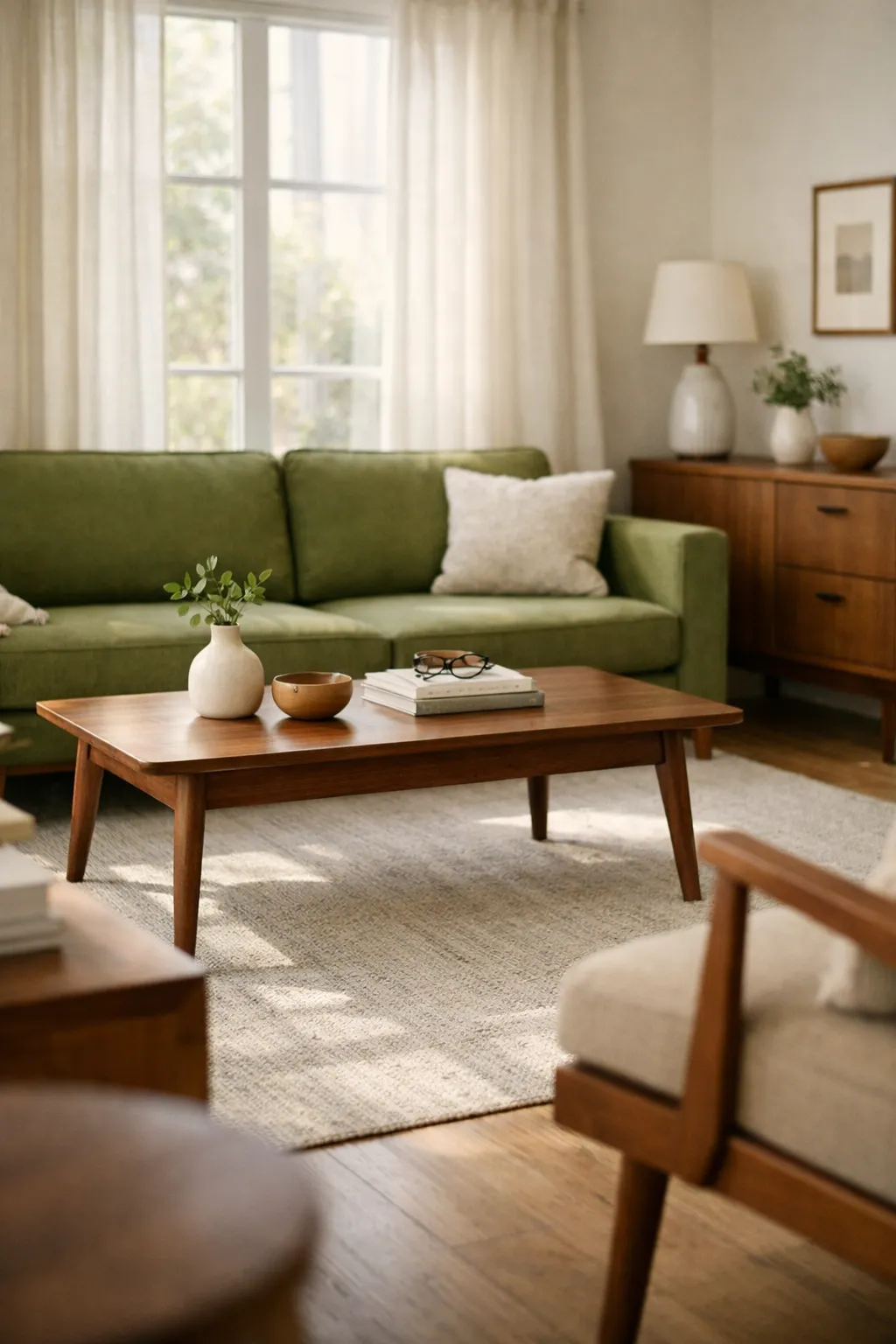
Design 12: Green and Wood Mid-Century Living Room
Green pairs beautifully with mid-century modern furniture. The warm wood tones often used in mid-century pieces create a natural harmony with green shades.
A classic setup might include a moss green sofa paired with walnut furniture, tapered legs, and simple geometric decor.
To keep the space balanced, use a neutral rug and minimal wall decor. Mid-century design works best when the room feels open and uncluttered.
A few carefully chosen accessories like a ceramic vase or sculptural lamp can add personality without overwhelming the room.
Design 13: Muted Green Accent Chairs
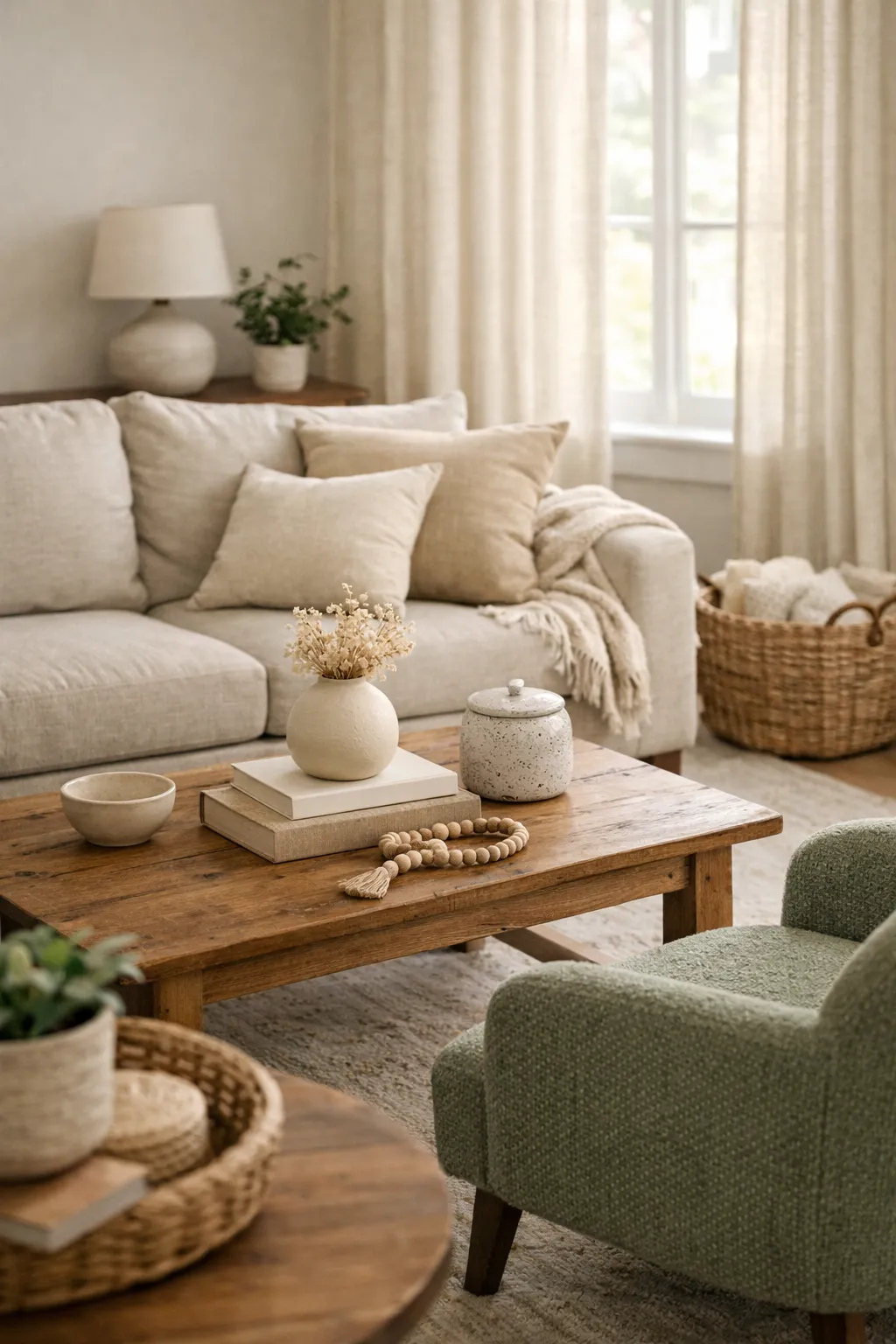
If you prefer subtle color additions, green accent chairs are a smart choice. They add personality to the room without dominating the overall design.
Muted shades like sage, moss, or olive tend to blend well with most color palettes.
Place the chairs opposite a neutral sofa or beside a coffee table to create a balanced seating arrangement.
Accent chairs also provide an opportunity to introduce texture through boucle, velvet, or woven fabrics.
Design 14: Green Curtains for Soft Color
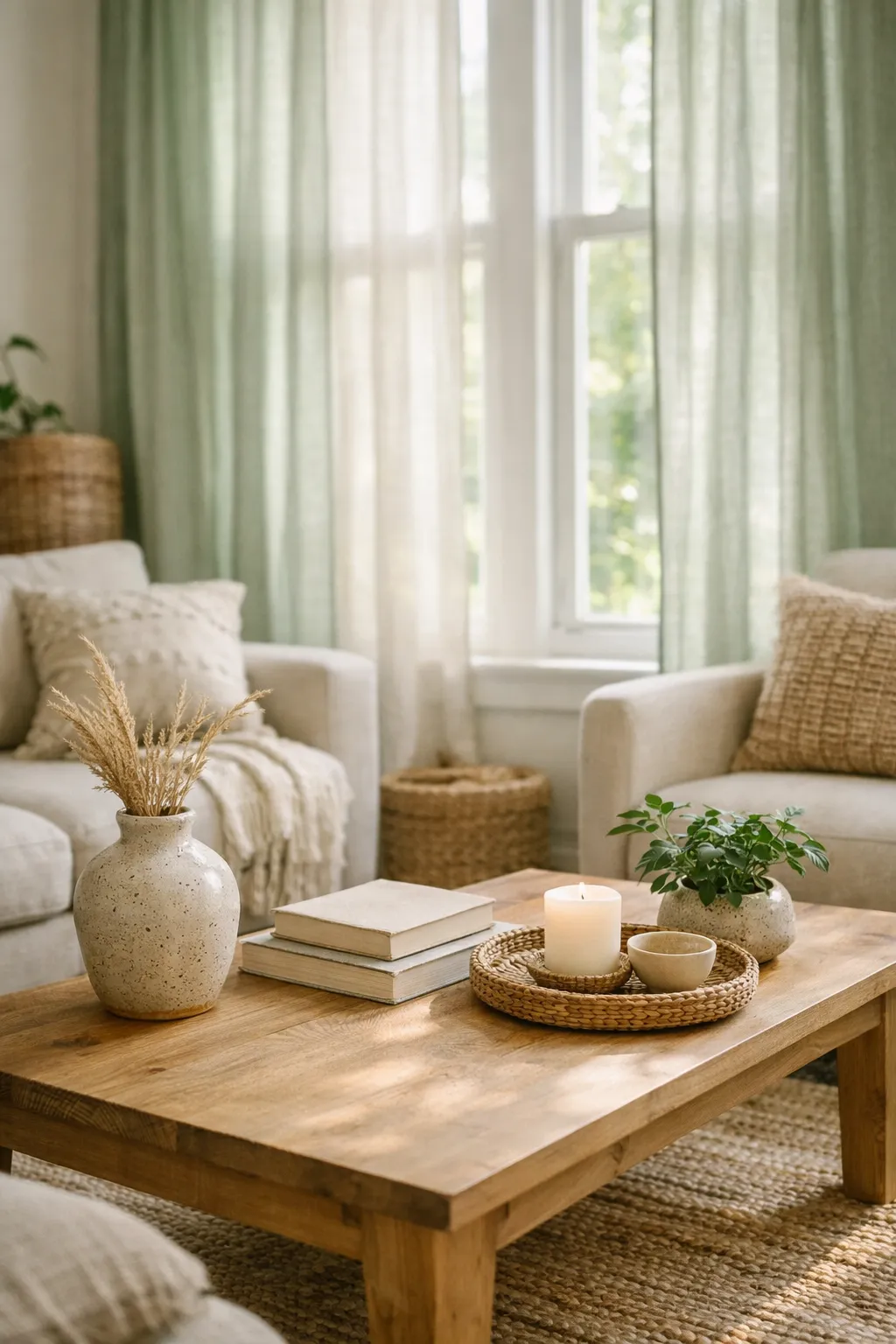
Curtains are often overlooked in living room design, but they can introduce color in a subtle and elegant way.
Soft green linen curtains can frame windows beautifully while allowing natural light to filter through the space.
This approach works particularly well in rooms with white or neutral walls. The curtains add color without requiring paint or major furniture changes.
Floor-length curtains also make ceilings appear taller, which can help smaller living rooms feel more spacious.
Design 15: Green Patterned Rug
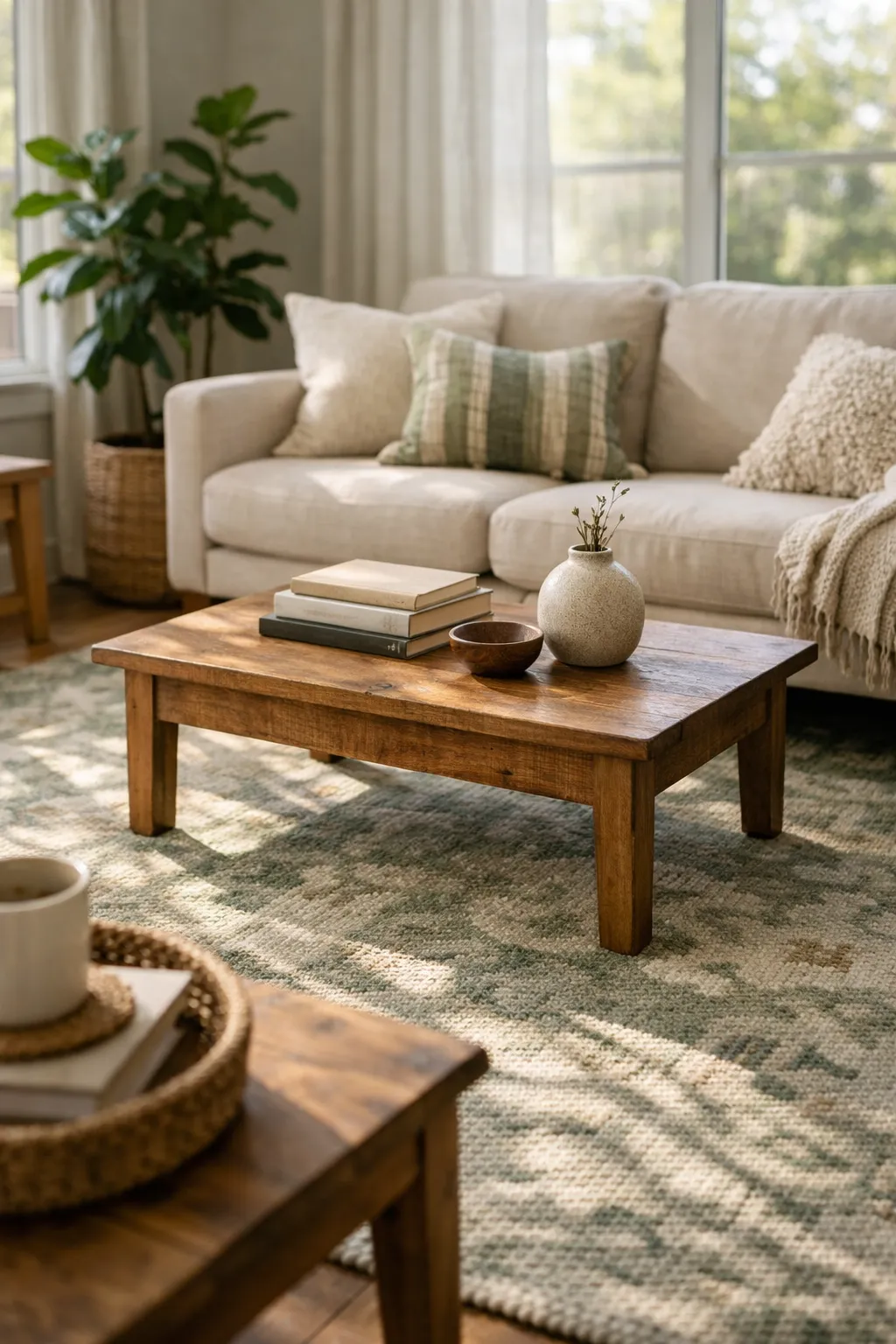
A patterned rug that incorporates green tones can tie an entire living room together.
Look for rugs that mix green with neutrals such as cream, beige, or gray. These combinations help ground the room while still adding visual interest.
Rugs with subtle vintage patterns often work well in transitional or eclectic spaces.
The rug becomes the anchor of the room, helping connect furniture pieces and create a cohesive color story.
Design 16: Green Gallery Wall Styling
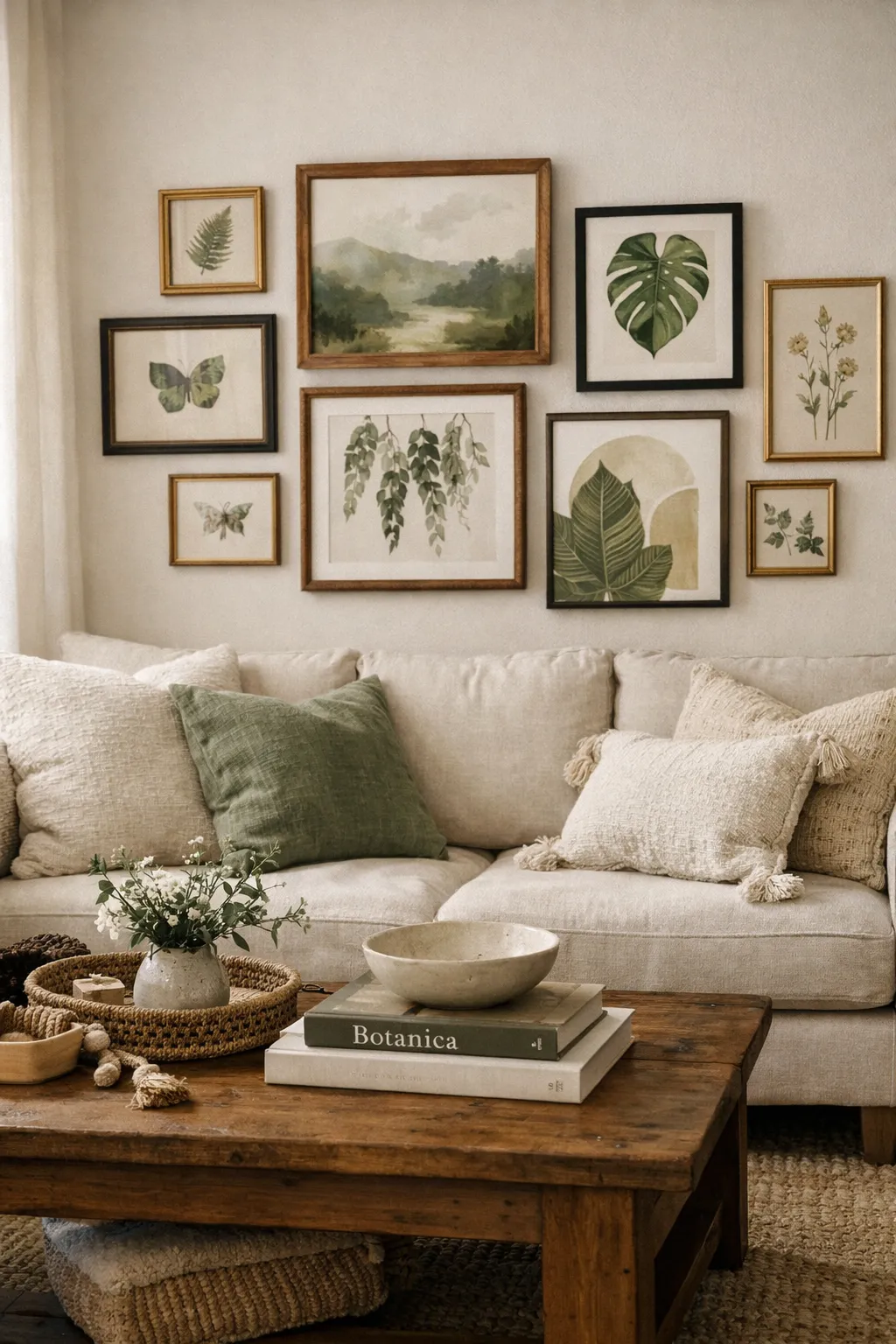
Artwork is another easy way to introduce green into a living room. Botanical prints, landscape paintings, or abstract pieces with green tones can build a cohesive gallery wall.
Mix different frame styles such as wood, black metal, or brass to create a collected look.
When arranging a gallery wall, maintain consistent spacing between frames to keep the display balanced.
This approach works well for renters or homeowners who prefer decorating with art rather than paint.
Design 17: Deep Green Cozy Reading Corner
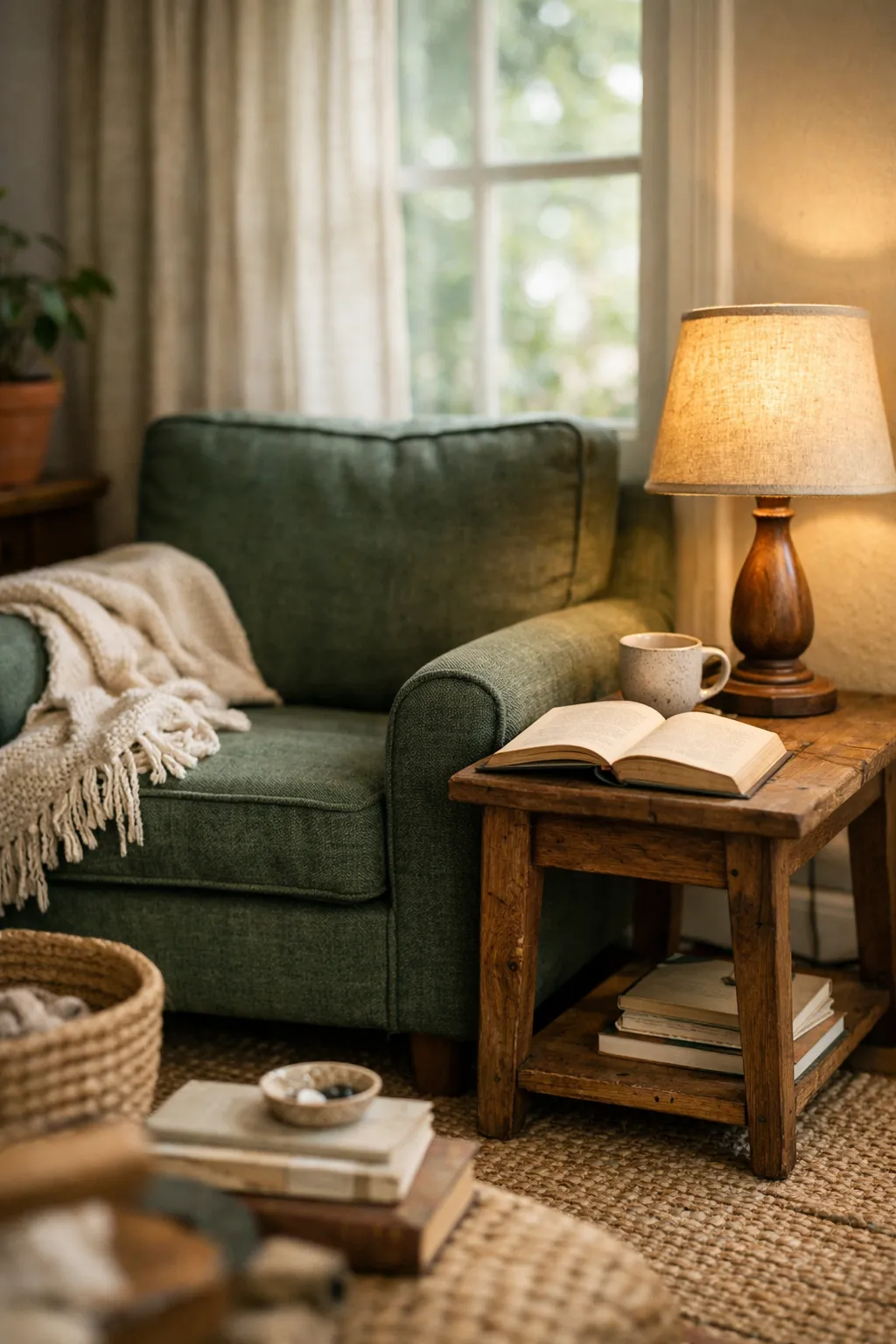
A small reading corner with deep green tones can add warmth and personality to a living room.
Start with a comfortable armchair in a dark green fabric. Add a soft throw blanket, a small side table, and a warm table lamp.
Place the reading chair near a window if possible so natural light can brighten the area during the day.
In the evening, layered lighting from the lamp creates a relaxing atmosphere that encourages quiet reading or conversation.
A small plant or stack of books on the side table can make the corner feel more personal and lived-in.
Comparison Table: Choosing the Right Green for Your Living Room
| Green Shade | Best Use | Room Style |
|---|---|---|
| Sage Green | Walls and calm palettes | Organic modern, Scandinavian |
| Emerald Green | Statement furniture | Modern, glam |
| Forest Green | Accent walls or built-ins | Traditional, transitional |
| Olive Green | Relaxed layered spaces | Boho, natural |
| Mint Green | Light bright rooms | Coastal, minimalist |
Choosing the right shade often depends on how much natural light your living room receives and how bold you want the design to feel.
Final Thoughts
Green is one of the most versatile colors in home decor. It can feel calm and subtle or bold and dramatic depending on the shade and how it is used.
Whether you introduce green through walls, furniture, textiles, or plants, the key is balance. Pair green with warm woods, soft neutral fabrics, and layered lighting to create a living room that feels welcoming and timeless.
Even small touches like pillows, curtains, or artwork can bring the refreshing feeling of nature indoors. With thoughtful styling, green can transform an ordinary living room into a space that feels relaxed, stylish, and full of life.