

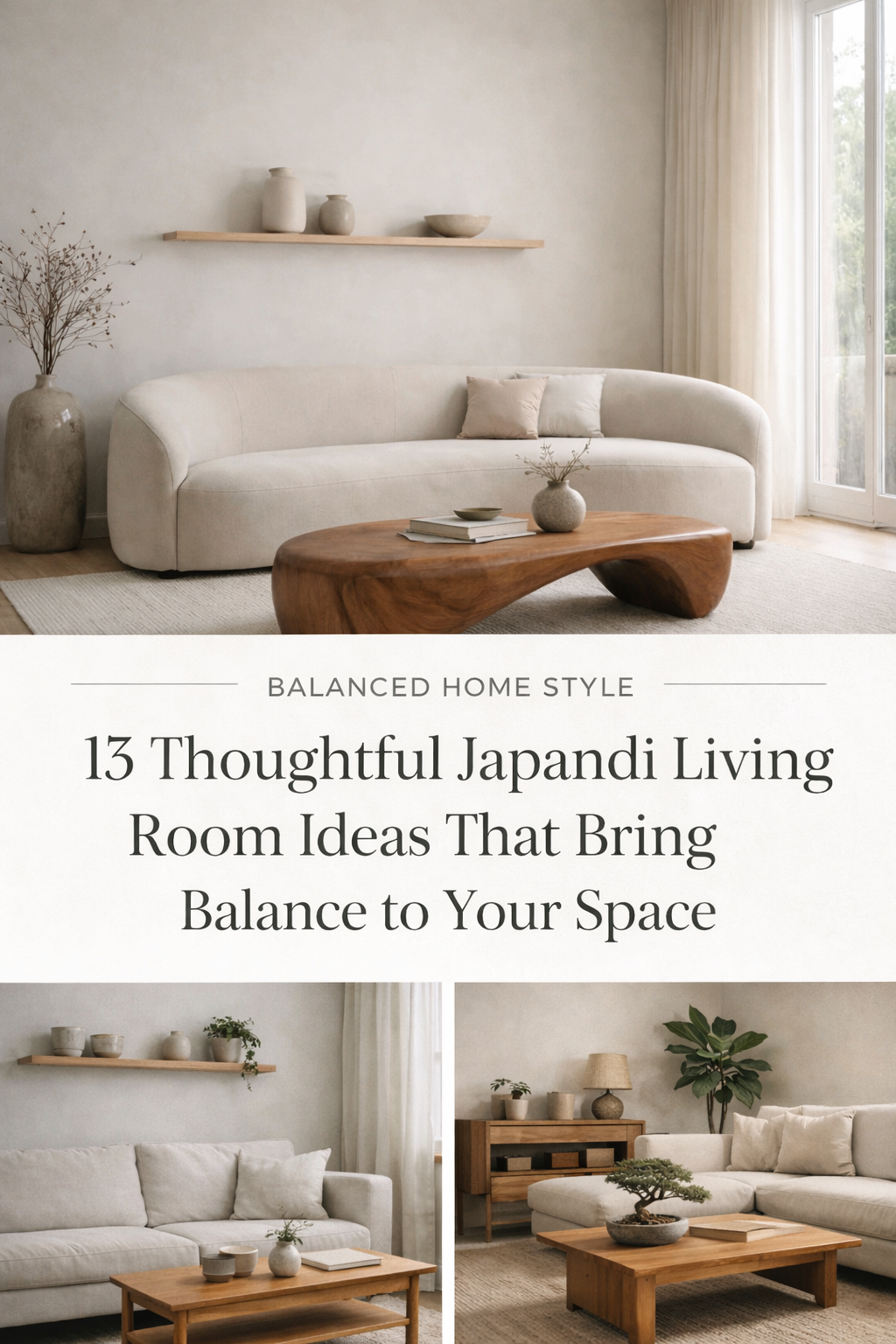
Japandi style has quickly become one of the most loved interior styles in modern homes. It combines the calm simplicity of Japanese interiors with the warmth and comfort of Scandinavian design. The result is a living room that feels peaceful, balanced, and welcoming without unnecessary clutter.
Many homeowners want a space that feels relaxing after a busy day. Japandi design answers that need by focusing on natural materials, simple layouts, and soft color palettes. Instead of filling a room with decoration, the style emphasizes thoughtful choices that create harmony.
A Japandi living room does not need to feel empty or strict. With the right textures, lighting, and furniture, it can feel warm, stylish, and livable.
Below are thirteen Japandi living room ideas that show how minimalist Zen style can work in real homes.
1. Light Neutral Japandi Living Room
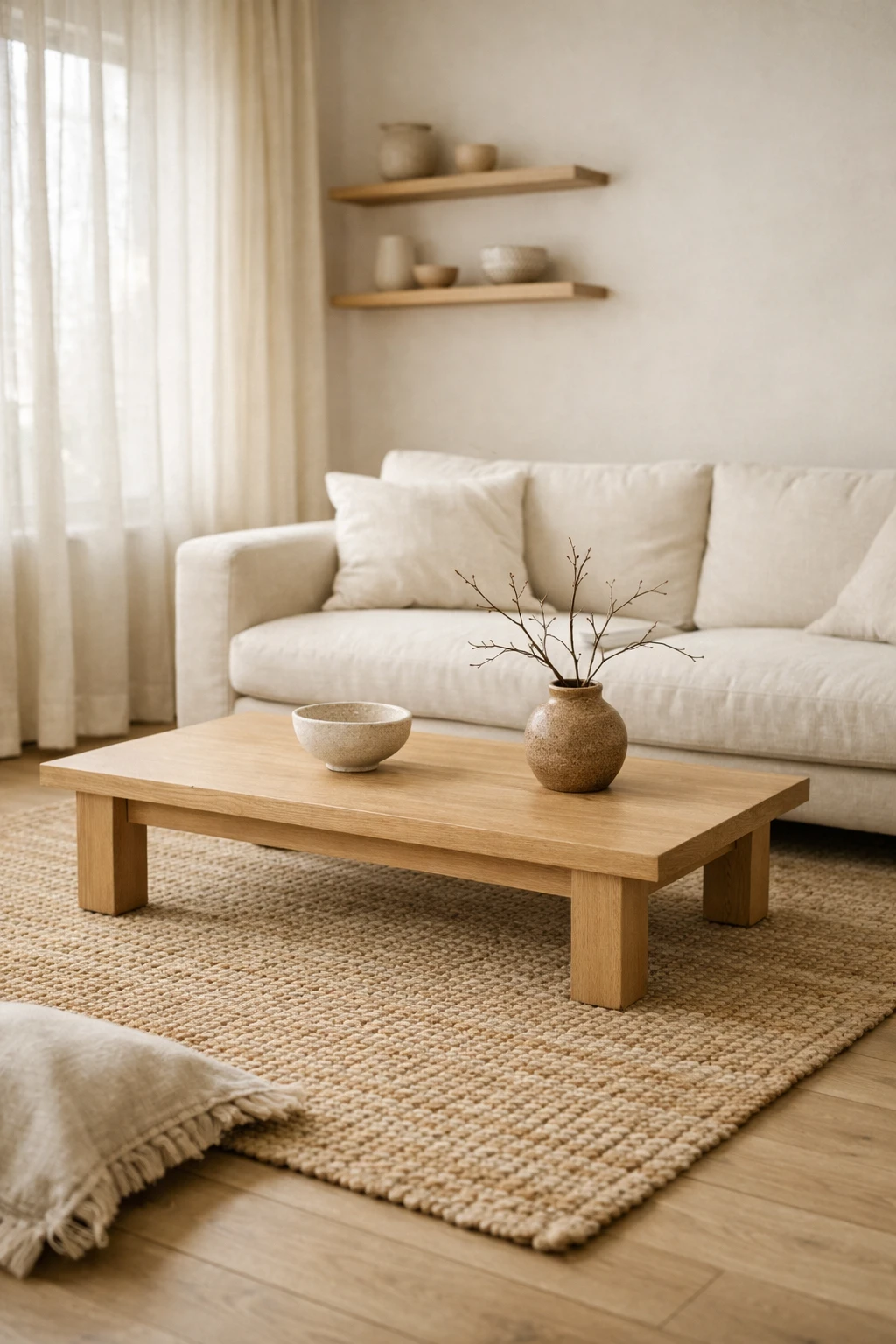
A light neutral palette is one of the easiest ways to create a Japandi-inspired living room. Soft whites, warm beige tones, and pale wood surfaces create a calming environment that feels open and airy.
A linen sofa in a cream shade works well as the central piece. Pair it with a light oak coffee table and a woven area rug to add gentle texture. Low-profile furniture keeps the room grounded and relaxed.
Decor should stay intentional. A handmade ceramic vase with simple branches or dried grasses adds visual interest without clutter.
Large windows allow natural daylight to fill the space. This natural lighting enhances the softness of neutral tones and highlights wood textures throughout the room.
2. Warm Wood Japandi Living Room
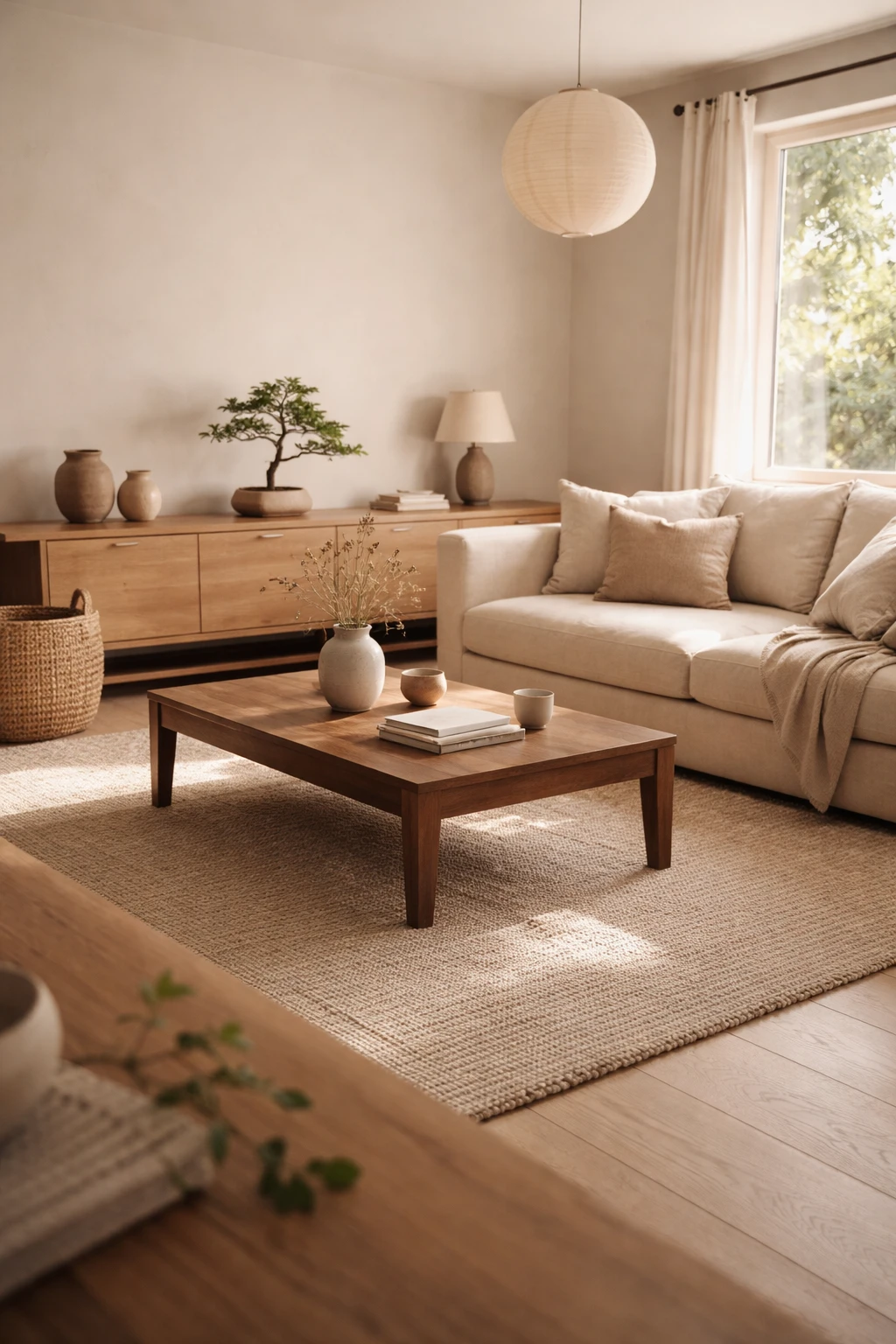
Wood plays a major role in Japandi interiors. A living room built around warm wood tones instantly feels grounded and inviting.
Choose furniture made from oak, walnut, or ash. A wooden coffee table, open shelving, and a low media console can define the space while maintaining a minimalist layout.
Balance the wood with soft fabrics such as linen cushions or cotton throws. These materials prevent the room from feeling too heavy.
Small decorative items like clay bowls or stone planters keep the design simple but thoughtful.
3. Cozy Textured Japandi Living Room
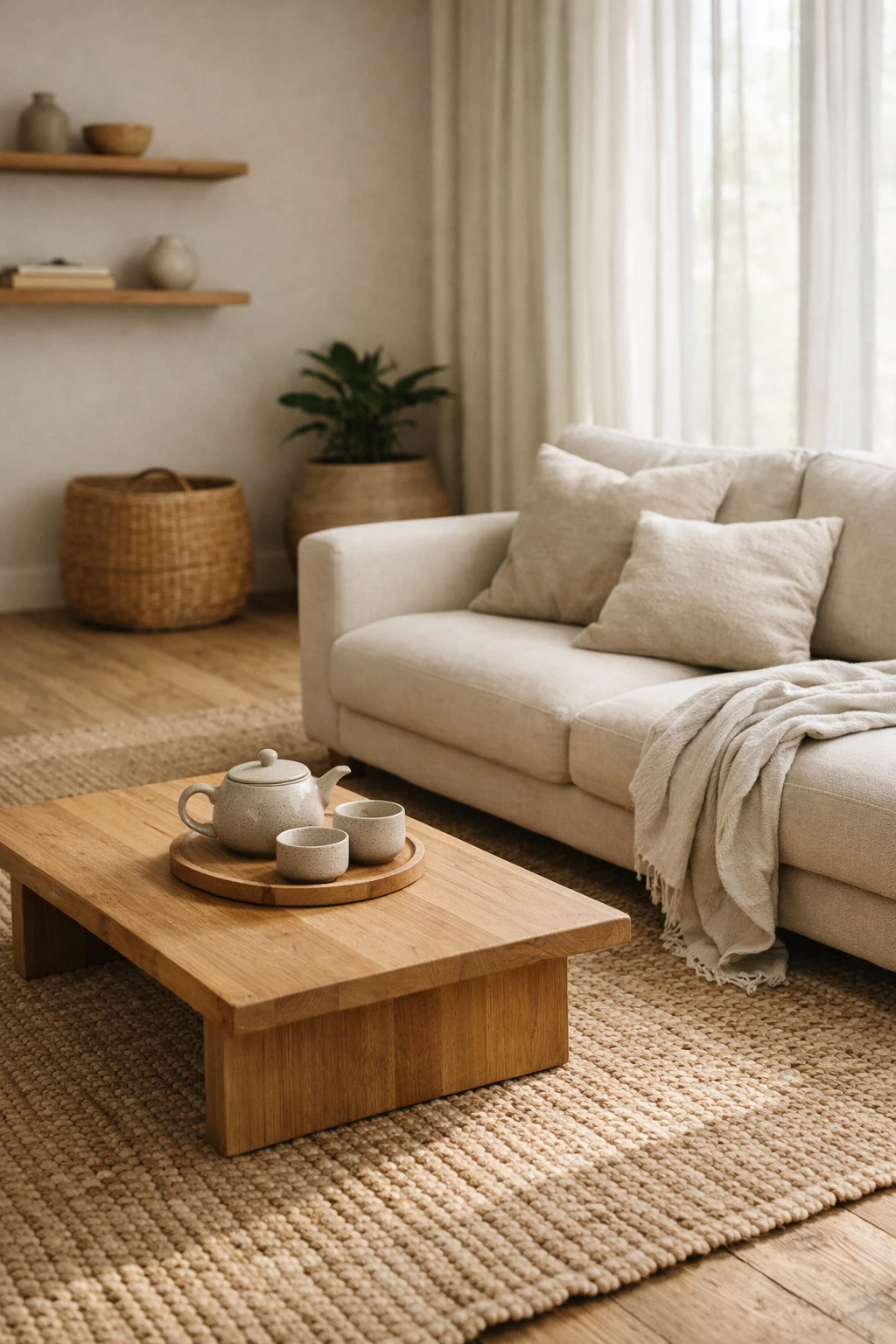
Minimal design does not mean a room must feel flat. Texture adds depth while maintaining simplicity.
Layer different materials such as:
• linen cushions
• woven rugs
• cotton throws
• ceramic decor
• natural wood surfaces
A soft neutral sofa paired with textured pillows creates comfort without visual noise.
This approach works well for families who want a relaxed Japandi living room that still feels warm and inviting.
4. Small Apartment Japandi Living Room
Japandi style works extremely well in small living rooms because the philosophy focuses on simplicity and functionality.
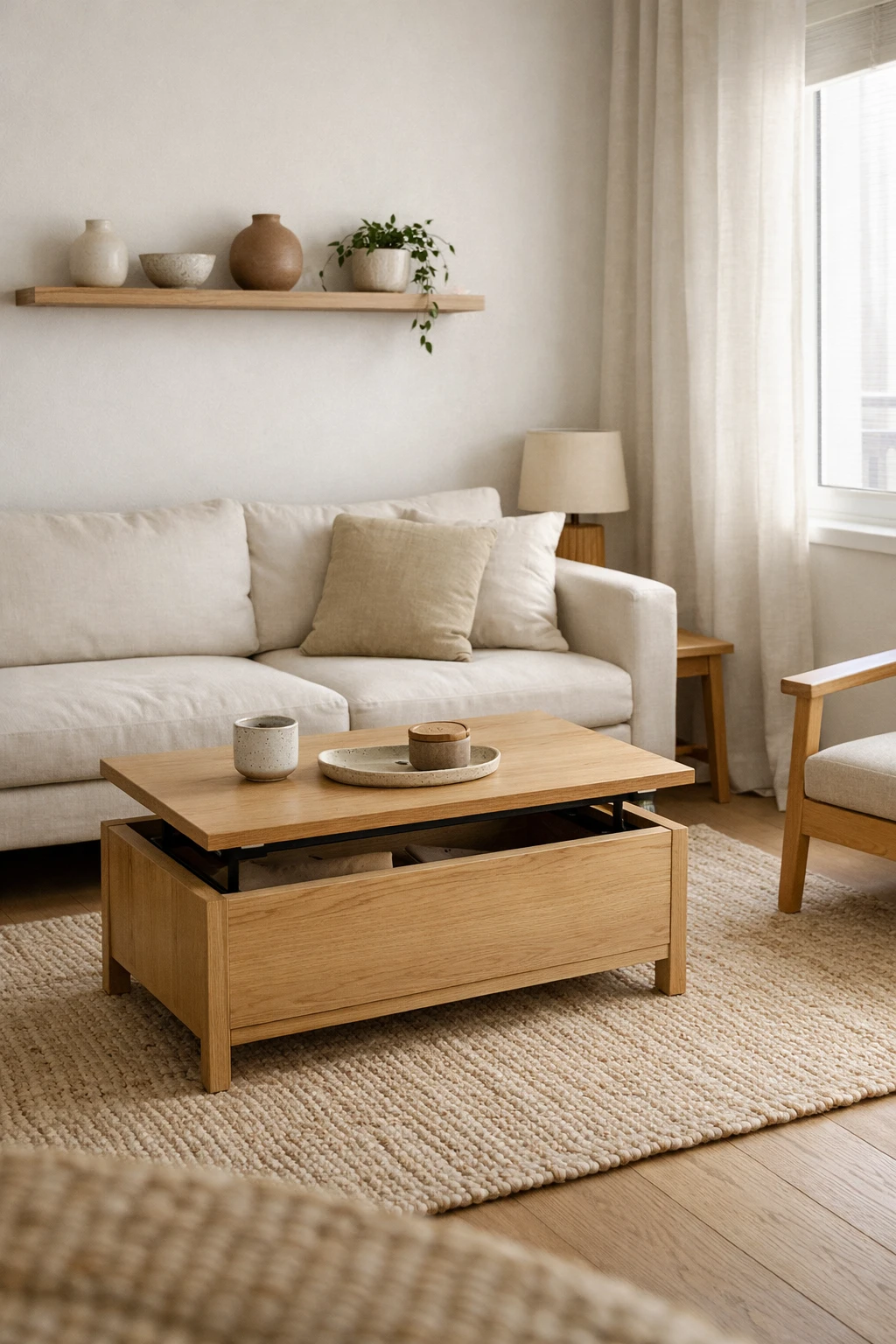
Choose furniture that serves multiple purposes. A low storage coffee table can provide hidden organization while maintaining a clean look.
Keep colors light to make the space feel larger. Avoid overcrowding the room with decor.
Wall-mounted shelves and minimal artwork help maintain visual openness.
Even in small apartments, a calm Japandi atmosphere can make the living room feel peaceful and spacious.
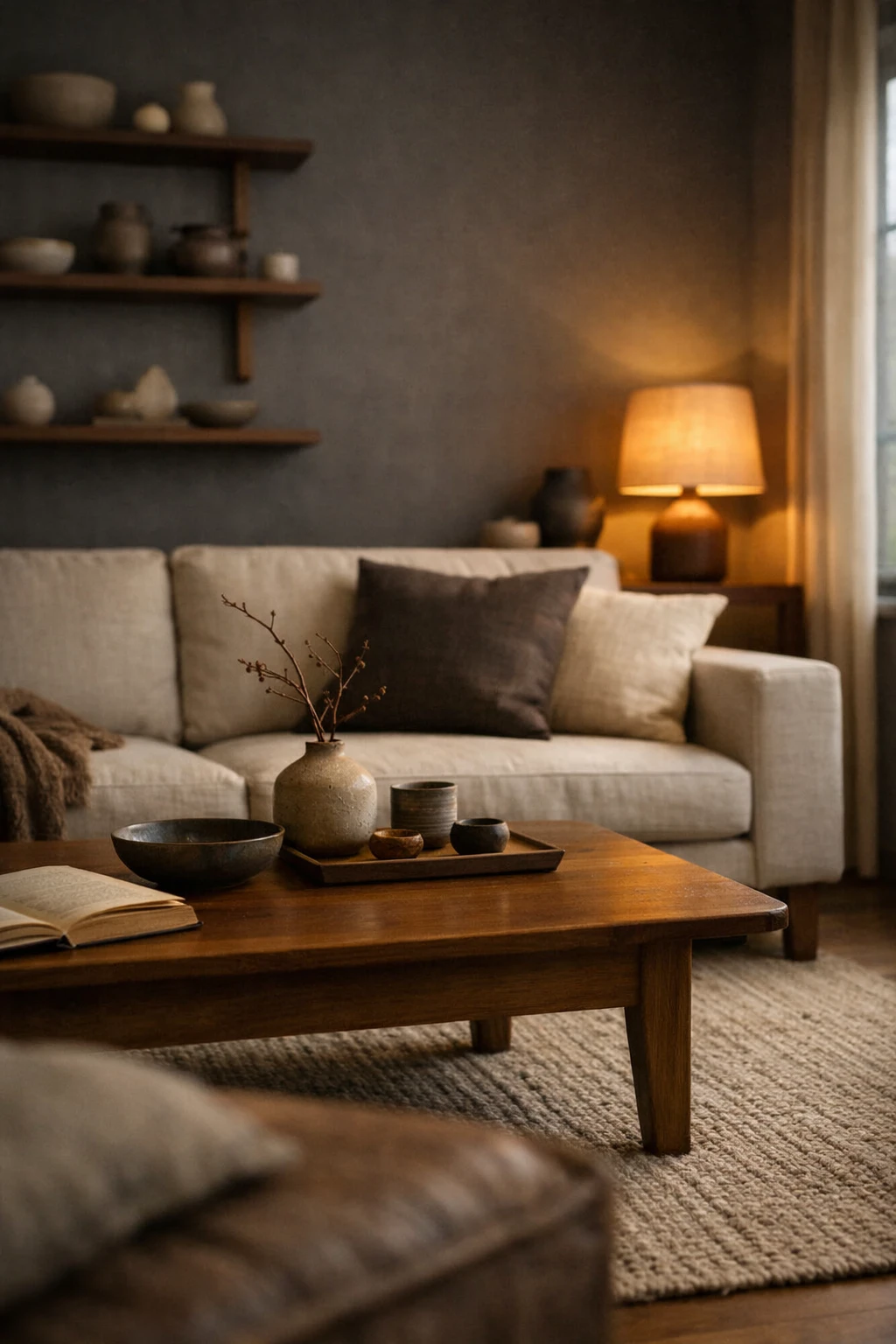
5. Dark Tone Japandi Living Room
While many Japandi interiors use light colors, darker tones can also create a stunning atmosphere.
Charcoal walls, deep brown wood, and black accents can produce a dramatic yet calm environment.
Balance darker elements with lighter fabrics such as beige sofas or neutral rugs.
Soft lighting becomes especially important in darker rooms. Warm lamps and layered lighting prevent the space from feeling too heavy.
6. Nature Inspired Japandi Living Room
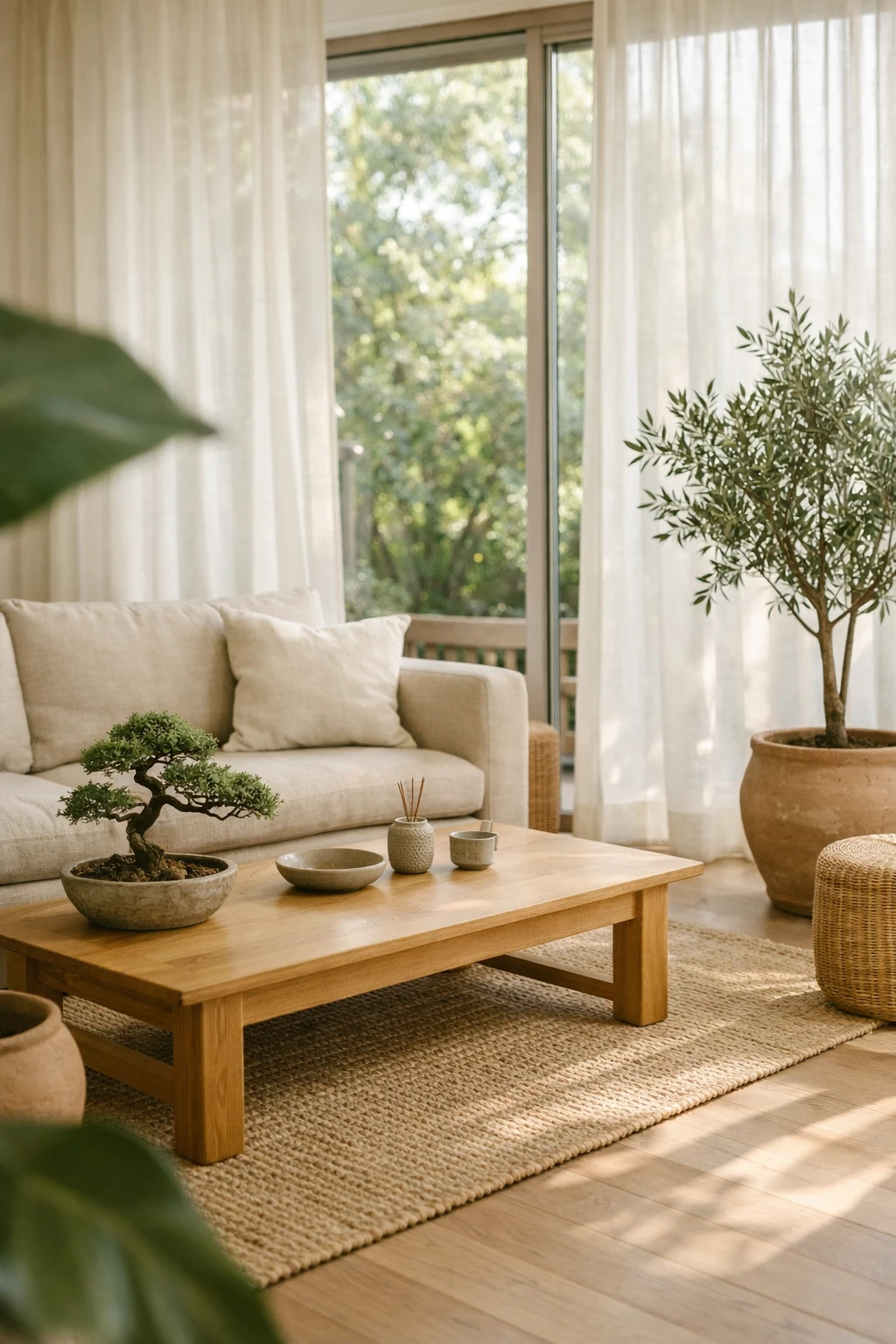
Japandi design often connects interior spaces with nature. This approach focuses on organic materials and natural greenery.
Add simple indoor plants such as olive trees, ficus, or bonsai to bring life into the room.
Use stone decor pieces, wooden furniture, and linen textiles to reinforce the natural theme.
Natural light should remain a priority. The combination of sunlight and greenery creates a peaceful Zen-like atmosphere.
7. Minimalist Zen Sitting Area
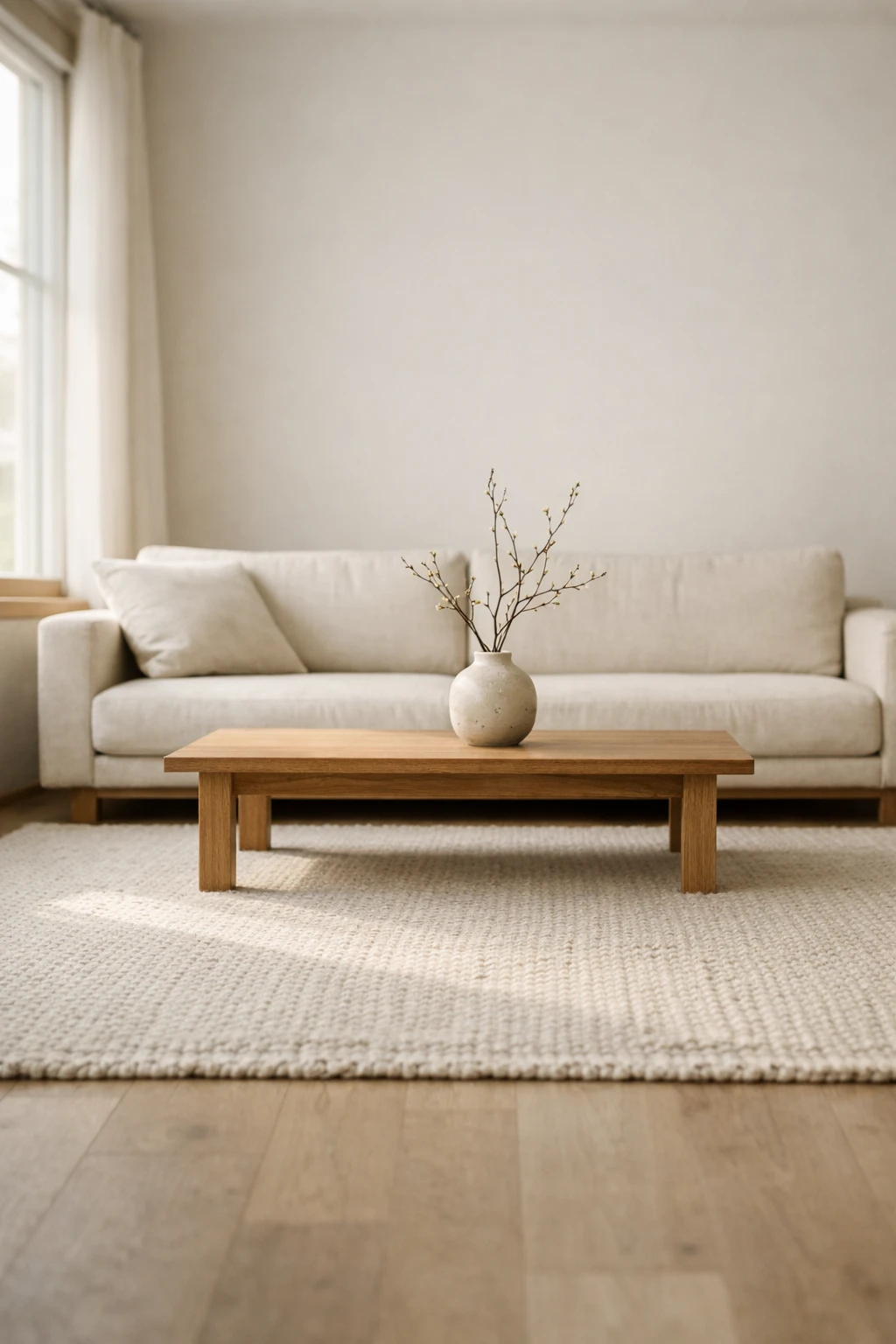
A minimalist Zen-inspired living room focuses on calm and balance above everything else.
Furniture should remain simple and limited. A low sofa, small wooden coffee table, and neutral rug may be all the room needs.
Decor stays extremely minimal. One or two carefully selected items such as a sculptural ceramic vase or handmade bowl can define the space.
The goal is to create a living room that feels uncluttered and emotionally calming.
8. Japandi Living Room with Indoor Plants
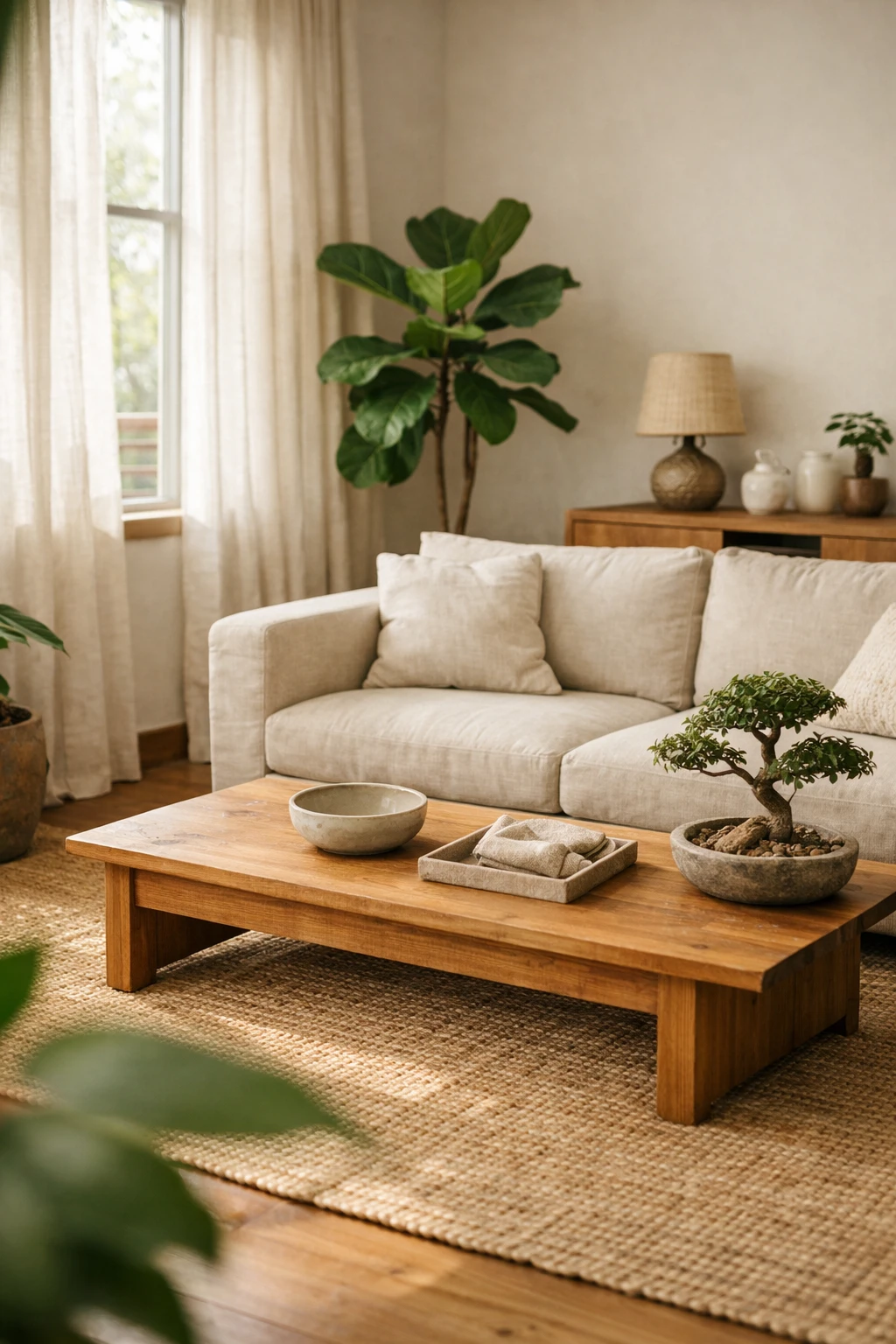
Plants can add life and softness to minimalist interiors. In a Japandi living room, greenery acts as natural decoration.
Large leafy plants like monstera or fiddle leaf fig can become subtle focal points.
Place them in simple clay or stone planters that match the natural palette of the room.
Plants soften the edges of minimalist furniture while keeping the design organic and balanced.
9. Modern Japandi Living Room
Some homeowners prefer a slightly more modern interpretation of Japandi style.
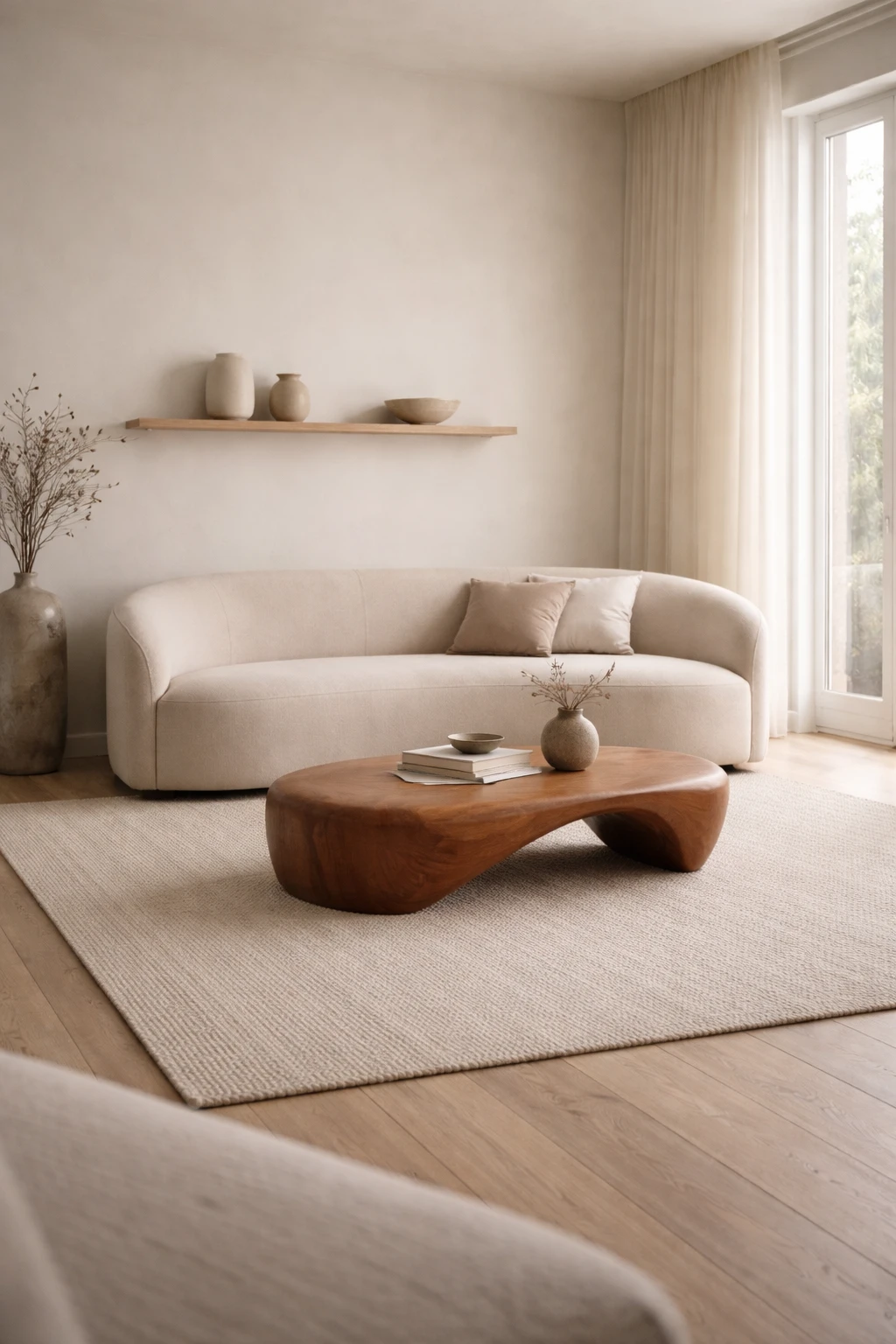
This approach introduces sculptural furniture shapes while maintaining the minimalist philosophy.
A curved sofa, statement coffee table, or abstract ceramic sculpture can create visual interest.
Keep colors calm and neutral so the modern elements do not overpower the peaceful atmosphere.
10. Compact Urban Japandi Living Room
Urban homes often have limited space, but Japandi design works well in compact layouts.
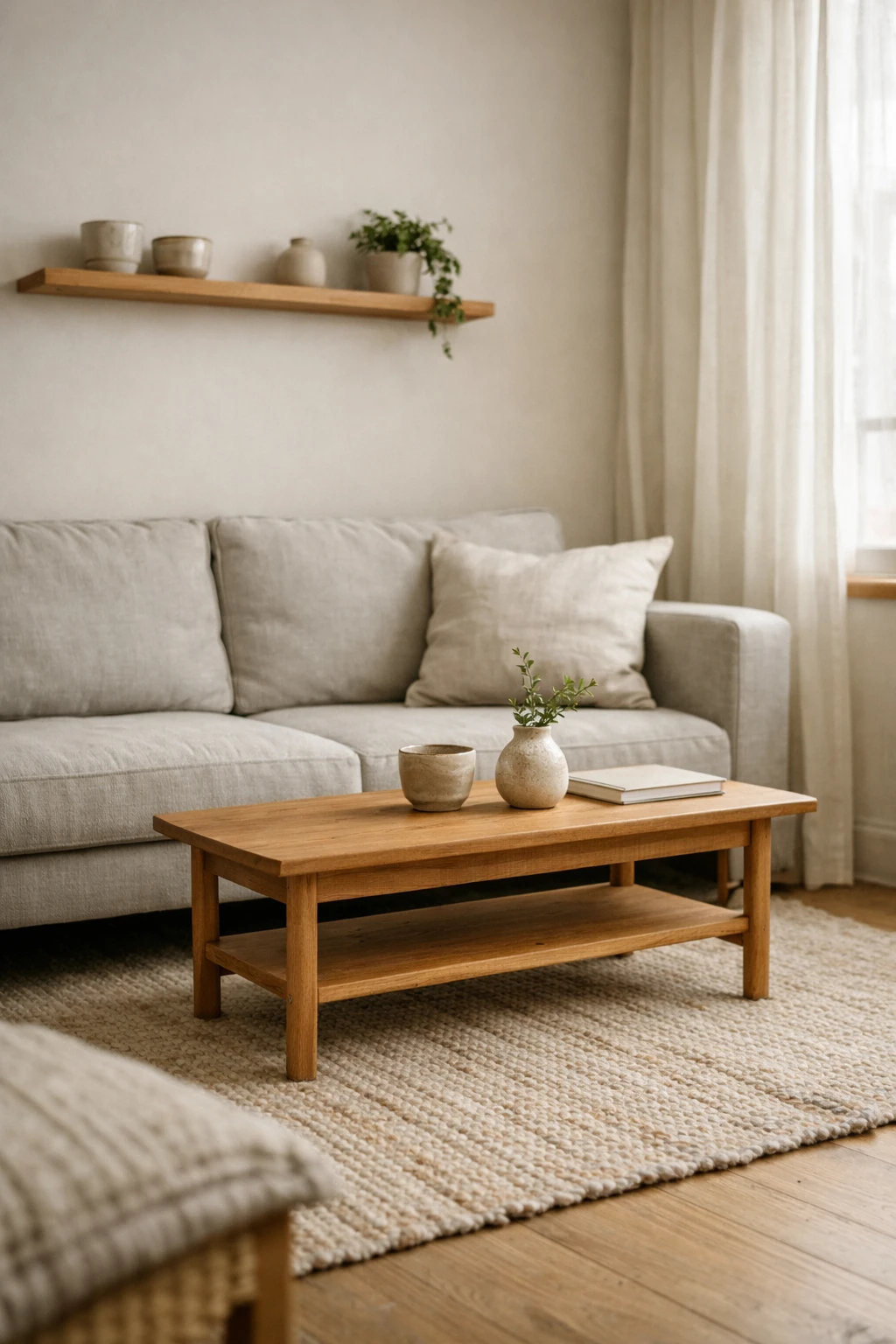
Focus on clean lines and efficient furniture placement. Avoid bulky pieces that overwhelm the room.
A slim sofa, narrow coffee table, and open shelving can keep the space functional while maintaining visual lightness.
Simple decor ensures the room remains calm despite the smaller size.
11. Natural Texture Japandi Living Room
Texture can become the main design feature in a Japandi living room.
Consider materials such as:
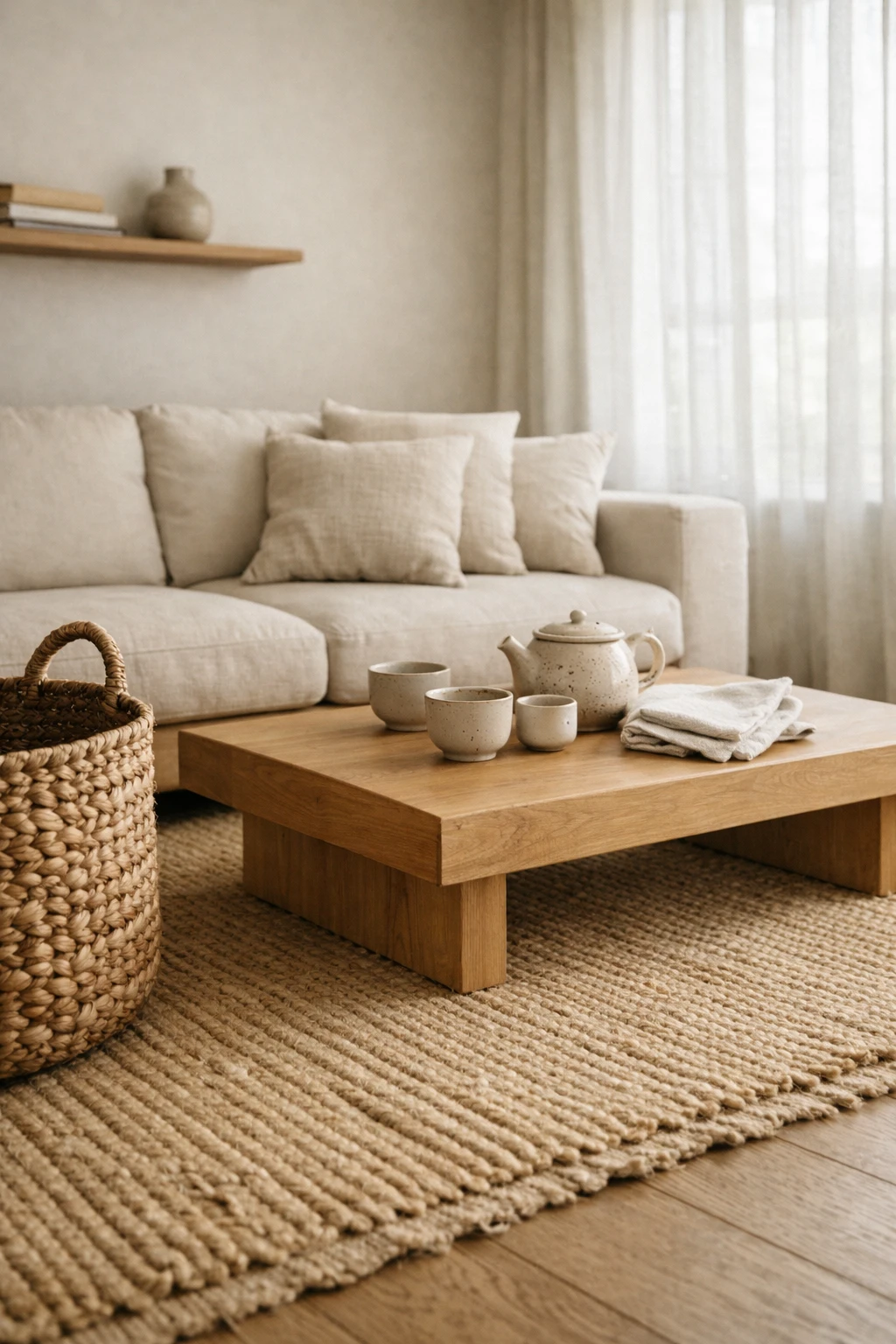
• woven jute rugs
• linen upholstery
• wood grain furniture
• clay pottery
• handmade baskets
These subtle layers create visual depth without introducing bright colors or busy patterns.
The room remains minimalist while still feeling rich and comfortable.
12. Soft Beige Japandi Living Room
A soft beige color palette creates one of the most soothing Japandi living rooms.
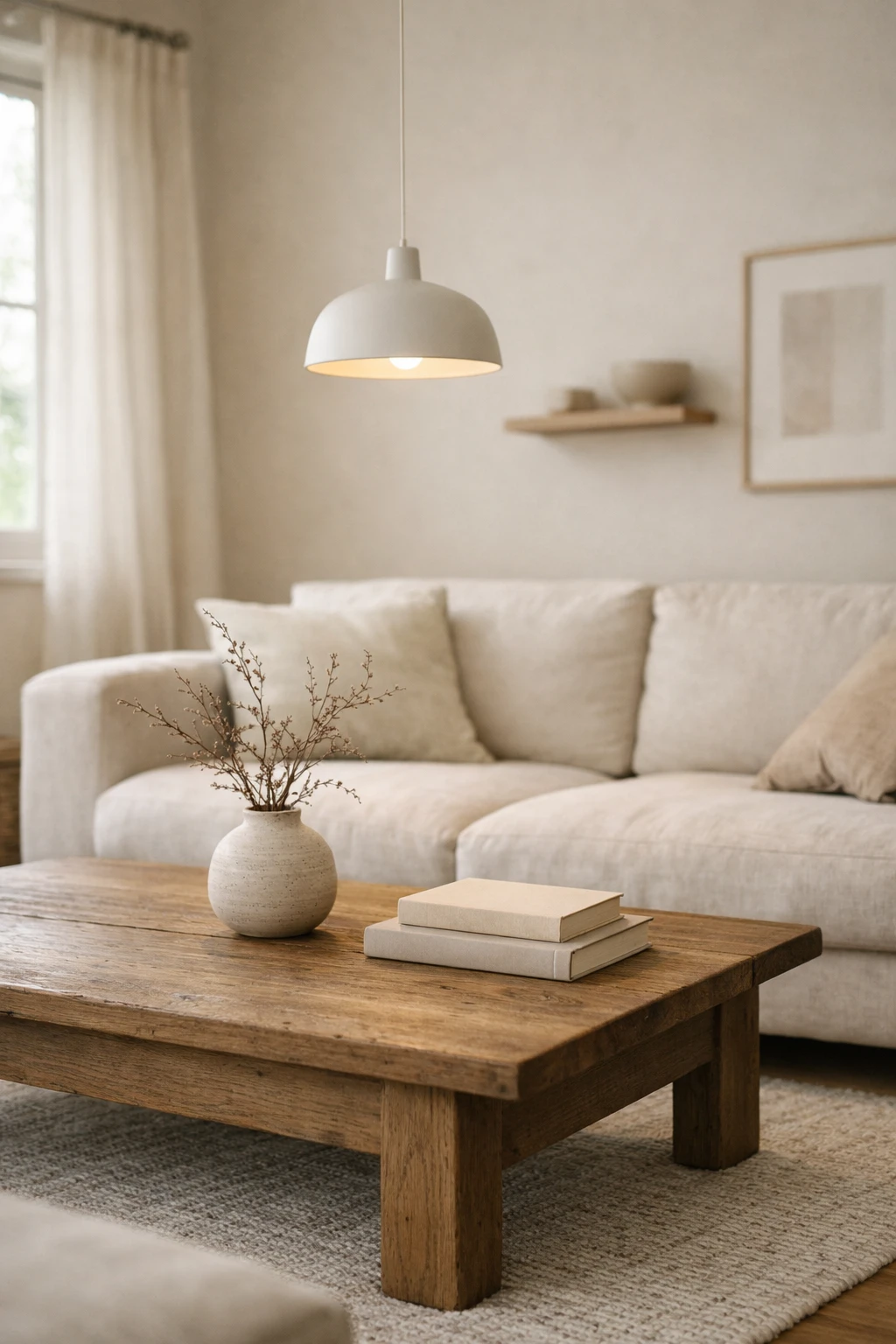
Beige walls paired with warm wood tones produce a gentle and cohesive environment.
Add a linen sofa, textured pillows, and a simple wooden coffee table to complete the space.
Soft layered lighting such as table lamps and pendant lights adds warmth during the evening hours.
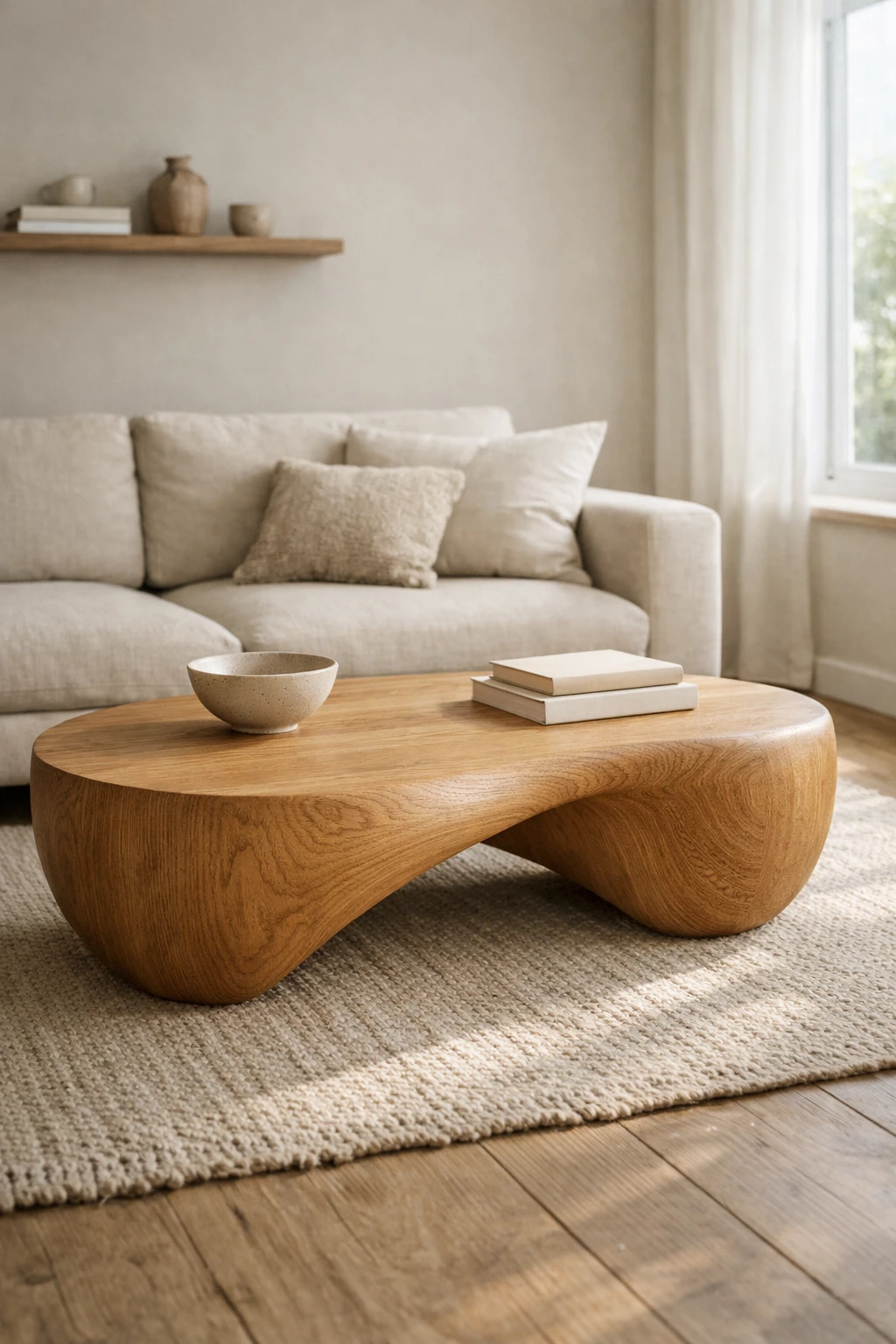
13. Statement Coffee Table Japandi Living Room
Sometimes a single piece can define the entire living room.
In this approach, the coffee table becomes the centerpiece. Choose a sculptural wooden or stone table with a unique shape.
Keep the surrounding furniture simple so the table stands out naturally.
Decorate the surface with a small ceramic bowl or minimal tray to maintain balance.
The result is a calm living room with a subtle focal point that fits perfectly within Japandi design principles.
Japandi Living Room Elements Comparison
| Element | Japanese Influence | Scandinavian Influence |
|---|---|---|
| Philosophy | Simplicity and mindfulness | Comfort and functionality |
| Materials | Bamboo, ceramics, natural fibers | Oak, wool, linen |
| Color Palette | Neutral earth tones | Light and airy neutrals |
| Furniture | Low profile pieces | Practical and comfortable designs |
| Atmosphere | Calm and minimal | Cozy and welcoming |
Understanding these influences helps homeowners create a balanced Japandi living room that feels authentic rather than forced.
Japandi design works because it values intentional choices over excessive decoration. With natural materials, thoughtful lighting, and simple furniture, a living room can become a peaceful retreat within the home.