

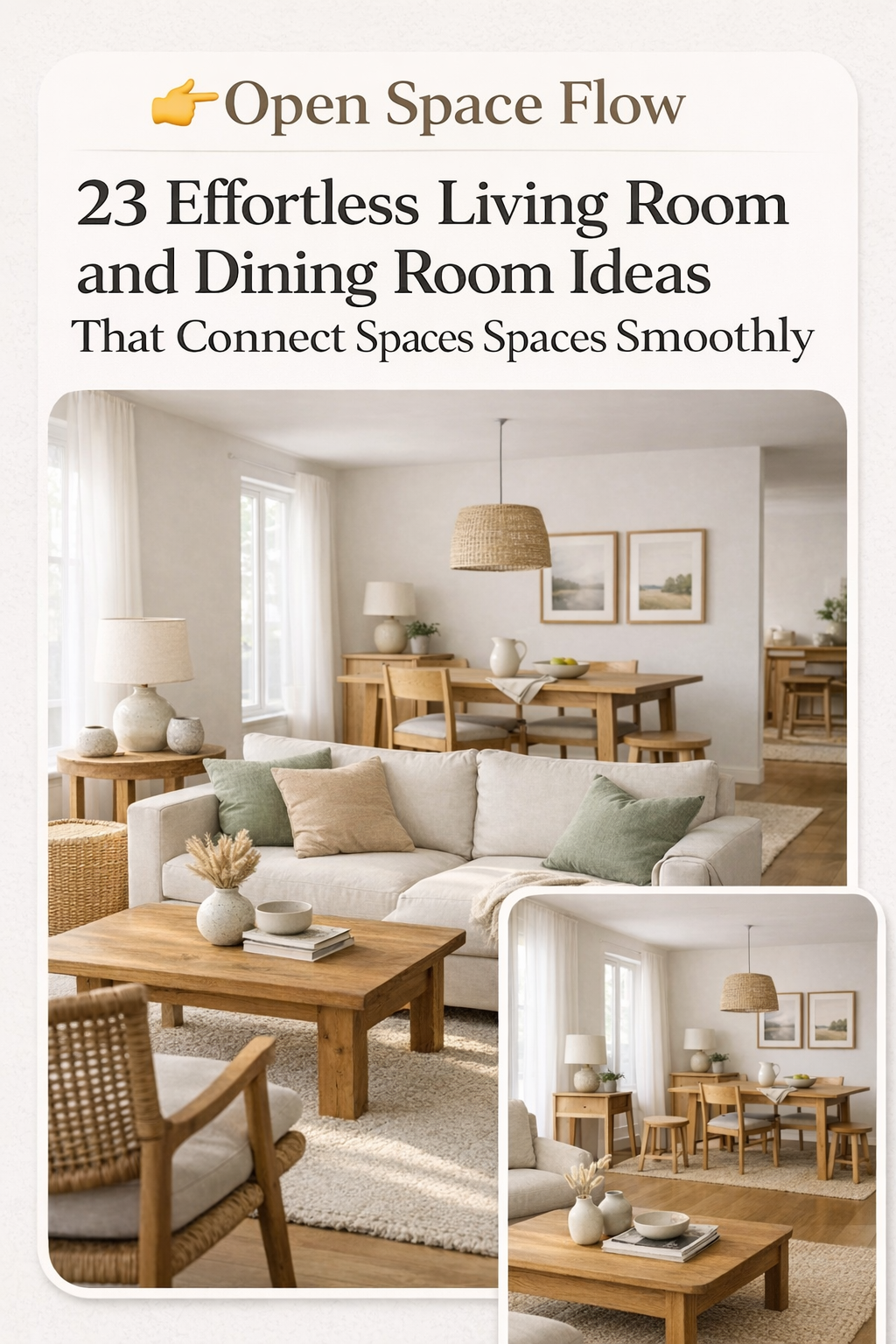
A connected living room and dining room looks calm, intentional, and easy to use. That matters in open floor plans, small apartments, family homes, and older houses where one room leads right into the next.
The mistake most people make is trying to make both spaces match too much or not at all. When everything is identical, the room feels flat. When every piece competes for attention, the room feels broken up and messy.
The better move is to give both areas a shared foundation, then let each one serve its own job. Your living area should invite people to relax. Your dining area should support meals, homework, coffee, and conversation. When both zones relate to each other in color, scale, texture, and layout, the whole space feels finished.
Why a Connected Layout Works Better
A strong living-dining combo does two things at once. It separates function while keeping the overall look consistent. That balance helps your home feel larger, cleaner, and easier to decorate over time.
The goal is connection, not perfect matching
Your sofa does not need to match your dining chairs. Your rug does not need to copy your curtains. What matters is repetition. Repeat a few visual cues across both zones, and the eye reads the room as one story.
Quick style guide for combined living and dining spaces
| Common Problem | Better Choice | Why It Works |
|---|---|---|
| Too many unrelated colors | Use one base palette and two accent colors | Keeps both zones tied together |
| Furniture feels crowded | Leave clear walkways between zones | Improves flow and makes the room look bigger |
| Living room feels heavy, dining room feels bare | Balance visual weight with lighting, art, and storage | Helps one side not overpower the other |
| Rooms feel chopped up | Repeat wood tones, fabrics, or metal finishes | Creates rhythm across the space |
| Open concept feels messy | Use rugs, lighting, and furniture placement to define zones | Gives structure without closing off the room |
1. Start With a Shared Color Palette
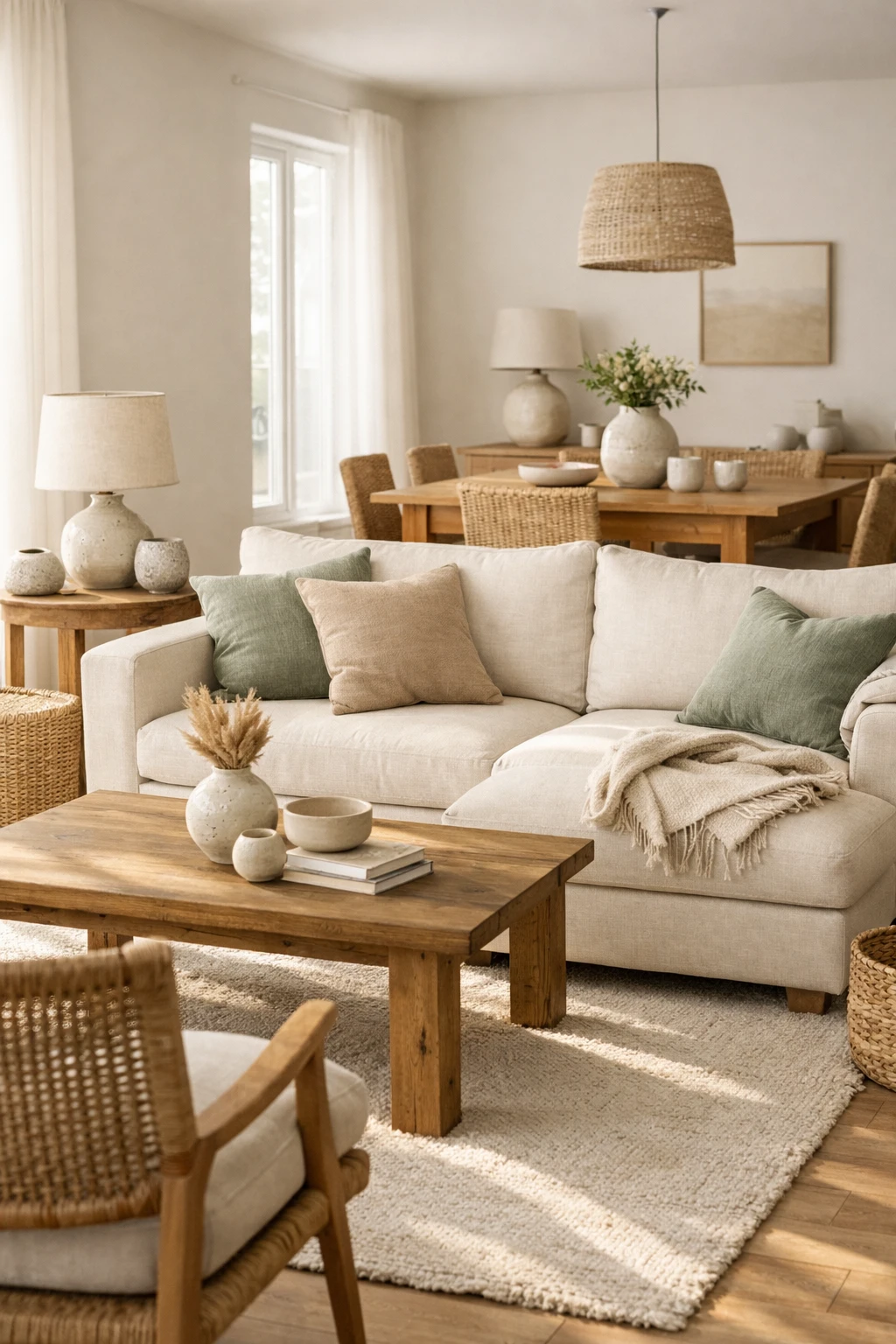
The fastest way to connect a living room and dining room is with color. Pick one main base color for both spaces, such as warm white, soft greige, light taupe, or muted sage. Then add one or two accent colors that appear in both zones.
For example, a cream sofa, oak dining table, black lighting, and olive accents can carry the whole room. You do not need the colors in equal amounts. You only need enough repetition for the eye to notice the link.
2. Repeat One Wood Tone Across Both Areas
Wood tones can make or break a connected layout. When the coffee table is orange-toned, the dining table is gray-toned, and the sideboard is dark espresso, the room starts to feel accidental.
Choose one dominant wood tone and repeat it in at least two or three places. That could mean an oak dining table, oak picture frames, and an oak side table. Small variation is fine. The undertone should still feel related.
3. Use Rugs to Define the Zones Without Breaking the Room Apart
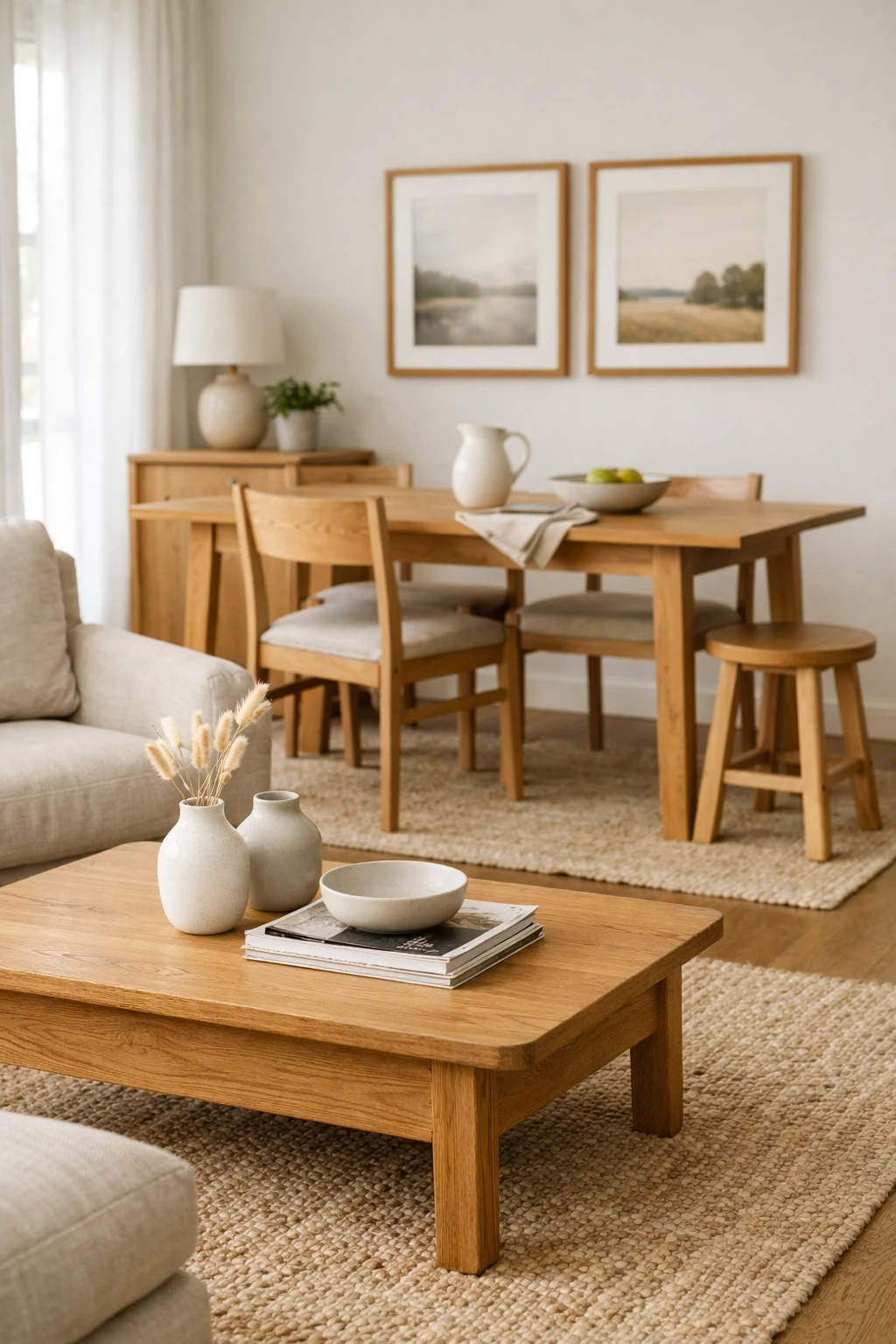
Rugs help each area feel grounded, but they should still talk to each other. A common mistake is using one bold rug in the living room and no rug in the dining room, or choosing two rugs that feel like they came from different homes.
Use rugs with a related palette, texture, or pattern family. In a small combo room, one rug under the living area and a bare floor under the dining table can work. In a large open space, two rugs often feel better.
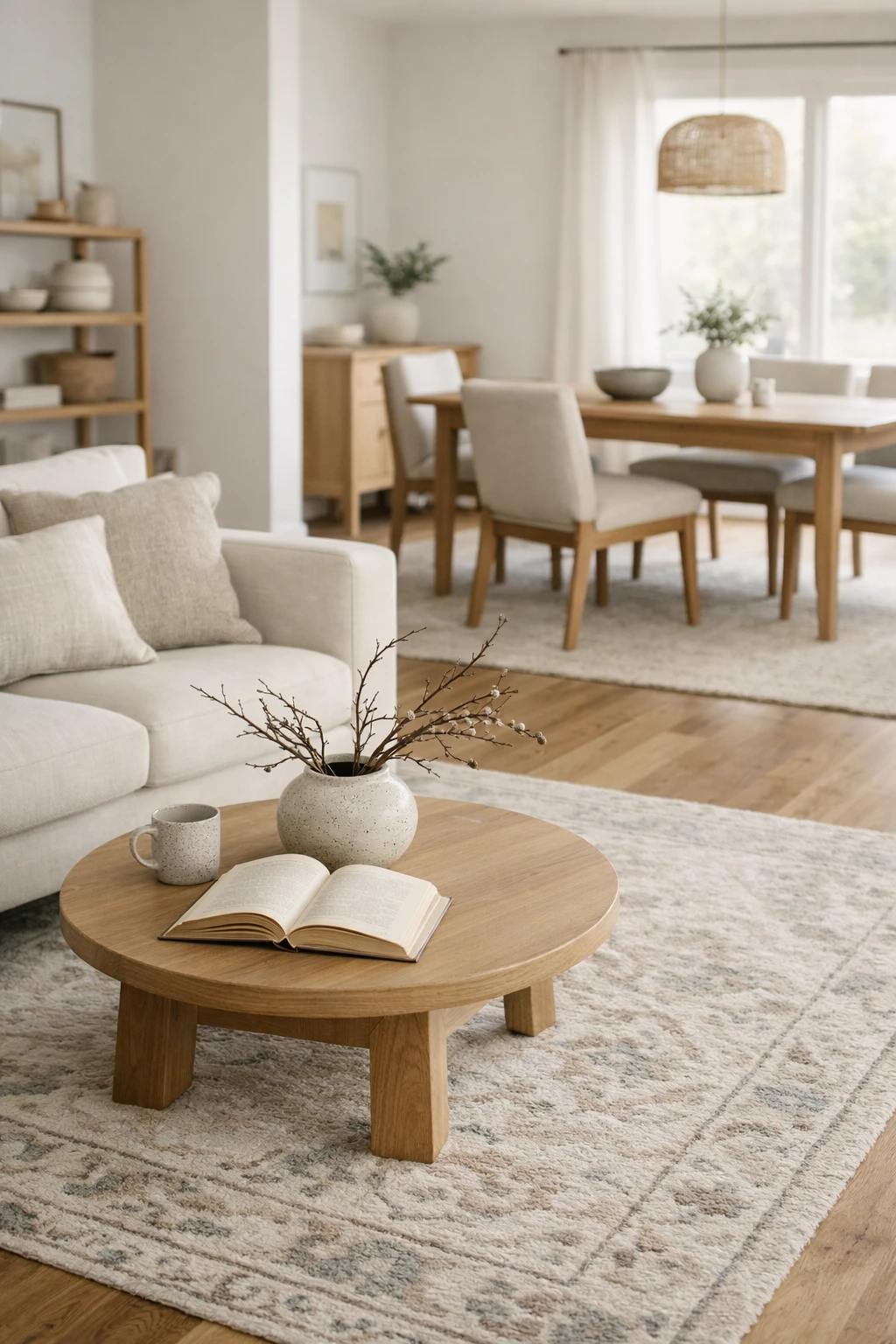
A good rug pairing rule
If one rug is patterned, let the other stay quiet. If one rug has strong color, let the other echo that color in a softer way.
4. Choose Dining Chairs That Echo the Living Room
This does not mean buying matching furniture sets. It means repeating a shape, material, or feeling. If your sofa has soft curves, curved dining chairs can create a nice link. If your living room leans casual with linen and wood, metal glam dining chairs may feel out of place.
A practical real-life example is pairing a low-profile beige sofa with dining chairs in a similar warm fabric. Even if the table is different, the room still feels tied together.
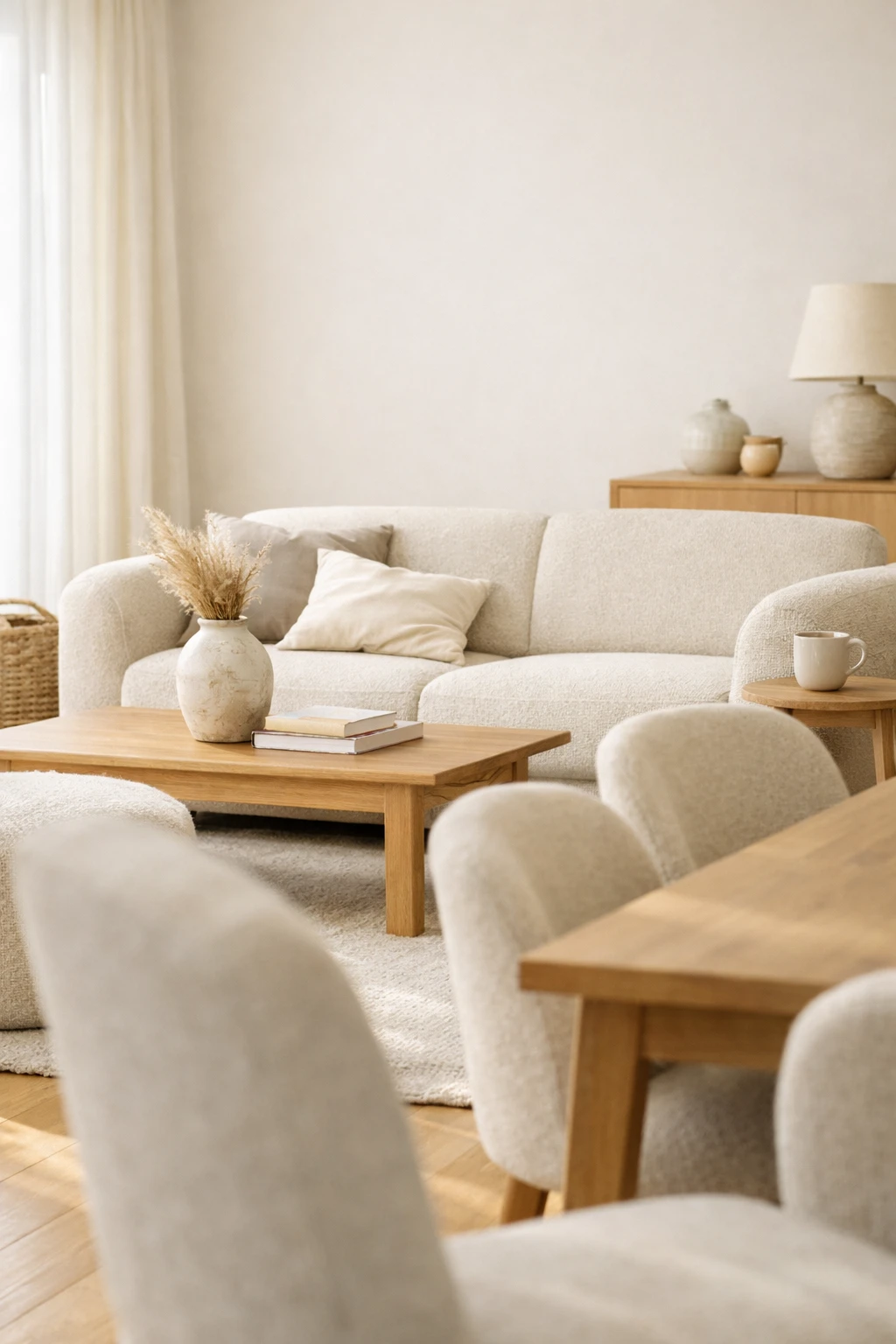
5. Carry One Metal Finish Through the Entire Space
Too many metal finishes create visual noise fast. Pick one main finish and repeat it. Black, aged brass, and brushed nickel are the easiest choices for most homes.
You can use that finish in the chandelier, floor lamp, curtain rod, dining table base, cabinet hardware, or picture frames. You do not need every single piece to match, but your main finish should show up enough to feel intentional.
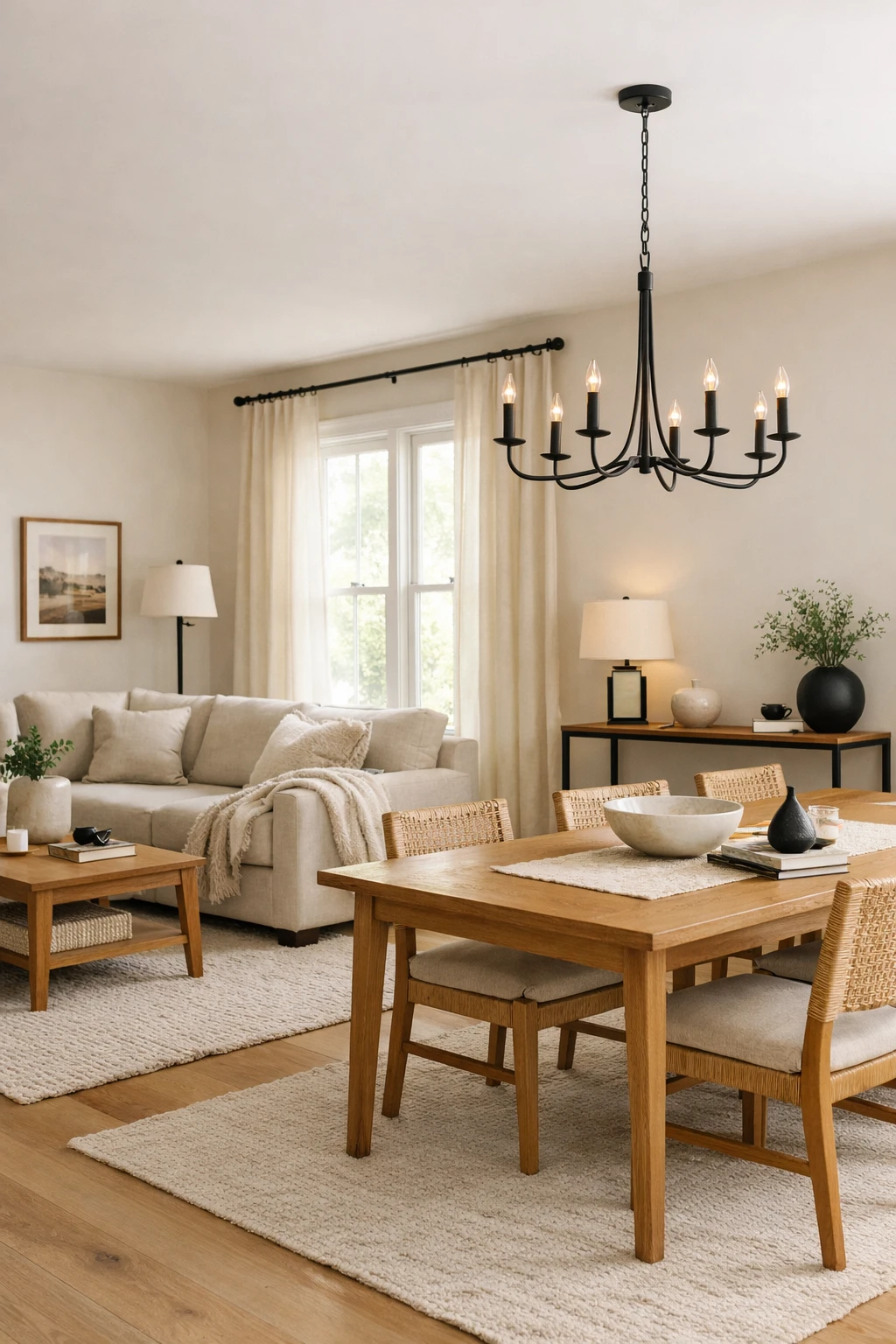
6. Make Lighting Feel Related
Lighting has a huge effect on whether two connected spaces feel united. Your dining light and living room lamps do not need to be twins, but they should feel like part of the same family.
A clean black chandelier can work with a black floor lamp. A woven pendant can work with a woven table lamp shade. A brass linear light can relate to brass sconces. Keep the scale right, and let the shapes or finishes repeat.
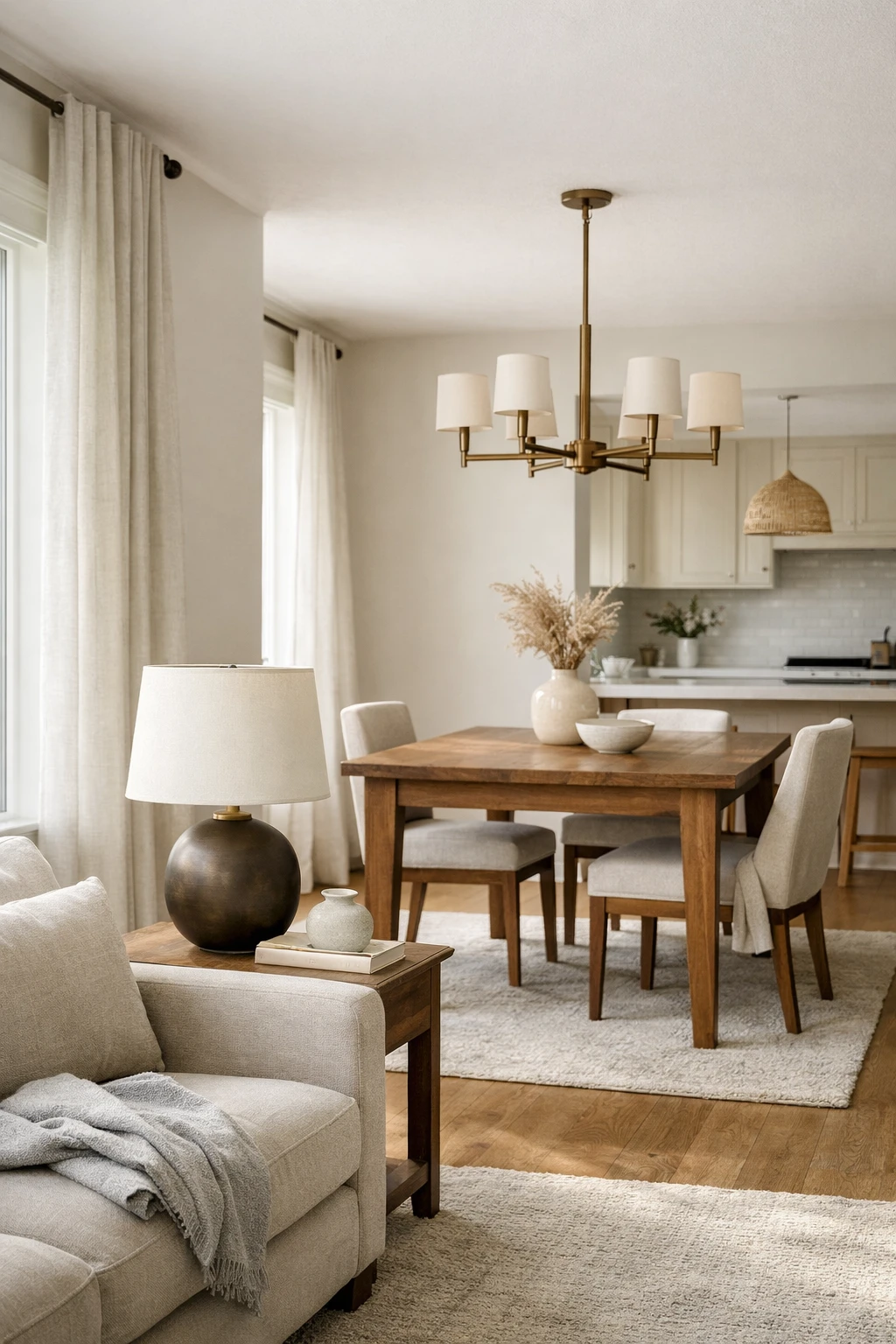
7. Anchor the Living Area First
In most connected layouts, the living room takes up more visual space than the dining room. That means you should anchor it first. Start with the sofa, rug, and coffee table. Once that zone feels stable, build the dining area so it supports the same style direction.
This keeps the room from feeling like two people decorated it on different days with different plans.
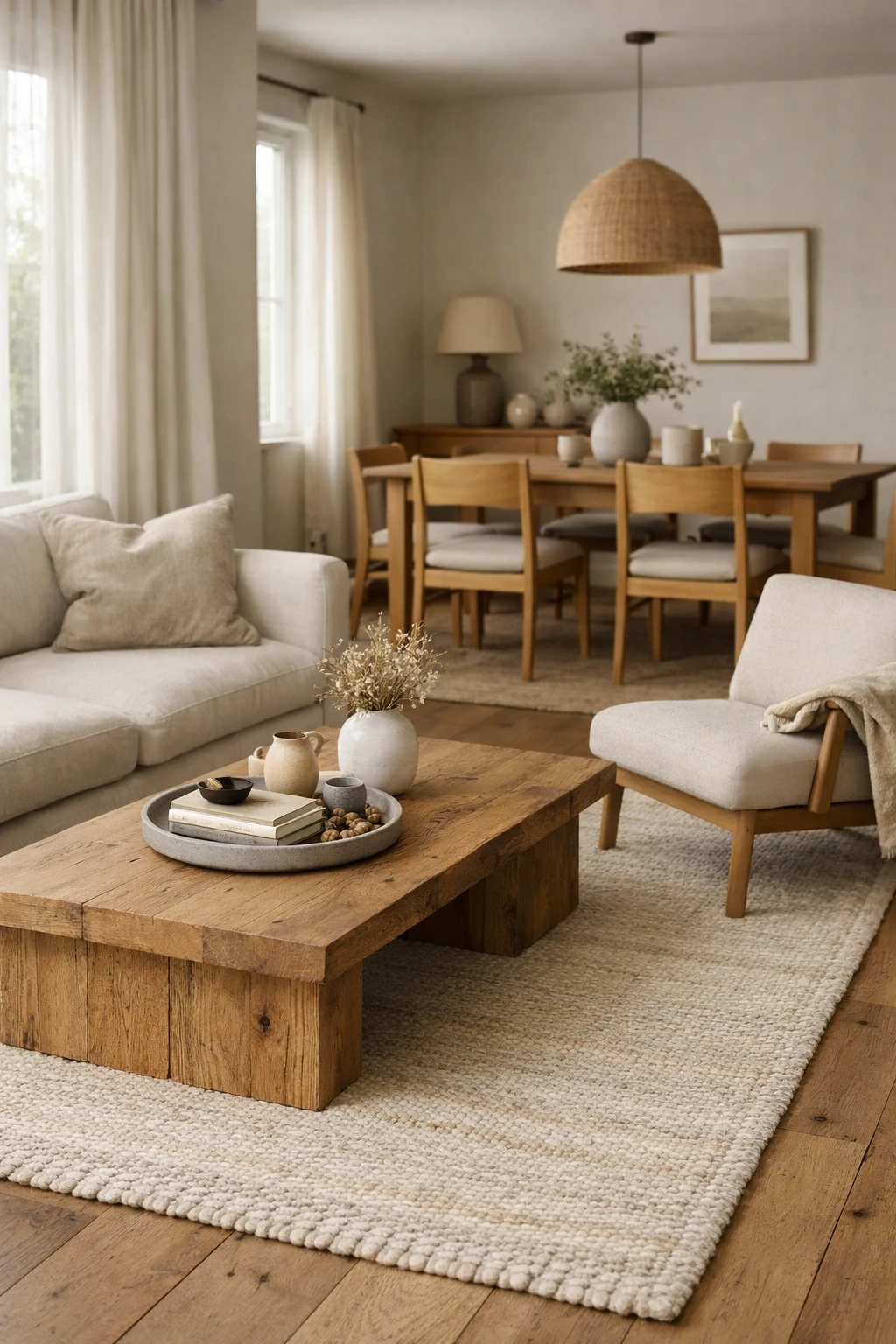
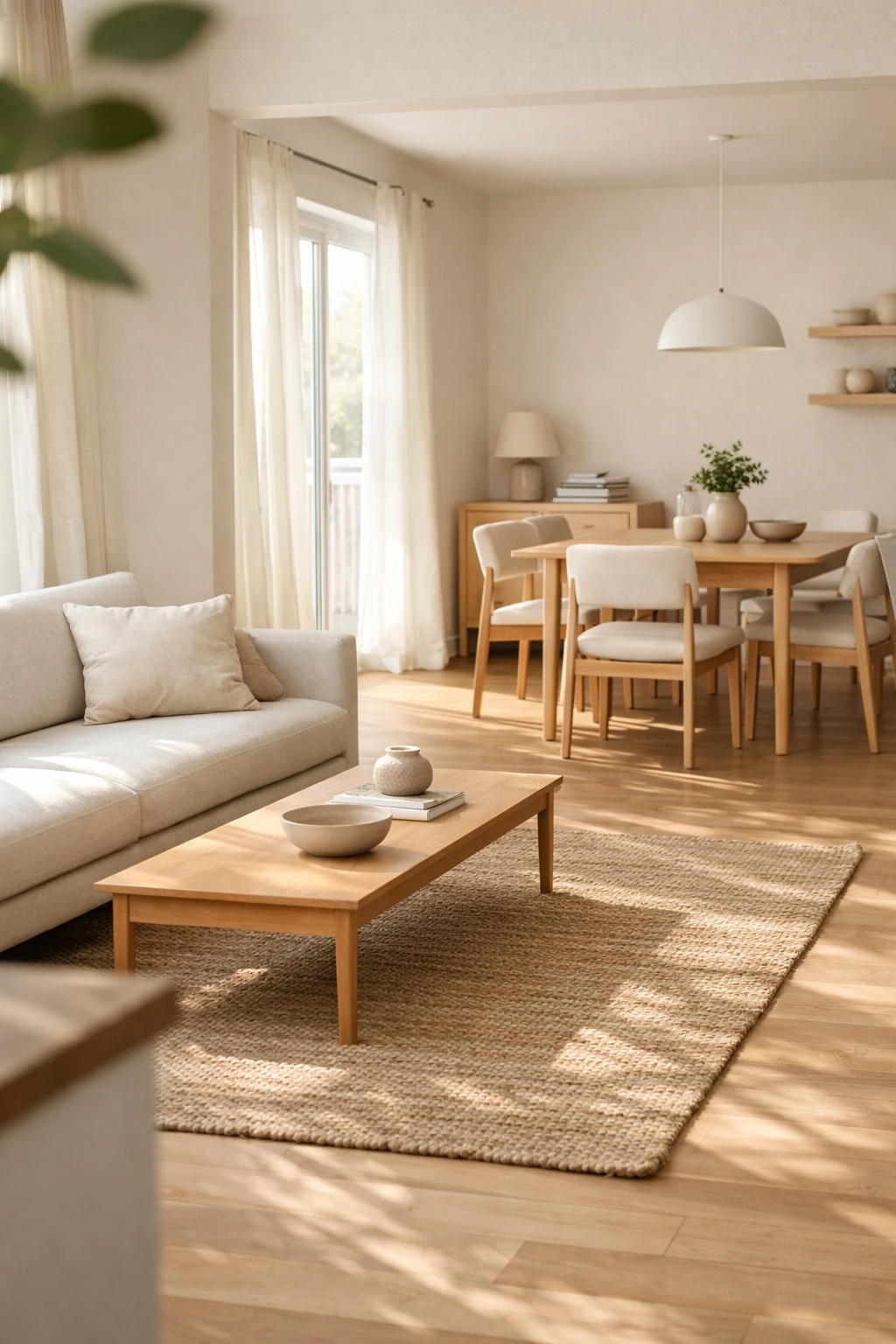
8. Keep Sightlines Open
A connected room needs breathing room. Avoid tall furniture pieces that block the view between the living and dining zones unless you truly need them. Heavy shelving, oversized hutches, and bulky room dividers can make the layout feel tight.
Use lower-profile furniture when you can. A slim console, open-base dining table, or airy chairs help the eye move through the room more easily.
Best for smaller homes
If you live in an apartment or townhouse, open sightlines matter even more. Visual space can make a modest room feel much more comfortable.
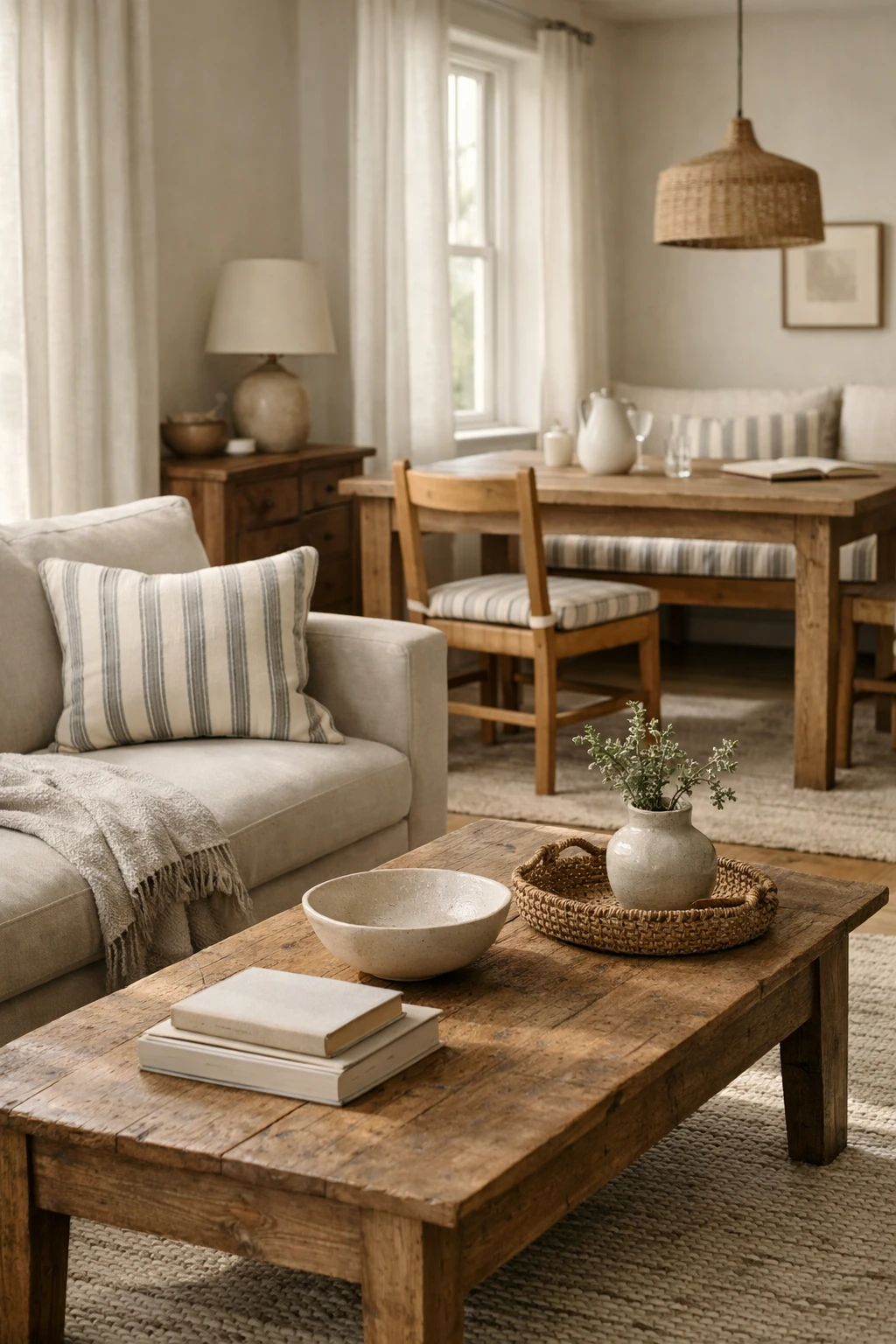
9. Repeat a Fabric or Pattern in Small Ways
Repeating fabric is one of the easiest designer tricks. You might use the same stripe from your dining chair cushion in a throw pillow. You might echo the linen texture from your curtains in a bench cushion. You might bring a tiny check pattern from the dining nook into the living room with a small accent pillow.
These little links help the room feel layered without feeling forced.
10. Use Artwork to Bridge the Two Zones
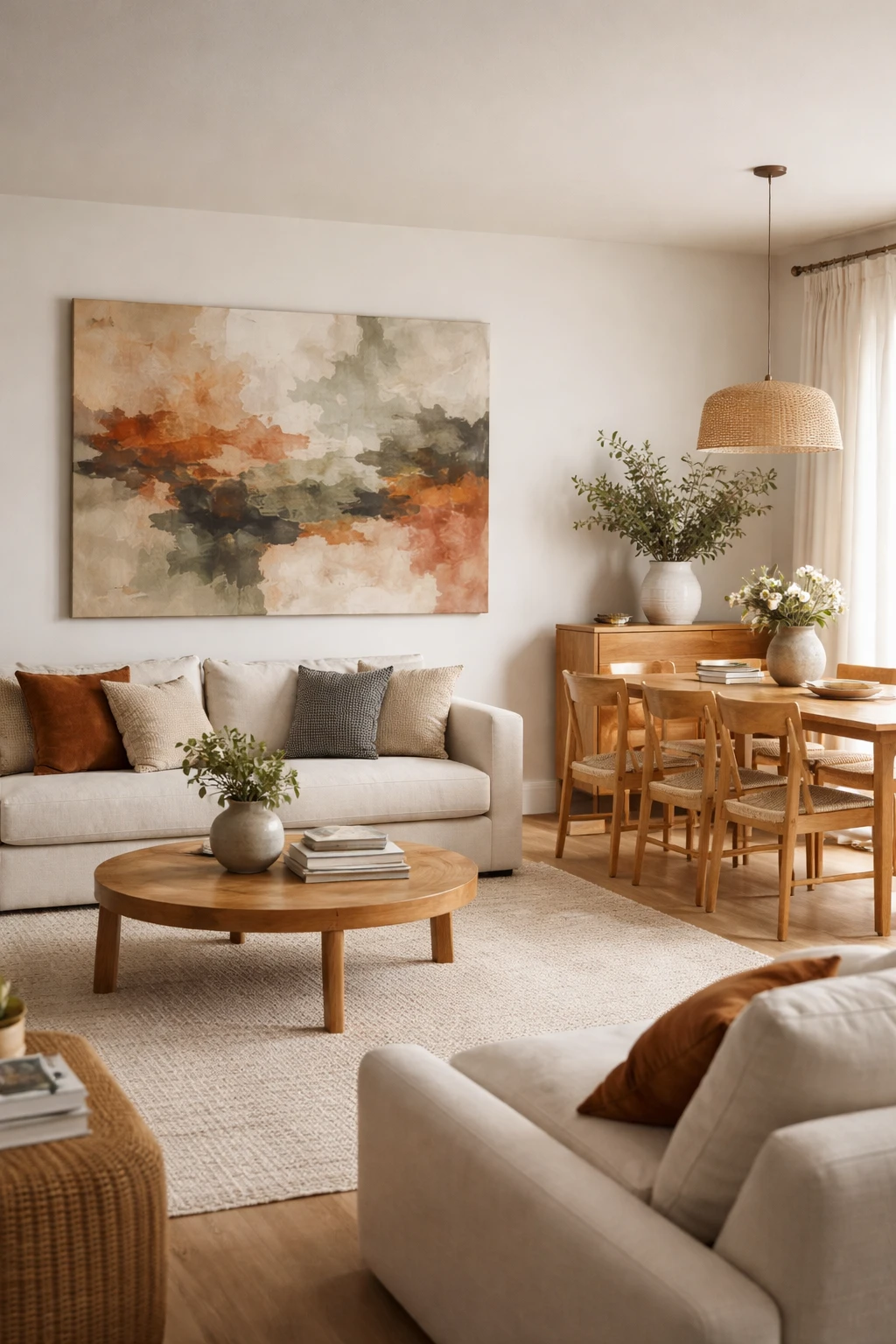
Wall art can connect the whole room when the palette or mood relates across both sides. You can use a gallery wall that stretches across the shared wall, or you can place one oversized piece in the dining area that picks up colors from the living room.
If your living room has earthy tones, abstract art with rust, cream, charcoal, or olive can quietly tie both spaces together.
11. Keep Window Treatments Consistent
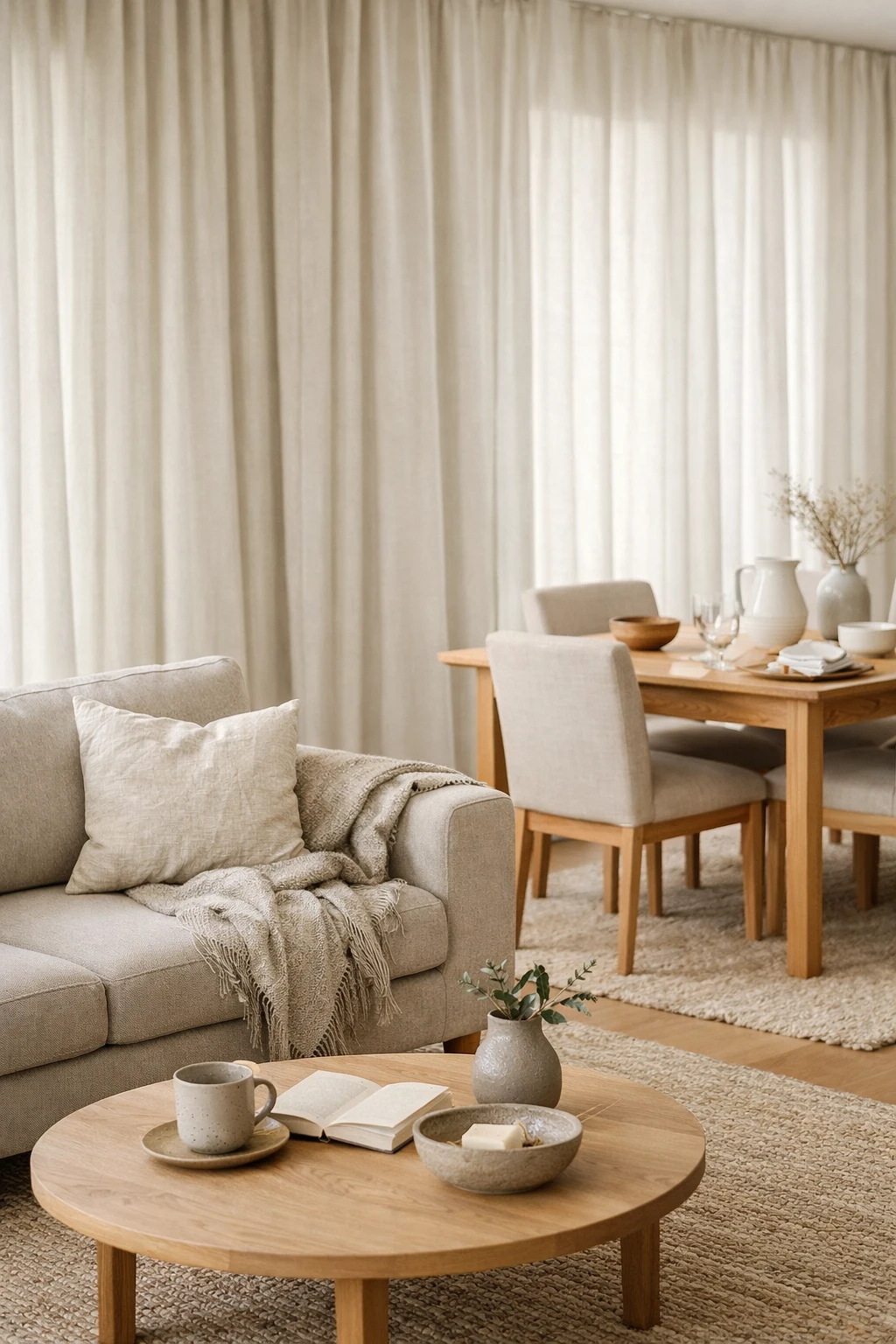
If both areas share windows in the same room, use the same curtain style and length. Mixing grommet curtains on one side with bamboo shades and heavy drapes on the other can make the room feel choppy.
Floor-length curtains in one neutral fabric usually work best. If privacy matters, layer them with simple shades that do not fight the rest of the room.
12. Balance Visual Weight From Side to Side
A common open-concept problem is one zone looking full while the other looks empty. Maybe the living room has a sofa, rug, lamps, art, and pillows, while the dining room has only a table and four chairs. That imbalance makes the room feel unfinished.
Fix it with visual weight, not clutter. Add a sideboard, artwork, pendant light, or plant near the dining area so both zones feel equally considered.
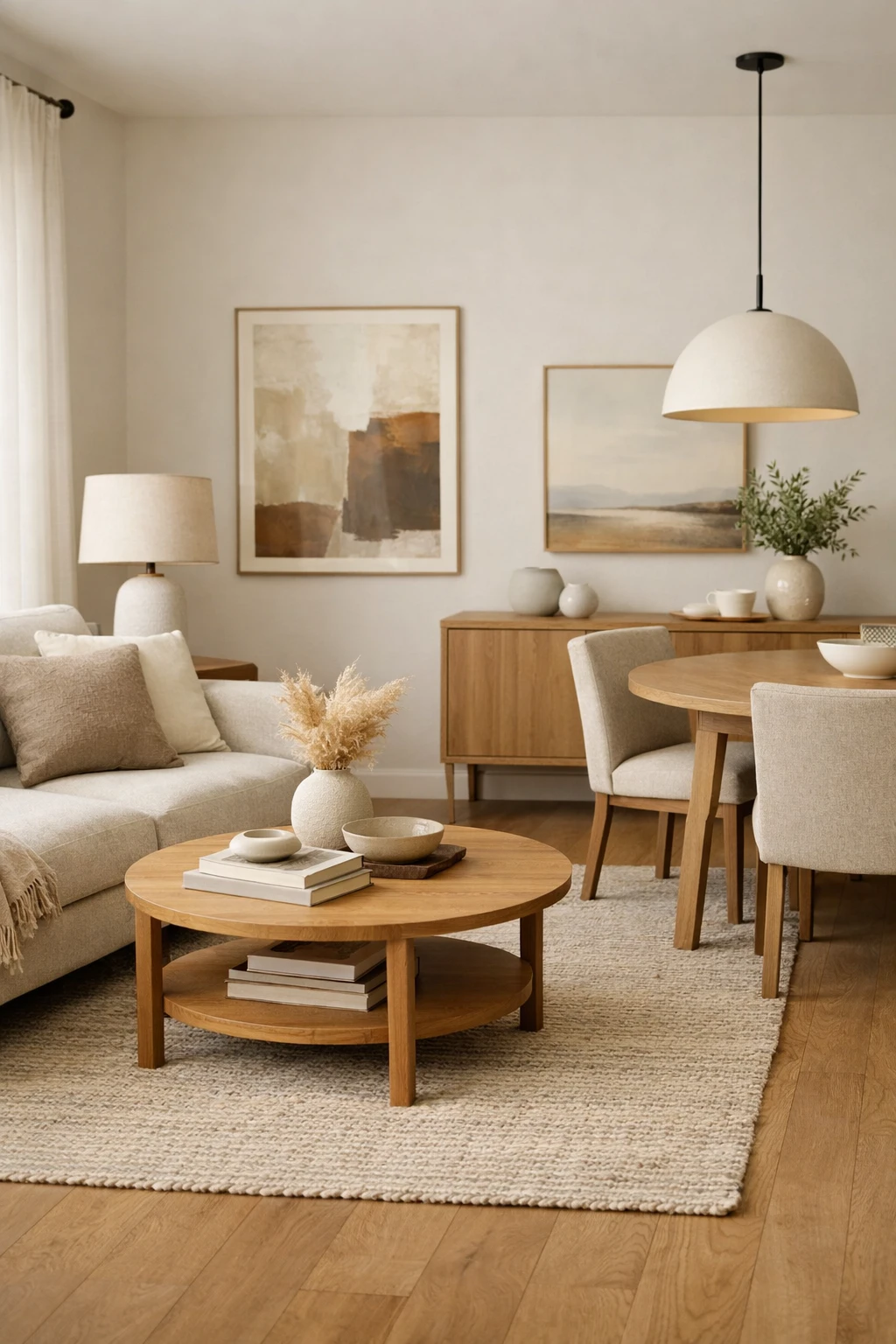
13. Pick the Right Dining Table Shape for Flow
Table shape affects movement more than most people think. Round tables are great in tight layouts because people can move around them more easily. Rectangular tables work well in longer rooms where the dining zone needs more definition.
If your sofa already creates many strong straight lines, a round or oval dining table can soften the whole room and help it feel more relaxed.
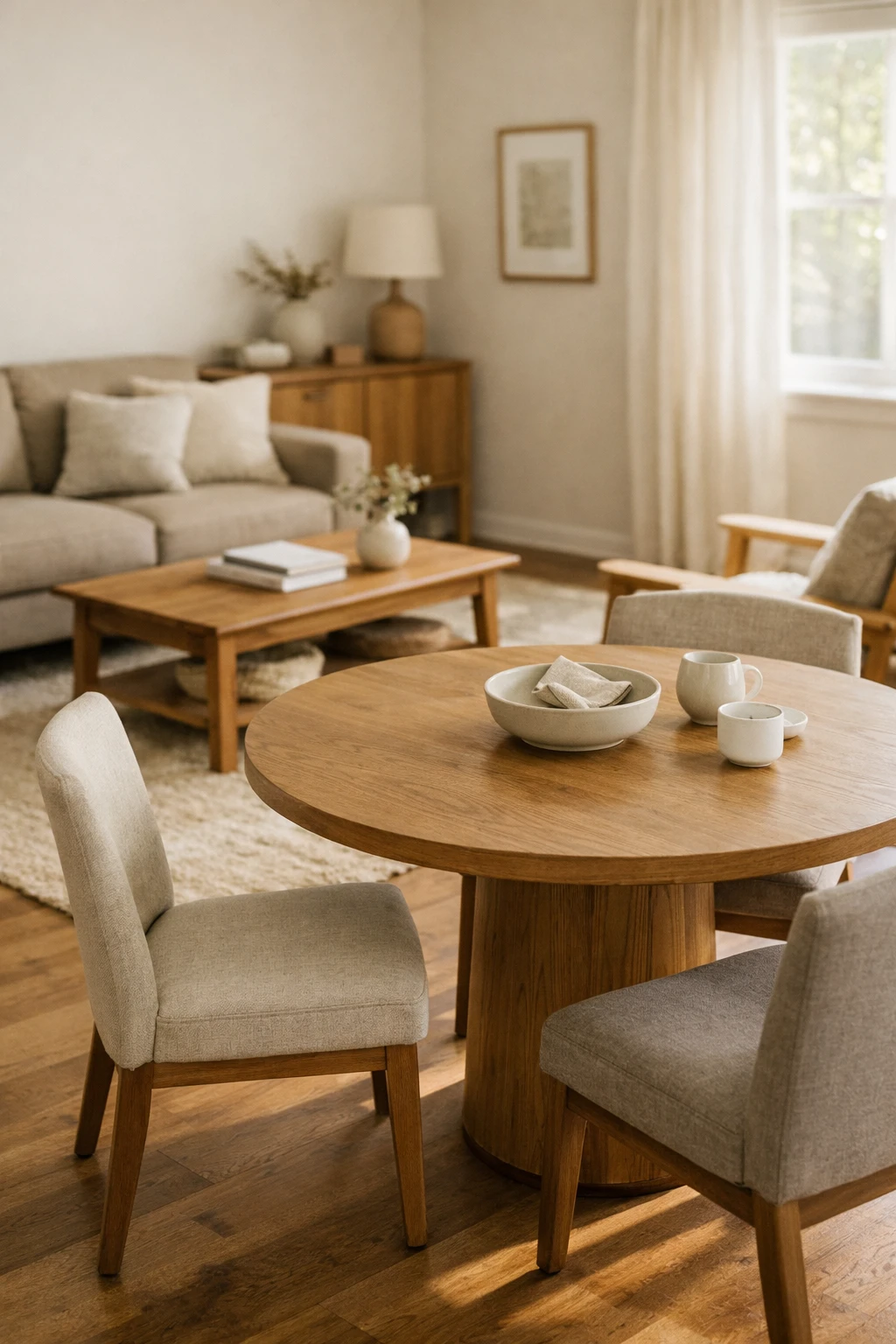
14. Use a Sideboard or Console as a Transition Piece
A sideboard, console, or storage cabinet can act as a bridge between the living and dining room. It gives the eye a stopping point while still keeping the room open.
This works well in real homes where you need hidden storage for placemats, candles, board games, chargers, or kids’ art supplies. Choose a piece that matches the scale of the room and supports your overall style.
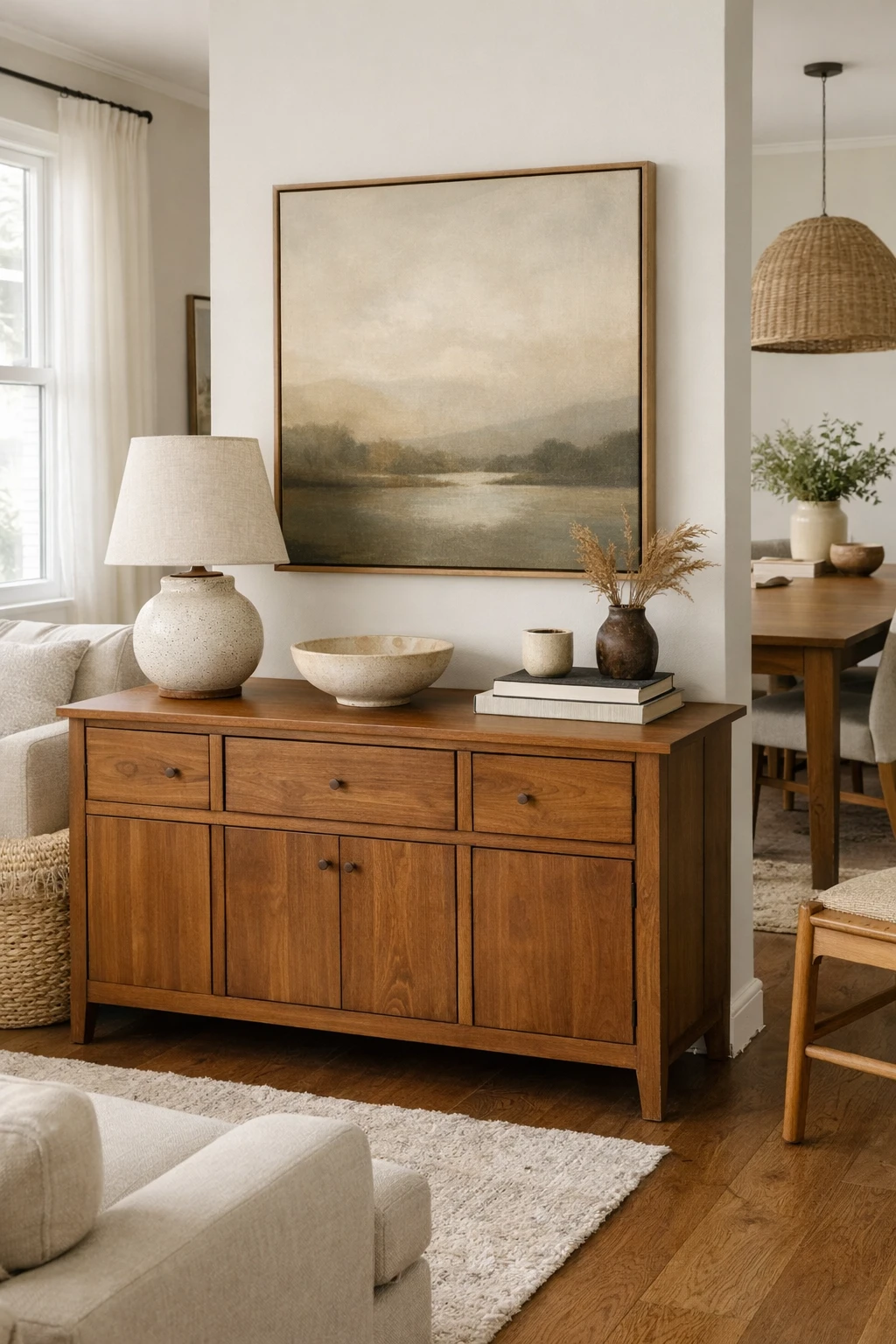
15. Let the Accent Colors Travel Across the Room
Accent colors work best when they appear in more than one place. A blue vase on the dining table should have a partner somewhere in the living area, like a pillow, book stack, or artwork. The same goes for rust, green, black, terracotta, or soft blush.
This makes the room feel designed instead of random.
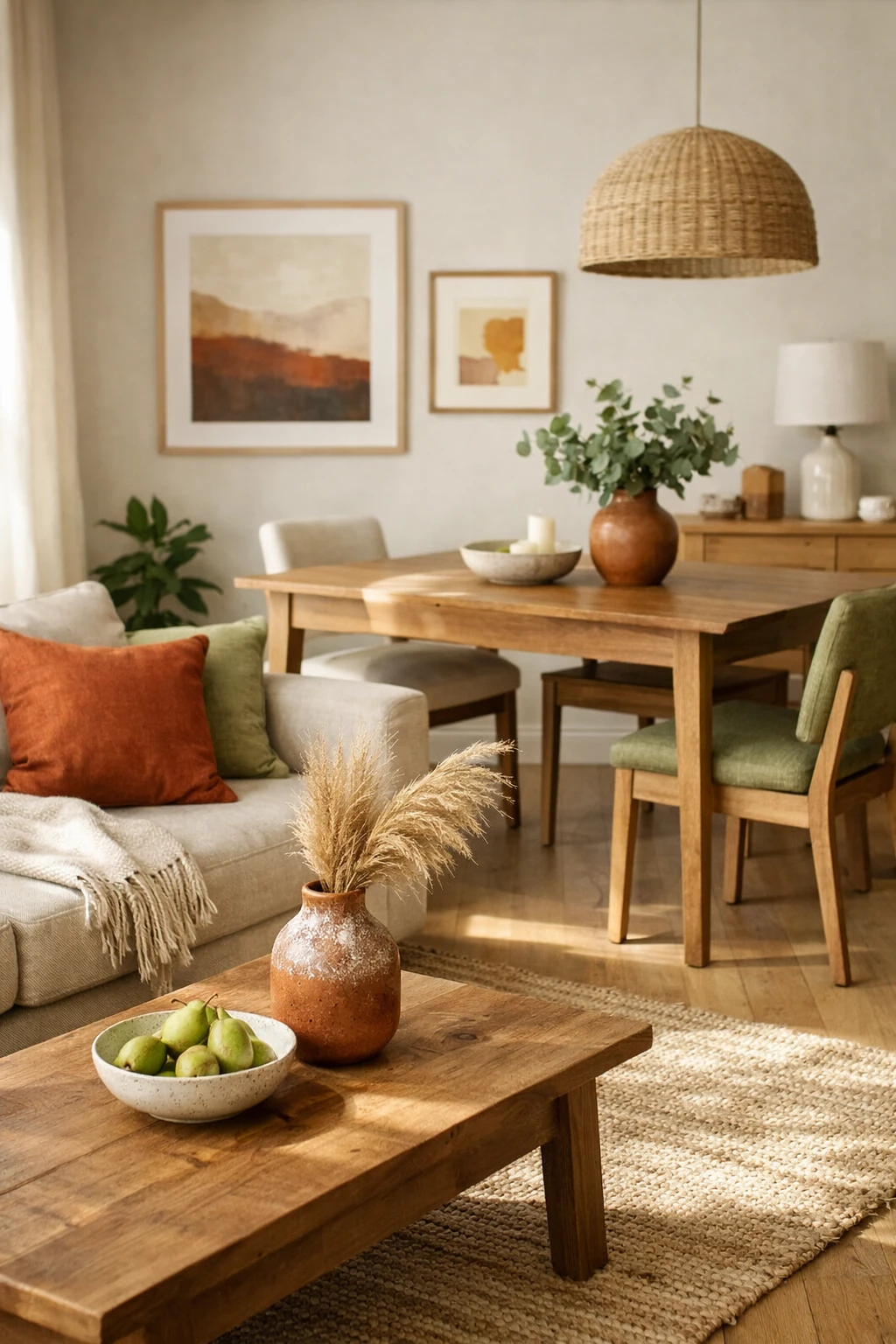
16. Add Plants to Soften the Transition
Plants connect spaces in a natural way. A tall olive tree near the dining area, a trailing plant on a console, or a compact plant on the dining table can soften hard edges and help the two zones flow together.
Plants also add movement, shape, and life without making the room feel busy. In neutral spaces, they keep the room from feeling flat.
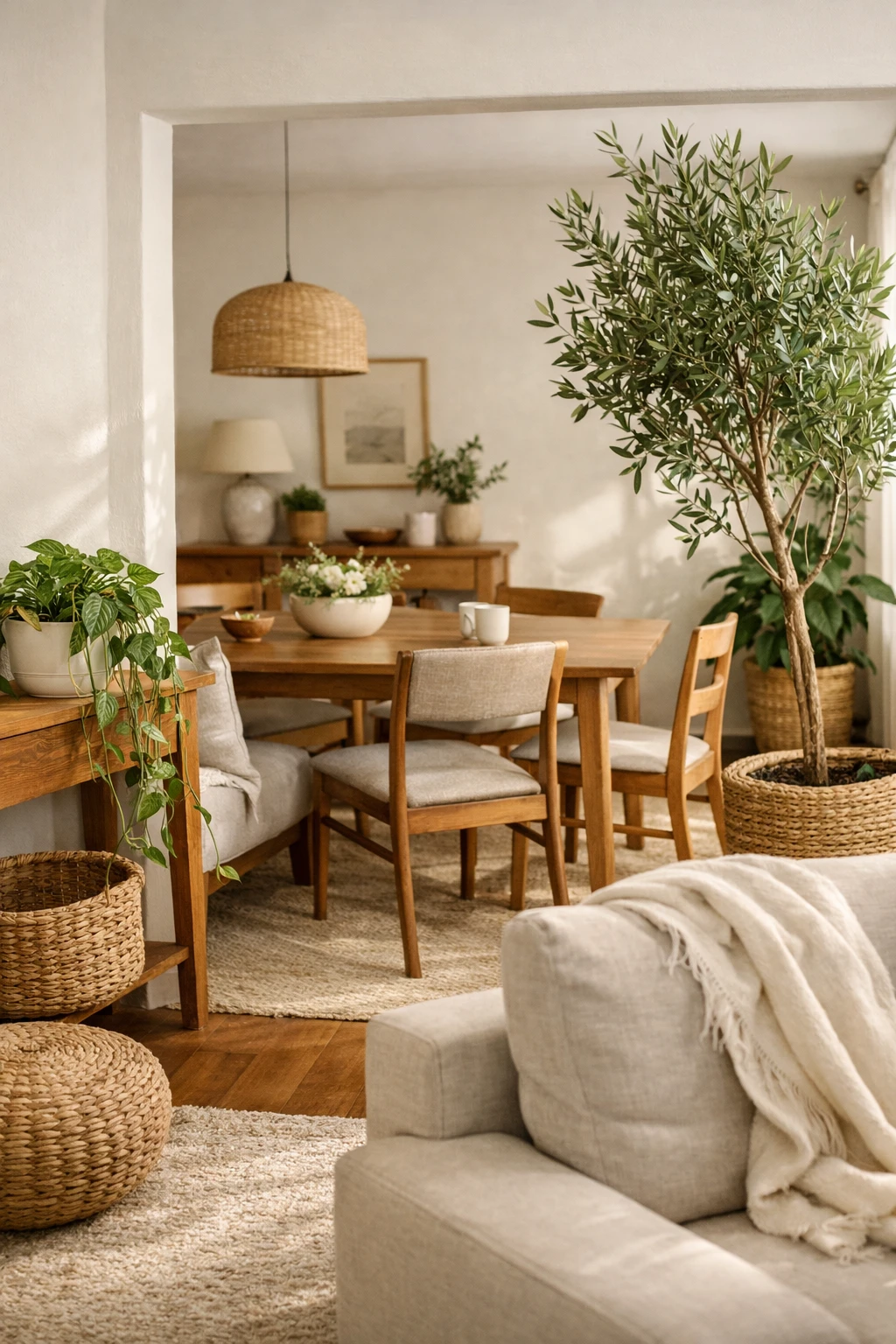
17. Keep Your Style Direction Consistent
You can mix styles, but you still need one overall direction. Modern living room with farmhouse dining room and glam lighting sounds good in theory, but it often looks confused in real life.
A better mix is modern-organic, warm transitional, Scandinavian, or casual contemporary. These style families leave room for contrast without losing connection. Think in terms of mood, materials, and shape rather than labels alone.
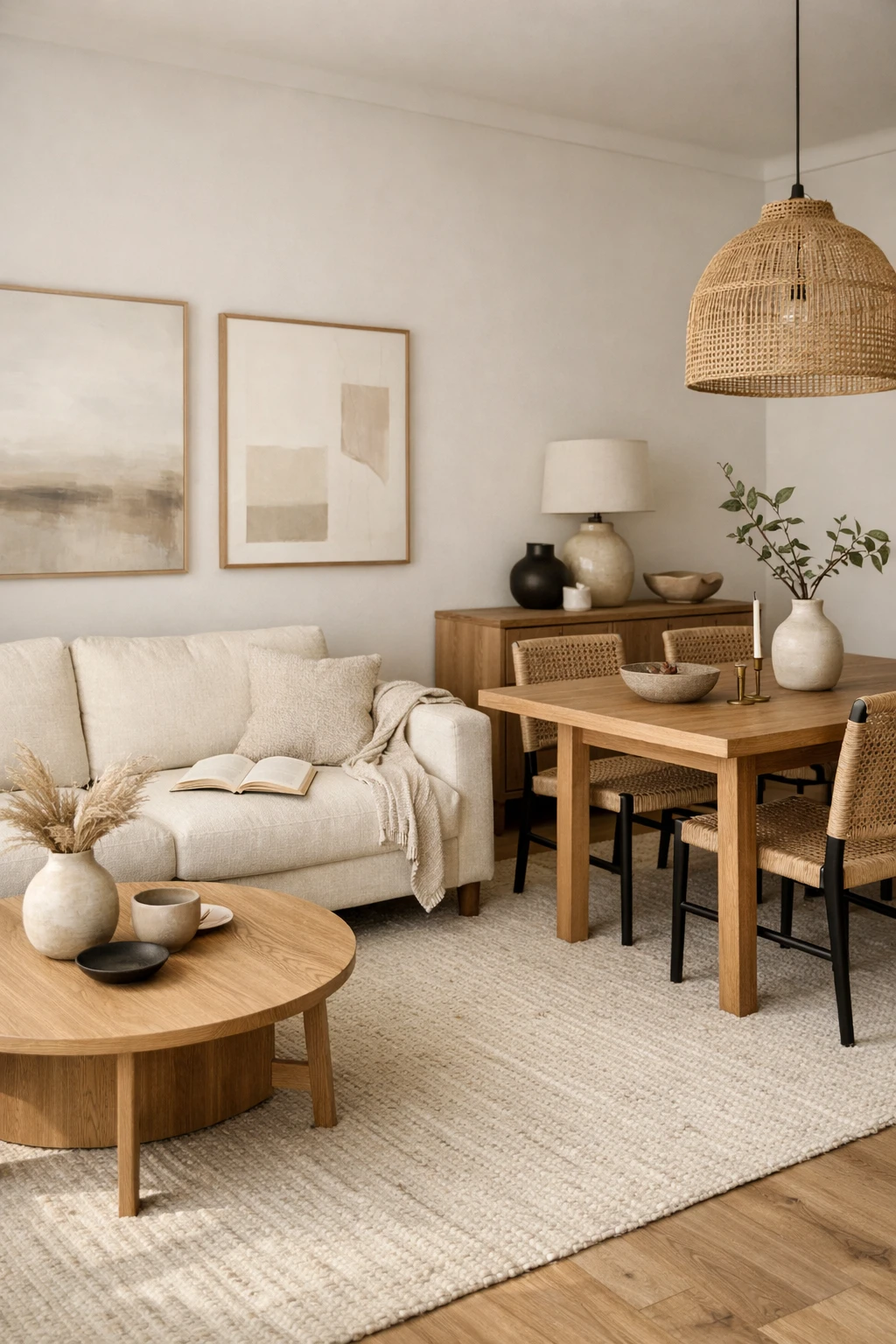
18. Match the Scale of Key Furniture Pieces
Scale matters just as much as color. A huge sectional beside a tiny dining set looks off-balance. So does a delicate glass dining table placed next to a chunky oversized sofa and heavy storage cabinet.
Pay attention to visual weight. If your living room furniture is full and substantial, your dining area should have enough presence to hold its own. That might mean a larger light fixture, stronger chair shape, or more grounded table base.
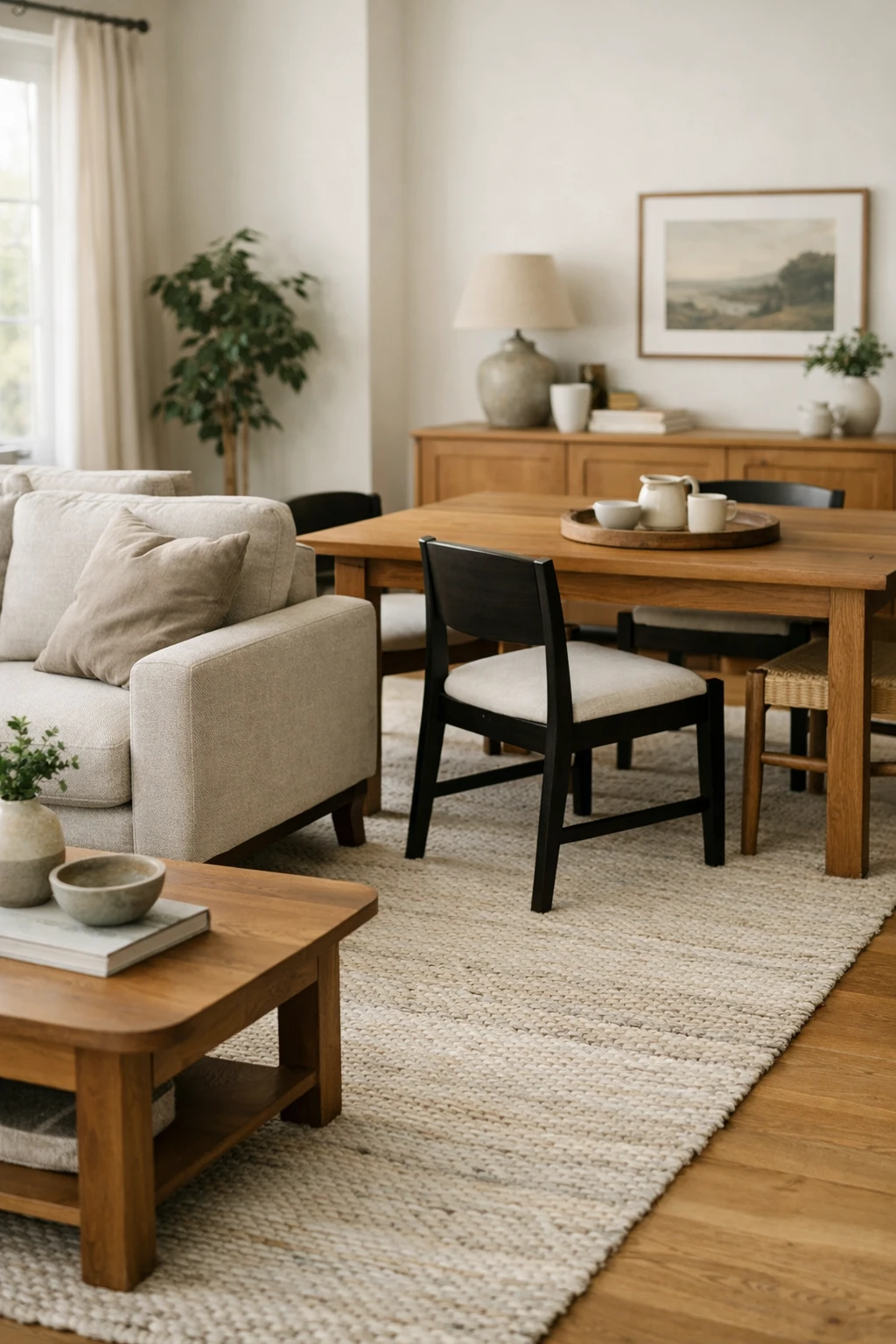
19. Leave Enough Walkway Space Between Zones
A connected room still needs clear paths. People should be able to walk from the sofa to the dining table, kitchen, or hallway without squeezing around furniture.
Try to leave open passage space between major pieces. Even a few extra inches can change how the room feels. In family homes, this matters even more because people move through these rooms all day long.
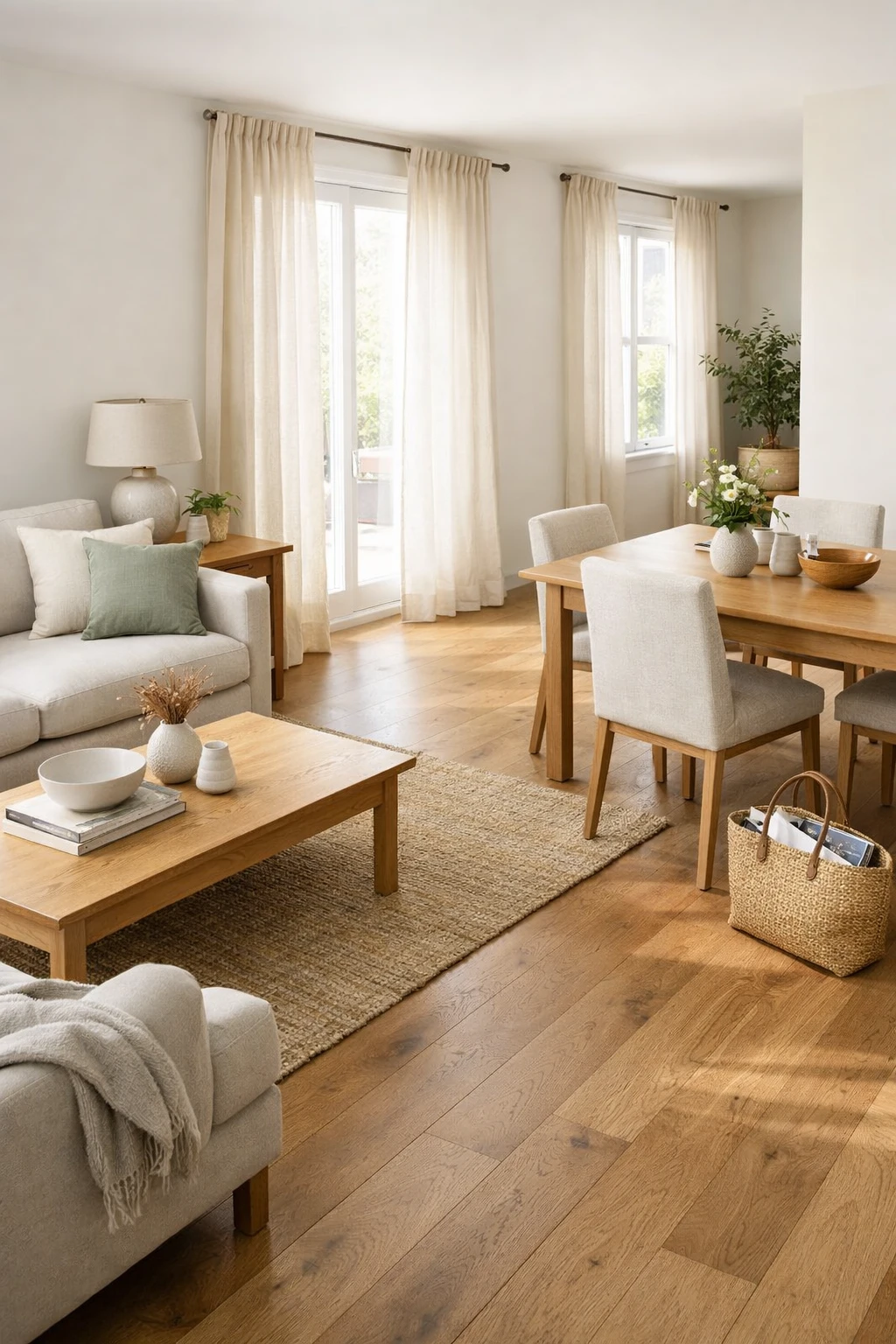
Walkway reminder
A room can be beautiful and still fail if movement feels awkward. Flow is part of style.
20. Use Storage That Looks Like Decor
In combined rooms, every visible item matters. Storage pieces should work hard and look good. A closed sideboard, woven baskets, or built-in shelving can hold daily clutter while still supporting the style of the room.
This helps a lot in homes where the dining table becomes a homework spot, laptop desk, or mail drop. When clutter has a place to go, both zones stay calmer.
21. Mix Old and New Pieces With One Linking Element
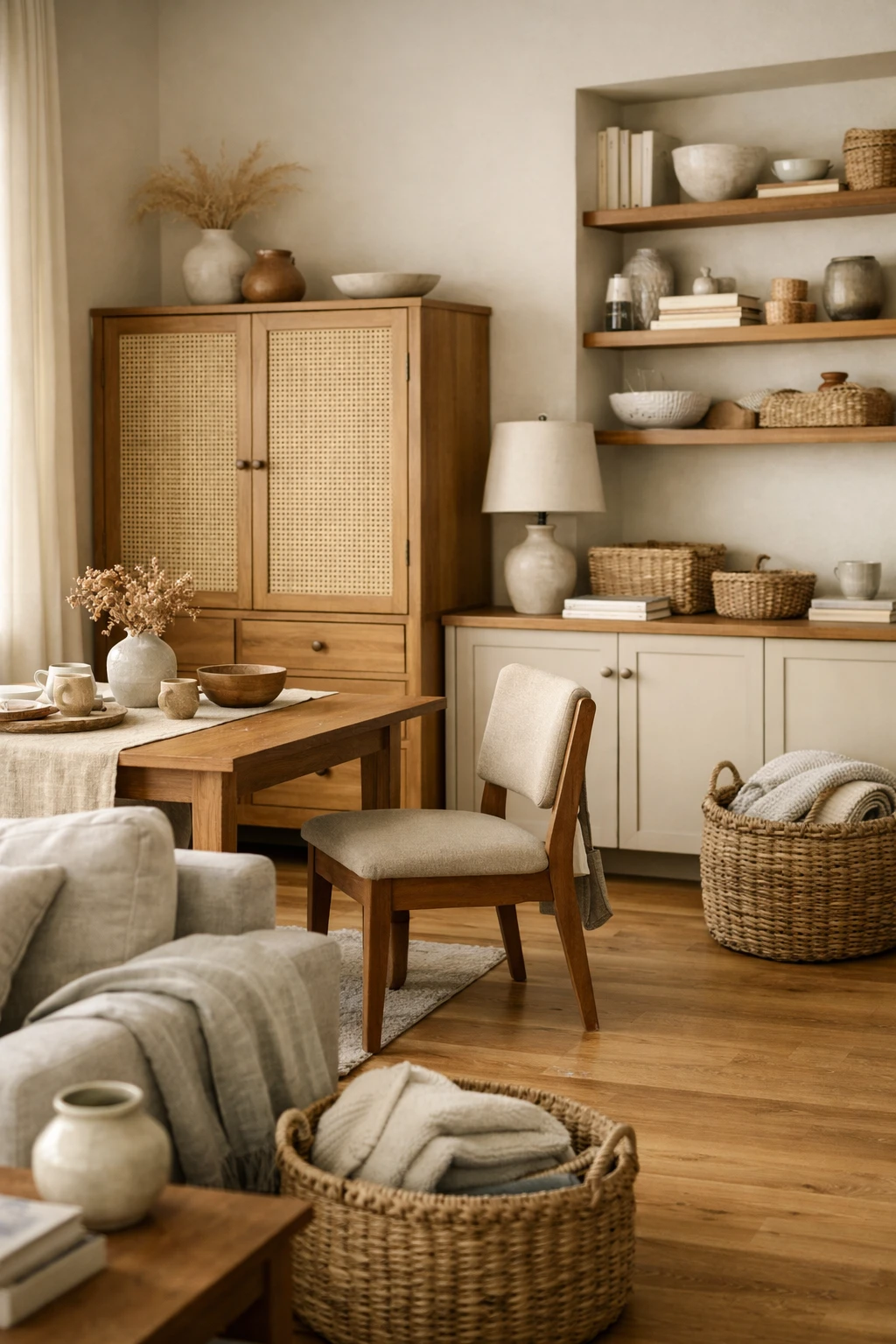
A room feels richer when it does not look bought all at once. You can mix an older wood table with a newer sofa, or vintage dining chairs with modern lighting. The trick is adding one link that keeps the mix under control.
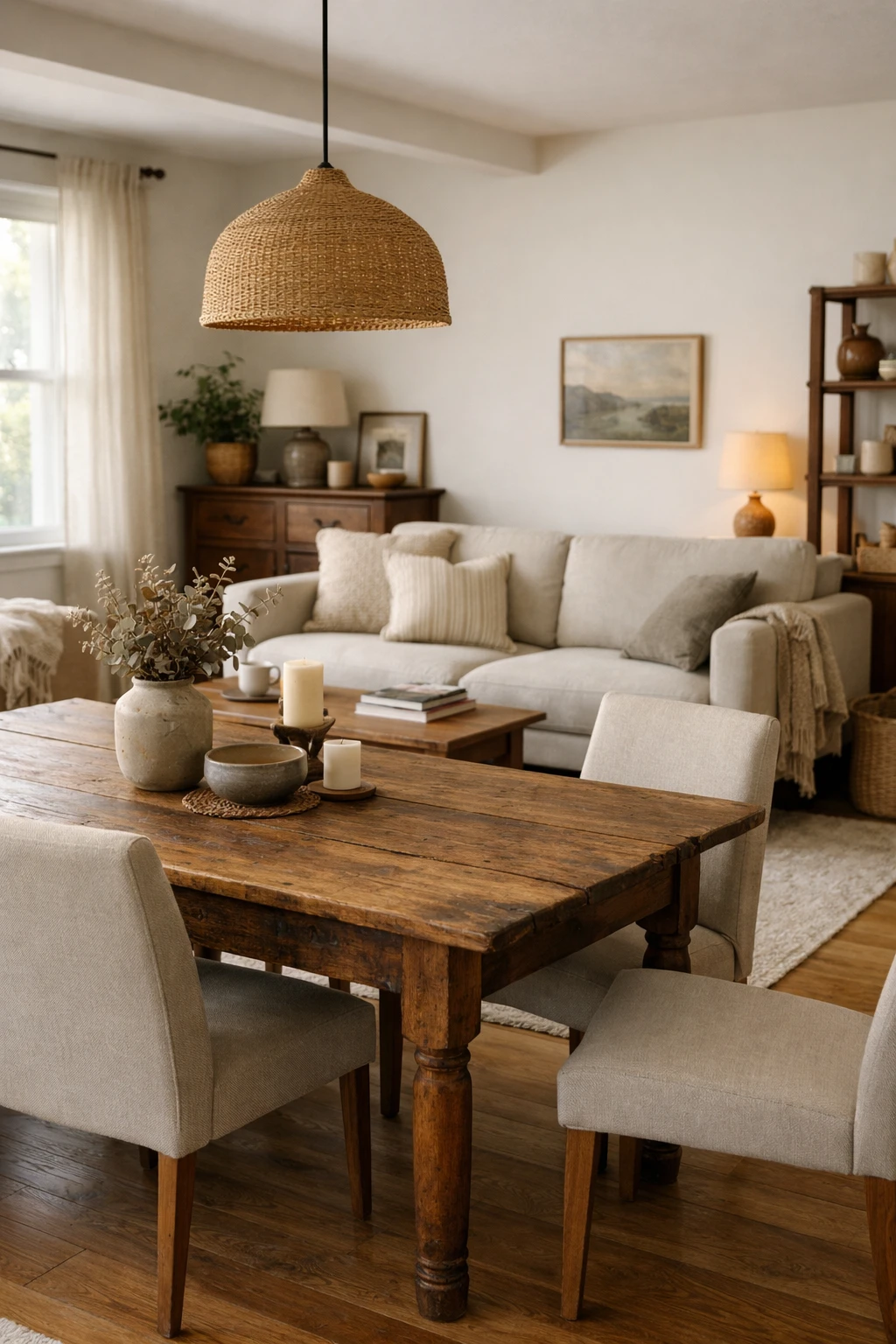
That link could be color, finish, fabric, shape, or tone. For example, an older dark wood table can still work with a newer cream sofa if black lighting and warm neutral textiles connect the room.
22. Layer the Lighting for Evening Use
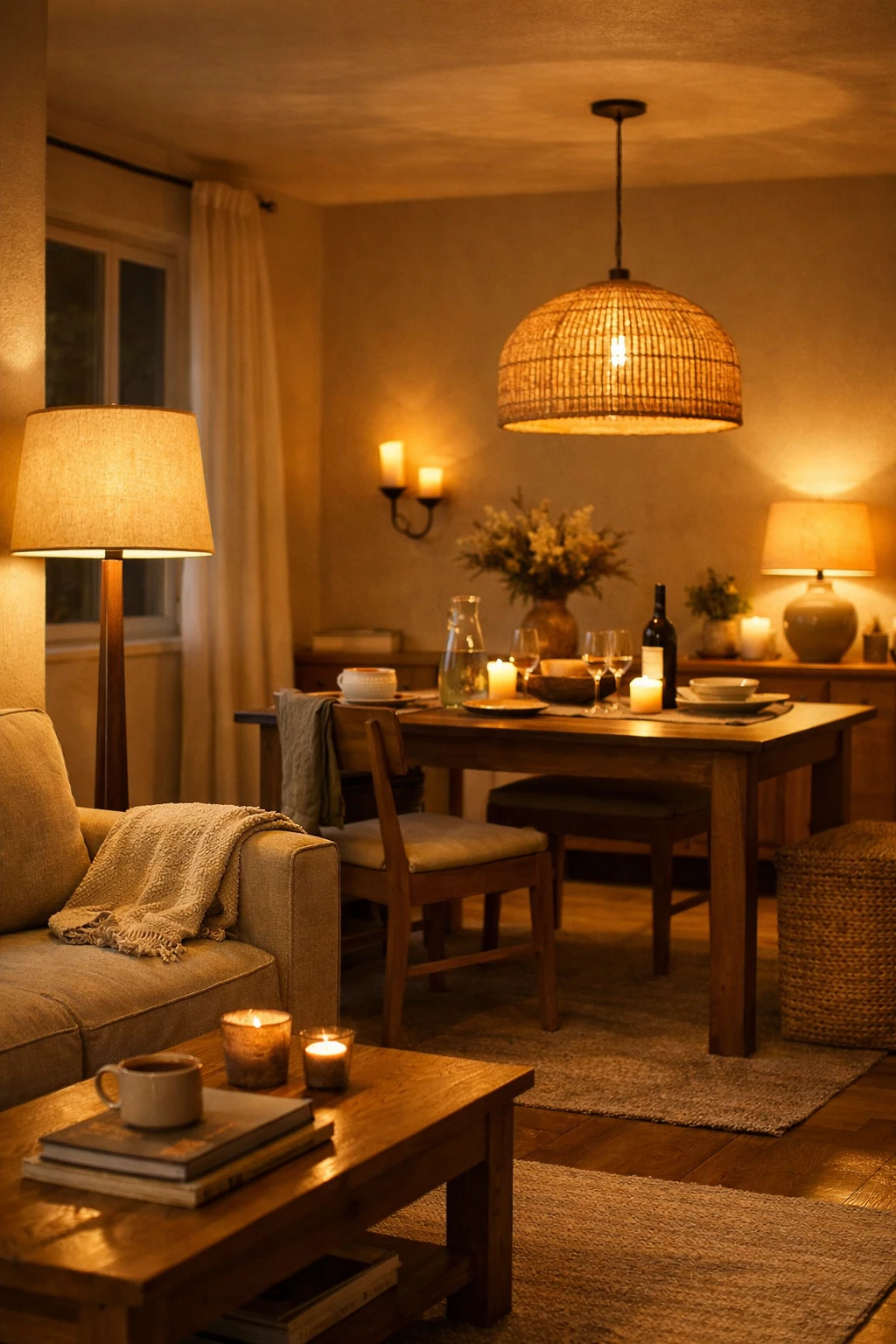
Connected rooms need more than one light source. A dining chandelier alone will not make the living room feel inviting at night. A single ceiling fan light will not make dinner feel warm.
Use layers:
- overhead light for general brightness
- floor or table lamps for the living zone
- a pendant or chandelier for the dining zone
- candles or sconces for extra warmth
When the light feels balanced across the room, the layout feels better too.
23. Edit More Than You Add
The final step is often the one people skip. They keep adding pillows, centerpieces, baskets, trays, and small decor until the room loses clarity. A connected layout works best when the eye has room to rest.
Step back and remove anything that feels repetitive, oversized, or out of place. Keep the pieces that support your palette, scale, and style. Cut the rest. A cleaner room almost always feels more connected.
Final Thoughts
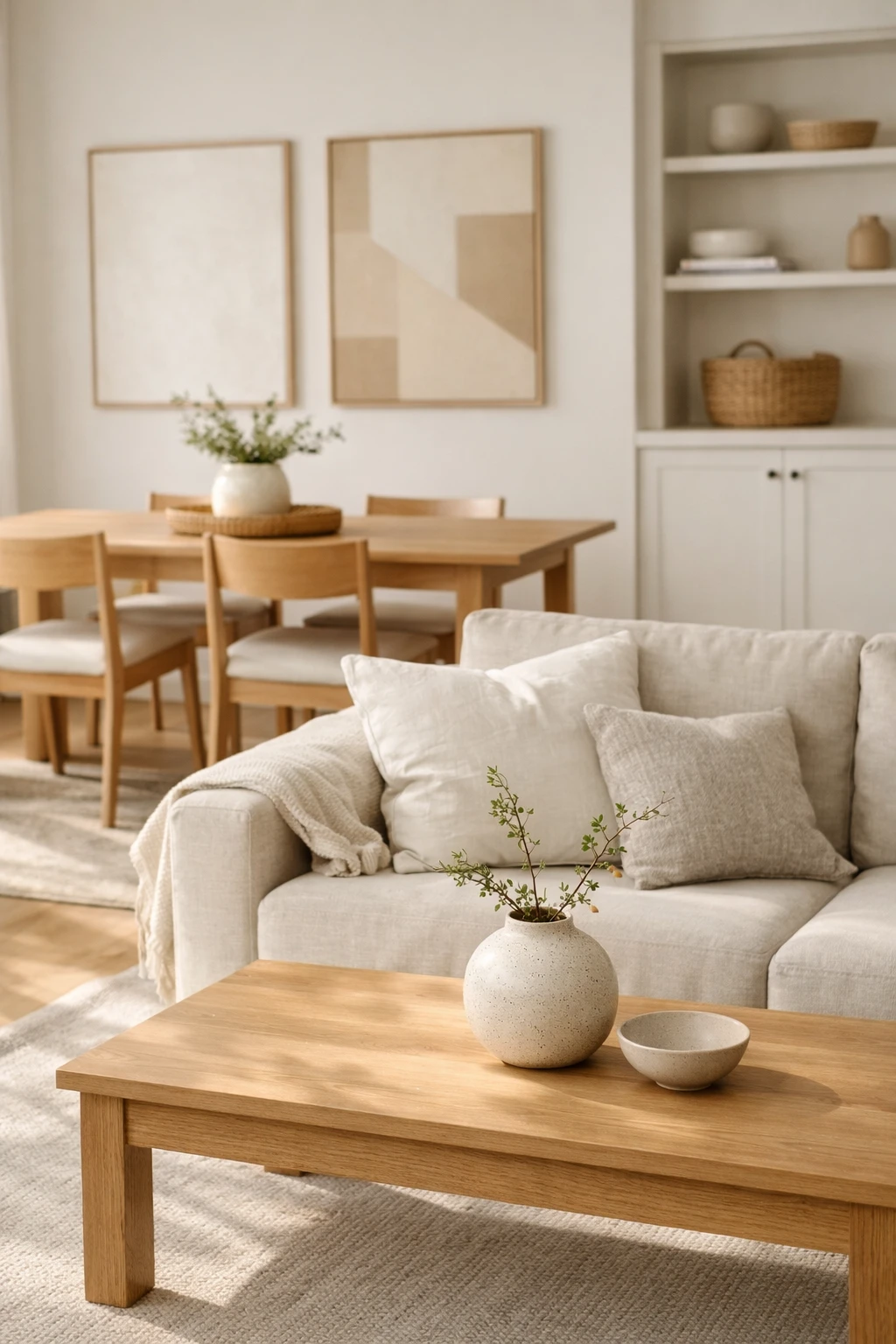
A beautiful living room and dining room combo is not about copying everything from one side to the other. It is about repeating the right details often enough that the whole room feels unified.
Start with your base palette. Then connect the zones with wood tones, lighting, rugs, fabric, scale, and clear flow. When you do that, even a simple home can feel polished, comfortable, and easy to live in.
The best part is that you do not need a giant renovation to get there. In many homes, a few smart changes can fix the problem fast.