

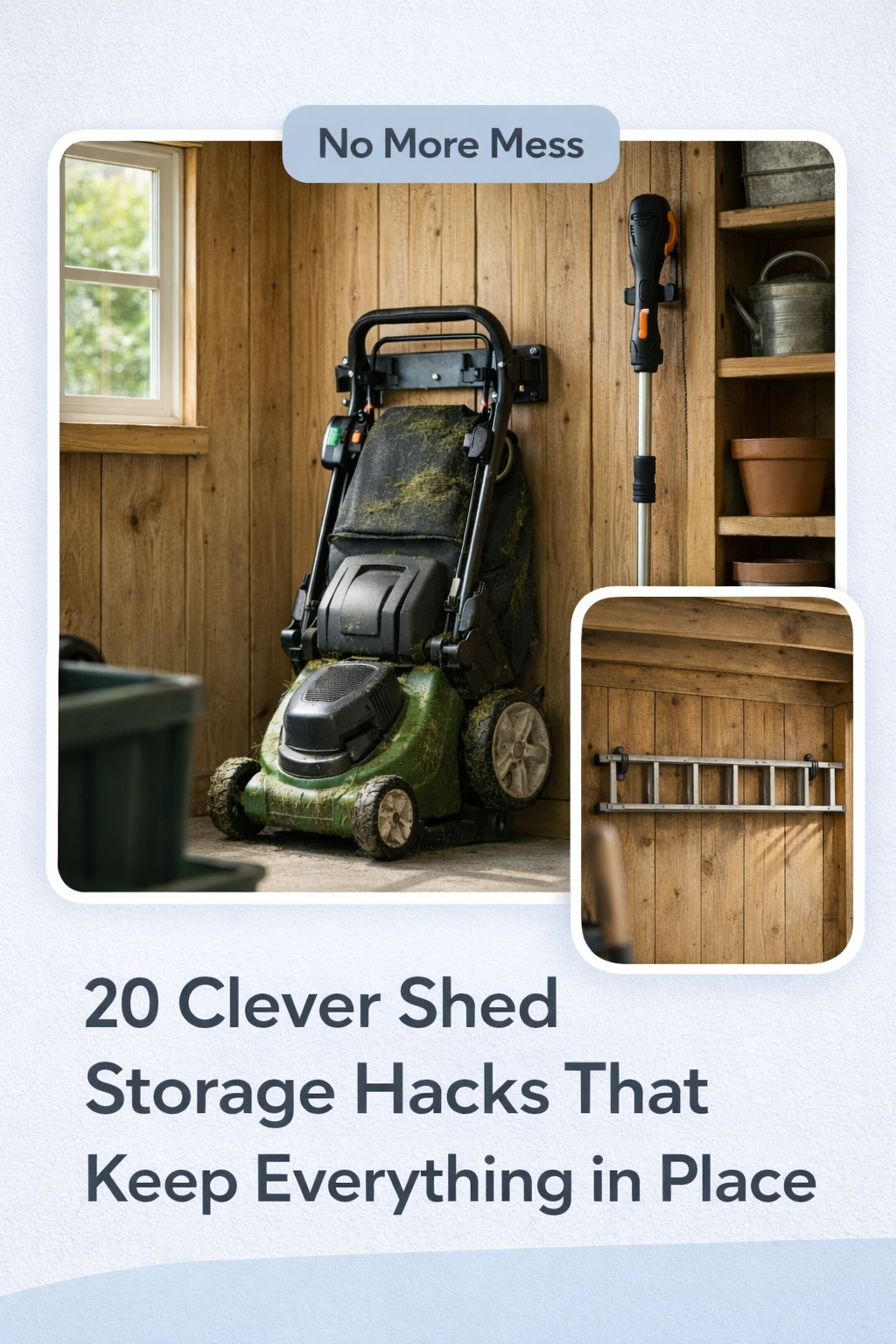
A backyard shed should feel like a helpful extension of your home. It’s where you store gardening tools, seasonal decor, lawn equipment, and weekend project supplies. But over time, even a decent-sized shed can start to feel cramped and chaotic.
You open the door and things spill forward. You can’t find the pruners. The rake falls over. Half the floor disappears under random bins. It’s frustrating.
The truth is, most sheds don’t lack space. They lack strategy.
When you use vertical surfaces, create smart zones, and rethink how you store bulky items, even a small 6×8 shed can feel organized and functional. The goal isn’t to make it look like a showroom. It’s to make it work better for your real life.
These 20 space saving shed organization hacks will help you maximize every square foot and finally enjoy a clutter-free, easy-to-use storage space.
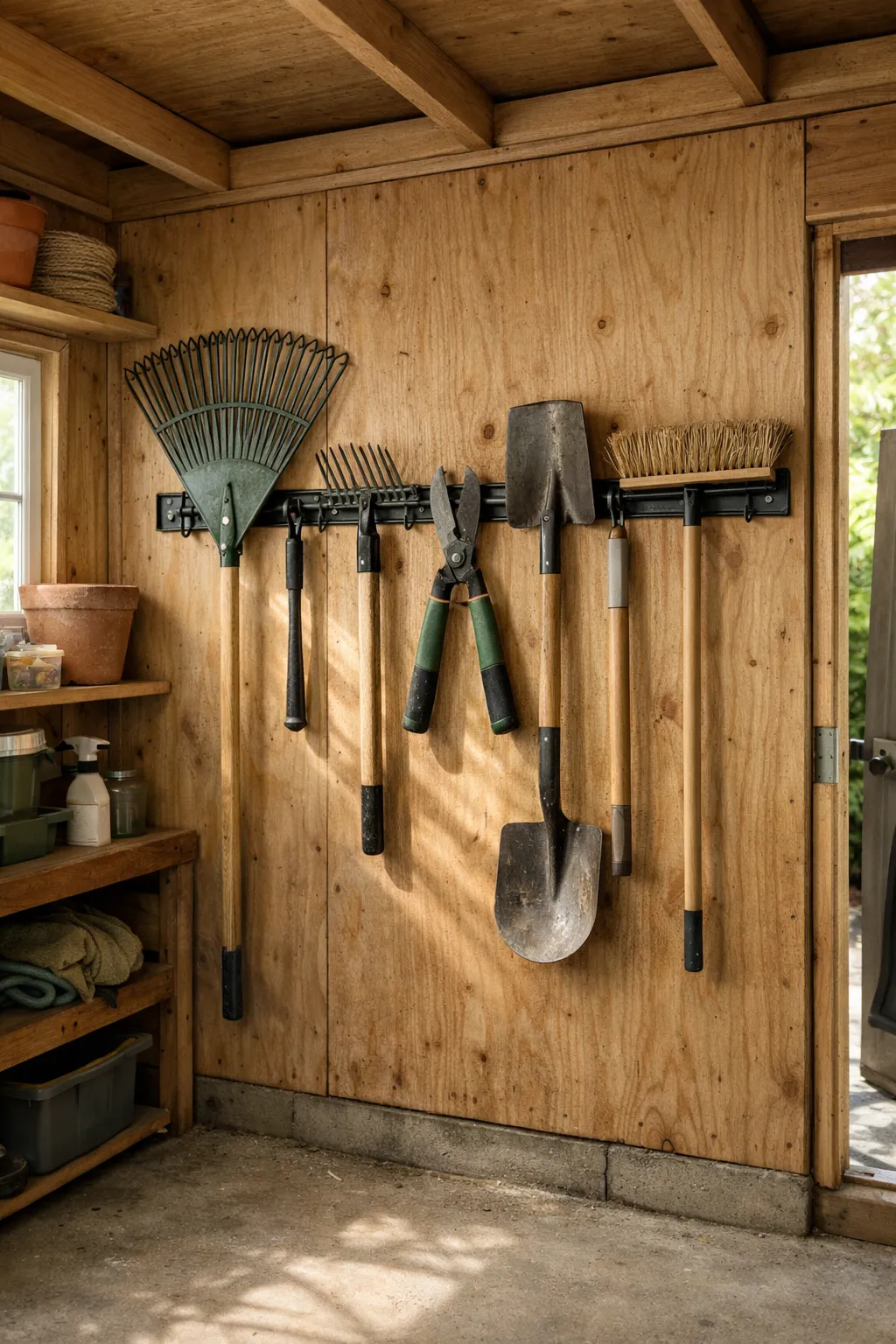
1. Install Vertical Wall Tool Rails
Long-handled tools are one of the biggest space wasters in any shed. When they lean in corners, they take up floor space and create visual clutter.
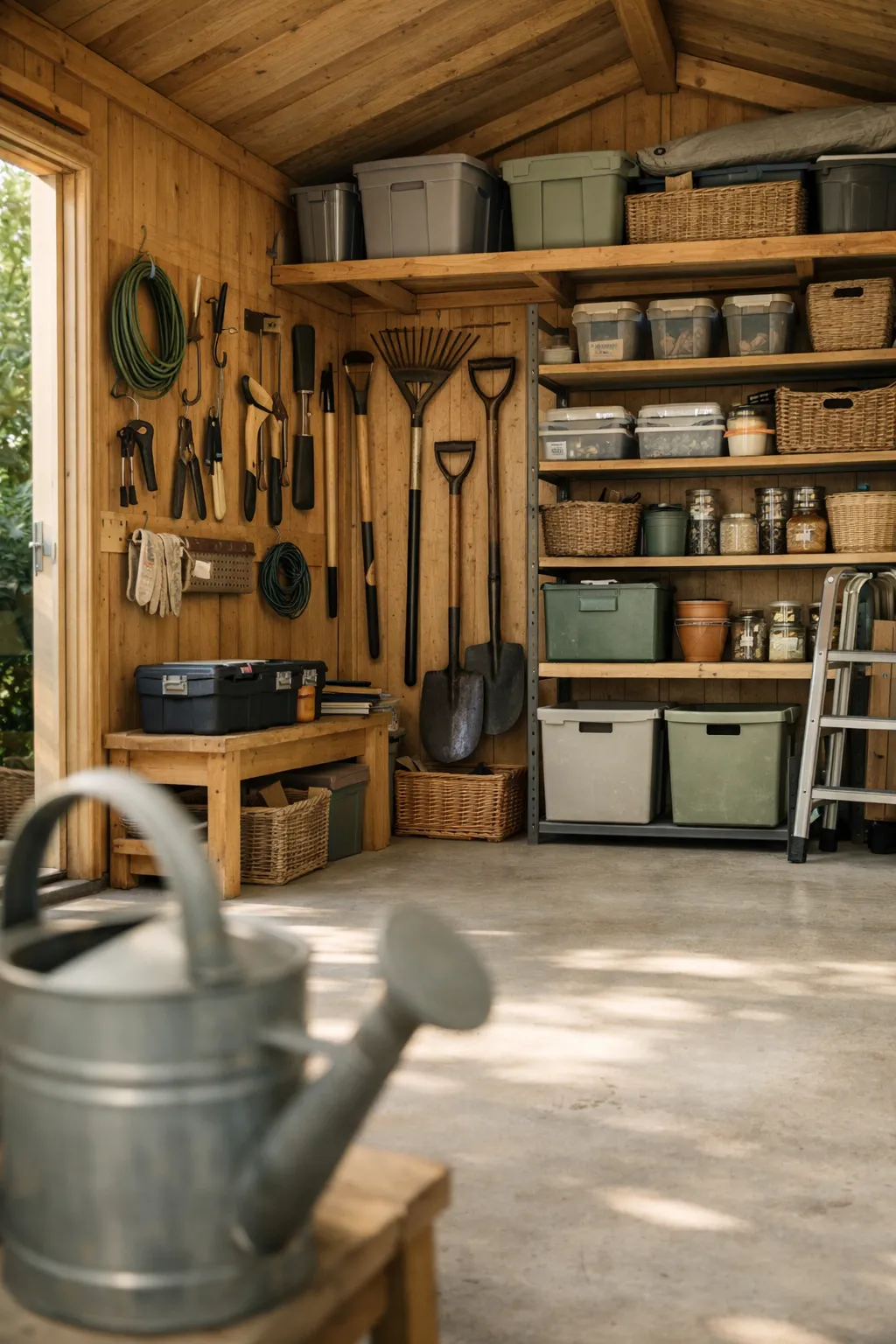
Install a sturdy wall-mounted rail system with adjustable hooks. Mount it along your longest wall at shoulder height. This keeps tools visible and easy to grab.
Store:
• Rakes
• Shovels
• Brooms
• Hoes
• Hedge trimmers
By lifting them off the ground, you instantly clear walking space. In a small shed, this one change can free up an entire corner.
If you have limited wall space, stagger tools slightly to fit more on one rail.
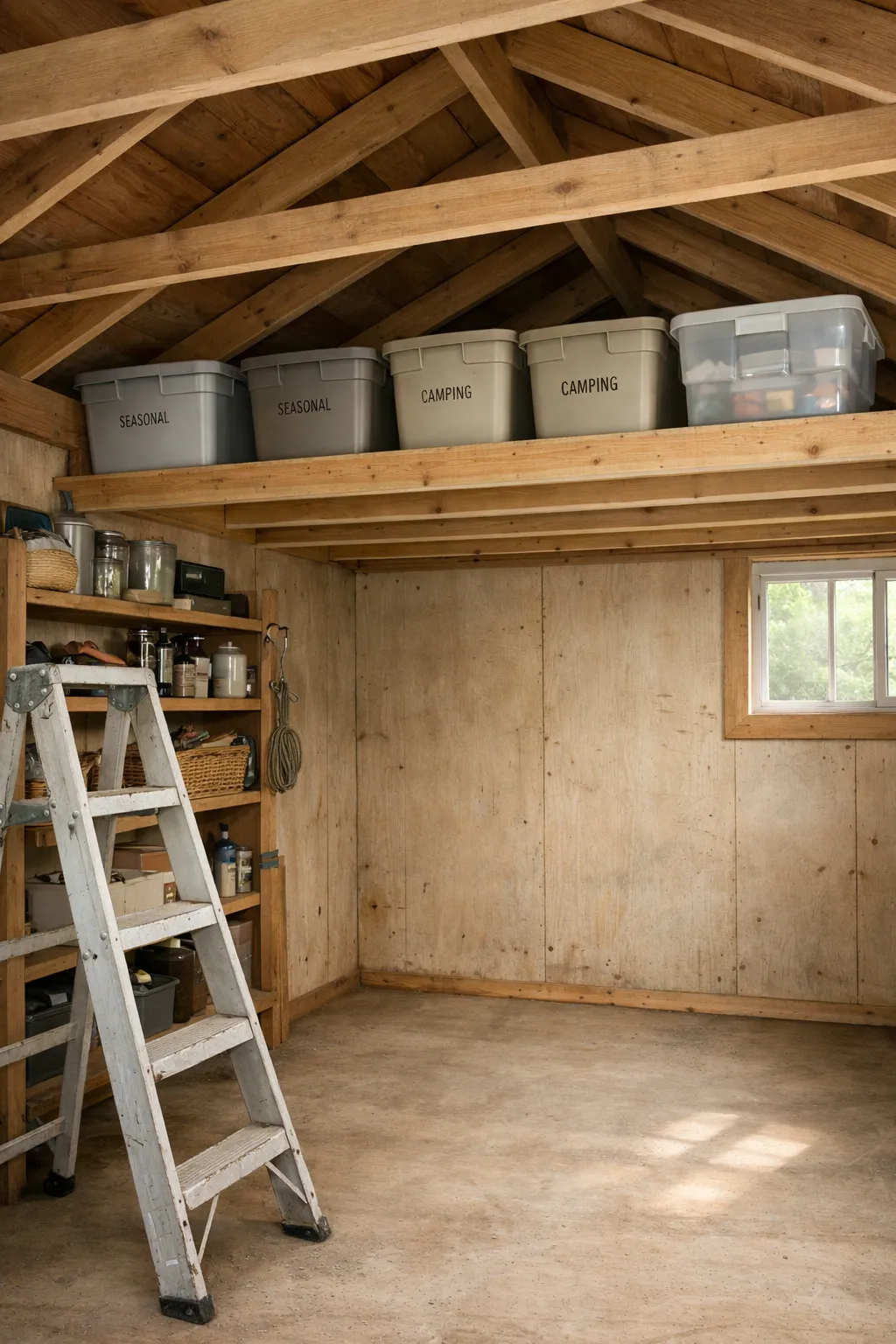
2. Use Ceiling Joists for Overhead Storage
Look up. Most sheds have unused space above eye level.
If your shed has exposed rafters, install simple plywood boards across joists to create overhead storage platforms. This area works best for lightweight, rarely used items.
Store:
• Holiday decorations
• Camping gear
• Pool inflatables
• Extra planters
Keep heavier items lower to protect the structure. Overhead storage keeps seasonal clutter out of your way without sacrificing accessibility.
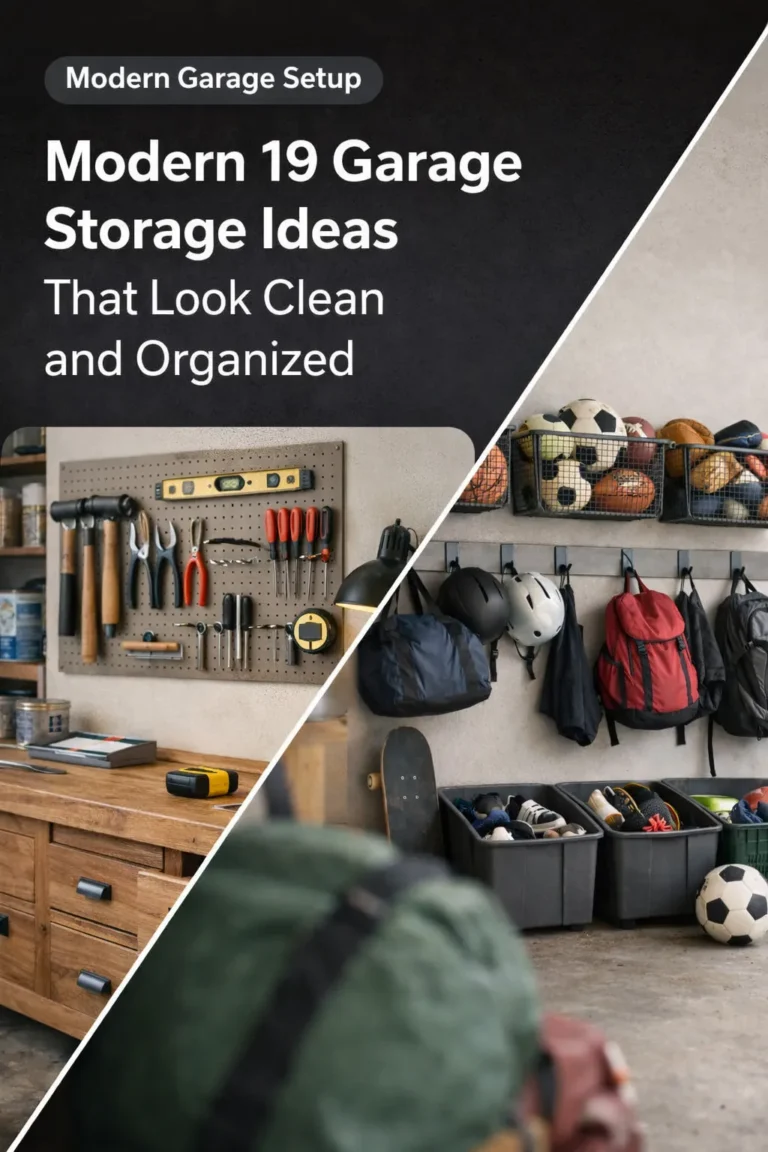
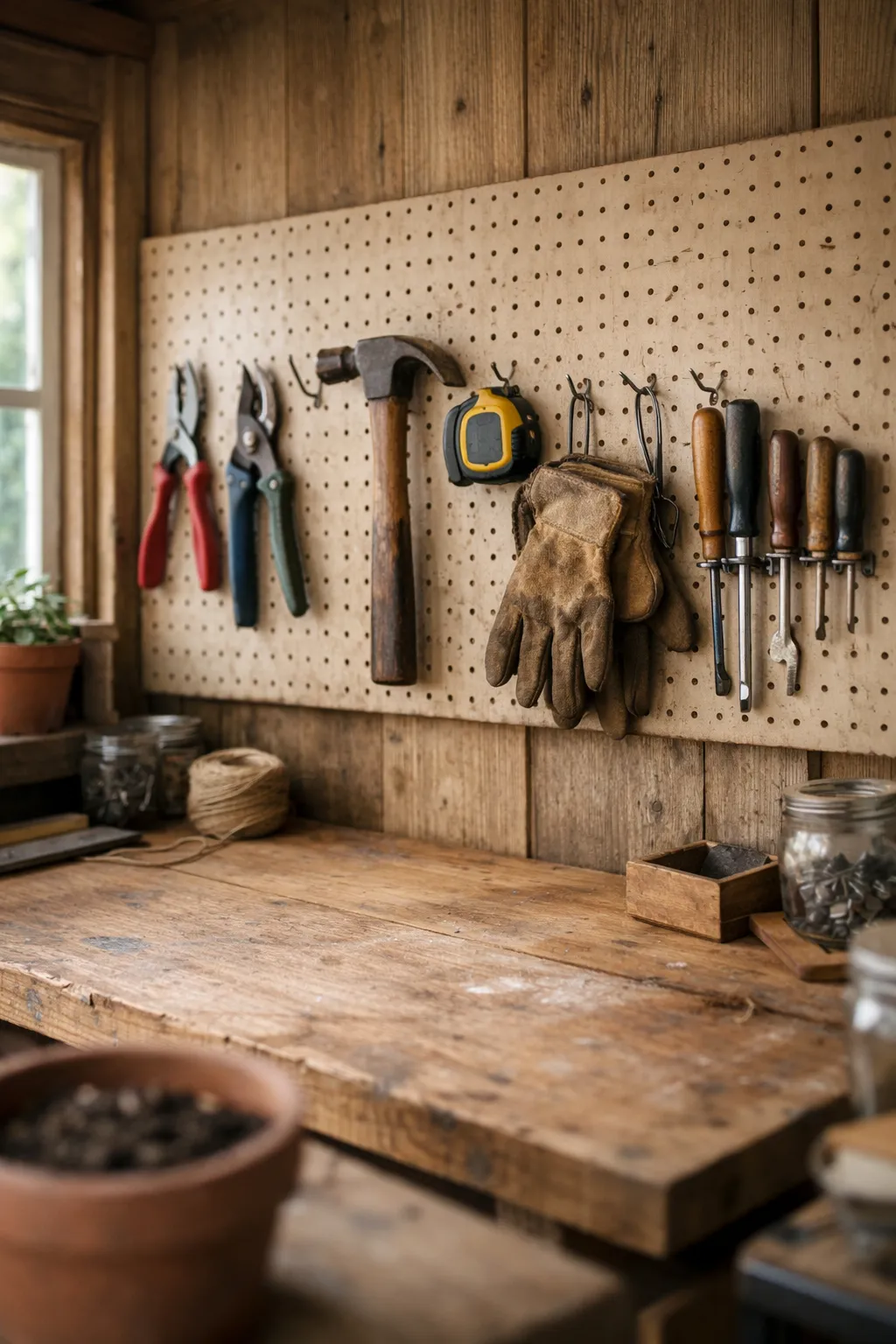
3. Add Pegboard for Small Hand Tools
Small tools disappear easily. Pegboard keeps everything visible.
Mount a large pegboard panel above a workbench or open wall. Add hooks, small baskets, and tool holders. Arrange items by category so they’re easy to find.
You can outline tool shapes with marker to keep the system consistent. It sounds simple, but it makes daily use much smoother.
Pegboard works especially well in narrow sheds where drawer storage isn’t practical.
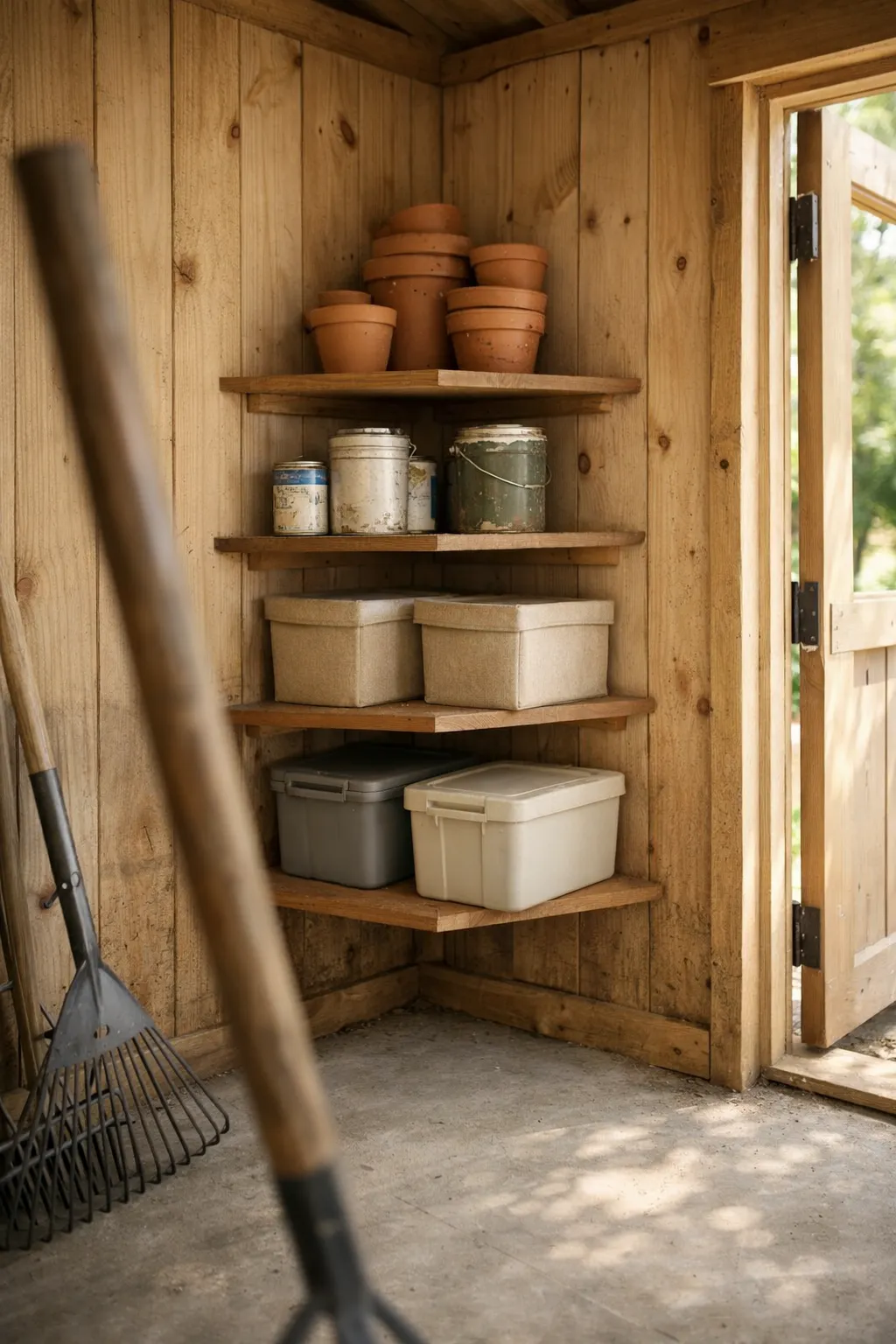
4. Install Corner Shelves
Corners often go unused, yet they can hold surprising amounts of weight.
Install triangular corner shelves to store:
• Paint cans
• Garden pots
• Small bins
• Fertilizer containers
Stack shelves vertically to maximize height. This prevents awkward floor piles and keeps bulky containers organized.
In compact sheds, corner shelving adds storage without blocking pathways.
5. Hang a Fold-Down Workbench
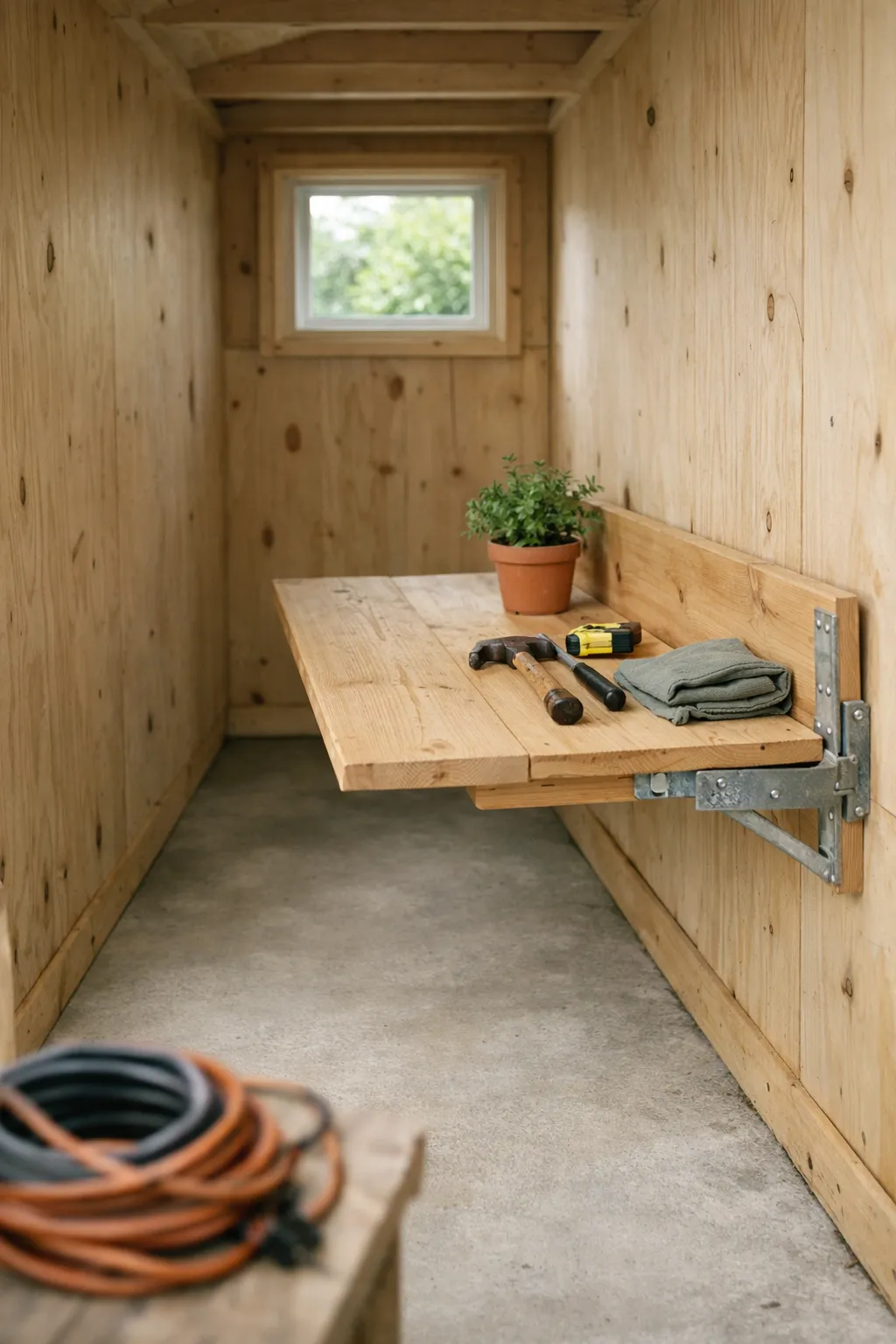
A permanent workbench can dominate a small shed. A fold-down version gives you flexibility.
Install a wall-mounted foldable work surface that drops down when needed and folds flat when not in use.
This works great for:
• Potting plants
• Quick repairs
• DIY projects
When folded, it keeps the shed open and easier to move through.
6. Use Clear Stackable Bins
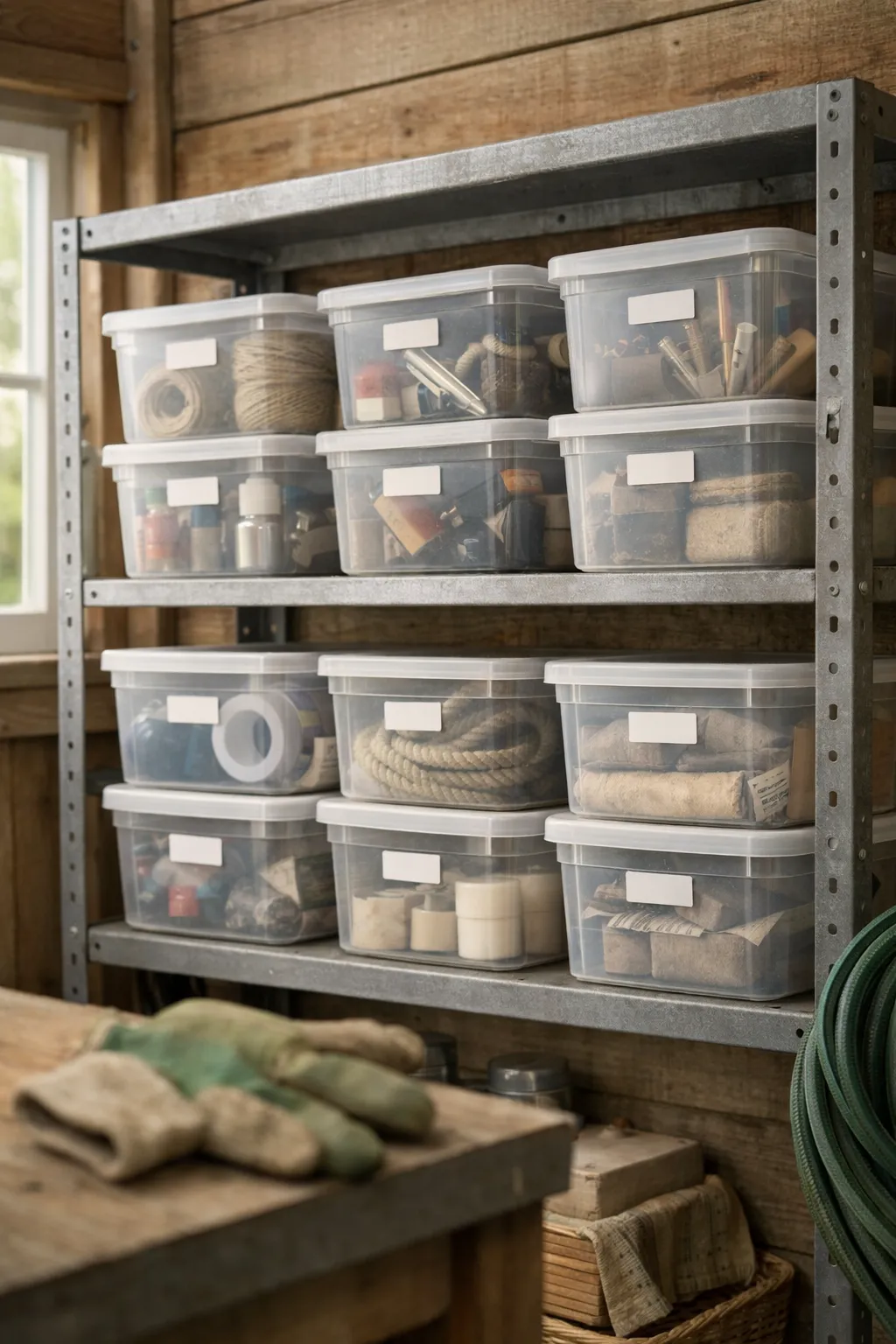
Random cardboard boxes create chaos. Clear, stackable plastic bins create structure.
Choose uniform bins that stack securely. Label each one clearly. Store items vertically instead of spreading them across shelves.
Great categories include:
• Extension cords
• Spray bottles
• Seed packets
• Hardware
Clear bins help you see what you have without digging through everything.
7. Create Functional Storage Zones
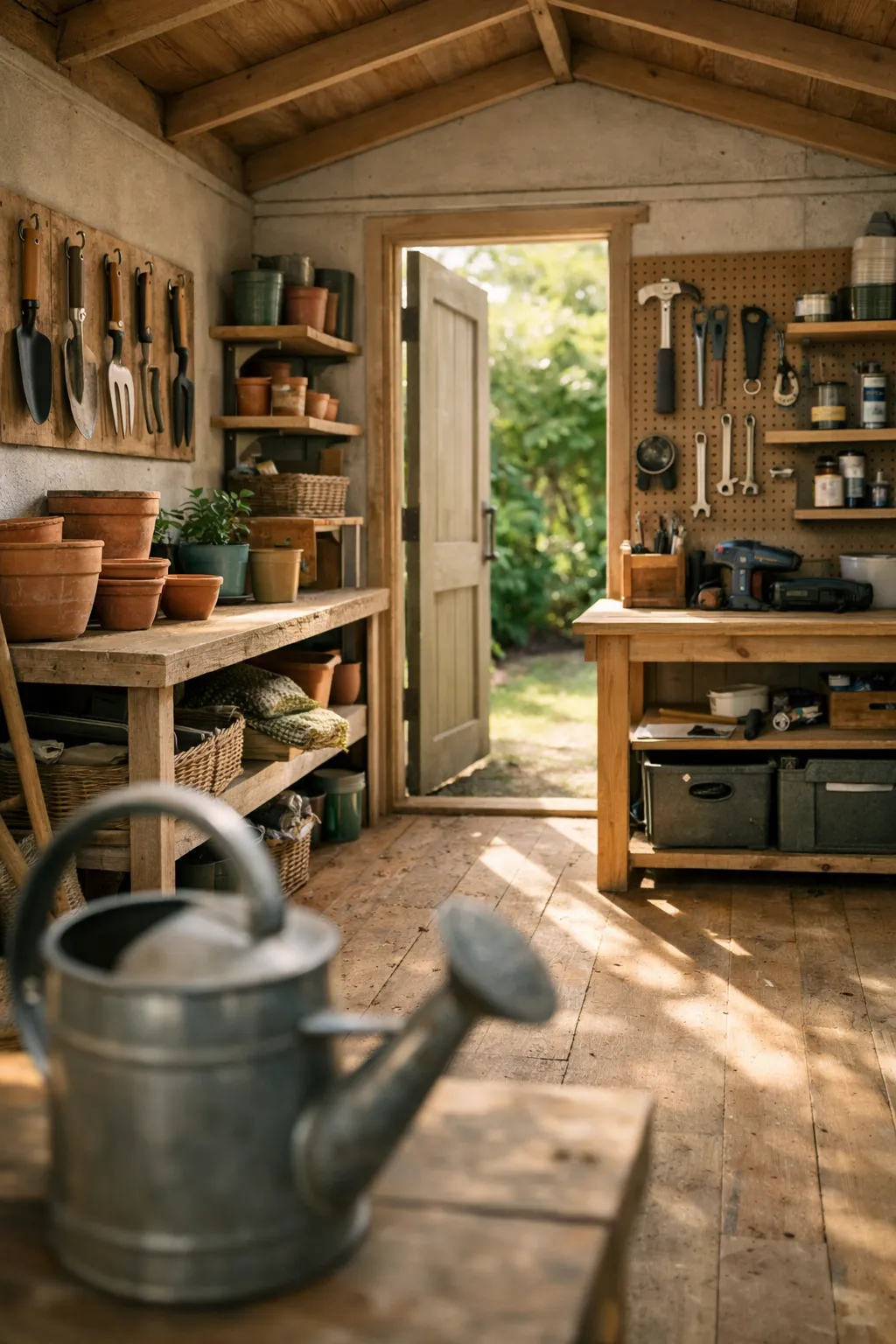
Think of your shed like a mini room with sections.
Create zones such as:
• Gardening zone
• Lawn equipment zone
• DIY tools zone
• Seasonal storage zone
Keep related items together. This prevents mixing categories and saves time when you need something quickly.
Even in a small 8×8 shed, zoning improves flow and reduces clutter.
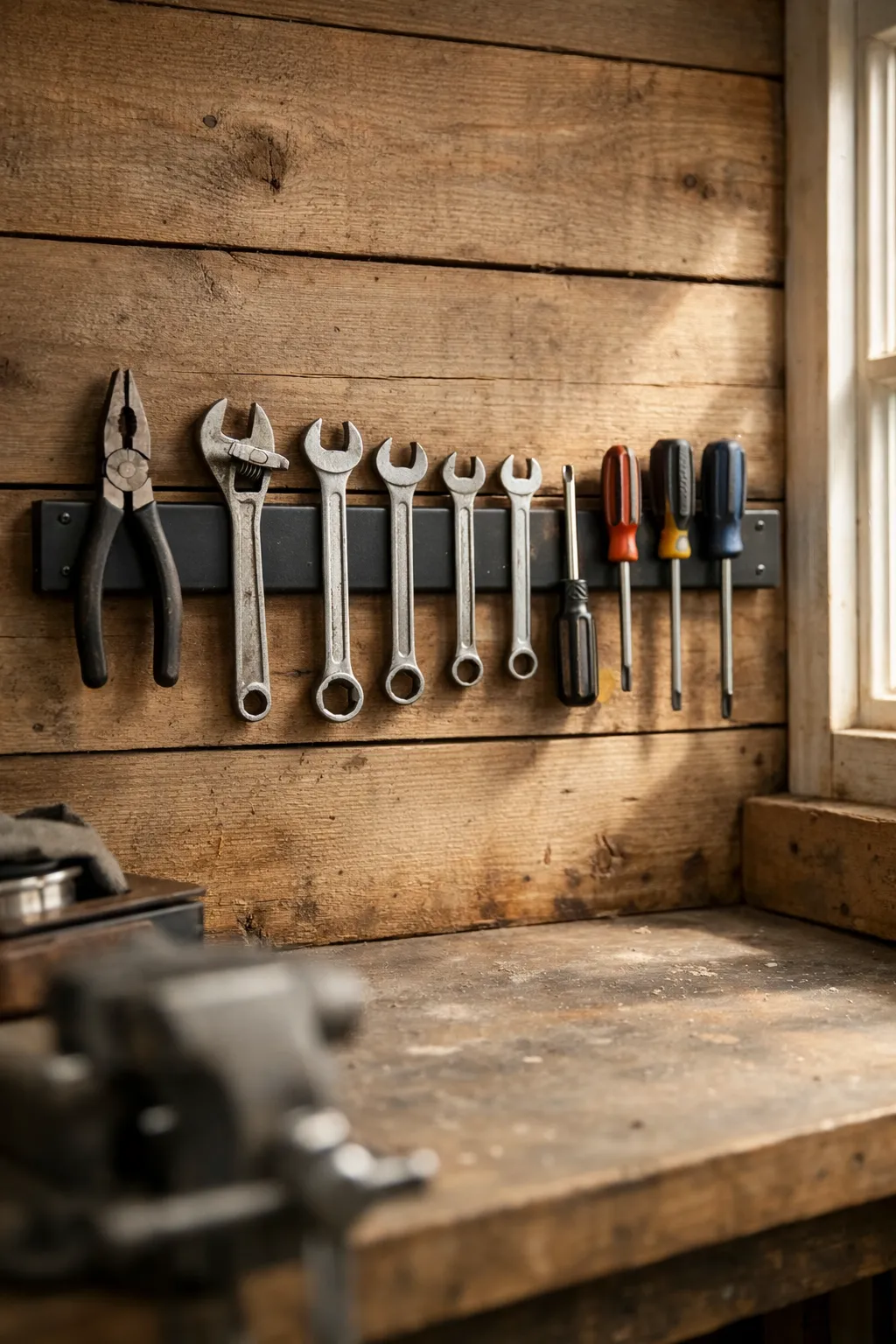
8. Install Magnetic Strips for Metal Tools
Magnetic strips aren’t just for kitchens. They work beautifully in sheds.
Mount heavy-duty magnetic strips near your work area. Store:
• Screwdrivers
• Wrenches
• Pruning shears
• Drill bits
This keeps tools visible and prevents drawer clutter. It also saves pegboard space.
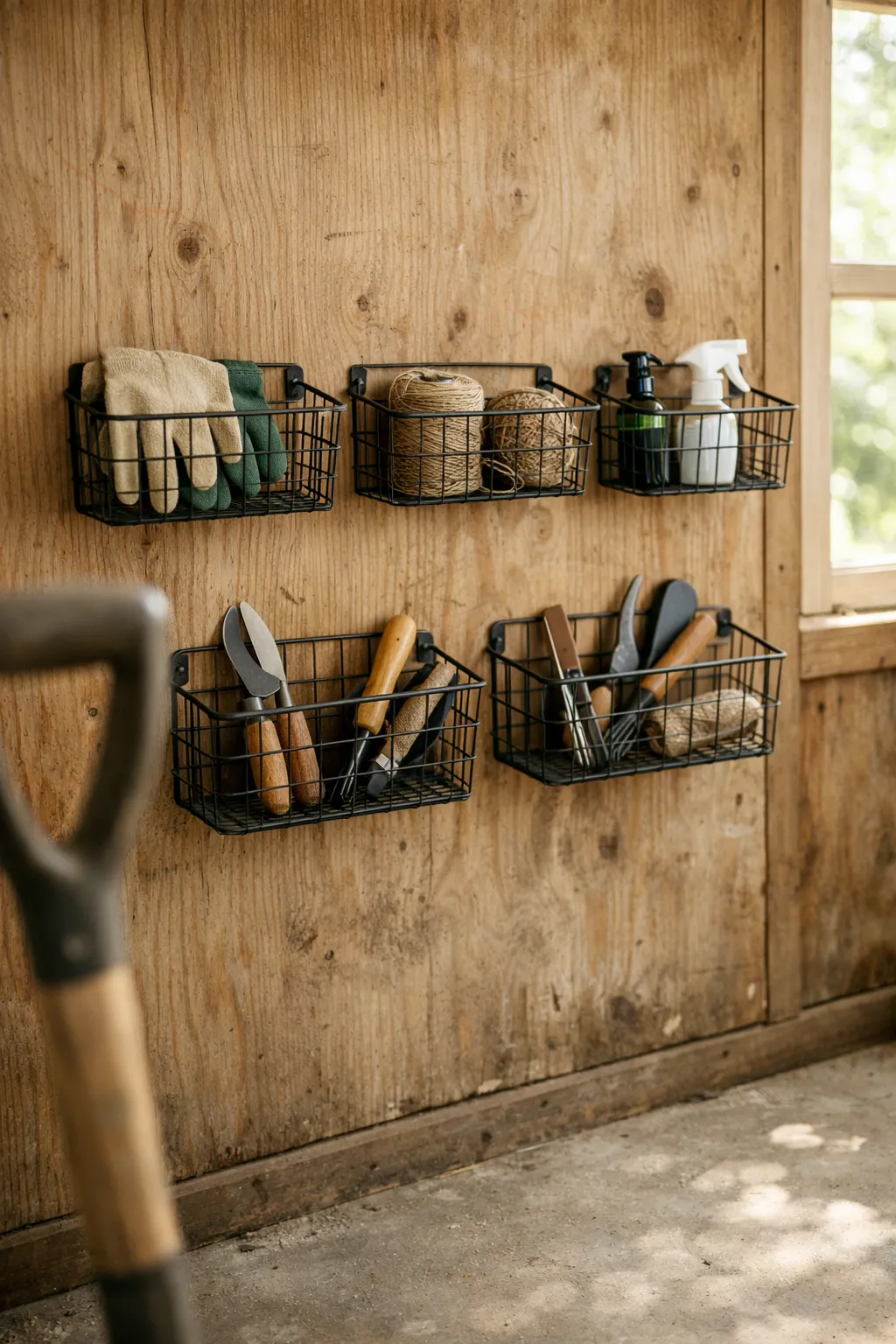
9. Hang Baskets on Wall Hooks
Metal or wire baskets mounted on hooks can store odd-shaped items that don’t stack well.
Use them for:
• Garden gloves
• Twine
• Spray bottles
• Small power tools
This adds vertical storage while keeping items easy to grab.
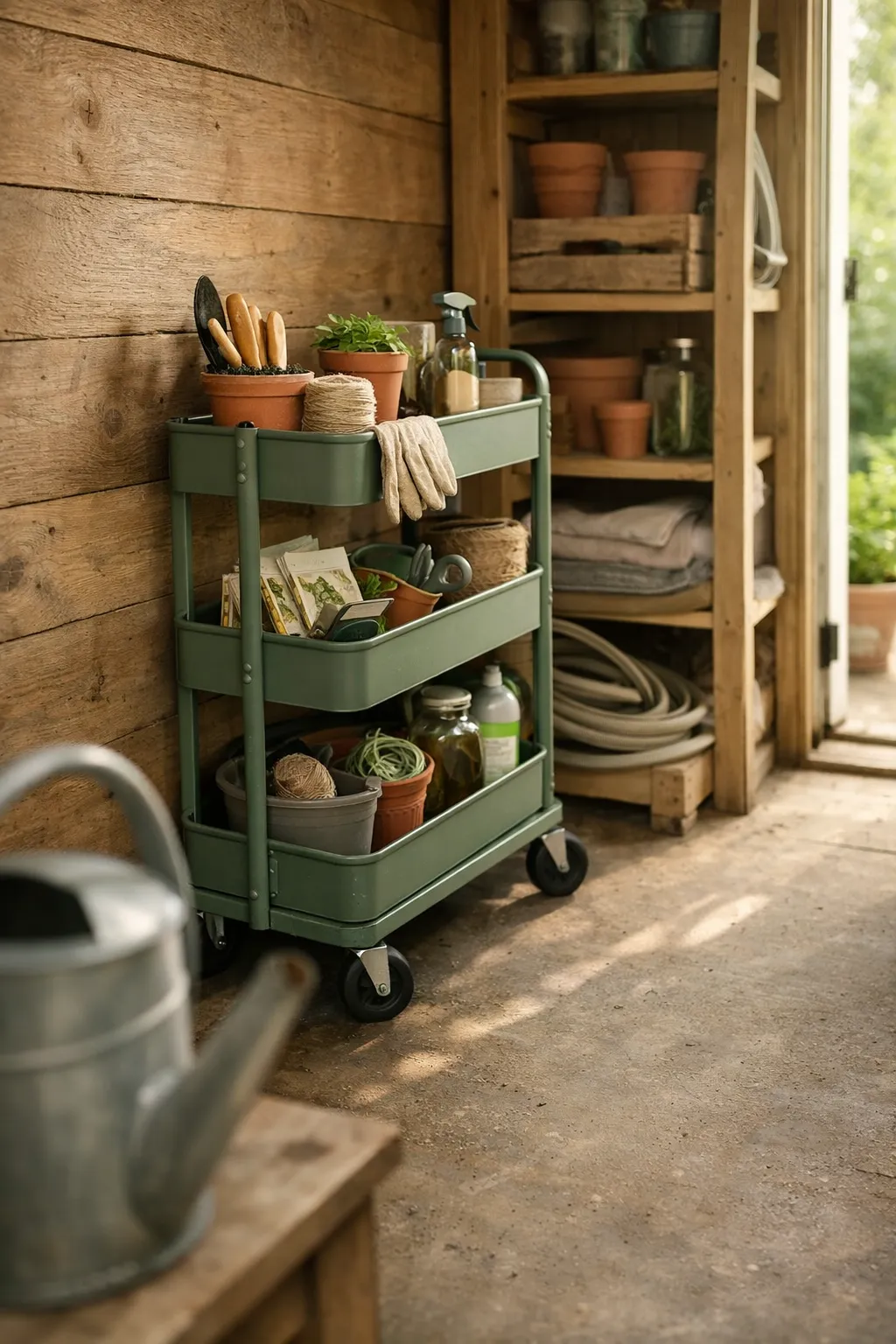
10. Use a Rolling Cart for Flexible Storage
A narrow rolling cart adds mobile storage without taking up permanent space.
Use it to store frequently used supplies. When you need room, roll it aside. When working, bring it closer.
Rolling storage works well in sheds used for active projects.
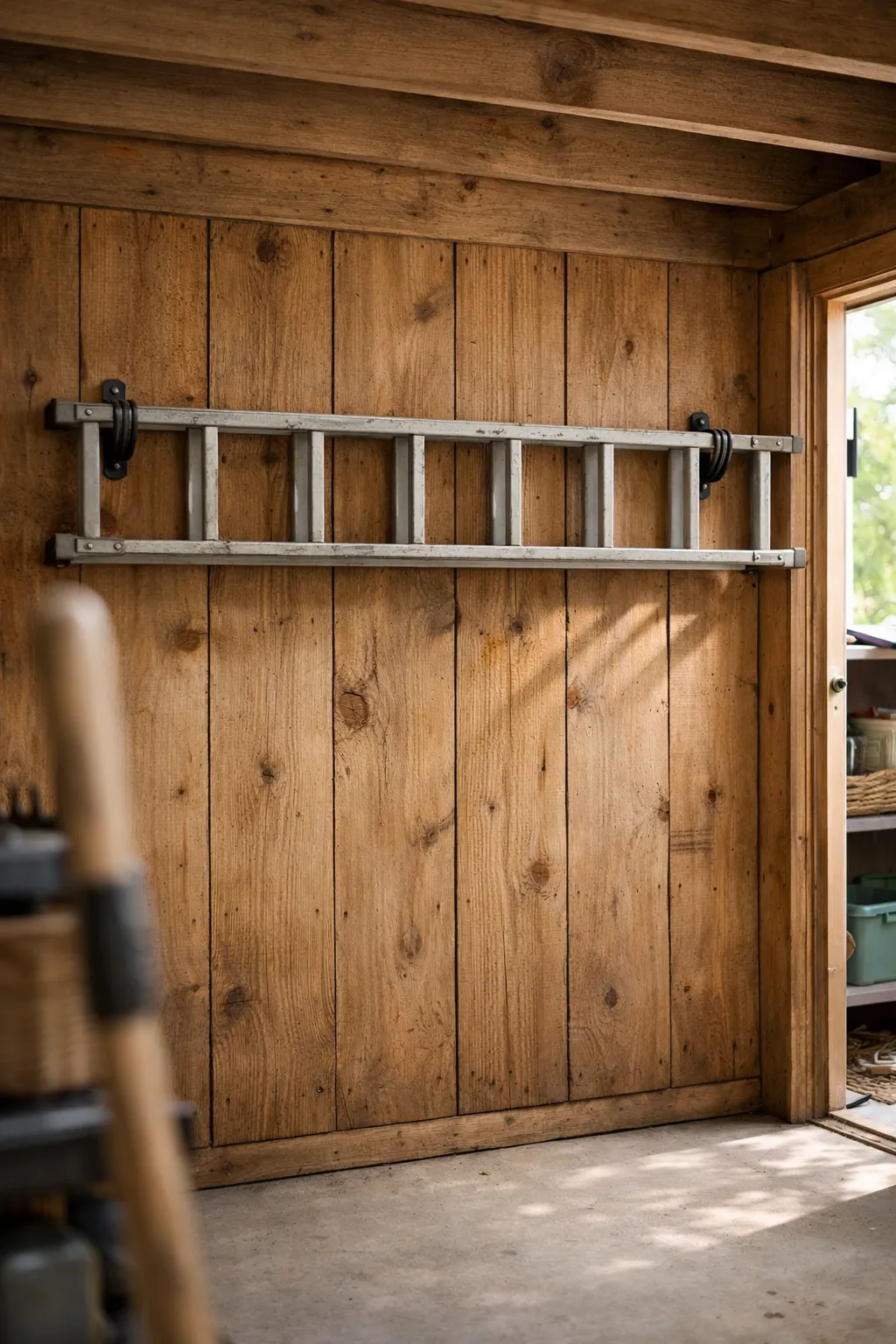
11. Install Ladder Hooks High on the Wall
Ladders consume valuable floor space.
Install heavy-duty wall hooks high along a side wall to store ladders horizontally. This keeps them secure and out of walking areas.
In narrow sheds, this is one of the most effective space-saving solutions.
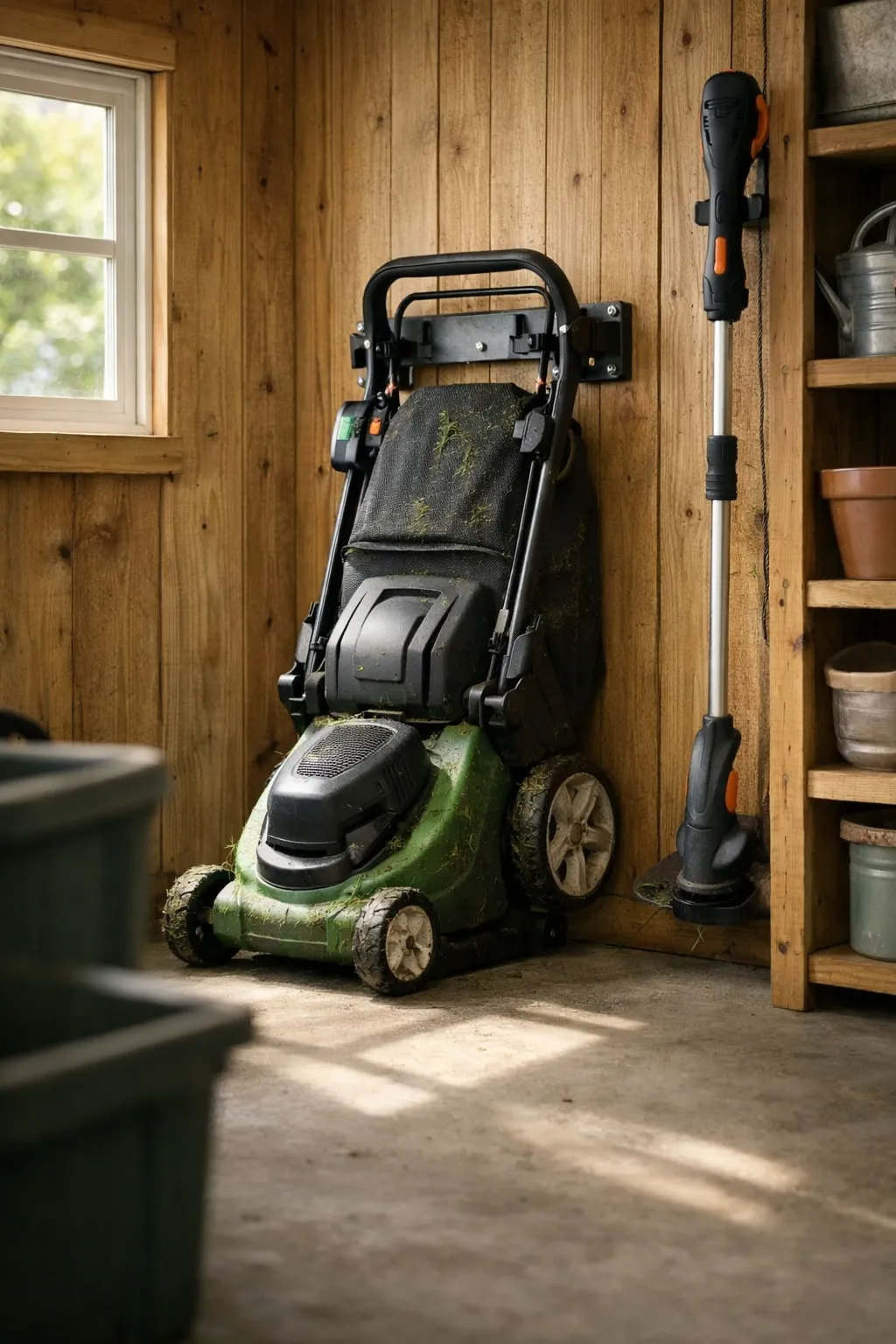
12. Store Lawn Equipment Vertically
Push mowers and bulky equipment should not block pathways.
Whenever possible, store equipment vertically or flush against walls. Some mowers allow upright storage. Check your manufacturer’s guidance.
Even shifting equipment tighter to one wall creates more usable floor space.
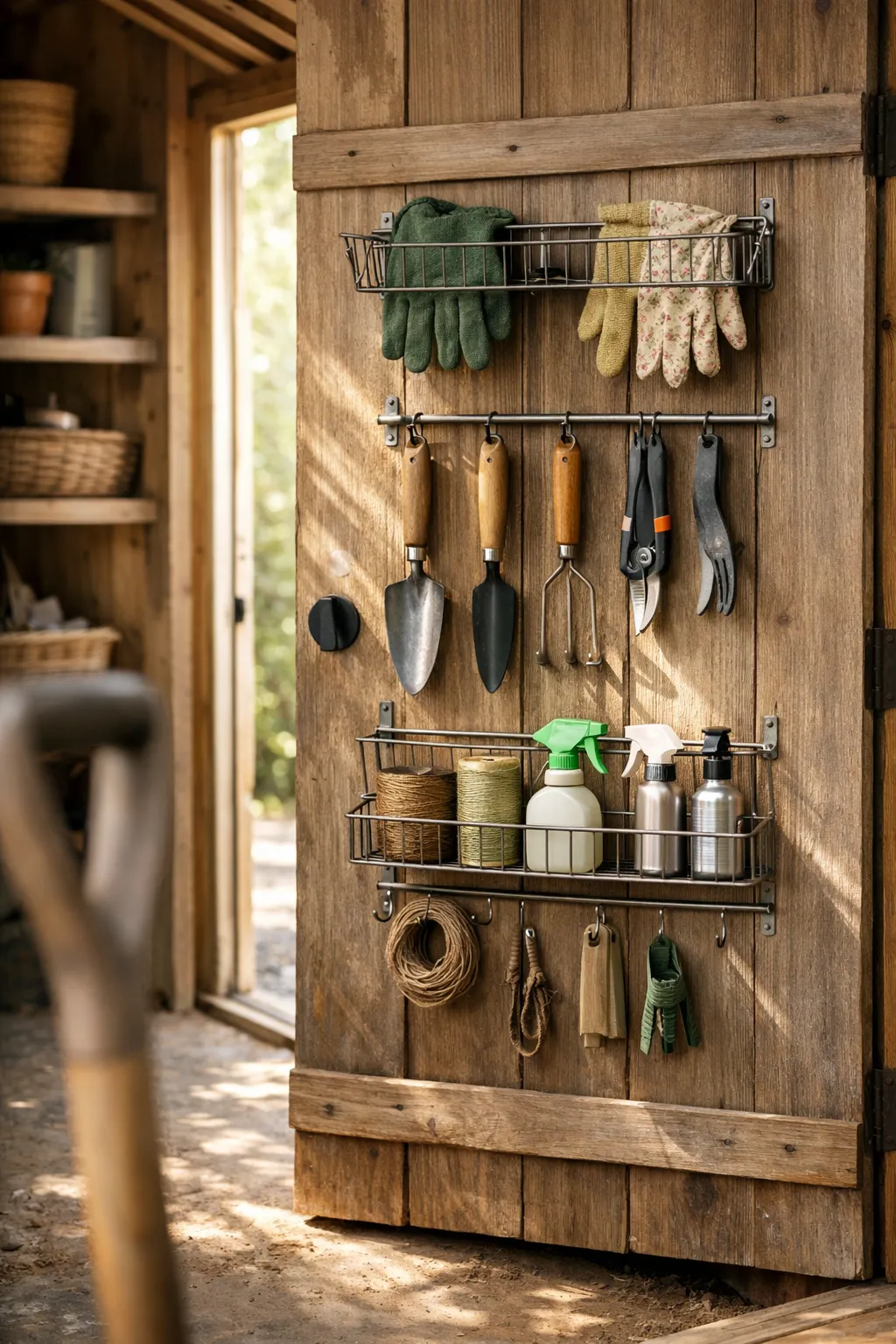
13. Add Door-Mounted Storage
The back of your shed door is often wasted.
Install slim racks, small bins, or hook strips on the inside of the door to store:
• Hand tools
• Gloves
• Safety glasses
• Small garden tools
It adds storage without affecting your interior layout.
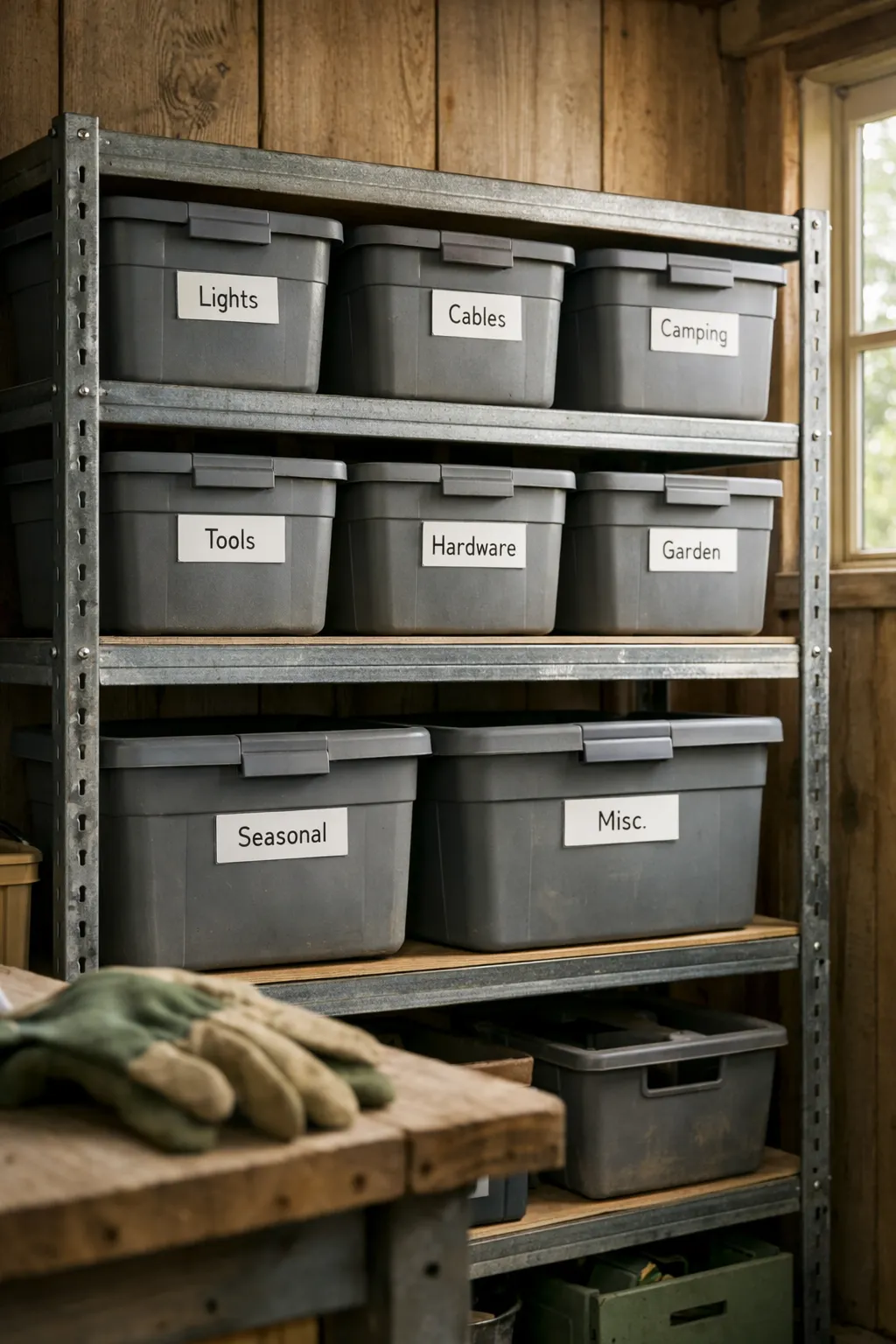
14. Use Labeling Systems
Organization only works if everyone can maintain it.
Use bold, easy-to-read labels on bins, shelves, and zones. This reduces guesswork and prevents clutter from creeping back.
Consistency keeps your shed system sustainable.
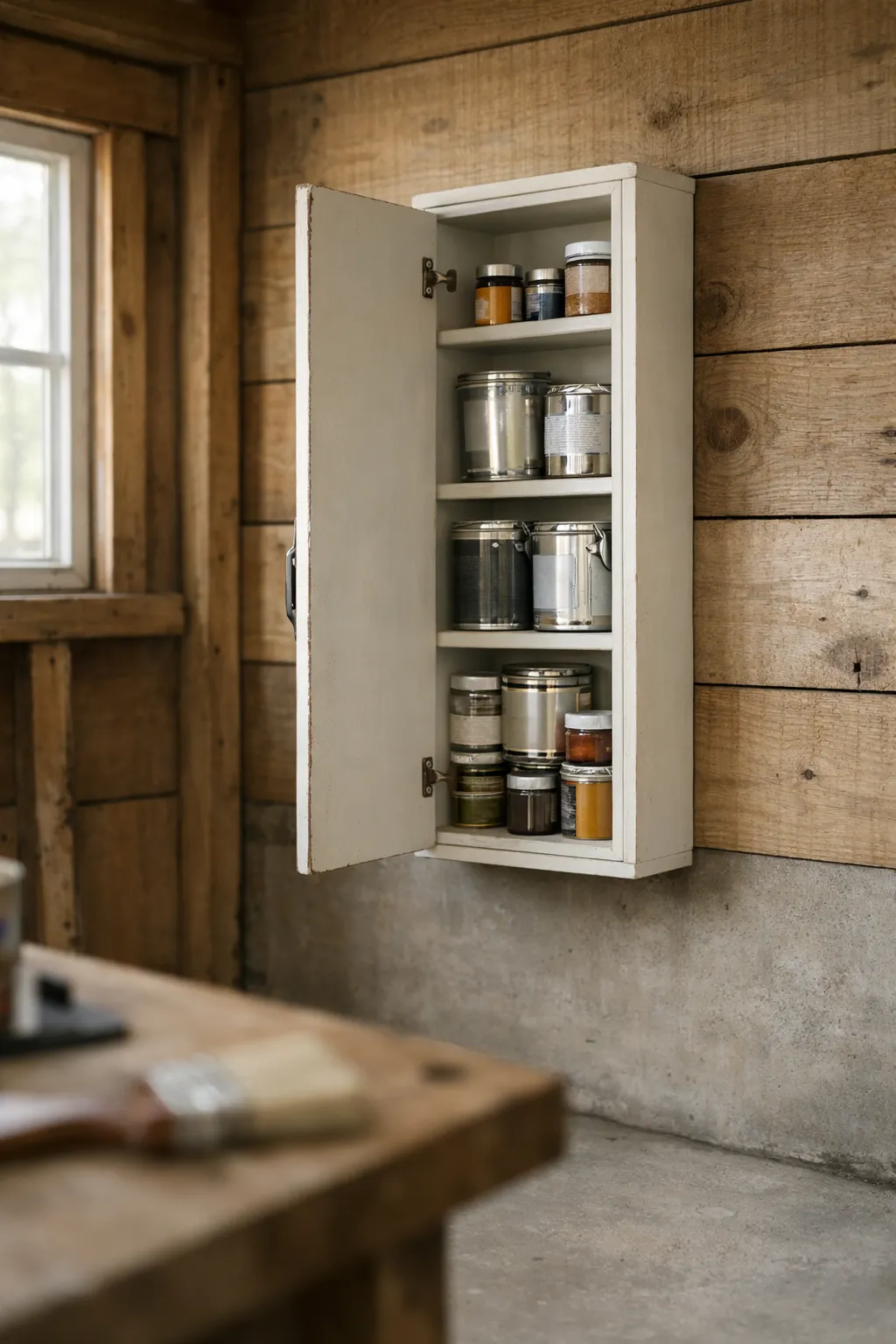
15. Install Narrow Wall Cabinets
If you need enclosed storage, choose shallow cabinets instead of deep ones.
Shallow cabinets keep pathways open while hiding clutter. They work well for:
• Paint
• Chemicals
• Automotive supplies
This keeps dangerous items secure and out of reach of children.
16. Stack Planters and Pots Efficiently
Garden pots take up more space than expected.
Stack similar-sized pots together and store them vertically on shelves. Place smaller pots inside larger ones to reduce bulk.
Keep saucers in a separate labeled bin to avoid messy piles.
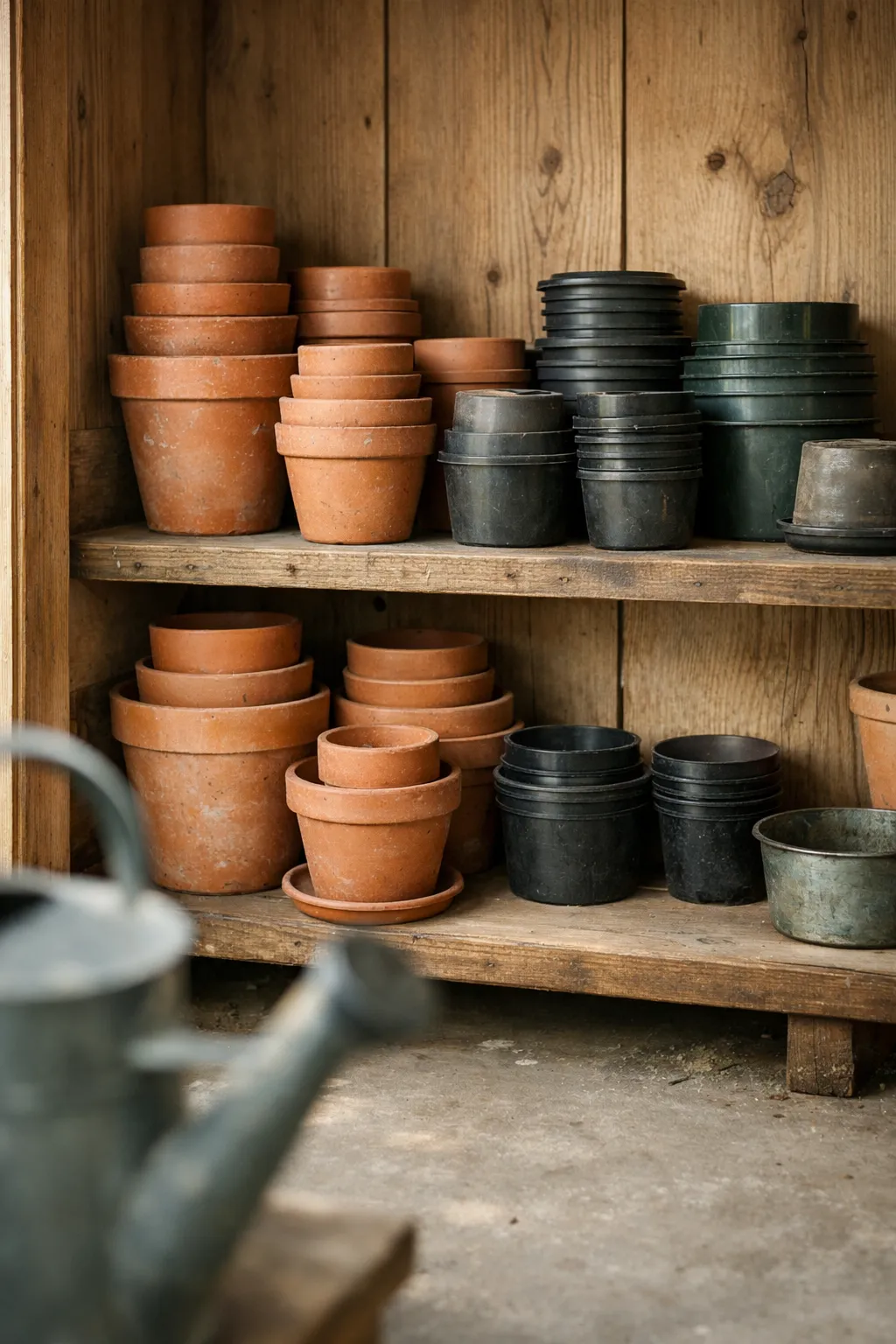
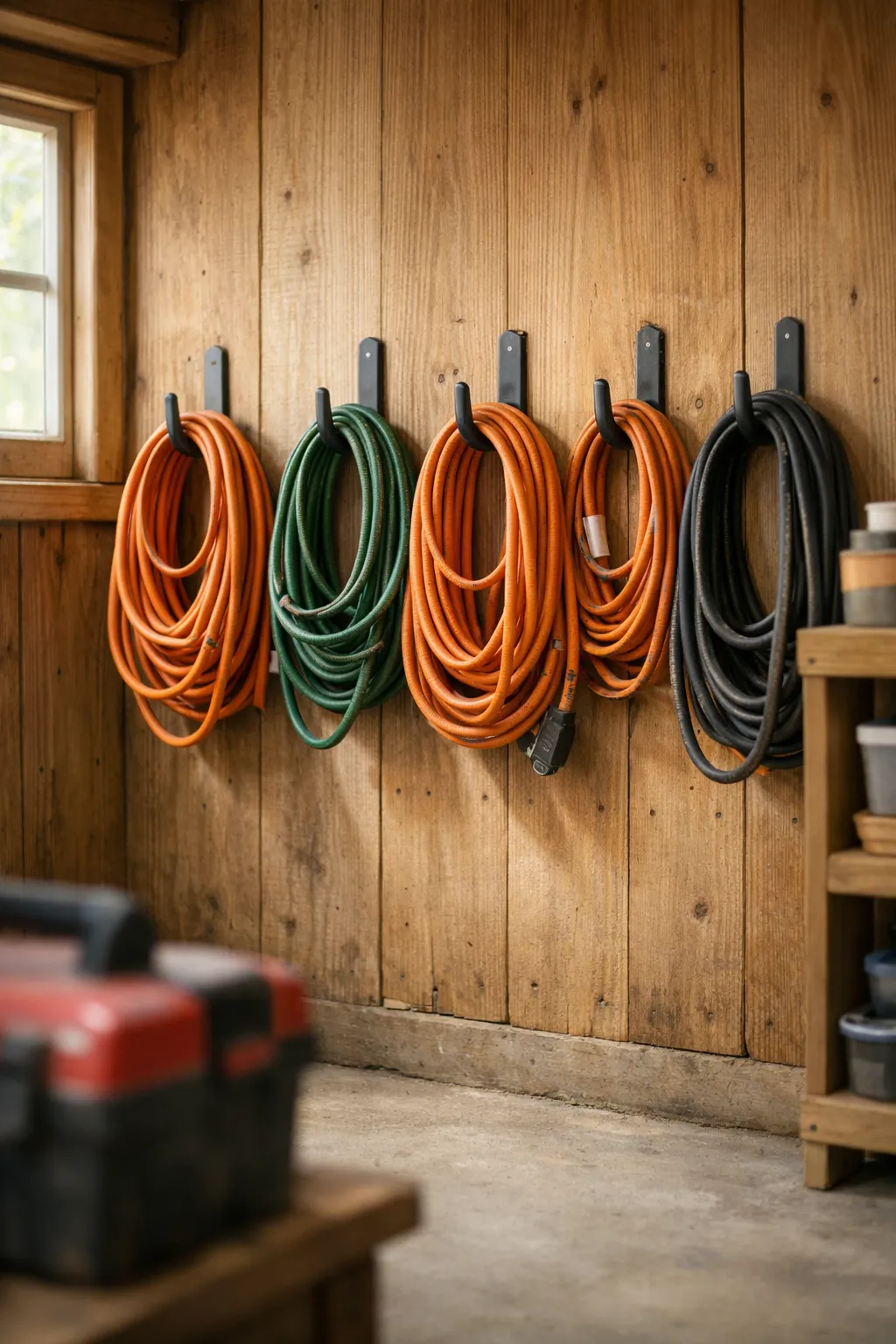
17. Hang Extension Cords Properly
Extension cords tossed in bins become tangled messes.
Install large wall hooks and hang cords neatly coiled. This keeps them accessible and prevents damage.
It also clears valuable shelf space.
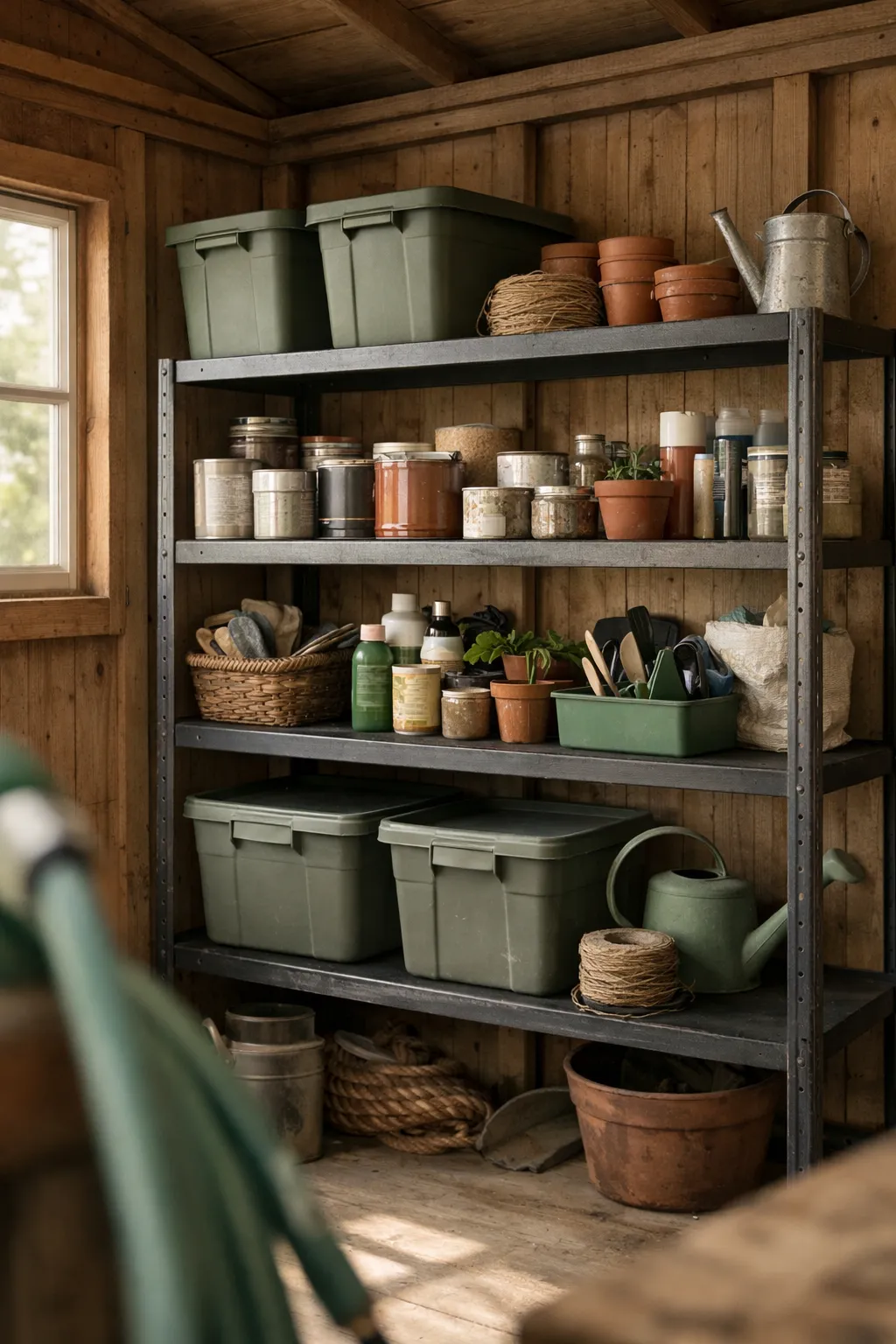
18. Use Heavy-Duty Shelving Units
Freestanding shelving can double your vertical storage capacity.
Choose metal or heavy-duty resin shelves that support weight without bowing. Store heavier items on lower shelves and lighter items above.
This creates a balanced, stable storage system.
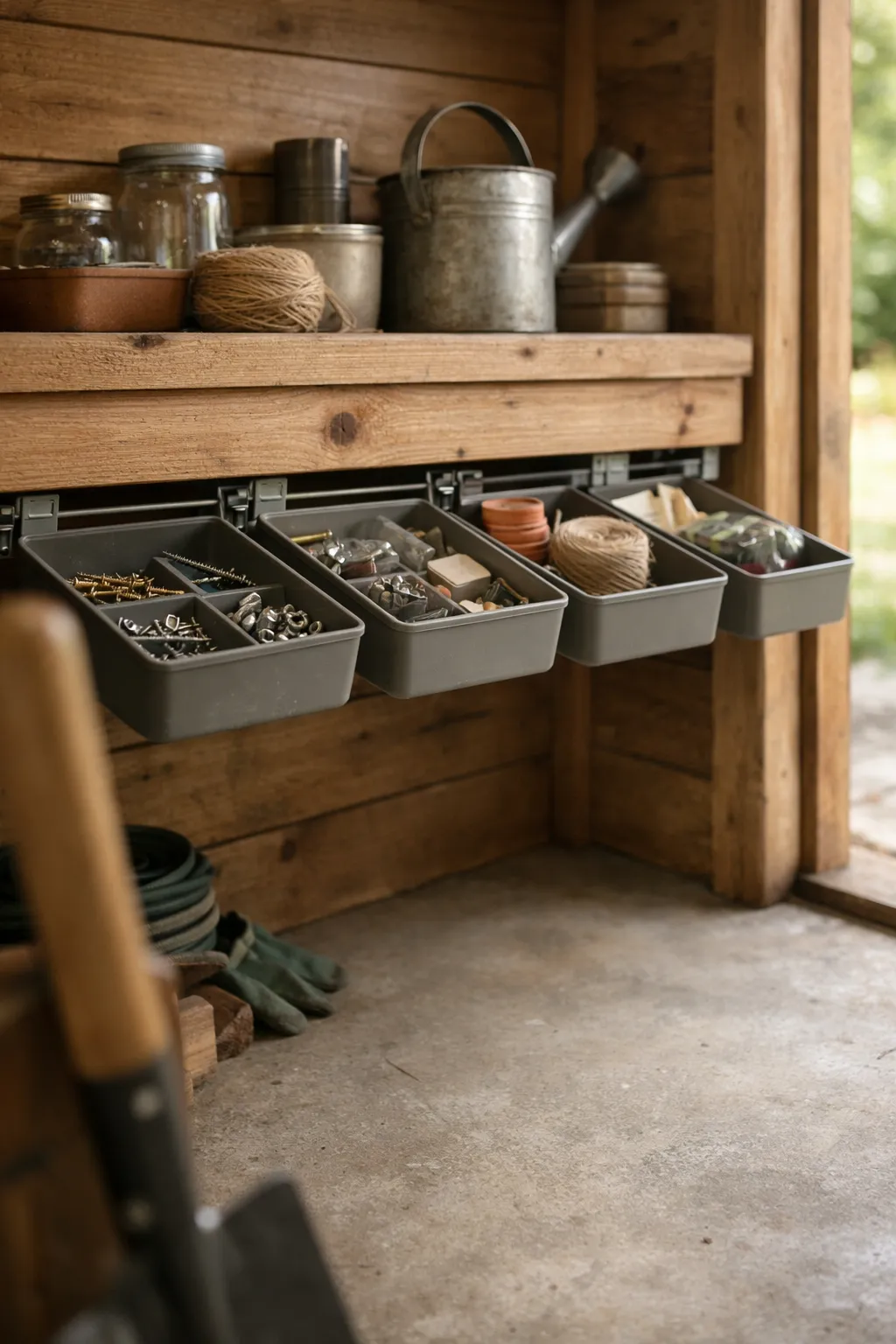
19. Install Sliding Storage Bins Under Shelves
If you have open shelving, add sliding bins underneath.
Attach simple rails or shallow drawers under existing shelves. These are perfect for small hardware, seed packets, or gloves.
This maximizes hidden vertical space.
20. Declutter Before You Organize
No system works if you’re storing items you don’t need.
Before reorganizing your shed, remove everything. Sort items into:
• Keep
• Donate
• Discard
Be honest about broken tools and expired supplies. A lighter load makes every organization hack more effective.
Comparison Table: Best Storage Solutions by Shed Size
| Storage Hack | Best for Small Sheds | Best for Large Sheds | Budget-Friendly | Heavy-Duty |
|---|---|---|---|---|
| Wall Tool Rails | Yes | Yes | Yes | Moderate |
| Overhead Storage | Limited | Excellent | Moderate | Light Items Only |
| Pegboard | Excellent | Excellent | Yes | Light Tools |
| Freestanding Shelves | Moderate | Excellent | Yes | Yes |
| Fold-Down Bench | Excellent | Good | Moderate | Moderate |
Choosing the right combination depends on your shed size and how you use the space.
Conclusion
An organized shed doesn’t require a full renovation. It requires intention.
When you use vertical walls, ceiling space, door backs, and clear zones, you transform a cluttered storage room into a functional extension of your home.
Start with one or two of these space saving shed organization hacks. Build momentum. As the space opens up, you’ll notice how much easier your projects become.
A well-organized shed saves time, reduces frustration, and makes outdoor work more enjoyable.