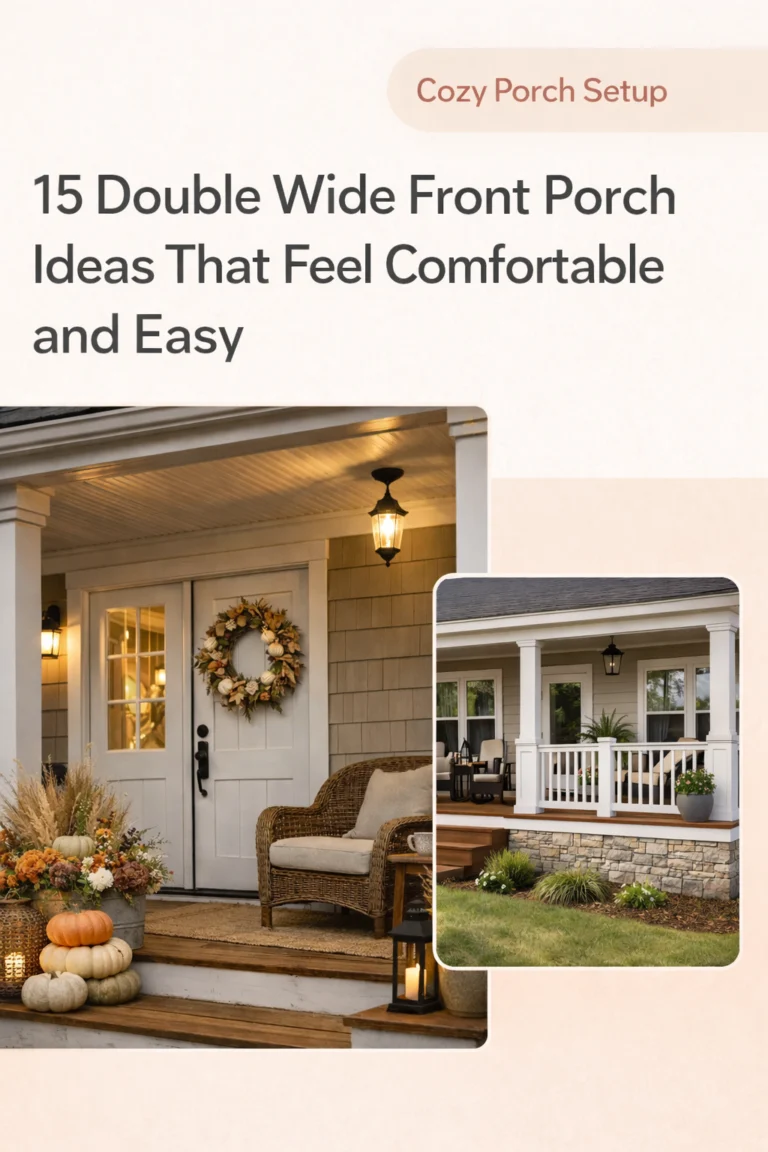


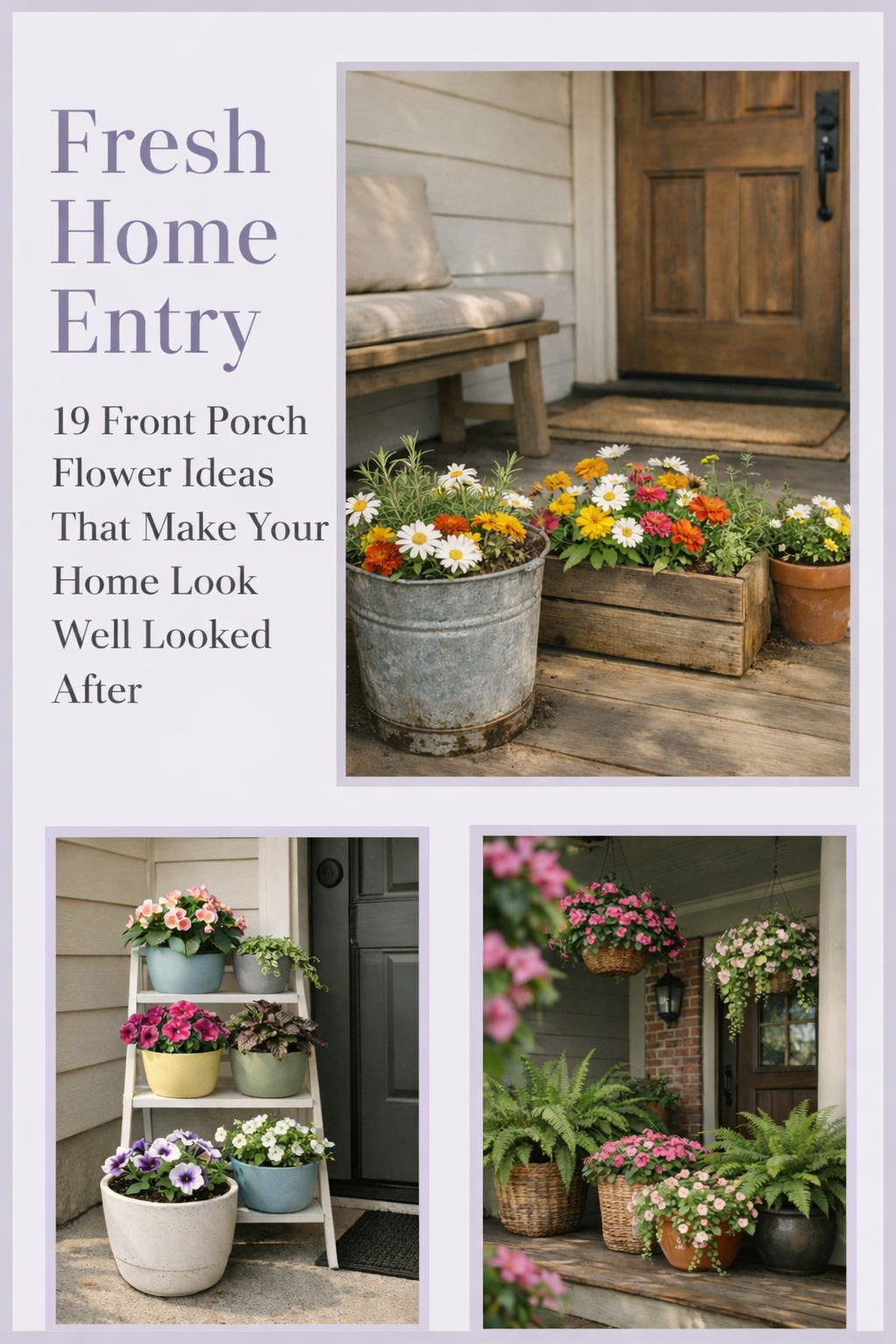
A front porch does more than frame your entry. It sets the mood before anyone steps inside. Flowers can make that first impression feel cheerful, calm, polished, cozy, or full of color, depending on how you use them.
The trick is not just picking pretty blooms. It is choosing arrangements that fit your porch size, light, home style, and season. A small porch can look crowded fast. A wide porch can feel empty if the flowers are too small or scattered. Good styling fixes both problems.
This guide shares front porch flower ideas that look beautiful, photograph well, and still feel realistic for everyday homes. You will see classic combinations, modern looks, cottage-style setups, and easy ways to make a basic porch feel more put together.
Why Front Porch Flowers Make Such a Big Difference
Flowers soften hard surfaces like brick steps, wood railings, concrete paths, and painted trim. They also add color where many front porches feel flat or unfinished.
A strong porch flower setup can help:
- make your home feel more welcoming
- improve curb appeal without a big budget
- add seasonal personality
- highlight the front door
- make a small porch feel styled instead of bare
The best results usually come from using flowers with a clear plan. Think in layers, scale, and balance. A porch should feel designed, not random.
How to Choose the Right Porch Flower Style
Before buying flowers, look at your porch like a stylist would.
Ask yourself:
- Is the porch small, medium, or wide?
- Is it fully covered, partly shaded, or in full sun?
- Does the house style lean farmhouse, traditional, cottage, coastal, or modern?
- Do you want a tidy look or a relaxed one?
- Are you decorating for one season or for longer-term curb appeal?
This matters because the same flower can look elegant in a tall black planter and casual in a weathered metal bucket.
Front Porch Flower Styling at a Glance
| Porch Situation | Best Flower Approach | Why It Works |
|---|---|---|
| Small front porch | Vertical planters, railing boxes, one strong focal pair | Keeps the area from feeling cramped |
| Wide front porch | Layered groupings, larger containers, repeated colors | Fills space without looking empty |
| Sunny porch | Petunias, geraniums, lantana, calibrachoa | Handles heat and strong light better |
| Shaded porch | Impatiens, begonias, fuchsia, coleus mixes | Gives color where sun-loving flowers struggle |
| Classic home exterior | Symmetrical planters, white flowers, clipped greenery | Looks timeless and clean |
| Cottage-style porch | Mixed blooms, soft colors, trailing plants | Feels relaxed and charming |
| Modern porch | Monochrome flowers, simple pots, strong structure | Looks crisp and intentional |
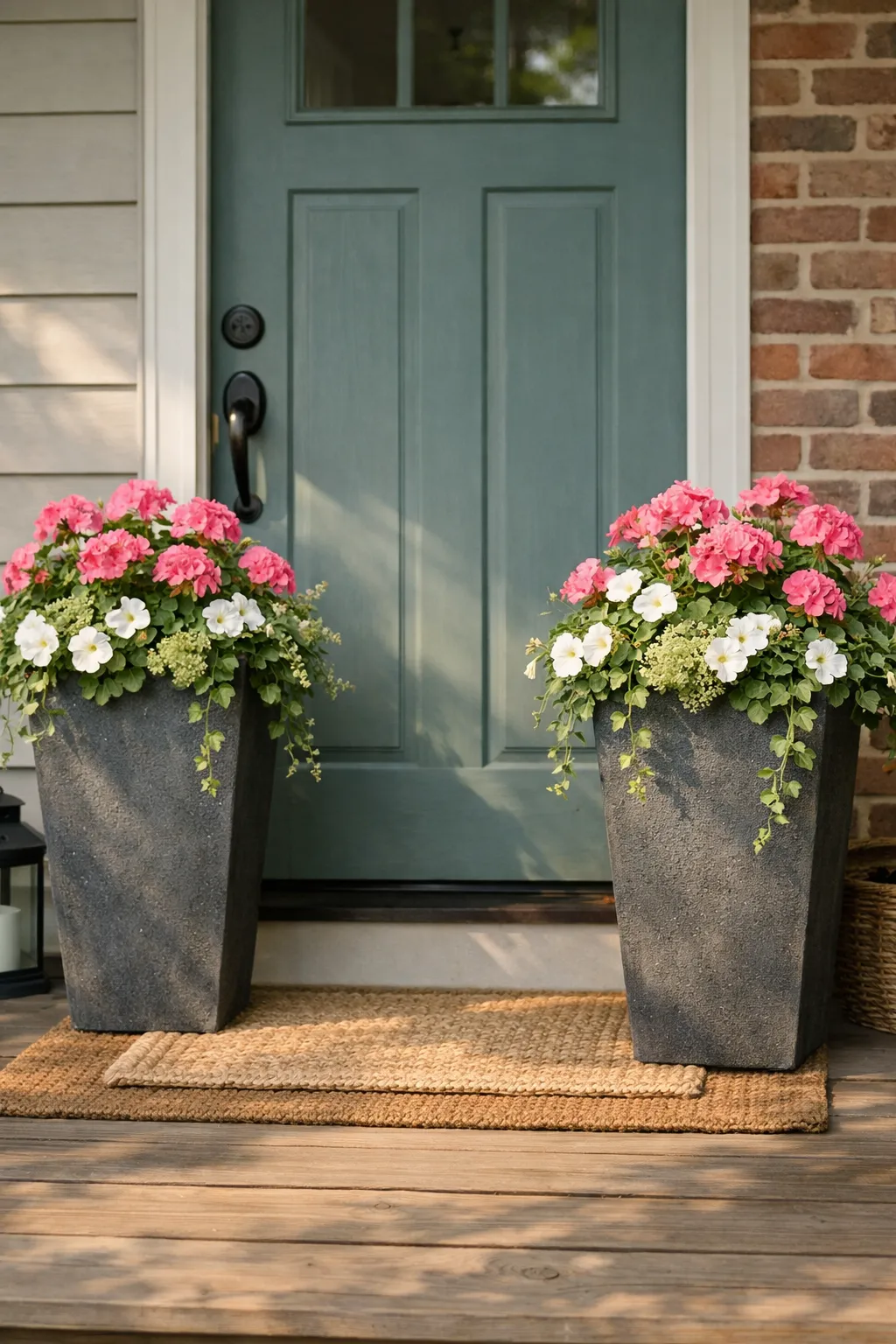
1. Symmetrical Planters by the Front Door
Matching planters on both sides of the front door are one of the easiest ways to make a porch look finished. This setup works with almost any home style because it creates order right away.
Go for tall planters if your door area feels flat. Use a filler-spiller-thriller mix, but keep it controlled. For example, upright geraniums or lavender in the center, petunias or begonias for fullness, and ivy trailing over the edge.
This idea works best when the porch already has a balanced layout. It also pairs well with lanterns, a patterned doormat, or simple black hardware.
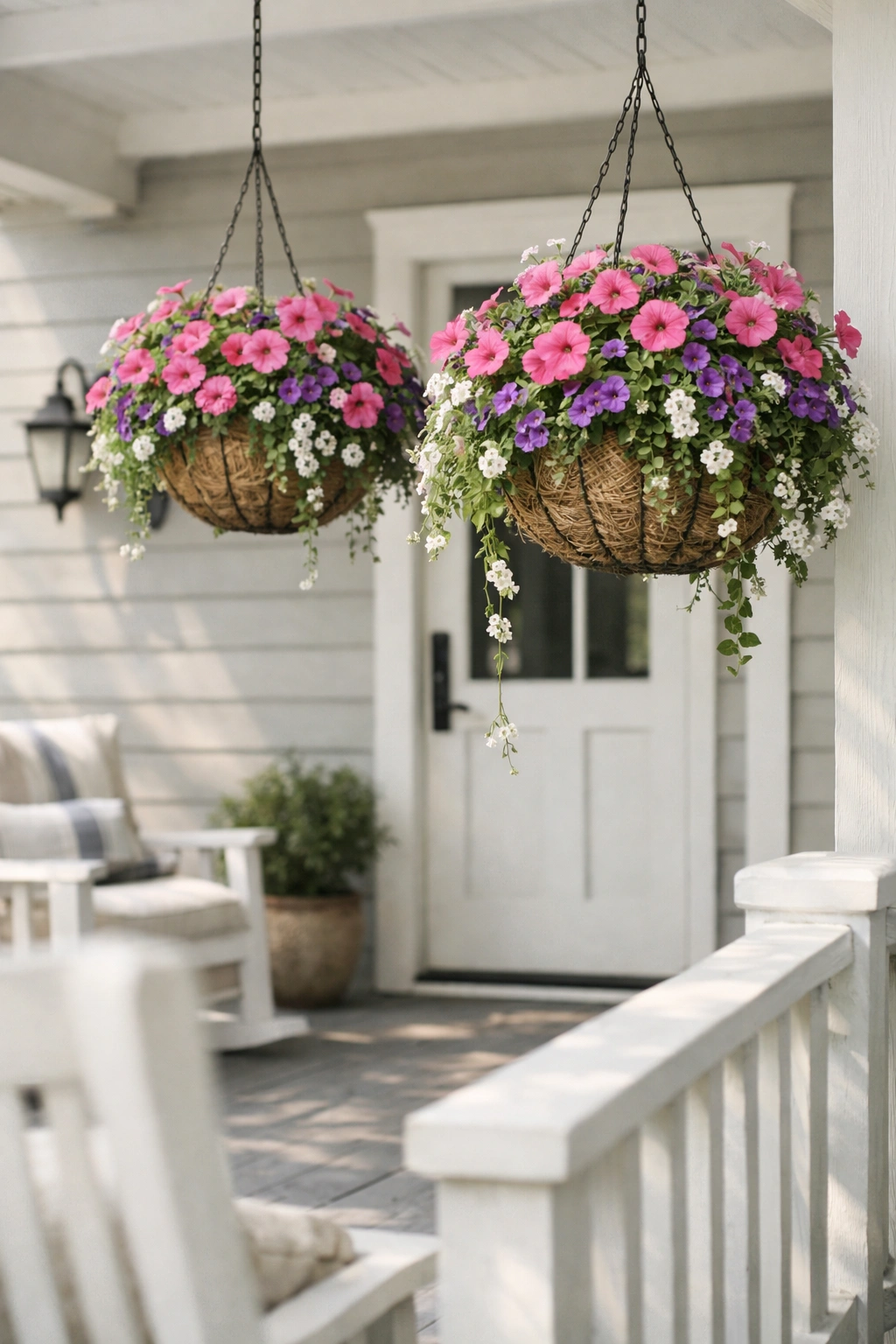
2. Overflowing Hanging Baskets
Hanging baskets are perfect when floor space is tight. They draw the eye up and make even a plain porch feel more layered.
Choose flowers that naturally spill and soften the edges. Petunias, calibrachoa, bacopa, and fuchsia are strong options. Use one basket on a narrow porch or a matching pair on a wider covered porch.
The mistake people make is hanging them too high. Keep them low enough to feel connected to the rest of the porch, but not so low that they block the view or bump into people.
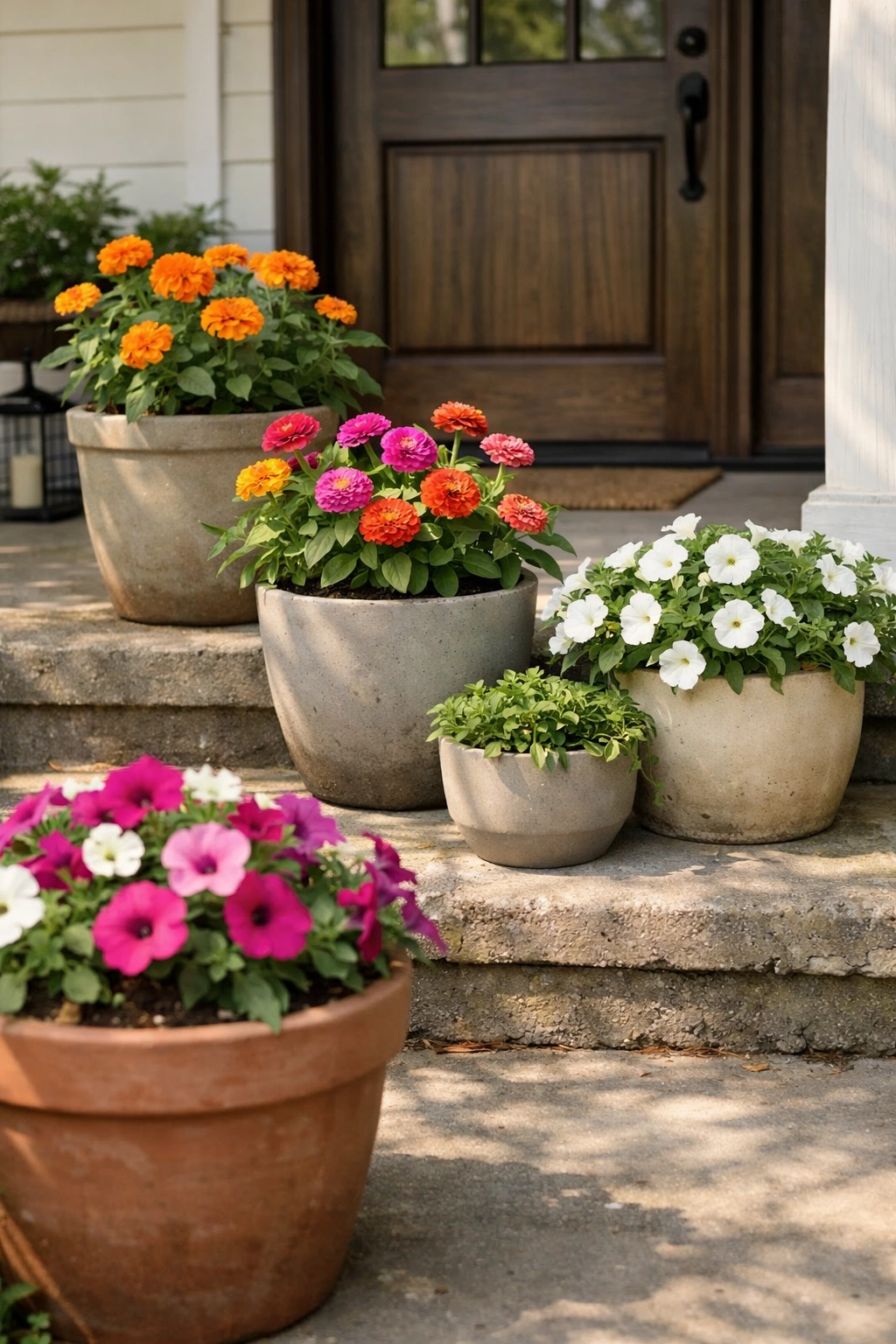
3. Layered Pots on Porch Steps
If your porch has steps, use them. Steps create natural levels, which makes flower styling easier.
Mix three or five containers in different heights and widths. Keep a common thread, like one repeated flower color or one planter finish. That keeps the display from turning messy.
This look works well with bright summer flowers like zinnias, marigolds, petunias, and verbena. A few green plants mixed in can calm the whole setup down.
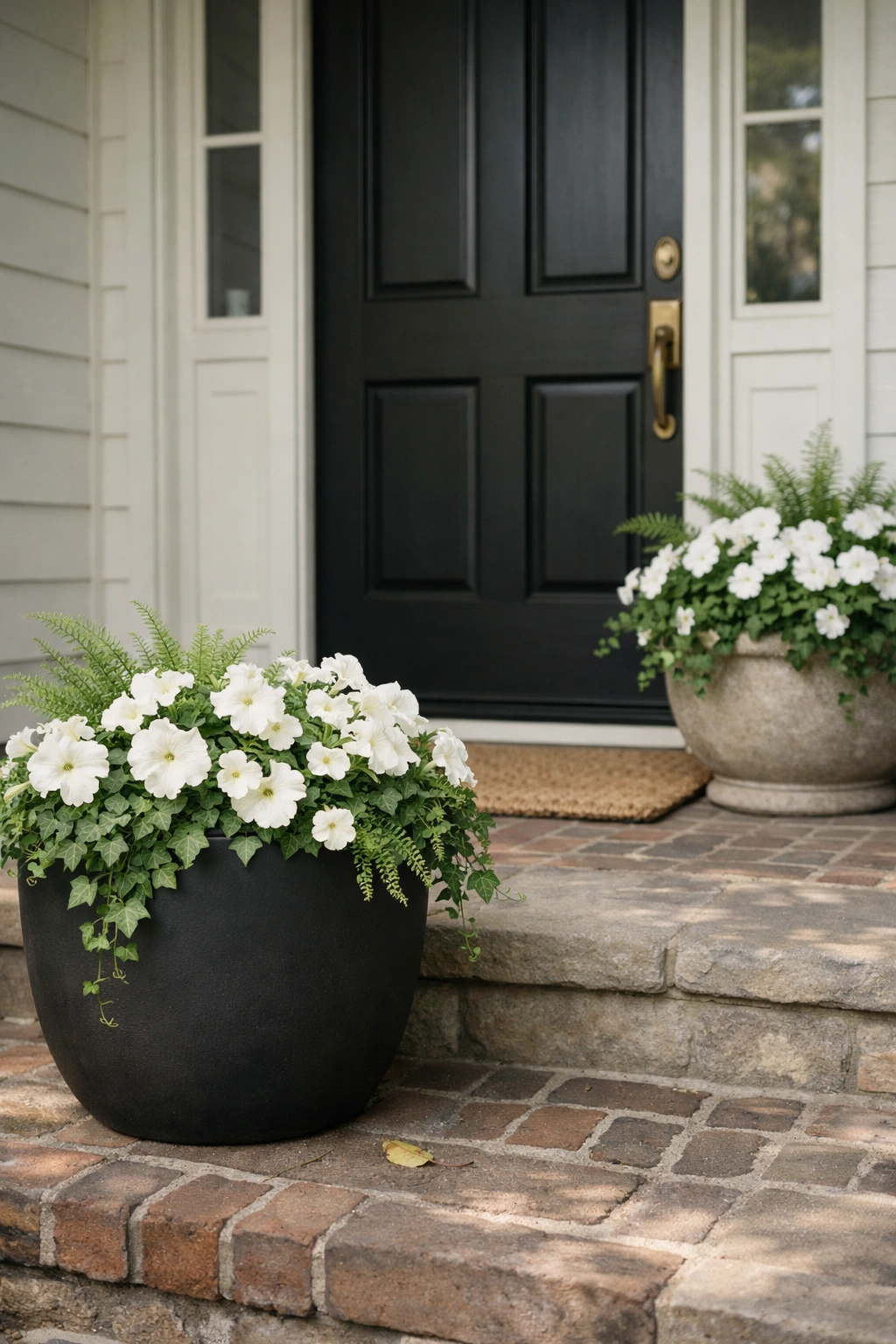
4. White Flowers for a Clean Timeless Look
White flowers with green foliage are hard to mess up. They look fresh, classic, and expensive even when the setup is simple.
Try white impatiens in shade or white petunias in sun. Add ferns, dusty miller, or ivy for texture. This style works especially well with black doors, brick homes, and modern farmhouse exteriors.
It is a smart choice if your porch already has a lot going on, like bold house paint, patterned tile, or colorful accessories. White flowers keep things balanced.
5. Cottage-Style Mixed Blooms
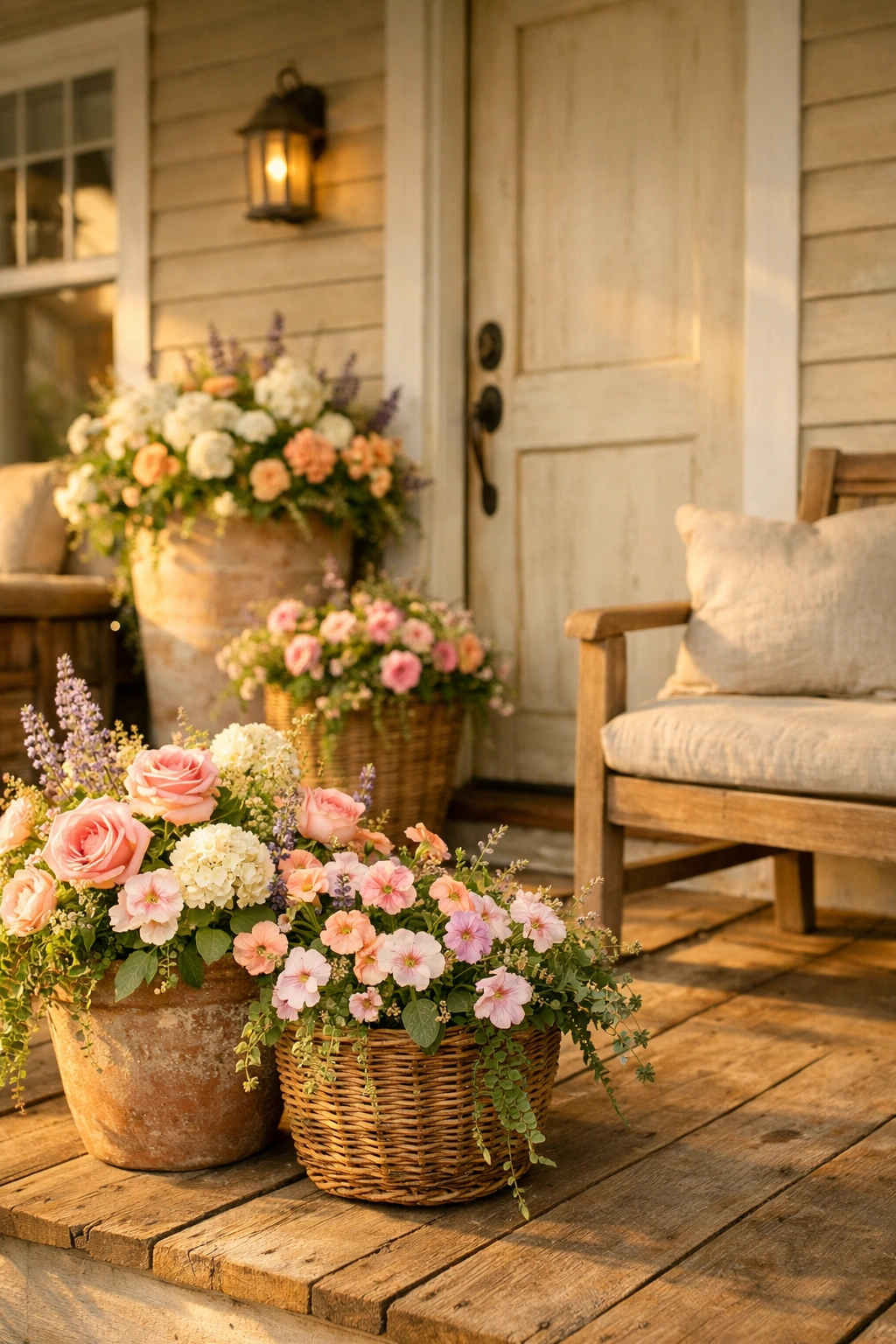
A cottage-style porch should feel loose but still thoughtful. This is where mixed flower colors can shine.
Use soft pinks, lilacs, creamy whites, peach tones, and light blues if you can find them. Pair fuller flowers with trailing greenery and woven or aged-look planters. The goal is charm, not perfection.
This setup suits older homes, porches with wood details, and spaces with rocking chairs or vintage-style lighting. It looks best when the flowers feel abundant, not stiff.
6. Tall Urn Planters for a Traditional Entry
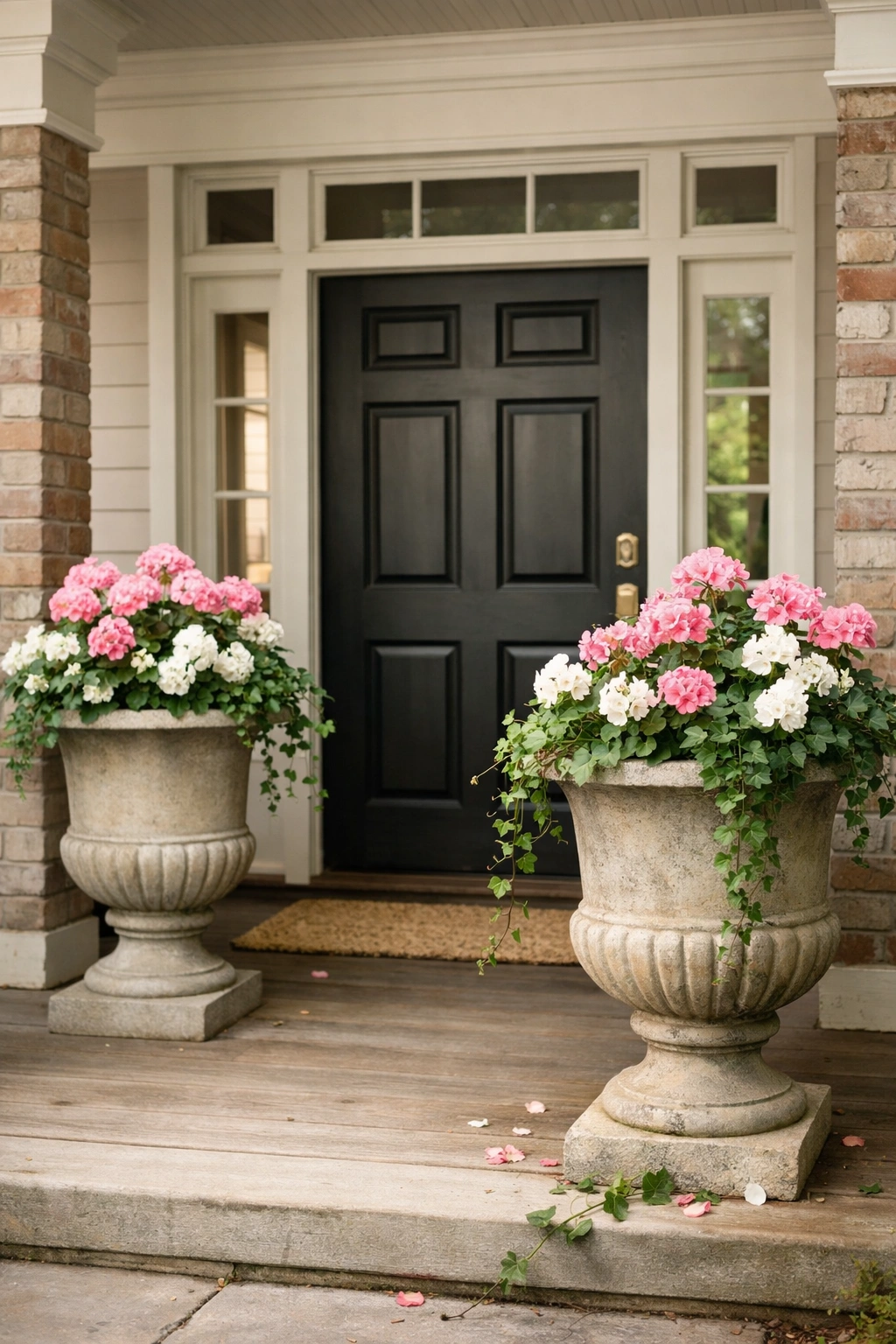
Urn planters add formality. They work well on colonial, traditional, or stately front porches where a more casual flower bucket would feel out of place.
A tall urn lifts the flowers visually, which helps near wide front doors or large columns. Try pink geraniums, white begonias, or a mix of upright blooms with trailing ivy.
Because urns already have visual weight, keep the planting cleaner than you would in a cottage arrangement. Too many colors can make the whole thing look crowded.
7. Monochrome Flowers for a Modern Porch
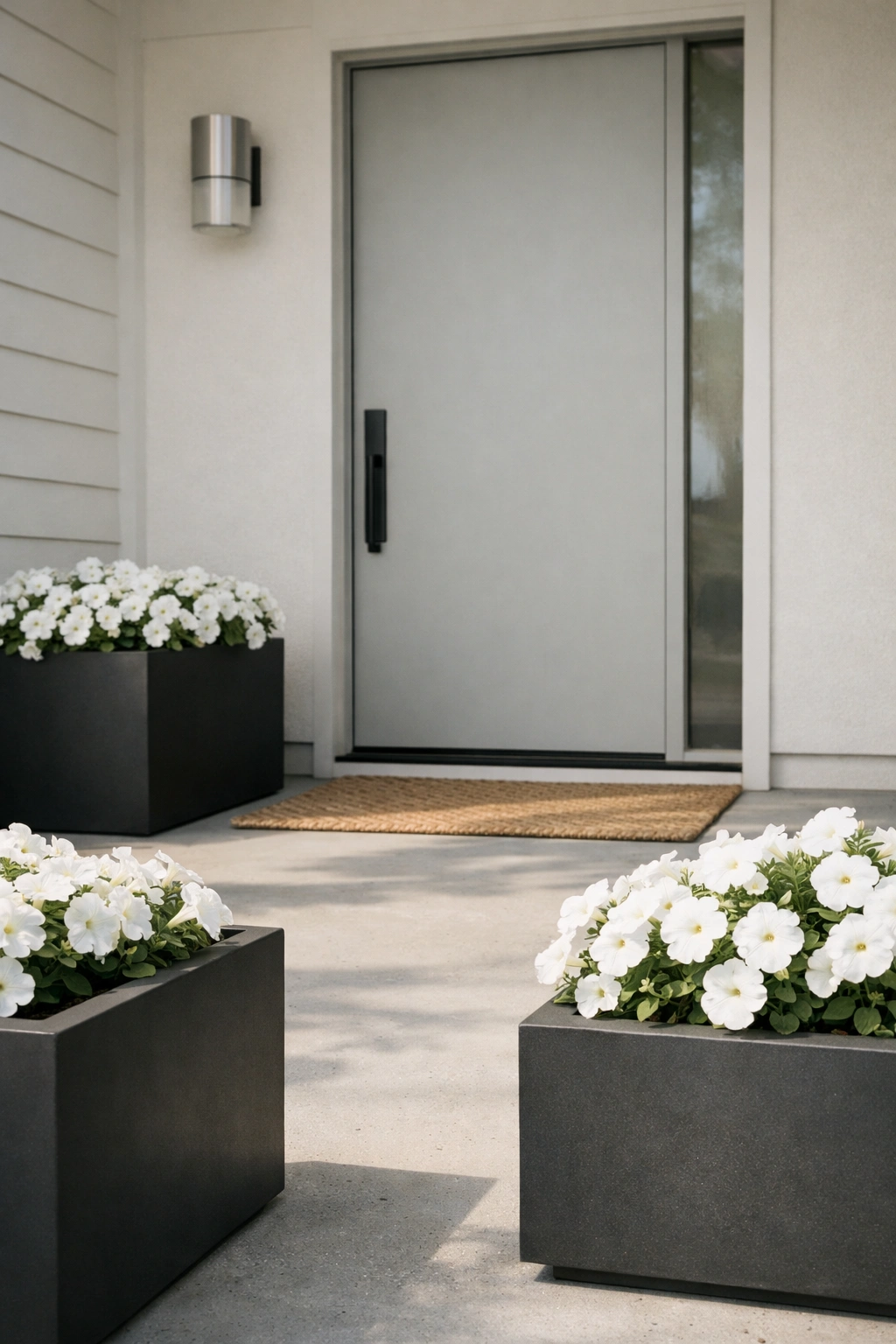
If your porch style is modern, stick to one flower color or a very tight palette. This simple move makes the arrangement feel sharper and more architectural.
Purple petunias in matte black planters can look bold and clean. All-white flowers in square planters feel calm and polished. Even soft blush tones can work if the containers are simple.
This idea is more about restraint than abundance. Fewer flower types, fewer colors, and stronger shapes usually look better.
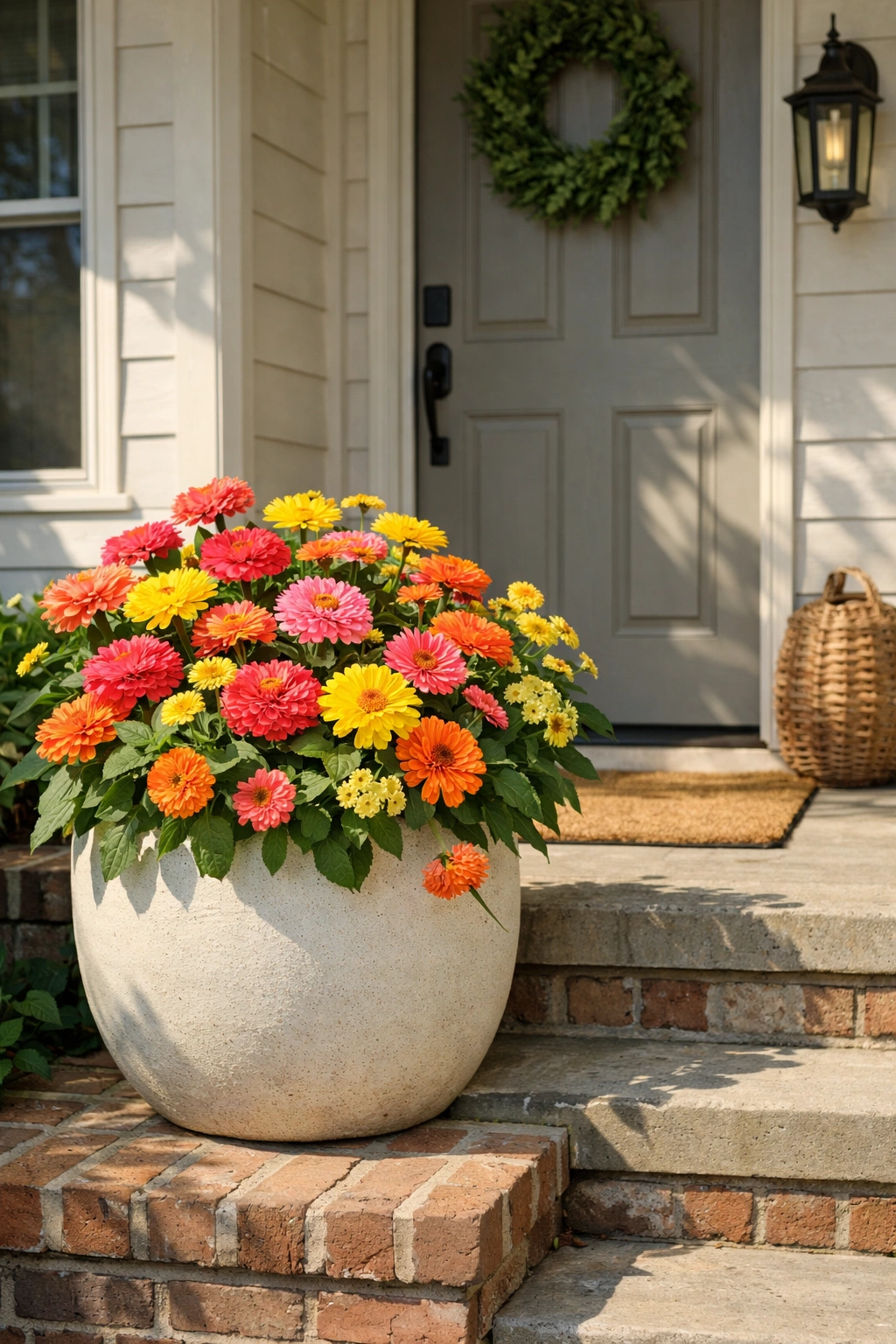
8. Bright Summer Color in Oversized Pots
Oversized containers with vivid flowers can wake up a porch fast. This works especially well on homes with neutral siding, plain steps, or builder-grade porches that need more personality.
Try hot pink, coral, orange, or yellow flowers in one or two large pots. Big containers help the arrangement feel intentional, not fussy. They also hold moisture better than tiny pots, which matters in summer heat.
Keep the color story tight. Two or three strong shades are enough.
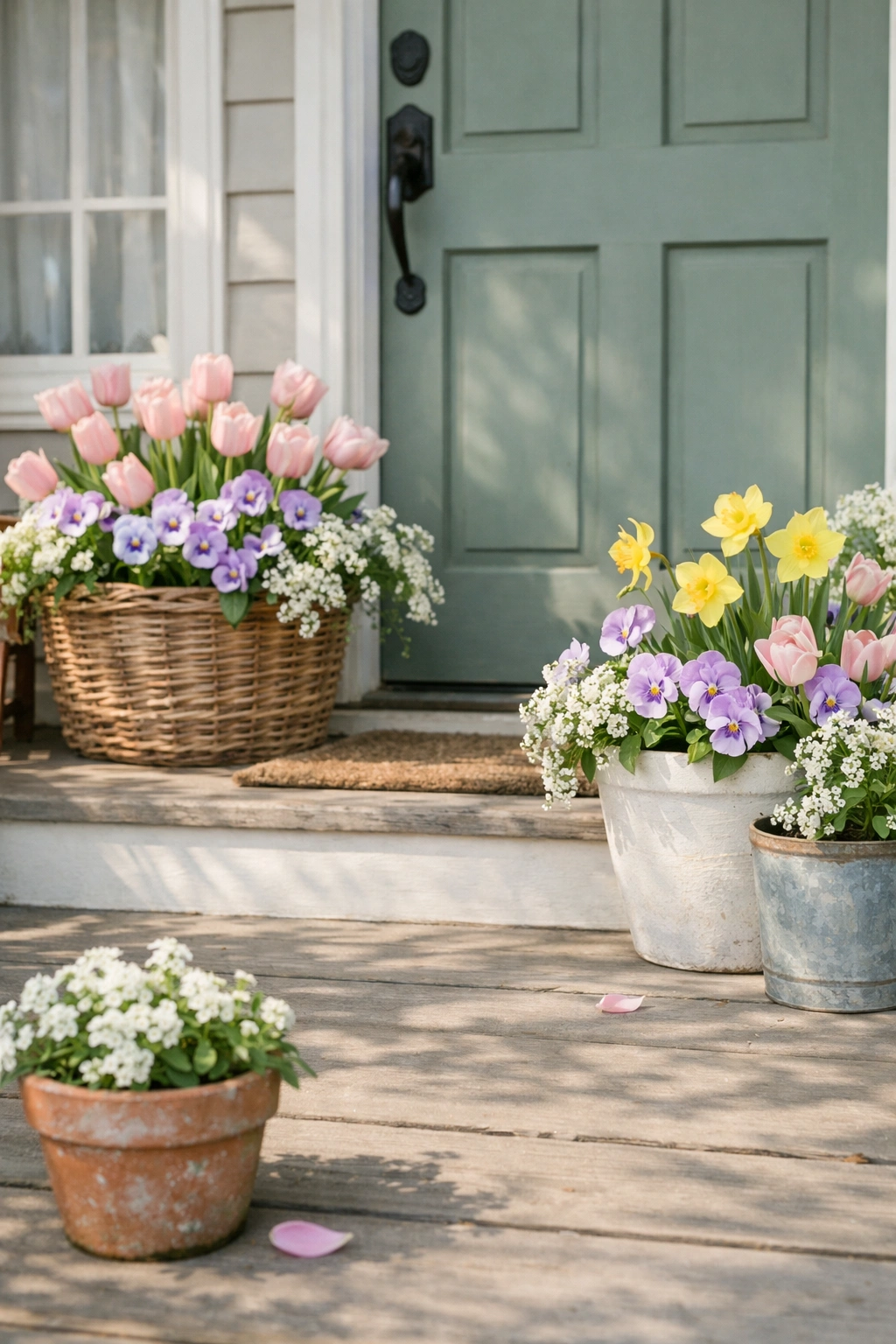
9. Soft Spring Pastels Near the Entry
Spring porches look best when the flowers feel fresh, light, and a little airy. Pastel flowers do that naturally.
Think pale pink tulips, light purple pansies, white alyssum, or soft yellow daffodils in porch pots or baskets. These pair well with light wood, white trim, pale wreaths, and woven textures.
This is a great style if you want your porch to feel gentle and welcoming rather than loud.
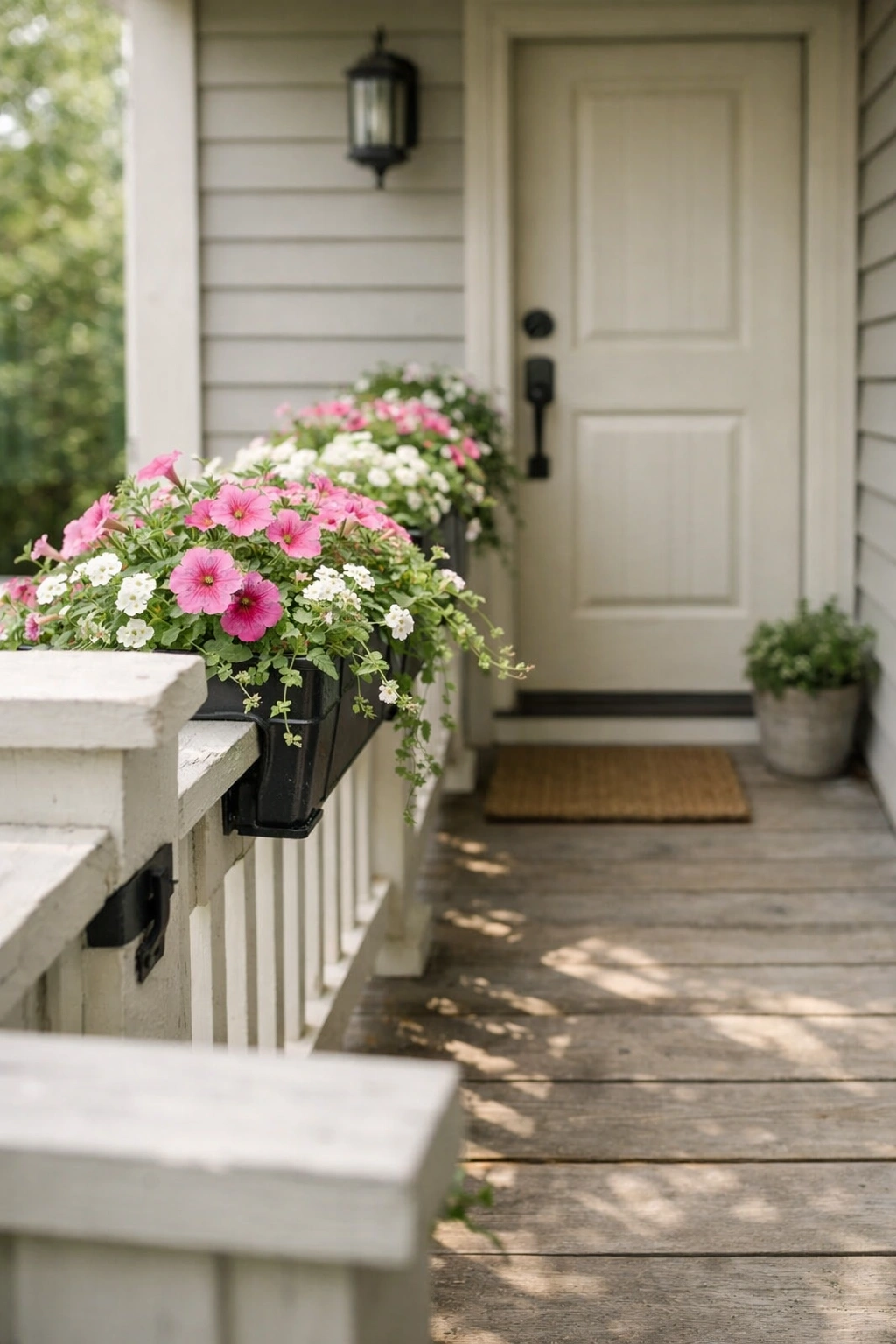
10. Railing Planters for Narrow Front Porches
A narrow porch can be frustrating because there is no room for large pots. Railing planters solve that problem.
They add flowers without taking up walking space. They also help stretch color across the porch instead of keeping everything at the door.
Choose flowers with a slight trailing habit so the boxes feel full. Keep the planter style close to the house style. Black metal boxes look great on modern homes. White or wood-tone boxes suit cottage and farmhouse porches.
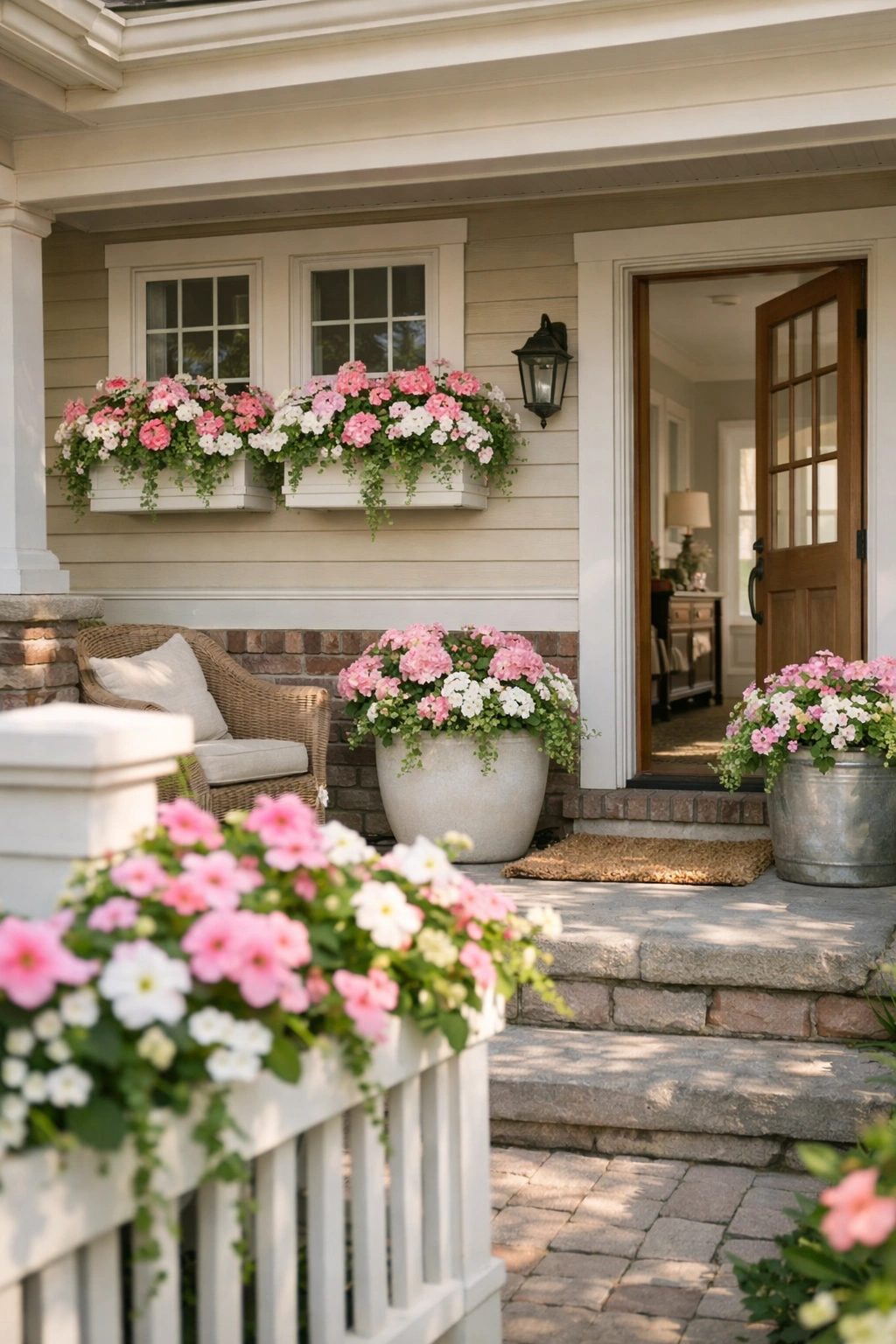
11. Flower-Filled Window Boxes Near the Porch
If your front porch sits under or near front-facing windows, window boxes can make the whole entry feel connected.
This works best when the porch planters and window box flowers share at least one color. That repeated detail makes the front of the house feel more complete.
Use this idea when you want a fuller curb appeal look without cluttering the porch floor. It is also useful on smaller porches where visual impact matters more than square footage.
12. A Simple Two-Pot Porch for Small Spaces
Not every porch needs a big setup. Sometimes two good pots are enough.
For a small porch, choose containers that are large enough to feel meaningful but not so big that they block the door swing or crowd the step. One on each side of the entry often works best.
Stick with one flower family or one simple mix. Clean styling beats stuffing in too many plants. This is often the best choice for townhomes, duplexes, and compact suburban porches.
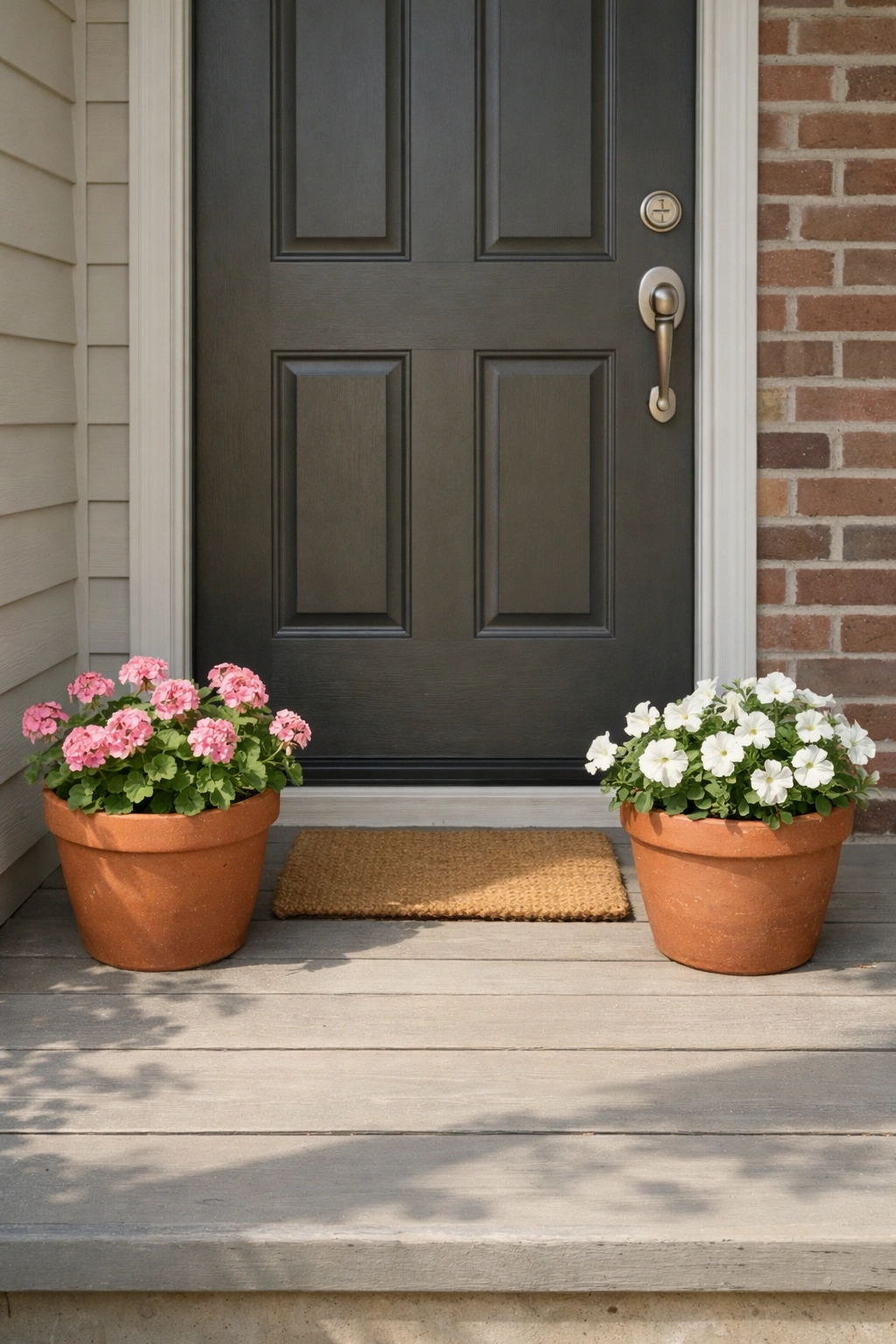
13. Tiered Plant Stands for Vertical Interest
A tiered stand gives you height without using much floor area. It is useful for apartment-style entries, side porches, and compact front stoops.
Use smaller pots with repeated flower colors so the stand looks styled, not random. Mix flowers with one or two foliage plants for breathing room.
This approach suits gardeners who like to swap plants by season because the arrangement is easy to refresh. It also works well in sheltered porches where delicate flowers last longer.
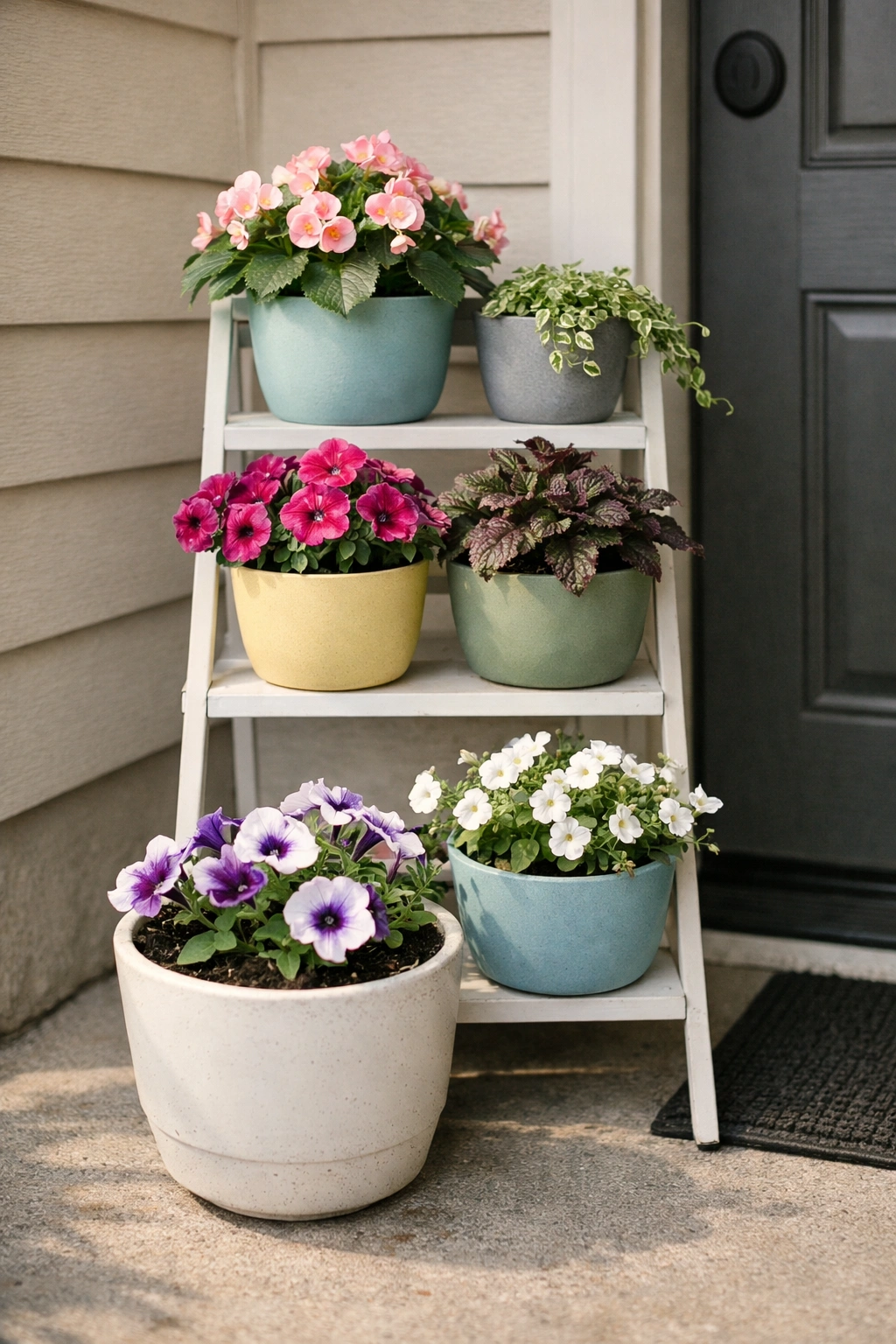
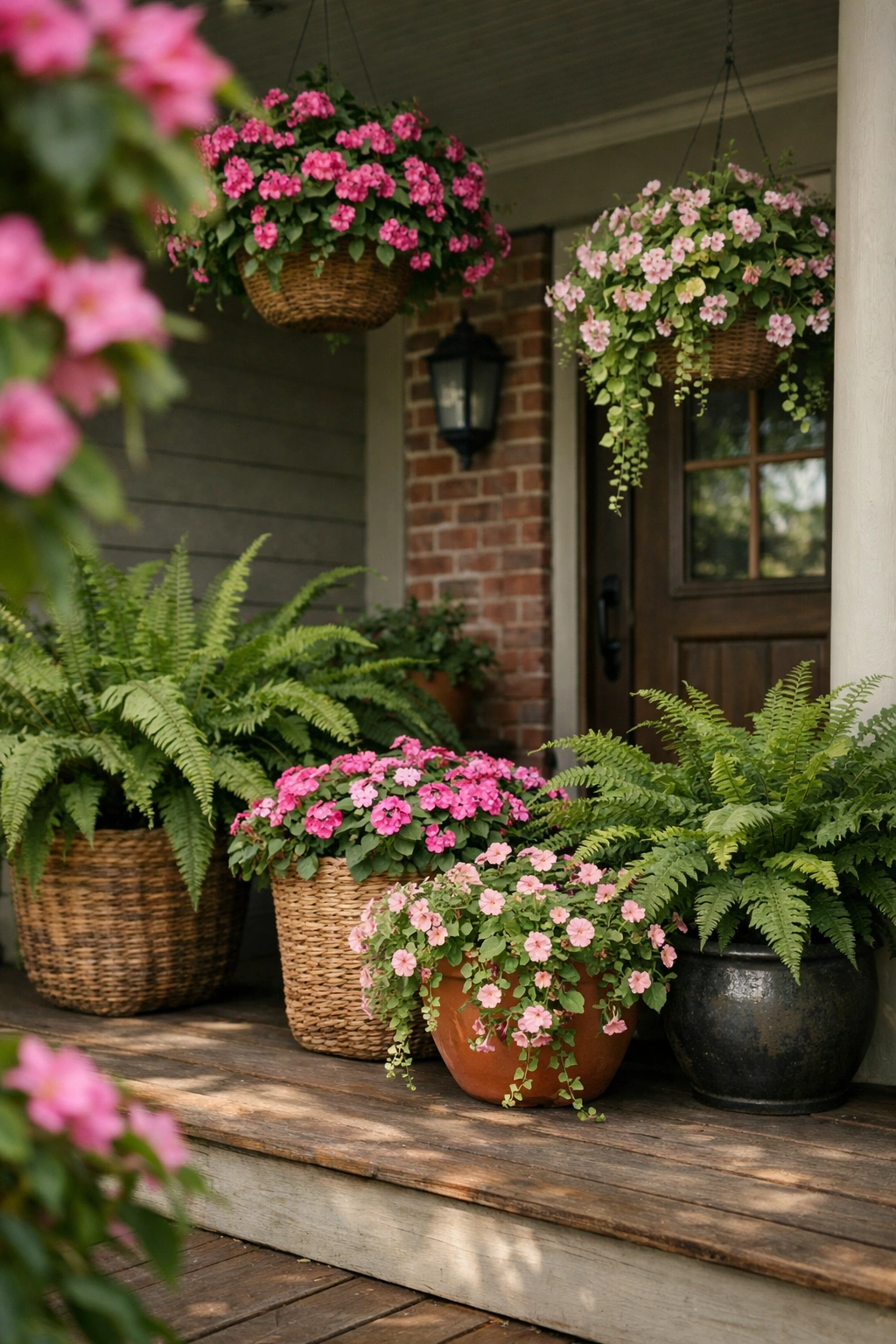
14. Trailing Flowers with Ferns for a Full Layered Look
Pairing trailing blooms with ferns creates an easy lush effect. Ferns bring softness and volume, while flowers add color and movement.
This look works best on covered porches with part shade. Think hanging baskets of pink impatiens near large porch ferns in urns or black pots. It feels classic and relaxed without being sloppy.
The mix is especially strong on older brick homes and Southern-style porches, where greenery and soft blooms feel right at home.
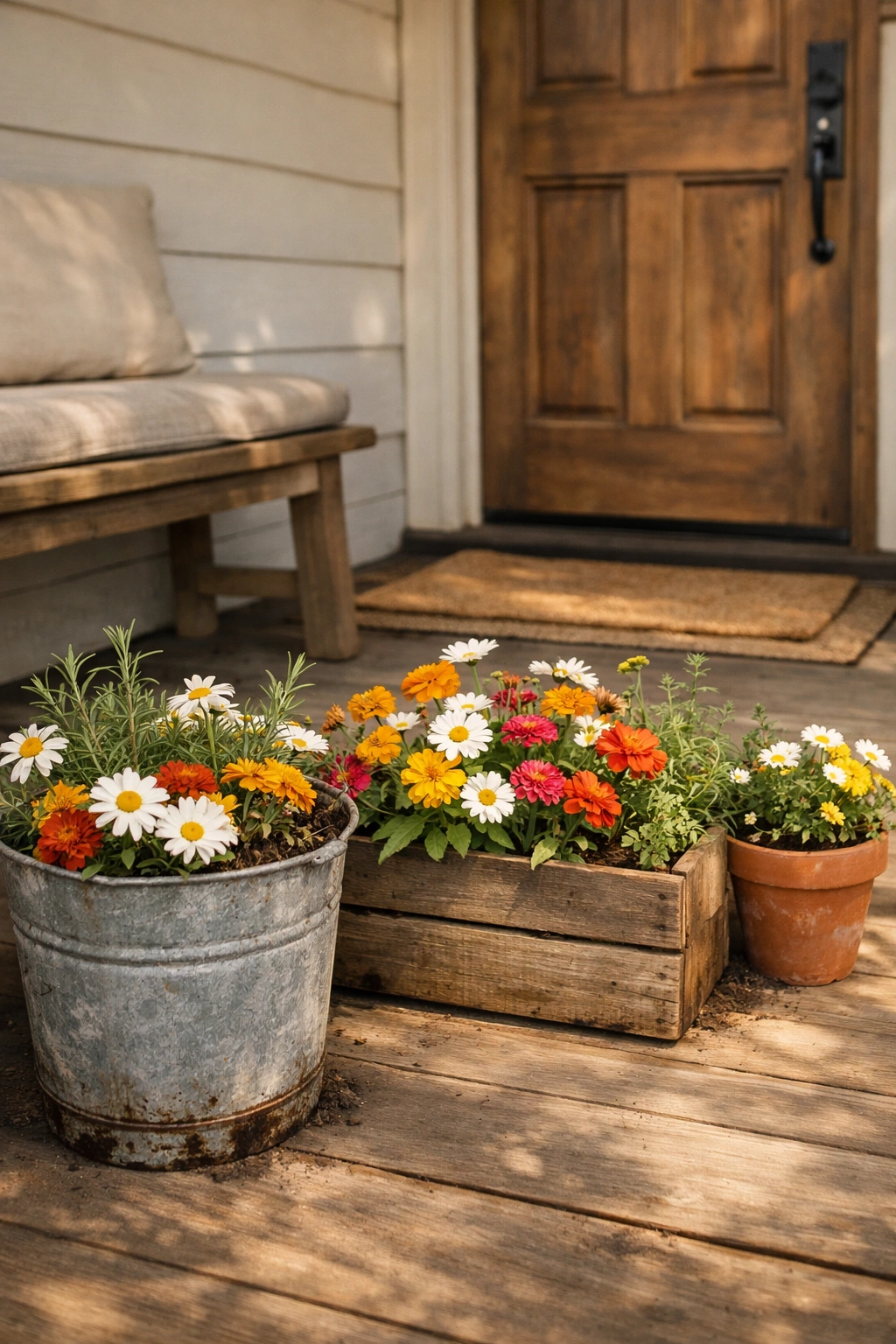
15. Rustic Crates and Buckets with Casual Blooms
For farmhouse or rustic porch styling, flowers in weathered containers can add charm fast. Old-look wooden crates, galvanized buckets, and simple clay pots work best.
This is not a formal flower display. It should feel easy and collected. Try daisies, zinnias, marigolds, or mixed seasonal blooms with herbs tucked in.
The key is editing. One crate, one bucket, and one pot can look charming. Seven different rustic containers often look like clutter.
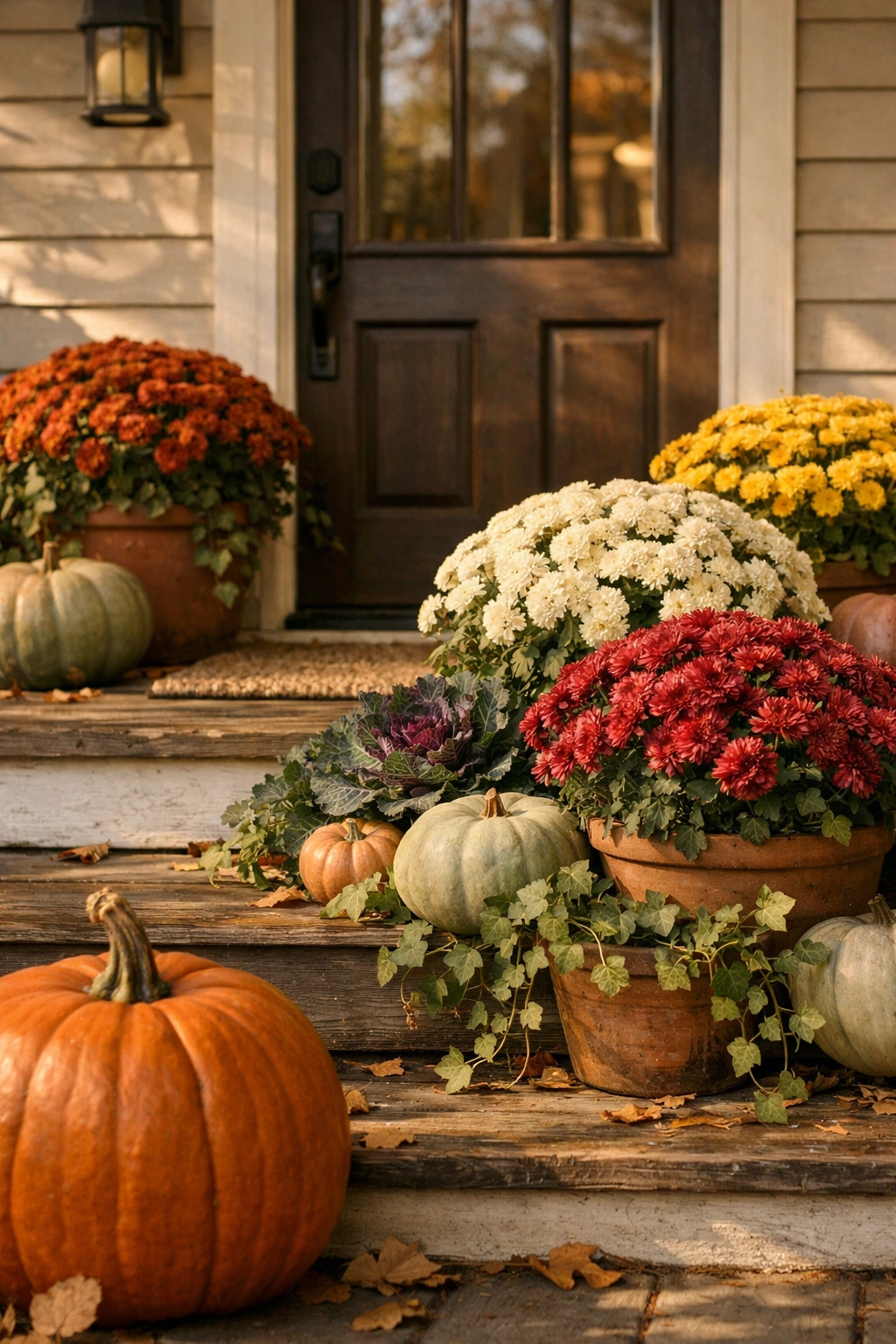
16. Fall Porch Flowers with Mums and Texture
Mums are popular for a reason. They are full, colorful, and easy to style on a front porch. The problem is that many fall porches stop there.
A better setup layers mums with ornamental cabbage, trailing greens, pumpkins, or darker foliage plants. That mix gives shape and texture, not just color.
Use warm shades like rust, burgundy, deep yellow, and creamy white for a rich fall look. Keep the arrangement grounded and full rather than overly bright.
17. Coastal Porch Flowers in Soft Breezy Colors
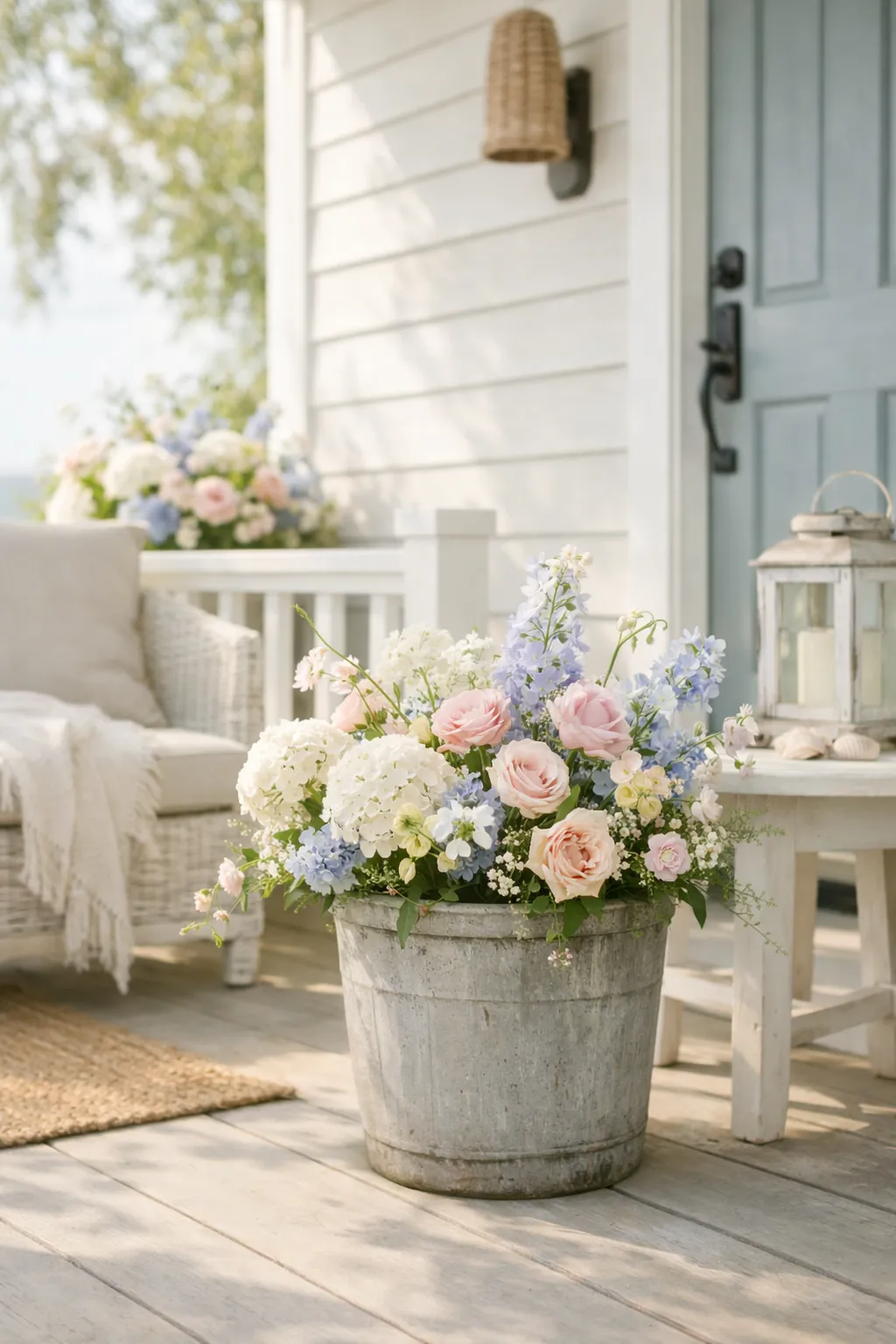
A coastal-style porch does not need tropical overload. In fact, softer flower choices often look better.
Use white, pale blue, lavender, and sandy pink tones with simple planters in white, gray, or natural textures. The goal is breezy, light, and relaxed. Flowers should support the porch style, not overpower it.
This idea works well with striped cushions, light wood, woven accents, and blue-gray front doors.
18. One Bold Statement Planter
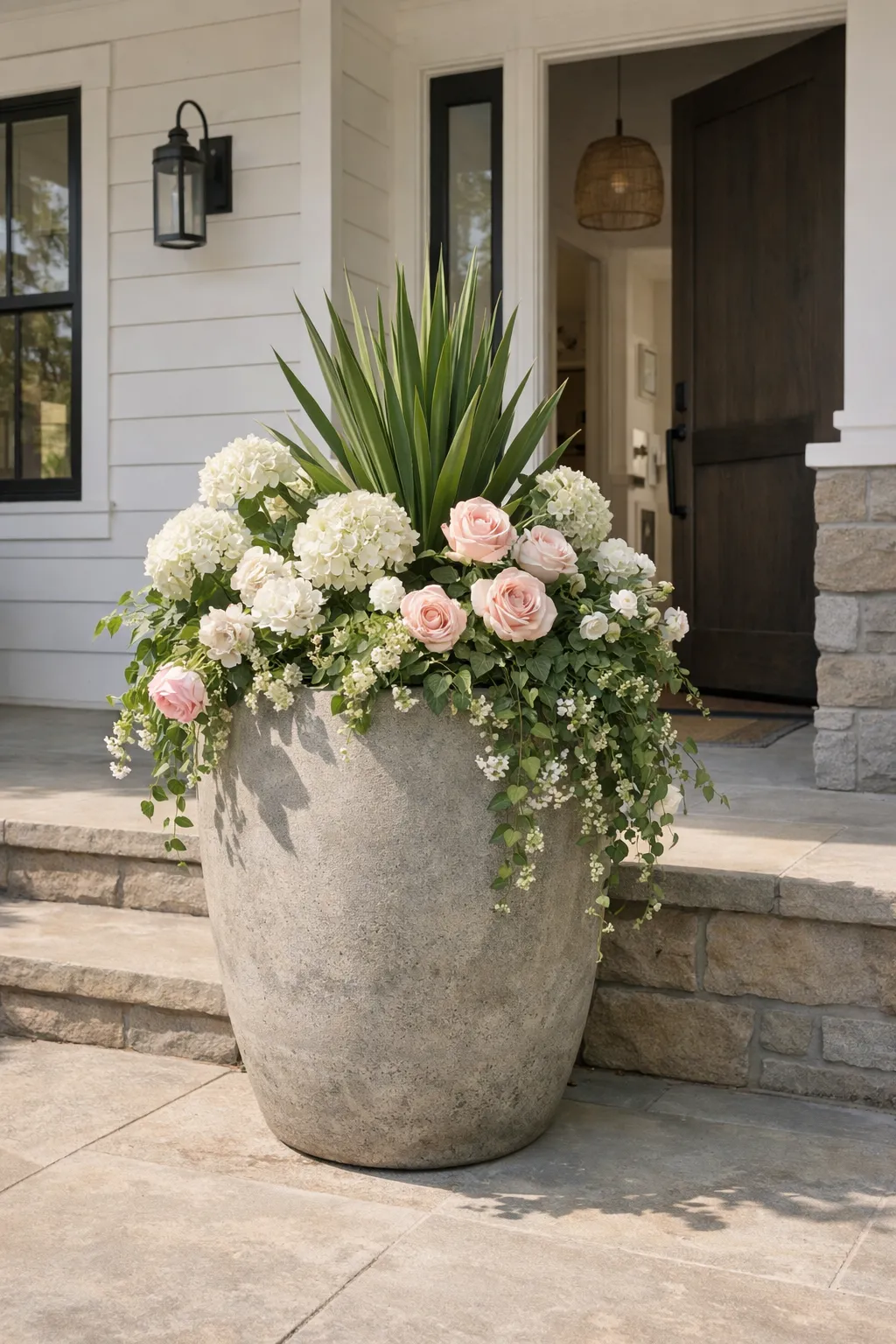
Sometimes one big planter near the front door or at the base of the steps is more powerful than several smaller ones.
This works best when the planter has size, shape, and enough fullness to act as a focal point. Use dramatic blooms, a tall center plant, and a bit of trailing softness.
A statement planter is a smart choice for minimalist homes, modern entries, and porches where clutter stands out right away.
19. Seasonal Flower Rotation for Year-Round Curb Appeal
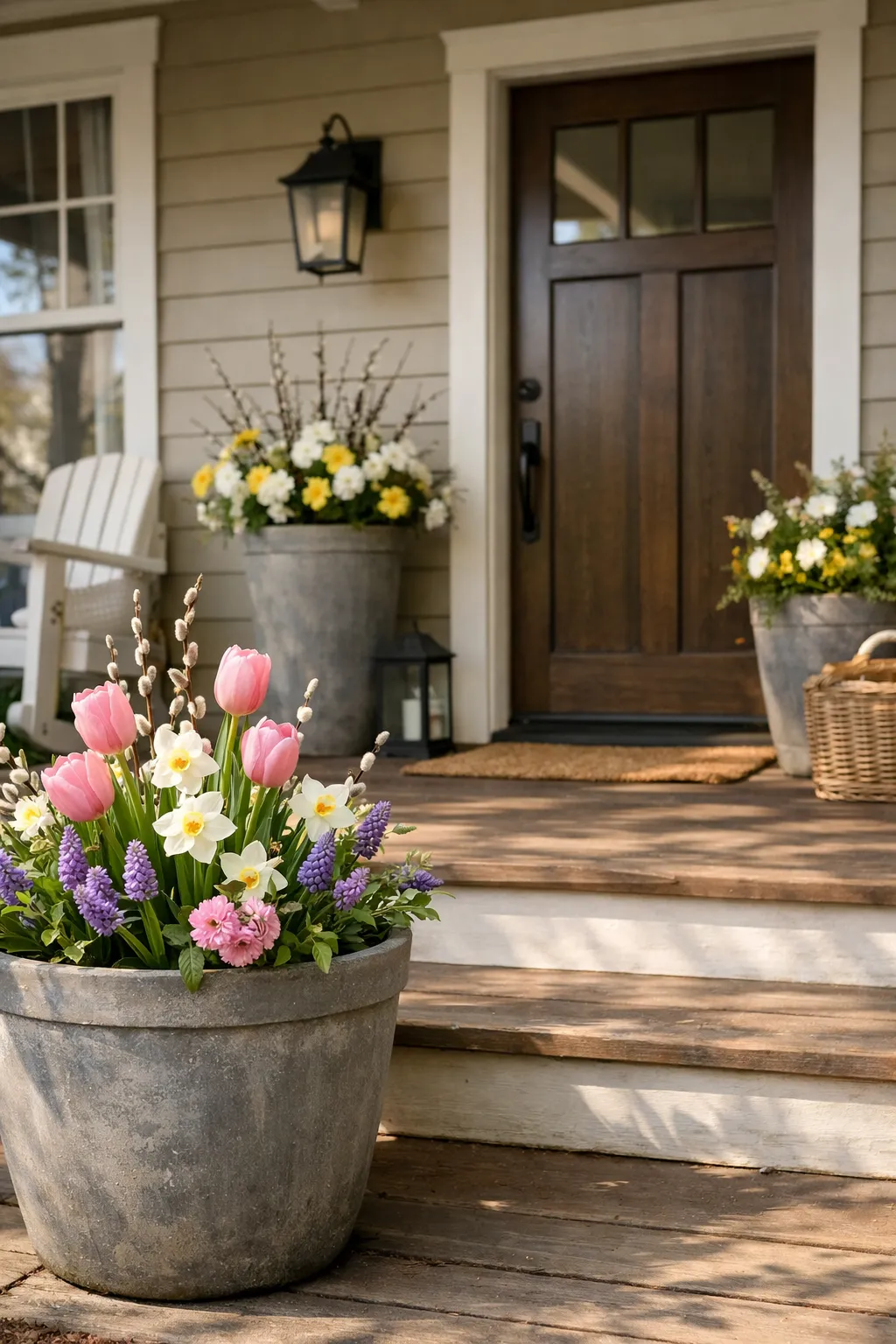
If you want your porch to stay attractive all year, plan around seasonal swaps instead of one permanent arrangement.
A simple rotation might look like this:
- spring: pansies, tulips, alyssum
- summer: petunias, geraniums, calibrachoa
- fall: mums, ornamental kale, trailing ivy
- winter: evergreen branches, berries, pinecones, and weather-safe accents
This keeps the porch looking current without changing the whole setup. Reusing the same planters each season also saves money and keeps your styling consistent.
How to Keep Front Porch Flowers Looking Styled, Not Messy
The fastest way to ruin curb appeal is to crowd too many colors, container styles, or flower types into one small area.
Keep these rules in mind:
- repeat at least one color across the arrangement
- limit planter finishes to one or two styles
- match the scale of the flowers to the porch
- use greenery to break up color
- leave some visual breathing room
- deadhead and trim regularly so the display stays fresh
A porch should look lived-in, not neglected. A little maintenance goes a long way.
Best Front Porch Flower Ideas for Different Home Styles
For farmhouse homes
Use white flowers, galvanized or black planters, soft trailing greens, and fuller arrangements with a relaxed shape.
For modern homes
Choose fewer flower types, cleaner containers, and one strong color story.
For cottage homes
Mix soft blooms, layered textures, and containers with a little character.
For traditional homes
Stick with symmetry, classic urns, and flowers in refined color palettes.
Final Thoughts
The best front porch flower ideas are not always the biggest or brightest ones. They are the ones that fit the porch, suit the house, and feel easy to maintain.
A matching pair of planters can look beautiful. So can one oversized statement pot. A narrow porch may need railing boxes, while a wide porch can handle layered containers and hanging baskets. There is no single right answer. There is only what works well for your space.
Start with one clear idea, keep the styling tight, and build from there. A front porch does not need much to feel warm and welcoming. Sometimes the right flowers in the right spot do most of the work.