

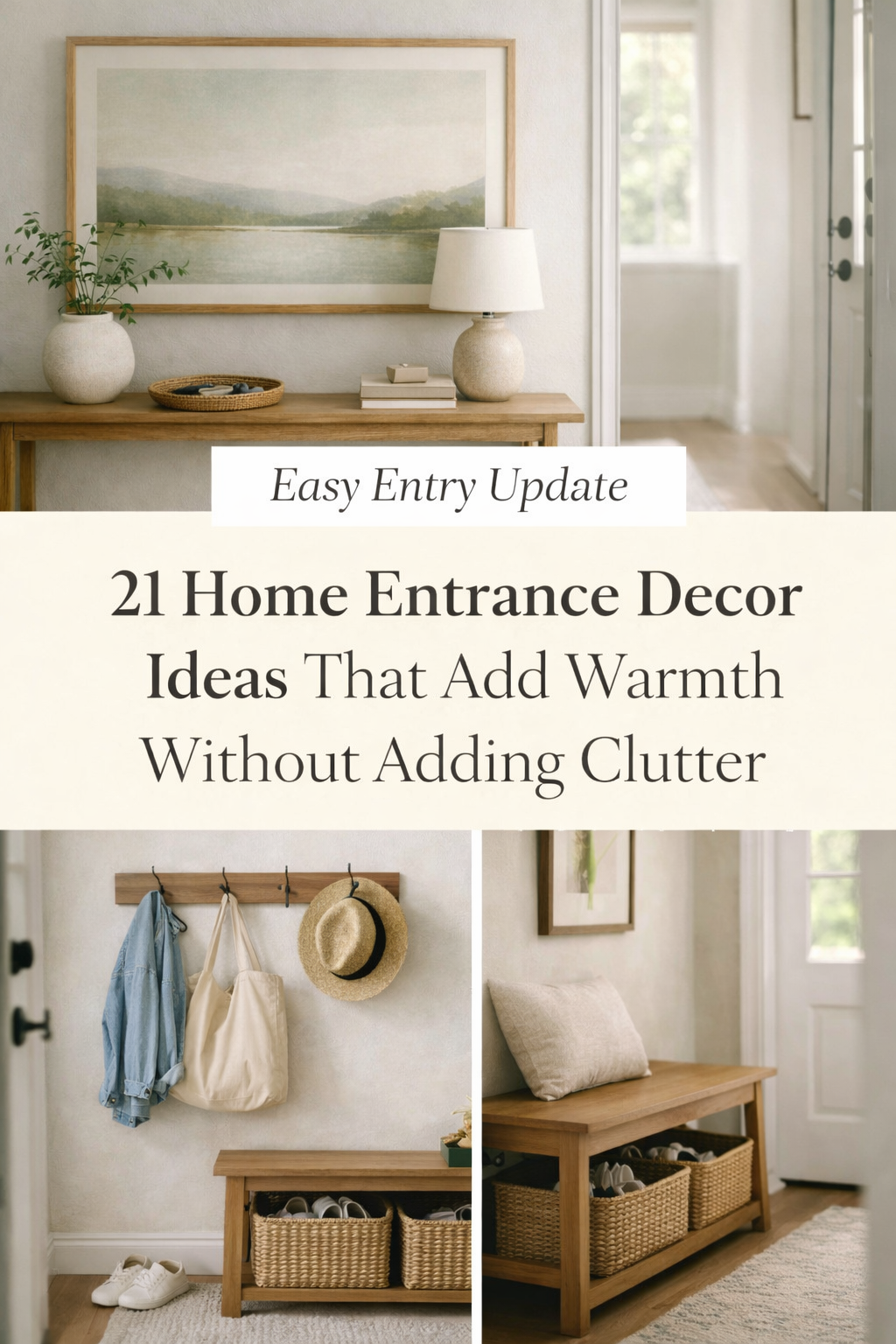
Your home entrance does more work than most people think. It sets the tone, catches daily clutter, and gives guests a first impression before they see anything else. A good entrance should feel welcoming, practical, and easy to maintain. It should also fit the way you actually live, not just look good in a photo.
Some homes have a full foyer. Others have a tiny strip of wall by the front door. Both can work. The key is choosing decor that adds style without creating visual mess. These home entrance decor ideas focus on real spaces, real storage needs, and simple styling choices that look polished year-round.
Before you start, it helps to think about what your entrance needs most. Some spaces need storage. Some need warmth. Some need better scale and balance.
| Entrance Need | Best Decor Approach | Why It Works |
|---|---|---|
| Small and empty | Mirror, slim console, runner | Makes the space feel bigger without crowding it |
| Busy family entry | Bench, hooks, baskets | Keeps shoes, bags, and jackets under control |
| Dark or flat-looking area | Lamp, sconce, lighter rug | Adds depth and warmth |
| Large blank foyer | Statement table, oversized art, layered decor | Fills space in a balanced way |
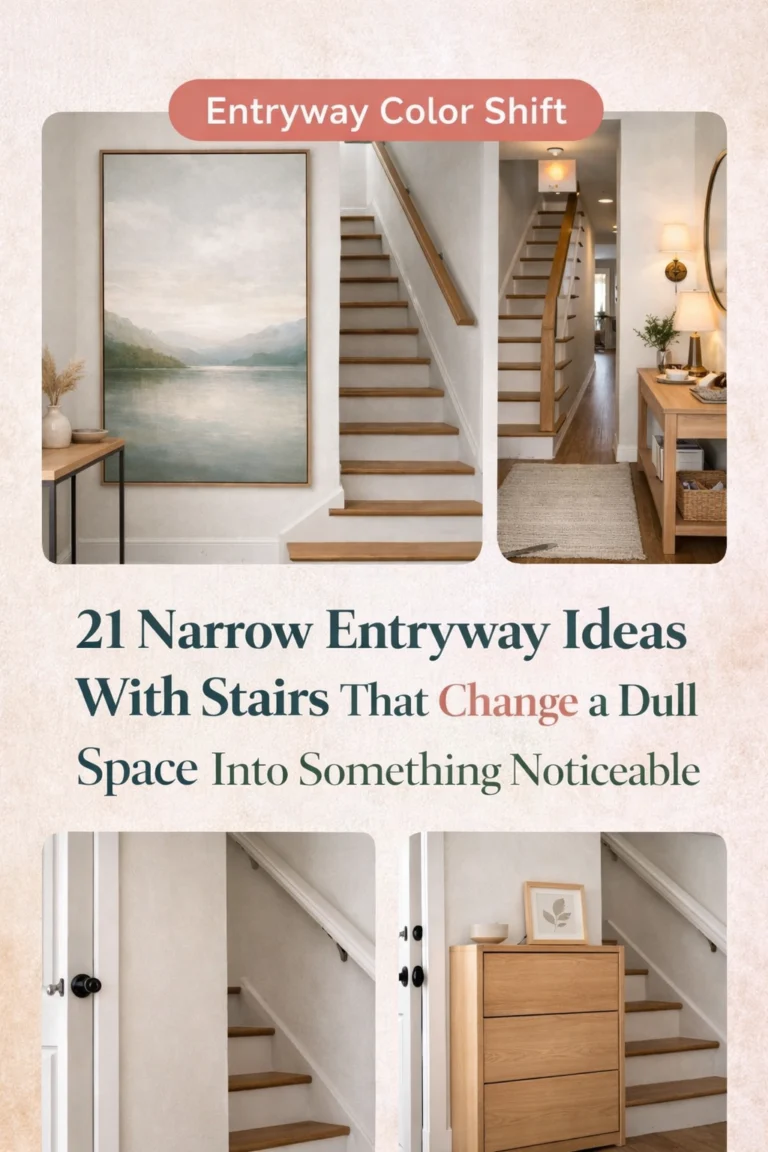
| Narrow hallway entrance | Wall-mounted storage, vertical styling | Saves floor space and still feels finished |
1. Add a Slim Console Table for Instant Structure
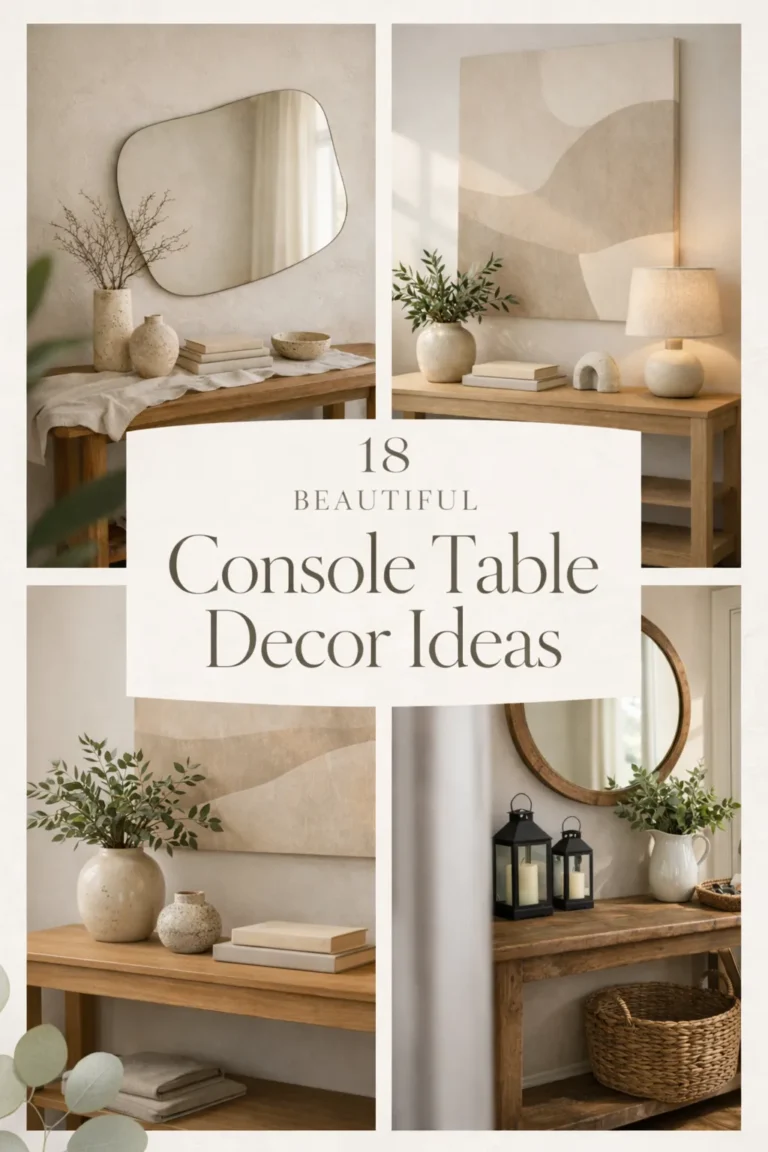
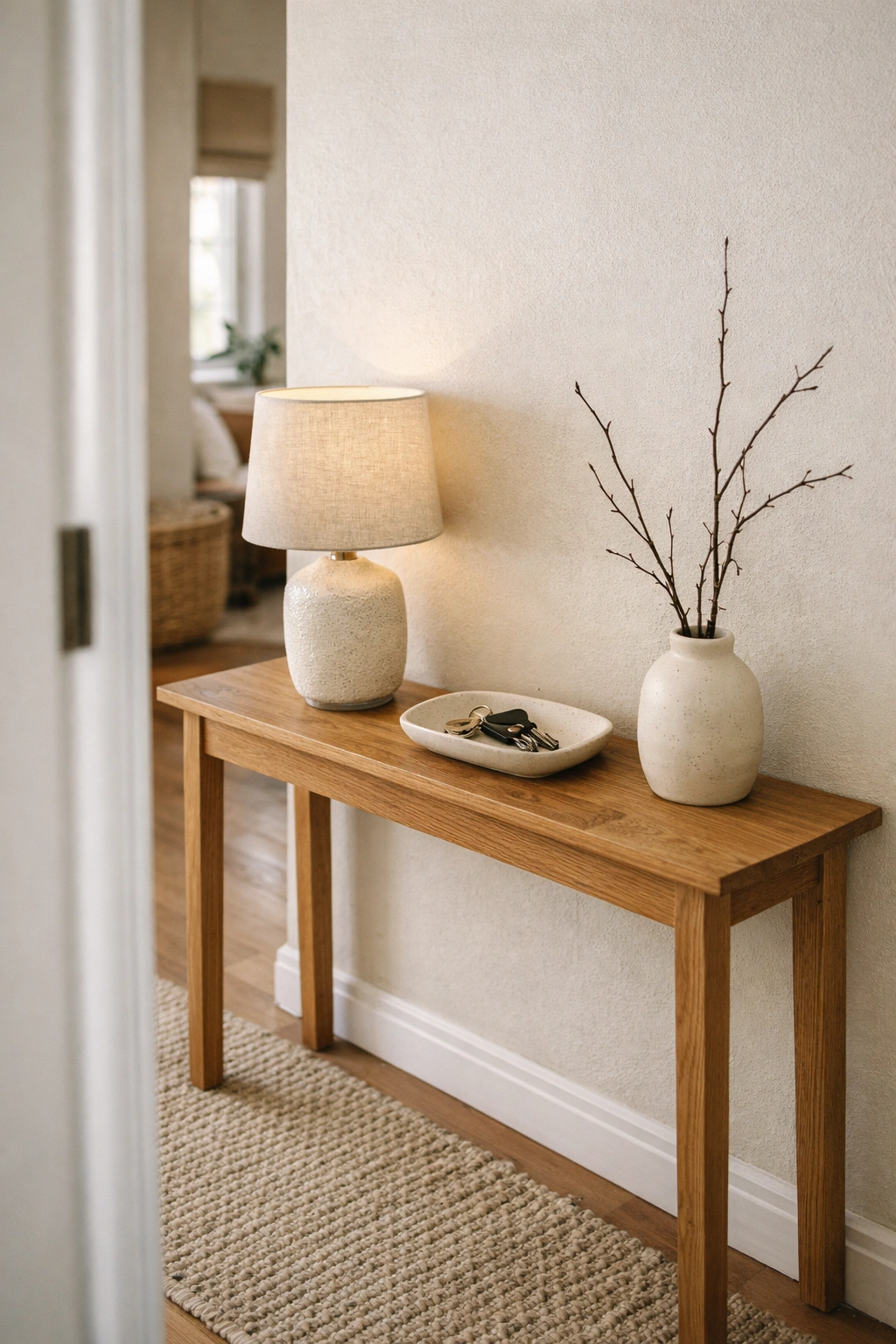
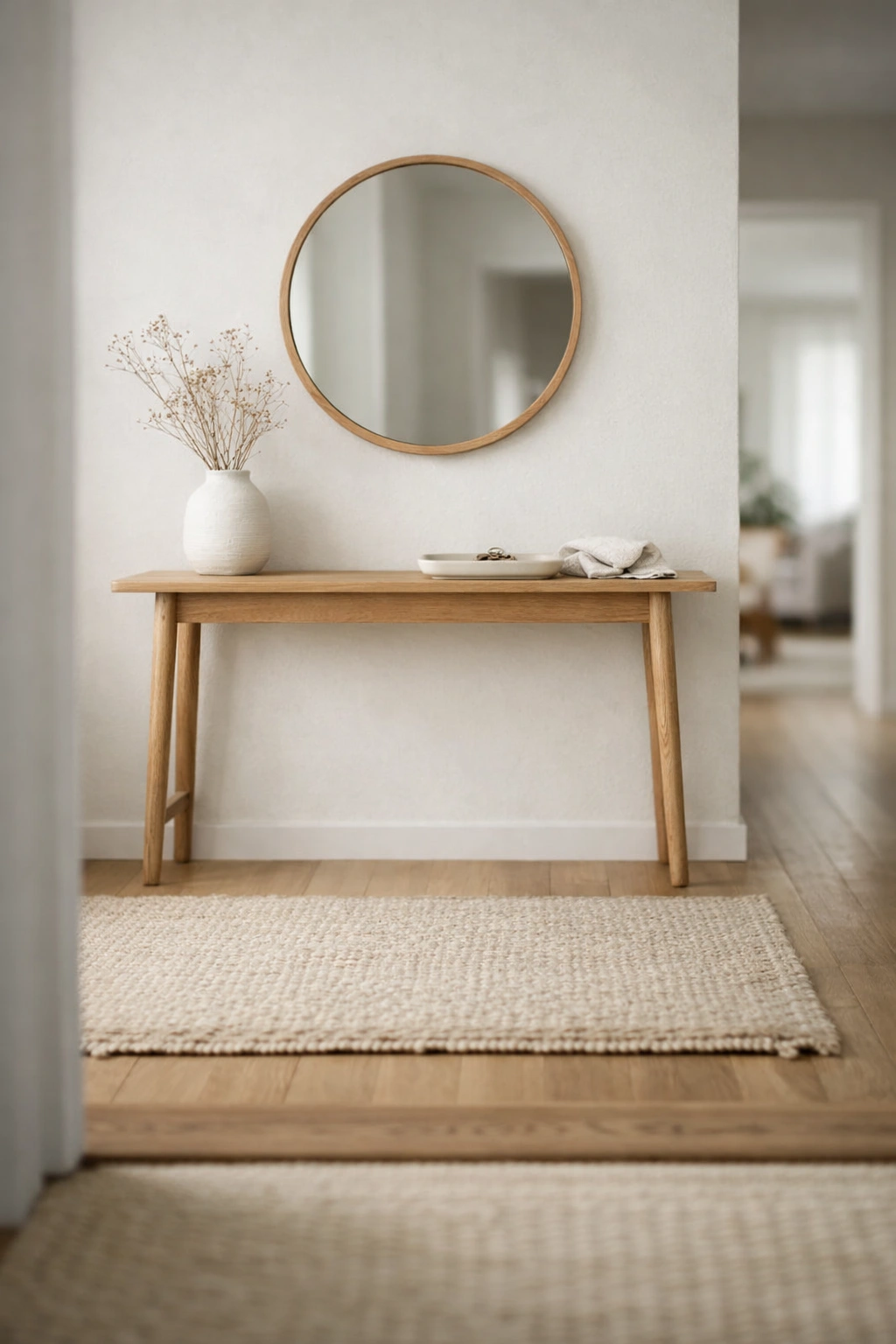
A slim console table is one of the easiest ways to make an entrance look intentional. It gives the eye a place to land and creates a surface for styling without taking over the room.
This works especially well in narrow entryways where a deep table would block movement. Look for a console with clean lines and enough surface area for a lamp, a tray, and one or two decorative pieces. Wood finishes feel warm and timeless. Black metal frames can work well in modern homes. Painted finishes feel softer in cottage or traditional spaces.
Keep the top simple. A small catchall tray for keys, a vase with branches, and a framed print usually does the job. If you crowd the surface, the whole entrance starts to feel stressful.
A real-life example is a small suburban entry with a 10-inch-deep oak console, a ceramic bowl for keys, and a lamp with a linen shade. It looks finished, but it still functions on a busy weekday morning.
2. Use a Large Mirror to Open Up the Space
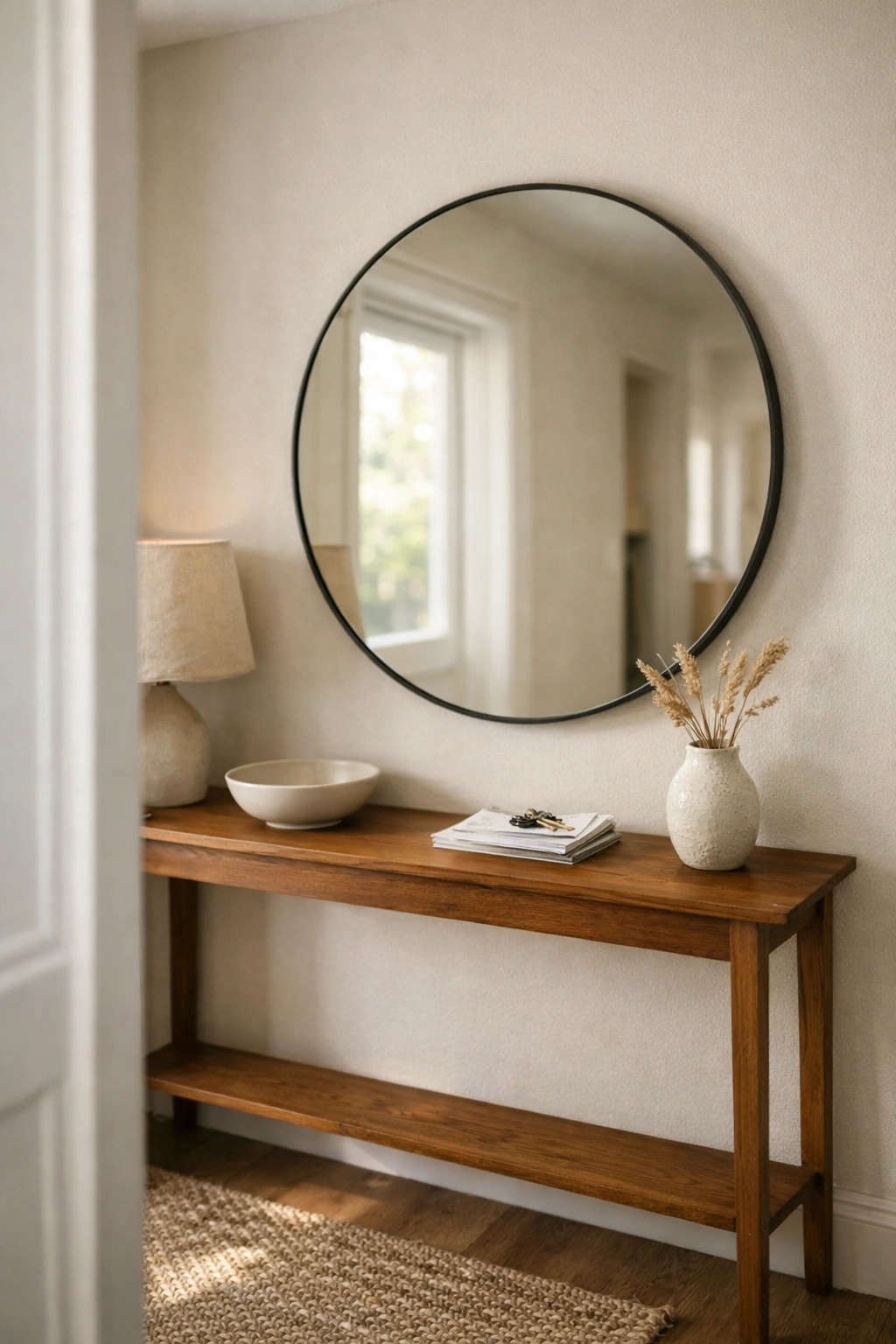
If your entrance feels tight, dark, or flat, a large mirror is not optional. It is one of the strongest fixes. It reflects light, makes walls feel less boxed in, and helps the area feel bigger.
A round mirror softens a space full of straight lines. A rectangular mirror feels more classic and works well over a console. Leaning mirrors can also work in larger foyers, though they need enough room to feel safe and balanced.
The frame matters. Warm wood adds softness. Black gives contrast. Brass can bring in a bit of polish without trying too hard.
This idea works best when the mirror has breathing room around it. If the wall is already busy with hooks, art, and shelves, adding a mirror can feel chaotic. Let it be the main feature.
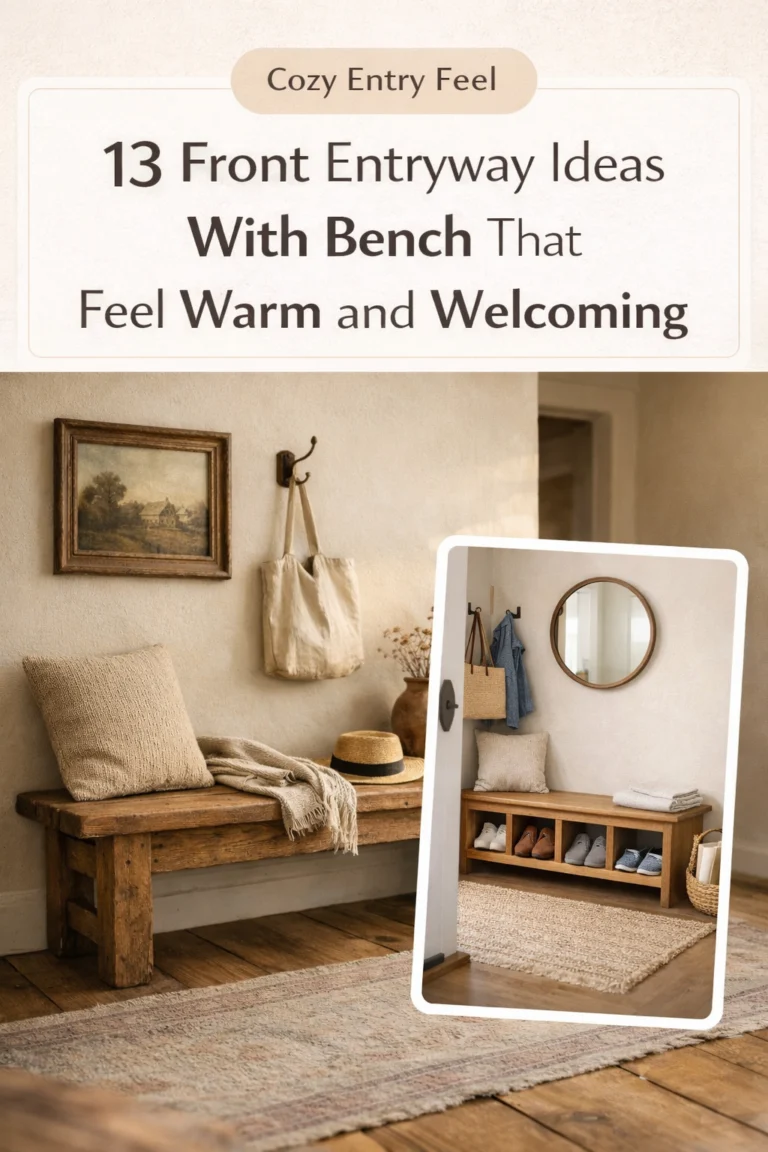
3. Bring in a Bench That Looks Good and Earns Its Spot
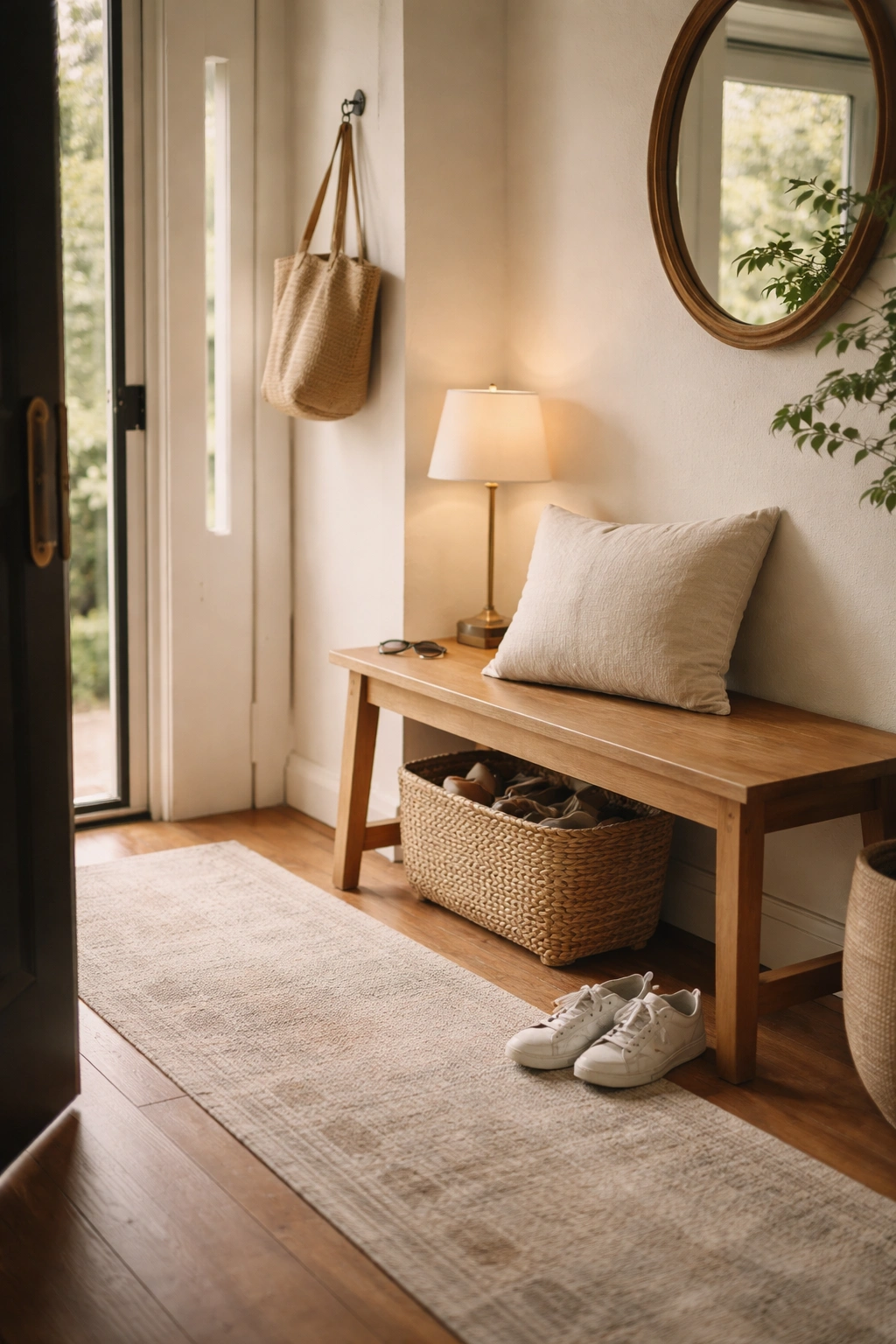
A bench gives people a place to sit while taking shoes on and off, but it also makes the entrance feel lived in. That matters. Entrances that are too bare can look cold and unfinished.
For small spaces, go with an open-leg bench so the floor stays visible. That keeps the area from feeling heavy. In family homes, a bench with hidden storage can pull a lot of weight. In more styled foyers, an upholstered bench adds softness and texture.
The mistake people make is picking a bench that is too bulky for the wall. Measure first. Leave enough space to walk past it easily.
Style it with one pillow at most. Add a basket underneath if you need storage. That is enough. A bench should solve a problem, not become another thing collecting clutter.
4. Layer an Entry Rug That Can Handle Real Life
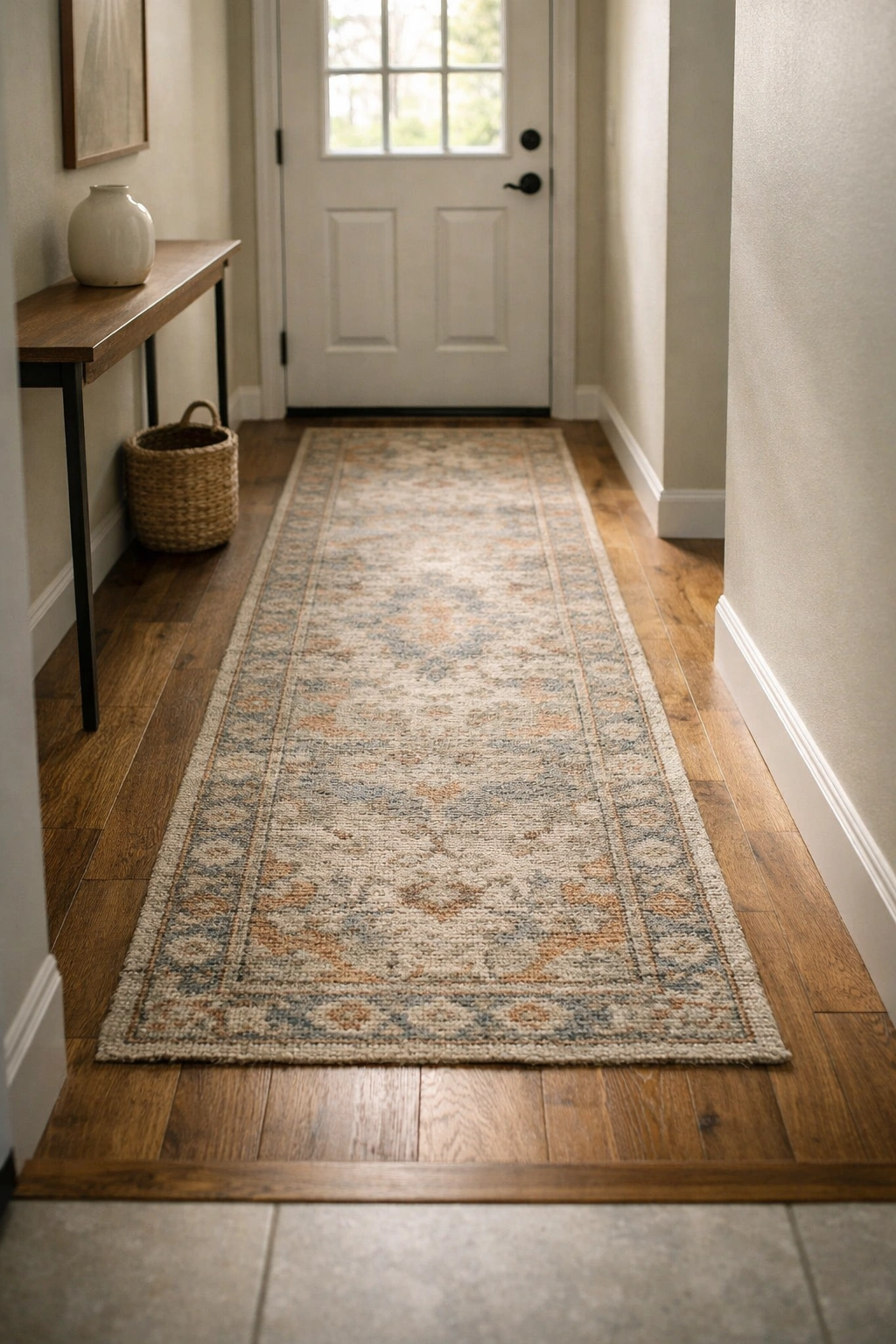
A rug makes the entrance feel grounded. It also protects the floor and helps define the space, especially in open-plan homes where the entry blends into the living room.
Flatweave runners, washable rugs, and low-pile indoor-outdoor styles work best here. High-pile rugs may look cozy, but they trap dirt and are harder to maintain near a front door.
Choose a rug that fits the shape of the area. A runner works in narrow hallways. A small accent rug works in compact foyers. In larger entrances, a wider rug can anchor a console table or bench setup.
Color and pattern matter too. A soft vintage-style print hides dirt better than a plain ivory rug. A striped runner can visually lengthen a narrow entrance.
If your front door opens directly onto the rug, check clearance first. This gets overlooked all the time and causes instant frustration.
5. Install Wall Hooks That Actually Match Your Style
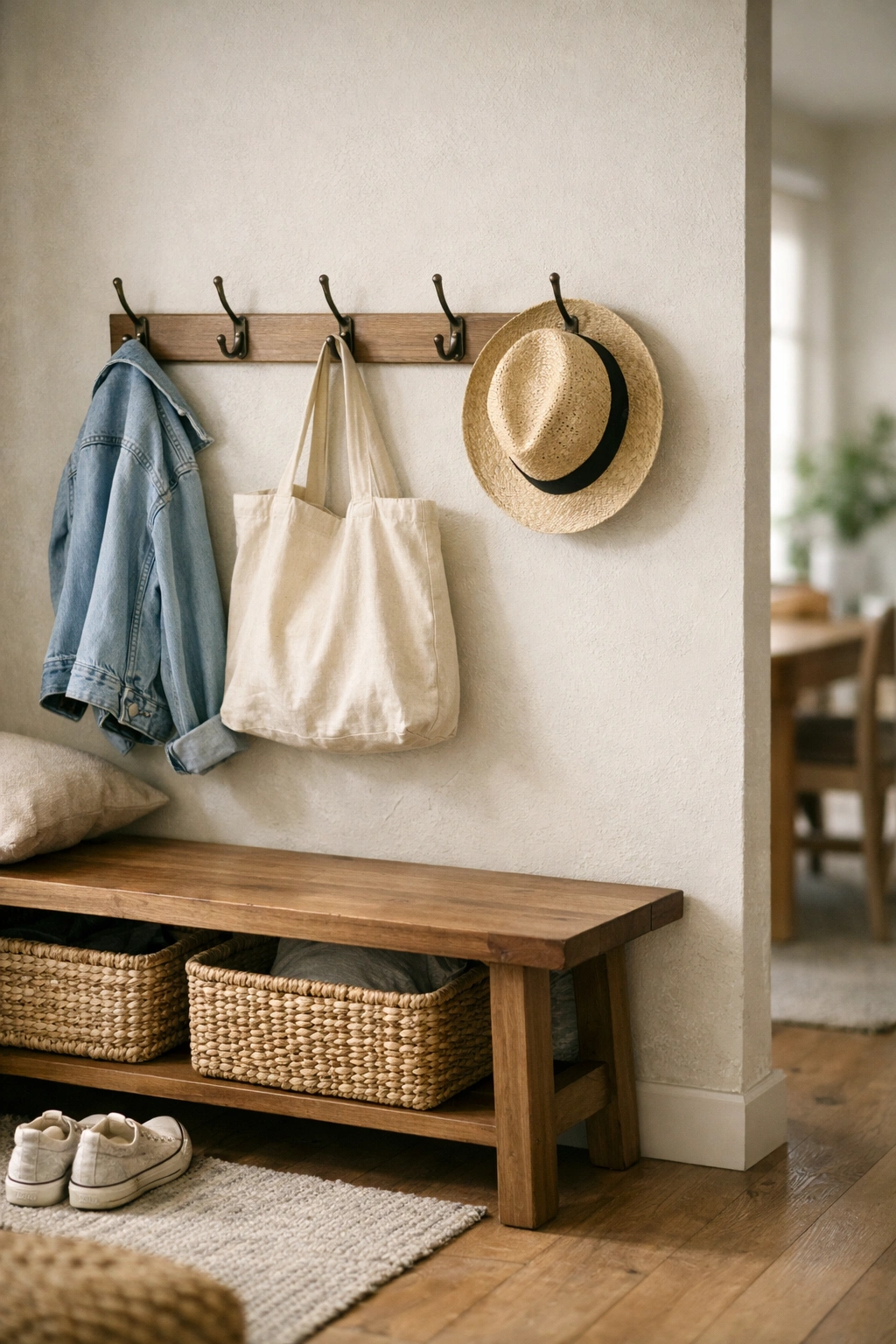
Hooks are practical, but they do not have to look like an afterthought. A row of well-chosen wall hooks can double as decor while keeping coats, bags, and hats off the floor.
This idea works well in homes without a coat closet. It is also useful in apartment entrances where every inch matters. Choose hooks in a finish that ties into the rest of the space, like matte black, antique brass, or natural wood.
The layout matters more than people realize. Hooks hung too high feel awkward. Hooks packed too close together look messy fast. Give each one enough space so coats can hang naturally.
If you want the setup to feel more polished, install the hooks above a bench or below a small picture ledge. That creates a more complete wall arrangement.
6. Style a Catchall Tray Instead of Letting Clutter Spread
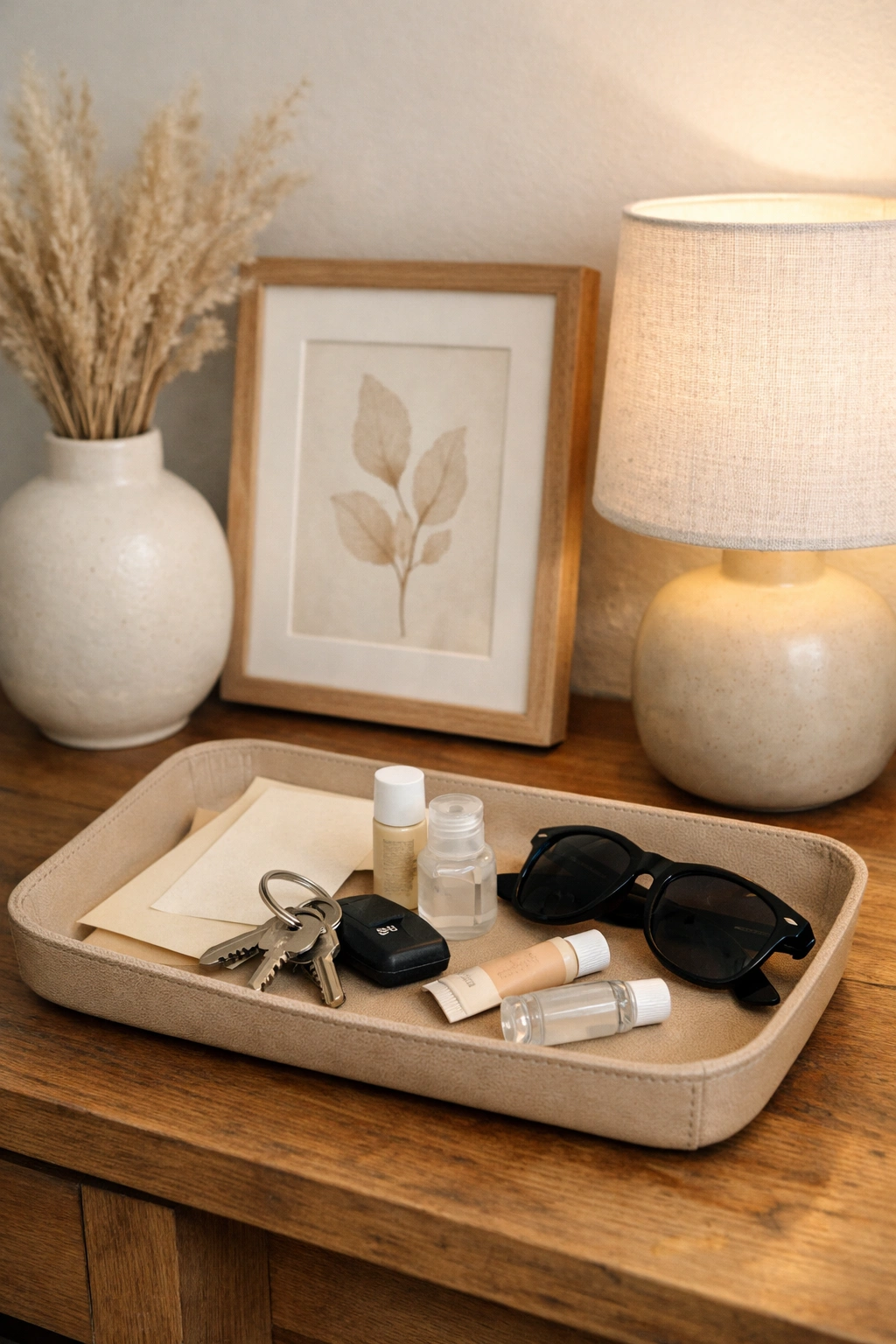
Most entrances collect small daily items. Keys, sunglasses, mail, and earbuds all end up there. If you do not give these things a proper home, they spread across every flat surface.
A catchall tray fixes that fast. It keeps small essentials contained and makes the entrance look more organized, even when life is busy.
Use something that fits your style. A marble tray feels crisp and clean. A wood tray adds warmth. A woven tray can soften a more modern setup. The goal is not to make the space look formal. The goal is to create visual order.
Keep only daily-use items in the tray. Do not turn it into a dumping zone for receipts, loose change, and unopened mail. That defeats the whole point.
7. Add a Table Lamp for Warmth and Depth
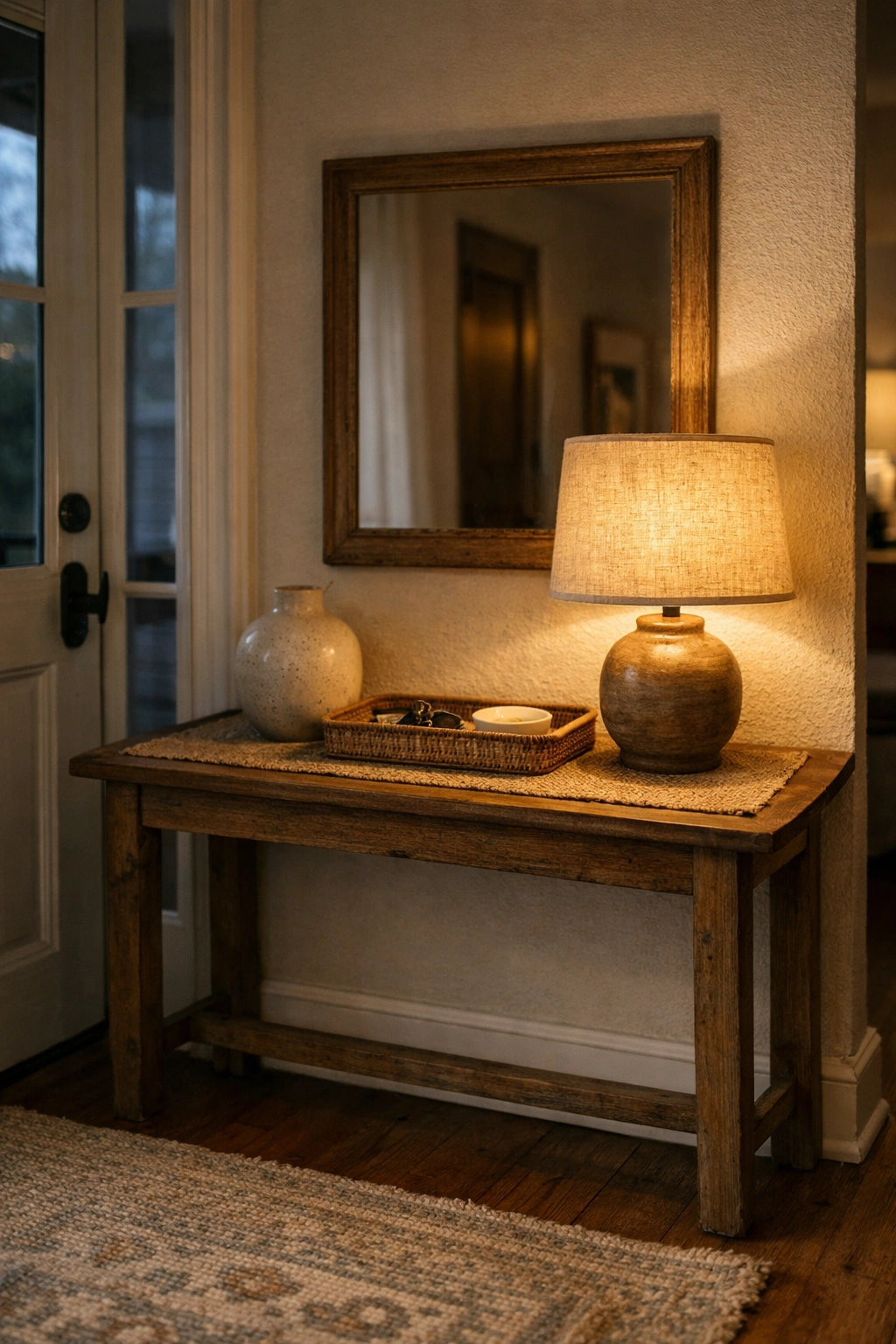
Overhead lighting alone often makes an entrance feel flat. A table lamp changes that. It adds warm light at eye level and makes the space feel more relaxed at night.
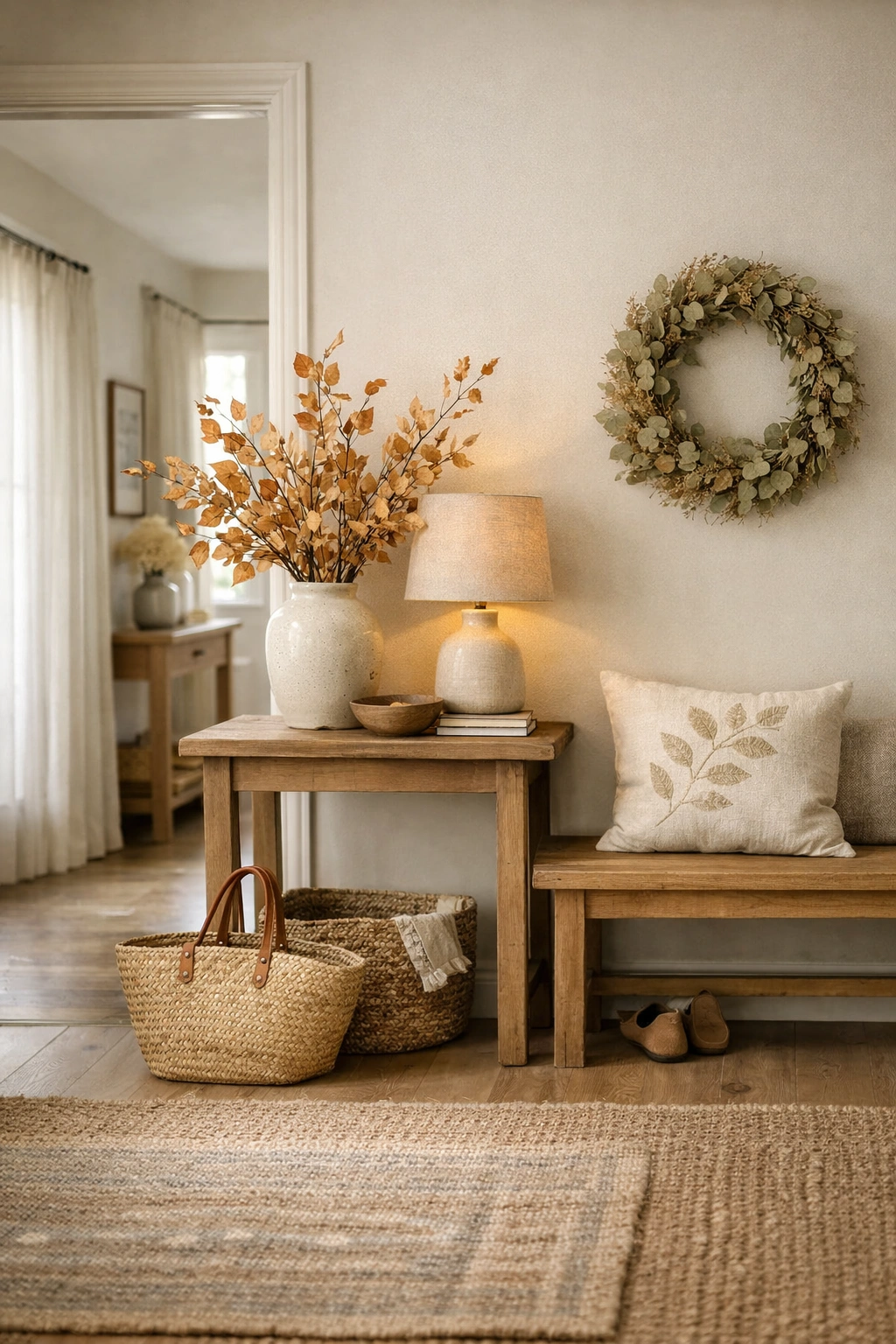
This works best on a console table, but in some larger foyers it can also work on a side chest or accent table. Choose a lamp with a base that suits the room and a shade that diffuses light softly. Linen and textured shades usually look better than shiny or overly stiff ones.
Warm ambient light is especially useful in entrances that open directly into the main living space. It helps the whole front area feel softer and more inviting.
If your entrance has no surface for a lamp, a wall sconce can create a similar effect.
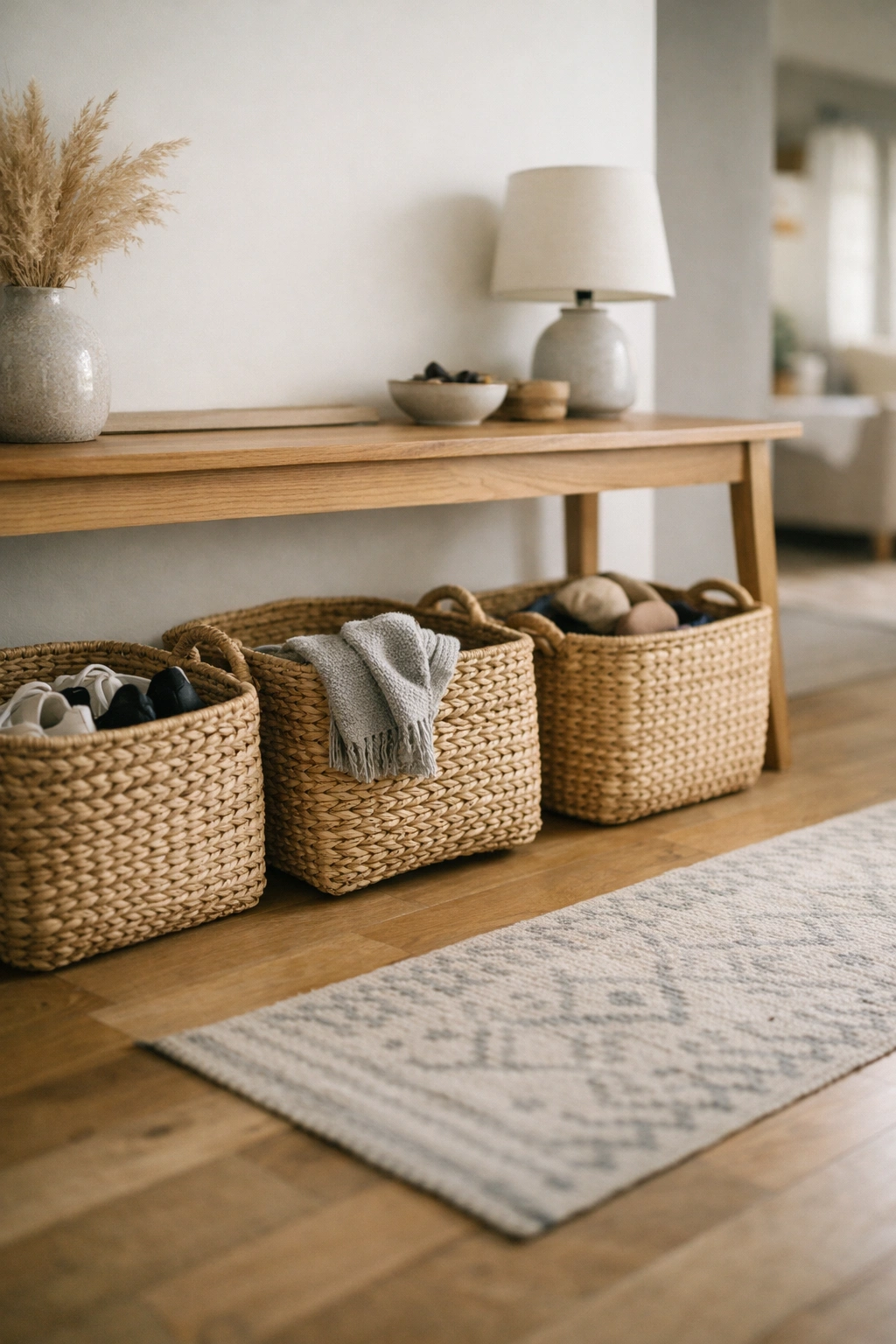
8. Use Baskets for Easy, Hidden-Looking Storage
Baskets are one of the best entryway tools because they solve storage problems without making the room feel stiff. They can hold shoes, scarves, dog leashes, umbrellas, or kids’ grab-and-go items.
Woven baskets also bring in texture, which is useful in entrances that feel too flat or hard. A space with wood, metal, paint, and woven fiber usually feels more layered and complete.
For a cleaner look, use matching baskets under a console or bench. In casual homes, mixed natural textures can still work as long as the shapes feel consistent.
Do not use baskets for everything, though. If every visible item is shoved into woven bins, the entrance can start to look generic. Use them where they solve an actual problem.
9. Hang Art That Gives the Entrance Personality
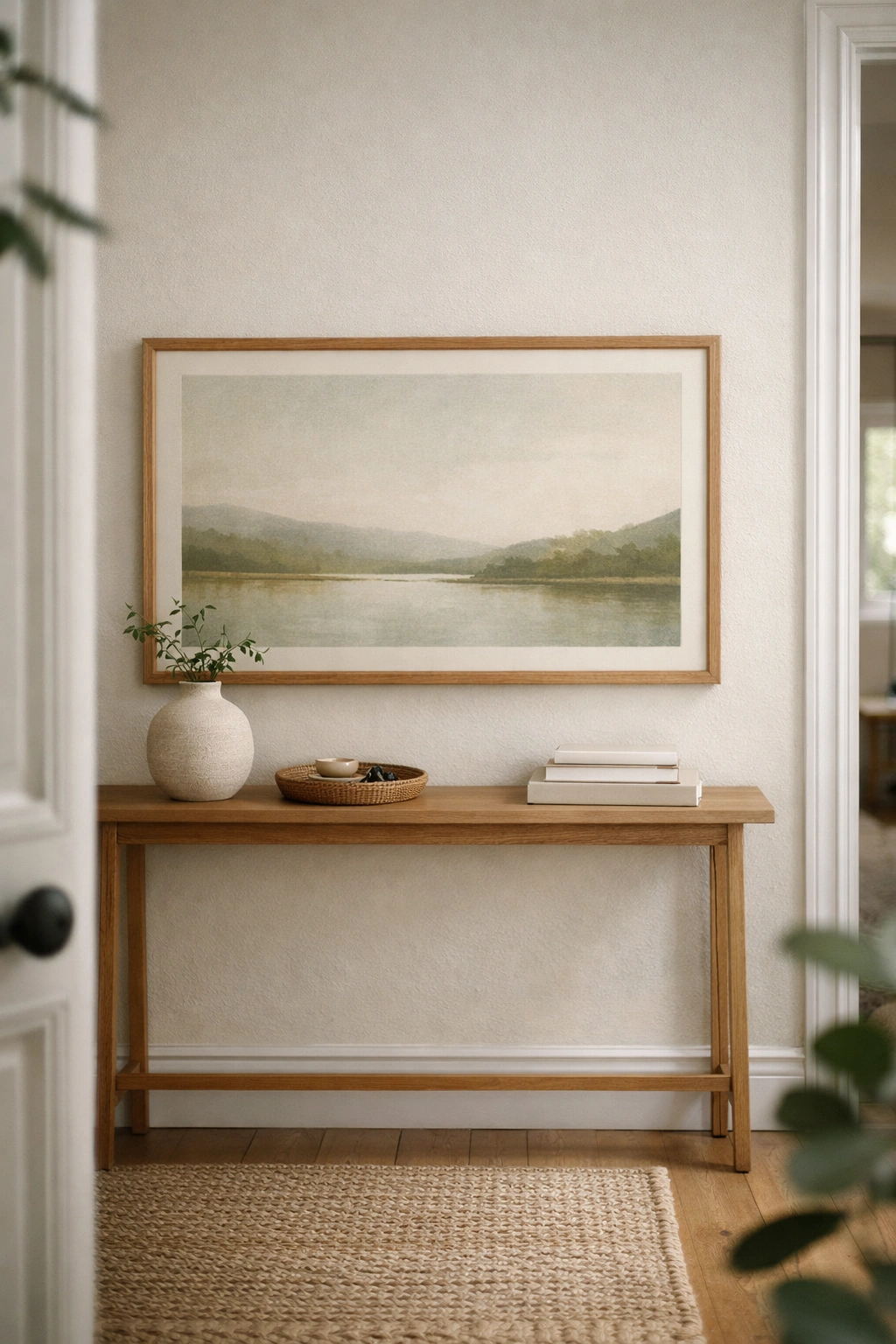
A lot of entrances look technically fine but forgettable. Art fixes that. It gives the space identity and helps it feel connected to the rest of the home.
This could be one oversized piece, a pair of prints, or a small gallery wall if the layout supports it. In tight spaces, one strong piece usually works better than many small ones.
The art should fit the mood of the home. Soft landscapes feel calm and easy to live with. Abstract pieces can bring movement and color. Black-and-white photography works well in modern or transitional homes.
Avoid hanging art too high. That mistake makes the wall feel disconnected from the furniture below it. If there is a console table under the art, the two should feel like they belong together.
10. Try a Round Accent Table in a Small or Awkward Entry
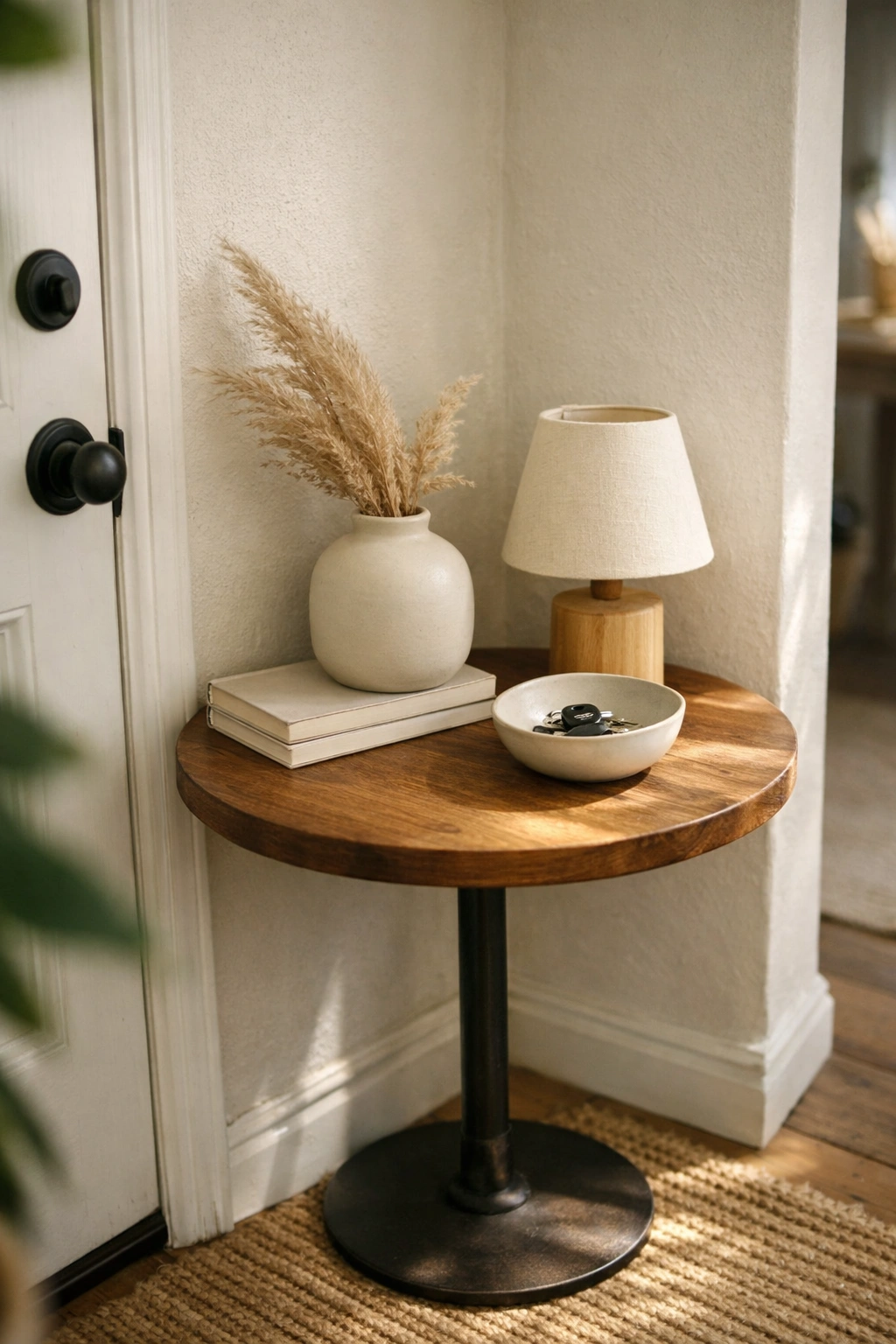
Not every entrance works with a console. Some corners are too tight, too square, or placed at a weird angle. In those cases, a small round accent table can work better.
A round table softens the entrance and improves flow, which matters when people are walking in with bags, shoes, or groceries. It also gives you a styling surface without the sharper, more rigid look of a standard console.
This is a smart choice for apartment entries, corners near staircases, or small foyers where a rectangular piece would feel forced. Style it with a vase, a small bowl, and maybe a lamp if there is room.
The scale has to be right. Too small and it looks random. Too large and it blocks circulation. When it fits, though, it can make an awkward entrance look far more natural.
11. Create Height With a Tall Vase or Branches
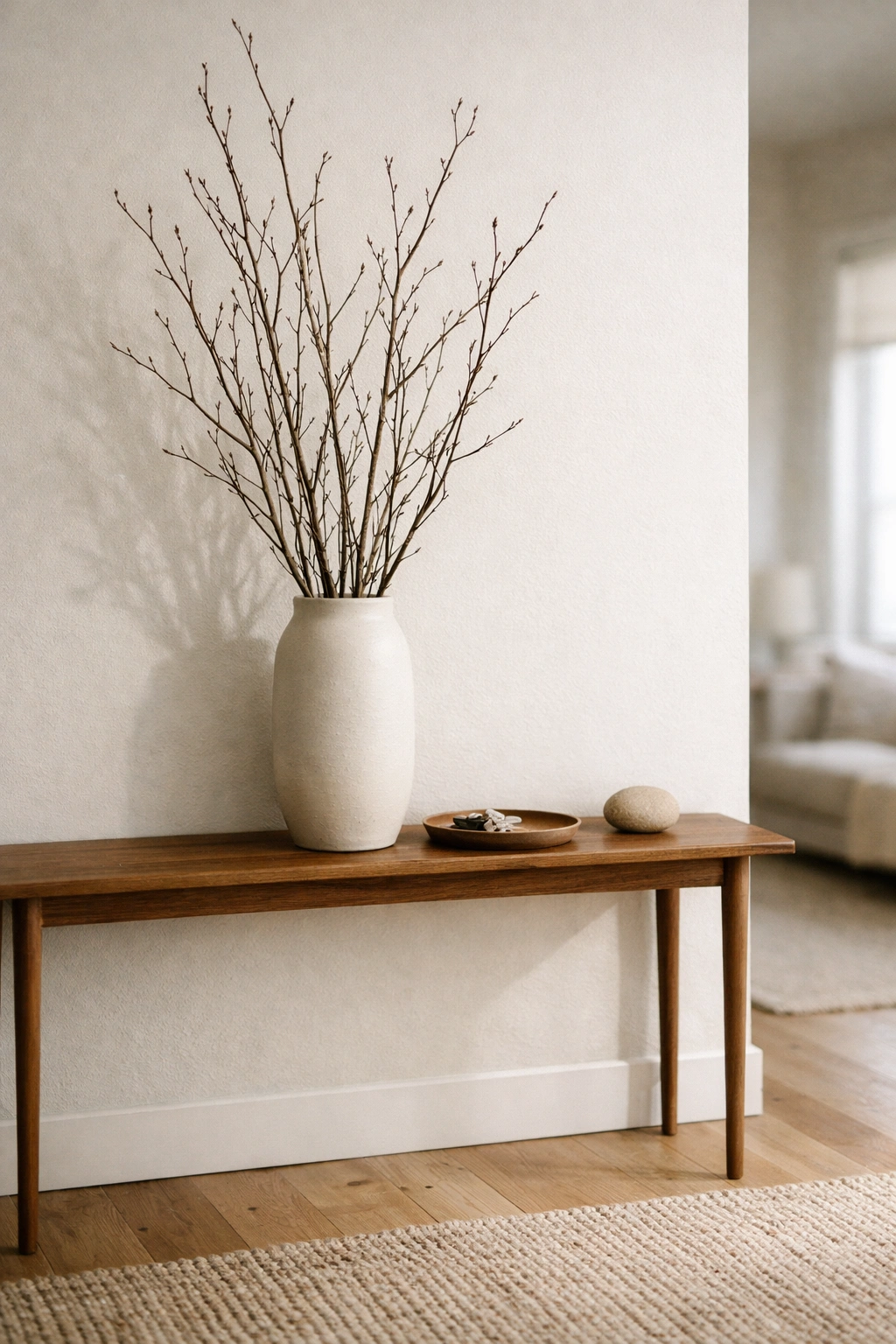
An entrance often needs something vertical to keep it from looking flat. A tall vase with branches is a simple fix. It draws the eye up, adds shape, and makes even a basic console setup feel more styled.
This works best when the rest of the arrangement stays restrained. If you already have a mirror, lamp, tray, and art fighting for attention, tall branches can tip the space into clutter. Use them as a statement, not filler.
Faux branches can work if they look realistic and have movement. Bare branches, olive stems, or soft greenery all suit different styles. In warmer months, something lighter feels fresh. In cooler months, moodier stems can add depth.
This is one of those details that seems small but changes the whole balance of the entrance.
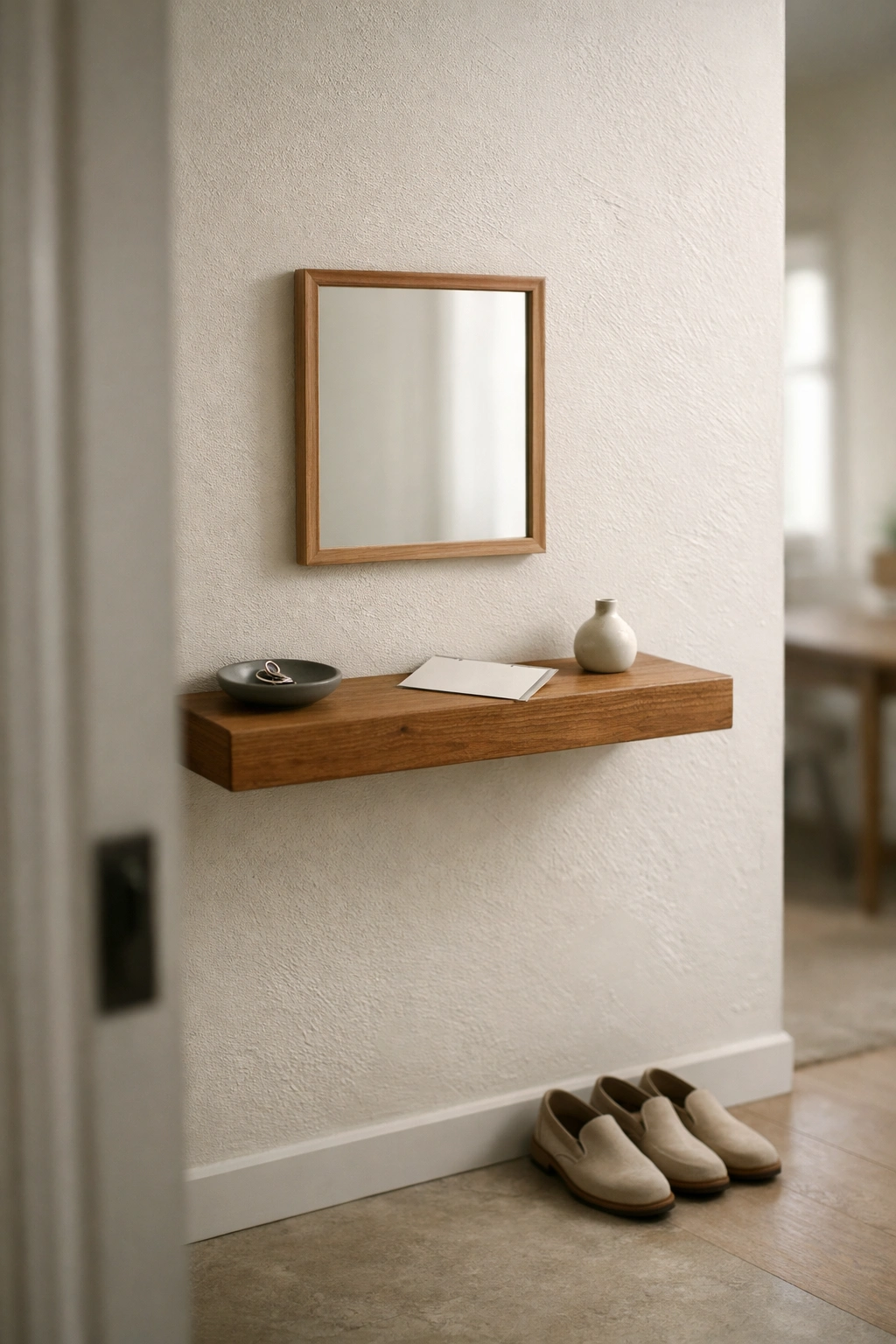
12. Use a Wall Shelf in a Tight Space
Some entrances simply do not have room for floor furniture. That does not mean they have to stay blank. A wall shelf can create a small landing zone without using precious floor space.
This works especially well in narrow hallways, small apartments, and side-door entries. A floating wood shelf can hold keys, mail, and one decorative item while still keeping the area open.
Add a mirror or a piece of art above it if the wall feels too bare. Under the shelf, you can place a slim basket or a pair of neatly lined shoes if needed. The goal is to keep it useful without making it look like a storage problem in progress.
A shelf only works when edited. Once it becomes a pileup spot, the whole entrance starts looking neglected.
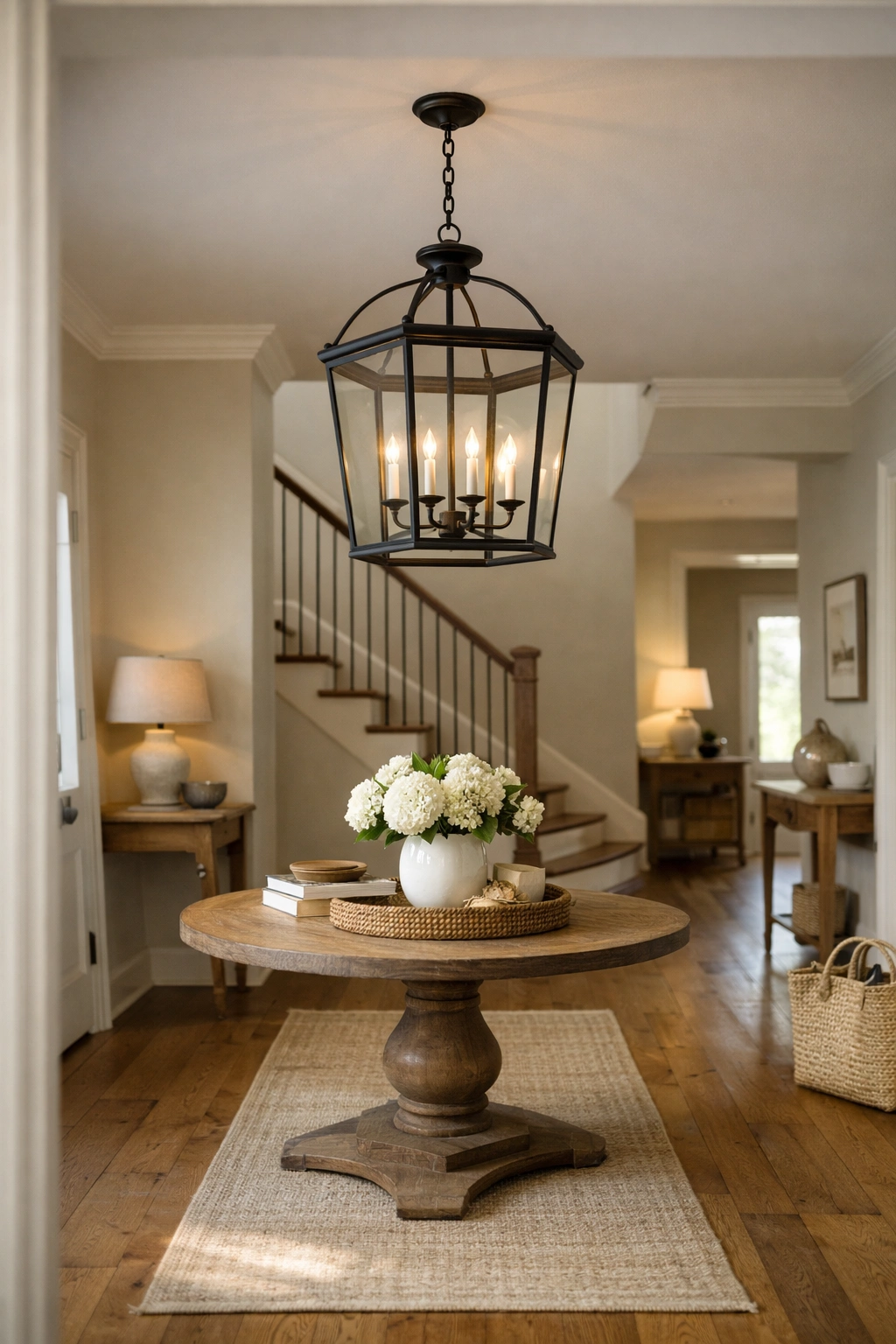
13. Mix in a Statement Light Fixture
If your entrance has overhead space and decent ceiling height, a light fixture can do a lot of visual work. A pendant, lantern, or semi-flush mount can make the area feel finished in a way that basic builder lighting never does.
This matters most in foyers where the entrance is visible from the living room or staircase. A good fixture acts like jewelry. It does not need to scream for attention, but it should add shape and character.
The style should match the home loosely, not perfectly. Black metal lanterns work in modern farmhouse and transitional homes. A soft brass fixture can warm up neutral spaces. Frosted glass often feels quieter and more timeless than trendy exposed bulbs.
Do not pick a fixture just because it looks impressive online. It needs to suit the scale of the entrance and the height of the ceiling.
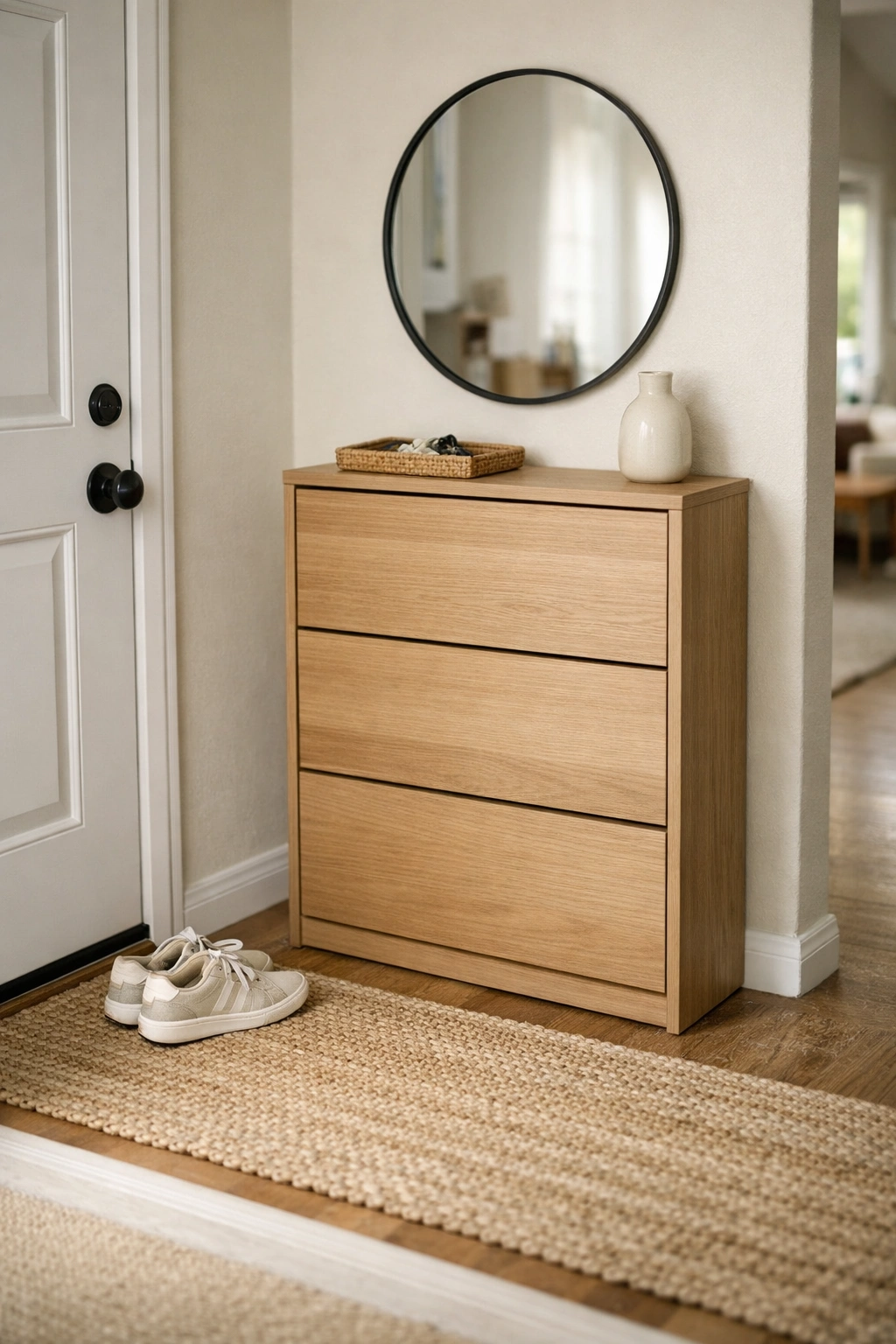
14. Add a Shoe Storage Piece That Does Not Look Cheap
Shoe clutter ruins an entrance fast. It does not matter how nice the mirror or rug is if there are six pairs of shoes piled by the door. A proper storage solution changes everything.
A closed cabinet usually looks better than an open rack in a front entrance because it hides the visual mess. In casual family entries, an open lower shelf under a bench can still work if the shoes stay limited and organized.
Choose a piece that feels like furniture, not utility gear. Slim shoe cabinets are especially useful in tight spaces because they hold more than people expect without sticking too far into the room.
This is where practicality has to win. If the household wears shoes daily and has no closet, pretending a decorative basket will handle it is nonsense. Use real storage.
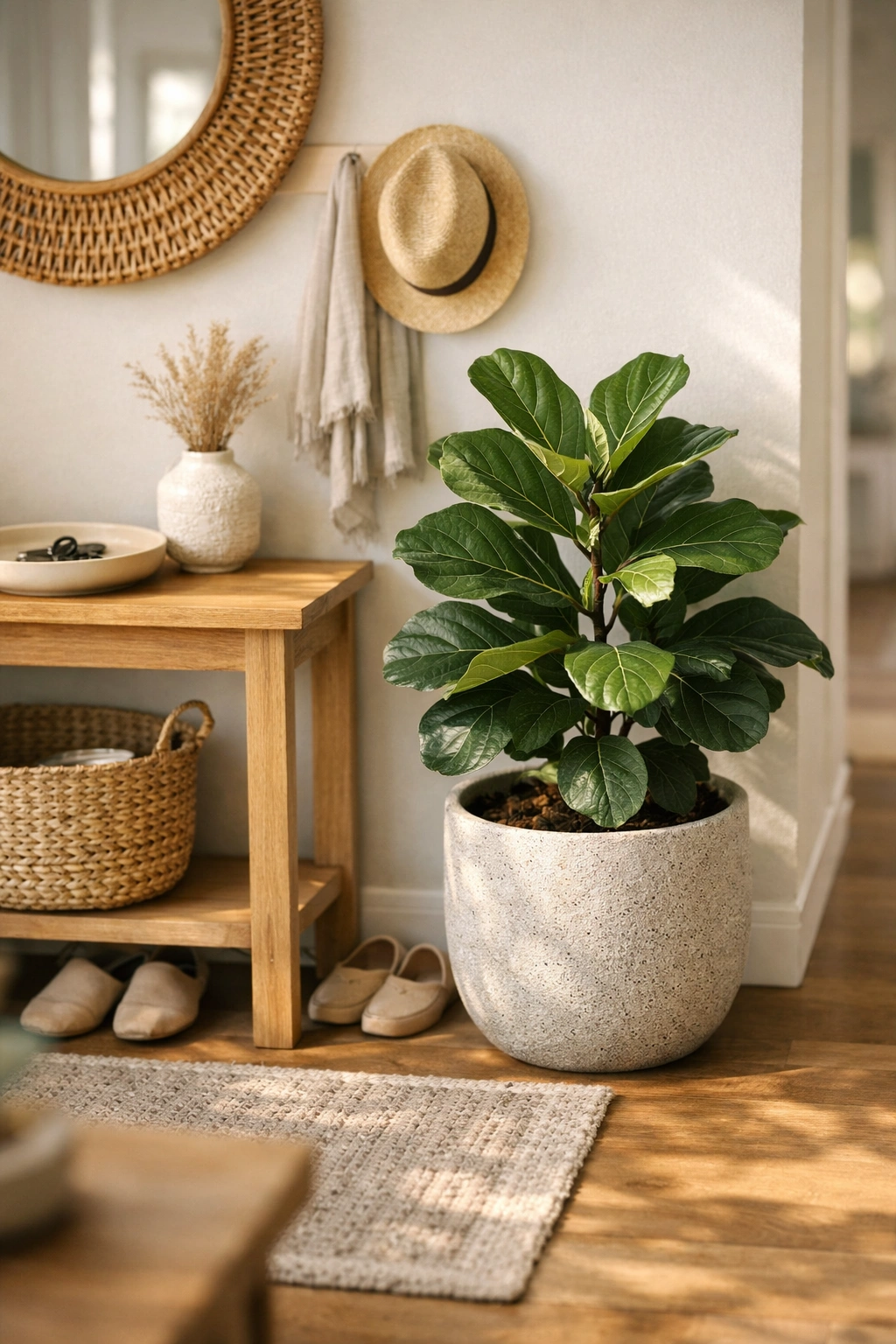
15. Bring in Greenery for a Fresher First Impression
Plants make an entrance feel alive. Even one small plant can soften hard edges and make the space feel more cared for.
A larger floor plant works well in open foyers with natural light. A smaller potted plant works on a console or shelf. If the entrance is dark, use a high-quality faux plant rather than forcing a real one to die in the corner.
Greenery works because it breaks up materials like painted walls, metal hardware, and wood furniture. It adds shape that does not feel rigid. It also helps neutral entrances feel less flat.
Keep the planter simple. Ceramic, stone-look, or woven planters usually blend in better than glossy plastic ones. The entrance should feel calm, not like a garden center display.
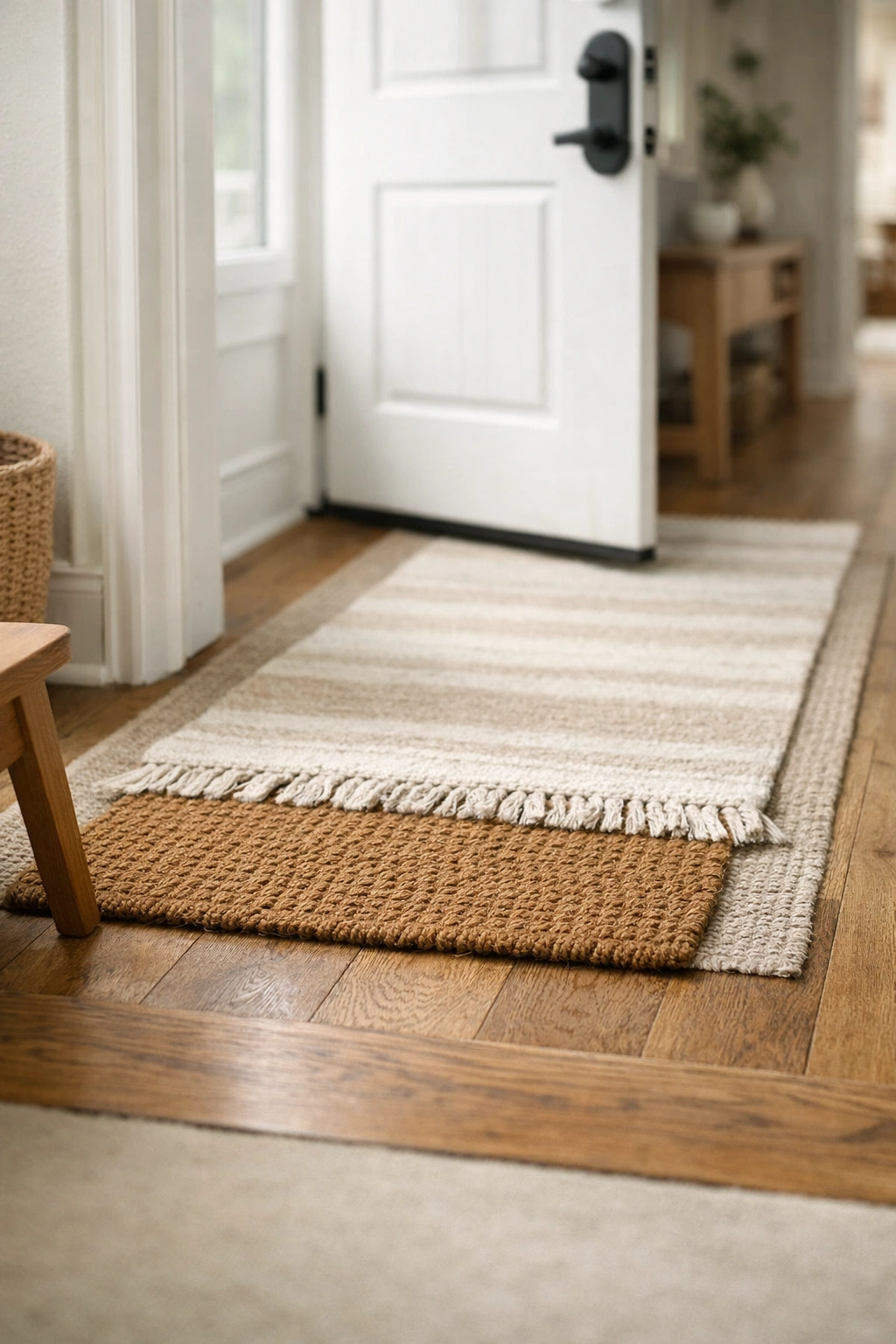
16. Style the Door Area With a Rug and Mat Combination
If your entrance opens directly inside from the front door, layering the doormat and interior rug can make the whole area feel more complete. It also adds function by catching dirt before it travels deeper into the house.
This works best when the two pieces look related but not identical. A simple coir-style mat outside or just inside the threshold can pair well with a muted runner or washable rug beyond it.
The key is contrast in texture and scale. You want the entrance to feel layered, not repetitive. A rougher mat plus a softer woven rug usually looks more natural than two similar flat pieces competing with each other.
This idea is especially useful in homes with kids, pets, or frequent foot traffic because it improves both style and cleanup.
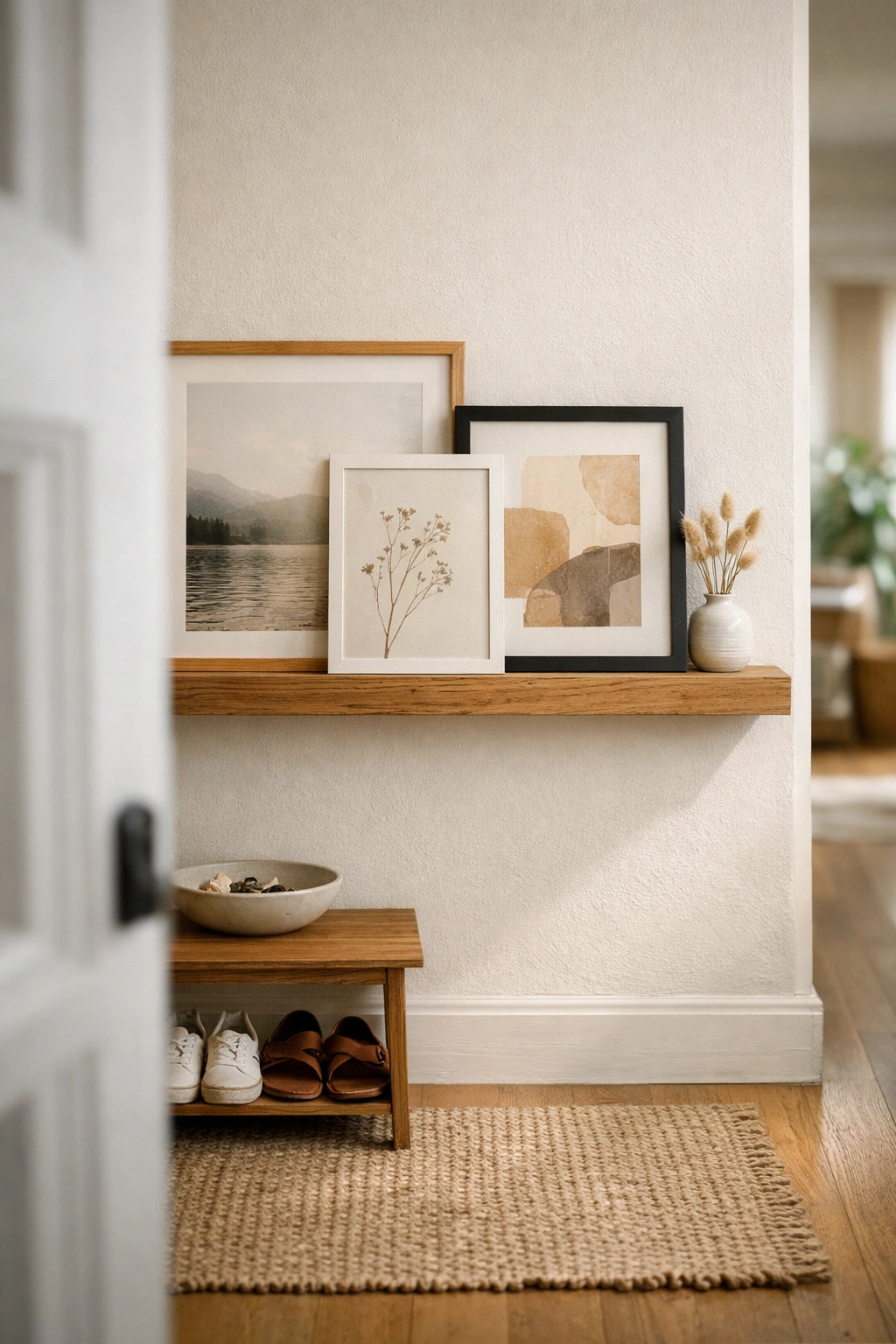
17. Use a Picture Ledge for Flexible Styling
A picture ledge gives you an easy way to add personality without committing to a single fixed arrangement. You can lean framed prints, small art pieces, or even a mirror and switch them out as the season or mood changes.
This is a good solution for people who like layered decor but do not want to keep patching walls. It also works well in entrances where one large artwork feels too formal or too rigid.
Keep the ledge styling tight. Two or three frames with slightly varied heights usually look better than a crowded stack. You can add a small object, but not much more.
This kind of setup works best in casual, lived-in homes where a bit of relaxed styling feels natural.
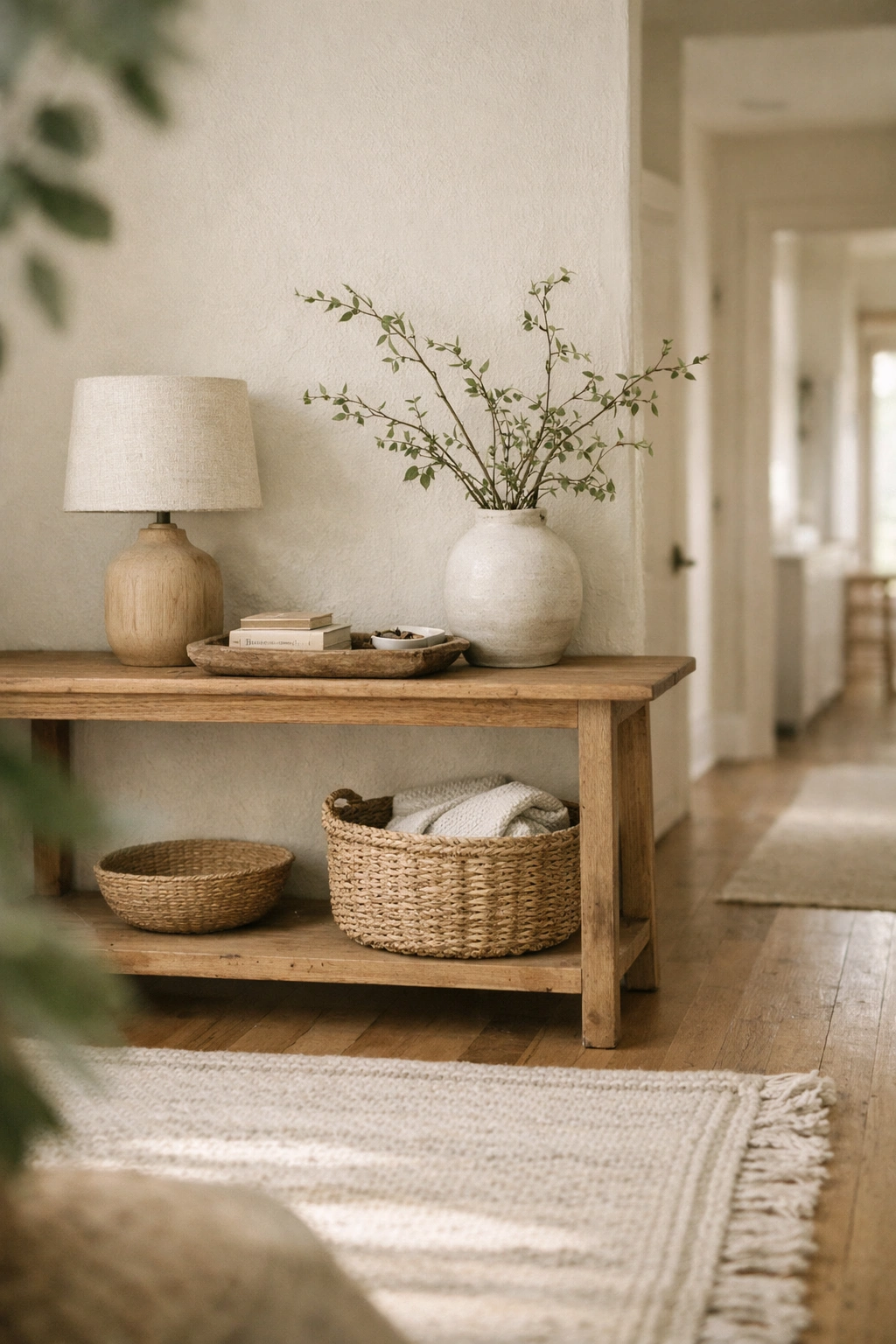
18. Add Texture With Wood, Linen, and Woven Materials
A lot of entrances fail because they are too flat. Painted wall, plain floor, bare table, done. It is functional, but it has no depth. Texture fixes that.
You do not need a lot. A wood console, a linen lamp shade, a woven basket, and a ceramic vase already create enough variation to make the area feel layered. These materials catch light differently, which gives the entrance a more natural and lived-in look.
This is one reason organic modern and warm neutral styles work so well in entryways. They rely on texture more than loud color. That keeps the space calming and timeless.
The trick is balance. If every item is rough, woven, rustic, or distressed, the entrance starts to feel overworked. Mix smooth and textured surfaces so the room still feels clean.
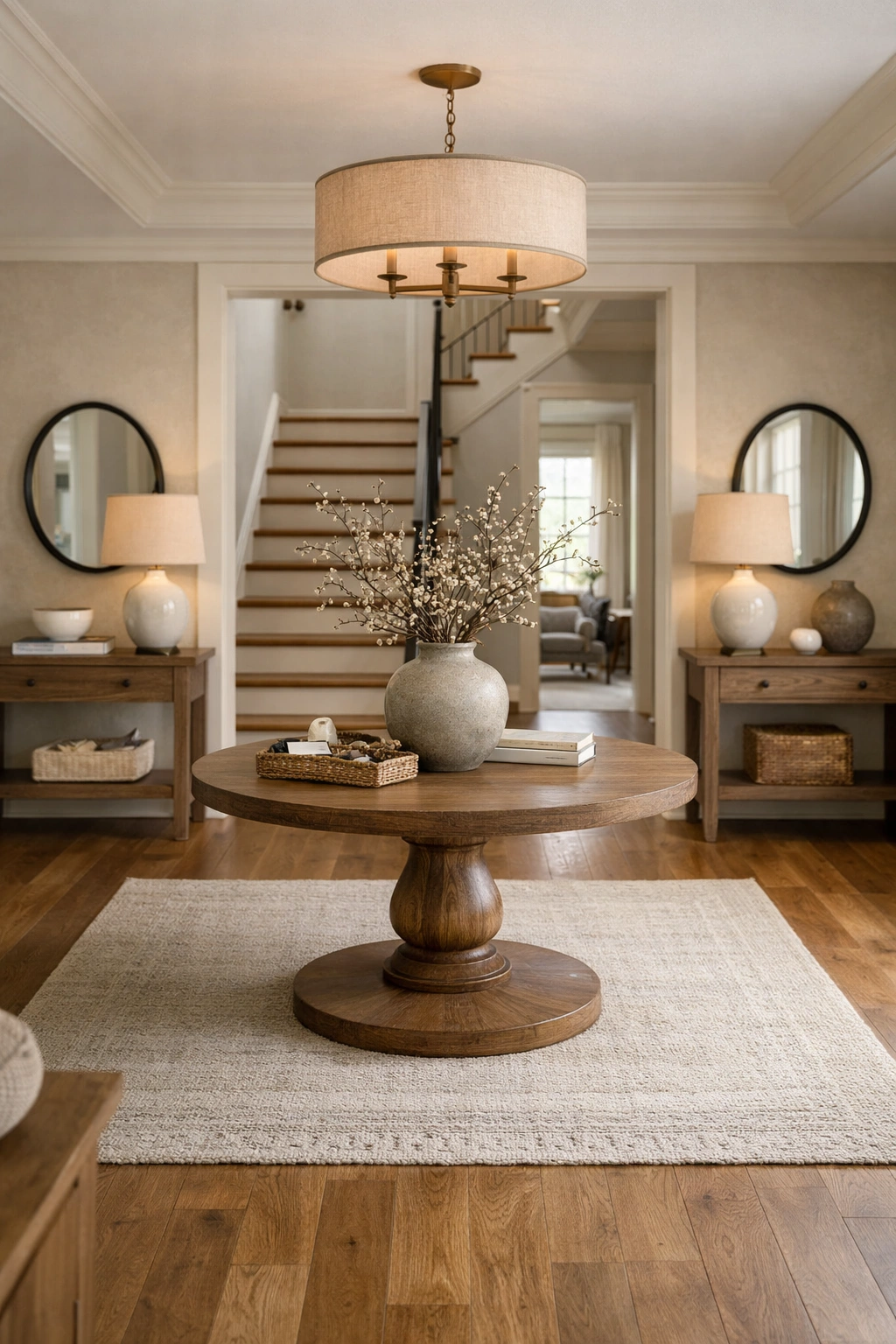
19. Use Symmetry in a Larger Foyer
If your entrance is wide or formal, symmetry can make it feel settled fast. A centered table with matching lamps, matching sconces, or a pair of planters can create order in a big space that might otherwise feel awkwardly empty.
This approach works best in traditional, transitional, and classic homes, but parts of it can also work in more modern spaces. Symmetry tends to feel calm because it gives the eye a clear structure.
That said, do not force it in a small entrance. In tight spaces, symmetry can look stiff and overplanned. It needs room to breathe.
A larger foyer with double-height ceilings or a visible staircase often benefits from a balanced layout because it helps the entrance feel intentional rather than unfinished.
20. Include One Seasonal Accent Without Redecorating Everything
Seasonal decor in an entrance makes sense because it is the one place guests always see. But most people overdo it. One seasonal accent is enough.
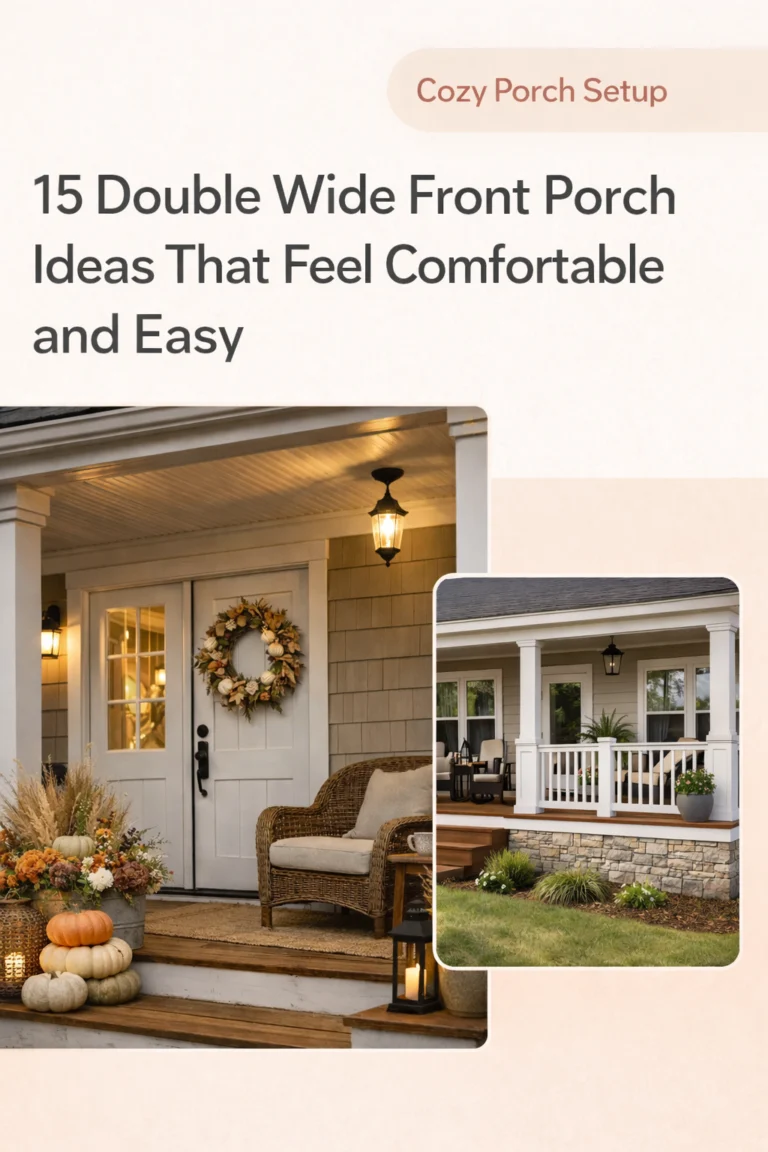
That could be a wreath, a bowl of seasonal stems, a pillow on the bench, or a subtle change in artwork and color. In fall, warmer tones and layered textures can make the entrance feel cozy. In spring, lighter branches and softer colors can freshen it up.
The goal is to nod to the season without rebuilding the entire space every few months. Permanent pieces should still carry the look. Seasonal decor should support, not dominate.
This keeps the entrance practical and avoids that temporary, overstyled look that gets old fast.
21. Edit Ruthlessly So the Entrance Stays Calm
This last idea is the most important because it affects every other one. A stylish entrance is rarely about adding more. It is about editing what does not need to be there.
Too many small objects make an entrance feel nervous. Too many storage pieces make it feel crowded. Too many decorative items make it lose function. The best-looking entrances usually have fewer pieces, better scale, and a clearer purpose.
Step back and ask a blunt question: does each item either help the space function or make it noticeably better looking? If the answer is no, remove it.
That is what separates a polished entrance from a cluttered one pretending to be styled.
How to Choose the Right Entrance Decor for Your Home
Not every idea fits every house. A small apartment entrance needs different choices than a wide suburban foyer. Before copying a look, match it to your space and habits.
| Home type | Best entrance choices | Avoid |
| Small apartment | Wall shelf, mirror, hooks, slim bench, narrow rug | Bulky tables, oversized decor |
| Busy family home | Bench, baskets, shoe cabinet, durable rug, hooks | Fragile styling, open clutter |
| Formal foyer | Statement light, large art, centered table, symmetry | Tiny accessories that get lost |
| Narrow hallway | Slim console, runner, mirror, wall-mounted storage | Deep furniture blocking flow |
| Cozy casual home | Warm lamp, woven textures, soft art, greenery | Harsh lighting, overly rigid layout |
Common Entrance Decor Mistakes to Avoid
A lot of bad entrance styling comes from ignoring scale and function. These are the mistakes that keep showing up:
- Choosing furniture that is too deep for the walkway
- Hanging mirrors or art too high
- Using rugs that slide, bunch, or block the door
- Adding too many small decor items
- Ignoring shoe storage in a high-traffic home
- Using cold overhead lighting only
- Treating the entrance like a display instead of part of daily life
Fix those first. Most entrances improve fast once the basic problems are handled.
Final Thoughts
A well-decorated home entrance is not about chasing a perfect Pinterest photo. It is about creating a space that feels welcoming the second you walk in and still works when real life gets messy.
The strongest entrances combine beauty with logic. They offer a place for keys, shoes, and bags. They use light, texture, and scale well. They feel personal without becoming cluttered. And they fit the actual size and rhythm of the home.
If you are updating your entrance, start with the biggest need first. Add storage if clutter is the problem. Add a mirror if the space feels closed in. Add a rug or lamp if it feels cold. Then layer in personality carefully.
That approach works better than randomly buying decor and hoping it comes together.