

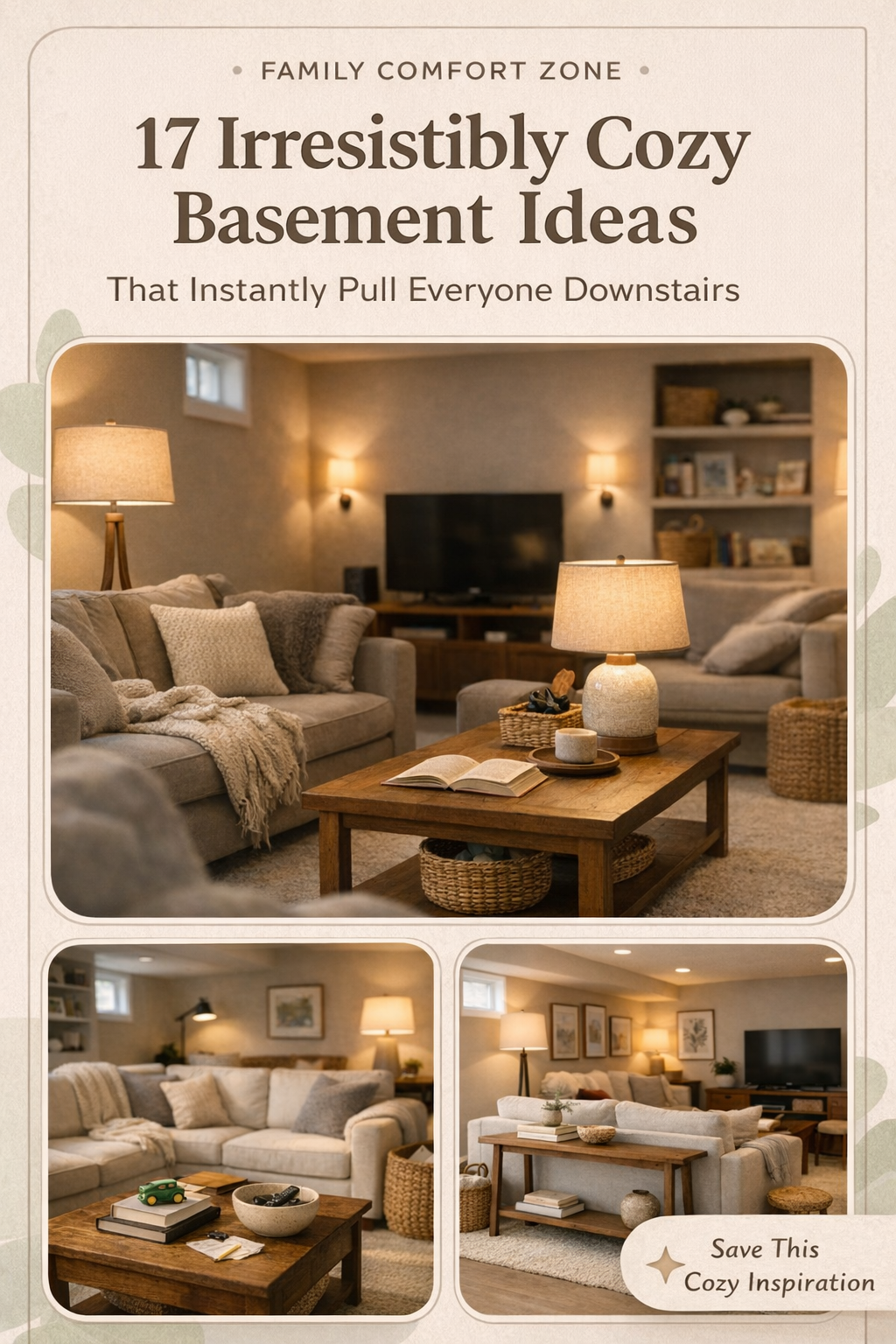
A basement can be the coziest room in the house or the most forgotten one. The difference usually comes down to comfort, layout, and light. Many family basements feel cold because they are treated like storage space with a couch pushed against the wall. That setup wastes square footage and misses what families actually need.
A good basement family space should feel relaxed, easy to use, and warm at every hour of the day. It should support movie nights, board games, homework, reading, naps, and casual weekends at home. It also needs to work with the common basement challenges most homes face, like lower ceilings, limited daylight, and awkward corners.
The ideas below focus on real homes and real family use. Some are simple decor upgrades. Others are layout moves that can make the room feel bigger, softer, and more inviting. Use one or mix several together depending on your basement size and budget.
What Makes a Basement Feel Cozy?
A cozy basement is not just about dark paint and a big sofa. In fact, too much heaviness can make a below-grade room feel smaller and gloomier. The most successful family basements mix warmth with balance.
The key elements usually include:
- layered lighting instead of one bright ceiling fixture
- soft textures like rugs, curtains, and pillows
- furniture arranged for conversation and comfort
- storage that keeps clutter from taking over
- colors that warm up the room without making it feel closed in
- clear zones for relaxing, playing, and gathering
Quick Comparison of Cozy Basement Design Choices
| Design Choice | Best For | Main Benefit | Watch Out For |
|---|---|---|---|
| Large sectional | Big families and movie nights | Creates one inviting gathering zone | Can overpower a small basement |
| Light warm paint | Low-light basements | Makes the room feel brighter and softer | Can look flat without texture |
| Dark accent wall | Media areas | Adds depth and intimacy | Too much dark color can feel heavy |
| Area rugs | Open basements | Defines zones and adds warmth | Needs the right size to avoid looking small |
| Built-in storage | Family rooms with toys or games | Keeps the space calm and usable | Higher cost than freestanding pieces |
| Reading nook | Quiet corners | Adds personality and function | Needs dedicated lighting |
Start With a Soft, Family-Friendly Layout
The biggest mistake in basement design is treating the room like one giant blank box. A family space works better when it has purpose. You do not need walls to create that. You need zones.
Think about how your family really uses the space. One area can be for TV and lounging. Another can be for games, crafts, or reading. Even a small basement feels better when each part has a job.
Design 1: Build the Room Around a Deep, Comfortable Sectional
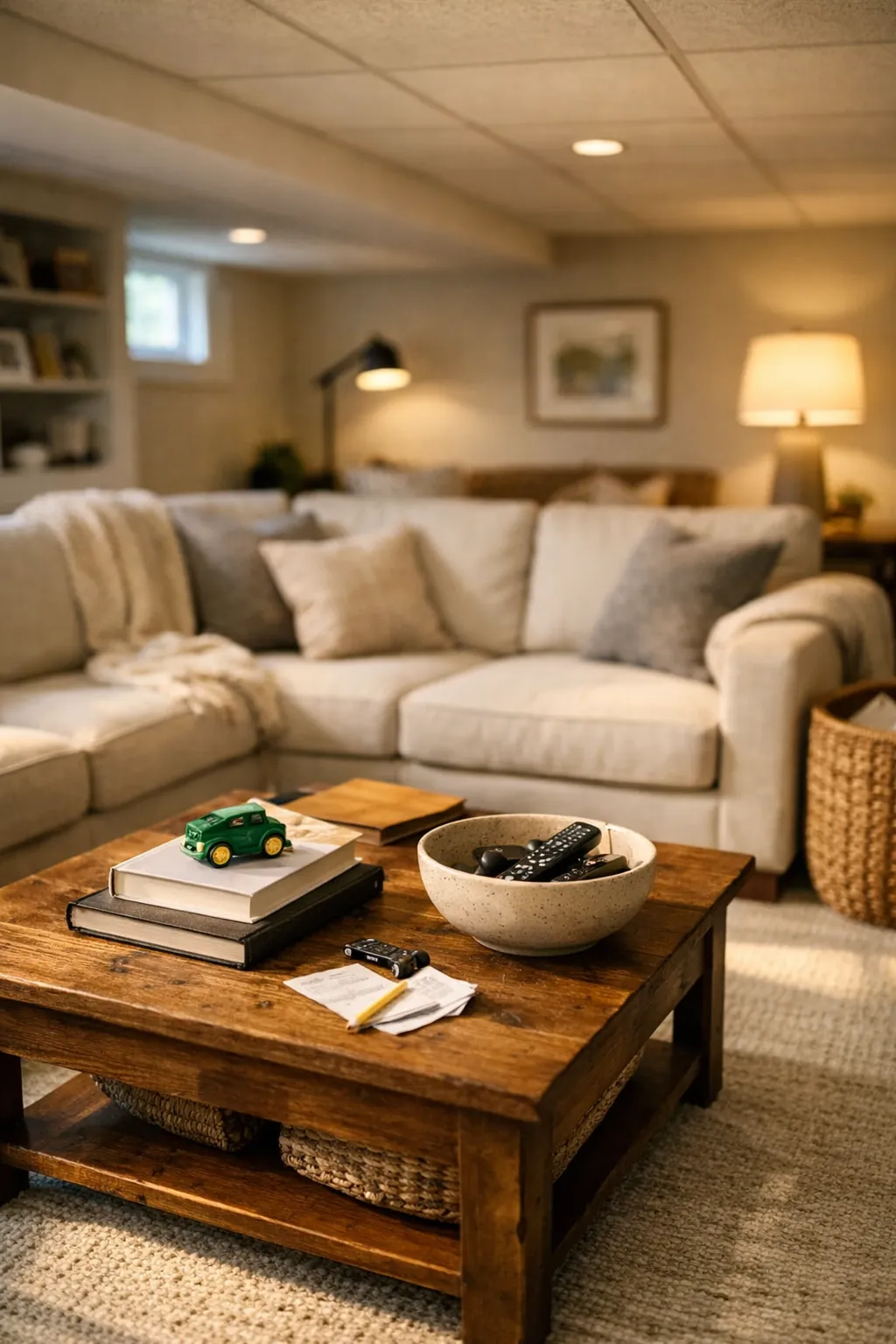
A cozy basement usually starts with seating that people actually want to sink into. A deep sectional works well because it fills the room with softness and gives everyone a place to sit without dragging in extra chairs.
Choose a shape that fits your footprint instead of forcing one oversized piece into the space. In many basements, a low-profile sectional in a warm neutral fabric feels inviting without blocking sightlines. Add a few textured pillows and one throw blanket per corner so the room feels ready for use, not staged.
Design 2: Float the Furniture Instead of Pushing Everything Against the Walls
Many people line basement walls with furniture to make the room look bigger. It often does the opposite. It leaves a big empty middle and makes the room feel like a waiting area.
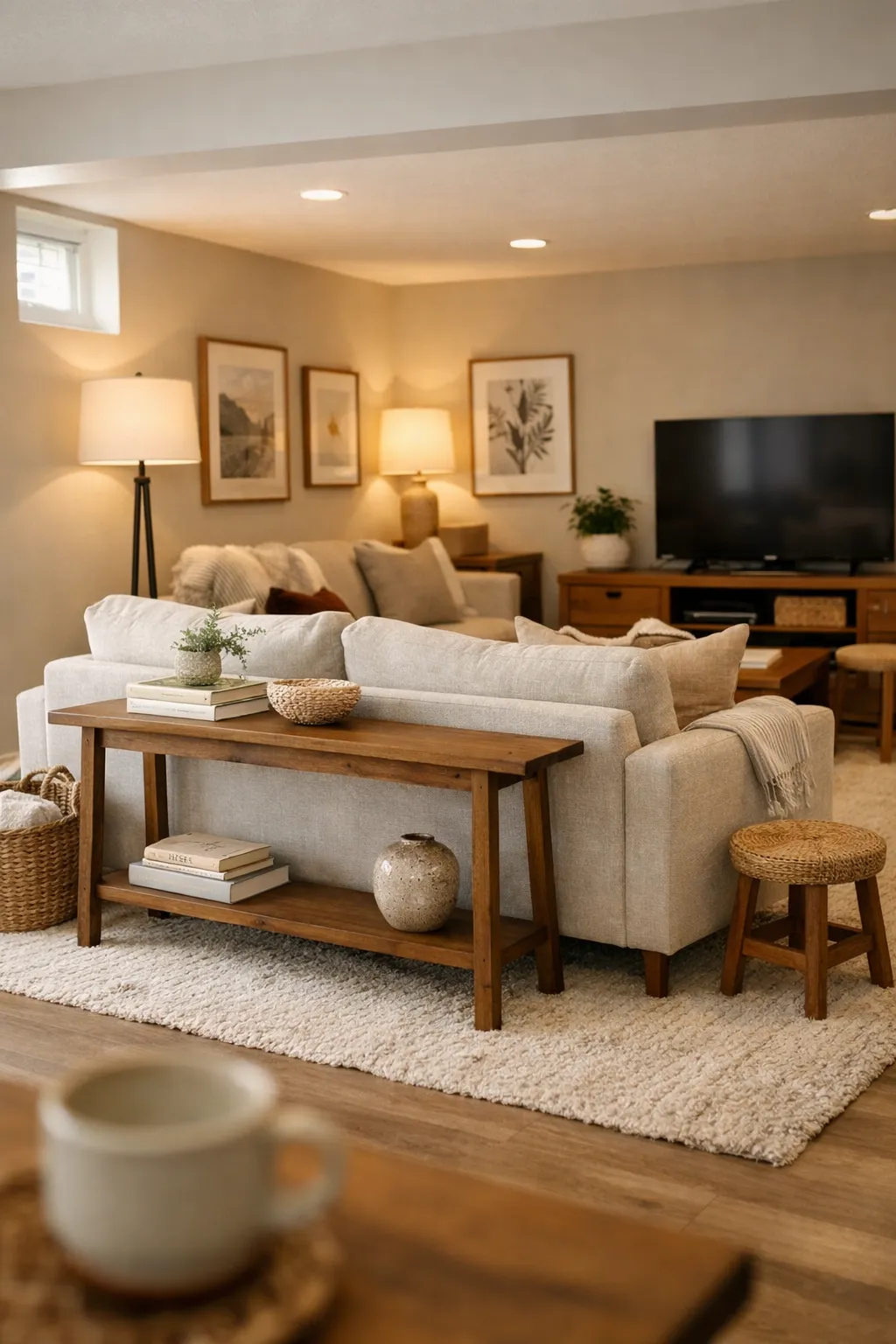
Try floating the sofa a few feet off the wall if the room allows it. Anchor it with a rug and a coffee table. This simple move creates a real living zone and makes the basement feel intentional. It also leaves space behind the sofa for a console table, toy storage, or a narrow reading corner.
Warm Up the Basement With Better Lighting
Lighting matters more in a basement than almost anywhere else in the home. One harsh overhead fixture can flatten the room and make it feel colder than it is.
Design 3: Layer Table Lamps, Floor Lamps, and Sconces
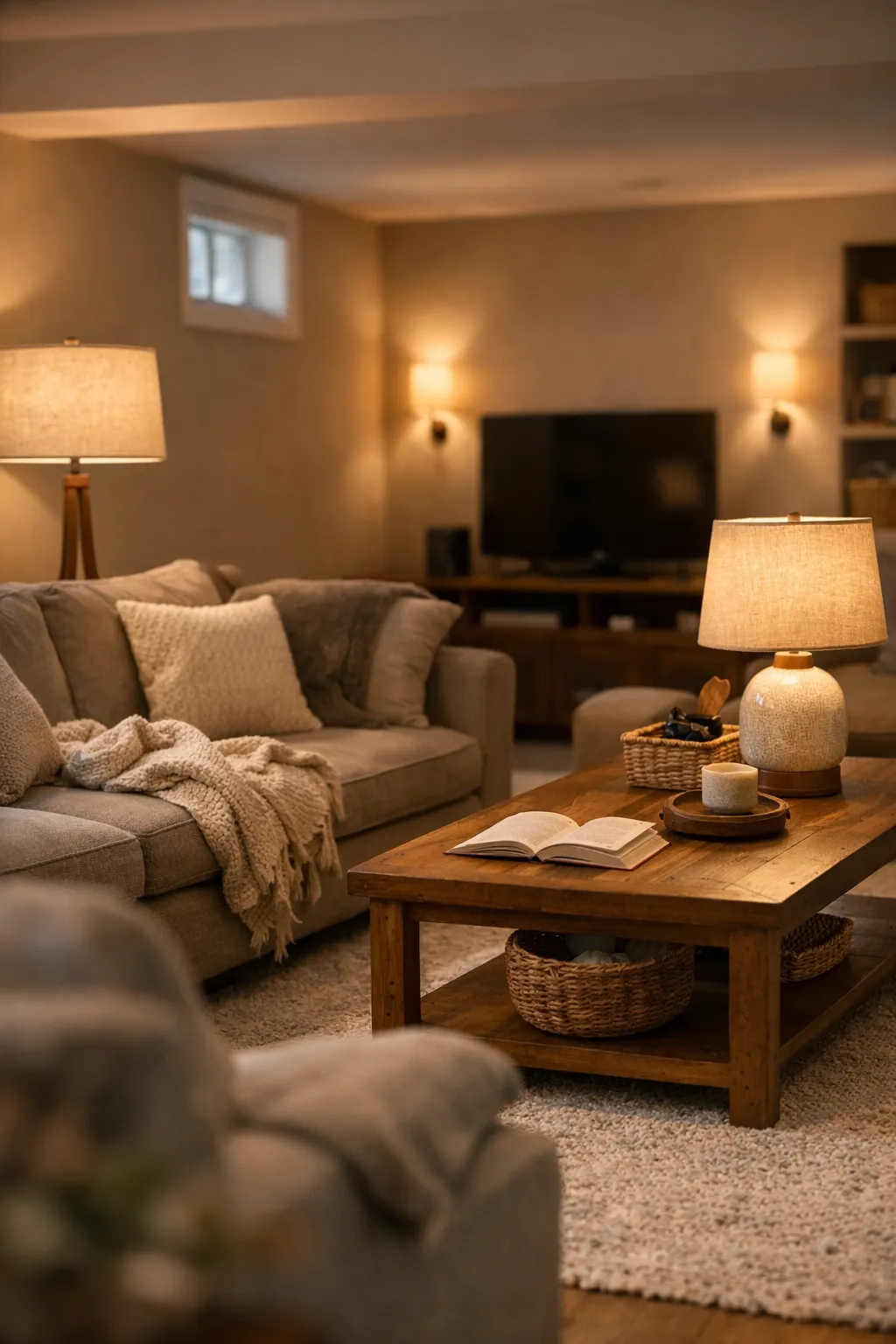
Basements need soft pools of light at different heights. A floor lamp near the sectional, a table lamp on a side table, and a pair of wall sconces can completely change the mood.
This layered approach makes the space feel more like an upstairs living room and less like a rec room. Warm bulbs are a smart choice here because they soften the room and flatter wood, textiles, and warm paint colors.
Design 4: Add Dimmable Lighting for Movie Nights and Everyday Use
A family basement needs to shift easily from bright afternoon activity to relaxed evening hangout space. Dimmers make that possible. They let you brighten the room for board games, folding laundry, or kids playing on the floor, then lower the mood for a movie or quiet evening.
If you are renovating, add dimmable recessed lighting. If you are not, use dimmable lamps and smart bulbs for the same effect without opening walls.
Use Color to Make the Room Feel Warm, Not Heavy
People often assume basements need dark colors to feel cozy. That is only partly true. Warmth comes from undertone, not just depth.
Design 5: Choose Warm Neutrals Instead of Cold Grays
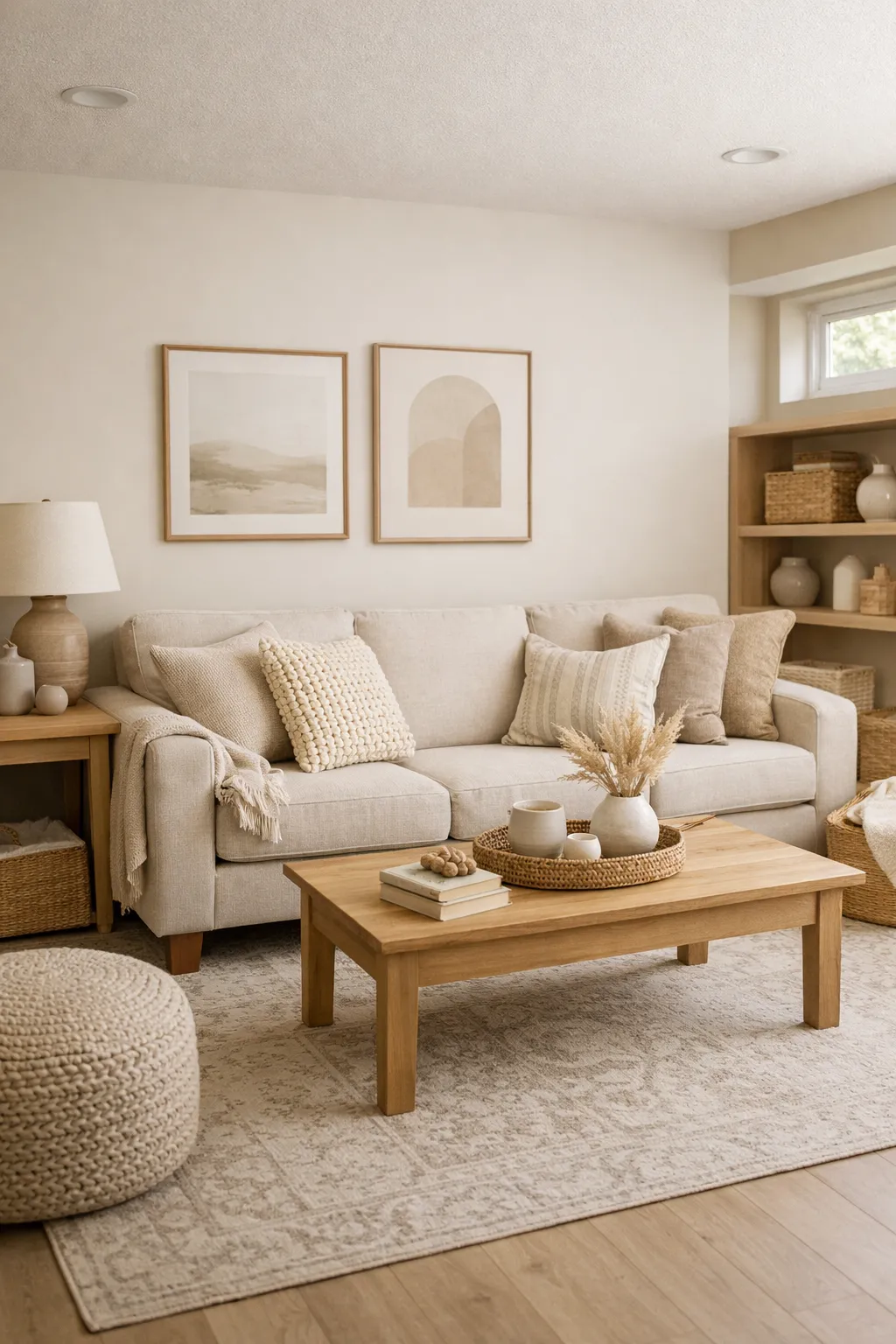
A lot of older finished basements were painted cool gray, which can make the room feel lifeless. A better choice is a warm neutral like creamy beige, soft taupe, clay-tinted off-white, or mushroom.
These shades reflect light while still feeling grounded. They also work with a wide range of family-friendly decor, from modern organic to casual farmhouse to transitional style.
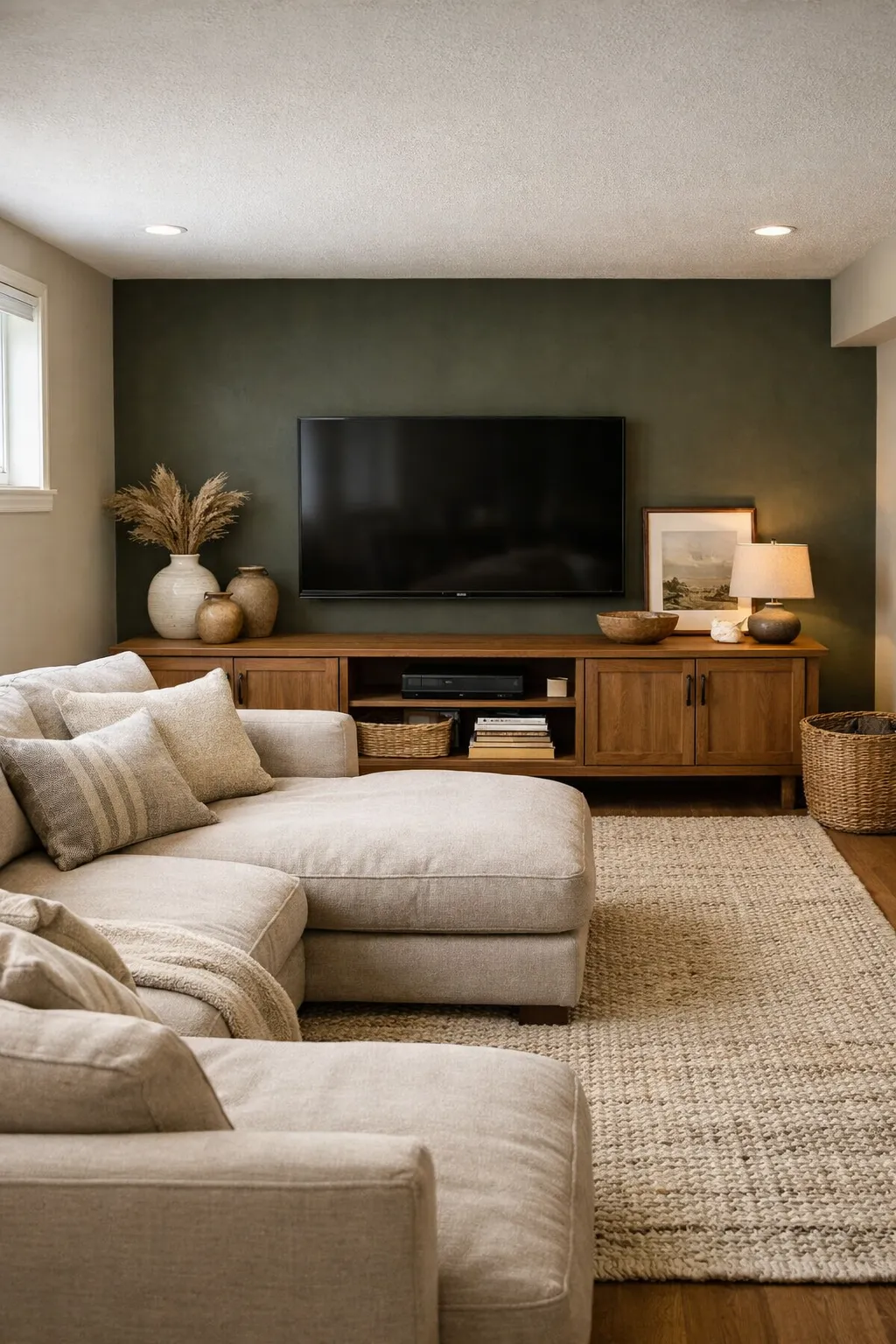
Design 6: Try a Moody Accent Wall in the TV Zone
If you want more depth, use it in one focused area. A moody accent wall behind the TV or sectional can make the room feel snug and layered without closing in every wall.
Deep olive, brown-gray, muted navy, or warm charcoal often look better than a stark black. Pair that darker wall with lighter surrounding walls, soft wood tones, and warm lighting so the room still feels balanced.
Add Texture Everywhere You Can
Texture is what saves a basement from feeling flat. This is especially true when natural light is limited.
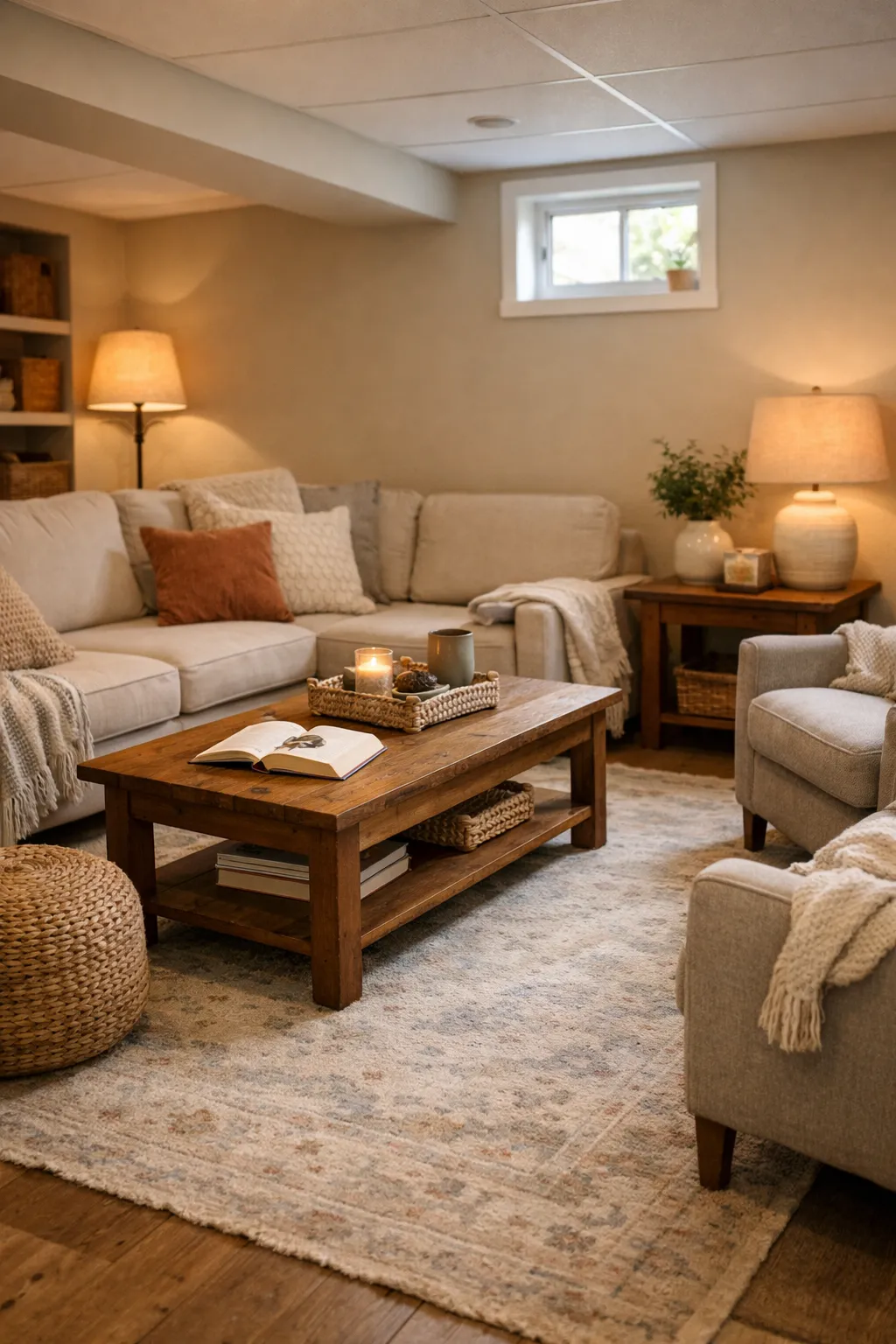
Design 7: Ground the Space With a Large Area Rug
A rug is not optional in a cozy basement. It adds warmth underfoot, absorbs sound, and helps define the seating area. The biggest mistake is choosing one that is too small. A rug that fits under at least the front legs of the main furniture pieces will make the room feel more finished.
For family use, look for low-pile, washable, or easy-care options with some visual softness. A faded pattern or subtle texture hides wear better than a solid pale rug.
Design 8: Mix Linen, Knit, Velvet, and Woven Details
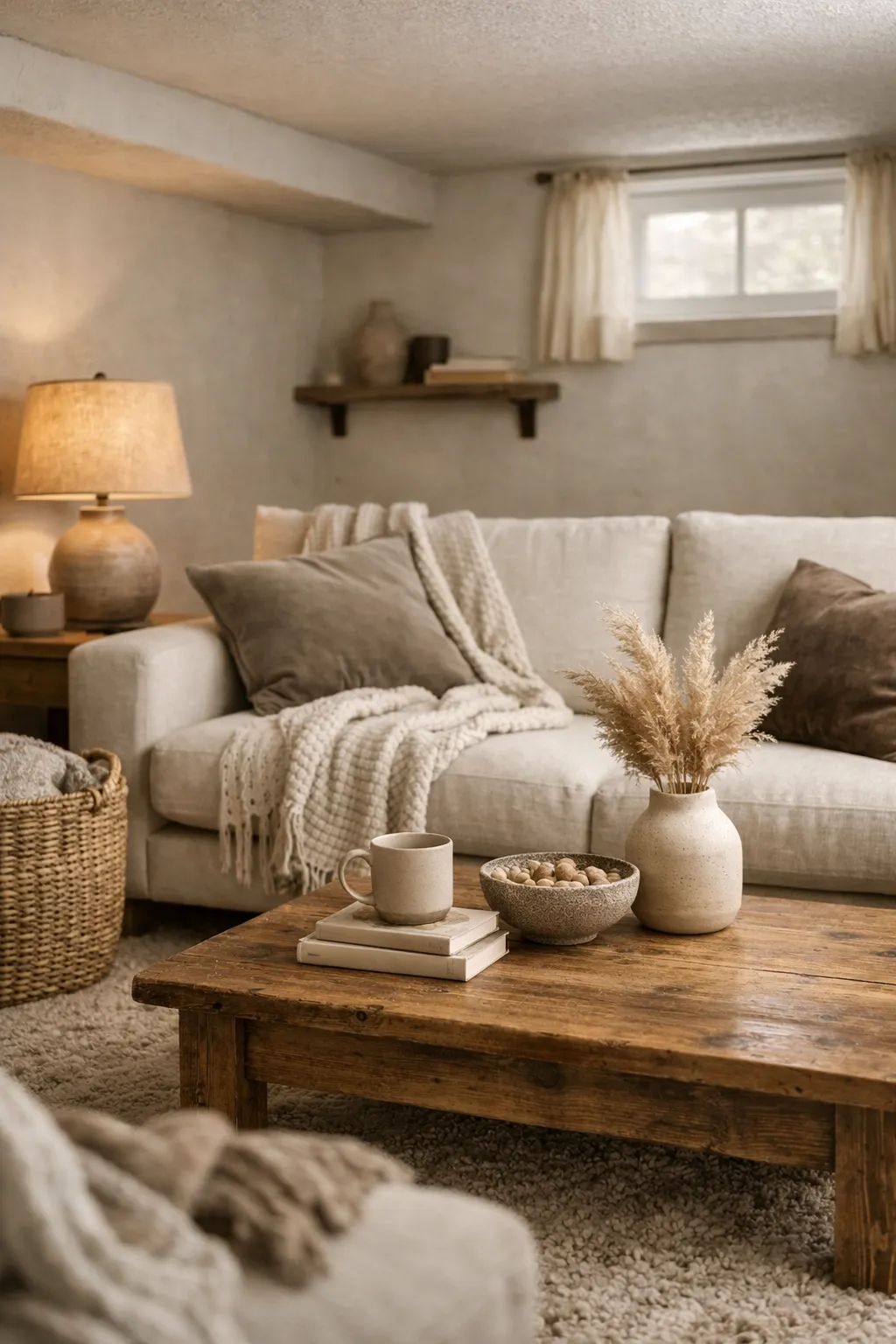
Basements come alive when they include touchable materials. Mix textures in a way that feels relaxed instead of fussy. A linen-look sofa, knit throw blankets, velvet pillows, a woven basket, and a wood coffee table create depth without needing lots of color.
This is one of the easiest ways to make a builder-basic basement feel custom and comfortable.
Make It Feel Lived In, Not Like a Spare Room
The best family basements feel personal. They do not look like a furniture showroom or a forgotten guest room.
Design 9: Create a Game and Puzzle Corner
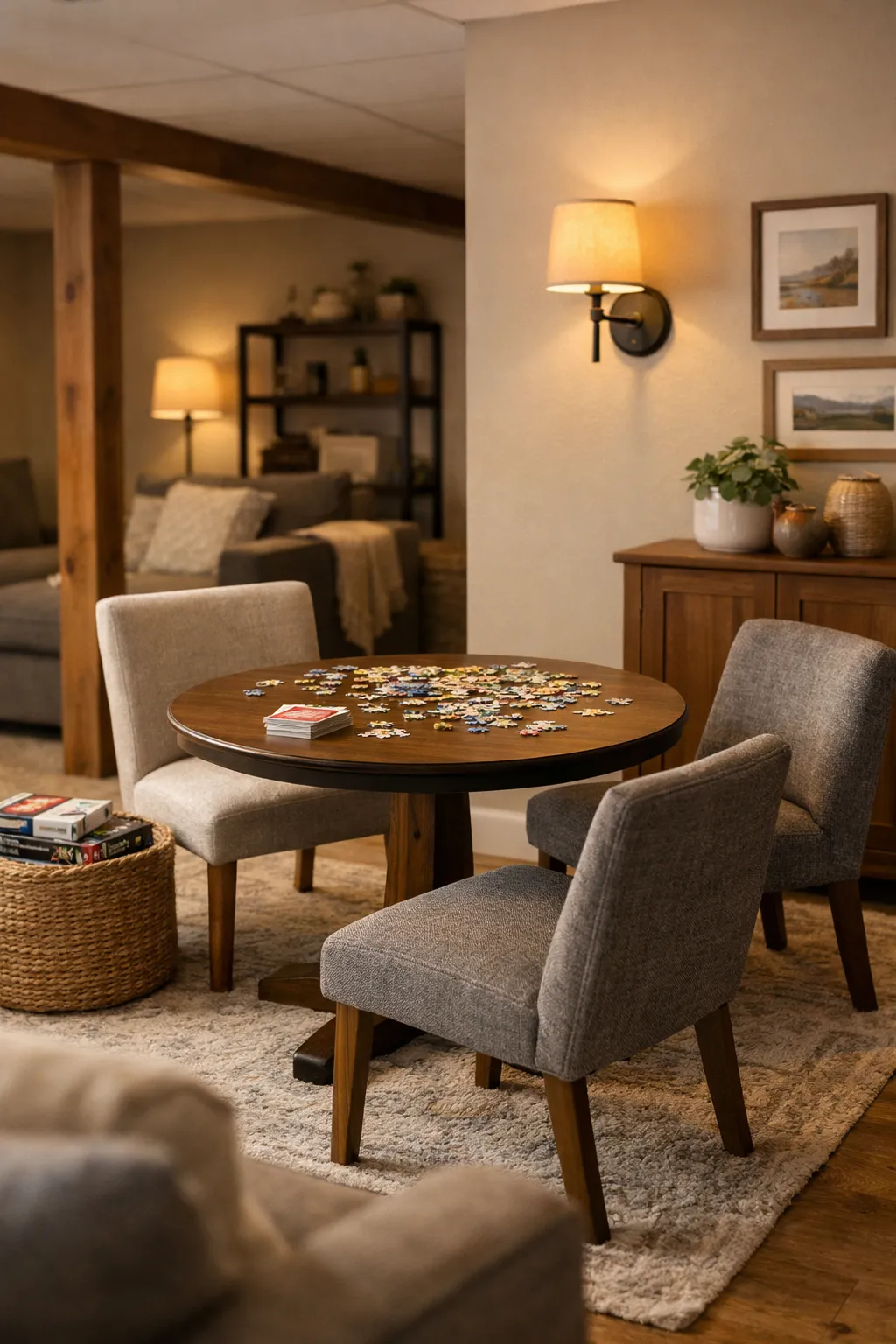
A small round table or square game table can turn an unused basement corner into one of the most loved spots in the house. This works especially well for families with school-age kids, teens, or adults who like cards and puzzles.
Keep a basket nearby for supplies and use comfortable chairs that can double as extra seating when needed. This kind of setup gives the basement another purpose beyond watching TV.
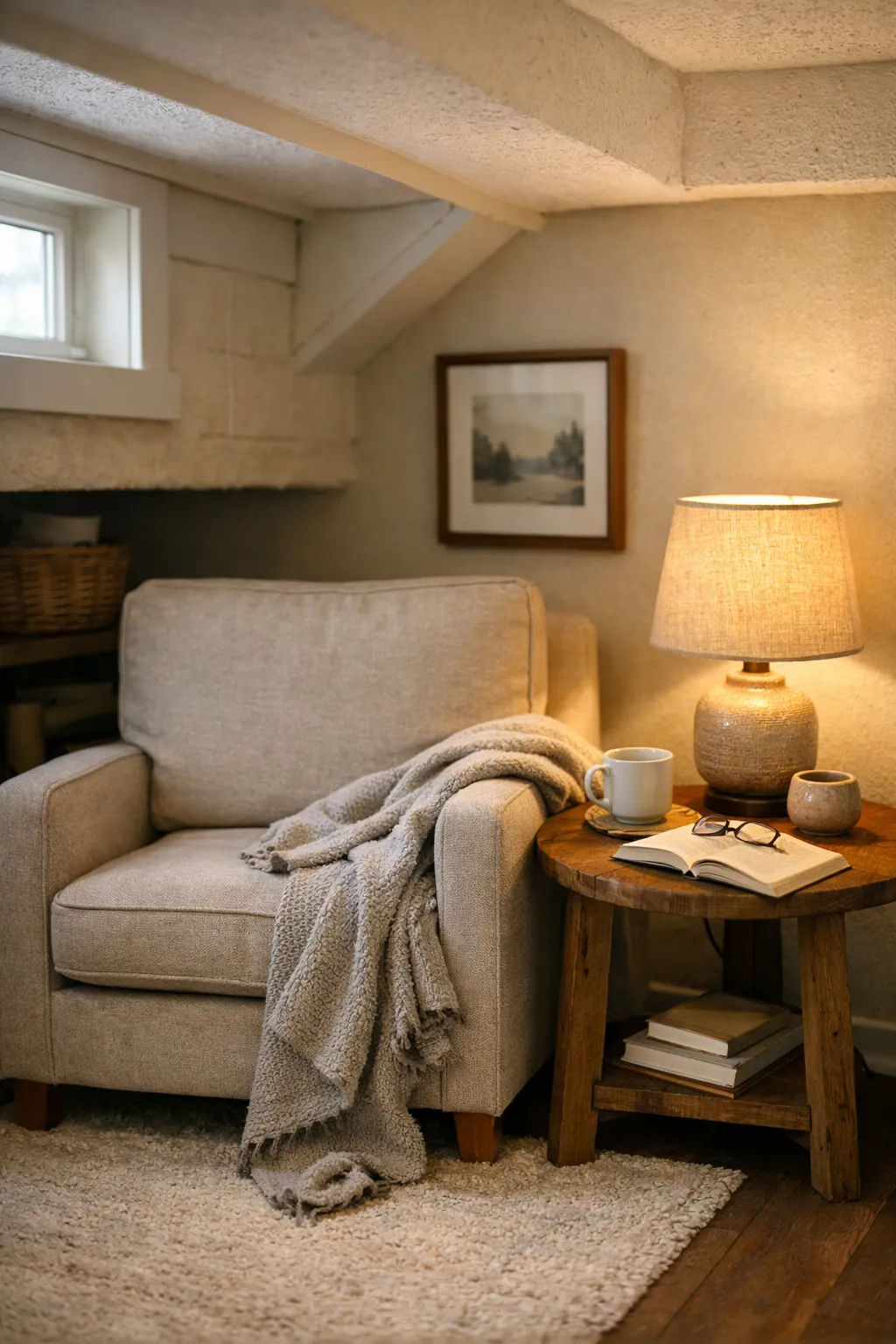
Design 10: Add a Reading Nook With a Chair and Good Light
If your basement has an odd corner, a low ceiling area, or a small window well, turn that spot into a reading nook. A cozy chair, a small side table, a lamp, and a soft throw can make even an awkward part of the basement feel special.
This also helps the space appeal to different family members at the same time. One person can read while others watch a movie or play a game.
Hide Clutter Before It Takes Over
A family basement often becomes the catch-all room. That kills coziness fast. Warmth and clutter rarely work together.
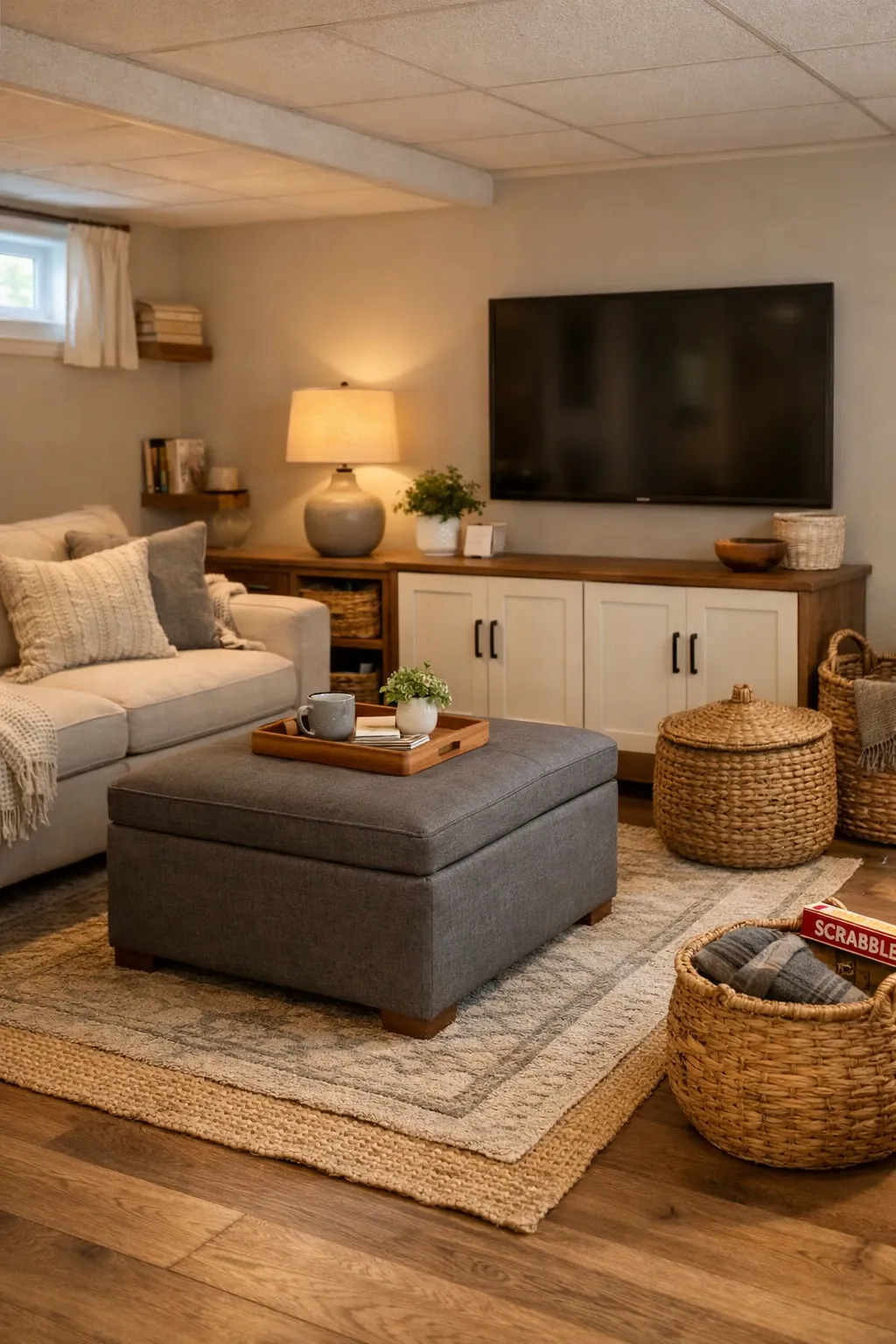
Design 11: Use Closed Storage for Toys, Games, and Tech Gear
Open shelves can look nice in pictures, but real family spaces need a mix of hidden storage. Cabinets, storage ottomans, media consoles with doors, and lidded baskets help the room stay calm.
This matters even more in a basement because many families already use part of the space for extra household storage. Keeping family-room items contained helps the room feel like a destination instead of a utility zone.
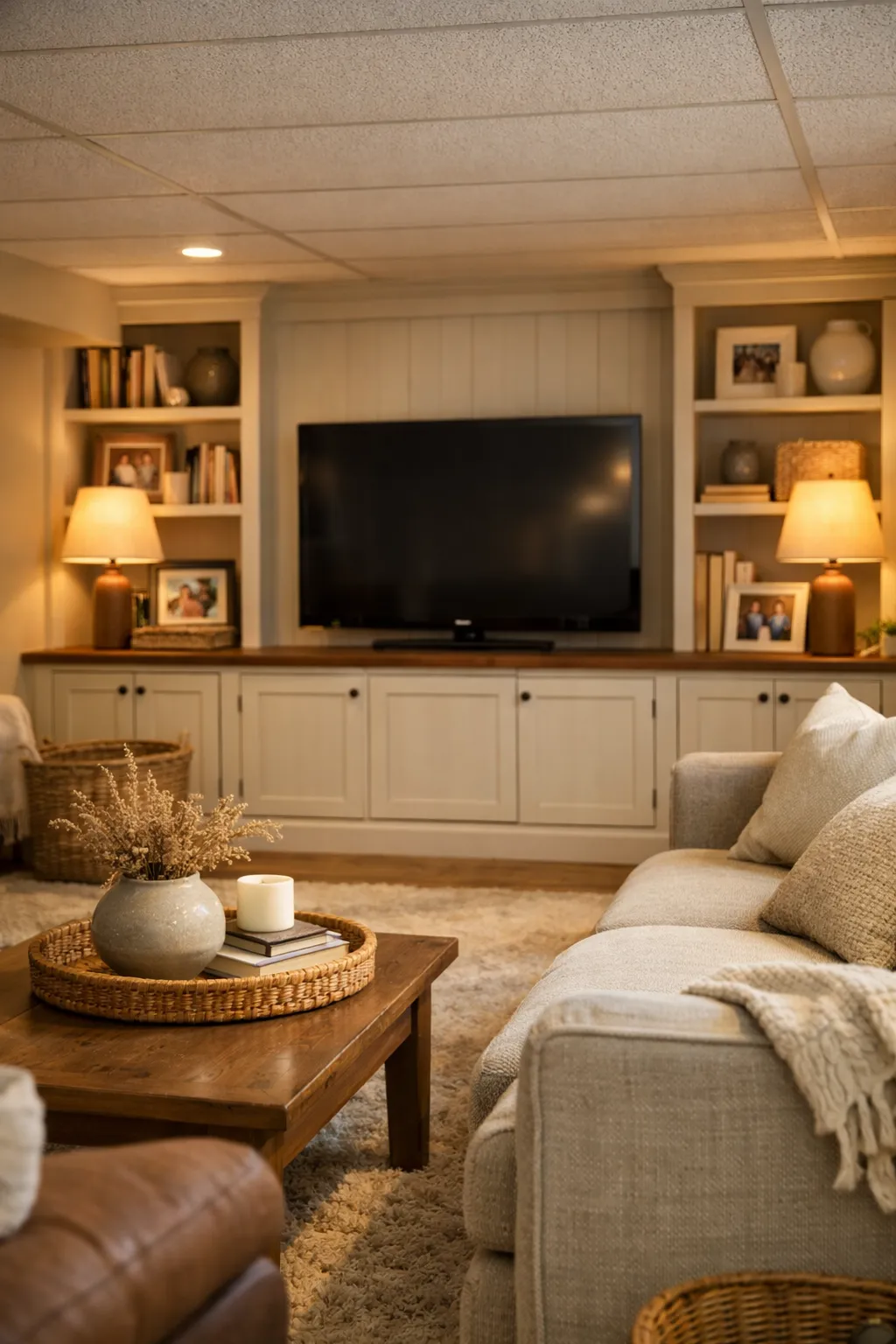
Design 12: Add Built-Ins Around the TV or Main Wall
Built-ins can make a basement look polished and solve several problems at once. They add storage, frame the TV, and make the wall feel less empty. Even simple custom shelves with lower cabinets can have a big effect.
If built-ins are not in the budget, combine low cabinets with floating shelves and keep the styling simple. A few books, baskets, framed family photos, and ceramic decor pieces are enough.
Bring in Warmth Through Natural Materials
Basements need elements that feel grounded and organic. Without them, the room can feel overly synthetic.
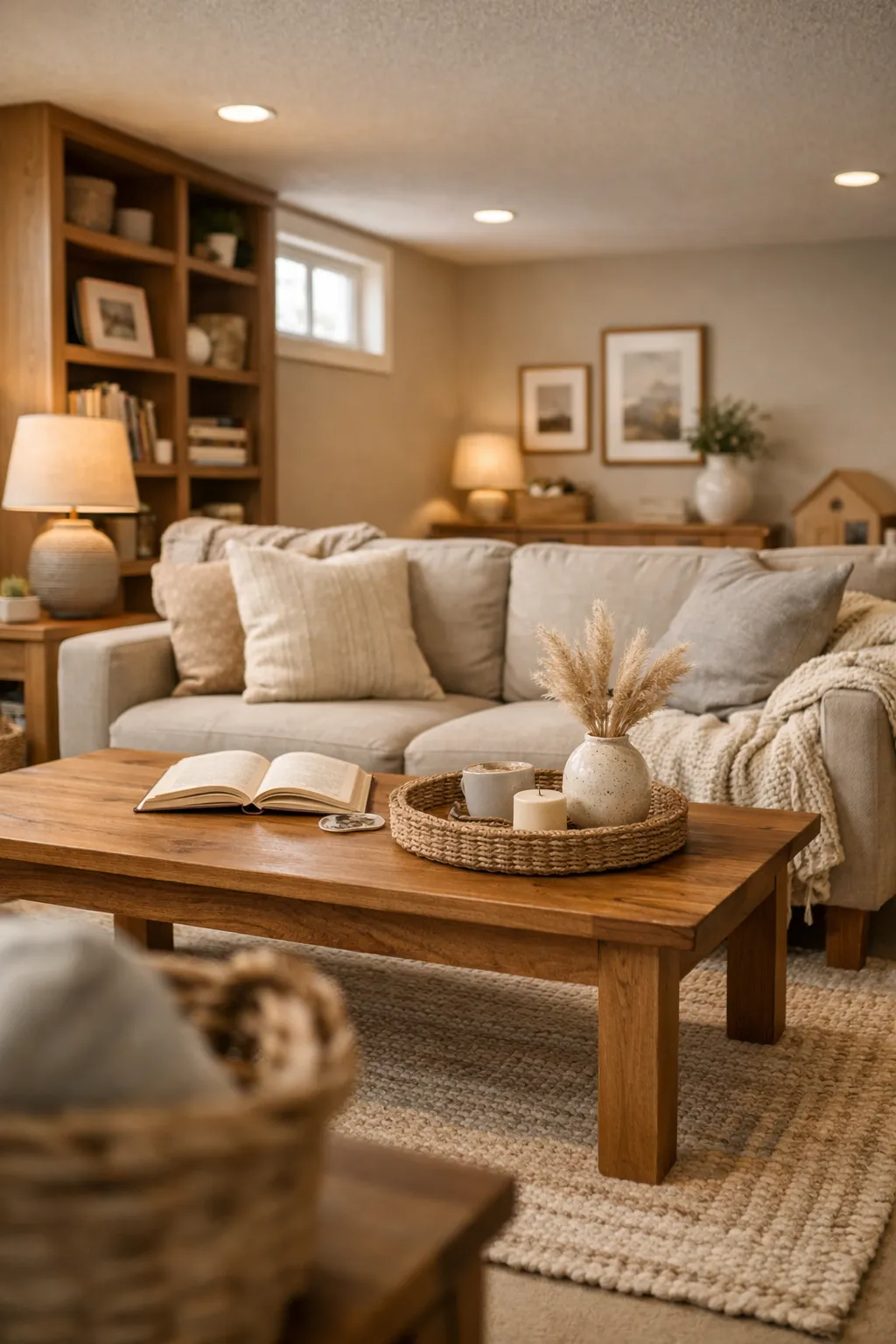
Design 13: Use Light to Medium Wood Tones for Balance
Wood furniture and accents add the warmth many basements lack. A medium wood coffee table, oak shelves, or walnut picture frames can soften drywall-heavy spaces.
Avoid using only dark espresso finishes, which can make the room feel dated and heavy. Lighter woods tend to brighten the look while still adding richness.
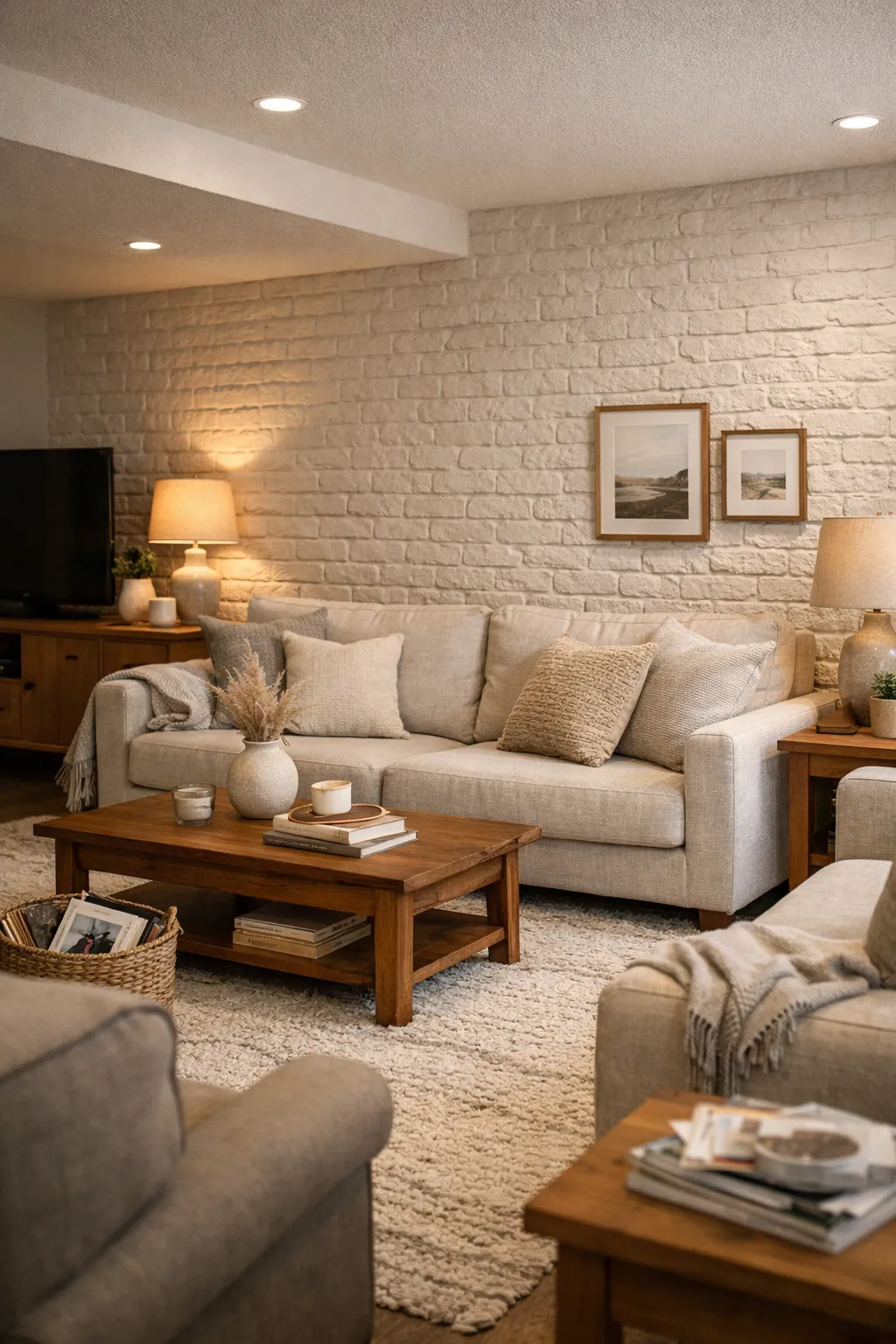
Design 14: Add Stone, Brick, or Wood-Look Texture on One Surface
A single textured surface can give the basement more character. That might be a painted brick wall, wood slat detail, beadboard, or a subtle stone-look fireplace surround.
This works well because basements often feel flat and boxy. One architectural texture helps the room feel layered and established, even in a newer home.
Make the Basement Work for Every Age Group
A good family space should not feel like it belongs only to kids or only to adults. The best basements bridge both.
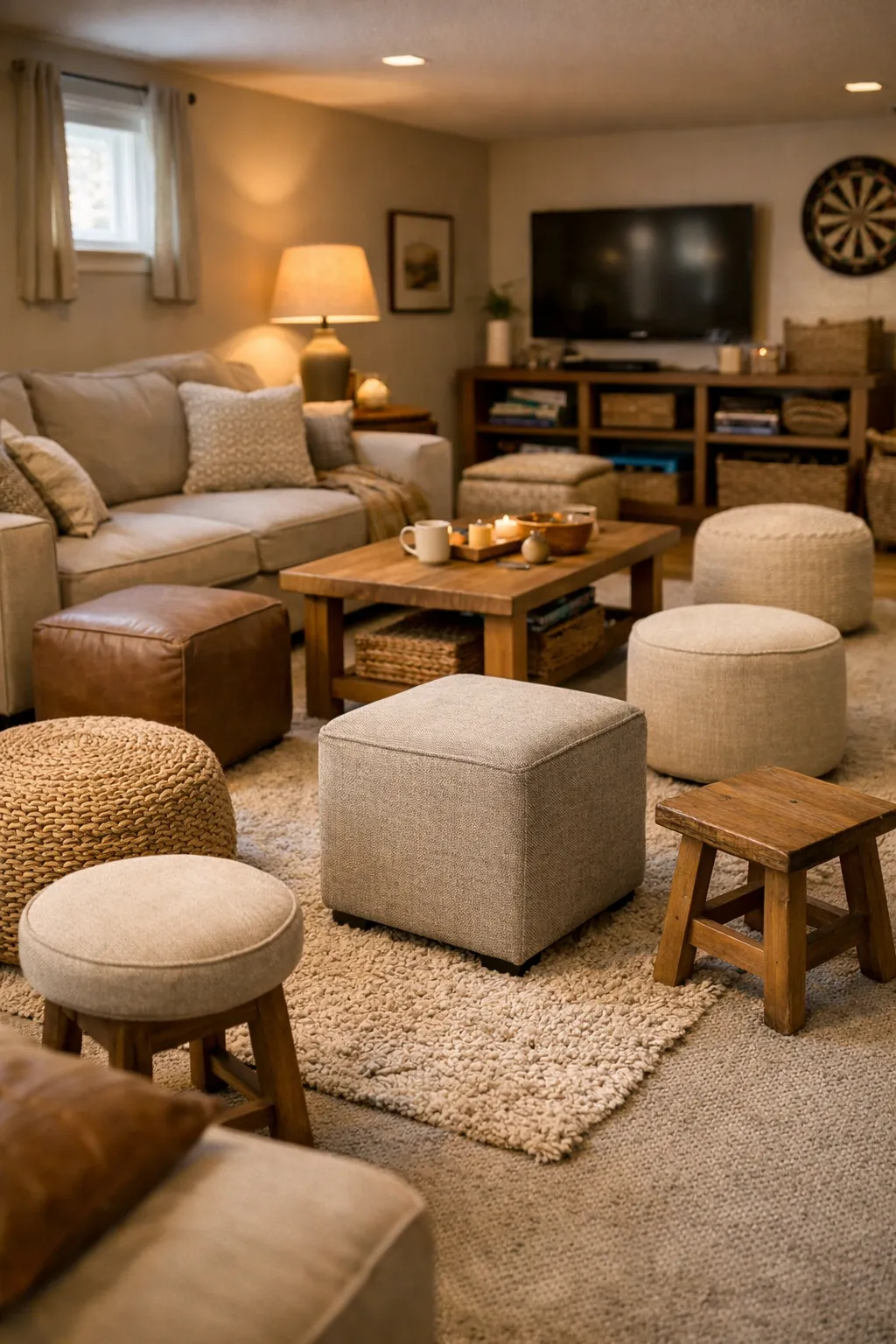
Design 15: Include Flexible Seating That Moves Easily
Poufs, small stools, cube ottomans, and lightweight accent chairs are useful in a basement because they can move around as needed. Kids can pull them into a game area. Adults can use them when guests come over. They also soften the room visually.
This kind of flexibility is especially useful in homes where the basement needs to do a lot with limited square footage.
Design 16: Add a Snack or Drink Station for Easy Gatherings
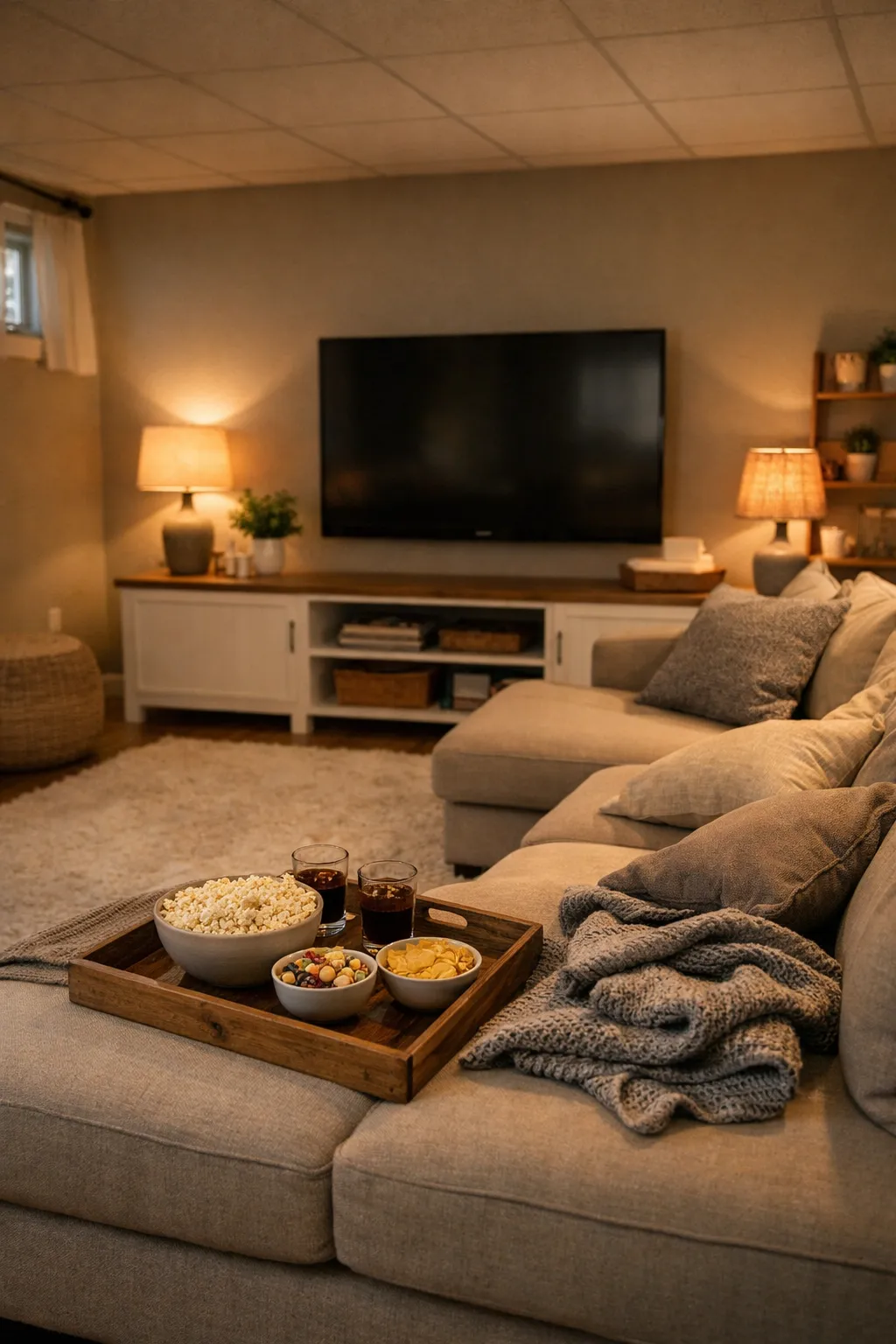
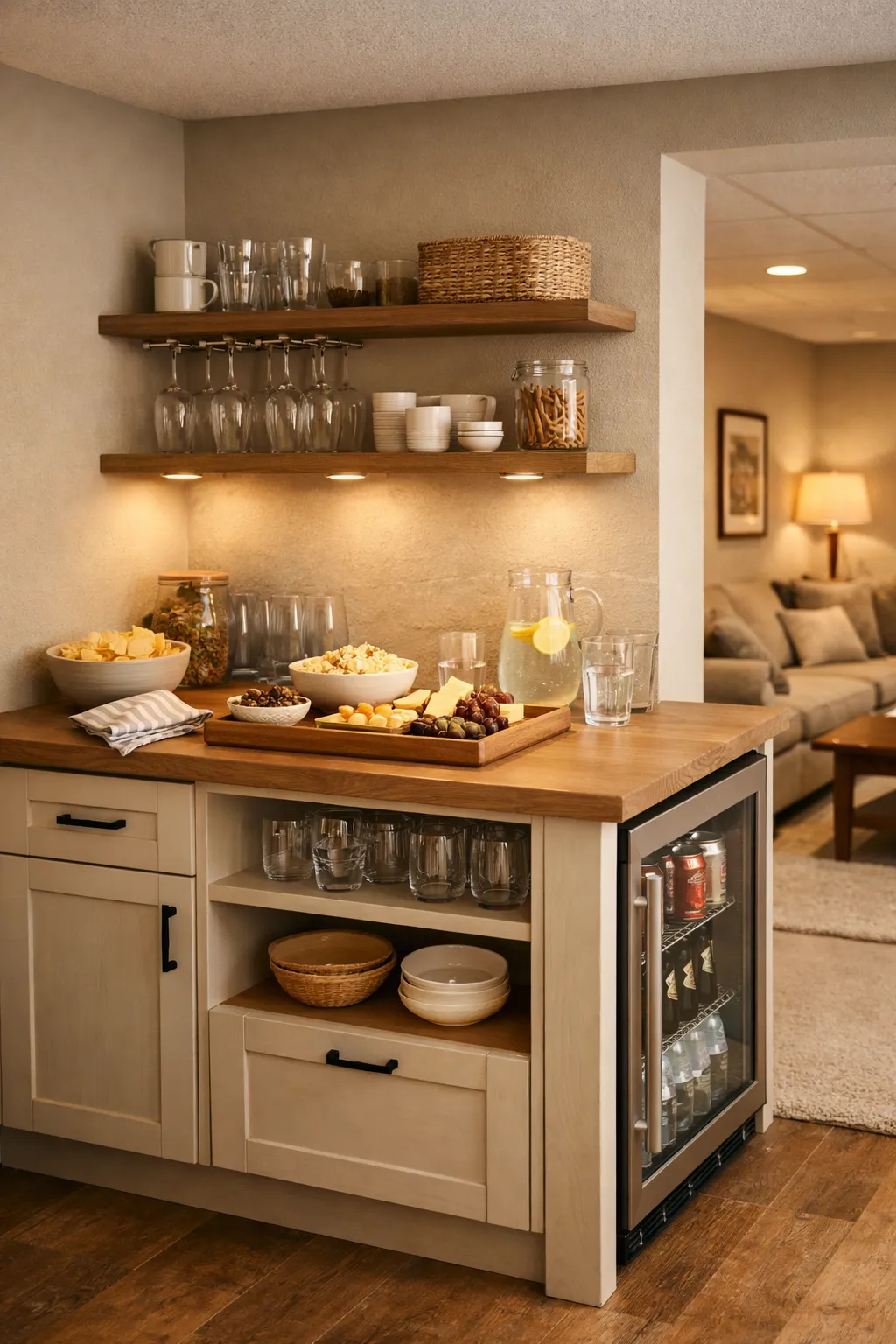
A simple basement drink station makes the room more functional for family movie nights and casual hosting. This can be as easy as a cabinet with glasses, a tray for snacks, and a small beverage fridge if space allows.
It keeps traffic out of the kitchen and makes the basement feel like a complete hangout zone. In homes with teens, this setup often makes the space more useful without requiring a full wet bar.
Finish With Details That Make the Room Feel Like Home
A cozy room is usually the result of many small choices, not one dramatic item.
Design 17: Use Art, Family Photos, and Soft Decor to Personalize the Space
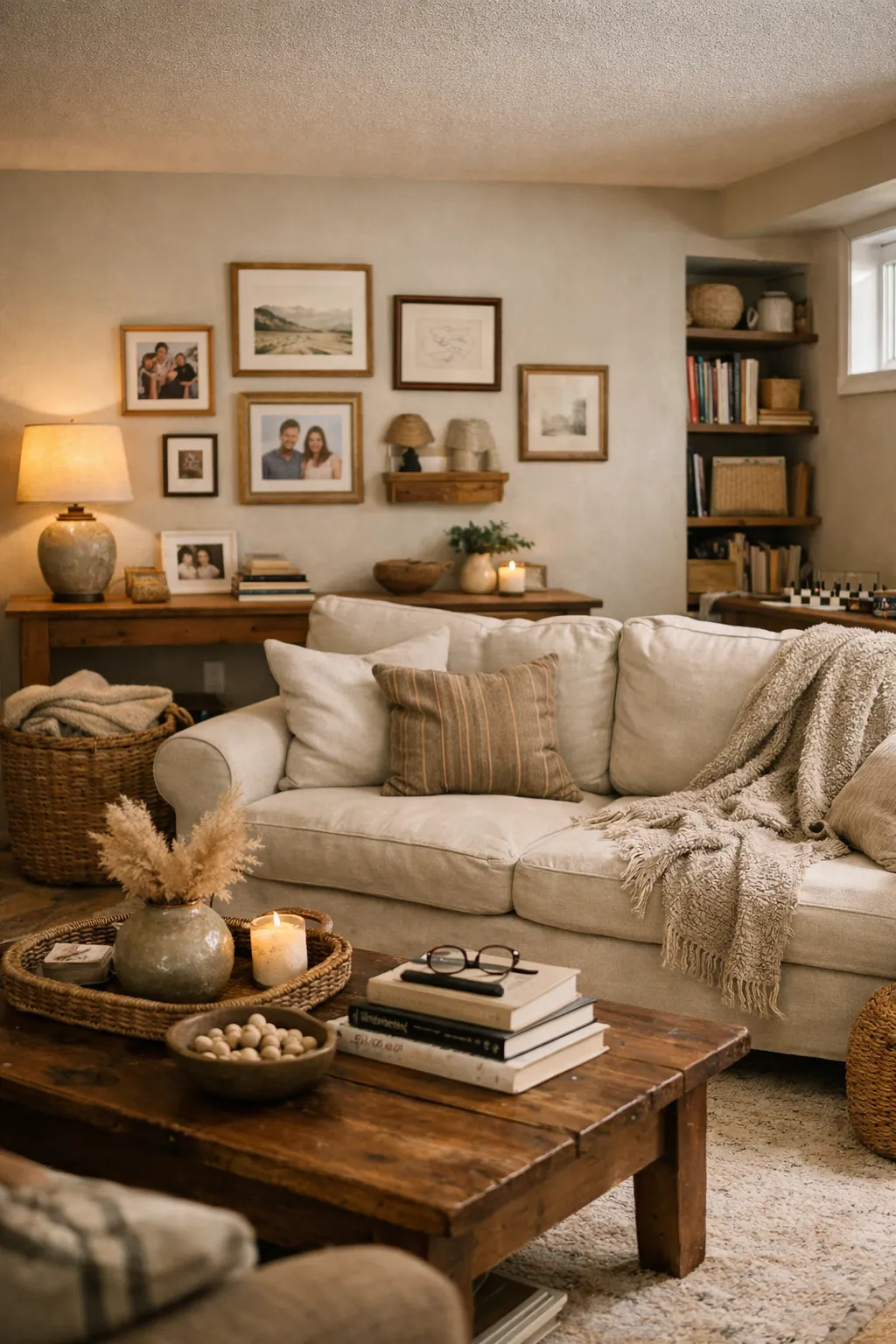
The final layer is what makes a basement family room feel connected to the rest of the home. Add framed art, family photos, books, candles, and objects that reflect how your family lives. Do not over-style every surface. A few meaningful touches go further than a shelf packed with decor.
A good basement should feel used, loved, and easy to settle into. That is the goal. Not perfection.
Common Basement Decorating Mistakes to Avoid
Even a nice basement can fall flat when the basics are off. Watch for these common problems:
- using only overhead lighting
- buying a rug that is too small
- choosing cold paint colors in a low-light room
- overfilling the space with bulky furniture
- skipping storage and letting clutter build up
- treating the basement like a second thought instead of a real living area
How to Pull the Look Together
If you want a simple formula, use this one. Start with a warm neutral base. Add one large comfortable seating piece. Layer in soft lighting. Use a rug big enough to define the space. Bring in wood and woven textures. Then finish with storage and personal decor.
That combination works because it solves both function and feeling. It gives the basement warmth without making it dark, and comfort without making it chaotic.
A cozy basement family space should be easy to live in on an ordinary Tuesday, not just nice to look at in photos. When the layout supports real life and the materials feel warm and inviting, the room starts doing what it should have done all along. It becomes one of the best spaces in the house.