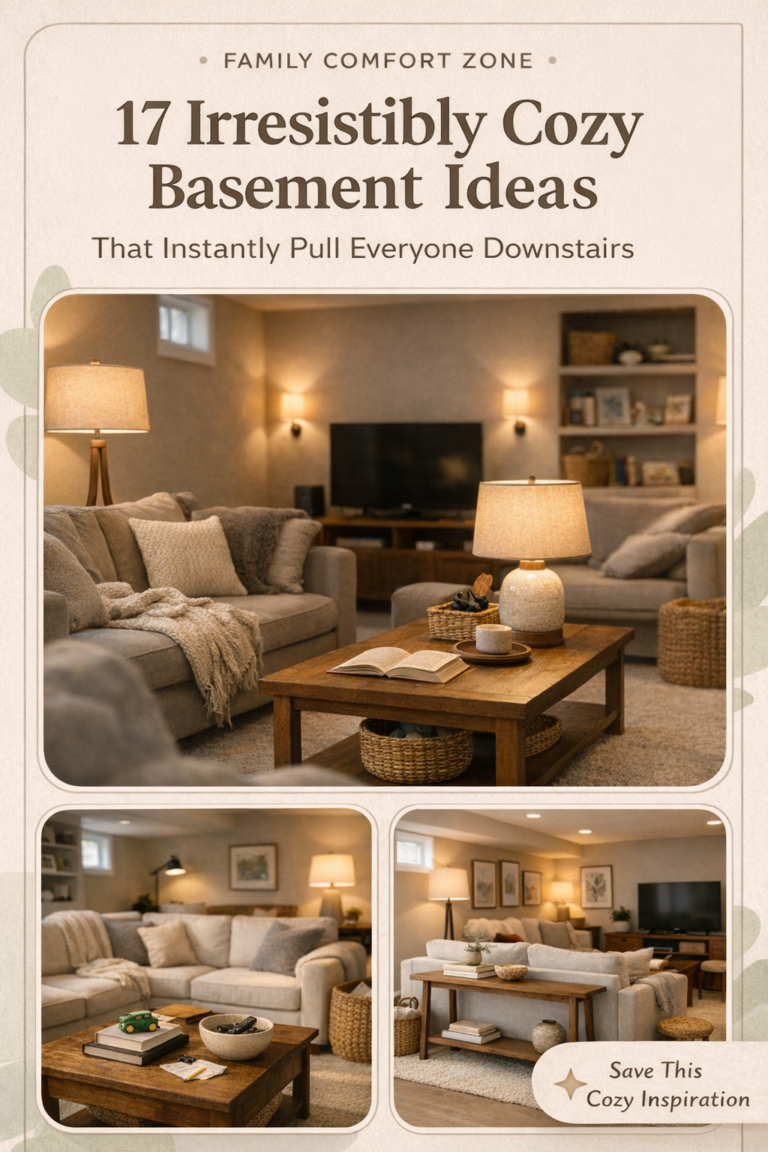


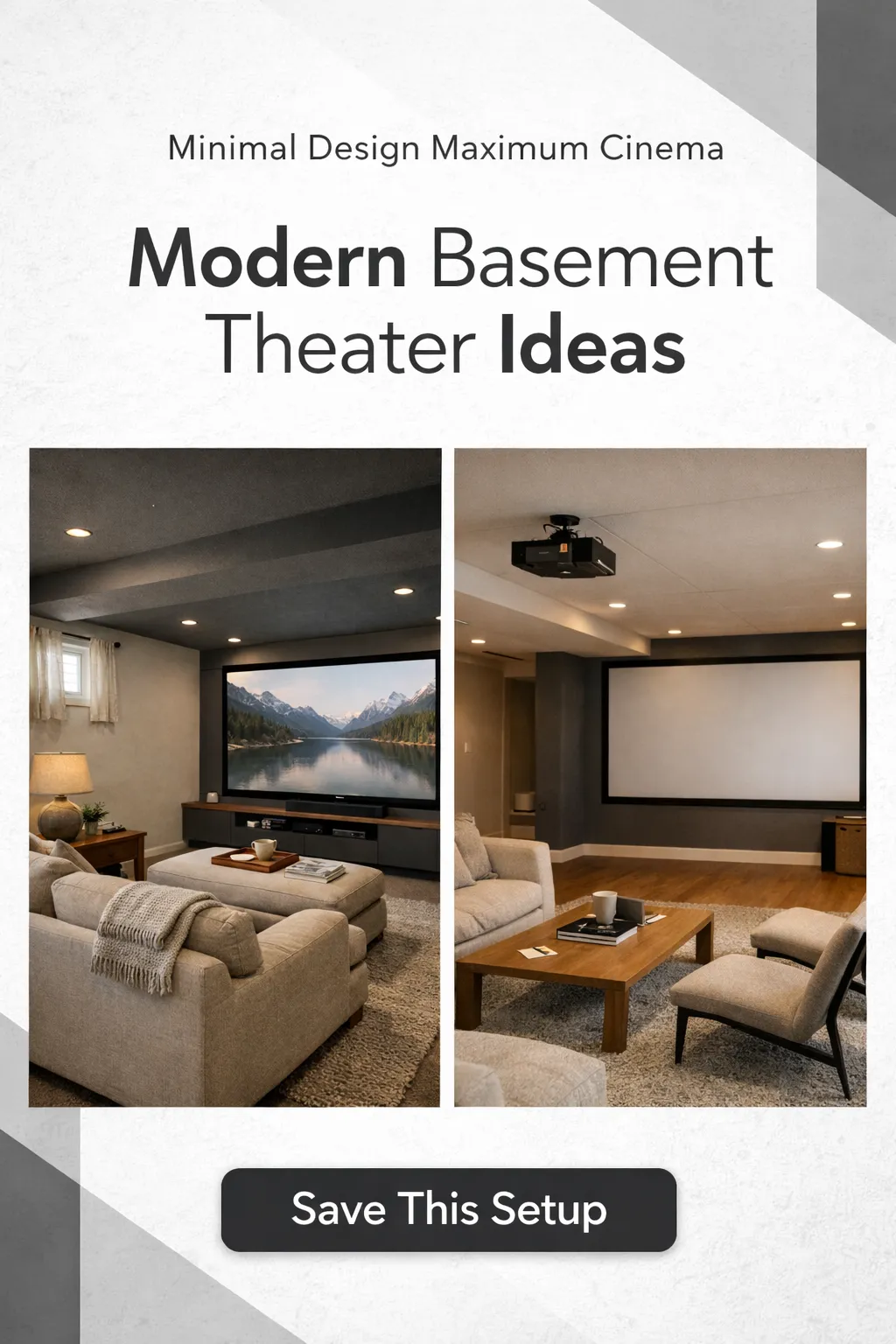
A basement can be the best place in the house for a home theater. It is naturally darker, more private, and easier to turn into a space that feels immersive. When it is designed well, a basement movie room can handle family movie nights, game-day watch parties, and quiet weekend streaming without feeling cold or unfinished.
The problem is that many basements are tricky. Some have low ceilings. Some feel cramped. Others have awkward corners, exposed ductwork, or not enough warmth. That is why a good basement theater is not just about buying a big screen. It is about shaping the room so it feels comfortable, balanced, and easy to use.
These basement home theater ideas focus on style, comfort, and practical planning. Some lean cozy and casual. Others feel more polished and cinematic. No matter the size of your basement, the right mix of layout, lighting, seating, and materials can make it feel like a destination instead of an afterthought.
What makes a basement home theater work
A great basement theater usually gets five things right:
- The screen is easy to see from every seat
- The room feels comfortable for long viewing sessions
- Lighting is soft and layered instead of harsh
- Sound does not bounce all over the room
- The design feels warm, not cave-like
Basements already have one advantage over upstairs family rooms. They can hold darker colors and moodier finishes without fighting daylight all day long. That gives you more freedom to use rich paint, cozy fabrics, and focused lighting.
Quick planning guide before you decorate
| Basement Theater Feature | Best for Family Movie Rooms | Best for Small Basements | Best for Luxe Cinema Feel |
|---|---|---|---|
| Seating | Large sectional | Compact loveseat or sofa | Recliners in rows |
| Screen type | Large TV or projector | Wall-mounted TV | Projector with feature wall |
| Lighting | Dimmable recessed lights and lamps | Wall sconces and low-profile lighting | Layered sconces and step lighting |
| Flooring | Plush carpet or big rug | Low-pile carpet | Wall-to-wall carpet |
| Storage | Built-ins, baskets, media console | Closed storage benches | Custom cabinetry |
Before you choose paint colors or seating, it helps to decide what kind of room you actually need. A family basement theater looks different from a sports lounge or a sleek media room built for adults.
Use this as a starting point, not a rulebook. Most basements need a blend of these choices.
Basement home theater ideas to inspire your space
1. Go all in with a dark and moody color palette
Dark paint helps a basement theater feel grounded and cinematic. Charcoal, deep taupe, muted navy, and warm black all work well. These shades cut glare and make the screen stand out.
The mistake people make is going dark without adding softness. Pair darker walls with plush seating, a thick rug, and warm wood tones so the room still feels welcoming.
2. Build the room around a large sectional
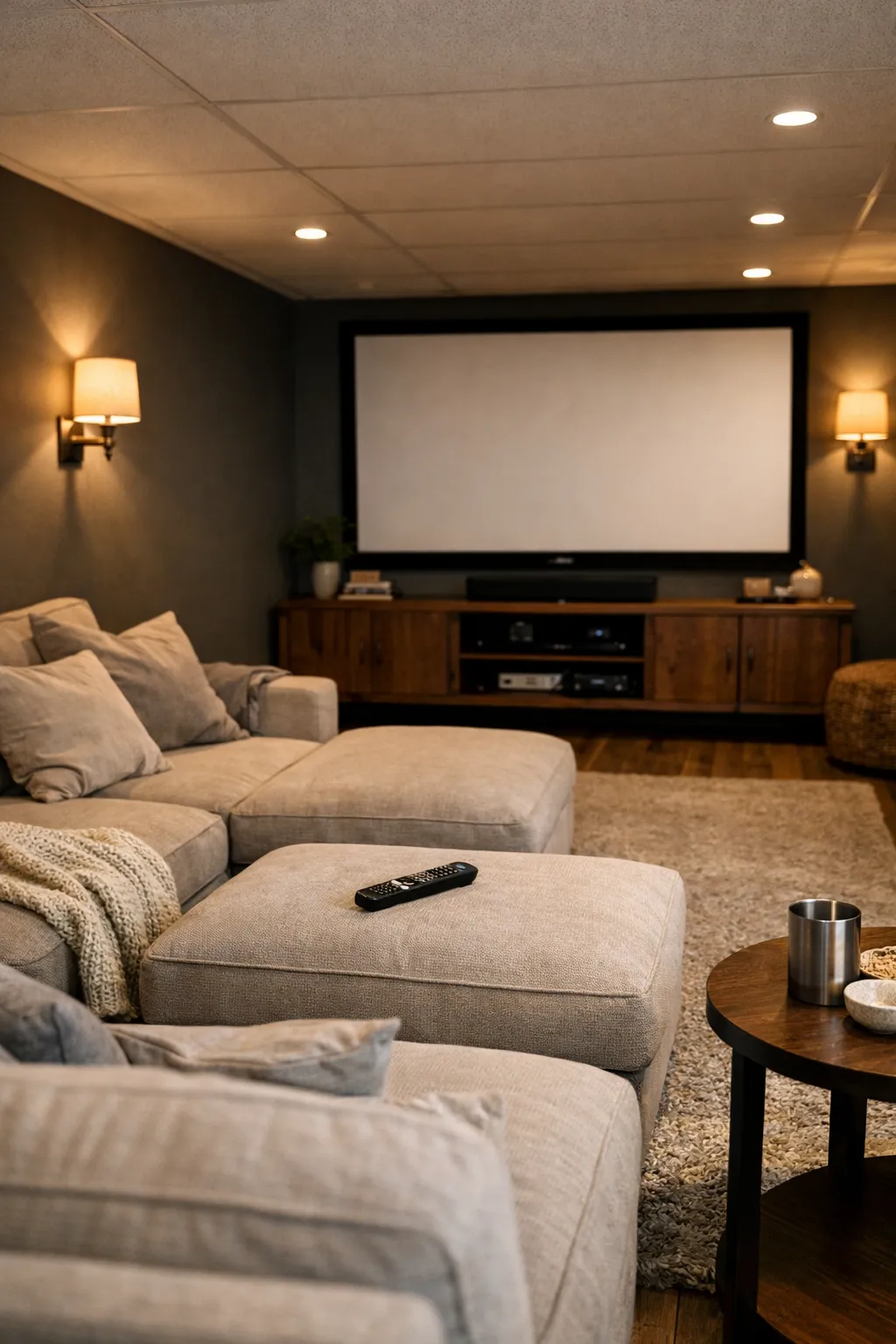
A sectional makes a basement theater feel relaxed and social. It works especially well for families who want everyone in one soft, comfortable zone instead of in separate recliners.
Choose a sectional with deep seats, easy-clean fabric, and a shape that leaves clear walking room around the coffee table and media wall.
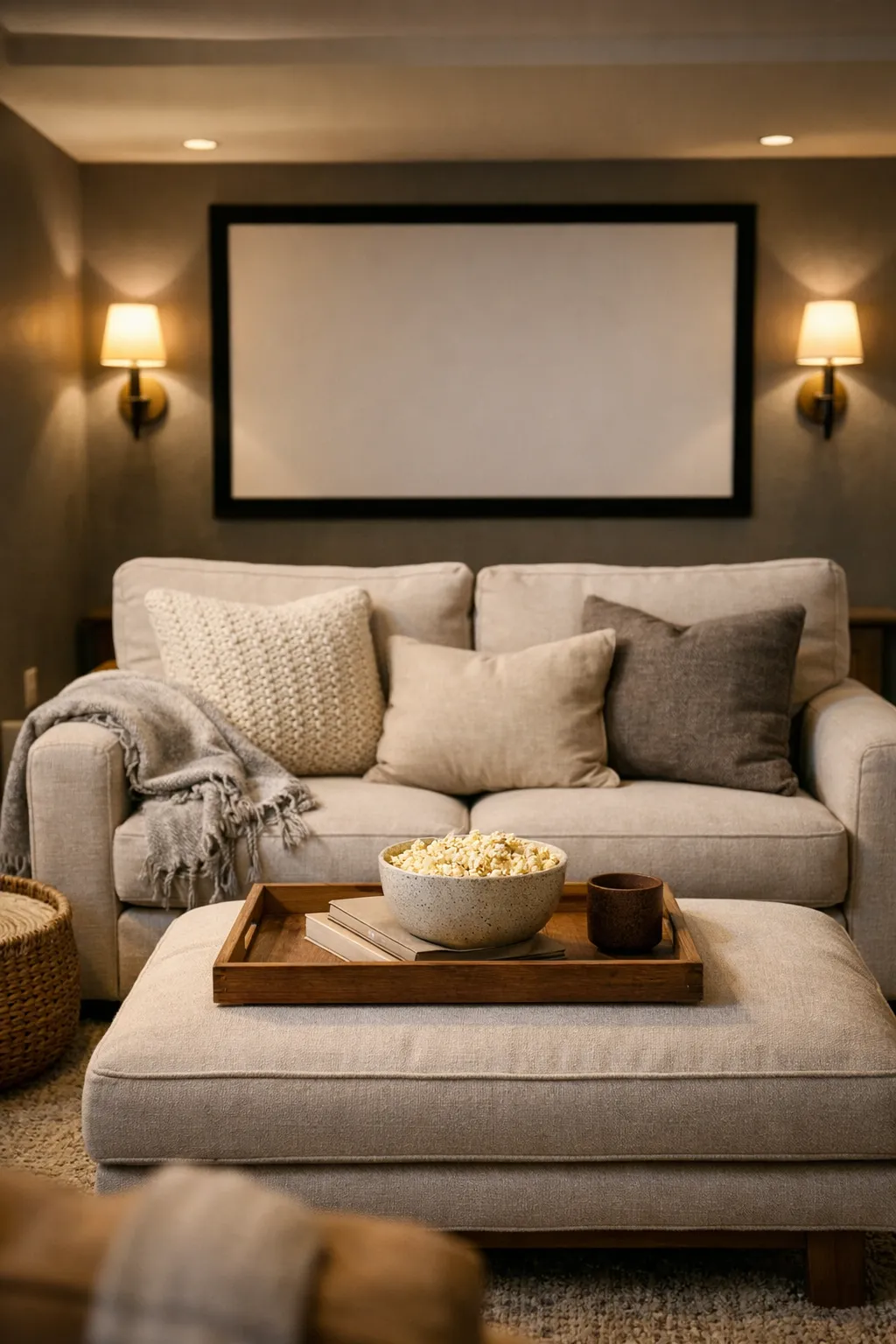
3. Use wall sconces instead of bright overhead lights
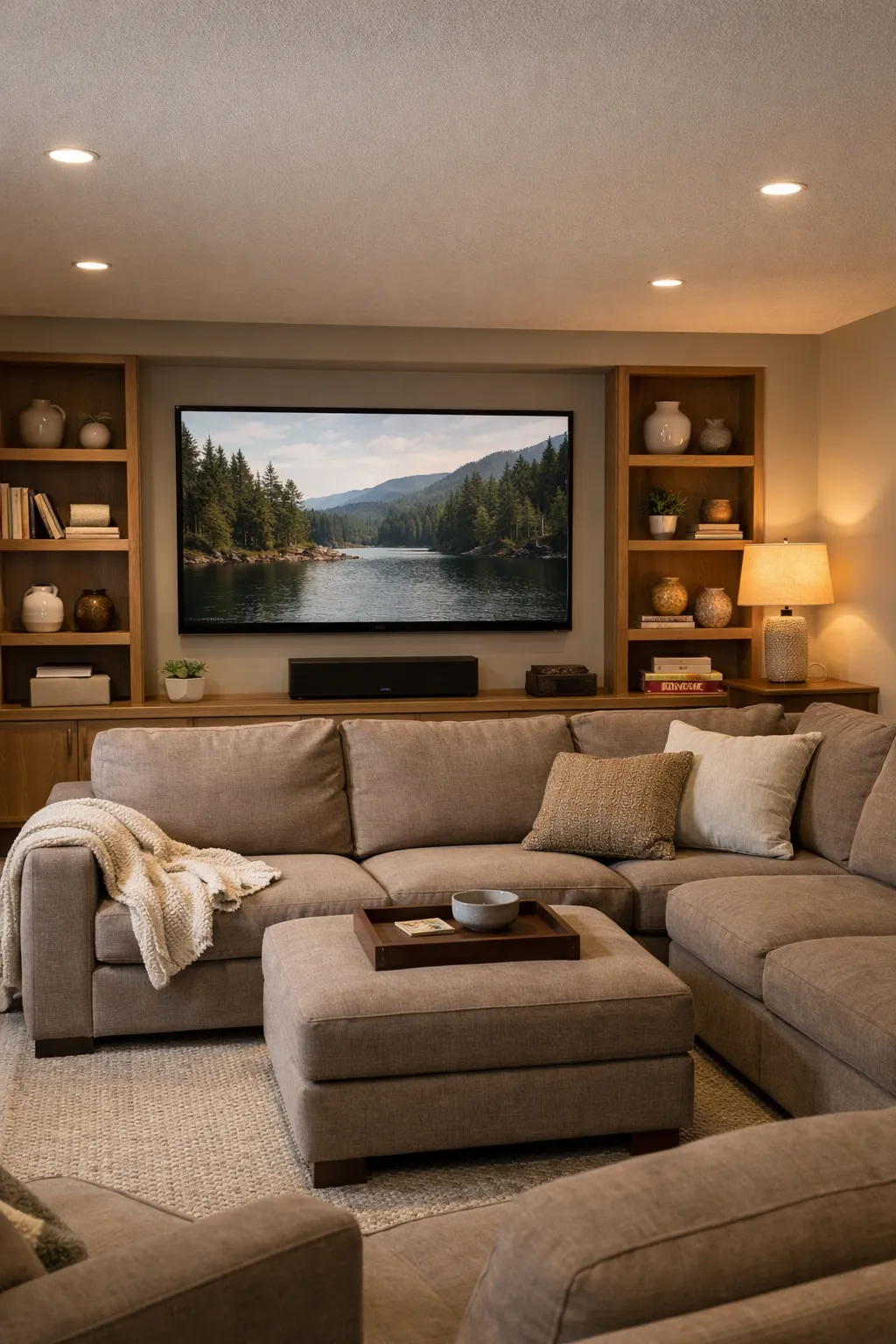
Overhead lighting can kill the mood in a movie room. Wall sconces bring in a softer glow and help the room feel more like a real theater.
In basements with lower ceilings, sconces are a smart move because they add atmosphere without making the room feel shorter.
4. Add a projector for a true cinema feel
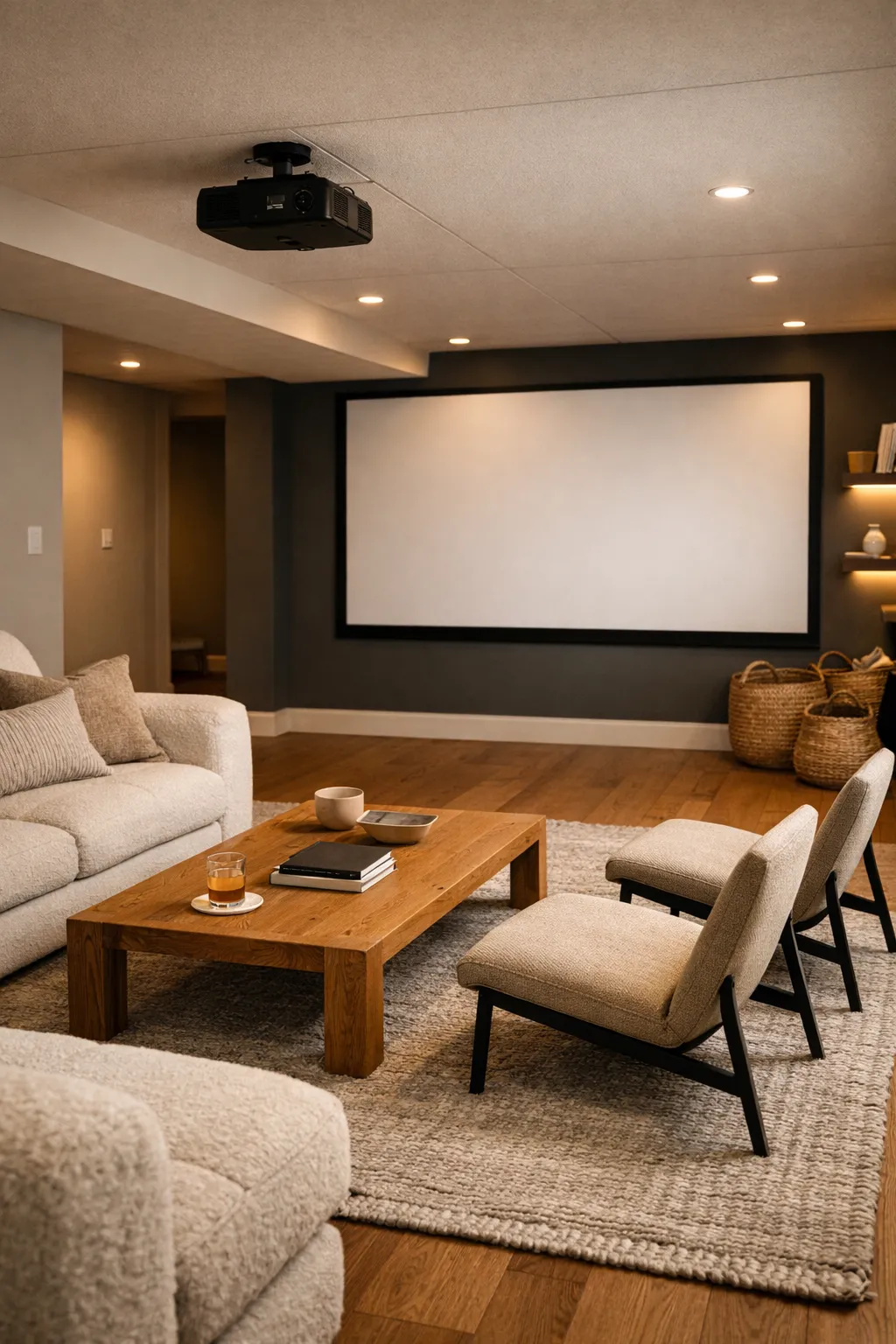
A projector can turn even a basic basement into a memorable movie space. This idea works best if you can control light and keep the viewing wall clean.
A projector setup does not need to feel overly technical. Hide cords, choose a simple screen or smooth painted wall, and keep the furniture layout centered on the viewing zone.
5. Create a media wall with built-in storage
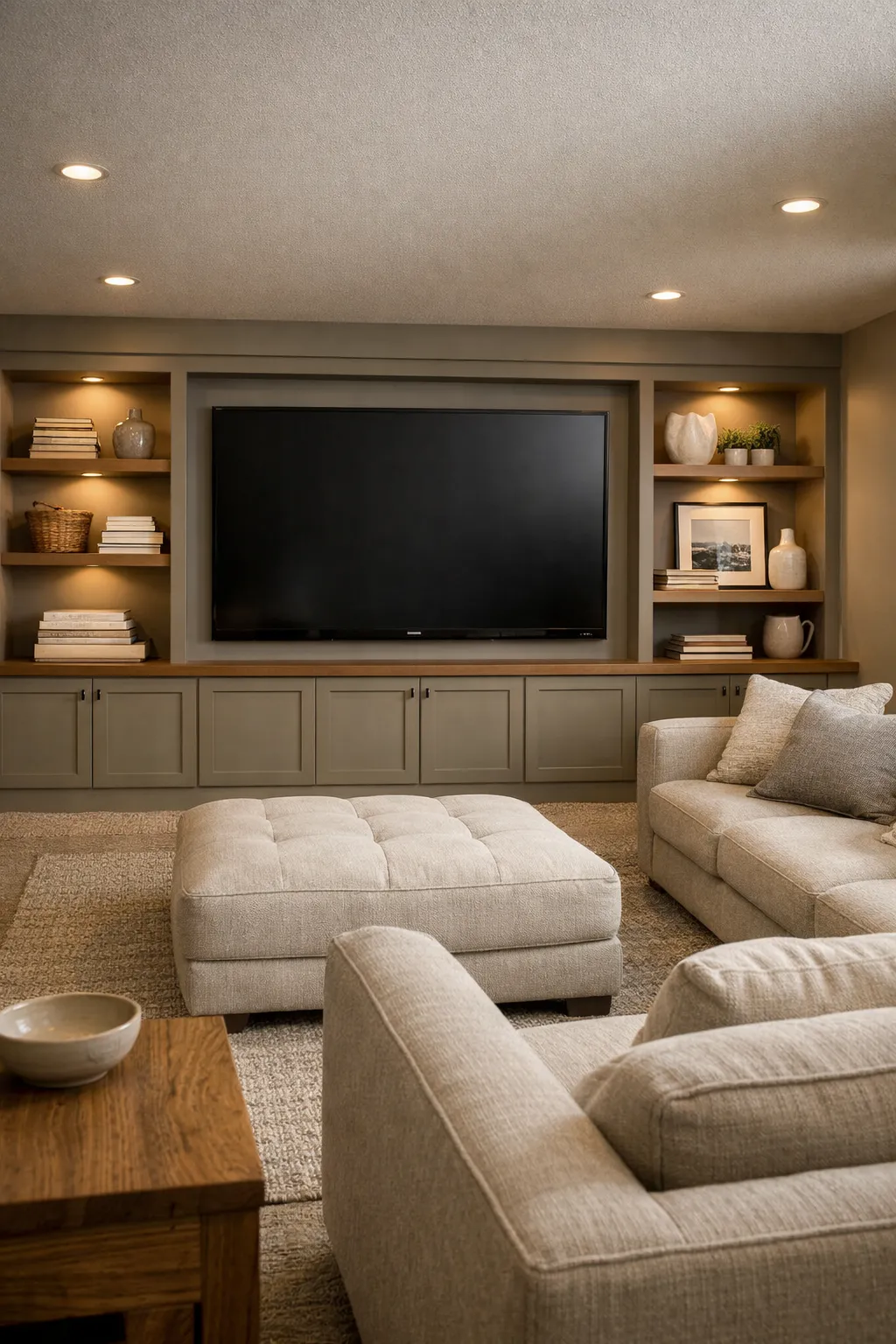
A built-in media wall makes the room look finished. It gives your screen a proper visual anchor and creates space for speakers, decor, remotes, games, and blankets.
Paint the built-ins the same color as the wall if you want a cleaner, more custom look. That approach keeps storage useful without making it feel bulky.
6. Warm up the space with wood accents
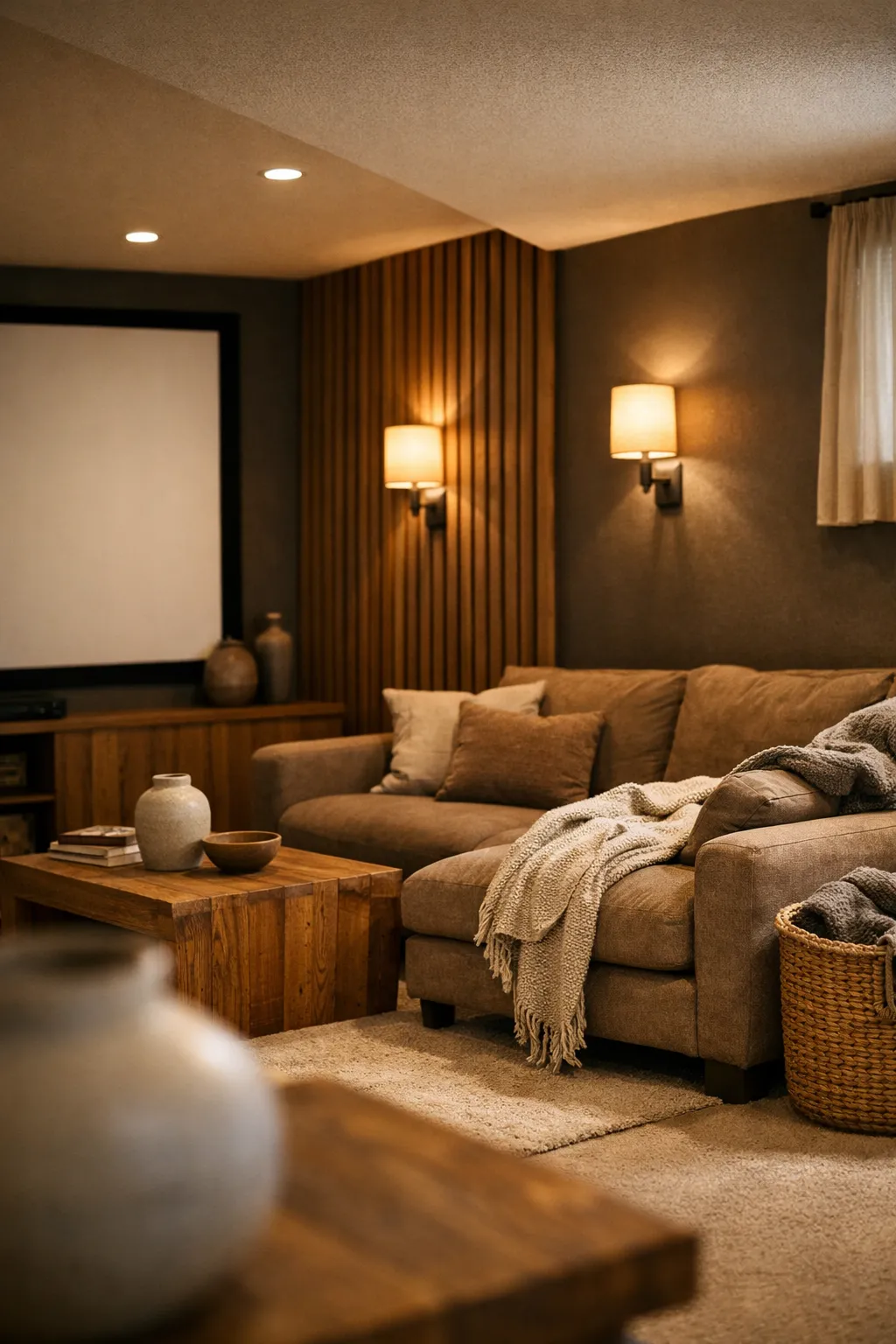
Basements can feel cold fast. Wood tones help fix that. A slatted wood wall, floating oak shelves, walnut side tables, or a natural wood media console can bring warmth to the room without making it look rustic.
This is a good balance if you want a clean modern theater that still feels lived in.
7. Choose plush carpet or a large area rug
Sound bounces in hard-surface rooms. Soft flooring helps with both acoustics and comfort. A basement theater is one place where carpet really earns its keep.
If you do not want wall-to-wall carpet, use a large rug that extends under most of the seating area. That makes the room feel more connected and less like furniture floating on a cold floor.
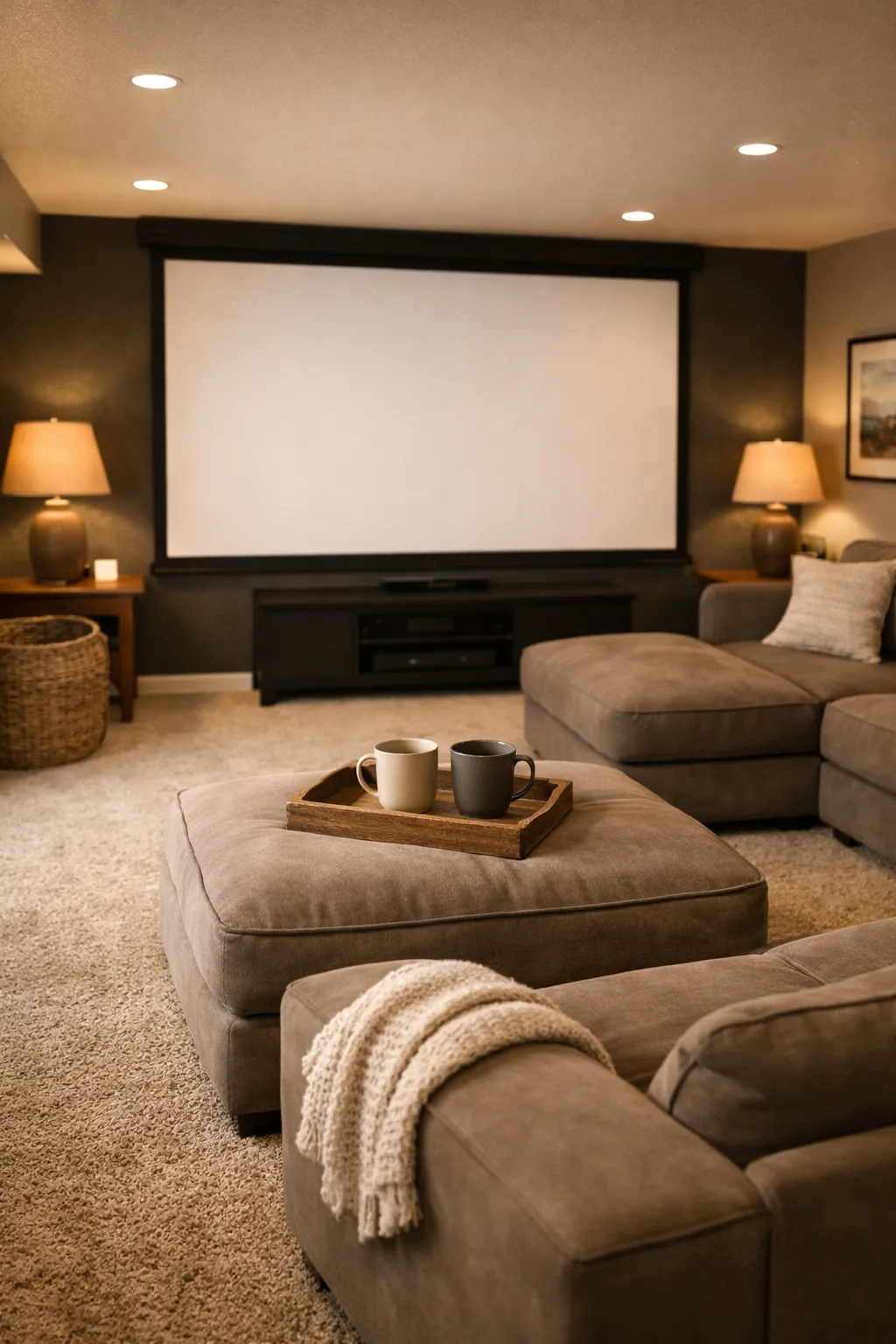
8. Use acoustic panels that double as decor
Sound control matters, but it does not have to look ugly. Fabric-covered acoustic panels, slatted wood panels with felt backing, or padded wall sections can help soften echo while still looking stylish.
This is one of the best upgrades for unfinished-sounding basements that look good but still feel loud.
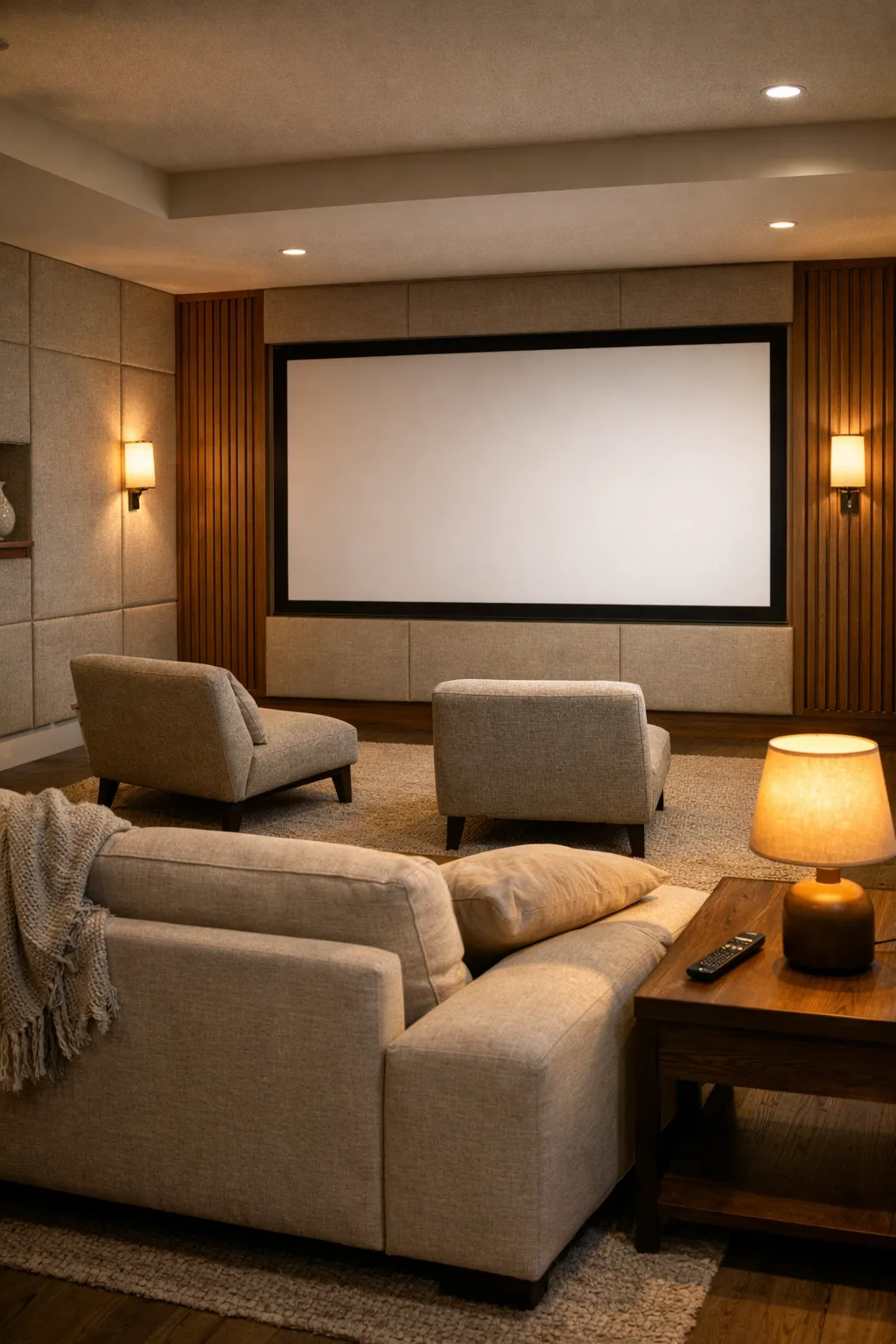
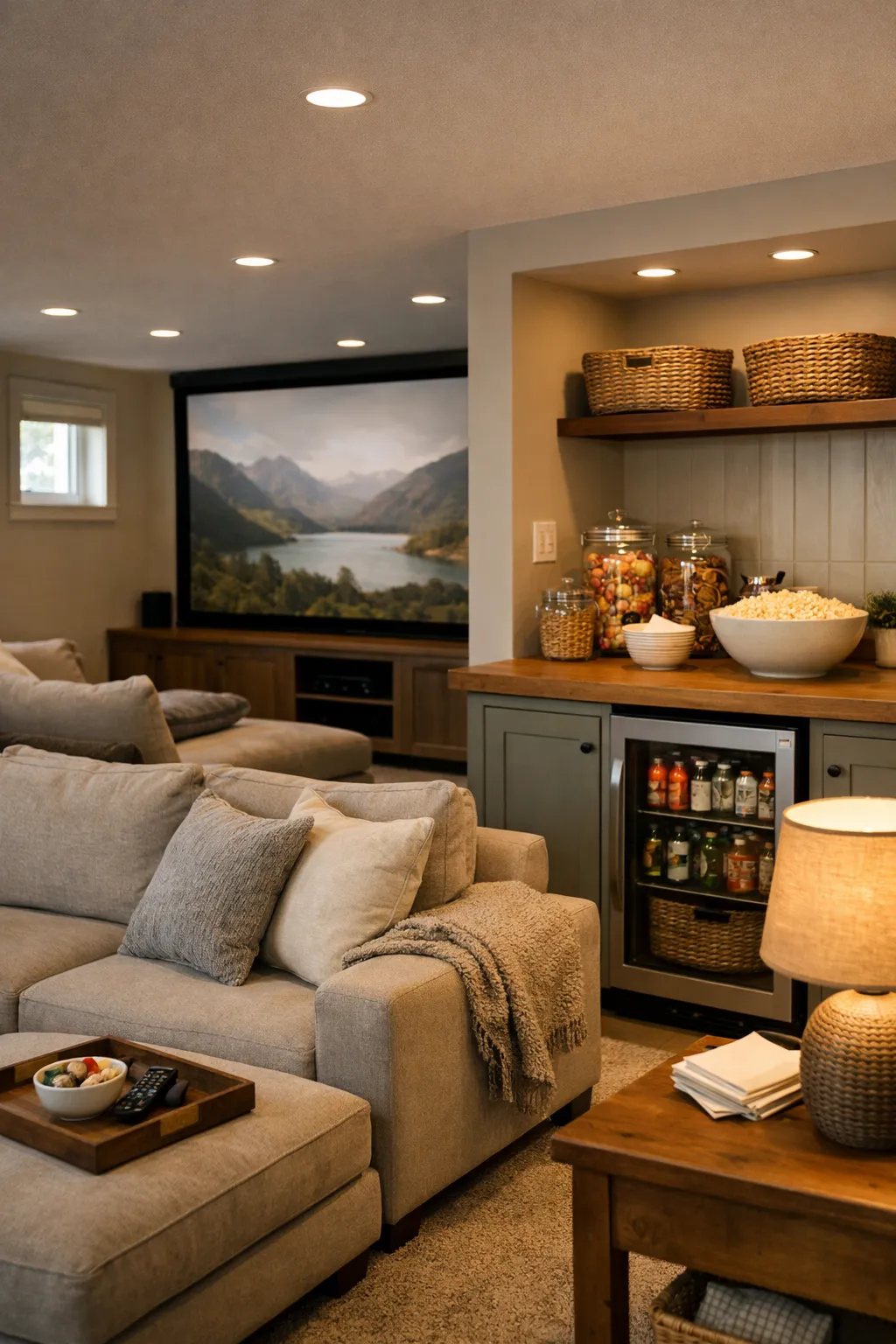
9. Add a snack bar or mini concession corner
A simple snack area can make the basement theater feel fun and complete. It does not need to be elaborate. A compact cabinet with a countertop, drink fridge, popcorn maker, and baskets for snacks can do the job.
This works especially well in larger basements where the theater is part of a bigger hangout zone.
10. Keep the ceiling visually quiet
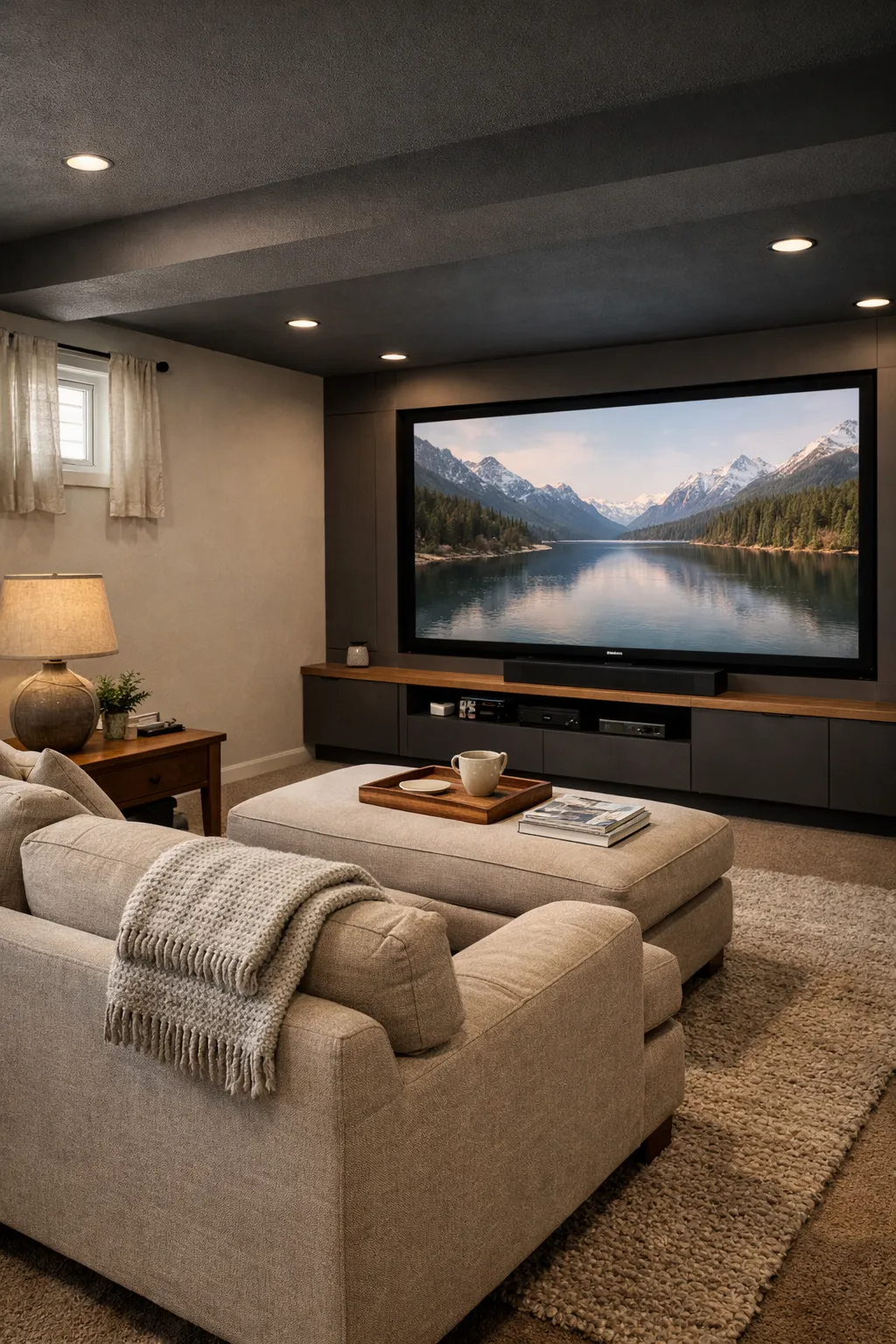
Many basements have beams, ductwork, or lower ceilings. The goal is not always to hide everything. Sometimes the better move is to simplify the look.
Paint exposed elements a dark tone so they recede. Use clean recessed lighting and avoid hanging fixtures that drop too low in the main viewing area.
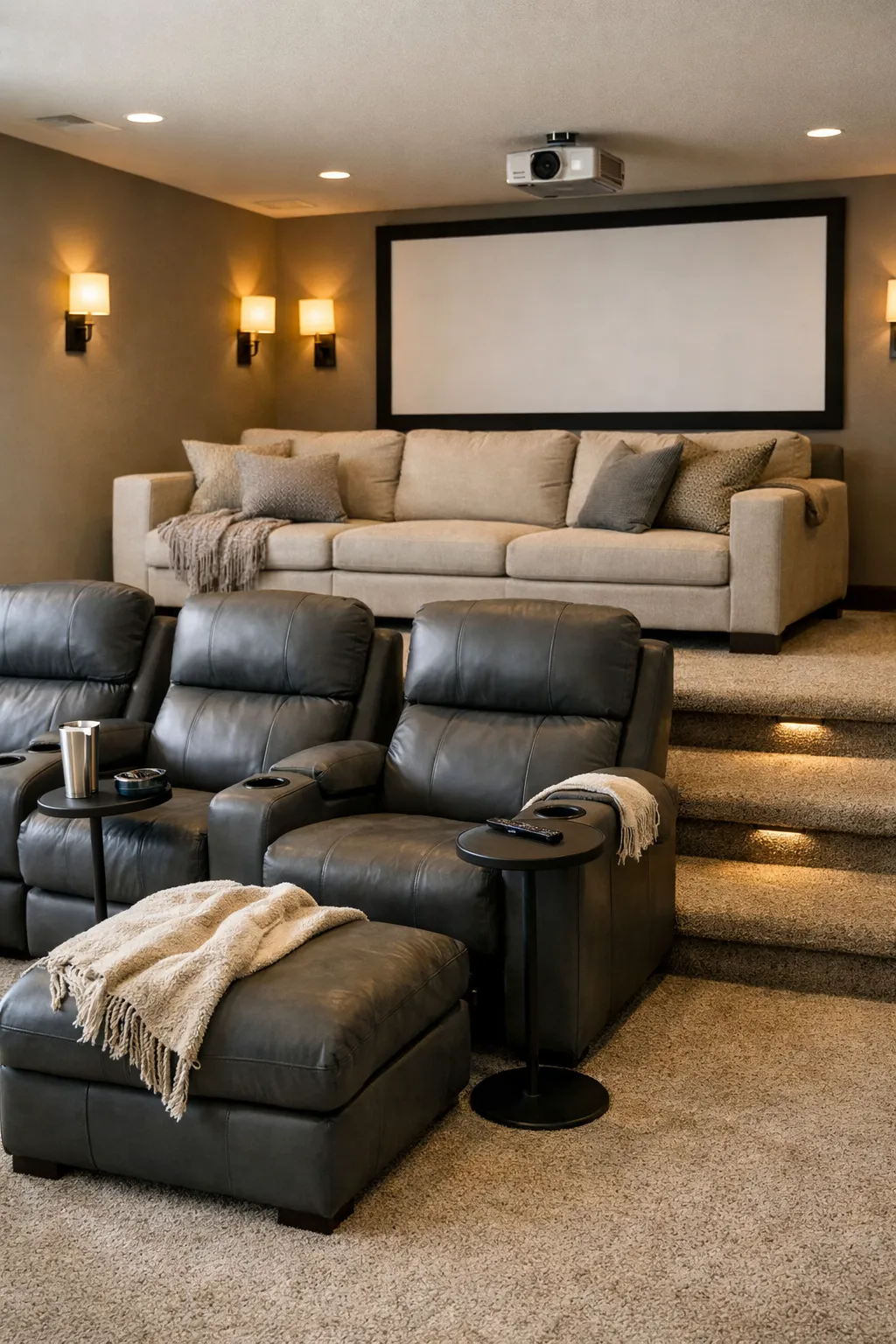
11. Try tiered seating in a larger basement
If you have enough square footage, raised second-row seating can make the room feel more theater-like. It is a strong choice for households that host movie nights often.
This setup works best when the room is long enough to keep every seat comfortable and the walkway safe.
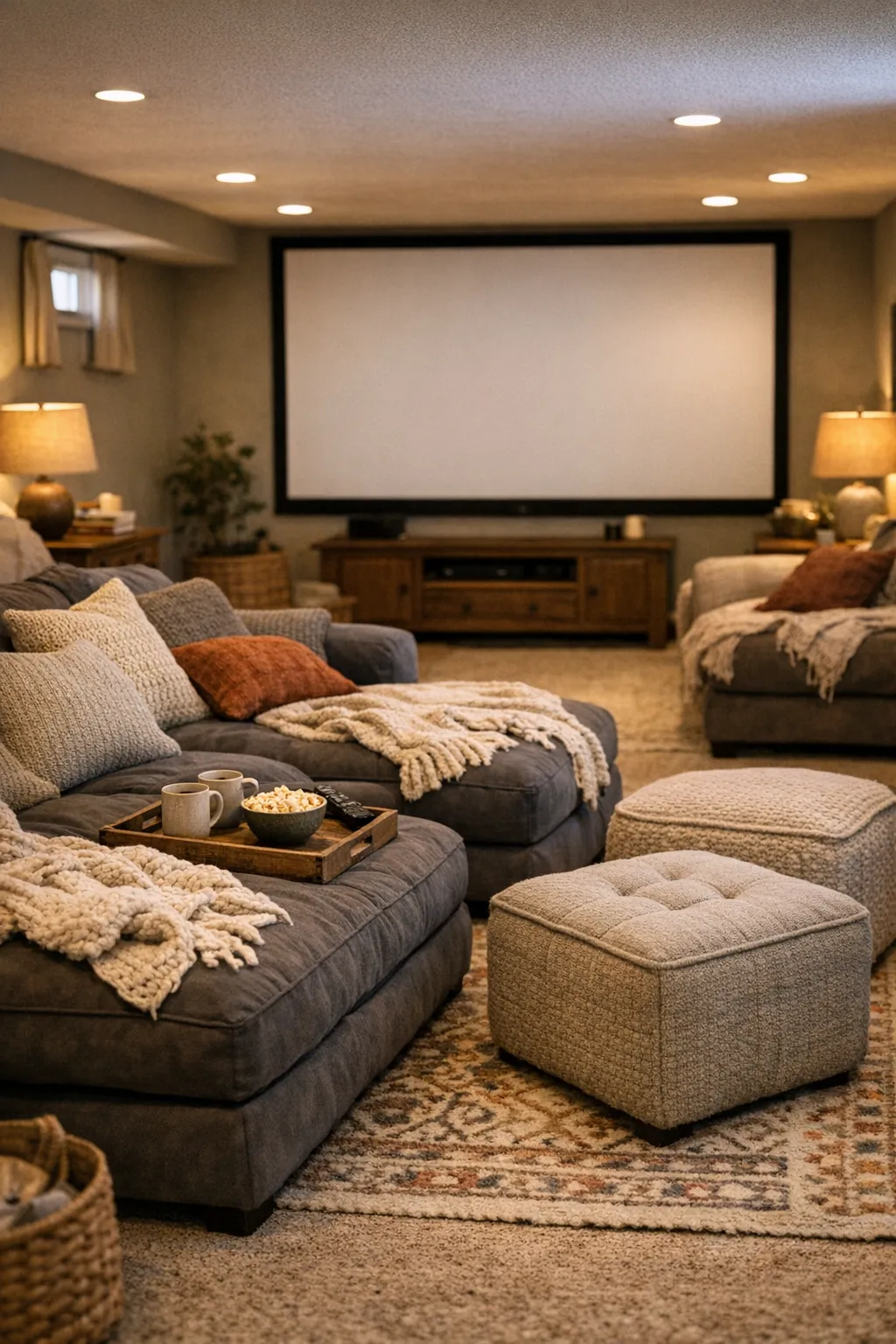
12. Make it feel cozy with layered textiles
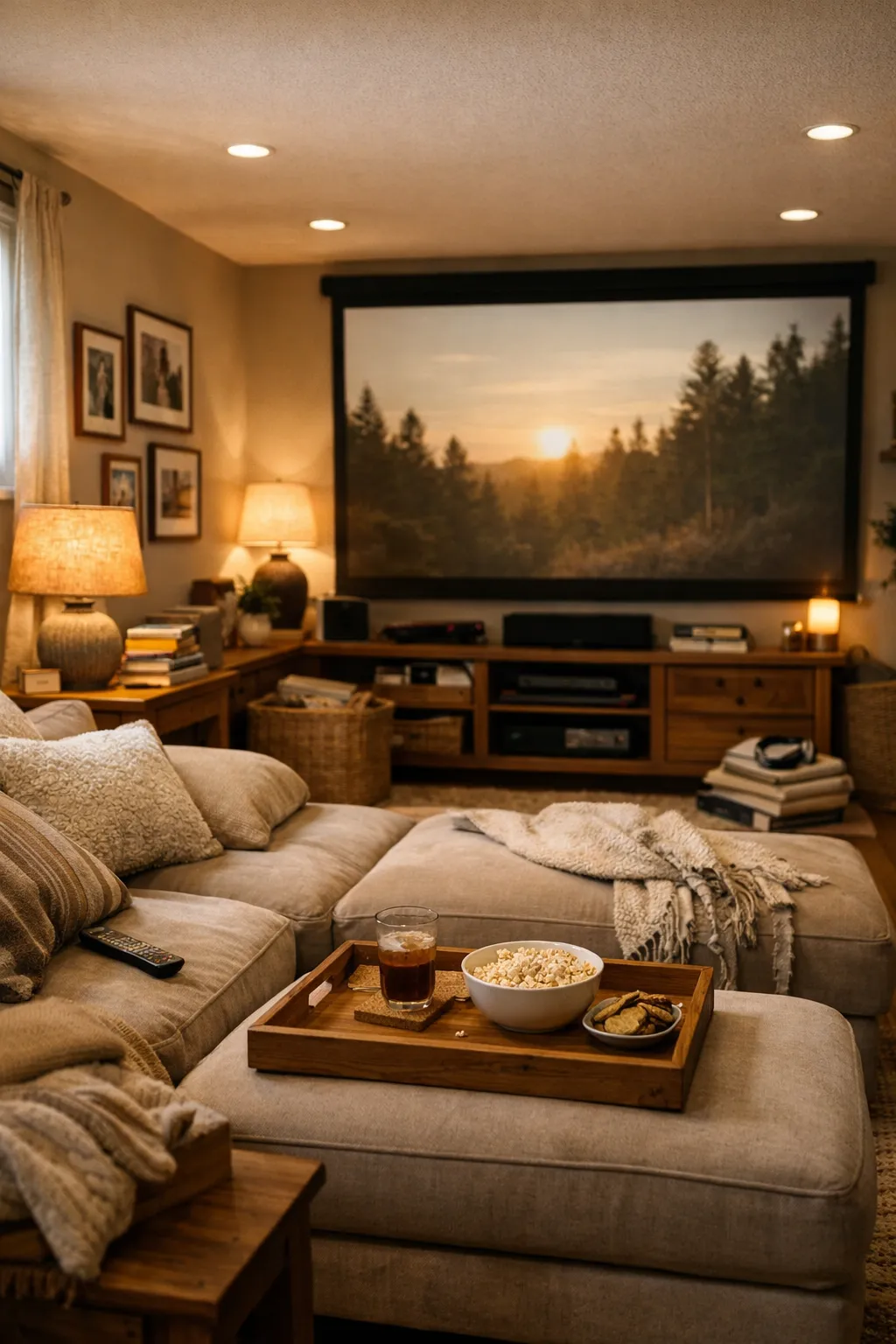
A great basement theater should not feel hard or sterile. Add throw blankets, textured pillows, upholstered ottomans, and soft curtains where they make sense.
These details matter more than people think. They help a basement feel like a room people want to stay in, not just a place with a screen.
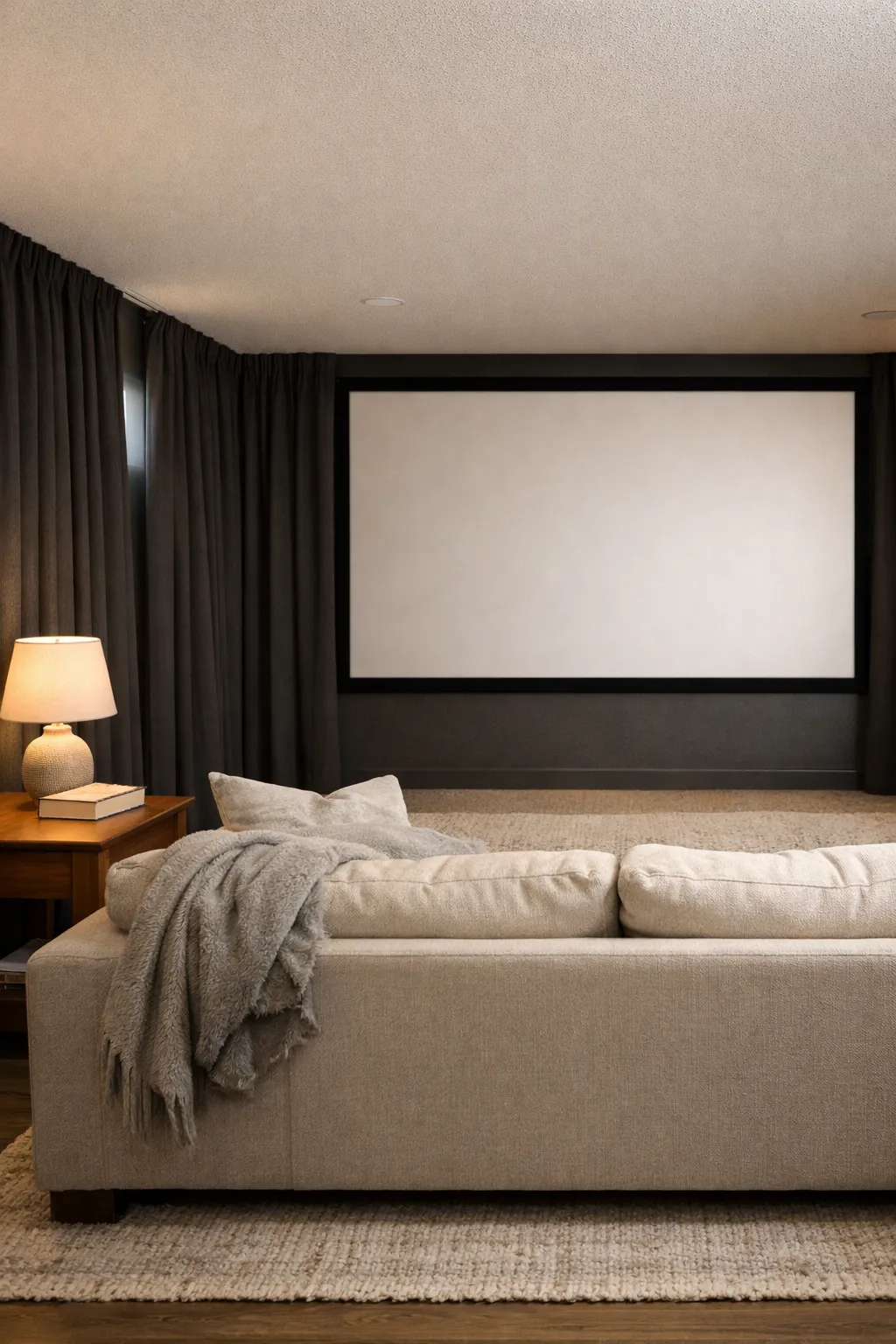
13. Use blackout curtains to hide awkward basement windows
Not every basement is fully underground. If your room has small windows, blackout curtains can block stray light and make the wall look more intentional.
Choose curtains in a tone close to the wall color so they blend into the room instead of calling attention to the window shape.
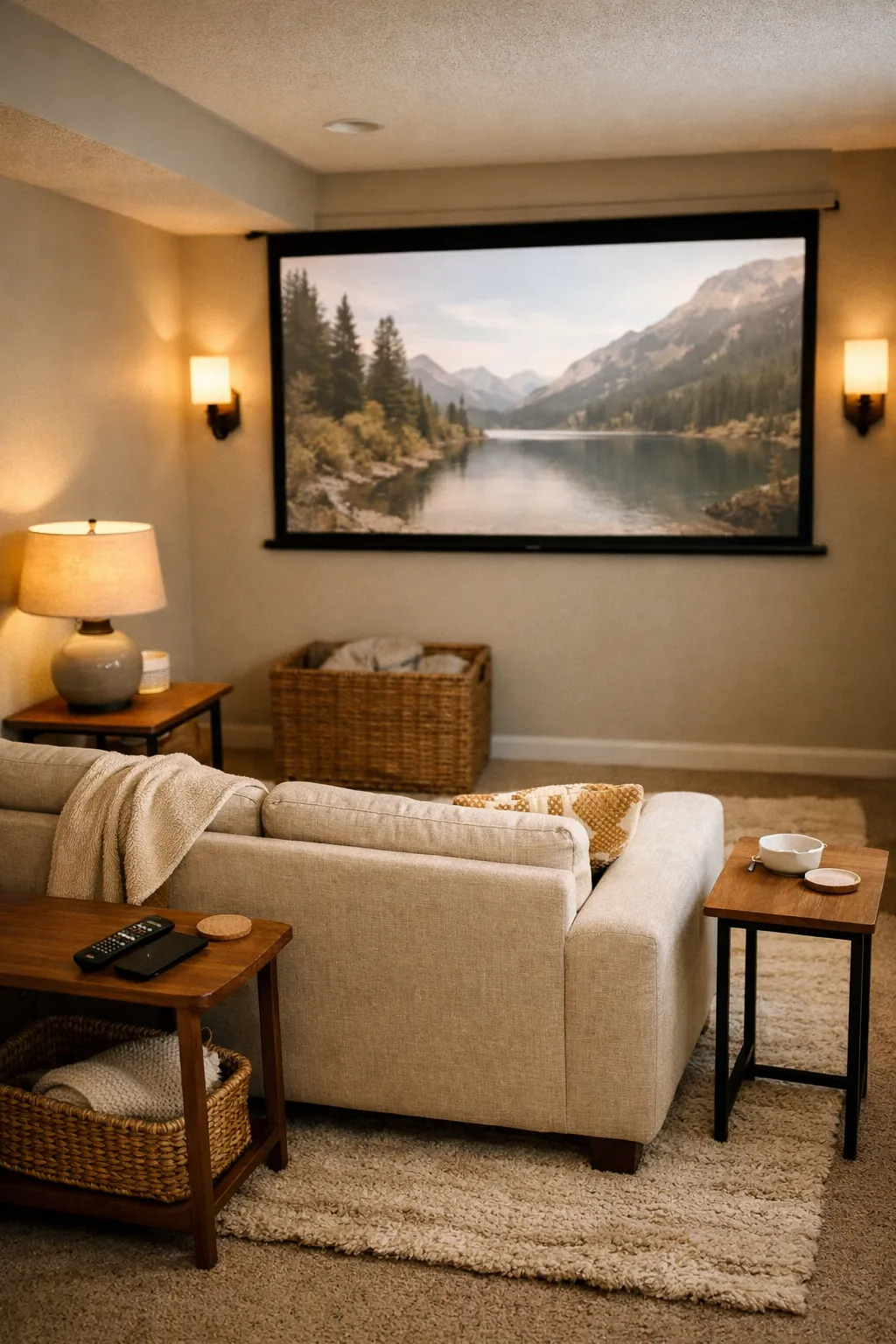
14. Design a small basement theater with a simple layout
A small basement can still become an excellent home theater. In fact, smaller rooms can feel more immersive when they are laid out well.
Keep the footprint simple. One sofa, one screen wall, one rug, and a few smart lighting choices can look far better than trying to squeeze in too much furniture.
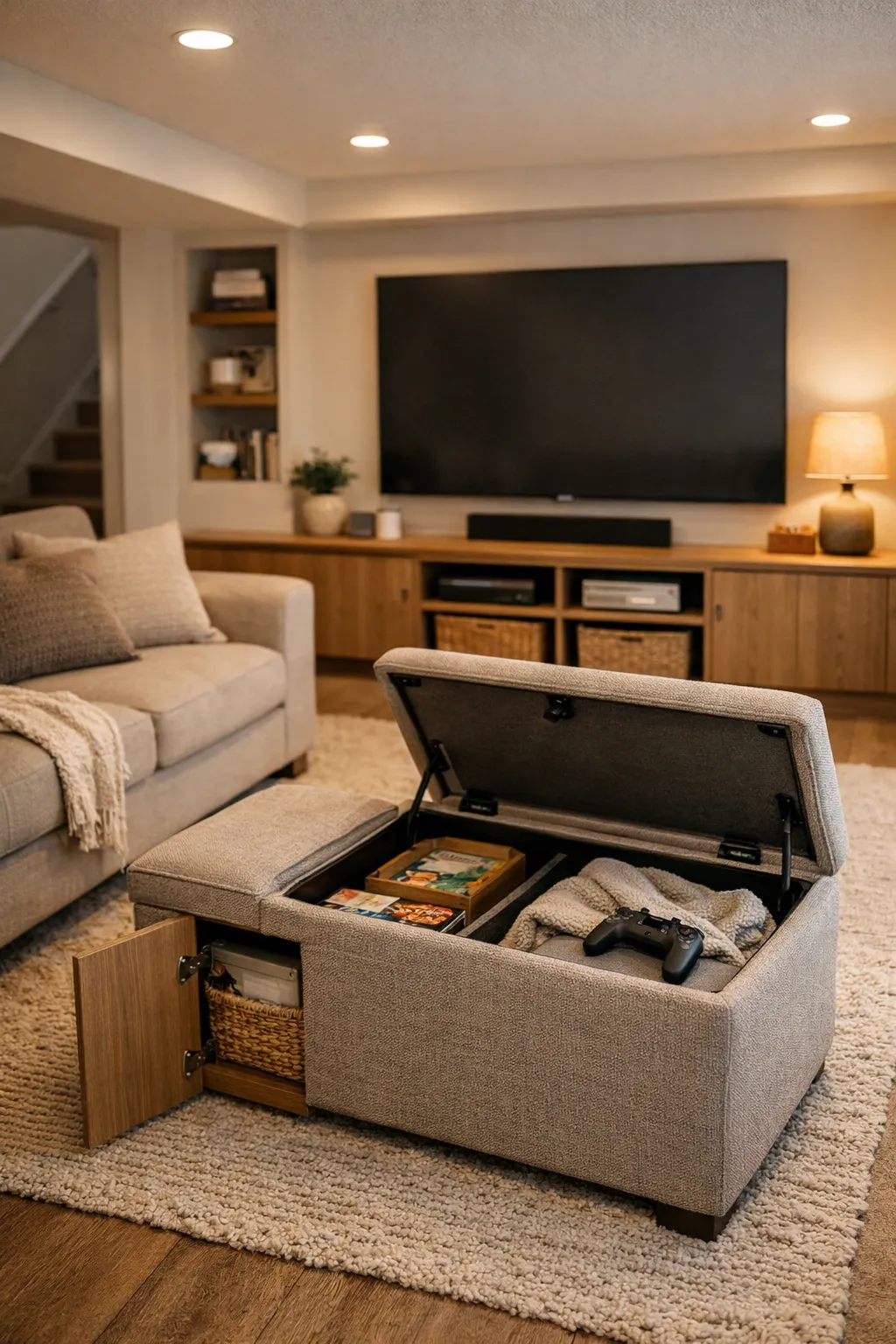
15. Add hidden storage for a cleaner look
Movie rooms collect clutter fast. Remote controls, game consoles, blankets, board games, extra chargers, and kid items pile up if there is nowhere to put them.
Storage ottomans, closed cabinets, benches with lift-up seats, and built-ins help keep the room calm and easy to reset after use.
16. Mix a theater room with a gaming zone
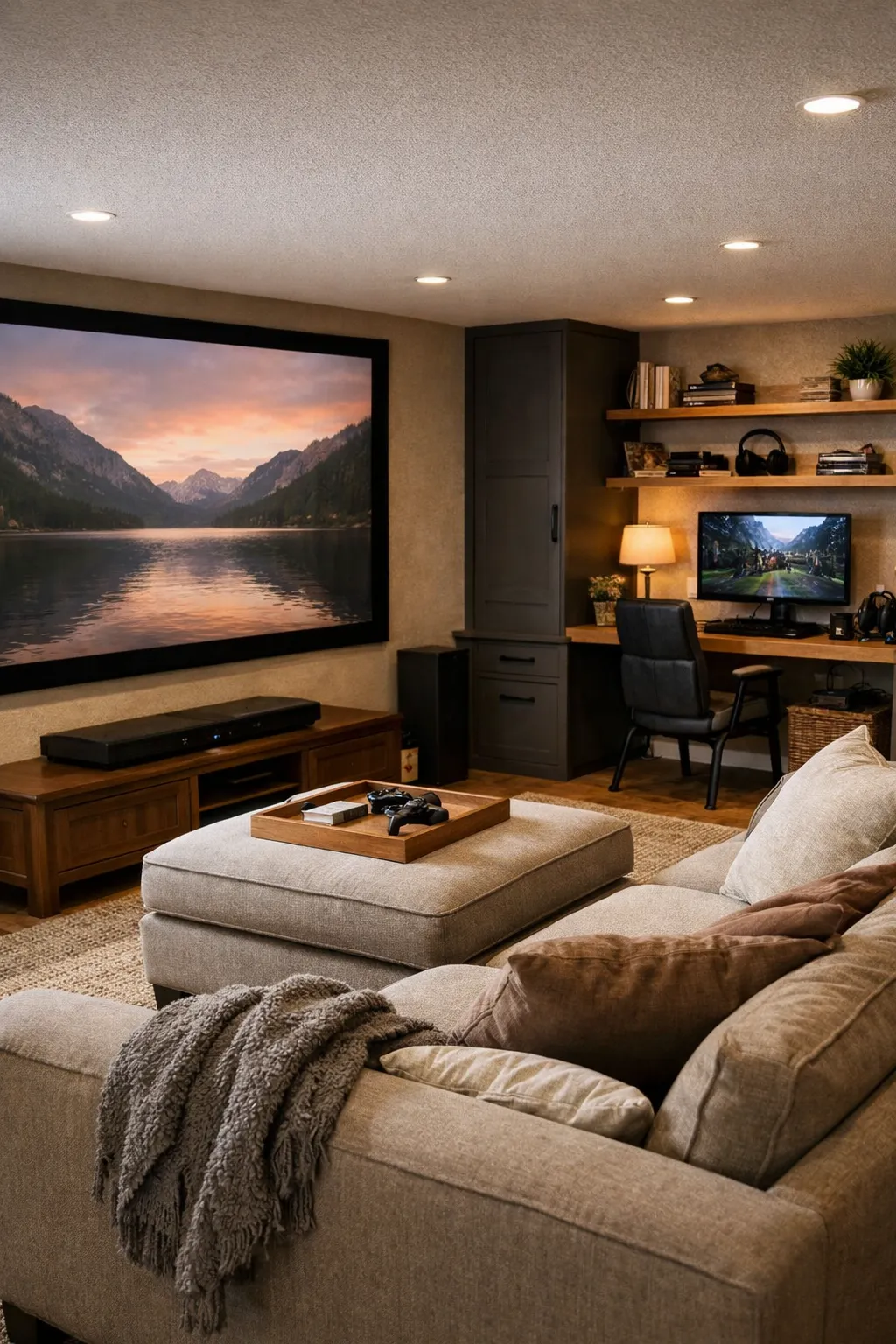
Some households want one basement room to do more than one job. A theater plus gaming space can work well if each function has a clear zone.
Keep the main viewing wall uncluttered, then place the gaming area off to one side with shelves, a compact table, or extra seating.
17. Use a huge ottoman instead of a coffee table
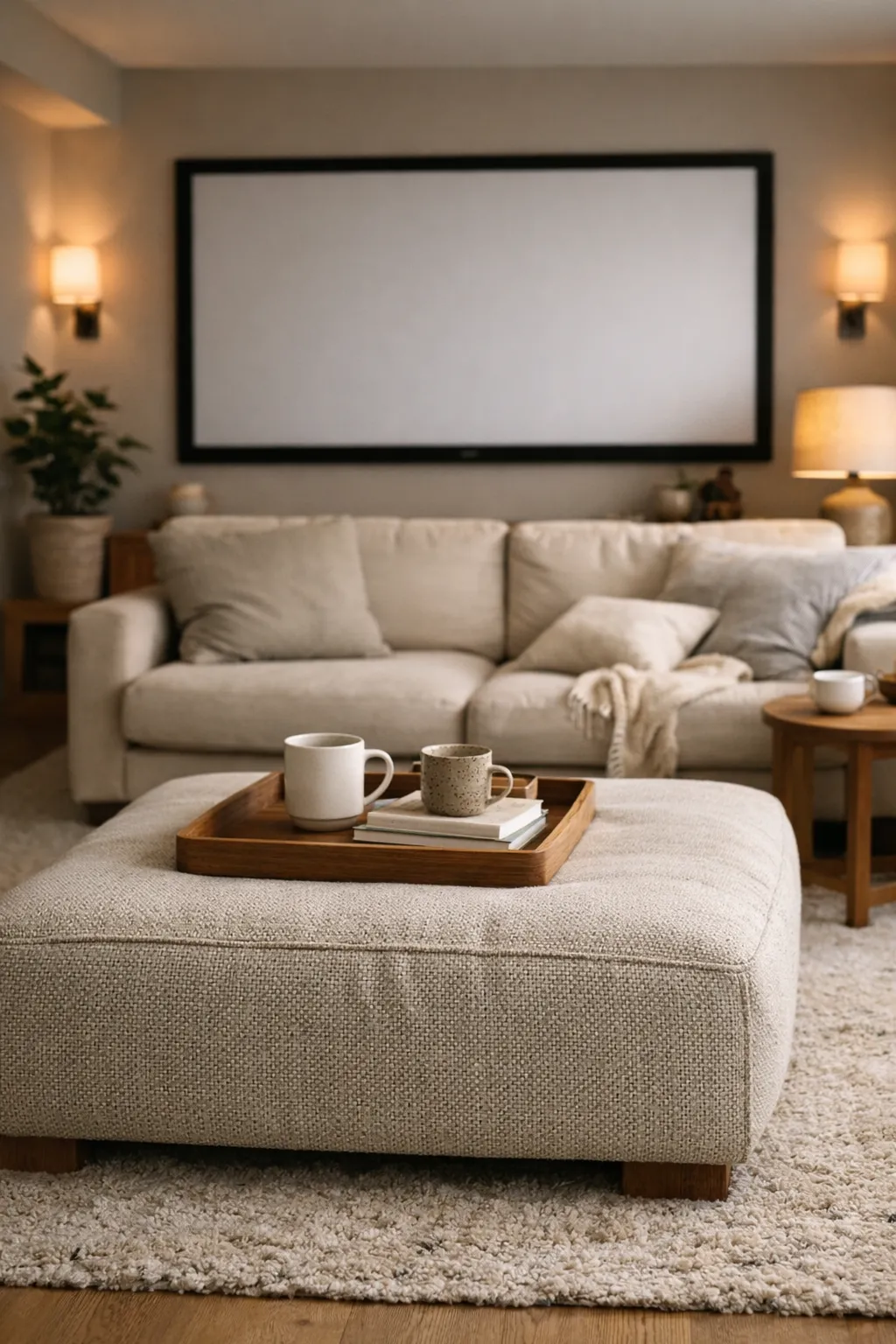
A large upholstered ottoman is often more useful in a basement theater than a hard coffee table. It softens the room, adds comfort, and can work as extra seating or a footrest.
It is also safer for kids and easier to move around when the room gets crowded.
18. Add dimmable recessed lighting for flexibility
You still need practical light for cleaning, hosting, and finding your snacks. Dimmable recessed lighting lets the room switch from bright and usable to low and cozy in seconds.
This is one of the smartest upgrades for a basement theater because it improves both function and mood without taking up visual space.
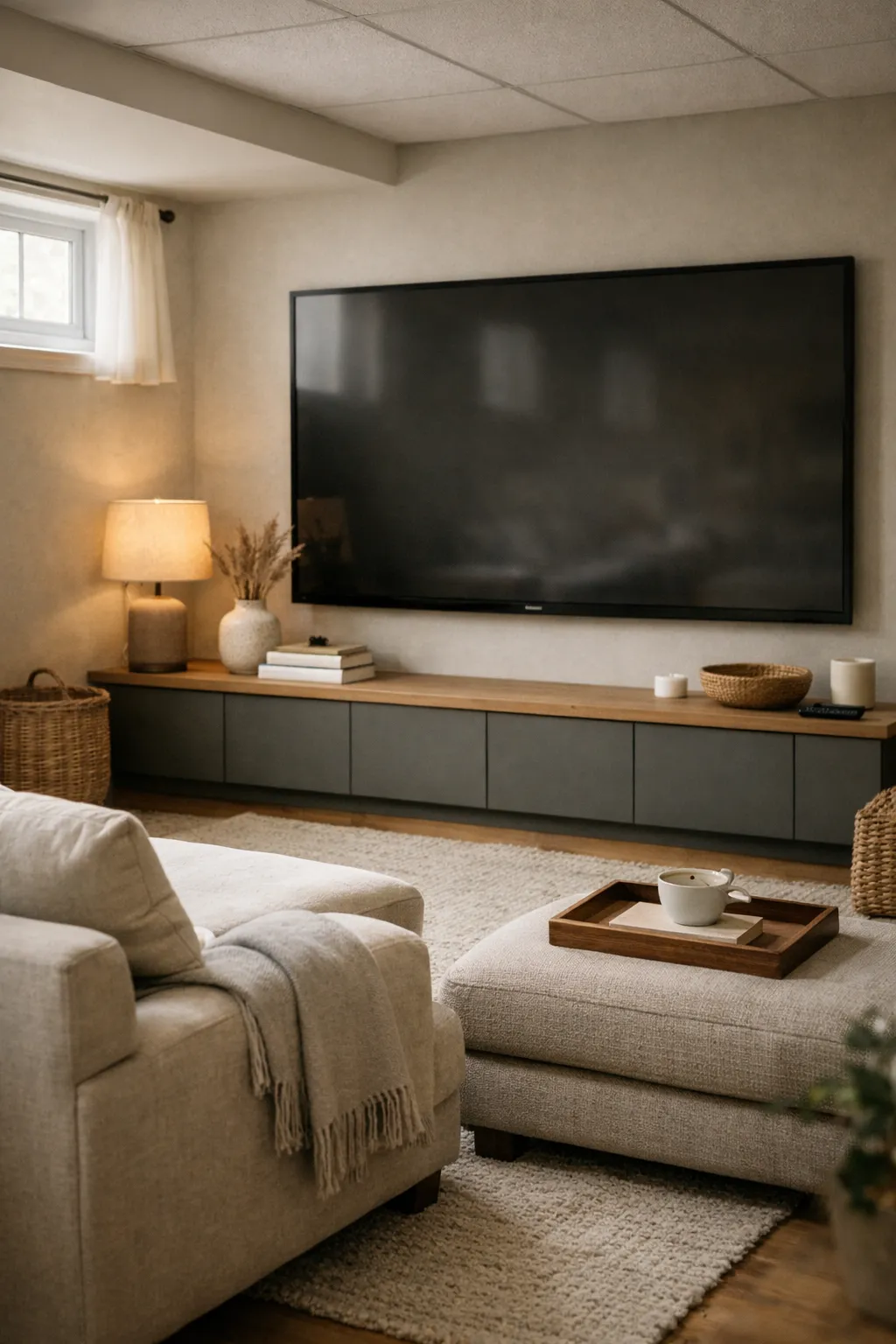
19. Use a low-profile media console for a clean modern look
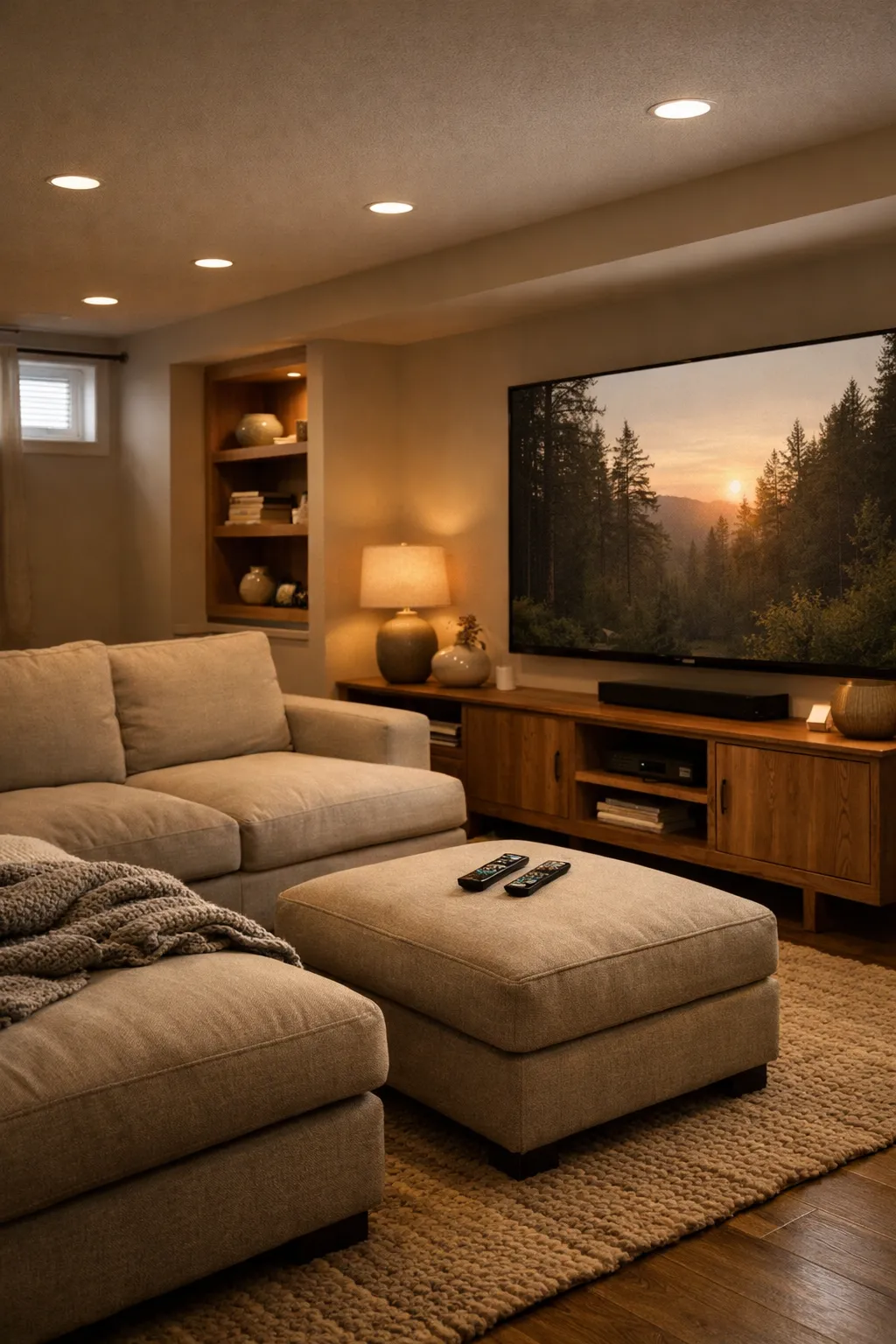
Not every basement theater needs full built-ins. A sleek media console can keep the space lighter and more relaxed.
This works well in modern basements where the goal is a stylish lounge feel rather than a formal theater setup.
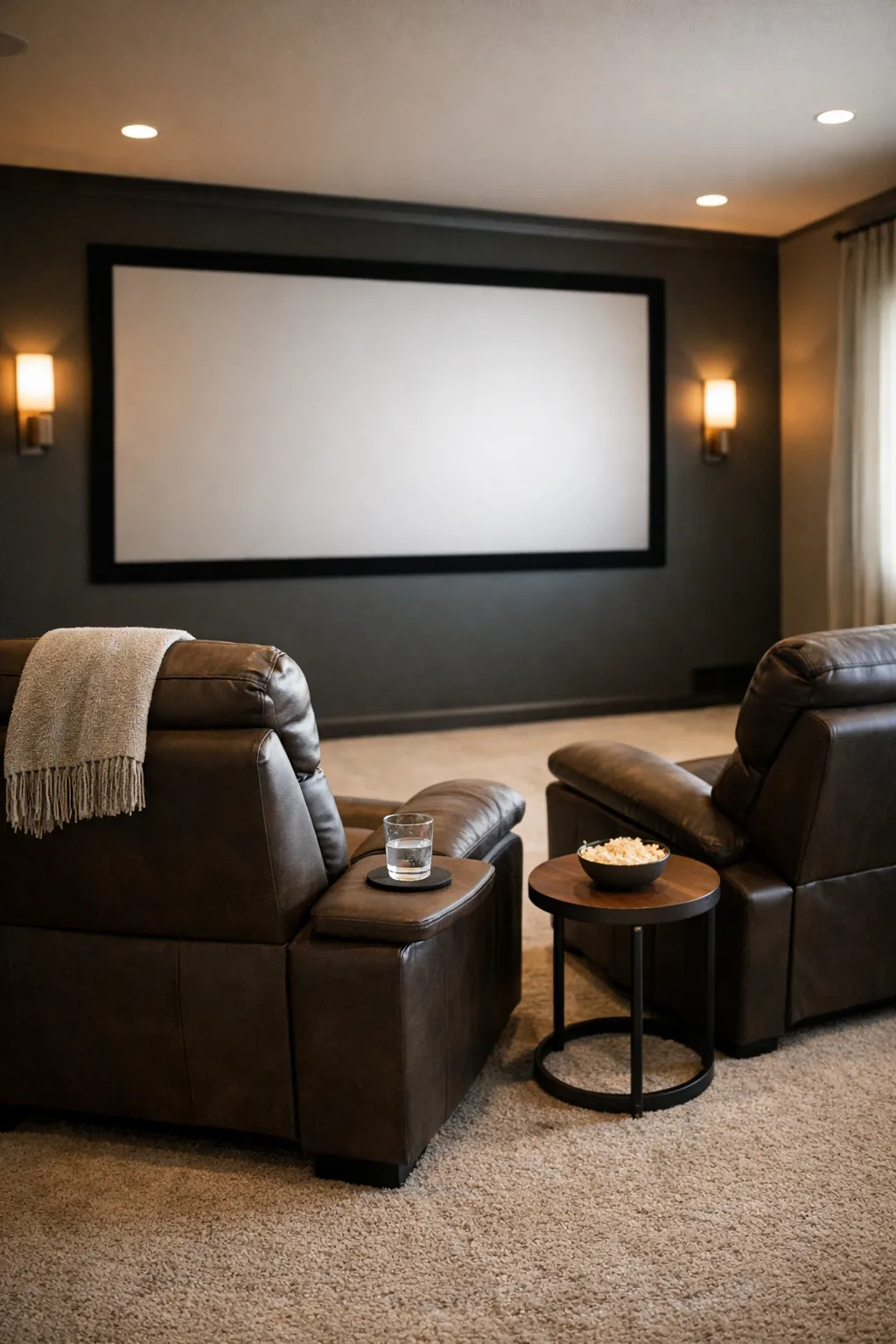
20. Lean into a luxury theater look with recliners
Recliners are the classic choice for a reason. They are comfortable for long movies and give the room that unmistakable cinema feel.
To keep the space from feeling too bulky, choose slimmer silhouettes, rich upholstery, and side tables or cupholder arms that look intentional instead of oversized.
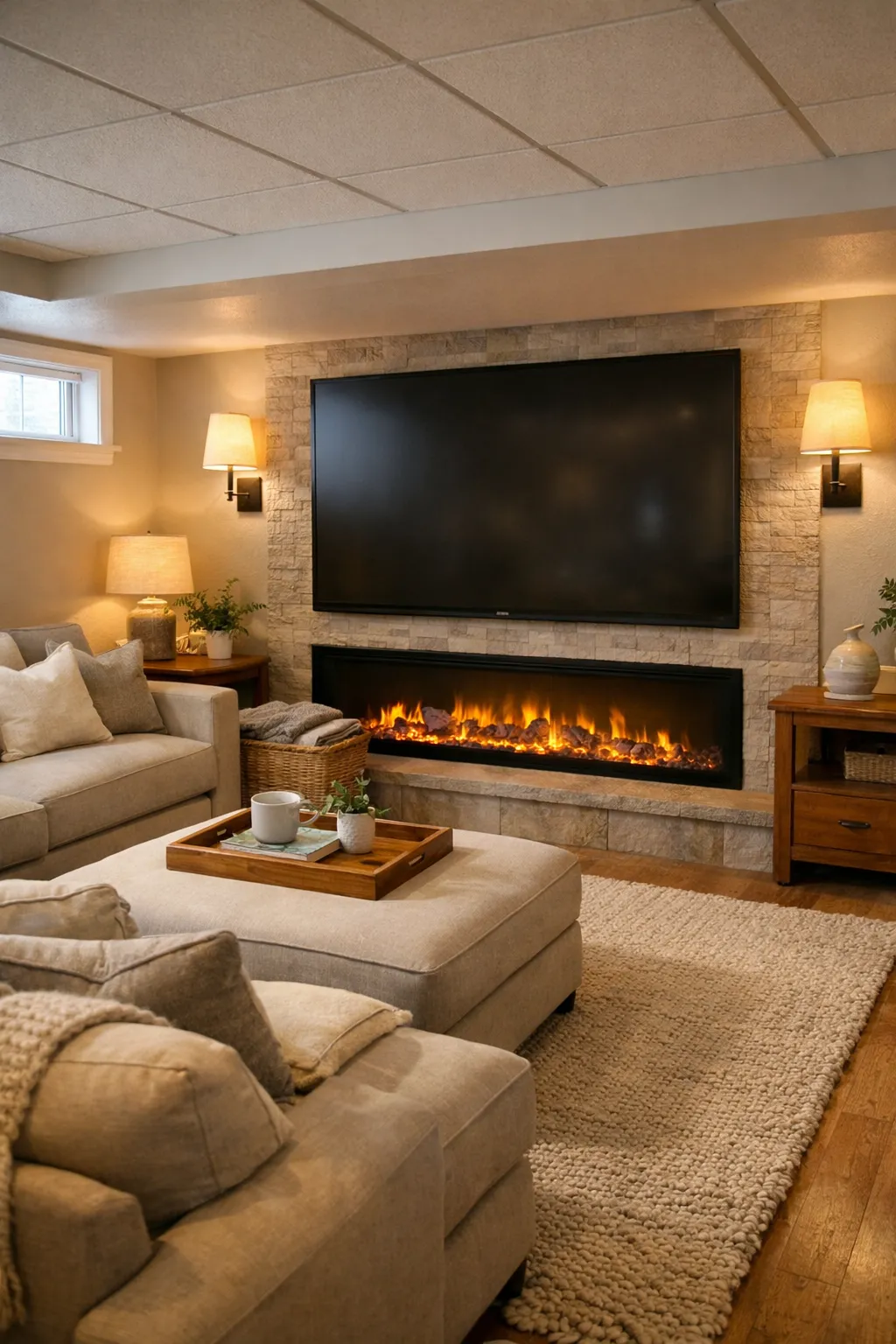
21. Bring in a fireplace wall for a cozy media room
A fireplace can make a basement theater feel more like a true retreat. An electric fireplace under or beside the screen is often the easiest way to get the look.
This idea works best in media-room style spaces where the room is used for movies, casual TV, and general lounging.
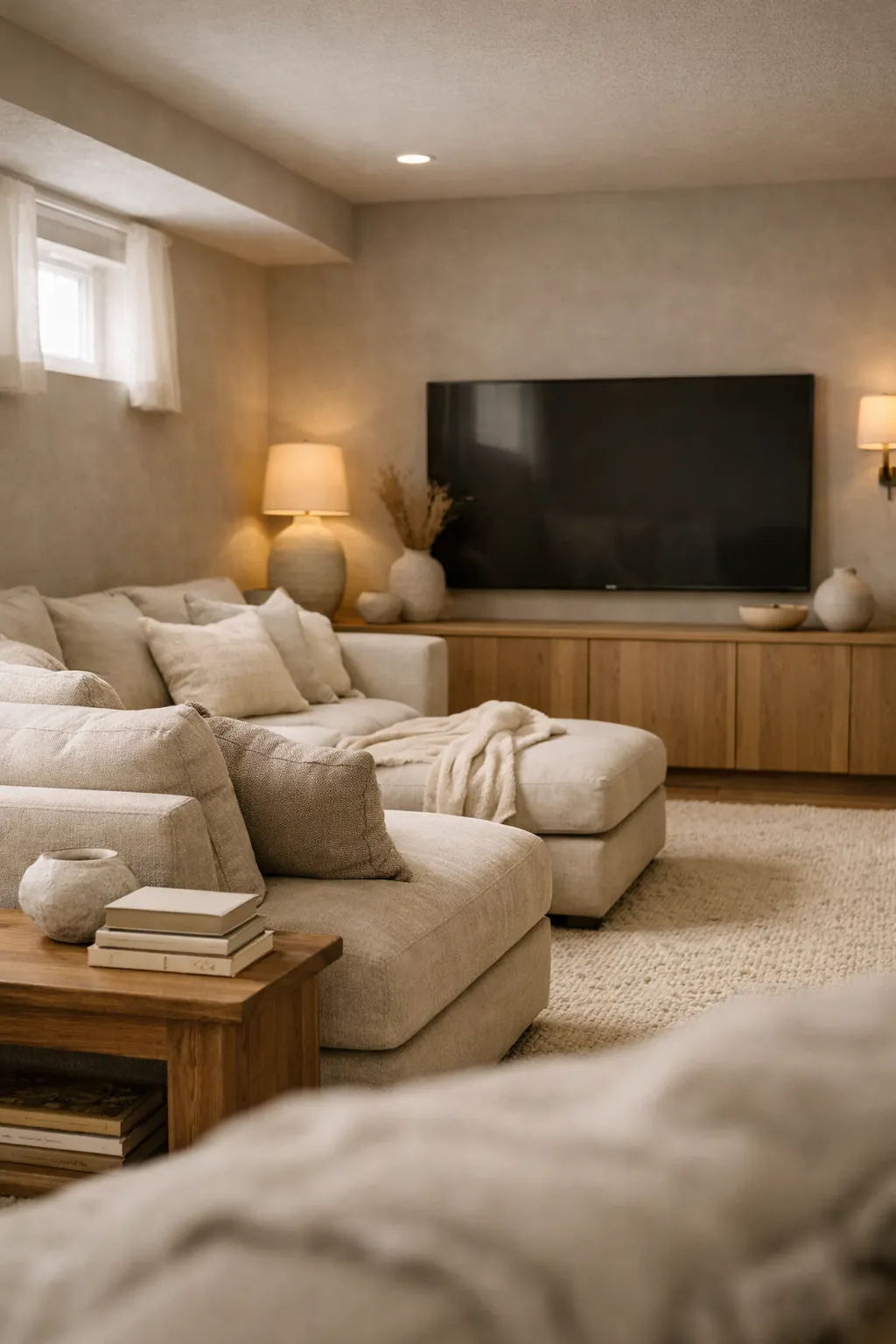
22. Use tone-on-tone neutrals for a softer theater style
Not every basement theater needs to be dark black and red. A softer palette can still feel cinematic. Think warm mushroom, taupe, greige, muted olive, and soft brown layered with cozy textures.
This look is especially good for homes that want the basement to blend with the rest of the house instead of feeling like a completely separate theme room.
23. Style the room so it feels personal, not staged
The best home theaters do not look like empty showroom sets. They feel lived in. Add framed art, stacked books, a tray for snacks, a throw casually placed on the sofa, and lighting that feels warm at night.
A basement theater should still reflect the people who use it. That personal layer is what turns a nice room into a favorite room.
Smart styling tips for a better basement movie room
Keep sightlines clear
Every seat should have a comfortable view of the screen. Avoid tall decor, bulky tables, or lighting fixtures that cut across the visual path.
Use warm materials to fight the basement chill
Try these combinations:
- Linen or performance fabric seating
- Wood furniture with visible grain
- Wool or textured synthetic rugs
- Ceramic lamps or decor pieces
- Woven baskets for storage
These materials add life and keep the room from feeling flat.
Balance comfort and clean-up
If kids, snacks, and guests are part of the plan, choose finishes that can handle use. Performance fabric, durable rugs, easy-wipe side tables, and closed storage will save you trouble later.
Do not overcrowd the room
This is one of the biggest mistakes in basement design. People try to fit too many chairs, too many accessories, or too many functions into one room. A theater works better when it has breathing room.
Common basement home theater mistakes to avoid
Ignoring acoustics
Even a beautiful room can sound bad. Hard walls, uncovered floors, and too many bare surfaces create echo. Use soft furnishings and sound-friendly materials from the start.
Choosing lighting that is too bright
A basement theater should not feel like a kitchen at night. Use dimmers, sconces, table lamps, and low-glow lighting instead of blasting the room from above.
Picking style over comfort
Beautiful chairs that no one wants to sit in for two hours are a bad choice. This room has to perform. Comfort comes first.
Forgetting storage
Basements often become dumping grounds. If the room does not include real storage, clutter will take over and the theater feel will disappear fast.
How to choose the right basement theater style for your home
If your home leans modern, go with clean lines, dark walls, built-ins, and subtle lighting. If it feels more classic or cozy, layer in warmer neutrals, soft textiles, wood accents, and lounge-style seating.
Ask yourself these three questions before you commit to a design direction:
- Will this room be used mostly for movies, everyday TV, or both?
- Do I want a formal theater feel or a relaxed family lounge?
- Is my basement large enough for extras like recliners, a snack bar, or tiered seating?
Those answers will shape almost every design choice.
Final thoughts
A basement home theater should feel immersive, comfortable, and easy to live with. The best rooms are not always the biggest or most expensive. They are the ones that use the space well, solve basement-specific problems, and make people want to stay for one more movie.
If you focus on the basics like seating, lighting, warmth, sound, and storage, even a modest basement can become one of the most inviting rooms in your home. Start with the layout, choose materials that soften the space, and build a room that matches how your household actually relaxes.