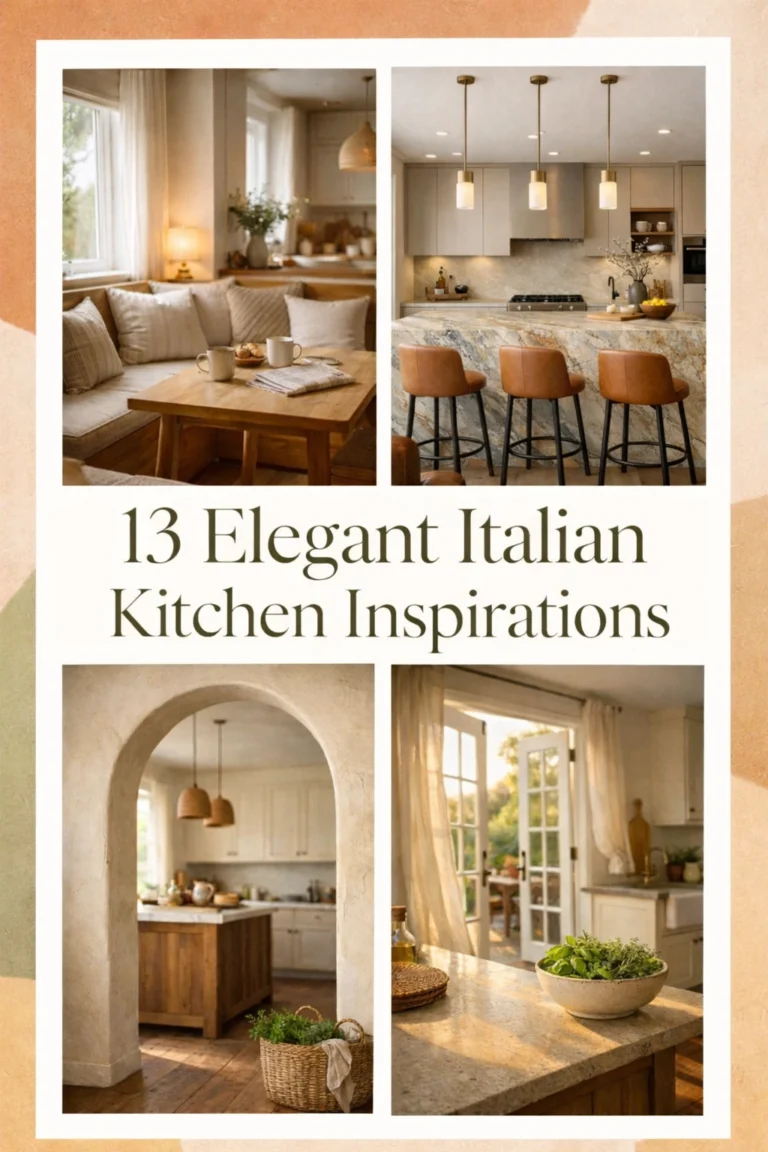

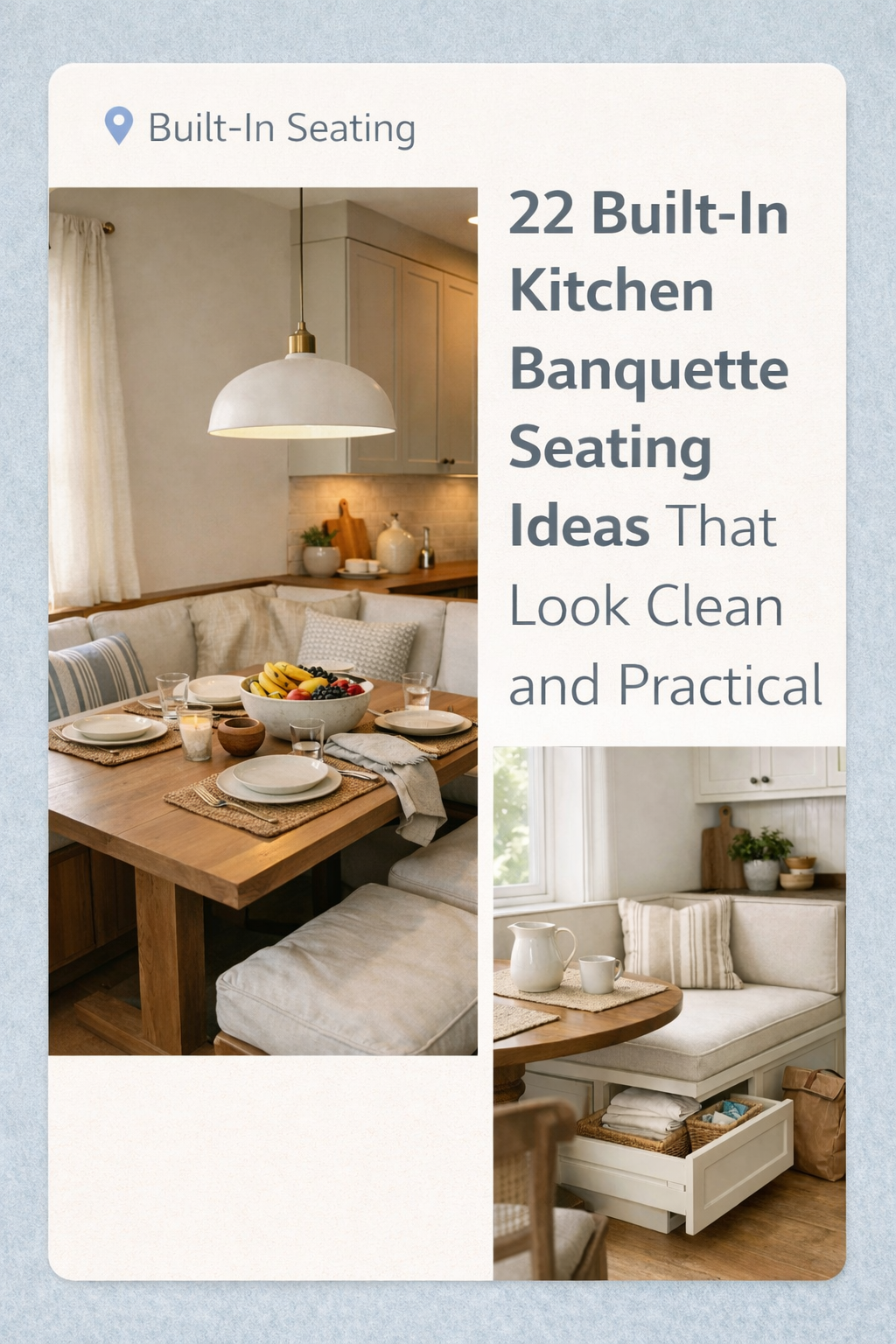
Kitchen banquette seating does more than fill an empty corner. It turns everyday meals into a more comfortable, more useful part of the kitchen. A good banquette can save floor space, add storage, soften a room full of hard surfaces, and make even a basic kitchen feel more custom.
It works in small homes, busy family kitchens, and open layouts that need better flow. The best setups look polished, but they also make real life easier. They give kids a place to land after school, create a cozy breakfast nook, and let more people sit around the table without crowding the room.
If you are planning a kitchen refresh, these kitchen banquette seating ideas will help you find a look that fits your space, your style, and the way you actually live.
How to Choose the Right Kitchen Banquette
Start with the layout
Before you fall in love with a look, measure the room. A banquette should make traffic flow better, not tighter. In many kitchens, the sweet spot is a table with enough clearance for people to slide in and out without bumping into the island, pantry, or appliances.
Corner spots, window walls, and dead zones near breakfast areas usually work best. If the kitchen is narrow, a slim bench can give you the seating you want without swallowing the walkway.
Match the setup to your daily routine
A family with young kids needs something very different from a couple who mostly uses the nook for coffee and casual meals. Upholstered seating feels softer and more inviting, but wood benches are easier to wipe down. Storage under the seat matters more in small homes. A round table helps with flow, while a rectangular table may seat more people.
Here is a quick guide to the most common options:
| Banquette Type | Best For | Main Benefit |
|---|---|---|
| Built-in corner | Small to mid-size kitchens | Saves space and feels custom |
| Freestanding bench | Renters or flexible layouts | Easy to move and update |
| Storage banquette | Busy family kitchens | Adds hidden function |
| Upholstered banquette | Cozy, polished kitchens | Adds comfort and softness |
| U-shaped banquette | Large households or hosting | Seats more people with ease |
1. Built-In Corner Banquette
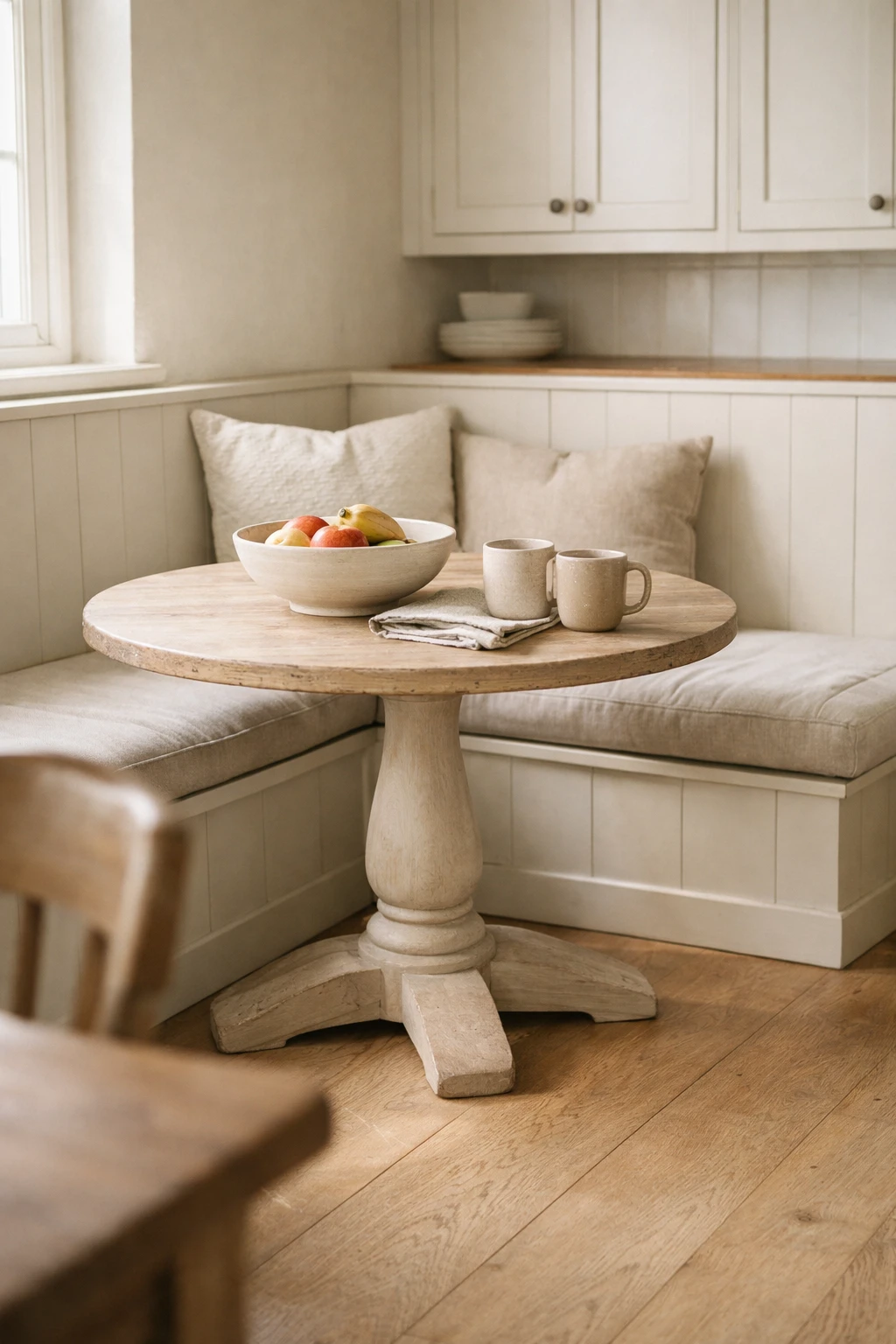
A built-in corner banquette is the classic choice for a reason. It uses a corner that often goes underused and turns it into one of the hardest-working spots in the kitchen. This setup fits especially well in breakfast nooks and eat-in kitchens where every inch matters.
Paint the base the same color as the cabinets for a seamless look. Add a tailored bench cushion and two or three pillows in washable fabrics so it feels finished but still practical. A pedestal table in the center keeps legroom open and makes the whole area easier to use.
| Image | Product | Description | Buy |
|---|---|---|---|
| Linon Chelsea Nook Corner | Farmhouse-style corner seating with hidden storage and a reversible L-shaped configuration. | Buy Now | |
| East West Dublin Table | Round dining table featuring drop leaves and a pedestal base for flexible seating. | Buy Now | |
| ROFIELTY Bench Cushion | Custom-size cushion designed for benches, window seats, breakfast nooks, and banquettes. | Buy Now |


2. Window-Side Breakfast Nook
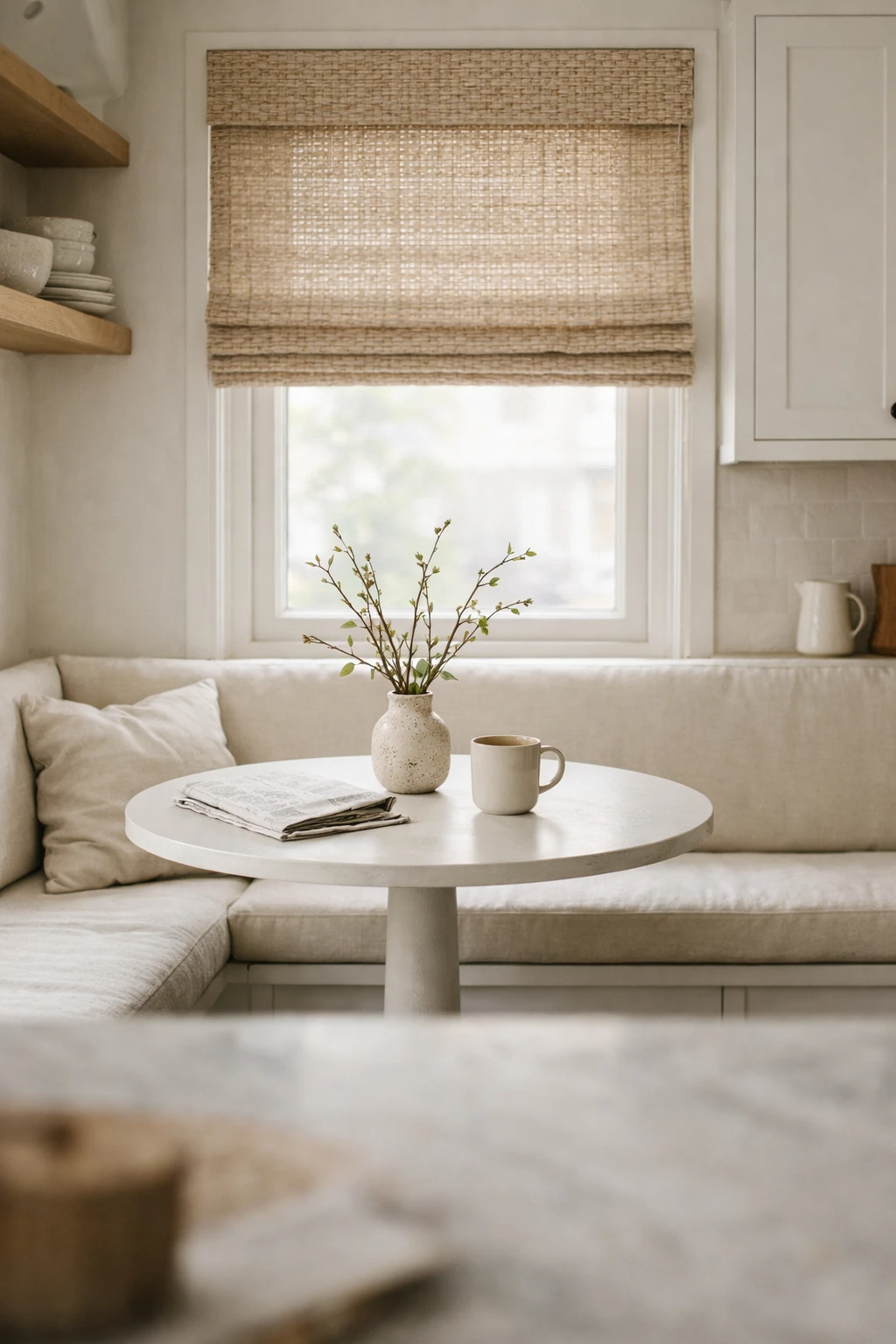
If your kitchen has a window, consider building the banquette around it. Natural light makes the seating area feel warm and inviting, instantly creating that cozy breakfast nook atmosphere people love.
Keep the palette soft with warm whites, oat tones, pale wood, or muted sage. A simple Roman shade or woven shade frames the window without making the nook feel heavy. This is a smart setup for slow mornings, coffee breaks, and casual family meals.
| Image | Product | Description | Buy |
|---|---|---|---|
| Chicology Belgian Cordless Roller Shade | Light-filtering cordless roller shade offering privacy with a clean, woven texture. | Buy on Amazon | |
| International Concepts Dining Table | Unfinished 36-inch wood dining table, ready to stain or paint to match any decor. | Buy on Amazon | |
| MIULEE Farmhouse Pillow Covers | Neutral-toned decorative pillowcases with a farmhouse style for sofas or beds. | Buy on Amazon |


3. Storage Bench Banquette
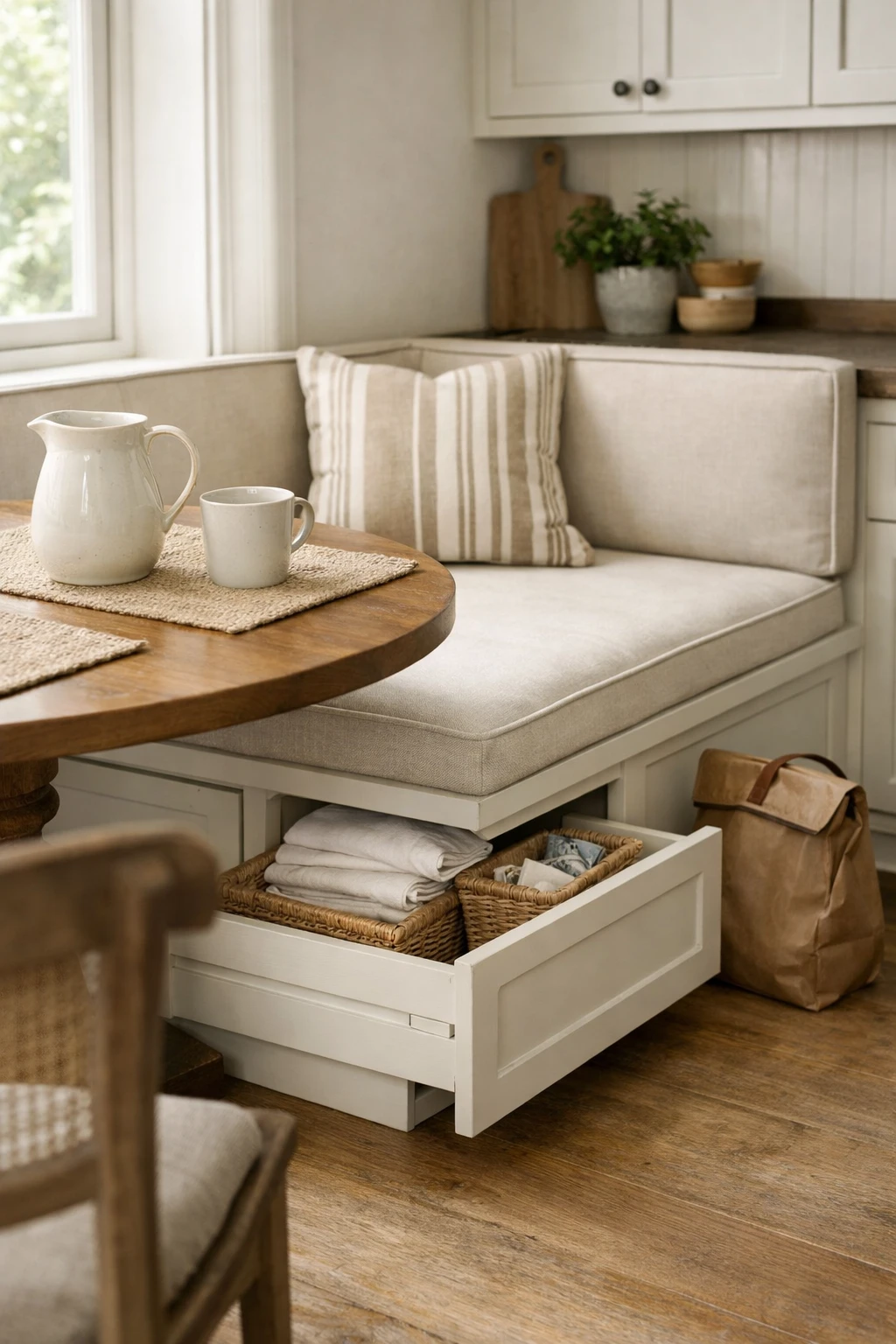
A kitchen banquette with storage earns its keep. Lift-top seats or deep drawers under the bench can hold table linens, small appliances, seasonal serveware, lunch boxes, or board games. That is a big win in kitchens short on cabinets.
This idea works best when the outside still looks clean and tailored. Avoid bulky fronts or oversized hardware. Flat panel drawers or hidden finger pulls help the banquette blend in. In a small house, this one move can solve both seating and storage without adding clutter.
| Image | Product | Description | Buy |
|---|---|---|---|
| Riverbay Backless Bench | Backless natural wood breakfast bench designed for compact dining and kitchen seating spaces. | Buy Now | |
| Honey Can Do Nesting Baskets | Set of three woven storage baskets ideal for organizing shelves, closets, and home essentials. | Buy Now | |
| MIULEE Corduroy Pillow Covers | Striped corduroy decorative pillow covers with soft texture for modern farmhouse decor styling. | Buy Now |


4. Slim Wall-Hugging Banquette for Small Kitchens
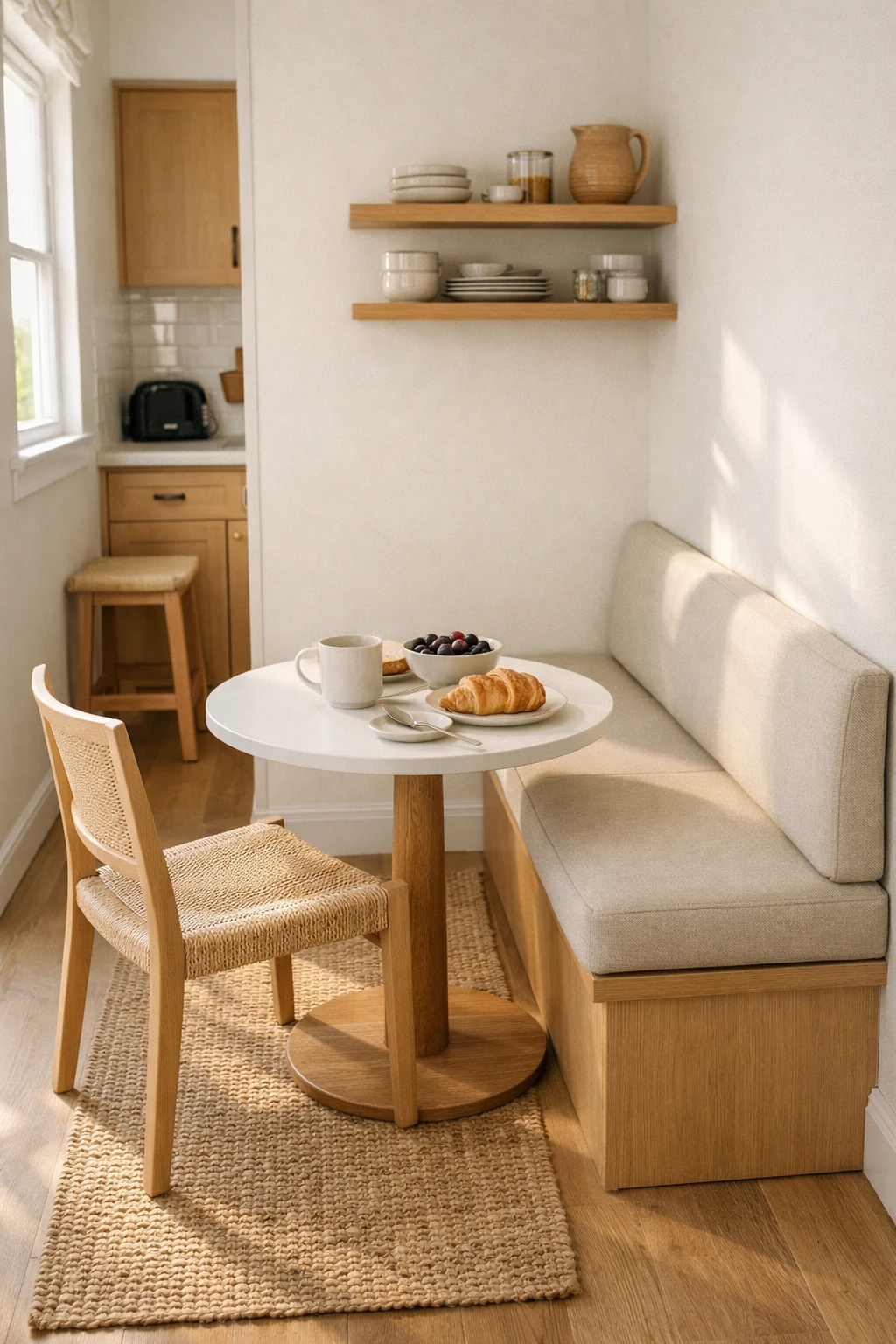
Not every kitchen can handle a deep built-in. A slim wall-hugging banquette gives you the same cozy look without eating up valuable floor space. Keep the seat depth tight and pair it with a smaller round or oval table to help the room breathe.
This style works well in galley kitchens, apartments, and narrow breakfast areas. Choose a bench with a simple back or no back at all if the room feels tight. Add one long cushion instead of several loose ones to keep the look tidy and easy to maintain.
5. U-Shaped Banquette for Big Families
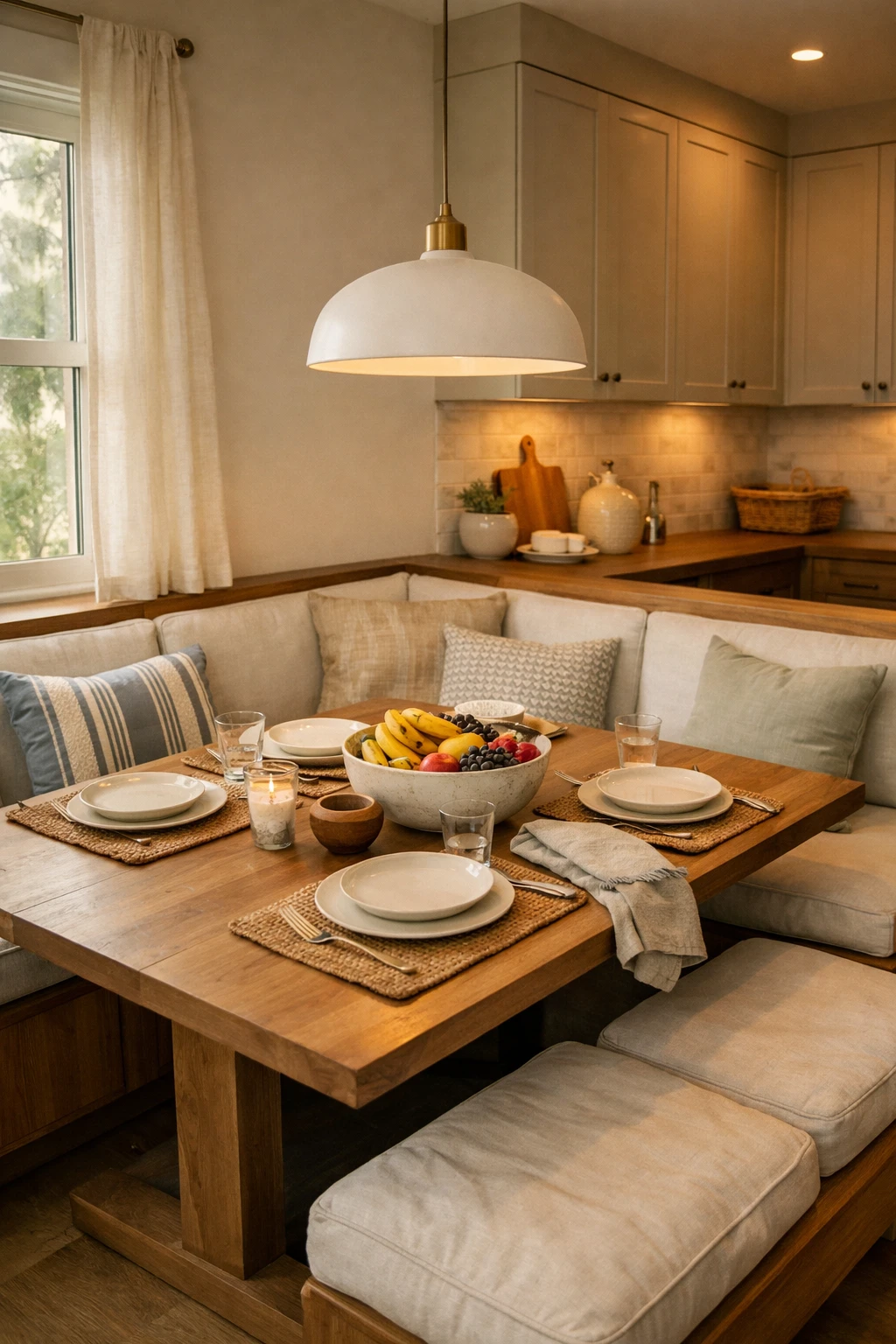
If your kitchen is the main gathering space, a U-shaped banquette can do a lot. It wraps the table, seats a crowd, and creates a natural zone for meals, homework, and weekend visits with friends. It is one of the best kitchen seating ideas for families who use the table constantly.
Use this style only if the room has enough square footage. A cramped U-shape feels boxed in fast. In a larger kitchen, though, it feels welcoming and efficient. Keep the upholstery simple and let lighting or pillows add personality.
6. Freestanding Bench with a Round Pedestal Table
A freestanding bench gives you the banquette look without the commitment of a full built-in. That makes it a strong pick for renters or anyone who likes to change things up over time. Pair it with a round pedestal table to keep the setup easy to move around.
This mix feels relaxed and less formal than a built-in nook. It also makes cleaning easier since you can shift pieces when needed. Use a bench on one side and a couple of dining chairs on the other for a balanced, flexible look.
7. Mixed Chair-and-Bench Setup
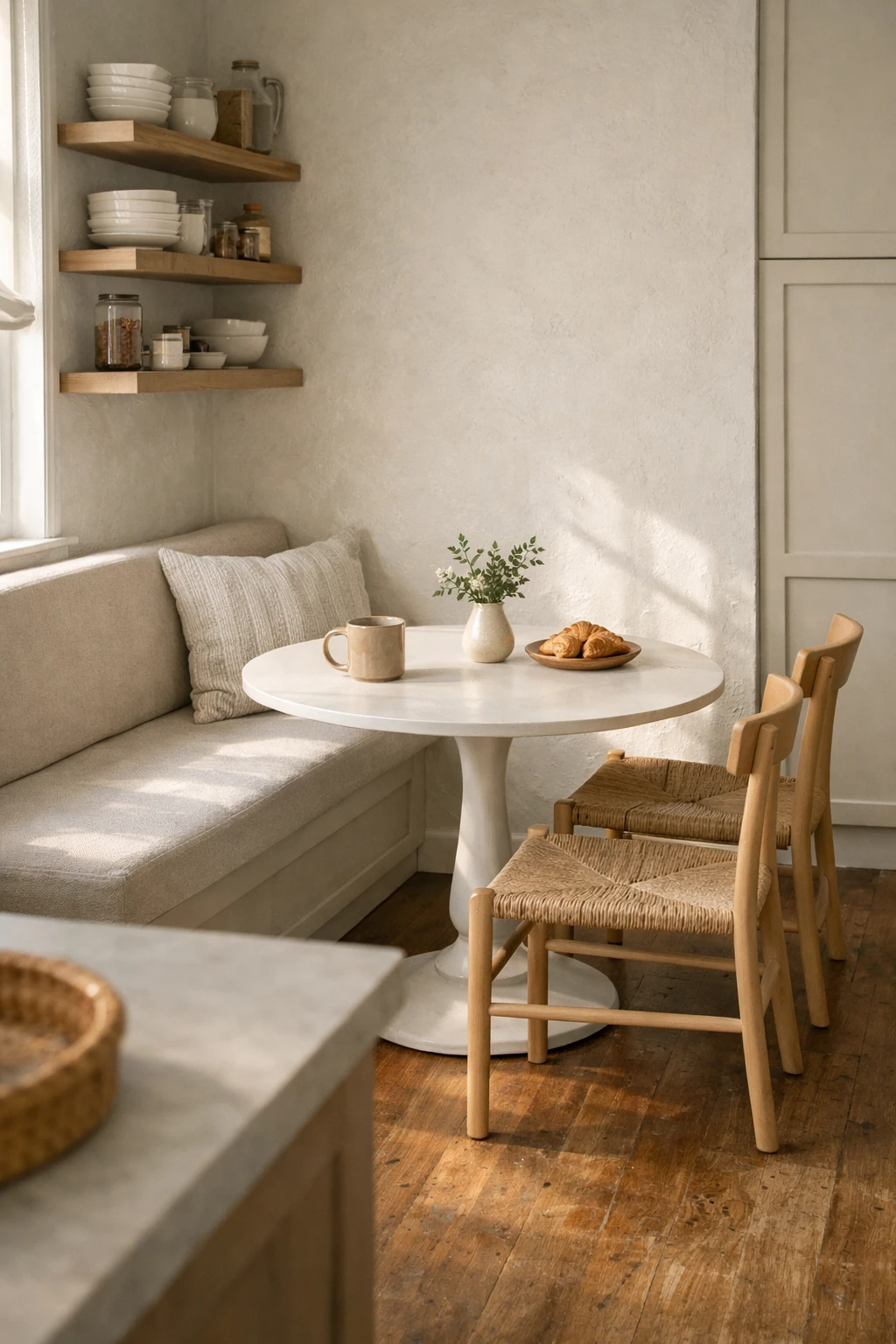
One of the easiest ways to make banquette seating feel more natural is to avoid matching everything too closely. A bench on one side and chairs on the other gives the kitchen a layered, collected look that feels warmer than a full matching set.
This setup also solves a practical problem. It keeps the space from feeling too heavy, which matters in smaller kitchens. Try a wood bench with cane or spindle-back chairs for a relaxed look, or pair an upholstered banquette with simple black chairs for contrast.
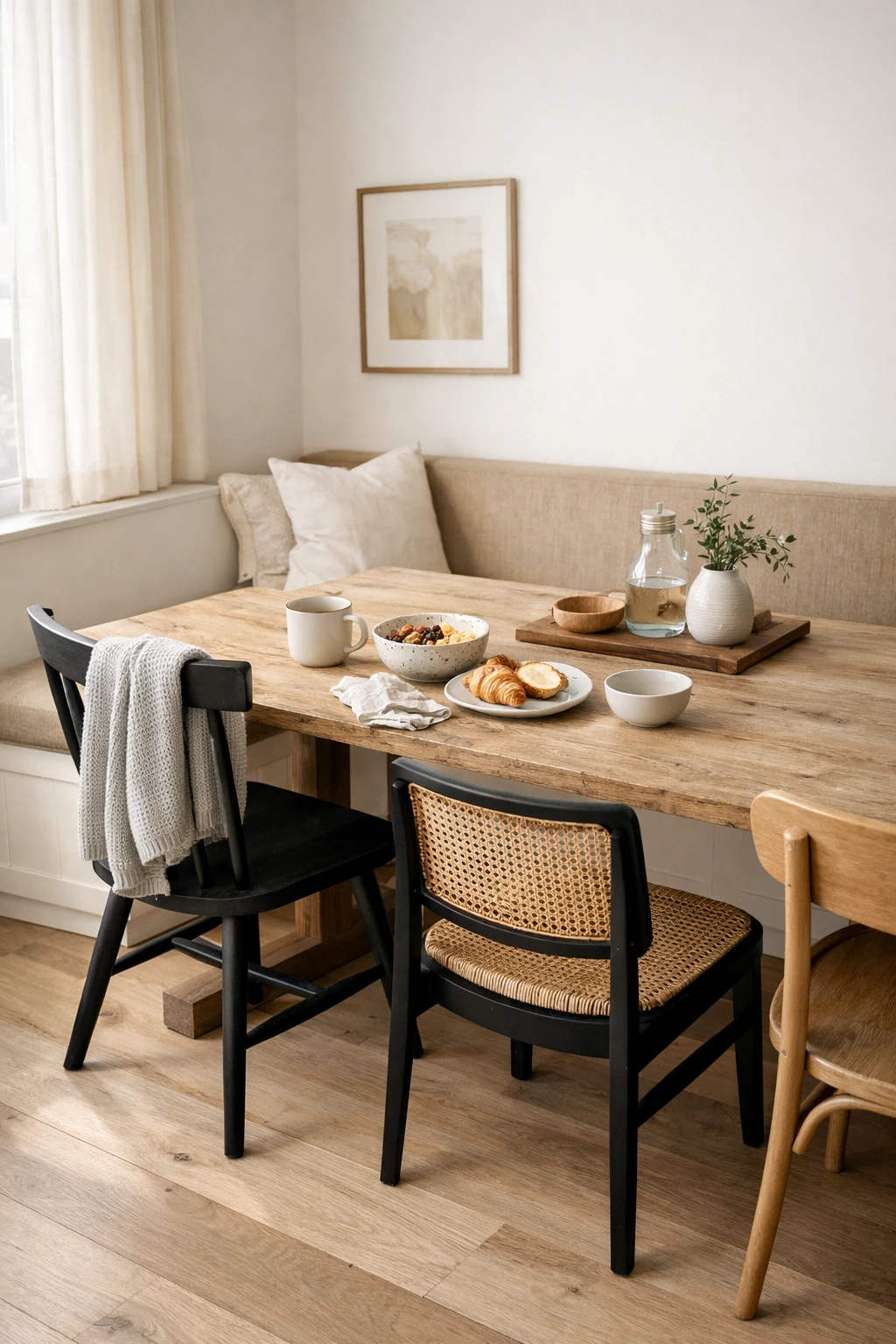
8. Upholstered Banquette in Performance Fabric
If comfort matters most, go upholstered. A padded seat and back instantly make the kitchen feel more inviting, which is why this idea works so well in homes where people linger at the table. It is great for long breakfasts, casual dinners, or kids doing homework while dinner cooks.
The key is fabric choice. Use performance fabric or another easy-clean option that can handle spills, crumbs, and daily use. Soft stripes, subtle checks, and solid neutrals all work well here. You want comfort, but you also want something that will not look tired in six months.
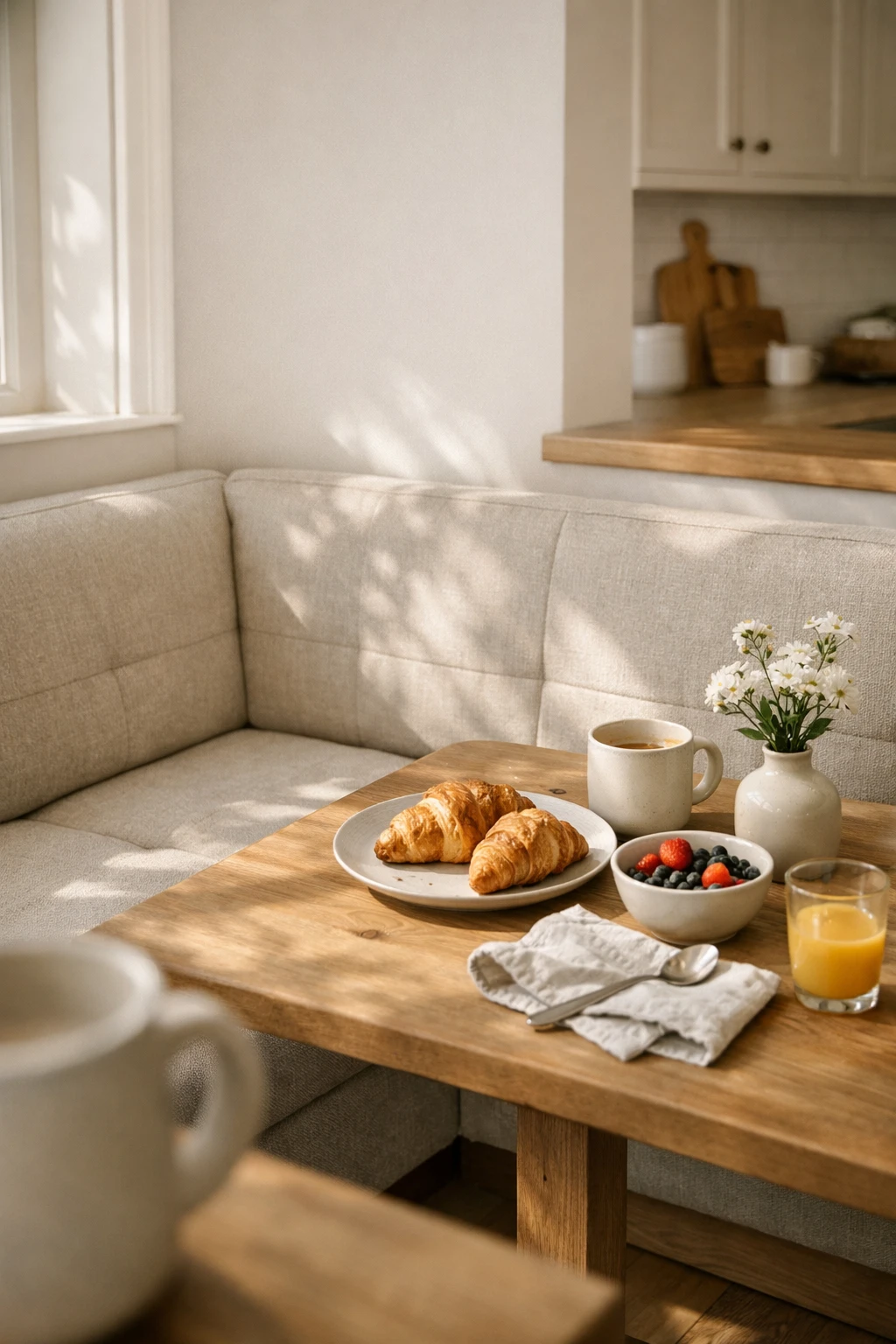
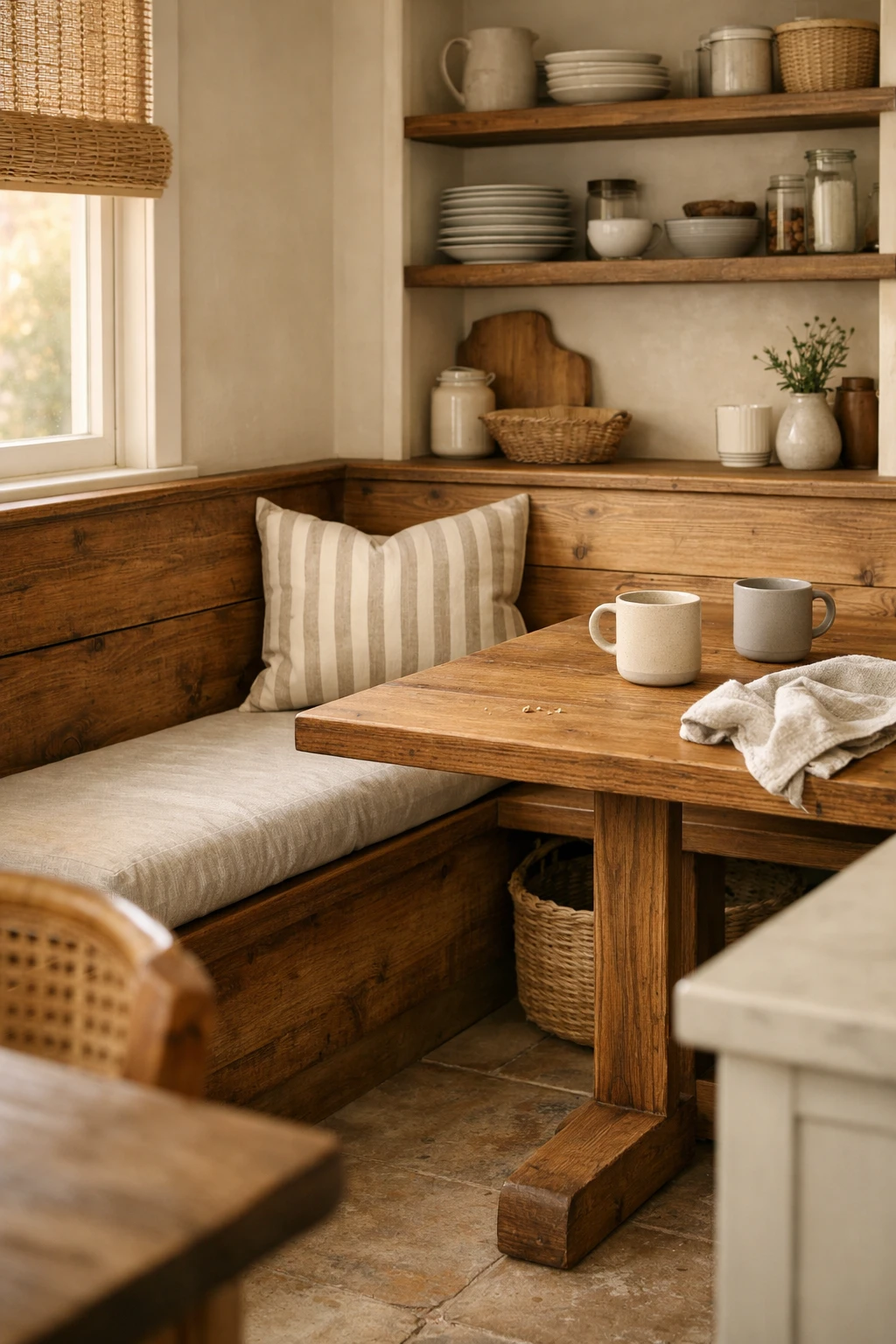
9. Wood Banquette for Warm Farmhouse Style
A wood banquette brings warmth into a kitchen fast. It works especially well in farmhouse, cottage, and traditional spaces where natural materials already play a big role. White oak, pine, and stained wood all add texture that keeps the kitchen from feeling flat.
To keep it from looking too rustic, balance the wood with cleaner lines elsewhere. A simple table, soft seat cushion, and one or two understated pillows usually do the job. In a white kitchen, a wood banquette can be the element that makes the room feel grounded.
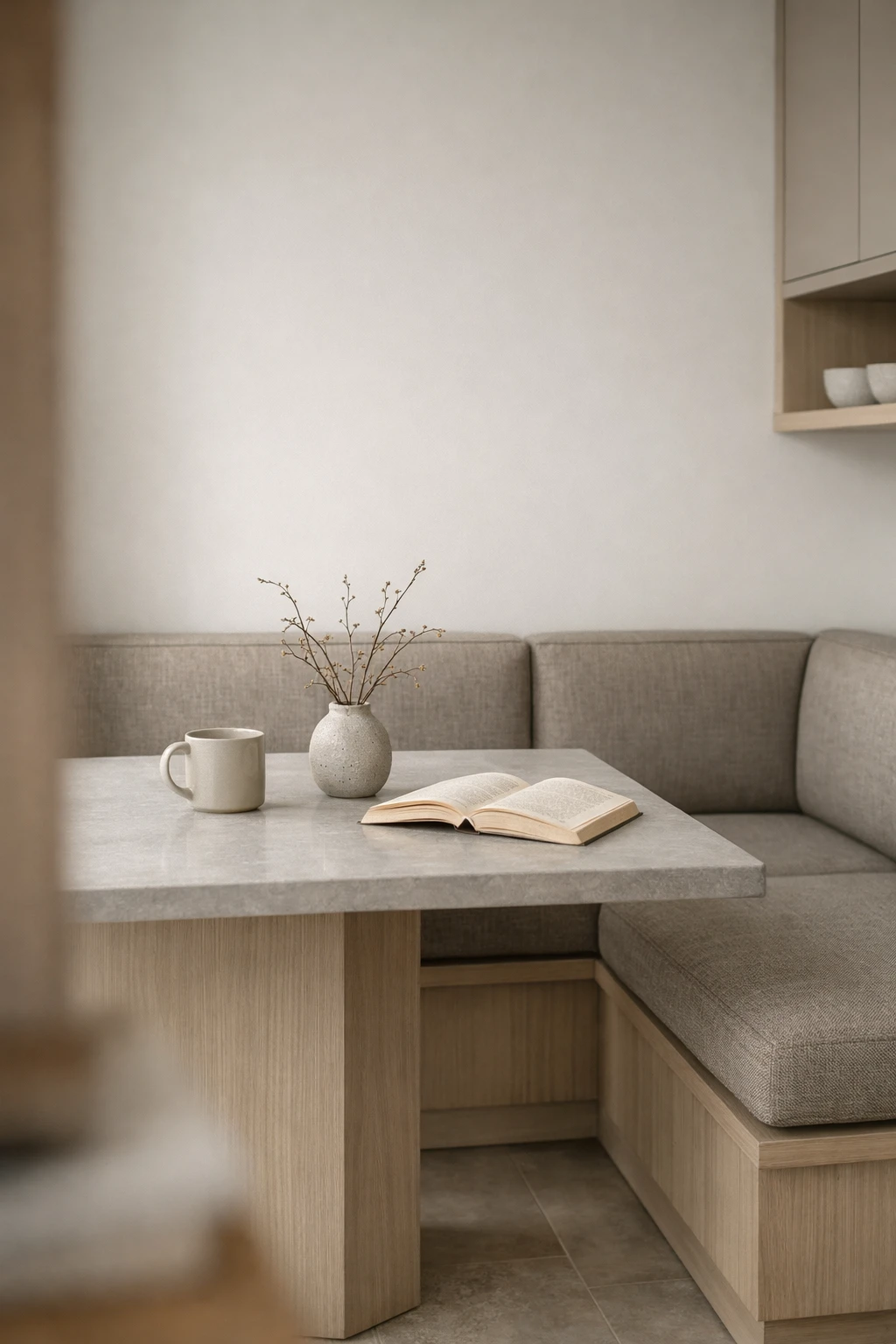
10. Modern Banquette with Clean Lines
For a modern kitchen, keep the banquette structured and simple. Think flat-front panels, crisp edges, low-profile cushions, and a restrained color palette. This style works best when it looks intentional, not overdecorated.
Try warm gray, greige, mushroom, charcoal, or soft black for the base. Add a slim table with a stone or wood top and keep accessories light. A single pendant or a pair of minimal sconces can finish the nook without crowding it. This look feels polished because it does not try too hard.
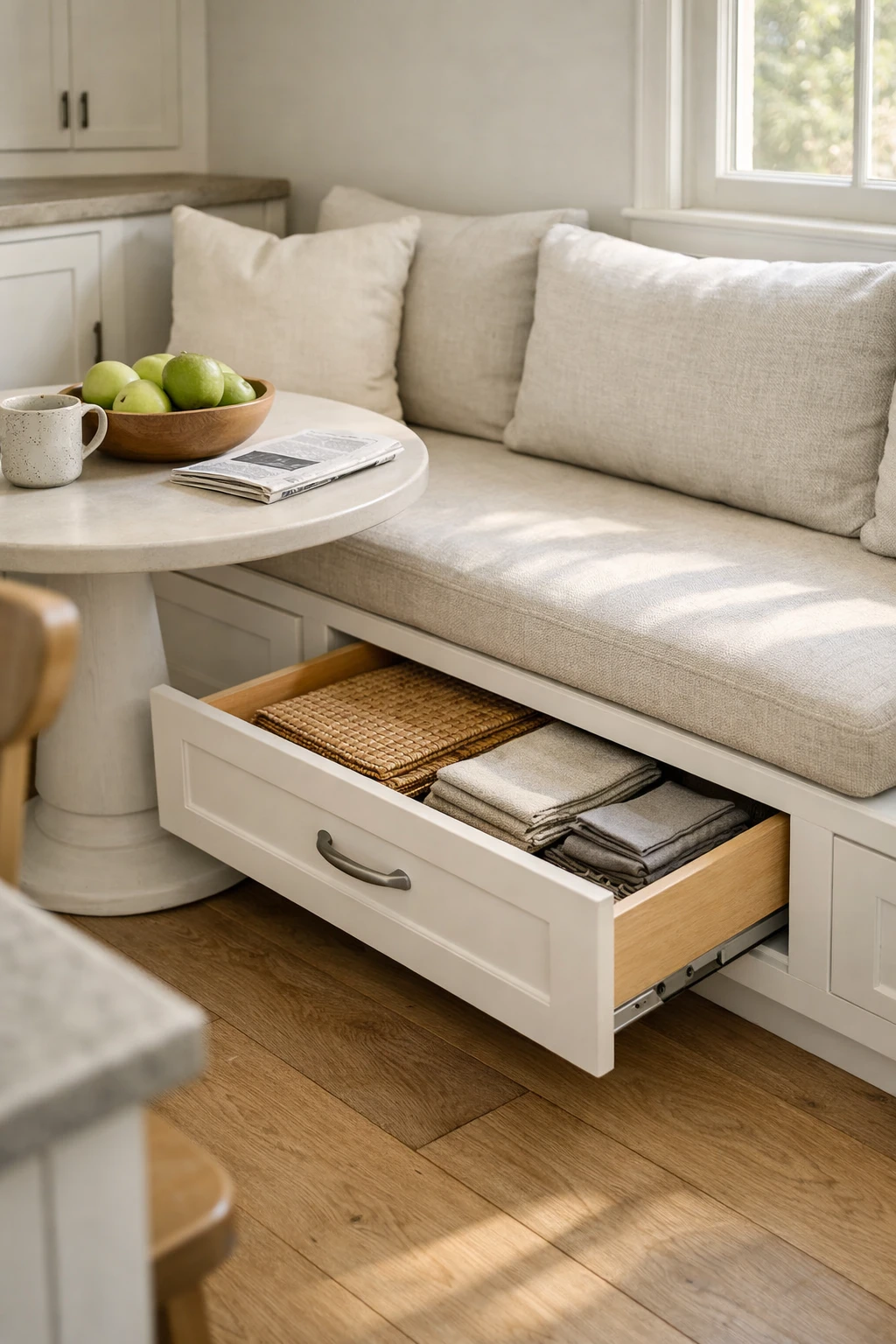
11. Banquette with Drawers Under the Seat
Drawers are often better than lift-up storage because they are easier to use day to day. You do not have to clear the seat to open them, and that matters in a busy kitchen. If you store lunch containers, placemats, or kid supplies there, drawers make life simpler.
This is one of the most practical built-in banquette ideas for families. Use deep drawers on one side and keep the seat cushions tailored so the whole unit still looks like furniture, not extra cabinetry dropped into the corner.
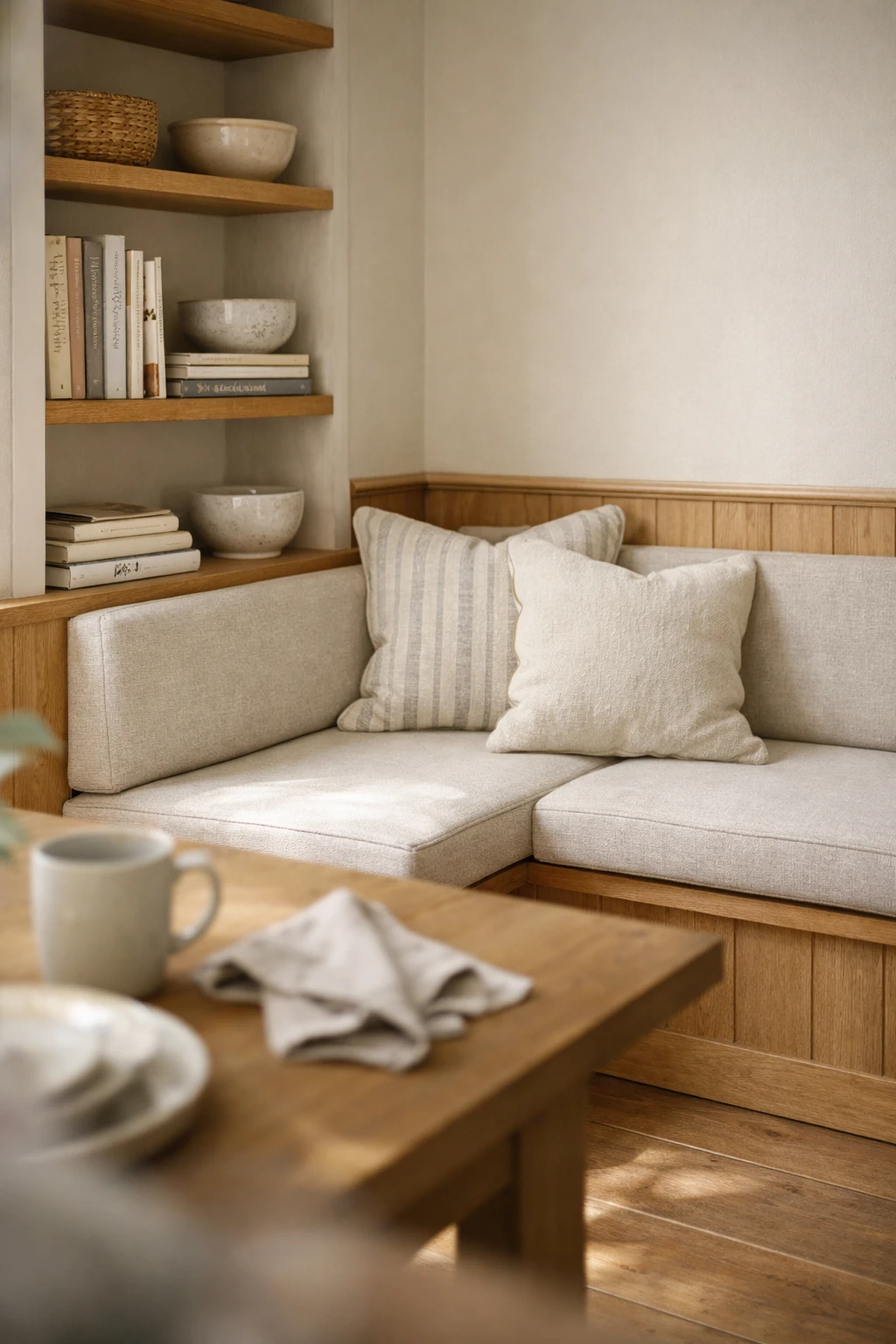
12. L-Shaped Banquette with Open Shelving
An L-shaped banquette already makes sense in a corner, but adding open shelving at one end can make it even more useful. Use the shelves for cookbooks, baskets, or a few everyday serving pieces that add character without creating visual noise.
This idea works best in kitchens that need storage and styling at the same time. Just do not overload the shelves. A banquette should feel calm and comfortable, not like a display wall. Keep the mix practical and light so the eye can rest.
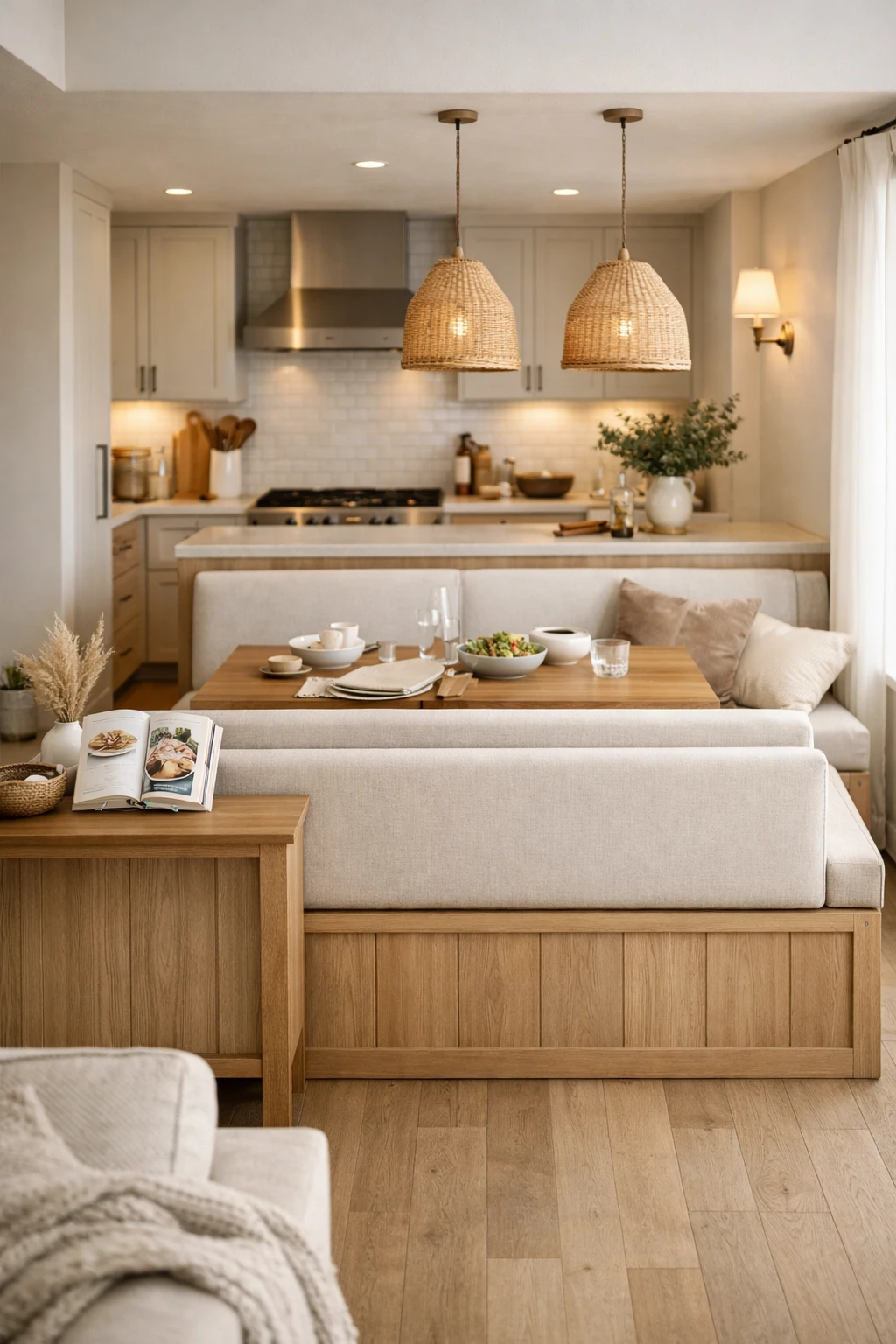
13. Double-Sided Banquette for Open-Concept Kitchens
In an open kitchen, a double-sided banquette can help define the dining area without building a full wall. One side faces the table, and the back side can help separate the kitchen from the living space. It feels built-in, but it also improves how the whole room works.
This idea fits larger homes and open-plan spaces best. Use durable upholstery and keep the back profile clean since it will be visible from more than one angle. It is a smart way to create a room-within-a-room feel without closing anything off.
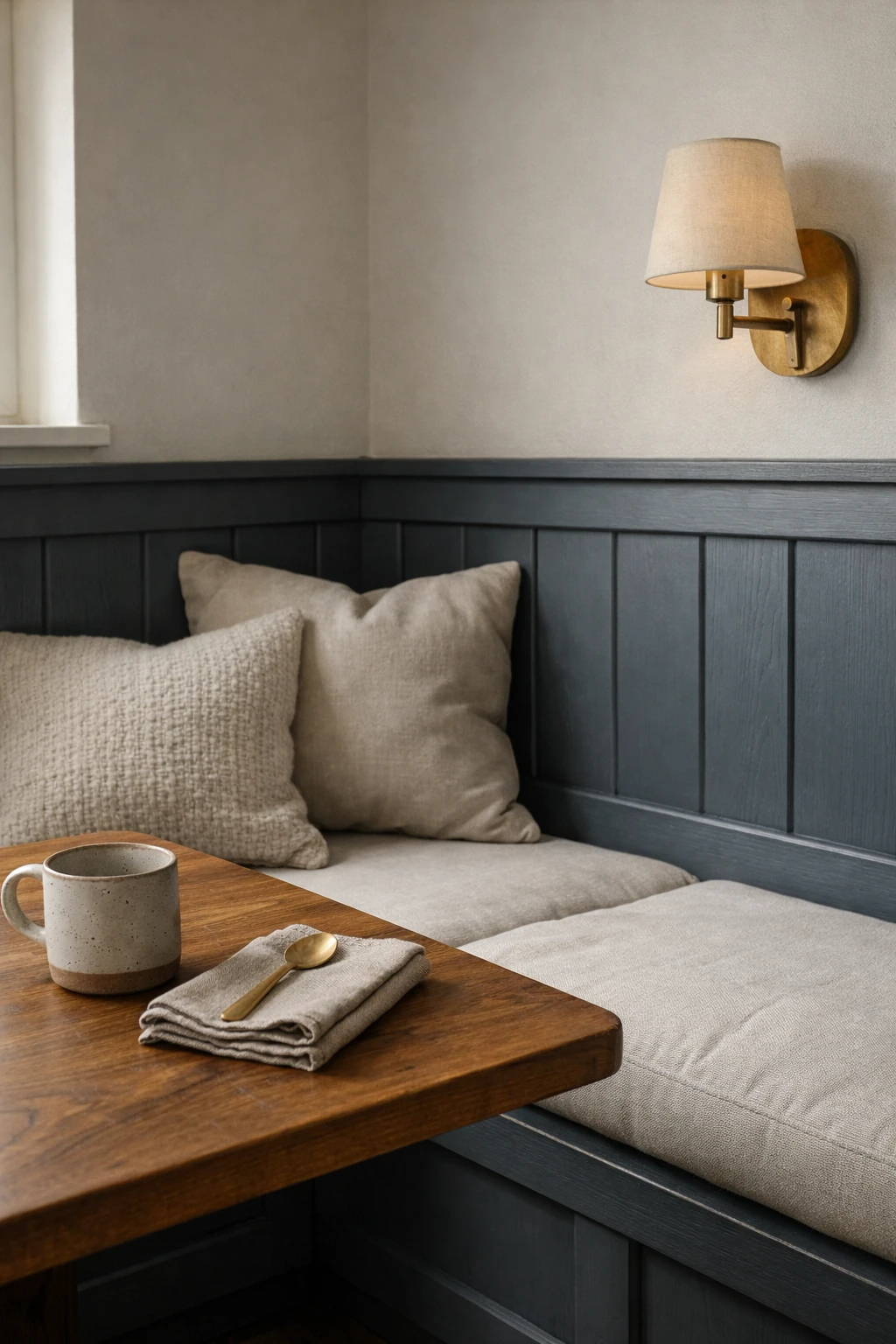
14. Moody Banquette with Dark Paint or Stain
A dark banquette can make a kitchen feel richer and more grounded. Deep olive, smoky blue, espresso, and charcoal all work well when the rest of the room has enough light to support them. This look is great for homeowners who want something more dramatic than the usual all-white nook.
Balance the darker base with lighter cushions, wood accents, or brass lighting so the space still feels warm. In a kitchen with white walls or pale countertops, a moody banquette becomes a strong anchor and adds depth fast.
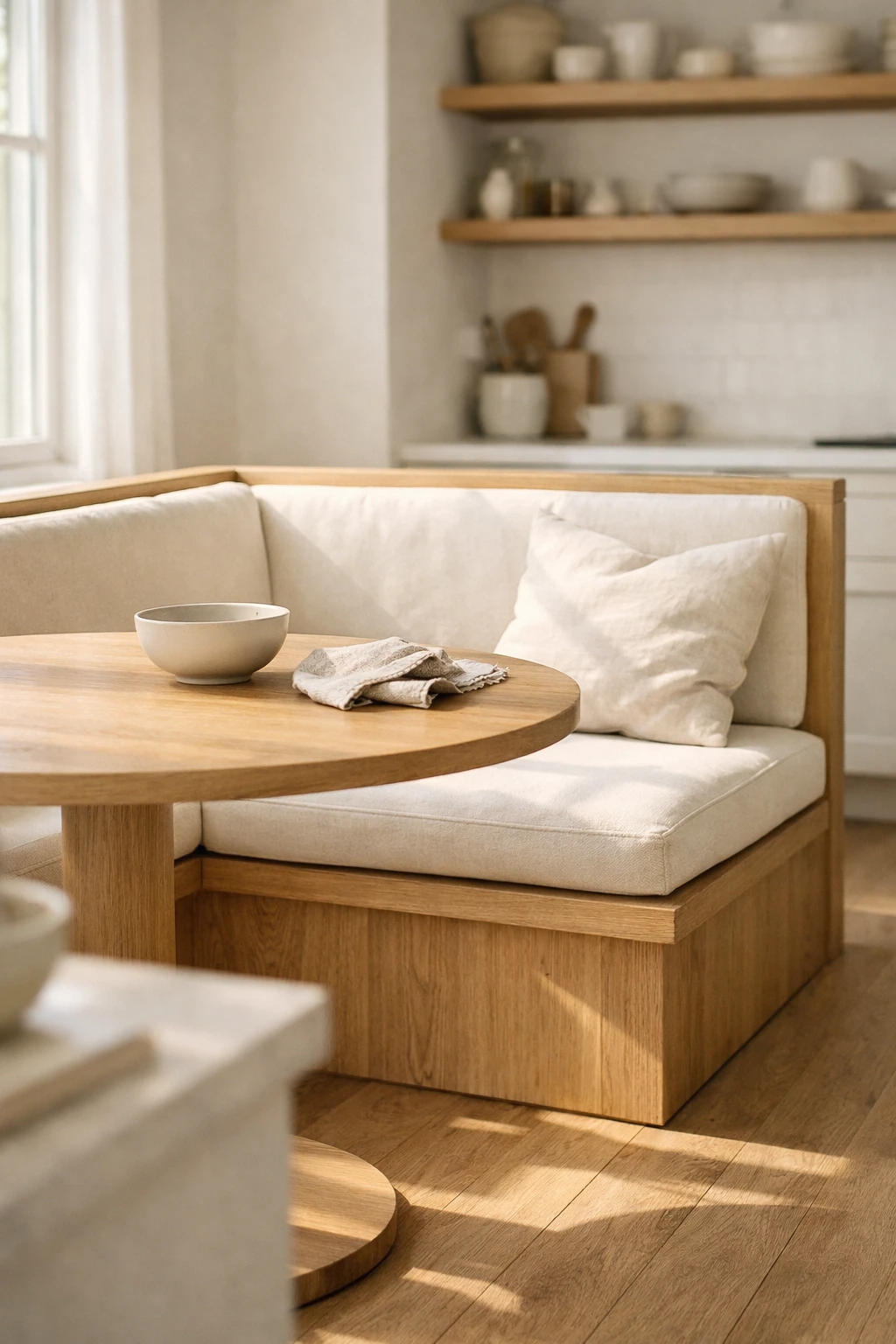
15. Light and Airy White Oak Banquette
If you want a fresh look that still feels warm, white oak is hard to beat. It has enough grain to add texture, but it stays soft and easy on the eye. That makes it a good fit for modern organic, Scandinavian, coastal, and updated traditional kitchens.
Pair white oak with off-white cushions, a creamy wall color, and simple ceramic accents. This combination feels bright without looking cold. It also photographs beautifully, which is one reason it performs so well in worthy kitchen designs.
16. Bistro-Inspired Banquette
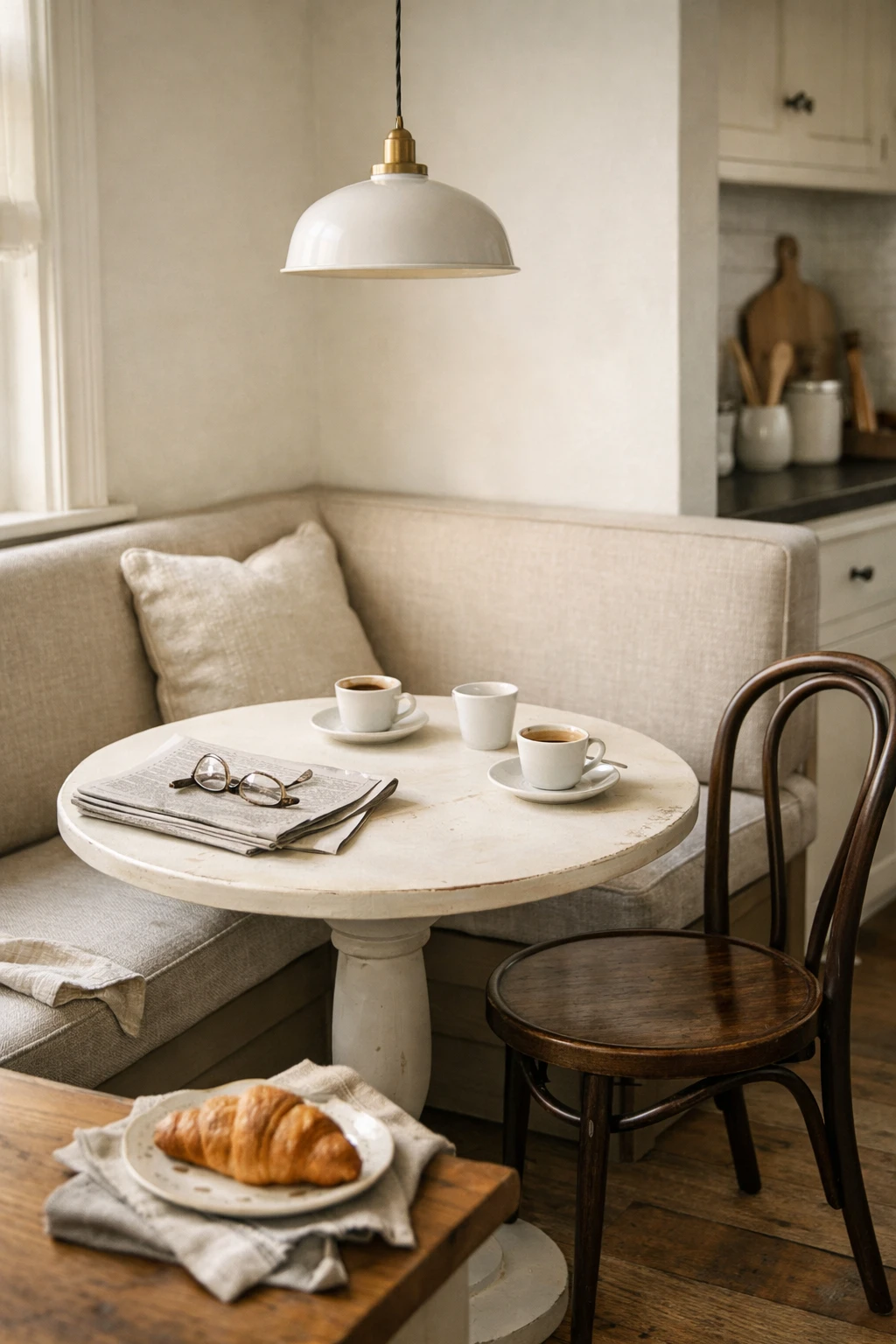
A bistro-style banquette brings a little charm to the kitchen without feeling overdone. Think a tighter footprint, tufted or lightly padded seating, a small round table, and maybe a cafe-style pendant overhead. It is a great fit for apartments, city homes, and compact eat-in kitchens.
You do not need to copy a restaurant look exactly. The goal is to capture that intimate, casual feel. Black bentwood chairs, checked cushions, or a marble-look tabletop can hint at the style while still feeling right at home.
17. Coastal Banquette with Relaxed Textures
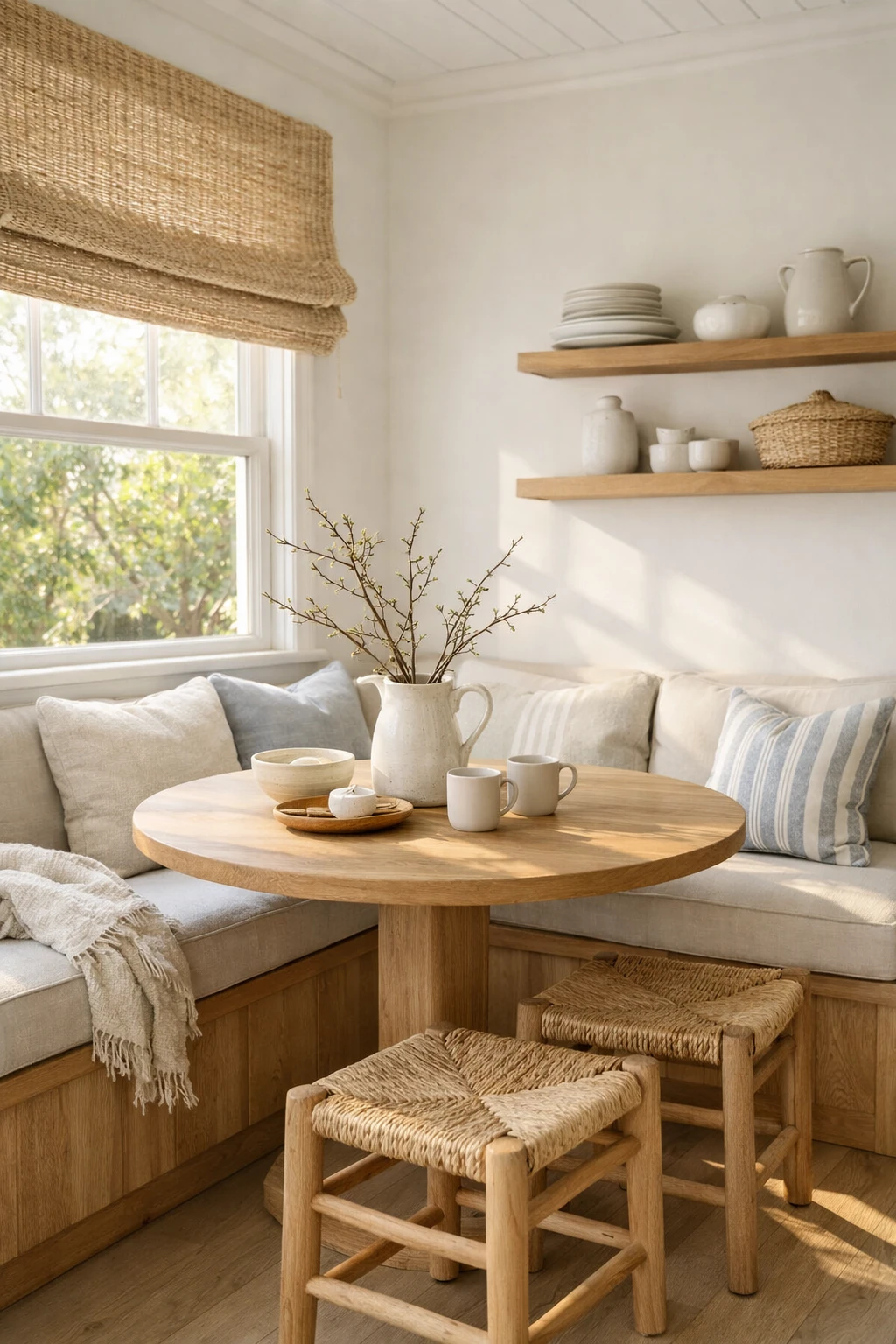
A coastal banquette looks best when it feels easy, not theme-heavy. Use pale wood, soft blue-gray, warm white, or sandy beige. Bring in relaxed textures like woven shades, linen cushions, and subtle stripes to create a light, breezy mood.
This style works especially well in kitchens with lots of daylight. Skip obvious beach decor and focus on texture and tone instead. A bowl of fruit, a ceramic lamp, and a natural fiber rug can do more for the look than shells or signs ever will.
18. Colorful Banquette with Patterned Cushions
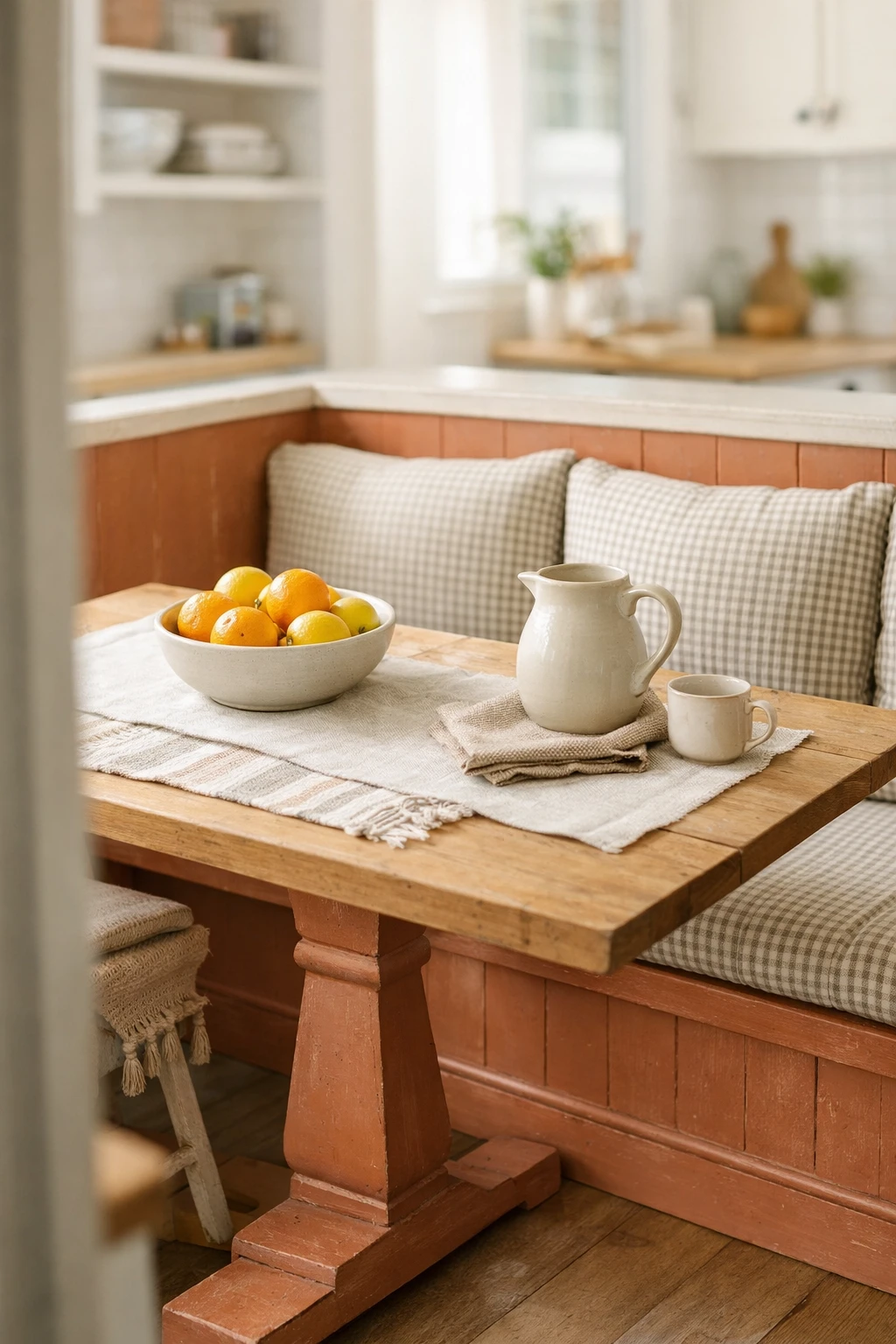
If the kitchen feels plain, a colorful banquette can wake it up. This is one of the easiest ways to bring in personality without repainting the whole room. A bench base in muted green, dusty blue, or terracotta can add depth, while patterned cushions soften the look.
Keep the pattern controlled so the nook still feels restful. Stripes, checks, and small florals usually work better than loud prints. In a neutral kitchen, this idea gives you a focal point that feels cheerful without turning chaotic.
19. Banquette with Oversized Pendant Lighting
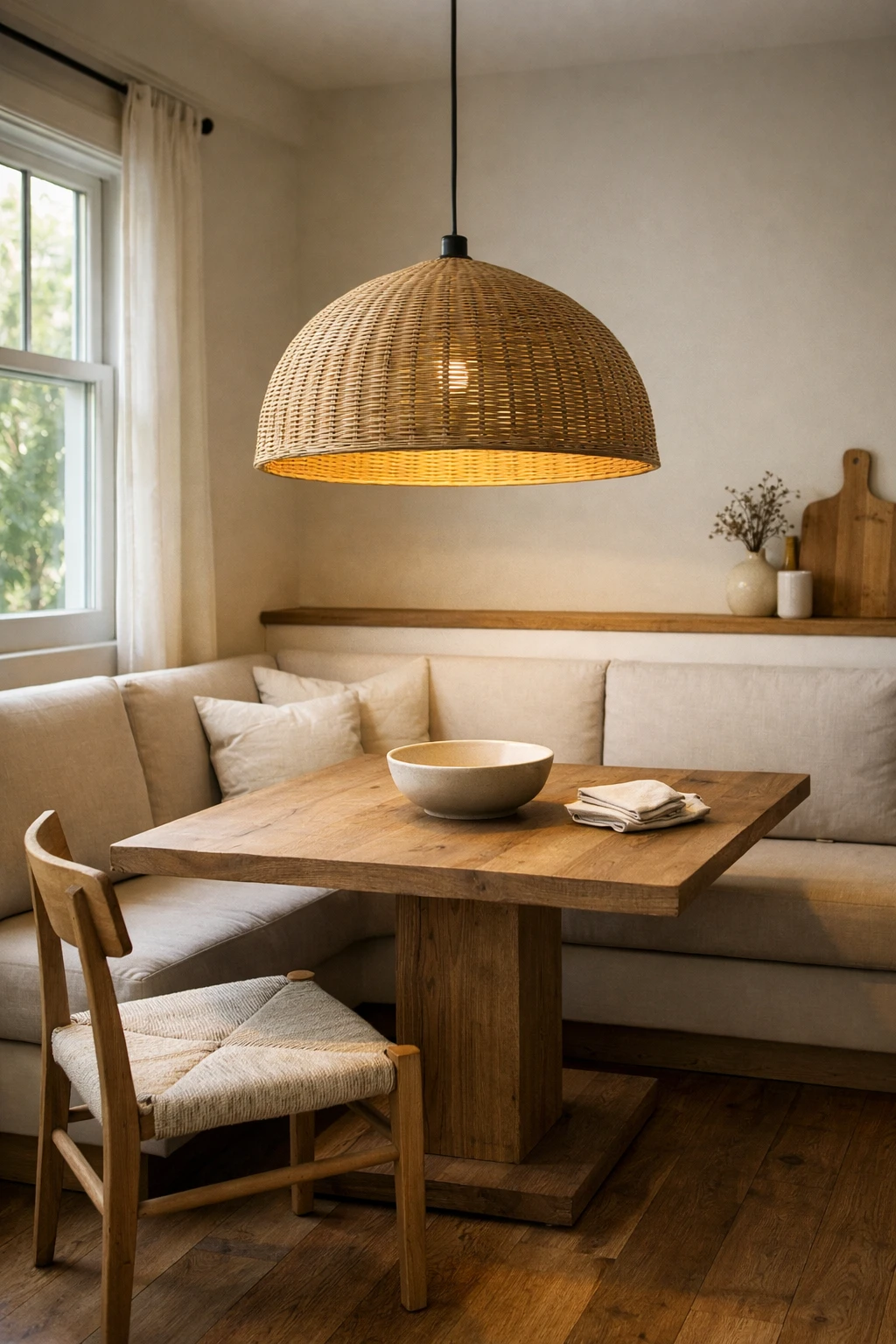
Lighting can make an average banquette feel intentional. An oversized pendant above the table pulls the nook together and gives the seating area a stronger identity inside the kitchen. This matters a lot in open spaces where the banquette needs to hold its own.
Choose a fixture that fits the scale of the table and bench. Too small, and it disappears. Too large, and it overwhelms the nook. Woven pendants, metal shades, and milk glass fixtures all work, depending on the style of the room.
20. Kid-Friendly Easy-Clean Banquette
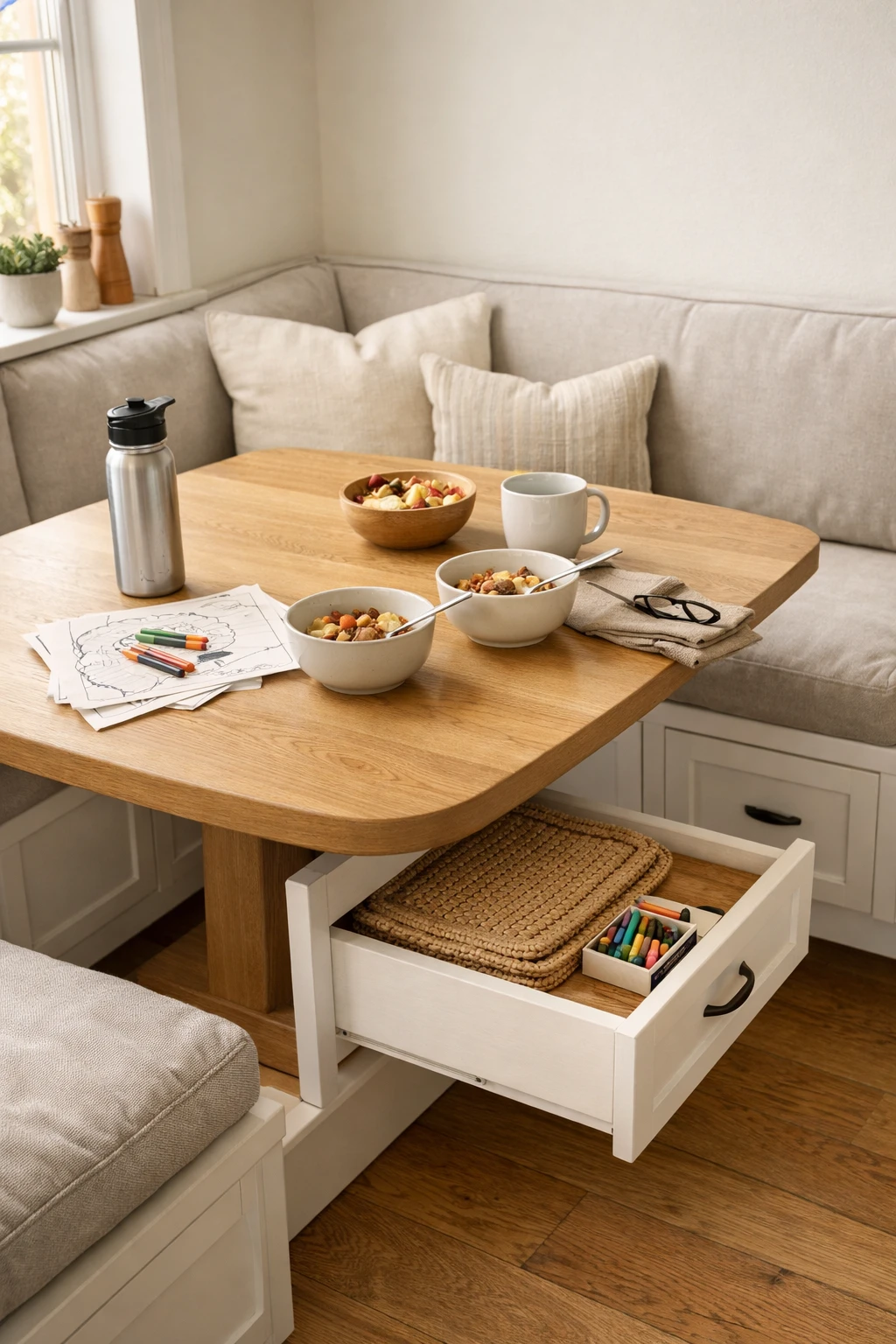
A family-friendly banquette should still look good, but the real test is whether it can survive daily life. Choose wipeable fabrics, rounded table edges, and darker or patterned cushions that hide small messes better than bright solids.
This setup is ideal for homes where the kitchen table does everything. Breakfast, art projects, school papers, snacks, and late-night leftovers all happen here. Build in storage for crayons, napkins, and chargers, and the space becomes much easier to keep under control.
21. Hidden Corner Banquette in an Awkward Layout
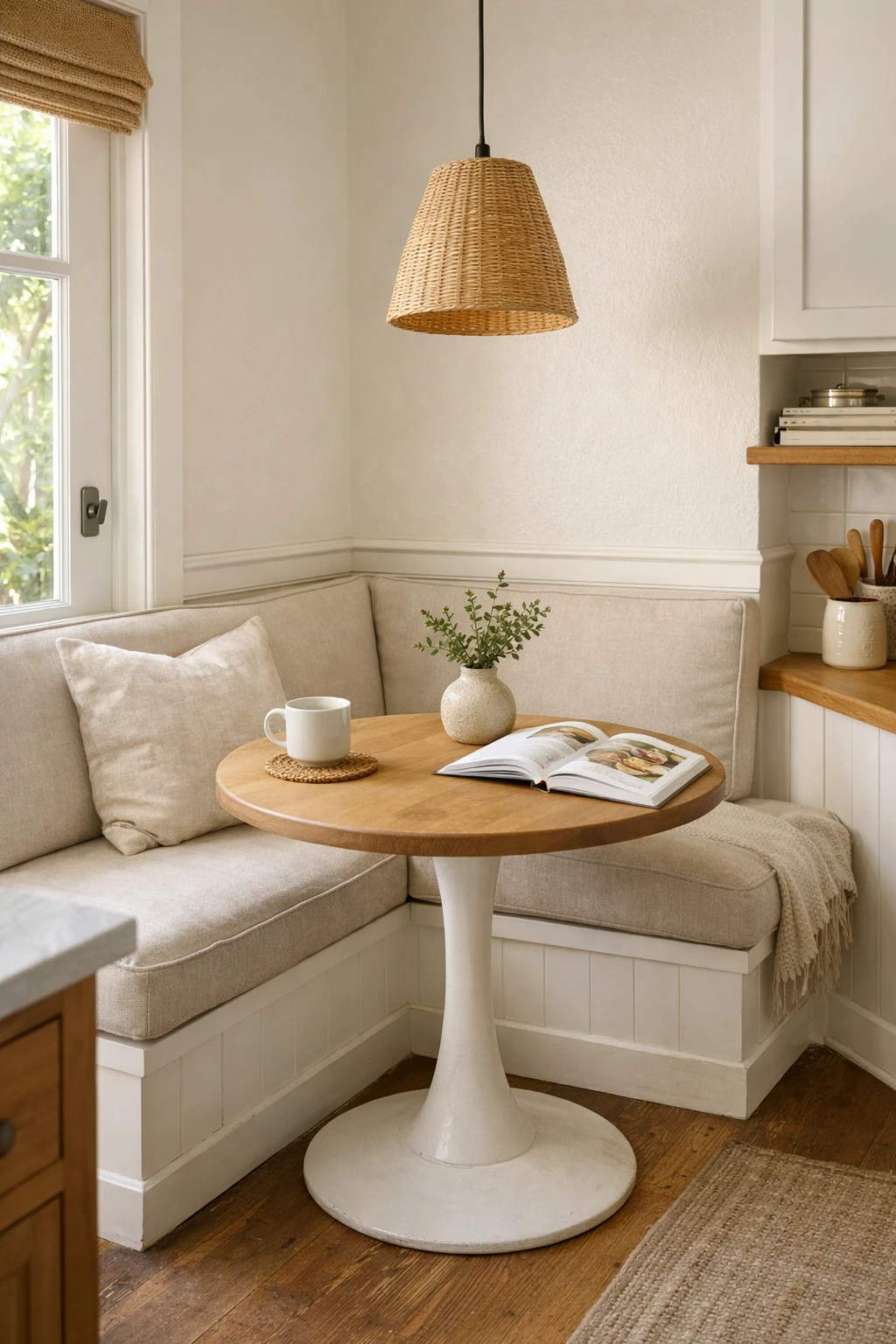
Some kitchens have strange corners, unused bump-outs, or walls that seem too small for anything useful. A compact banquette can turn that awkward area into a hardworking nook. This is one of the smartest small kitchen seating ideas because it makes wasted space feel purposeful.
In older homes, this can be the difference between a kitchen that feels patched together and one that feels thoughtful. Use a custom cushion, a small pedestal table, and one sconce or pendant to make the nook feel intentional from the start.
22. Custom-Look DIY Style Banquette
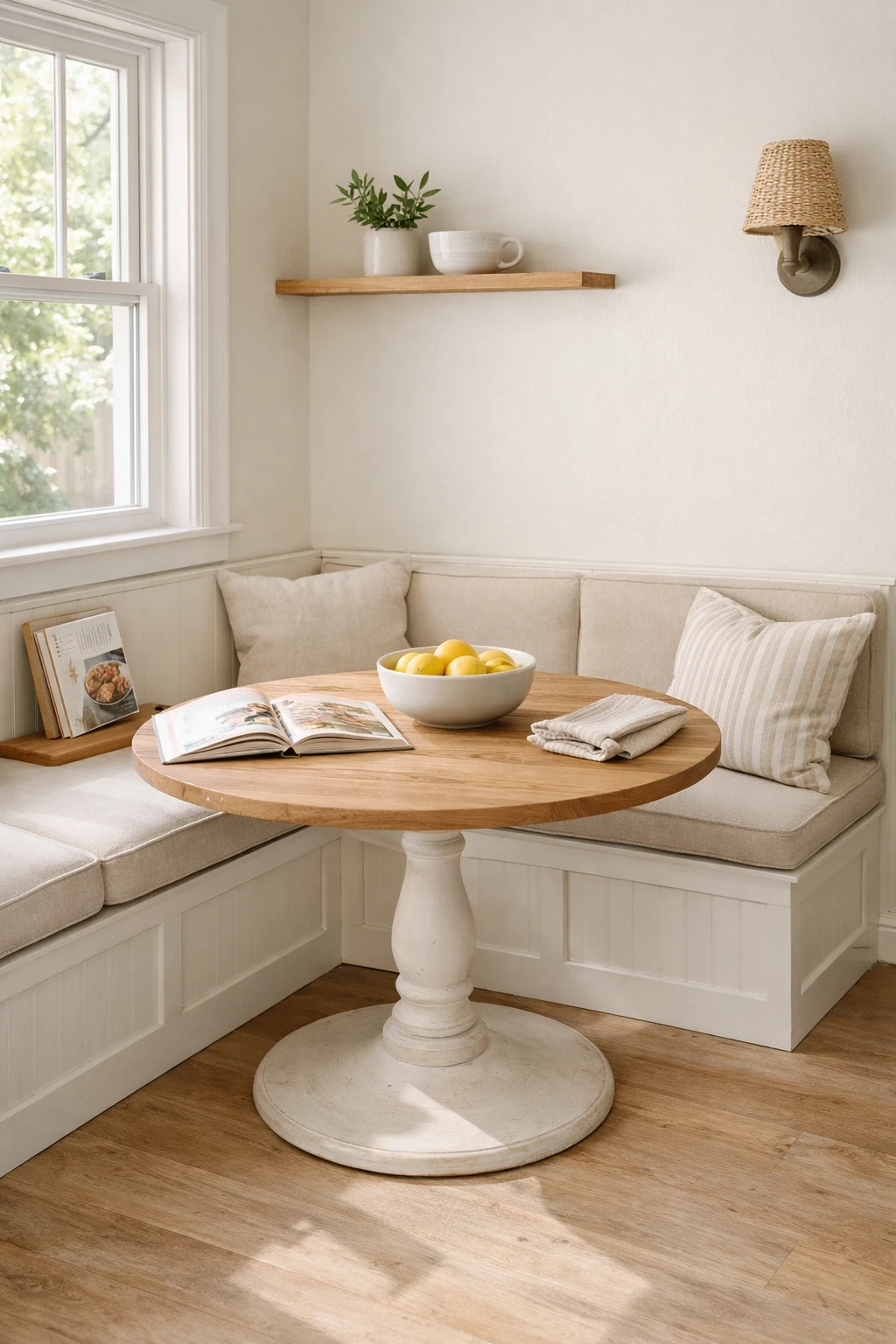
You do not always need a full custom build to get the look. A DIY-style banquette can combine stock cabinets, a bench frame, and made-to-order cushions for a result that looks far more expensive than it is. Done well, it reads as built-in and tailored.
The trick is proportion. The bench height, cushion thickness, and table scale all need to work together. Paint the base to match nearby trim or cabinetry so it blends in. This idea is perfect for budget-conscious homeowners who want the charm of a custom breakfast nook without the full price tag.
Common Banquette Mistakes to Avoid
Going too deep with the bench
A banquette that is too deep looks generous, but it can feel awkward to sit in. People end up slouching unless there are enough back cushions to support them. A tighter seat depth often feels better and looks cleaner too.
Ignoring traffic flow
A beautiful nook is useless if the dishwasher cannot open properly or if people keep squeezing sideways to get through. Always check how the seating works when chairs are pulled out and when someone is actually sitting there.
Using fussy fabrics
Kitchens are messy. Even in a home without kids, coffee, oil, crumbs, and red sauce show up. Choose washable or easy-clean materials so the banquette stays attractive without constant stress.
Overstyling the nook
A couple of pillows, good lighting, and one simple centerpiece usually do enough. Too many pillows, decor pieces, or busy patterns can make a small seating area feel crowded very fast.
Kitchen banquette seating works best when it looks good and solves a real problem. It should make the kitchen easier to use, more comfortable to live in, and warmer to gather in. Whether you want a built-in breakfast nook, extra storage, or a softer place for family meals, the right banquette can completely change how your kitchen feels.