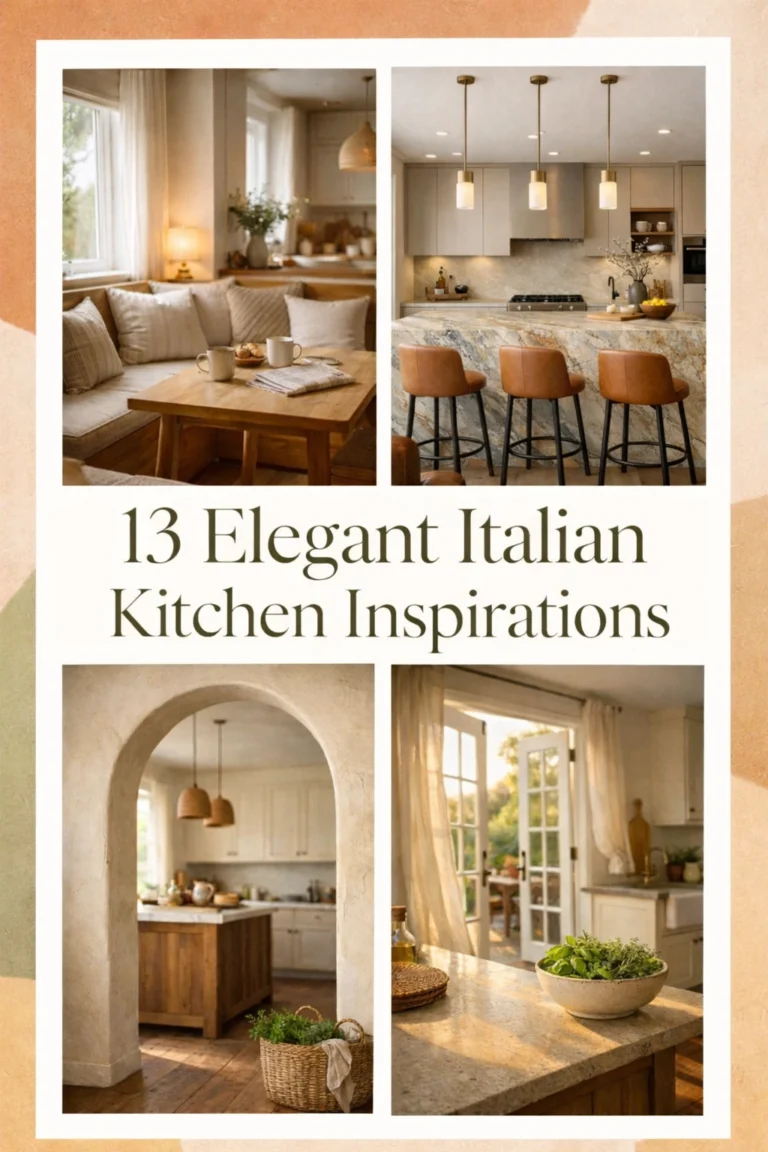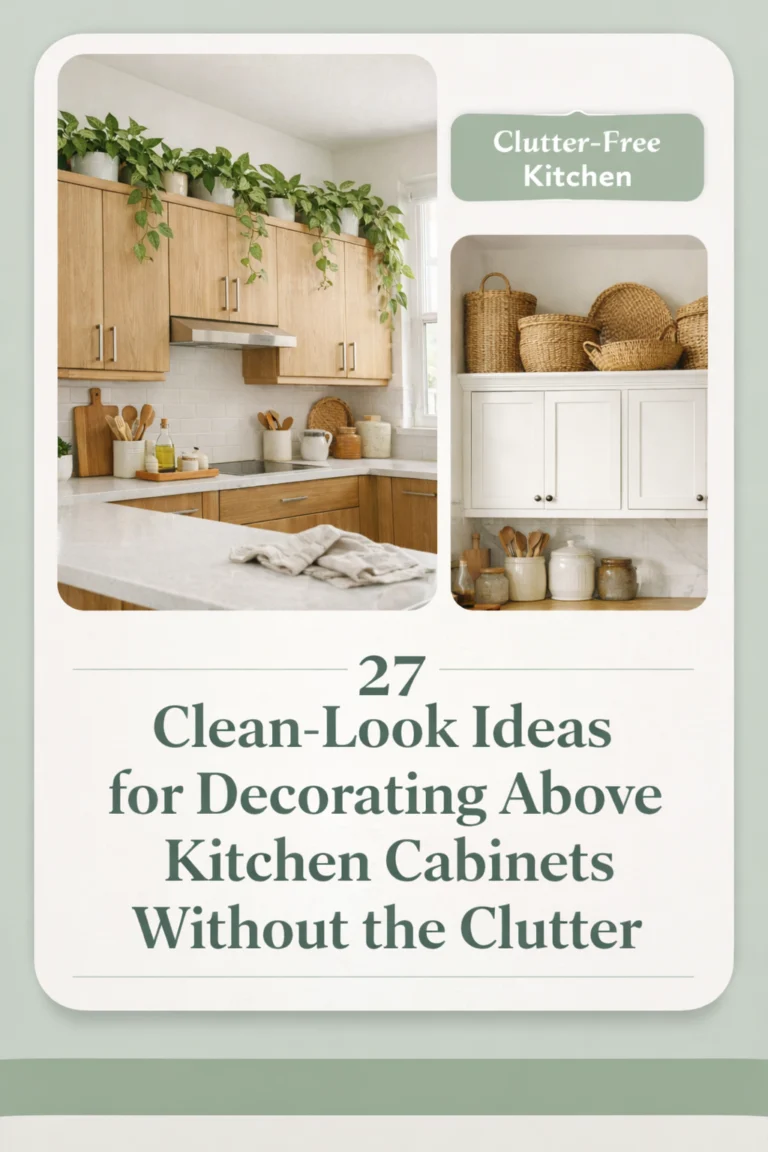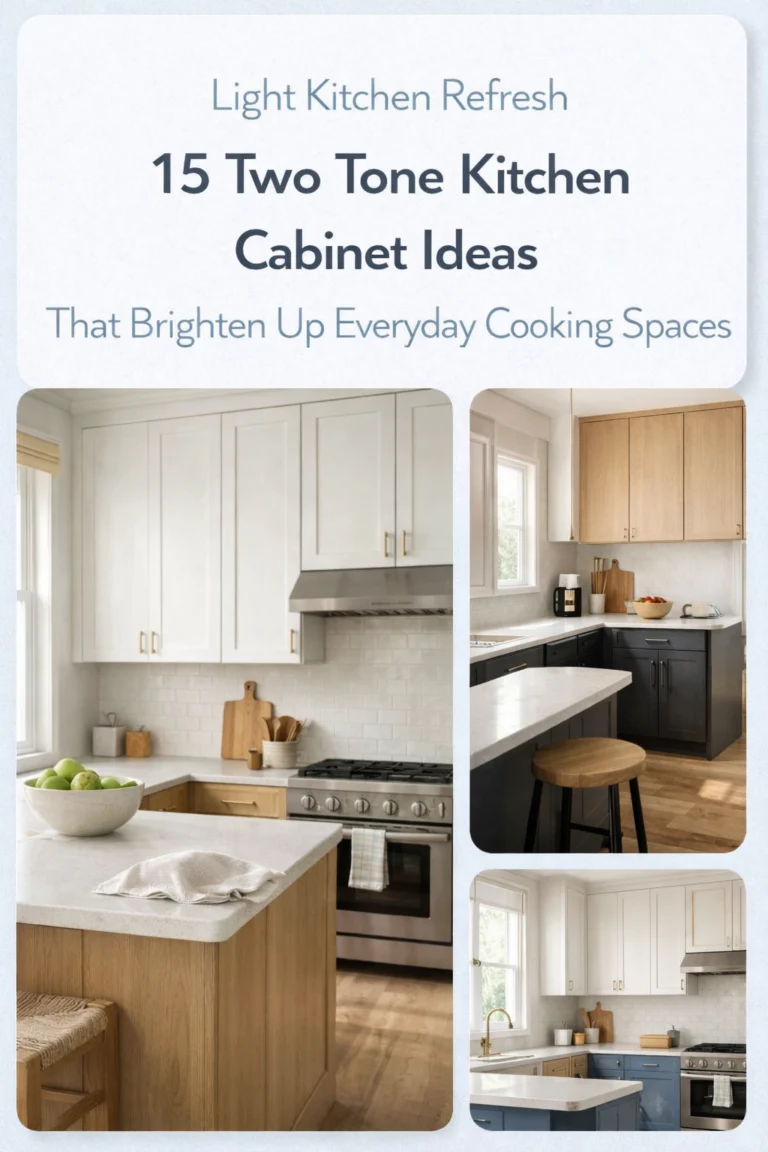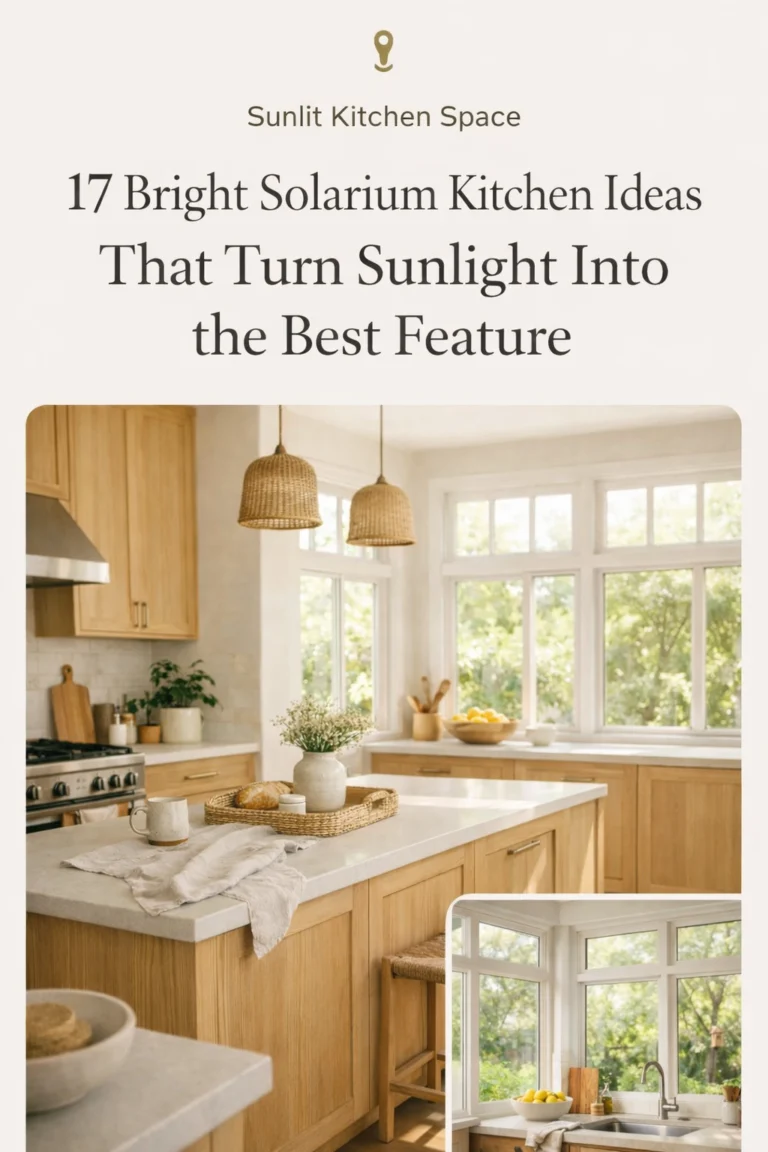


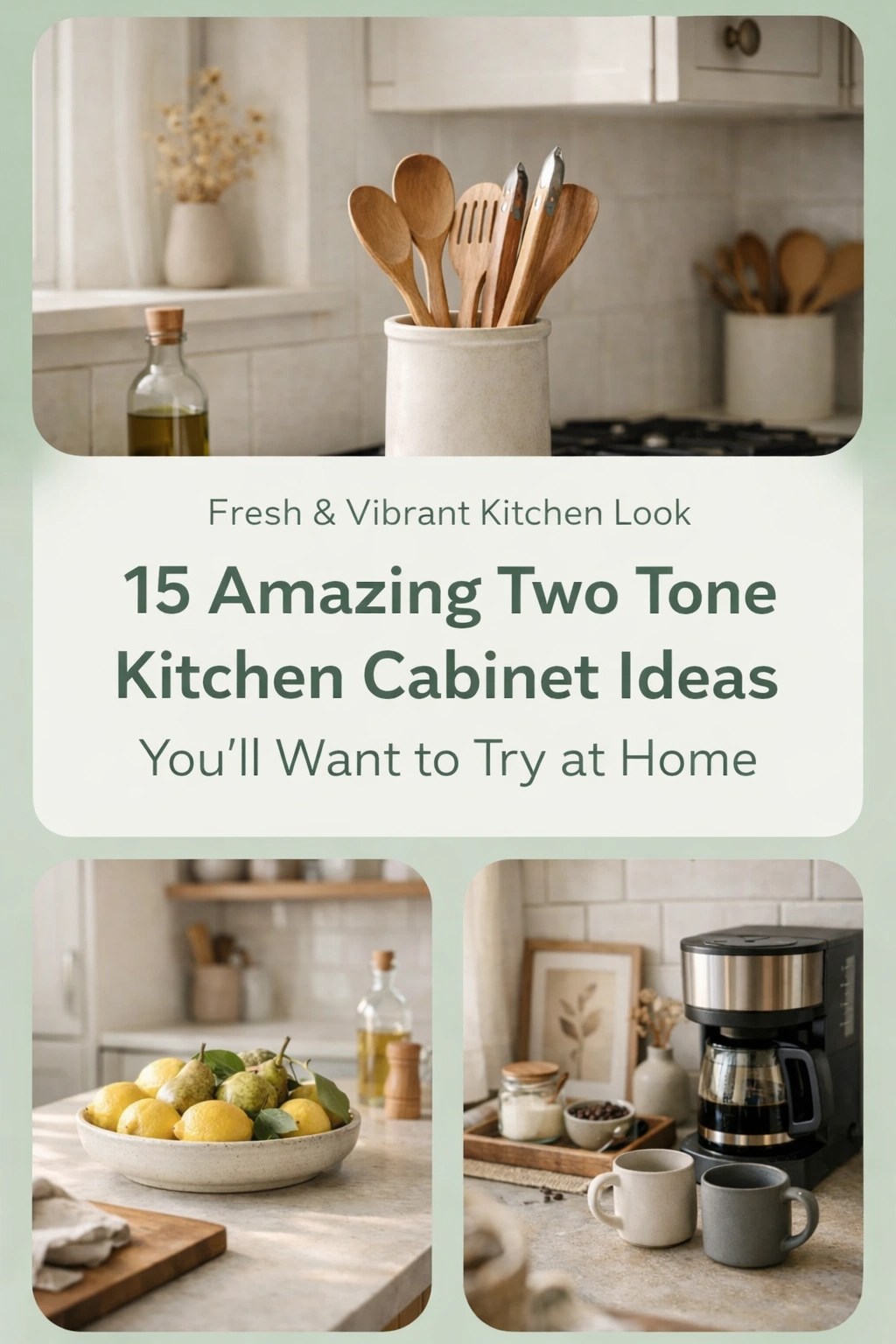
Kitchen counters can make or break the feel of a kitchen. When they are too bare, the room can feel cold and unfinished. When they are overloaded, the whole kitchen starts to look stressed. The goal is not to decorate every inch. The goal is to style the counter in a way that feels useful, calm, and attractive at the same time.
That balance matters even more in real homes. Most people are not working with a giant showroom kitchen. They have to make room for a toaster, coffee maker, fruit, dish soap, and daily life. A good counter setup should help the kitchen look better without making it harder to use.
The best kitchen counter styling ideas do three things well. They add warmth, they support function, and they create visual order. That means every item should either be helpful, beautiful, or both. A ceramic crock that holds wooden spoons works. A tray that groups oils and salt works. A giant collection of random decor that blocks prep space does not.
This guide walks through 16 kitchen counter styling ideas that feel realistic, timeless, and easy to adapt. Some are simple and minimal. Others add a little more layering and personality. You do not need to use all of them. In fact, that would be a mistake. The smart move is to choose the ideas that fit your kitchen size, layout, and daily routine.
What makes kitchen counter styling look good
Before getting into the ideas, it helps to understand why some kitchens look polished while others look cluttered. Styling is not just about buying pretty objects. It is about creating a clean visual rhythm.
A well-styled kitchen counter usually has these traits:
- Items are grouped instead of scattered
- There is a mix of heights and textures
- Functional pieces are part of the look
- Open space is left on purpose
- The palette feels connected
That last point matters more than people think. If your counter holds black appliances, white canisters, bright red utensils, chrome organizers, and a neon fruit bowl, the eye has nowhere to rest. It looks busy even if it is technically organized.
A more cohesive setup might use warm wood, white ceramic, glass, greenery, and soft metal finishes. That kind of mix looks lived in but controlled.
How to choose the right styling approach
Different kitchens need different solutions. A small apartment kitchen should not be styled the same way as a large open-plan kitchen with long counters and a big island.
| Kitchen Type | Best Styling Approach | What Works Well | What to Avoid |
|---|---|---|---|
| Small kitchen | Minimal and vertical | Trays, stacked boards, one vase, wall-adjacent styling | Too many small loose items |
| Family kitchen | Functional styling | Crocks, canisters, fruit bowl, coffee station | Decor that gets in the way |
| Modern kitchen | Clean layered styling | Stone, wood, glass, simple shapes, fewer items | Overdecorating every corner |
| Traditional kitchen | Warm collected styling | Cookbooks, ceramics, layered boards, seasonal stems | Heavy clutter and duplicate items |
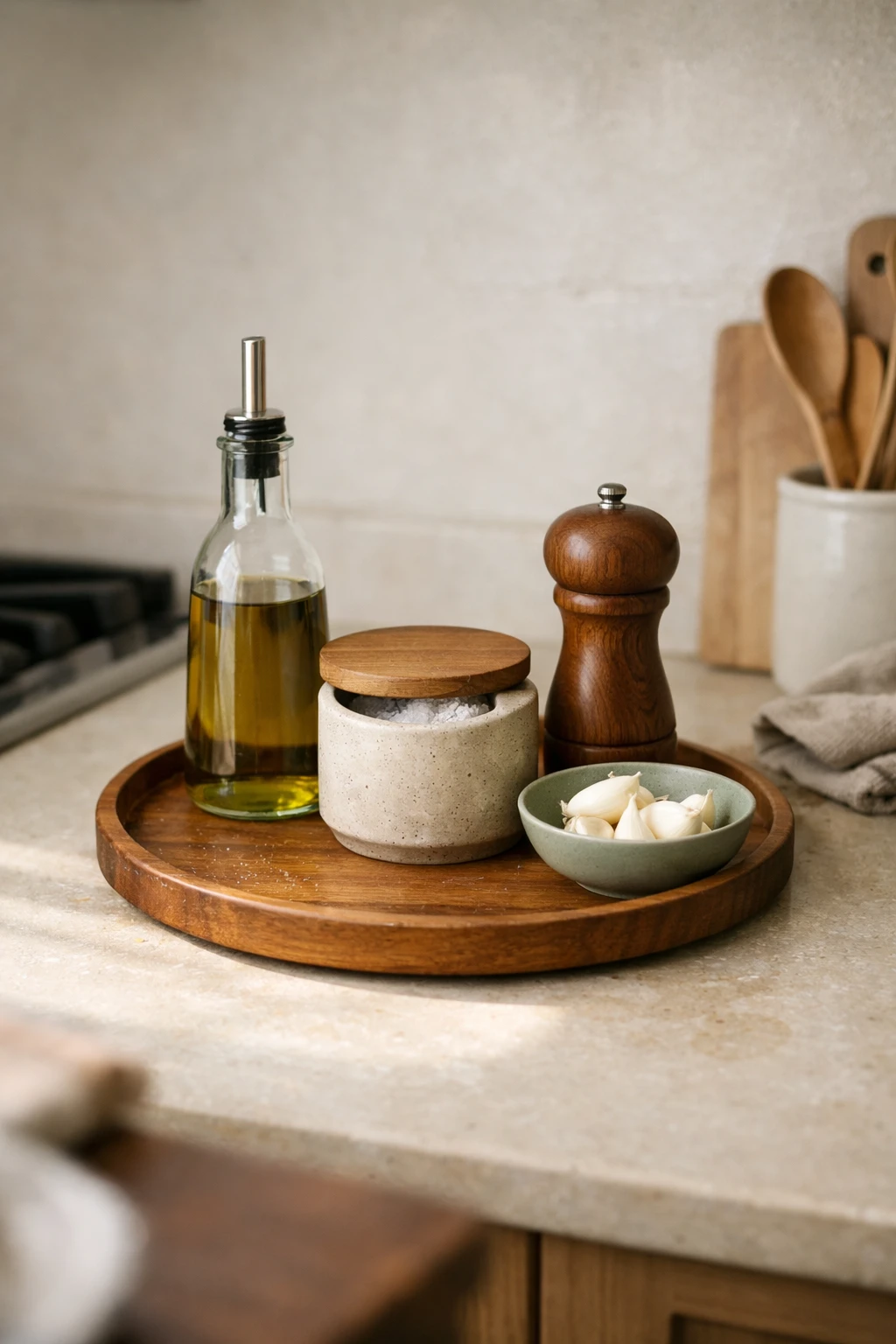
1. Use a tray to create an intentional counter moment
A tray is one of the easiest ways to make kitchen styling look deliberate. Instead of placing items one by one across the surface, gather them into a single group. That instantly makes the counter feel neater.
A tray works especially well near the stove, in a dead corner, or beside a coffee machine. You can use it to hold olive oil, salt, pepper, and a small bowl. You can also use it for hand soap, lotion, and a scrub brush near the sink.
Wood trays feel warm and relaxed. Marble trays feel fresh and clean. A metal tray can work in a more modern or industrial kitchen.
The mistake people make is picking a tray that is too small. If everything looks crammed together, it loses the effect. Give each item a little breathing room.
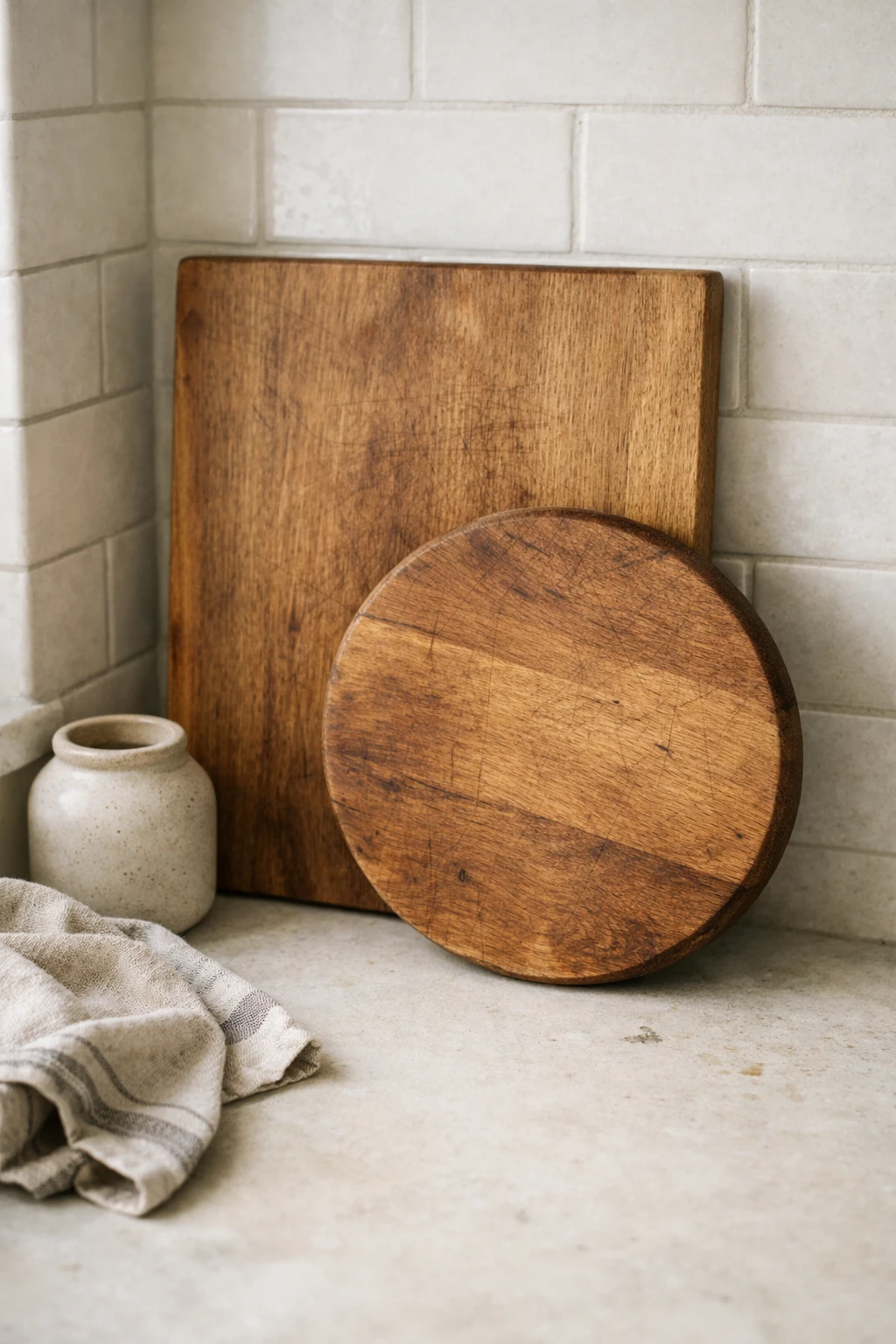
2. Layer cutting boards against the backsplash
Cutting boards are functional, but they also double as decor when styled well. Leaning one or two boards against the backsplash adds height and warmth without taking up much room.
This works best with boards in different shapes or materials. Try one large rectangular wood board with a smaller round board in front of it. That creates depth and makes the kitchen feel softer and more collected.
This idea is especially helpful in kitchens with a lot of hard finishes like quartz, tile, and stainless steel. Wood breaks up those colder surfaces.
Do not use five boards unless you actually need five boards out. One or two well-chosen pieces look stylish. A whole wall of them starts to feel like storage overflow.
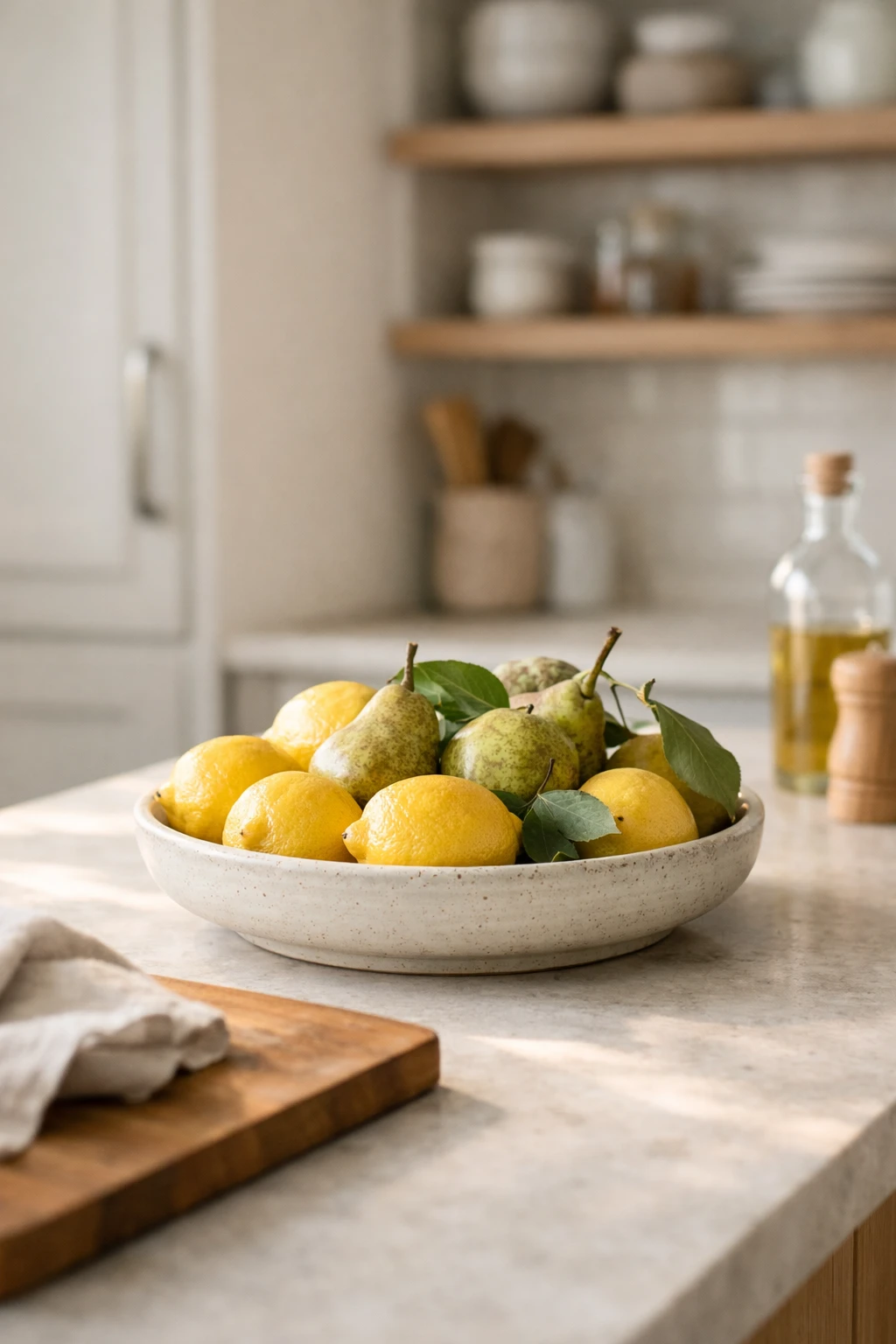
3. Style a simple fruit bowl for color and life
A fruit bowl is practical, but it also adds shape, color, and freshness to a counter. It is one of the easiest ways to make a kitchen feel alive without trying too hard.
A low ceramic bowl filled with lemons can brighten a white kitchen. A woven basket with pears or apples feels warmer and more casual. Citrus often works well because the color is clean and cheerful.
The key is keeping it intentional. A proper bowl looks styled. A pile of random bananas, plastic produce bags, and old mail on the same counter does not.
This works well on islands, end corners, and larger uninterrupted stretches of counter where you need one visual anchor.
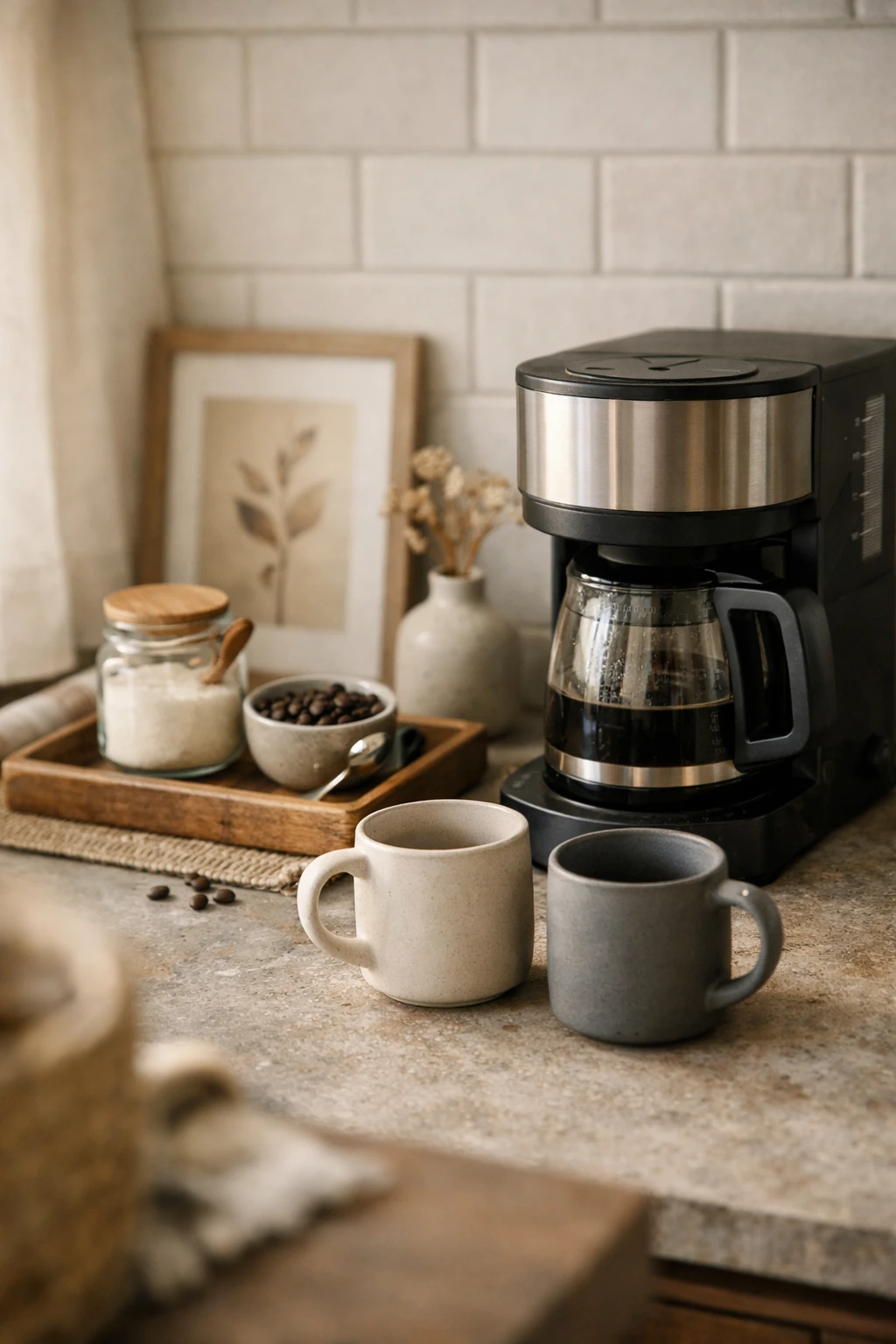
4. Build a compact coffee station that earns its space
If coffee is part of your daily routine, stop pretending the coffee maker is invisible. Give it a proper zone. A compact coffee station can look polished while making mornings easier.
Start with the machine, then add only what supports it. Think mugs, sugar, a small container of pods or beans, and maybe a tray to keep the setup contained. A tiny framed print or a small vase can help soften the look.
This is one of the best kitchen counter styling ideas because it solves a real problem. It turns a bulky appliance area into a functional feature.
Keep it tight. A coffee station should feel edited. Once it starts holding syrups, snack bars, random papers, and six novelty mugs, it becomes clutter again.
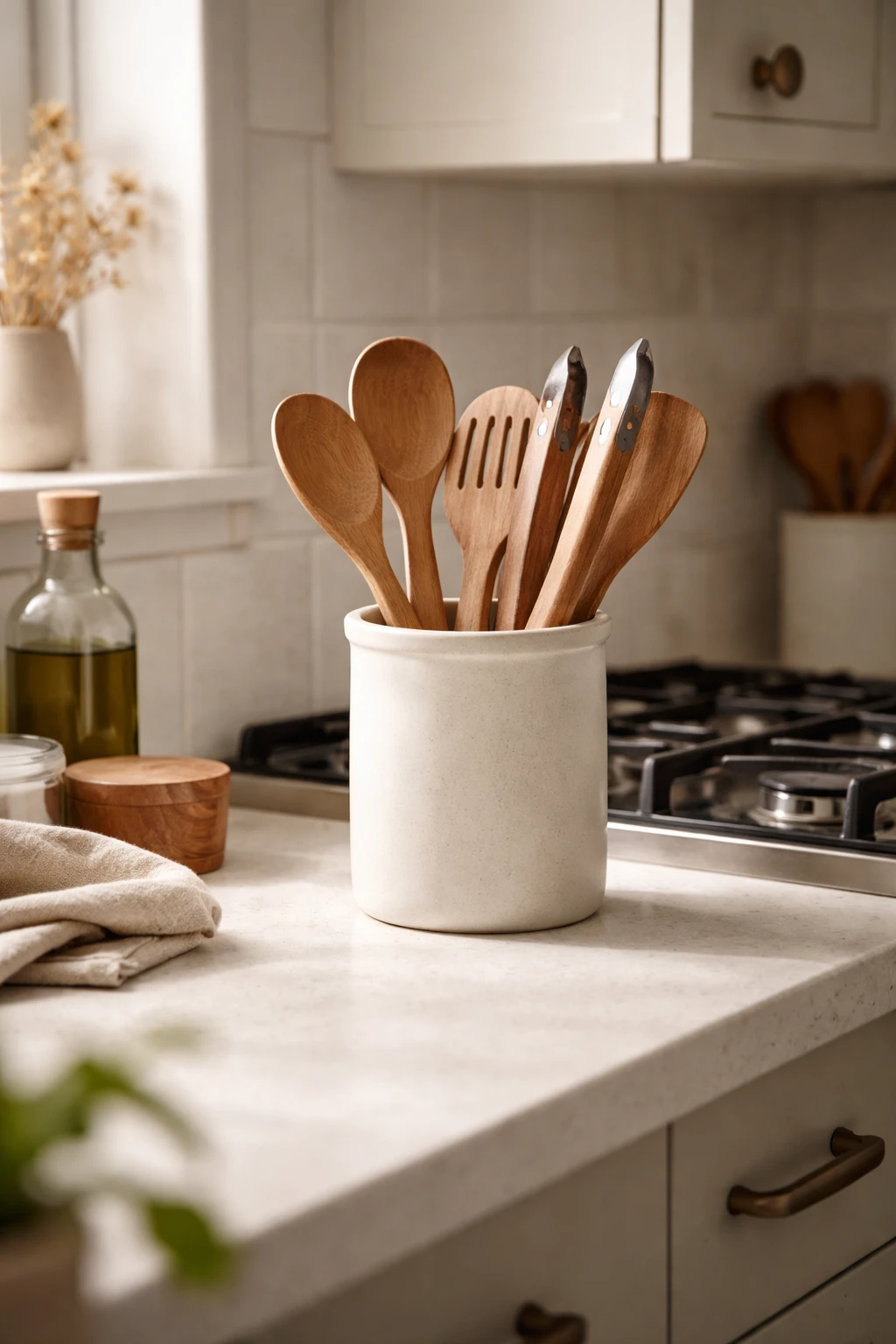
5. Add a ceramic utensil crock with wooden tools
A utensil crock is classic for a reason. It keeps the tools you use most close at hand, and it adds height to the counter in a useful way.
Wooden spoons and spatulas are the best choice visually because they bring in texture and warmth. A white, cream, or earthy ceramic crock works in almost any style of kitchen.
Place it near the stove so it supports cooking, not just styling. That makes the setup feel natural.
The visual trick here is restraint. A few beautiful tools look intentional. A stuffed crock with every whisk, peeler, and plastic gadget you own looks chaotic.
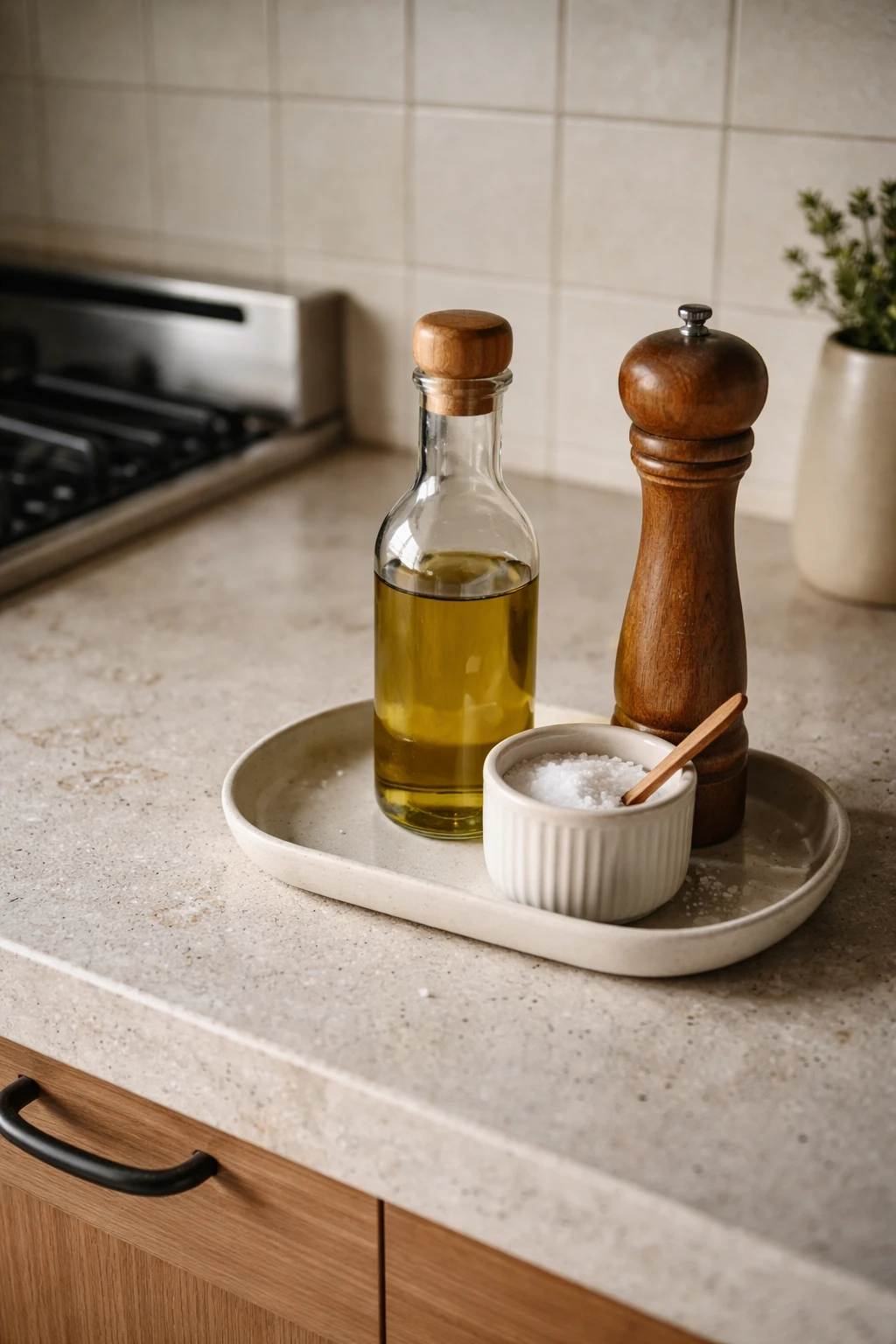
6. Group oils, salt, and pepper into a cooking vignette
This idea works best beside the range. If you cook often, your olive oil and seasonings are already on the counter. The smarter move is to group them in a clean way instead of letting them sit around as visual clutter.
Use a small tray or a shallow dish. Add a good-looking oil bottle, a salt cellar, and a pepper mill. That is enough for most kitchens. If you use a favorite spice blend every day, include it too.
This setup makes the kitchen look more thoughtful because it blends function with styling. It is also easier to wipe around than a bunch of loose items.
The wrong move is adding every sauce and seasoning you own. Keep only the daily essentials out.
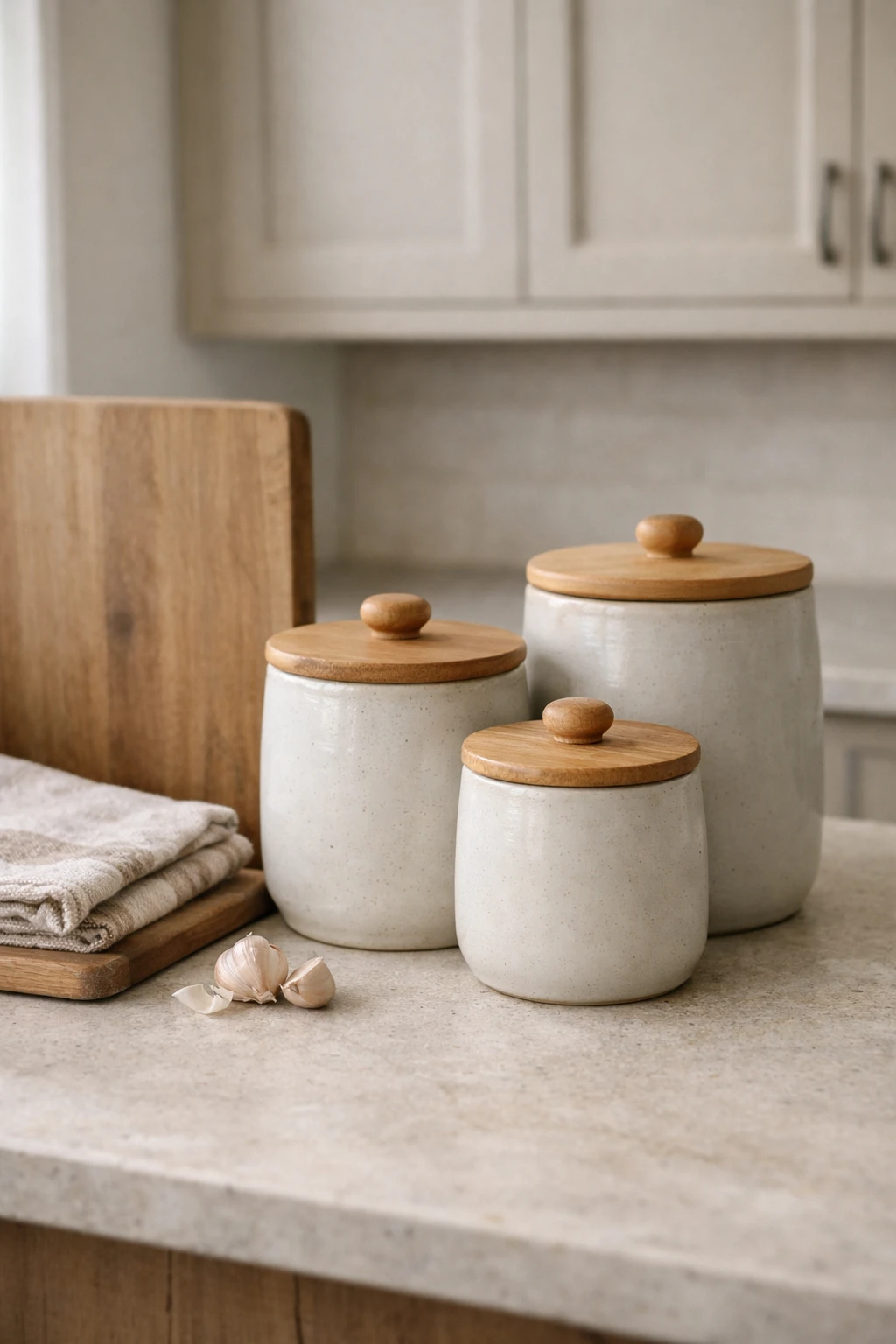
7. Use canisters that are both useful and attractive
Canisters are one of the easiest ways to style a counter while hiding visual mess. Flour, sugar, coffee, tea bags, or snacks look much better in matching containers than in half-open packaging.
Ceramic canisters feel timeless. Glass canisters look lighter and more casual. Matte stoneware can look great in modern organic kitchens.
Try placing two or three canisters together rather than spreading them out. Odd-number groupings usually look better than even ones.
Make sure the canisters fit your actual needs. Oversized containers on a small counter look awkward. Tiny ones that hold almost nothing become pointless.
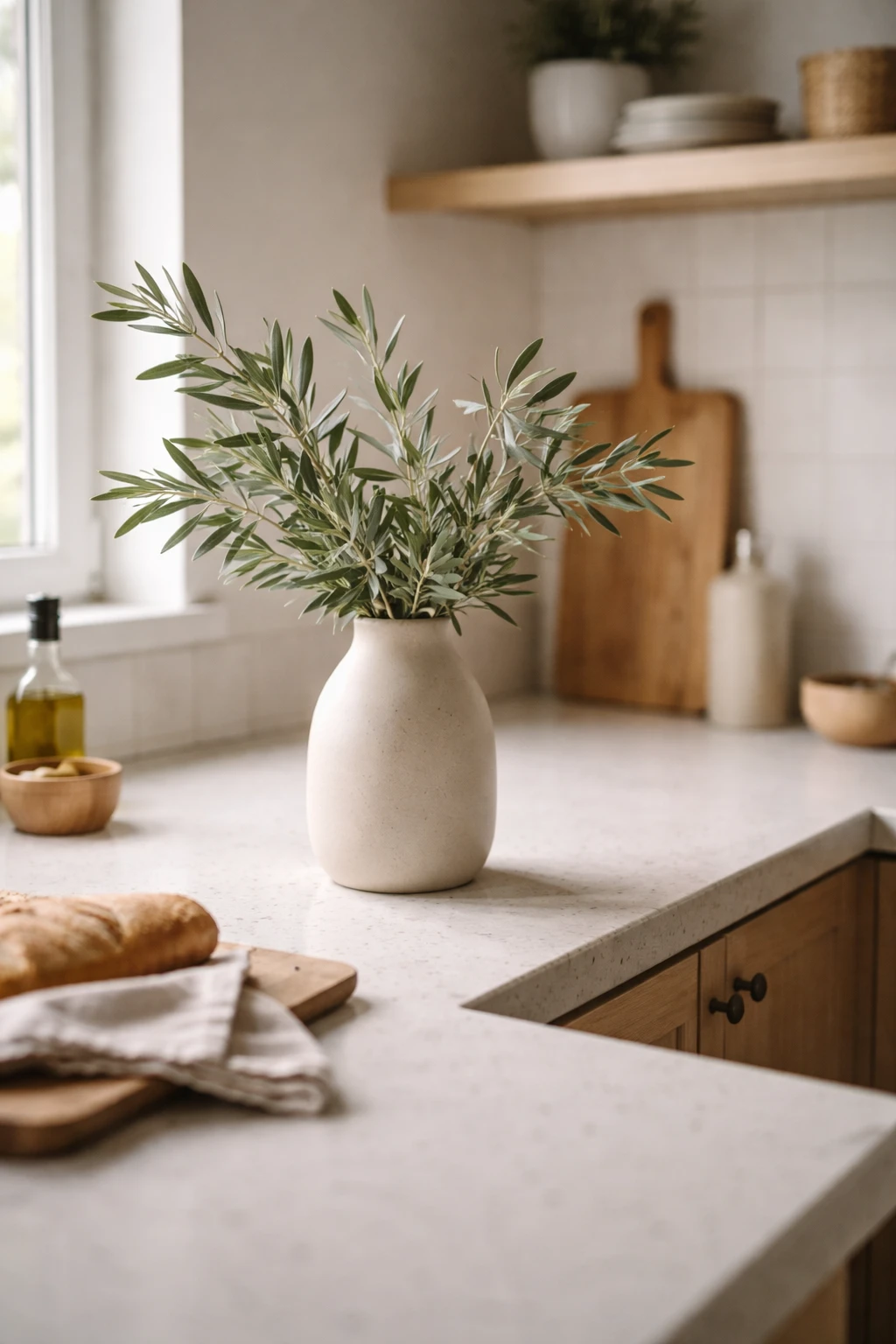
8. Bring in a vase of branches, herbs, or seasonal stems
Every kitchen benefits from something organic. A simple vase with fresh eucalyptus, olive branches, or seasonal stems can soften the room and make the counter feel less rigid.
This works especially well in corners that feel empty but do not need more storage. It also helps break up a wall of cabinets and stone.
Fresh herbs can be even better because they look good and support cooking. A few potted basil or rosemary plants near a window bring freshness without feeling decorative for the sake of decoration.
Skip oversized floral arrangements unless you have a very large kitchen. Most counters need something lighter and less formal.
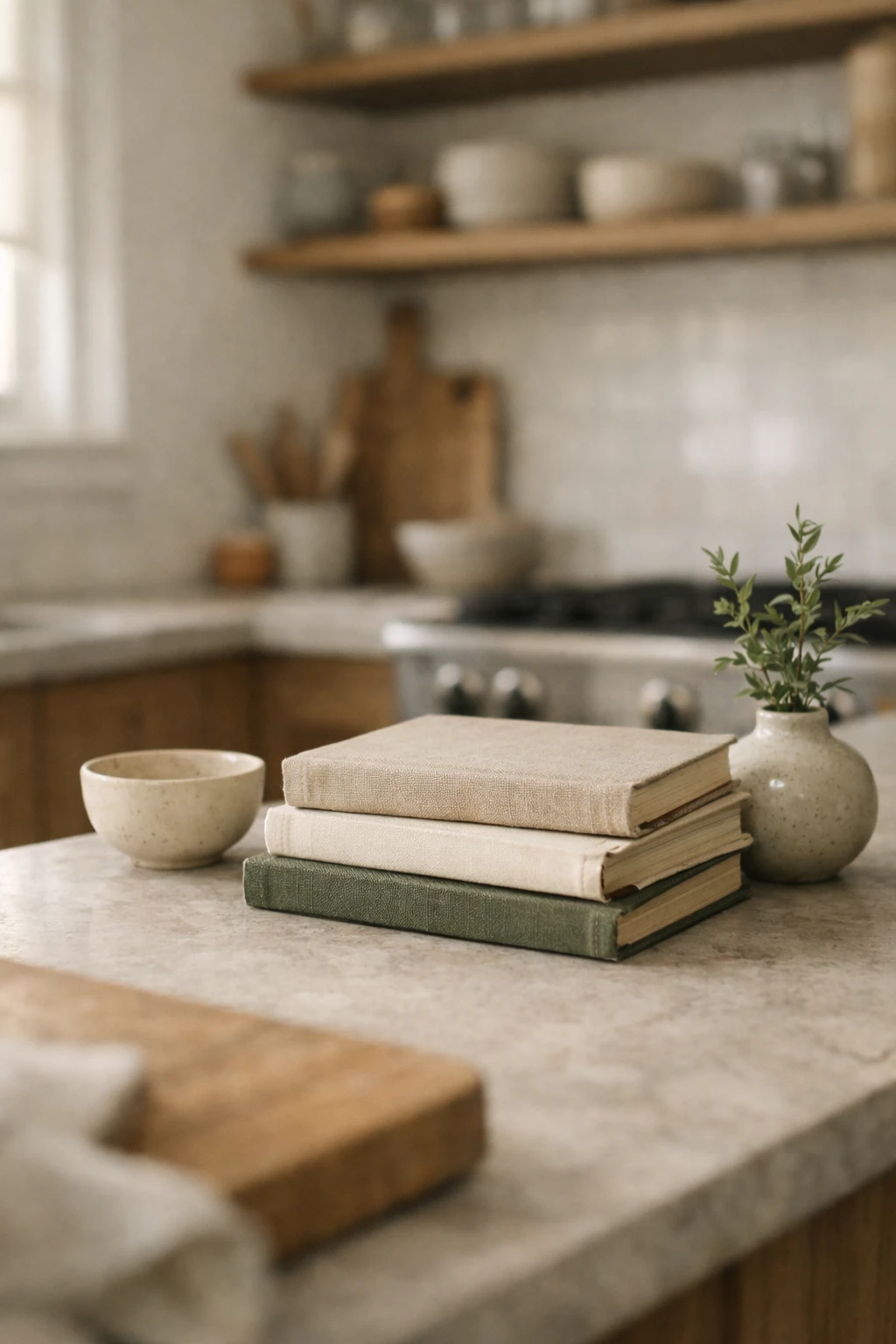
9. Stack a few cookbooks for personality
Cookbooks add color, shape, and character to a kitchen. They also make the space feel more personal. A short stack of two or three books can work well at the end of a counter or beside a lamp or bowl.
Choose books with covers that suit your kitchen palette. If the colors clash with everything else, the stack can look messy instead of charming.
This styling trick works best in kitchens that already have some warmth and personality. In a very sleek minimalist kitchen, one book may be enough.
Use books you actually like. Random decorative cookbooks with perfect covers but no relevance to your life tend to feel fake.
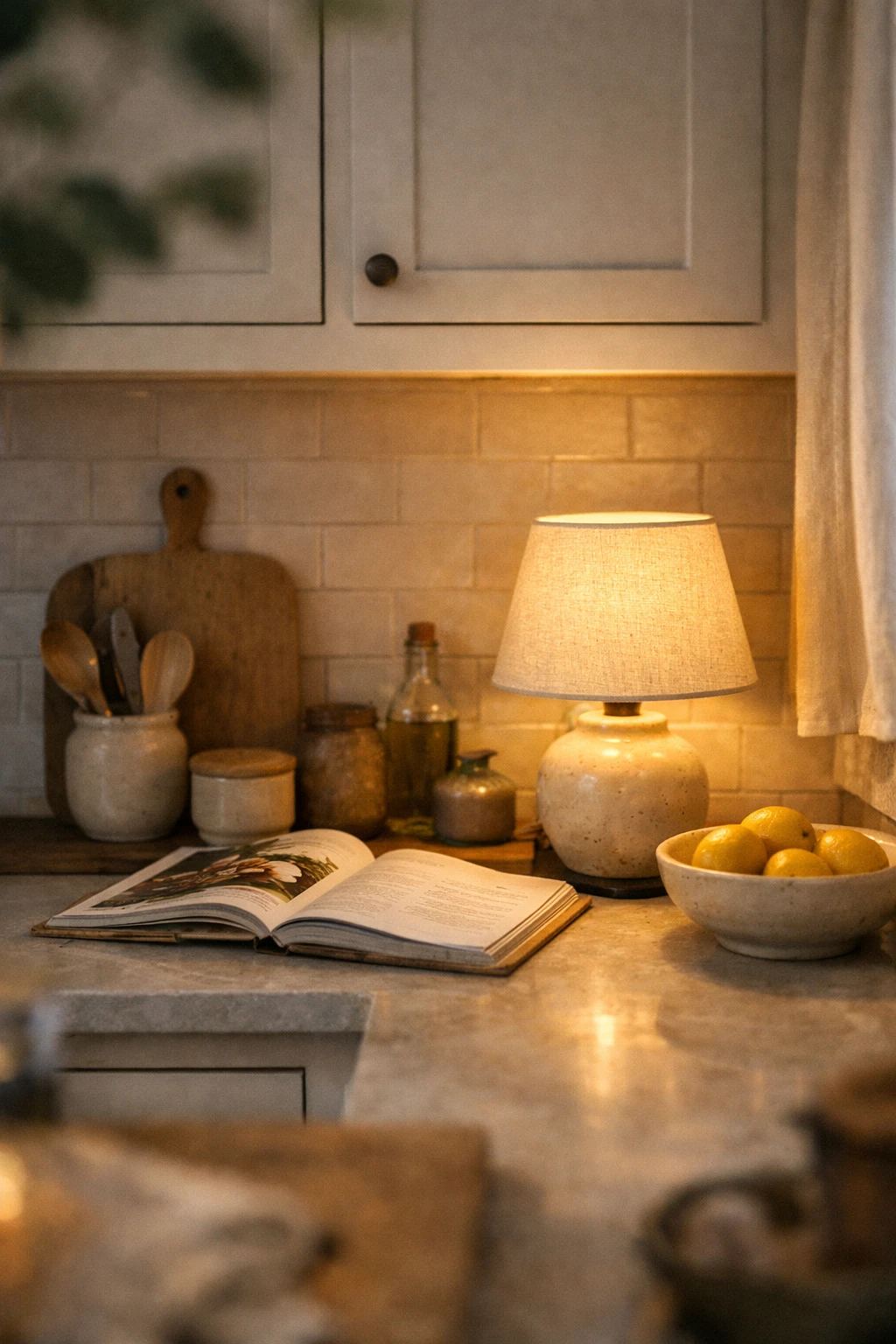
10. Add a small lamp for warmth and softness
A small lamp in the kitchen sounds unnecessary until you see one done well. It adds a soft glow in the early morning or evening and makes the kitchen feel more like part of the home, not just a work zone.
This works best on a far counter corner, a baking station, or a section that is visible from a living or dining area. It is especially effective in larger kitchens that can otherwise feel a little flat.
Choose a compact lamp with a simple shade and a base that fits the room. Ceramic, metal, and stone styles often work well.
This is not the move for a cramped kitchen with no extra room. But if you have the space, it adds a cozy layer that overhead lights never can.
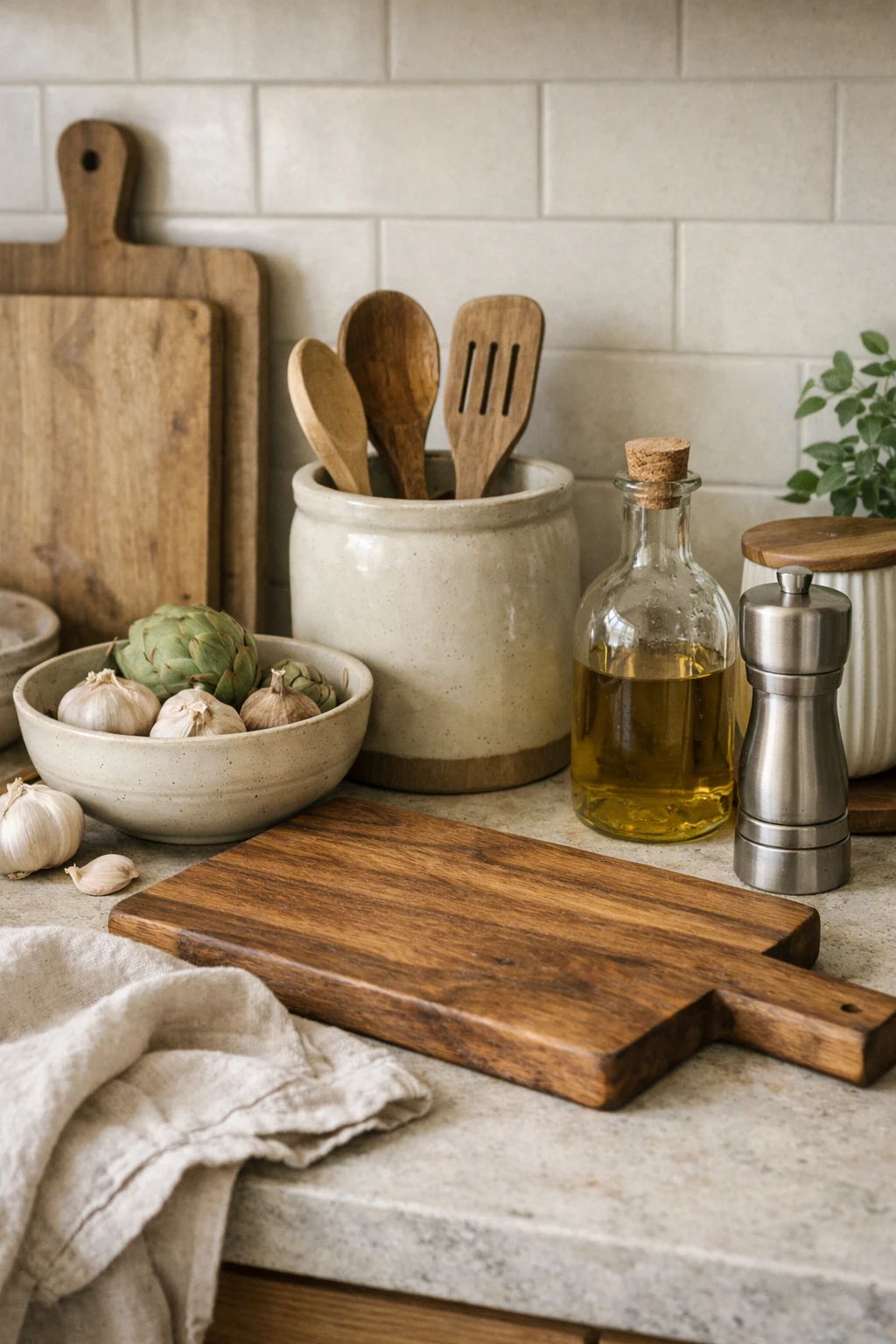
11. Mix wood, ceramic, glass, and metal for texture
A counter styled with all one material can fall flat. Texture is what makes a kitchen feel layered and real. That does not mean using everything at once. It means combining a few materials in a calm way.
For example, you might use a wood board, a ceramic crock, a glass bottle, and a brushed metal mill. That mix creates depth without adding visual noise.
Texture matters even more in kitchens with neutral color palettes. If everything is white, beige, or gray, the room needs material contrast to avoid looking dull.
The mistake is chasing variety without connection. If every item has a different finish, shape, and tone, the result looks random. Texture should add richness, not confusion.
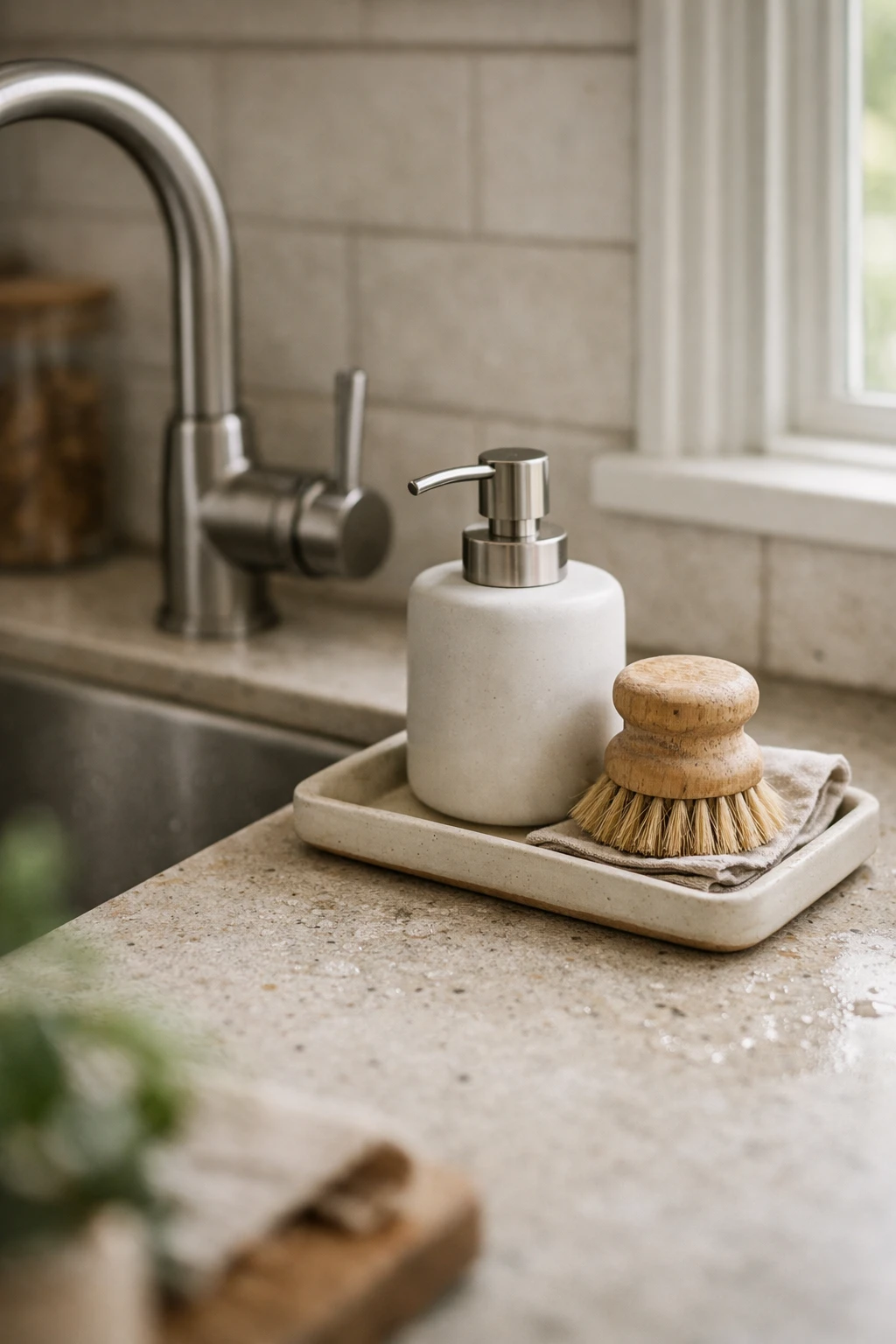
12. Keep the sink area styled but practical
The sink area often becomes the messiest part of the counter. Soap bottles, wet sponges, and scrub brushes can wreck the look fast. A better setup keeps these essentials contained and visually consistent.
Use a small tray or dish beside the sink. Choose a soap dispenser that fits your kitchen style. Add a simple brush and a folded cloth if needed. That is enough.
This little setup has a big effect because the sink is one of the most visible spots in the kitchen. If it looks clean and intentional, the whole room feels more under control.
Be honest about what belongs there. Three soaps, a plastic sponge holder, a bottle cap, and a loose scrub pad are not styling. That is just procrastinated cleanup.
13. Use one oversized piece instead of many small ones
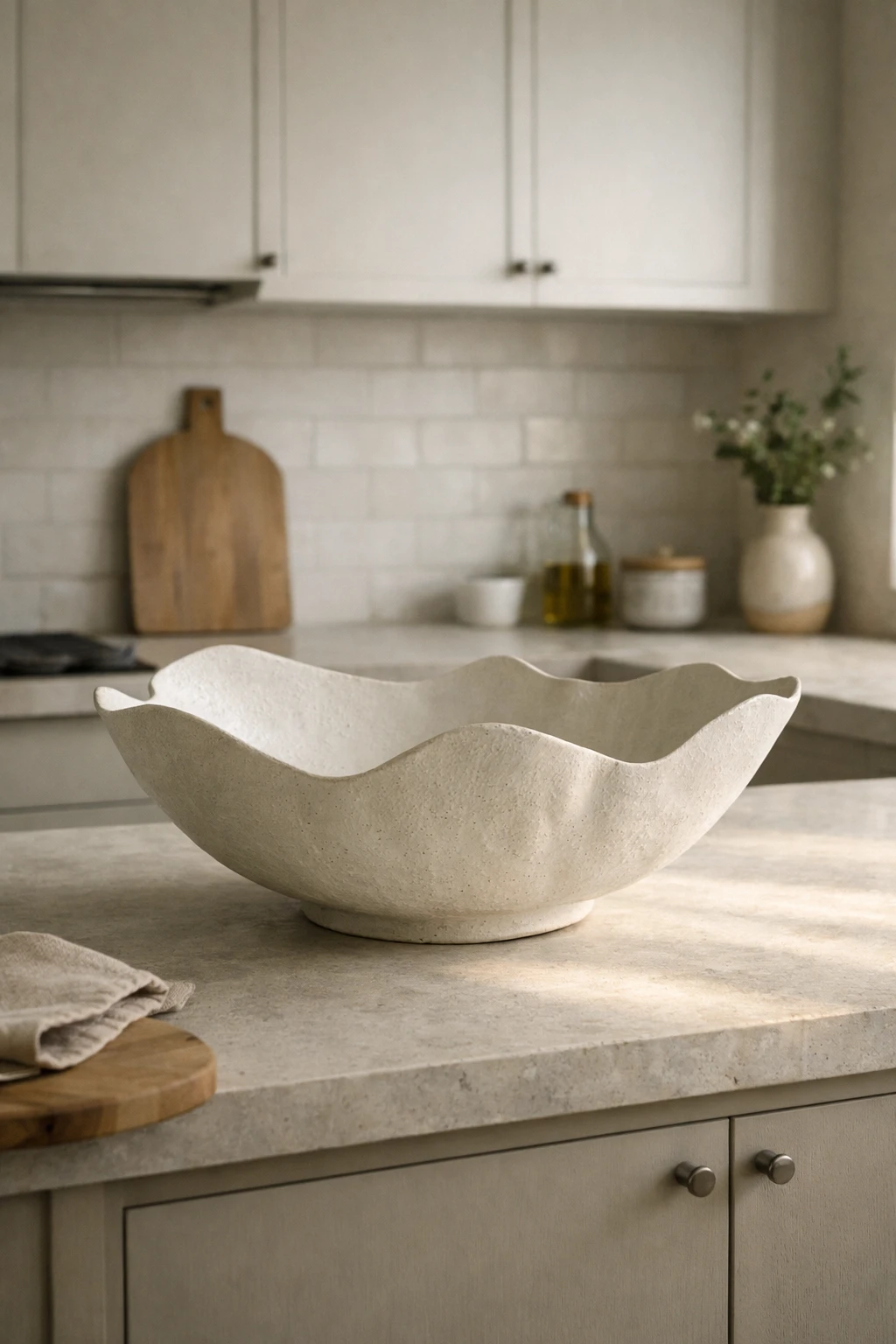
A lot of people try to fill a blank counter by adding several small objects. That usually backfires. It makes the counter look busy. One larger item often works better.
That could be a large board, a substantial fruit bowl, a sculptural vase, or a statement canister. Bigger pieces create stronger visual structure and keep the eye from bouncing around too much.
This is especially useful in modern kitchens, where clean lines and simplicity matter. One oversized piece can make the whole counter feel complete.
The catch is proportion. Do not use something so large that it blocks outlets, prep space, or sight lines.
14. Leave some counter space empty on purpose
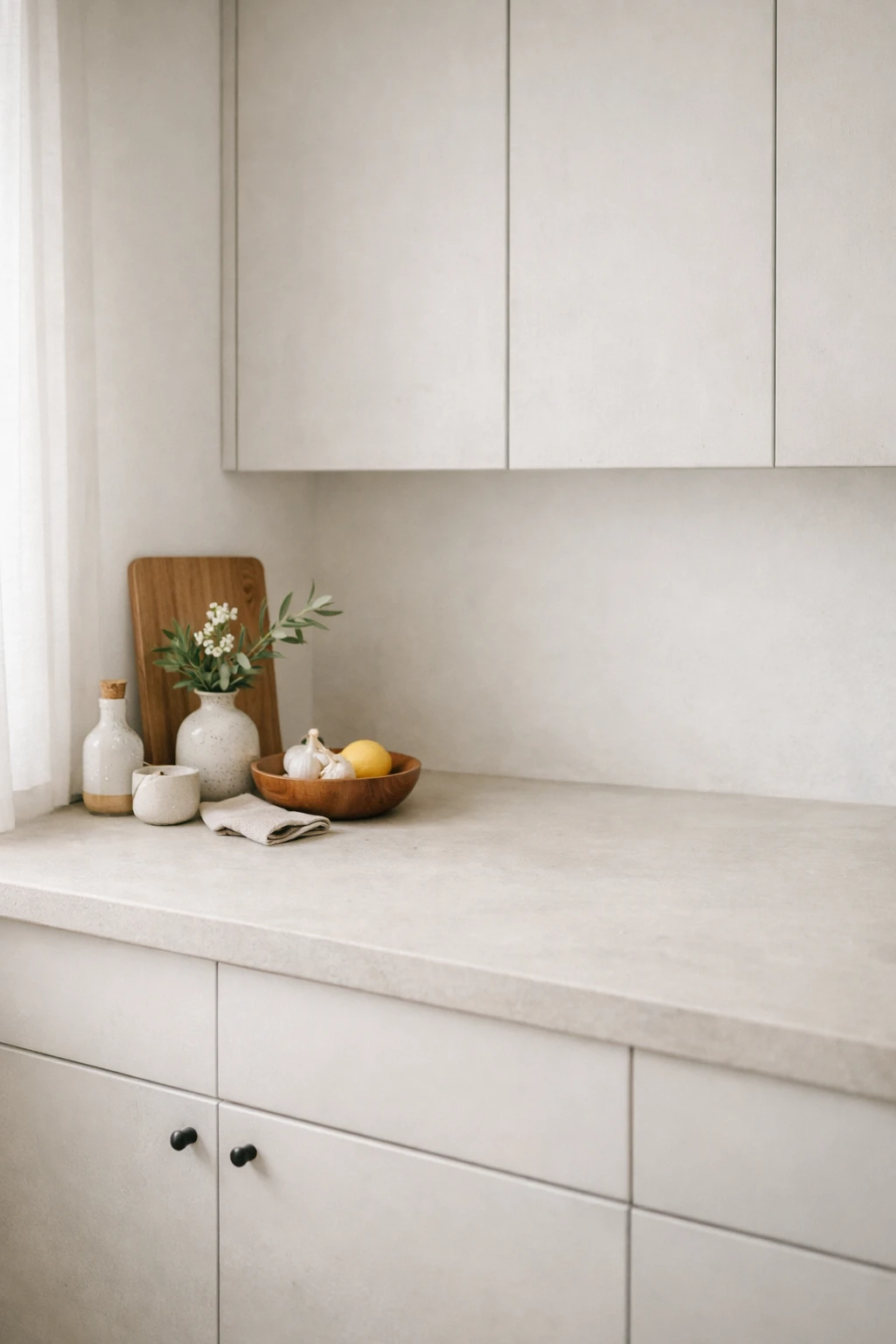
This may be the most important idea in the whole article. Empty space is part of styling. Without it, even beautiful items look like clutter.
A counter does not need decor from one end to the other. In fact, that almost always looks worse. Leaving open space makes the styled areas feel more intentional and gives you room to work.
Think of it like punctuation in a sentence. The pause matters.
15. Create zones based on how you actually use the kitchen
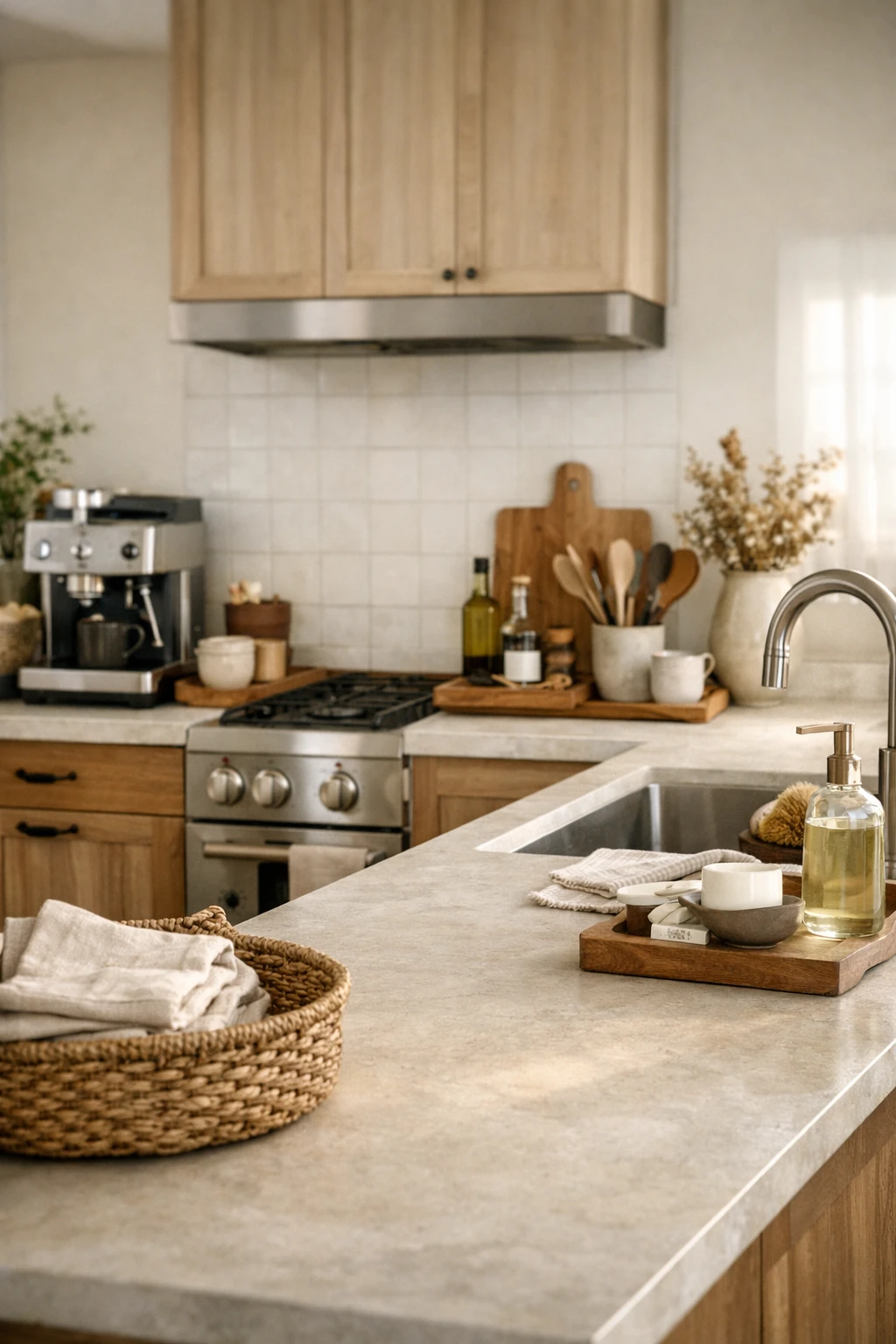
The smartest styling is built around routine. Instead of decorating randomly, create simple zones. One area might be for coffee. Another might be for prep tools. Another might be for sink essentials.
This approach works especially well in larger kitchens with long counters. It helps each section feel intentional and keeps items close to where they are used.
For example, the counter beside the stove can hold oils and utensils. The sink side can hold soap and a small plant. A breakfast corner can hold the toaster and a fruit bowl.
This method keeps the counter useful and cuts down on visual drift, where items slowly pile up in places that make no sense.
16. Add one personal detail that keeps the kitchen from feeling generic
The final touch is personality. Without it, a styled kitchen can look flat and copied. One small personal detail helps the room feel grounded in real life.
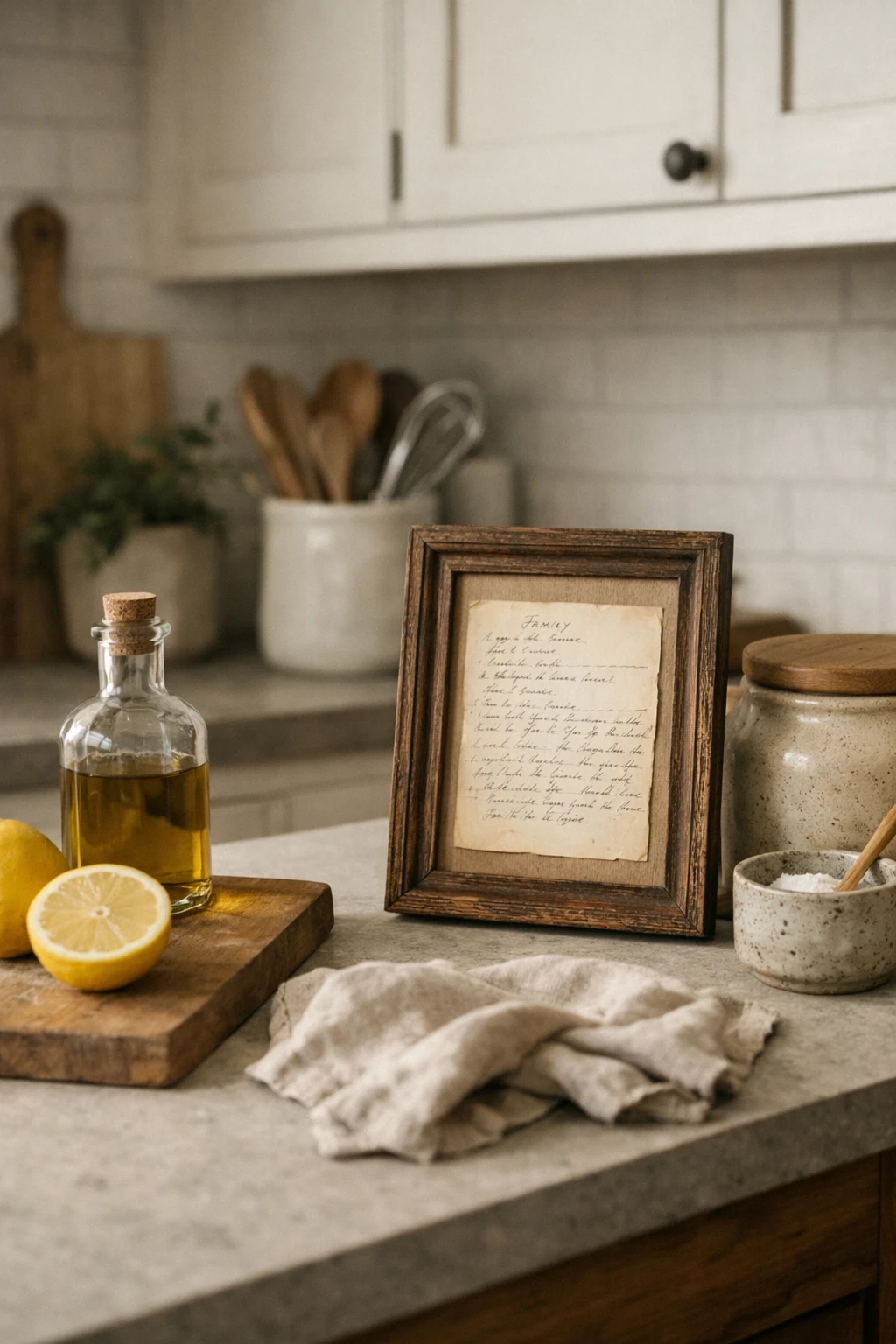
That might be a framed family recipe, a vintage ceramic piece from a flea market, a handmade bowl, or a cookbook you use every weekend. The point is not to turn the counter into a memory shelf. The point is to include one thing that feels yours.
This matters because the best kitchens are not just pretty. They feel lived in, relaxed, and believable.
Be selective. Personal does not mean crowded. One meaningful detail goes much further than ten random ones.
Common kitchen counter styling mistakes to avoid
Even strong decor pieces can fail if the setup is off. These are the mistakes that usually make counters look cluttered instead of styled:
- Using too many tiny objects
- Leaving out items you do not use
- Mixing too many colors and finishes
- Blocking prep space with decor
- Styling every single corner the same way
- Letting practical items look random instead of grouped
- Ignoring scale and proportion
The fix is usually simple. Remove a few pieces, group what stays, and make sure each section has a purpose.
How to make these ideas work in a real kitchen
You do not need a full kitchen makeover to get this right. Start by clearing everything off the counter. Then put back only what you use daily. After that, choose one or two styling ideas that solve a problem and add warmth.
A small kitchen might need only a board, a tray, and a fruit bowl. A larger kitchen may have room for a coffee station, a lamp, and a styled prep zone.
The smartest approach is to edit hard. Kitchens get messy fast because counters are easy dumping grounds. Styling only works when it has boundaries.
If a setup looks nice but makes cooking harder, change it. If a corner still feels cold, add texture. If the counter looks crowded, remove half the items before buying anything new.
That is the truth most decor guides skip. Better styling is usually more about editing than shopping.
Final thoughts
Kitchen counter styling is not about perfection. It is about creating a space that feels calm, useful, and easy to maintain. The right setup helps your kitchen look better every day, not just in photos.
The strongest ideas are the ones that blend beauty with function. A tray can organize clutter. A board can add warmth. A vase can soften hard lines. A coffee station can make a daily habit look intentional. Even an empty stretch of counter can be part of the design. The key is choosing with purpose. Style the kitchen you actually live in, not the one you think you are supposed to have. That is what makes it work.